Giovani Ghisolfi (Milan 1623-1683), attributed to/workshop
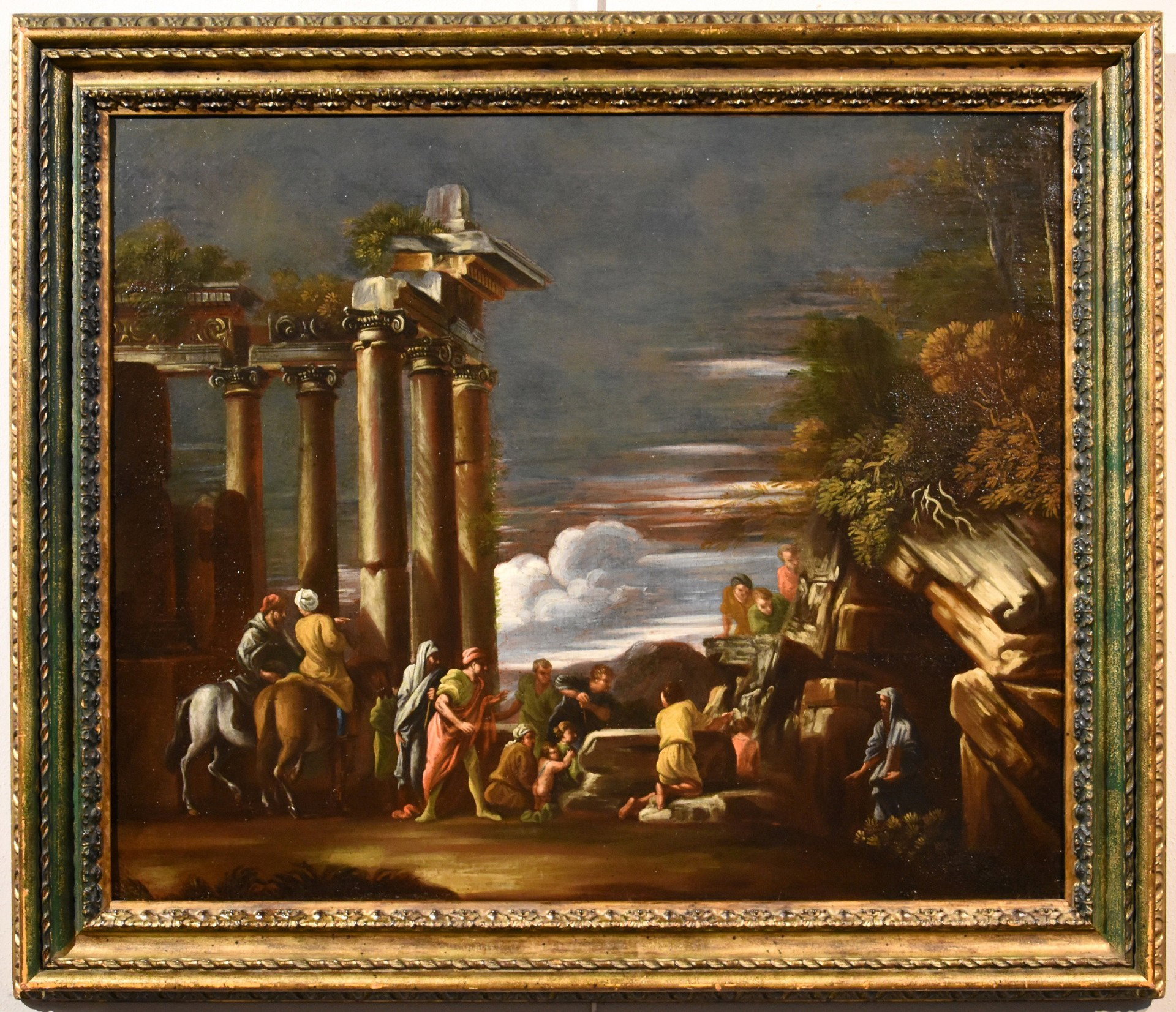
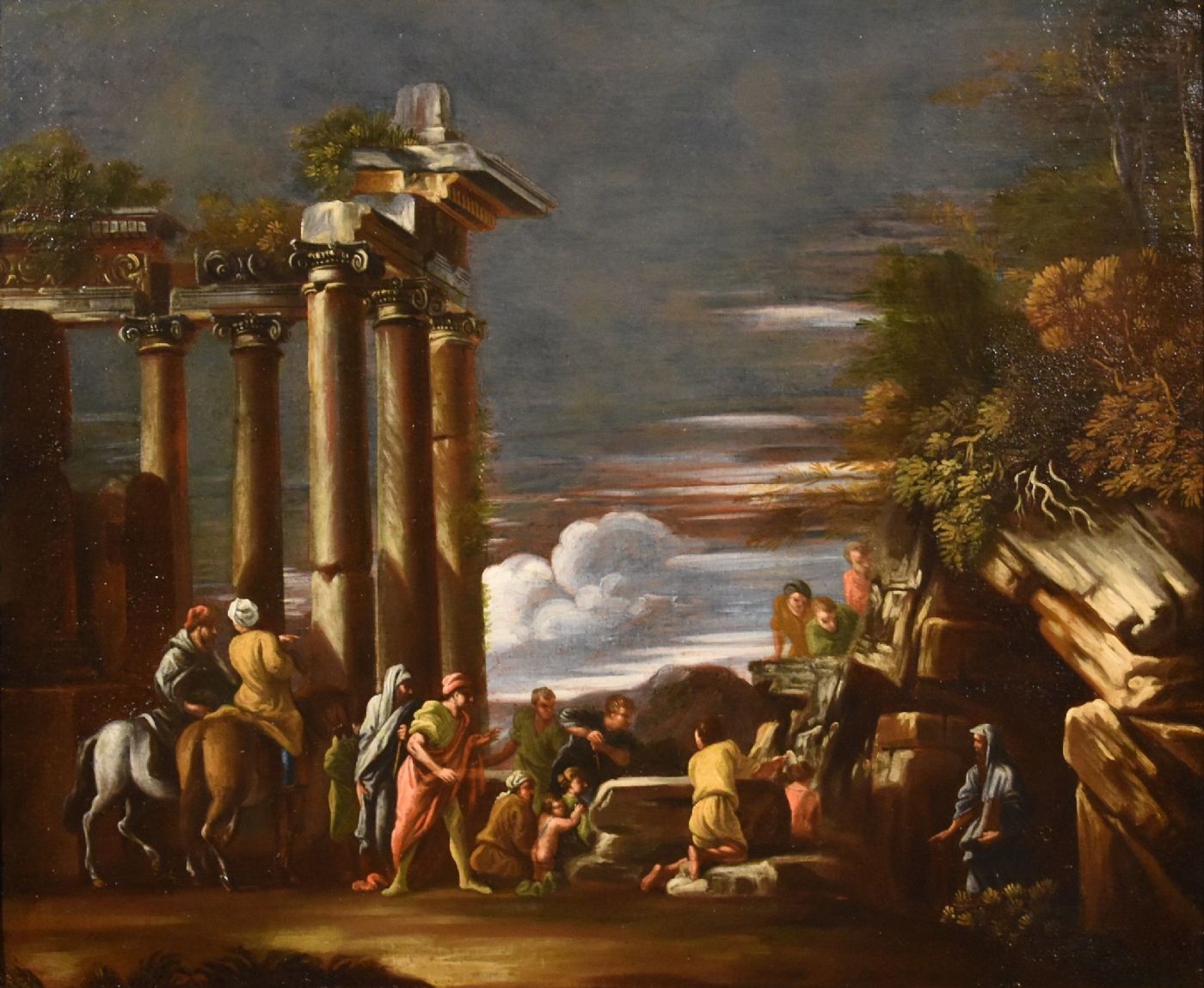
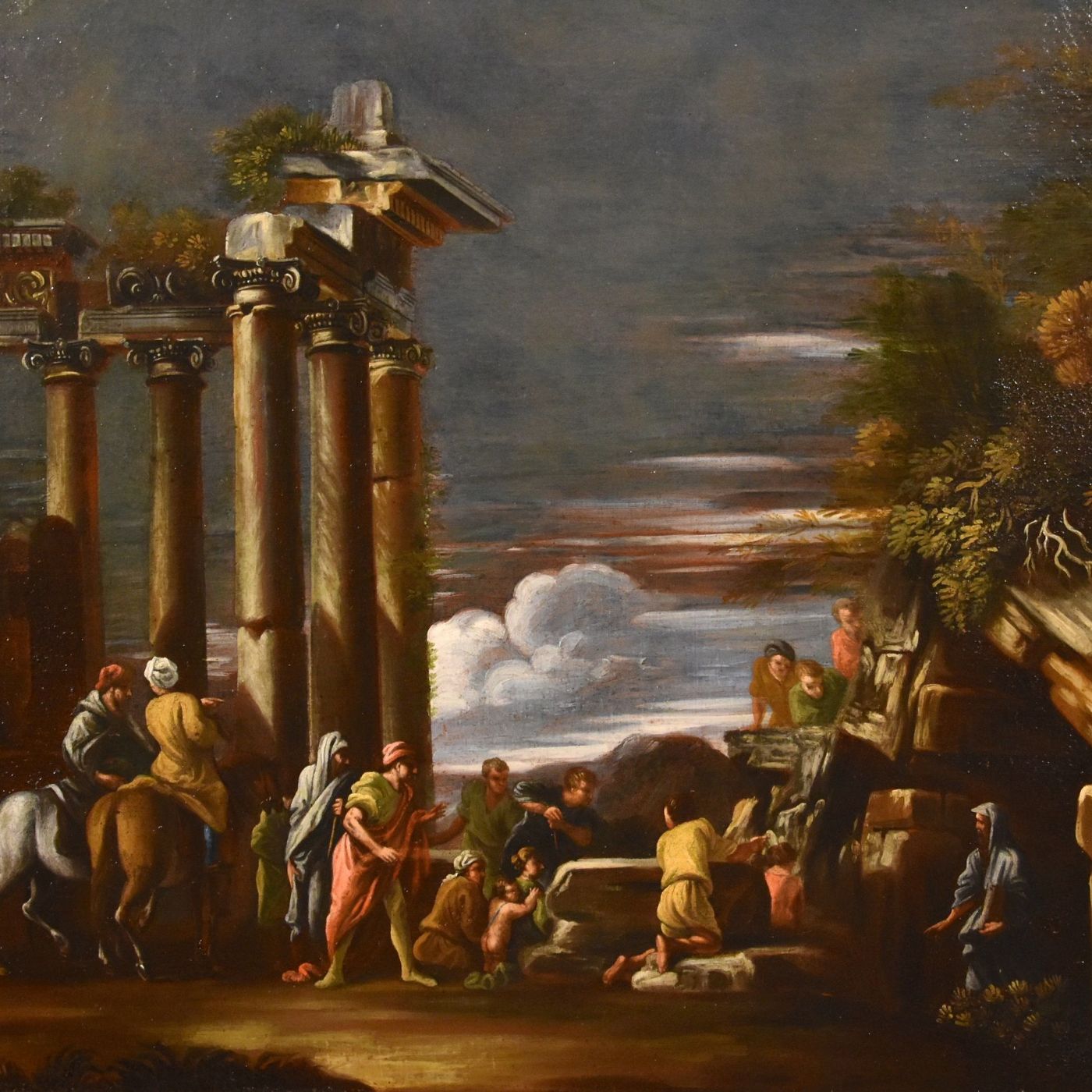
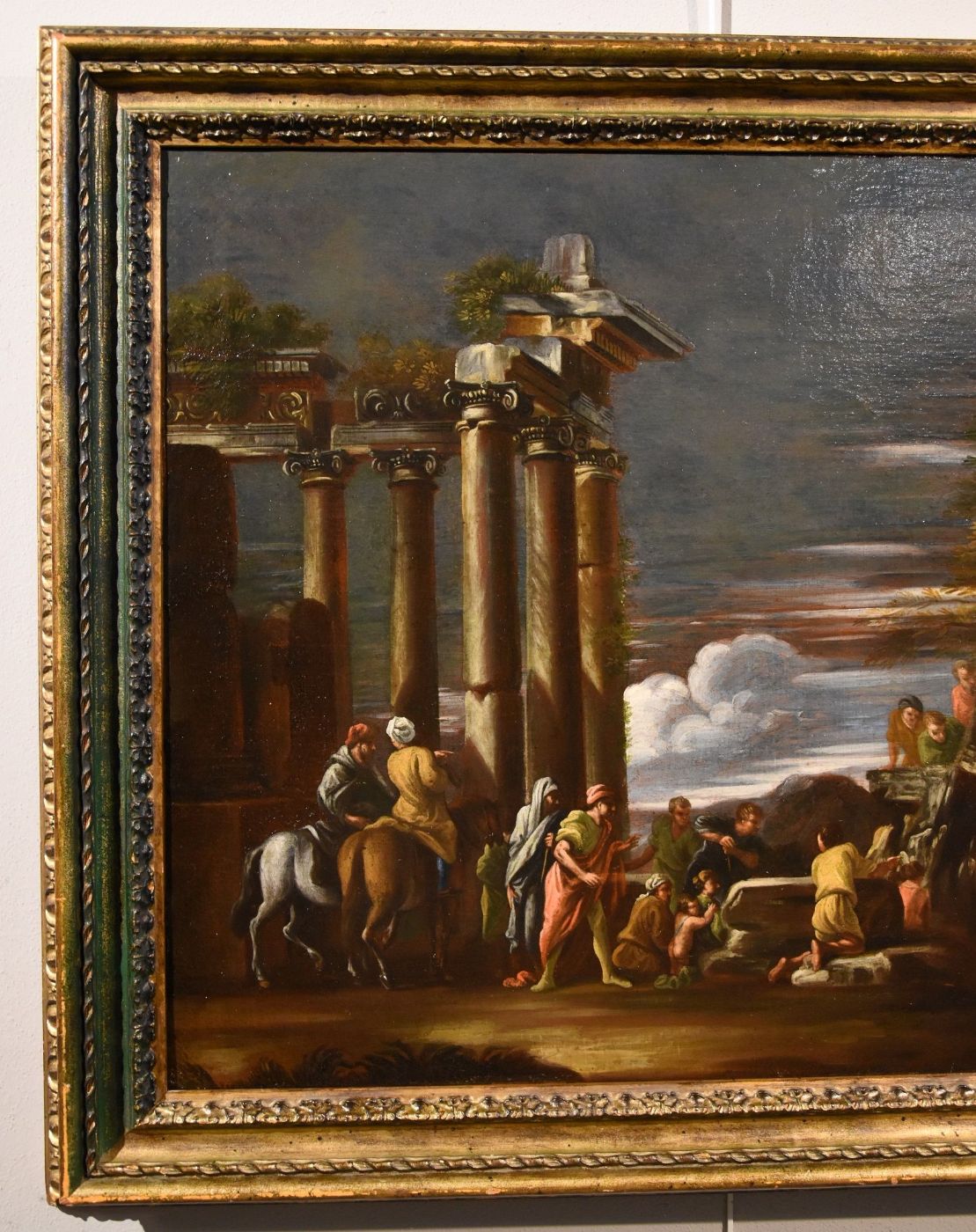
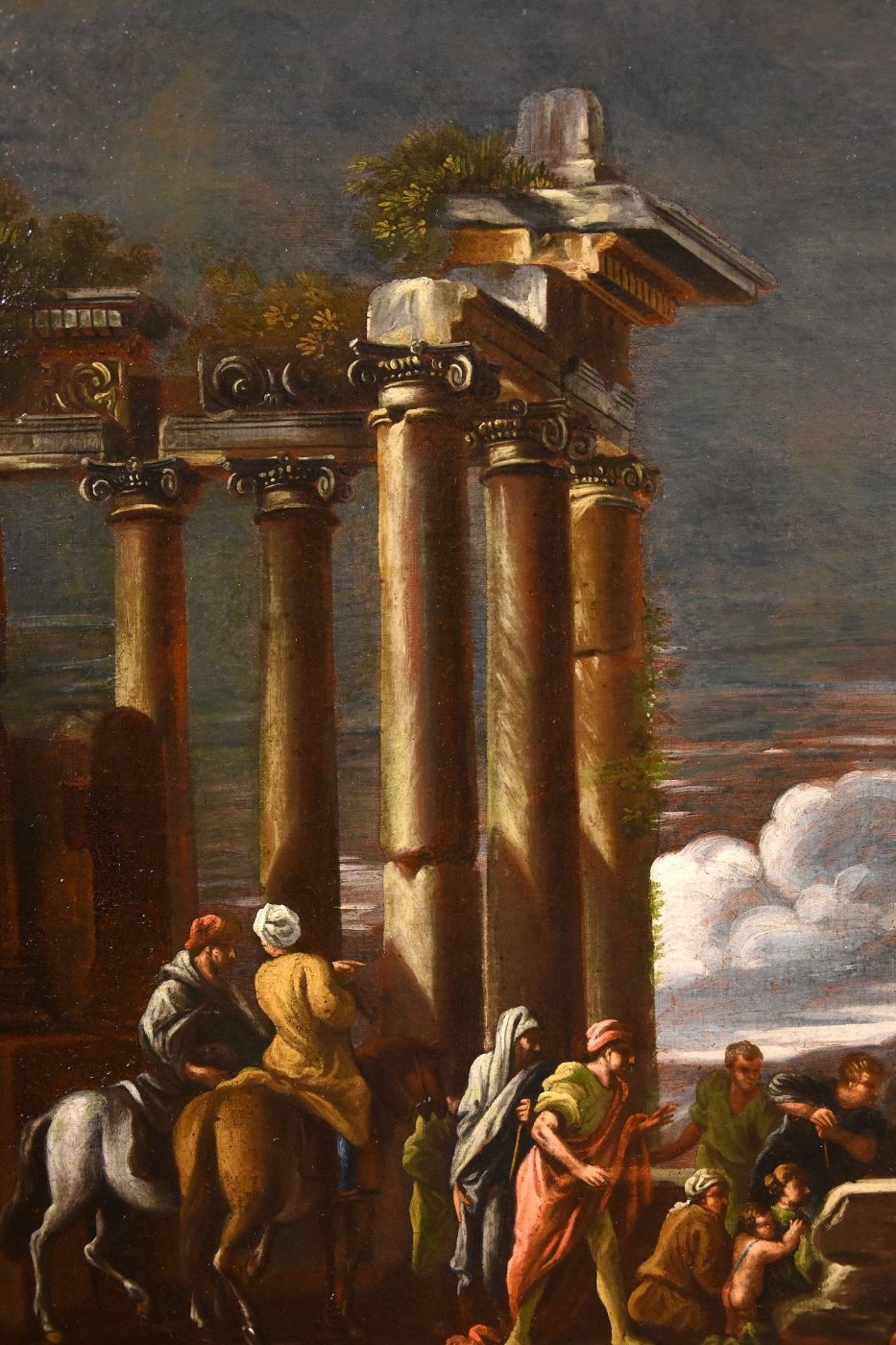
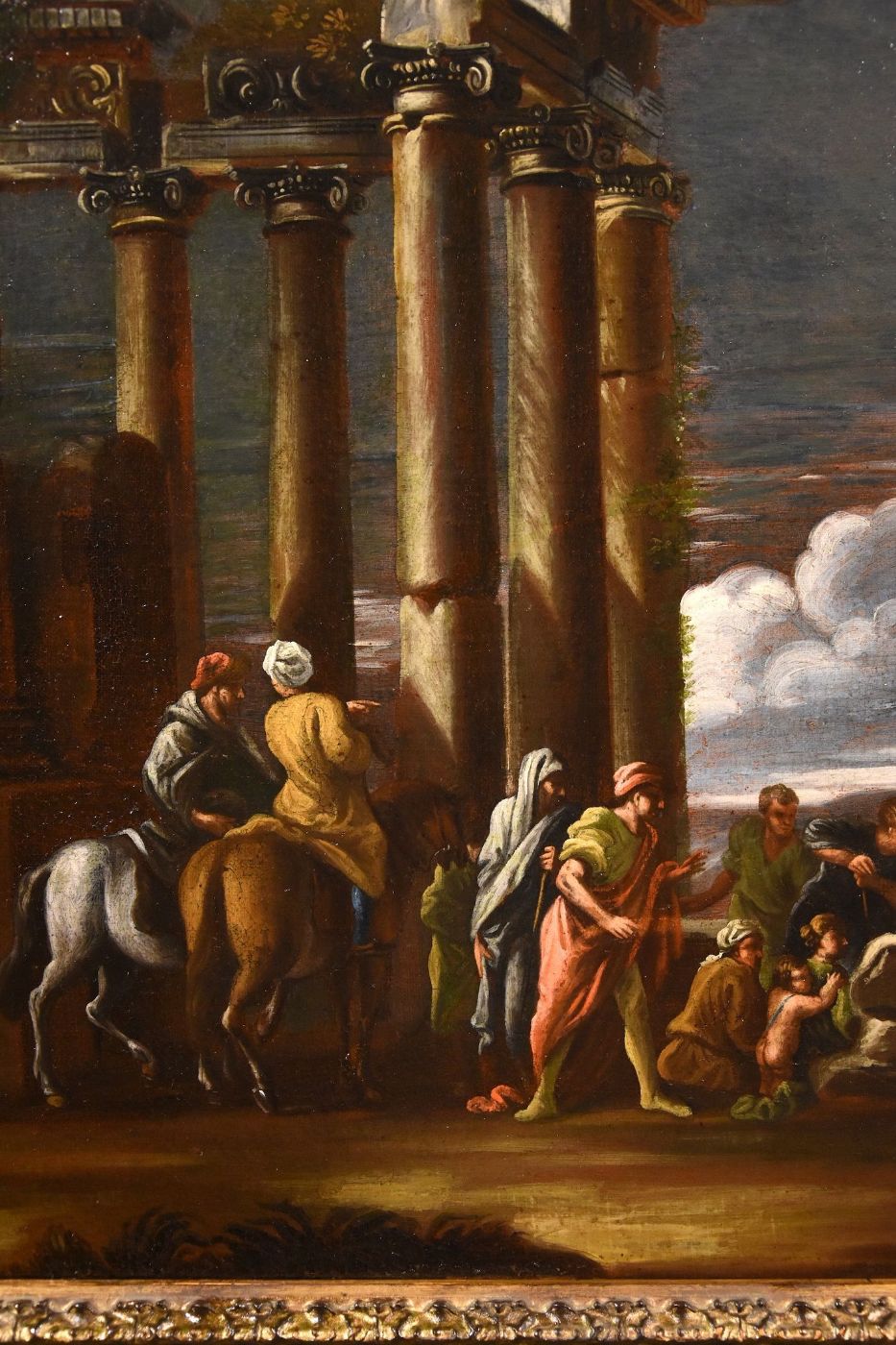
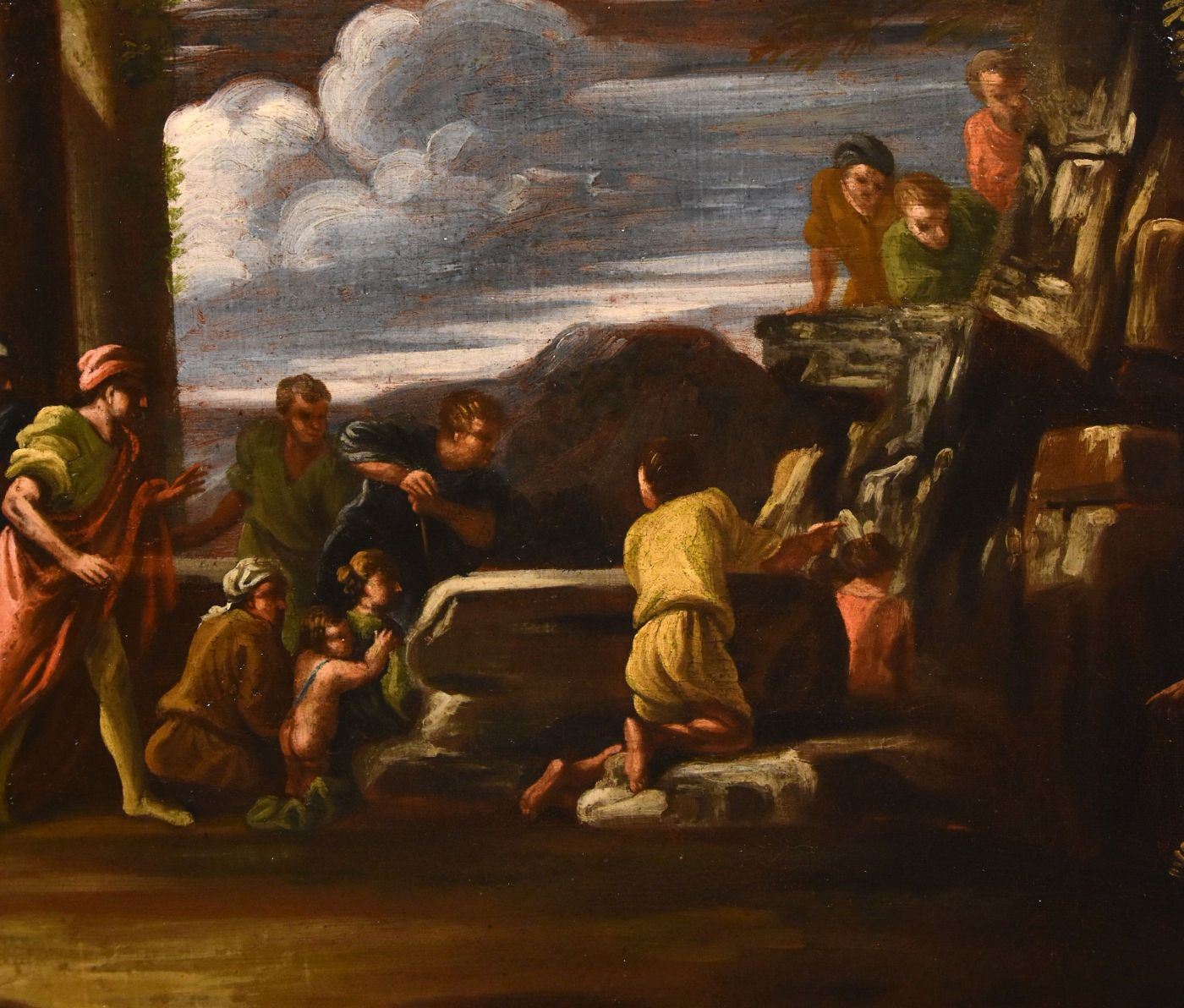
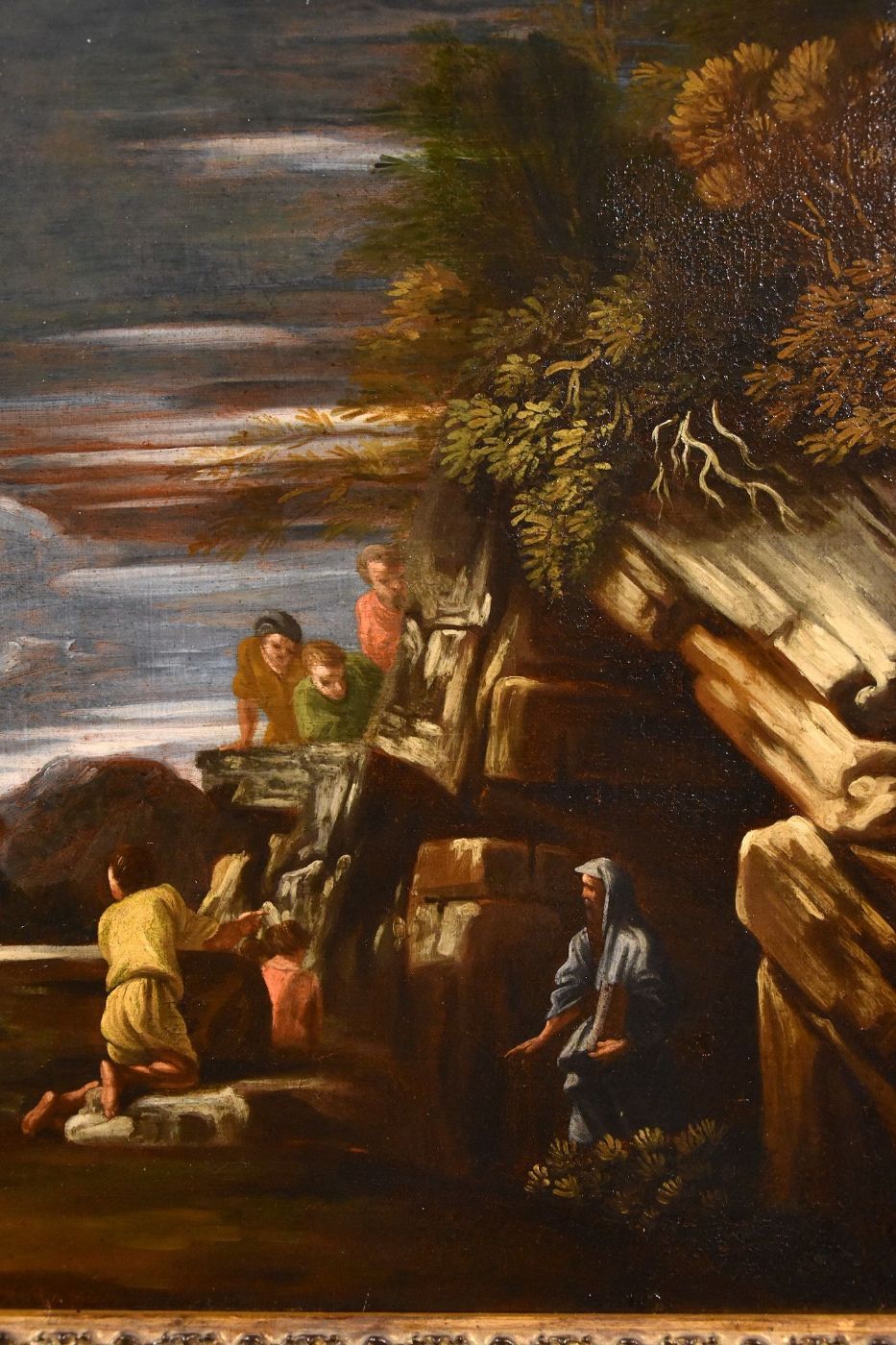
View of classical architectural ruins with the philosopher Pythagoras pretending to return from Hades
Oil on canvas (cm. 70 x 84 - framed cm. 86 x 100)
Full details of the work (link)
The painting in question, depicting an architectural view with classical ruins, can be traced back to the work of the Milanese painter Giovanni Ghisolfi and echoes the work that the painter created for the renowned collection of Cardinal Pietro Ottoboni, great-nephew of Pope Alexander VIII, which then passed to the Roman Almagià Collection (http://catalogo.fondazionezeri.unibo.it/scheda/opera/54064/Ghisolfi%20Giovanni%2C%20Pitagora%20rieme...).
G. Ghisolfi, Pythagoras emerges from Hades Almagià Collection, Rome (Lazio, Italy)
In the left area are the ruins of an ancient temple, which evoke that of Saturn in the Roman Forum, while the animated scene in the foreground is a fascinating representation of the Greek philosopher Pythagoras as he emerges from the cave he built himself, where he decided to retire to meditate and study philosophy, later telling his followers waiting for his return that he had reached Hades and had therefore been resurrected.
The scenery is flooded with a dark light to evoke the late evening, where the rays that stand out on the pillars and boulders have an evocative, metaphysical effect, and with the clouds on the horizon giving brighter colors.
The painting is a good testimony of Ghisolfi's classicist 'ruinism', and in particular of his mature phase, characterized by constructions orchestrated with measured and skillful balance. This is the softer and freer pictorial style of the painter of Lombard origins, which owes much to the influence of Salvator Rosa, with whom he was a close friend during his Roman stay in the 1650s.
Ghisolfi was a precursor to many artists of the following century who drew fruitful inspiration from this final phase of the master, Milanese by birth but Roman by adoption. It was in the papal city that he matured his training in these particular iconographies, focused on the ancient Roman vestiges, and thanks to which he became the most established specialist in this strand.
Examination with Wood's lamp reveals slight restoration work, but overall the state of conservation is excellent.
Painting complete with certificate of authenticity in accordance with the law.
For any information, please do not hesitate to contact us.
Giovani Ghisolfi (Milan 1623-1683), attributed to/workshop
View of classical architectural ruins with the philosopher Pythagoras pretending to return from Hades
Oil on canvas (cm. 70 x 84 - framed cm. 86 x 100)
Full details of the work (link)
The painting in question, depicting an architectural view with classical ruins, can be traced back to the work of the Milanese painter Giovanni Ghisolfi and echoes the work that the painter created for the renowned collection of Cardinal Pietro Ottoboni, great-nephew of Pope Alexander VIII, which then passed to the Roman Almagià Collection (http://catalogo.fondazionezeri.unibo.it/scheda/opera/54064/Ghisolfi%20Giovanni%2C%20Pitagora%20rieme...).
G. Ghisolfi, Pythagoras emerges from Hades Almagià Collection, Rome (Lazio, Italy)
In the left area are the ruins of an ancient temple, which evoke that of Saturn in the Roman Forum, while the animated scene in the foreground is a fascinating representation of the Greek philosopher Pythagoras as he emerges from the cave he built himself, where he decided to retire to meditate and study philosophy, later telling his followers waiting for his return that he had reached Hades and had therefore been resurrected.
The scenery is flooded with a dark light to evoke the late evening, where the rays that stand out on the pillars and boulders have an evocative, metaphysical effect, and with the clouds on the horizon giving brighter colors.
The painting is a good testimony of Ghisolfi's classicist 'ruinism', and in particular of his mature phase, characterized by constructions orchestrated with measured and skillful balance. This is the softer and freer pictorial style of the painter of Lombard origins, which owes much to the influence of Salvator Rosa, with whom he was a close friend during his Roman stay in the 1650s.
Ghisolfi was a precursor to many artists of the following century who drew fruitful inspiration from this final phase of the master, Milanese by birth but Roman by adoption. It was in the papal city that he matured his training in these particular iconographies, focused on the ancient Roman vestiges, and thanks to which he became the most established specialist in this strand.
Examination with Wood's lamp reveals slight restoration work, but overall the state of conservation is excellent.
Painting complete with certificate of authenticity in accordance with the law.
For any information, please do not hesitate to contact us.