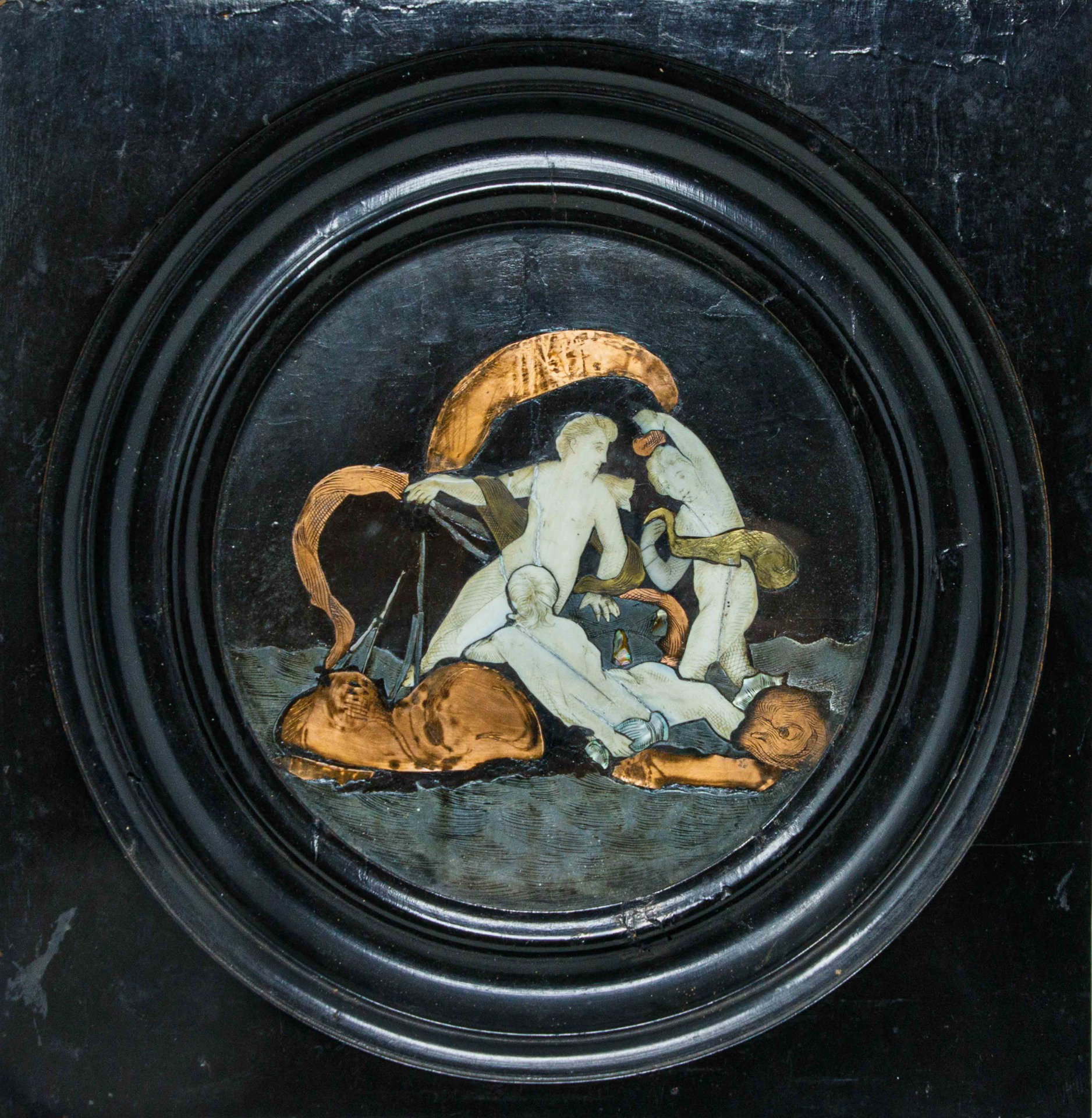
Late 18th century, Triumph of Galatea
Description:
Late 18th century
Triumph of Galatea
Inlay of ivory, mother-of-pearl, and metal leaf on slate, diam. 16 cm
With ebonized wood frame, 27 x 26.5 x 3 cm
Accompanied by CITES certificate
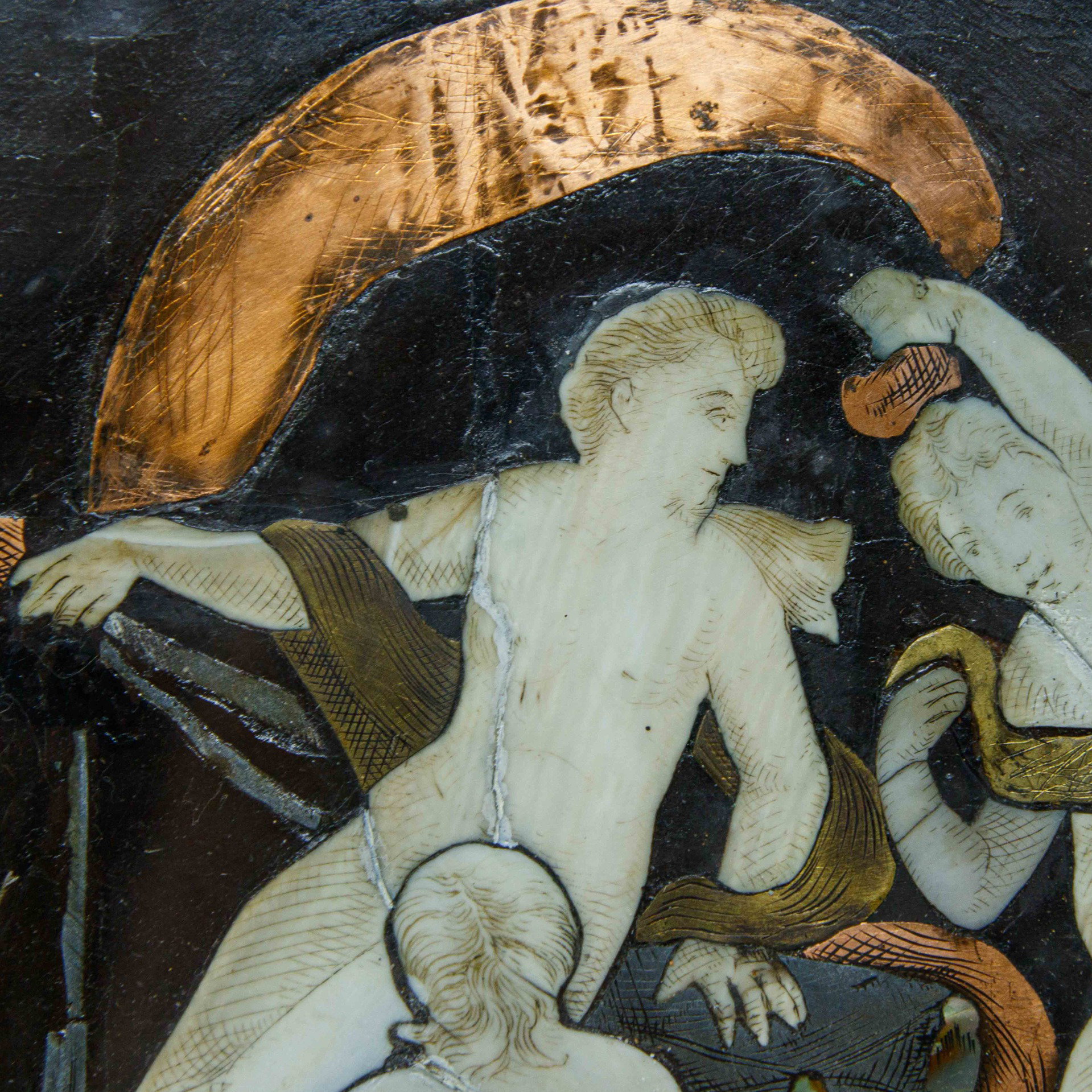
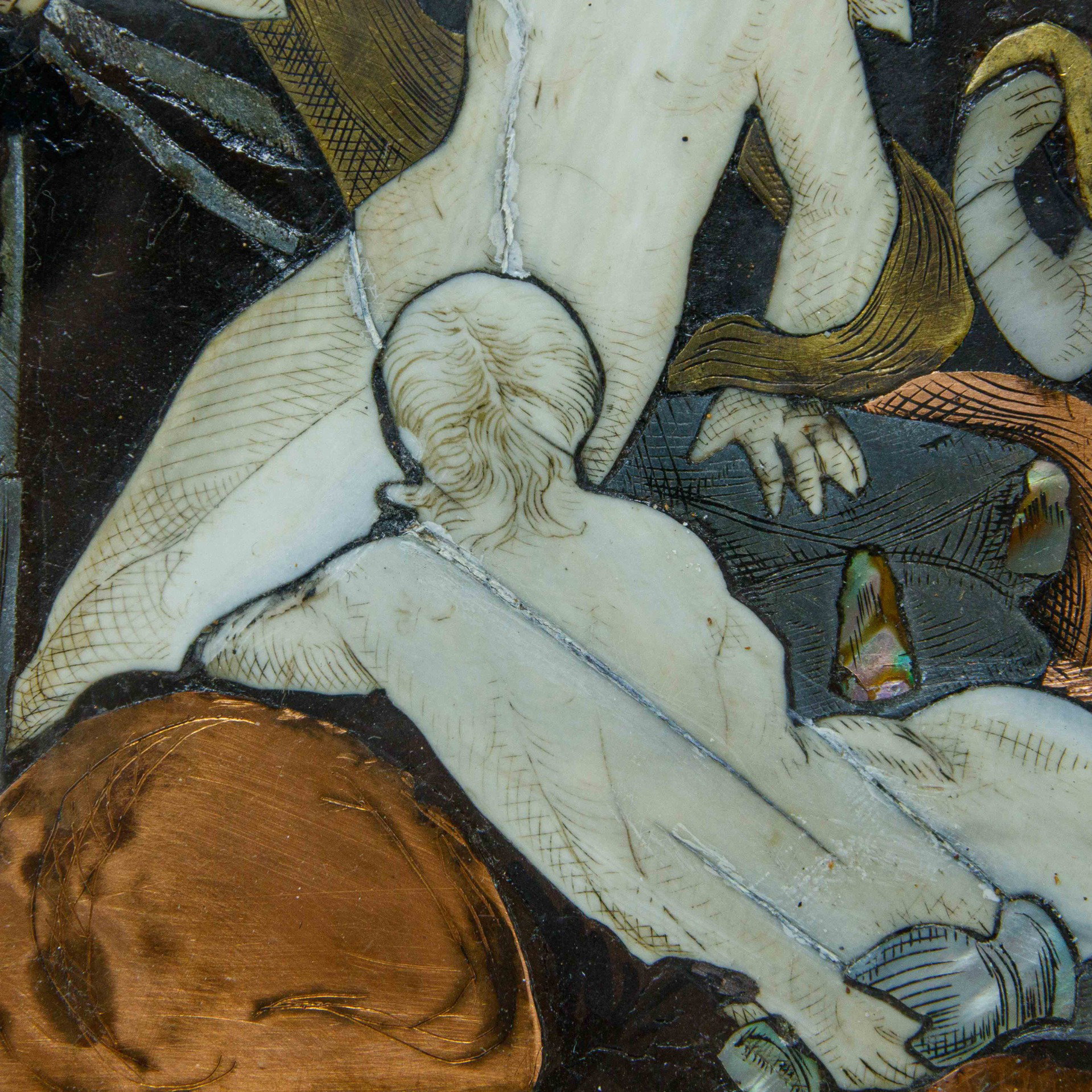
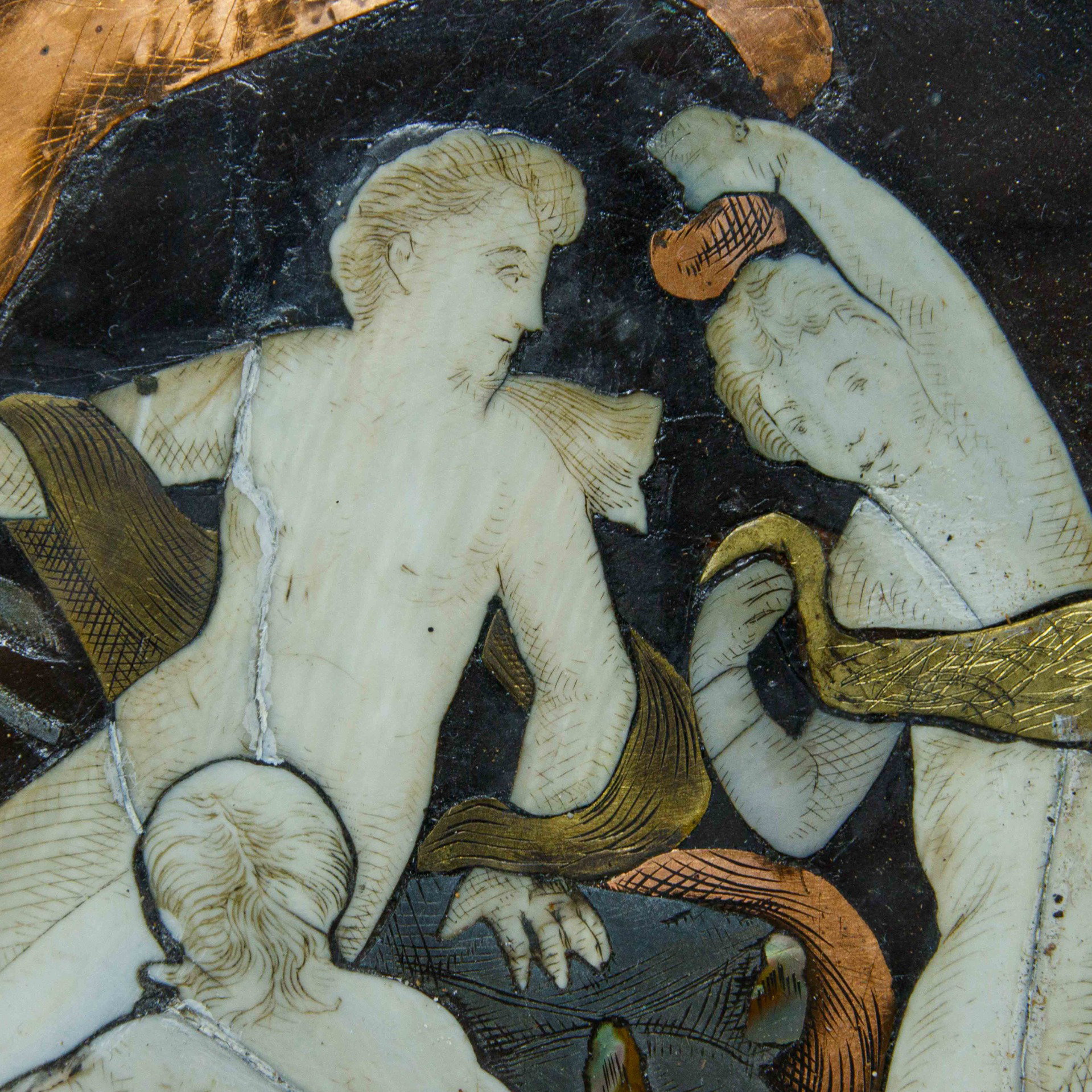
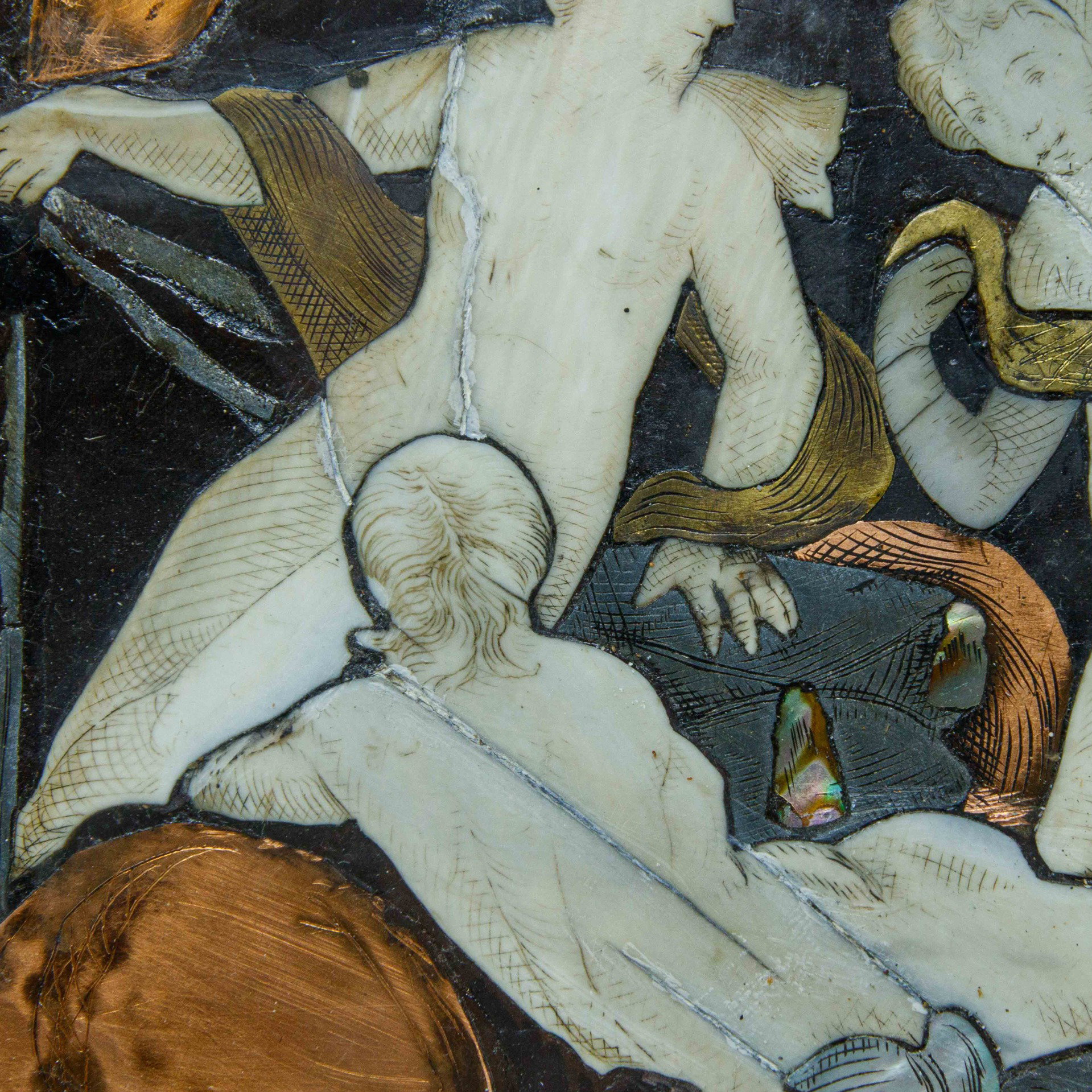
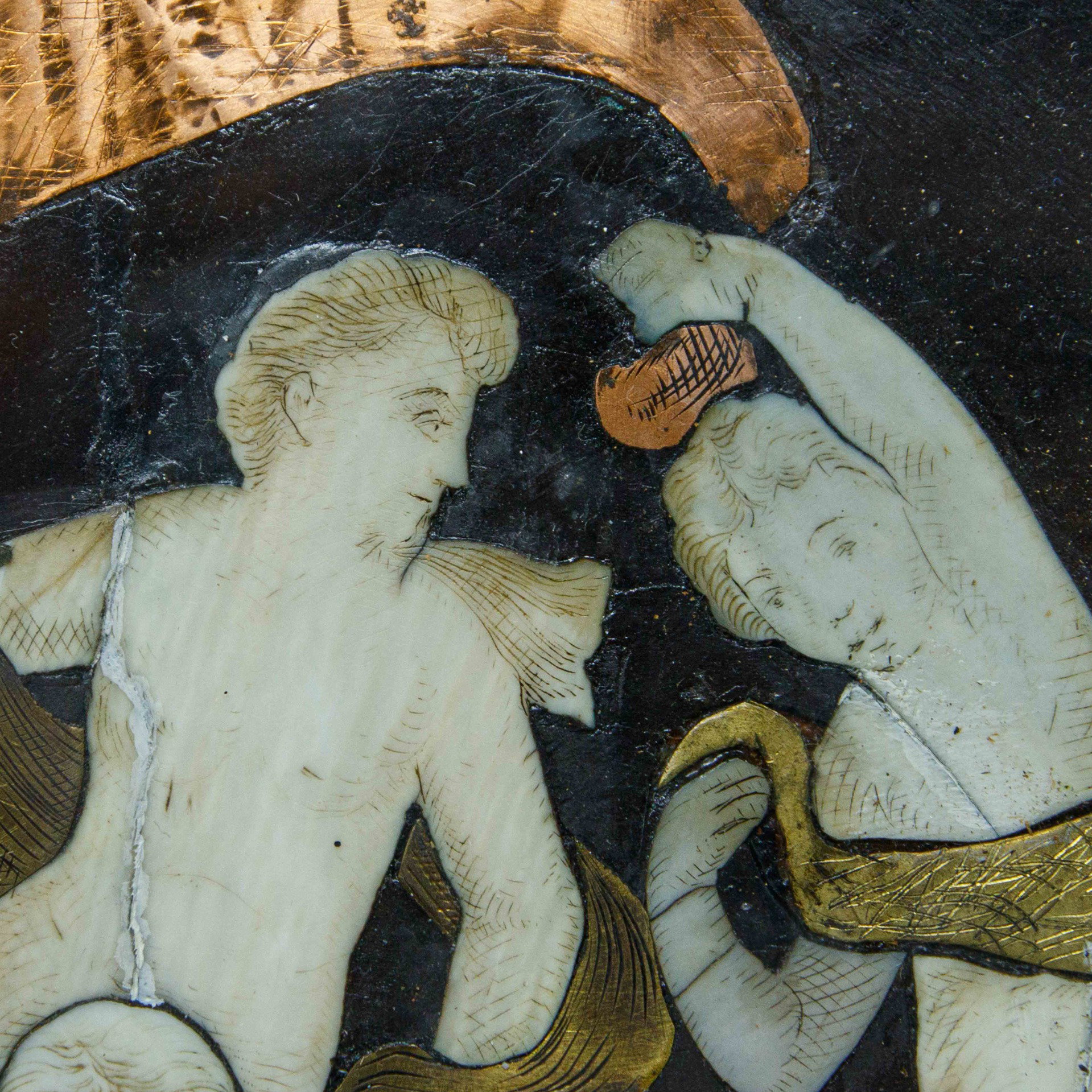
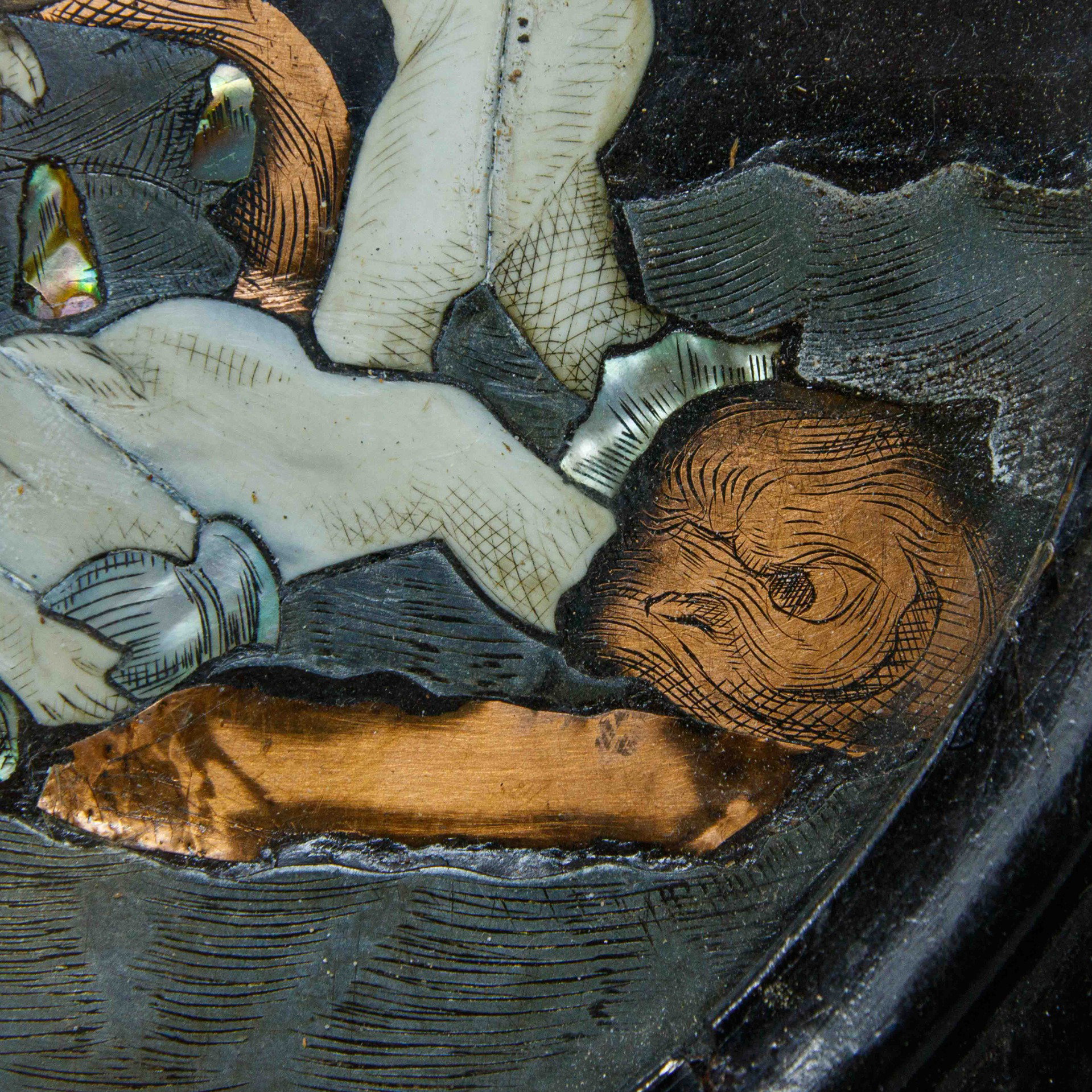
The artifact in question is a valuable example of applied and decorative art, dating from the late 18th to the early 19th century, a period characterized by the full influence of Neoclassicism. The work is configured as an inlay (or commesso), a technique that involved the precise juxtaposition and setting of heterogeneous materials on a solid base. The choice of support, a slab of deep black slate, is not accidental, but responds to the need to create a deep monochrome background. This base served as a repoussé, enhancing by contrast the luminosity and chromaticity of the inlaid materials, an effect reminiscent of pictorial chiaroscuro and imparting austere elegance to the work. The execution of the central roundel, enclosed by sober wooden ebonization, demonstrates remarkable mastery in the use of precious materials: the ivory, used for the plastic rendering of the mythological figures in this Triumph of Galatea, particularly for the semi-nude bodies, exploits its ivory tone and workability to suggest the softness of flesh tones and anatomical perfection, in line with Neoclassical aesthetic ideals; the mother-of-pearl, whose iridescent qualities, derived from shells, are strategically used to simulate effects of brilliance, probably for water, waves, or to lend luster to specific details; the metal leaf, here inserted with a pictorial function, adding luminous and precious details to drapery, jewelry, or finishes, contributing to the overall sense of luxury of the work.
The subject depicted is of classical mythological origin: the Triumph of Galatea. The composition, dense and dynamic within the circular format, captures the sea nymph Galatea in a moment of exaltation, likely accompanied by a Triton or her lover Acis. The figures, immersed in a marine environment suggested rather than described, are enveloped by a flowing red-orange drapery that introduces the sole dominant warm chromatic element and contributes to the sense of upward and triumphant movement of the scene. The iconography, rendered here in its simplicity, draws on the celebrated pictorial models of the great masters, such as Luca Giordano or Jacques Stella. Overall, the artifact constitutes an eloquent testimony to Italian craftsmanship, which skillfully adapted traditional techniques of hardstone inlay to high-quality decorative art production.
With Ars Antiqua, it is possible to pay for all amounts up to a maximum of €7,500 at ZERO INTEREST for a total of 15 INSTALLMENTS.
Example Total €4,500 = Monthly installment €300 for 15 months.
Example Total €3,600 = Monthly installment €720 for 5 months.
For amounts over €7,500 or for longer payment terms (over 15 installments), we can provide personalized payment options.
Contact us directly for the best quote.
LIVE TV
– SUNDAY 5:00 PM – 9:00 PM Digital terrestrial 126 - Sky 824
– Streaming on our website www.arsantiquasrl.com and on our social media Facebook and Youtube
All works offered by Ars Antiqua are sold with a certificate of authenticity according to the law and a detailed information sheet.
It is possible to view the works directly at the showroom gallery in Milan, via Pisacane 55 and 57.
We personally organize transport and delivery of works, both within Italy and abroad.