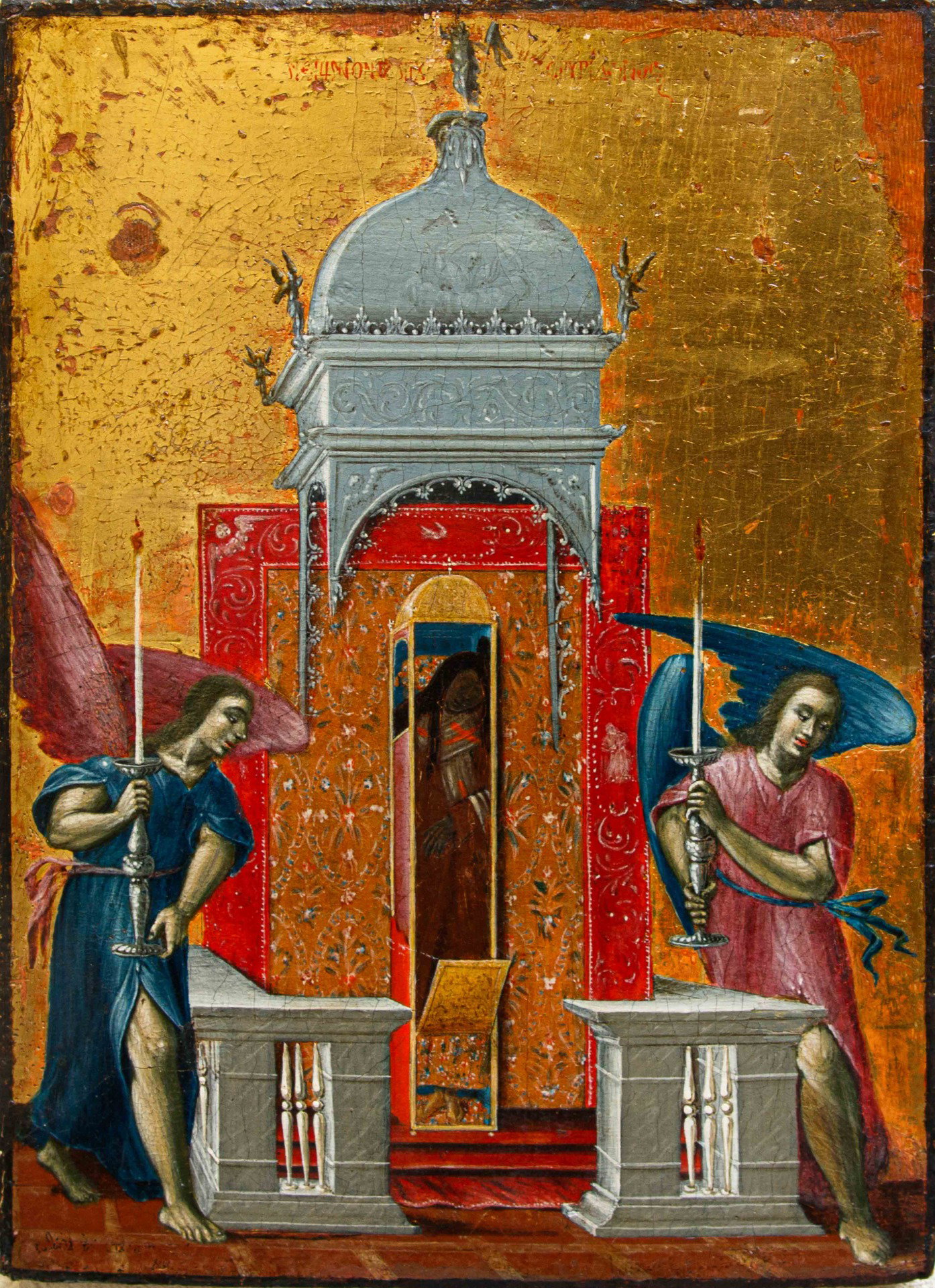
Early 18th century, Follower of Theodoros Poulakis, The relics of Saint Spyridon of Trimythous preserved in the temple of Kerkyra
Description:
Early 18th century, Follower of Theodoros Poulakis (Crete, 1622 – Corfu, 1692)
The relics of Saint Spyridon of Trimythous preserved in the temple of Kerkyra
Tempera on panel and gold leaf, 26.5 x 19 cm
Critical note by Dr. Stefania Verità
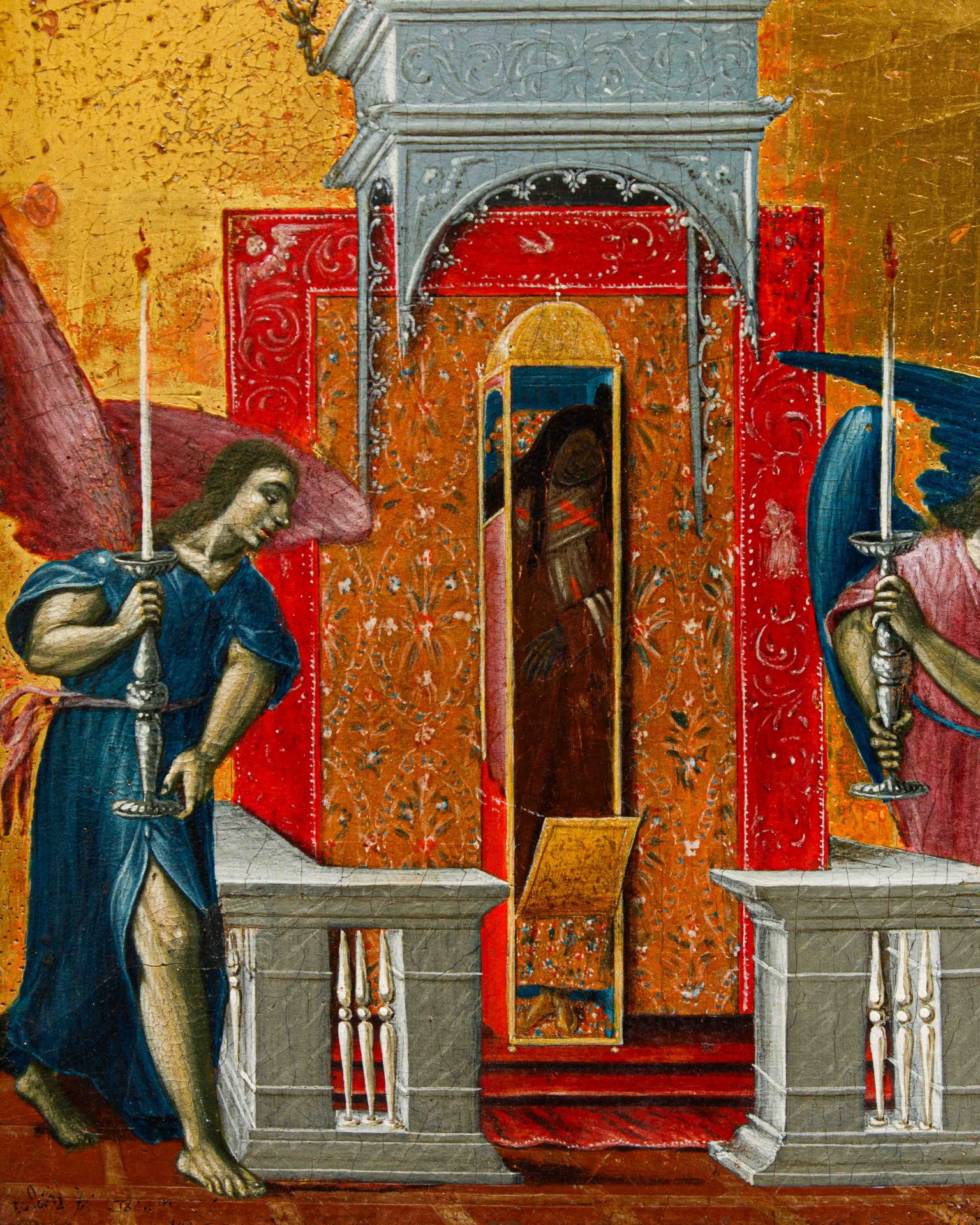
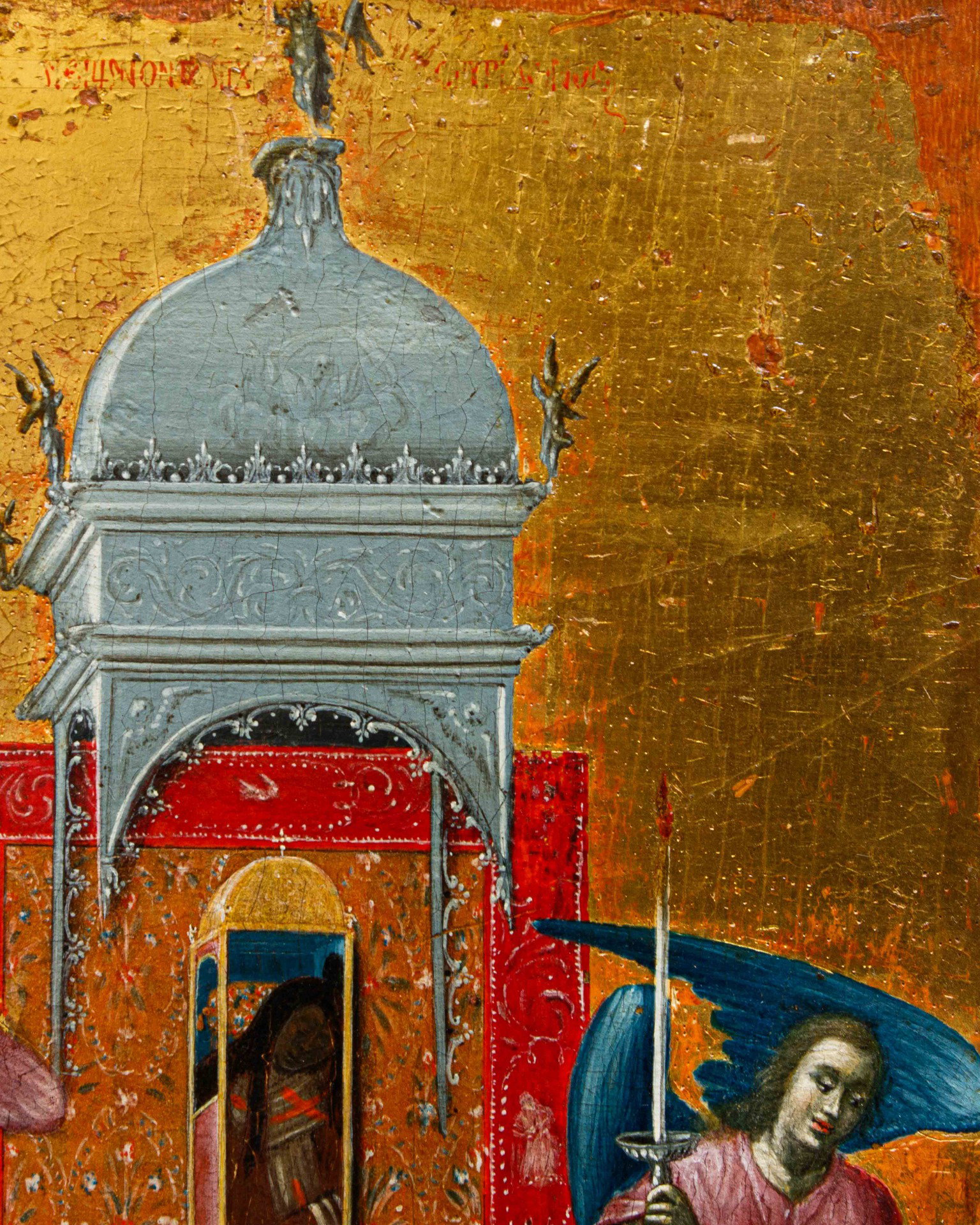
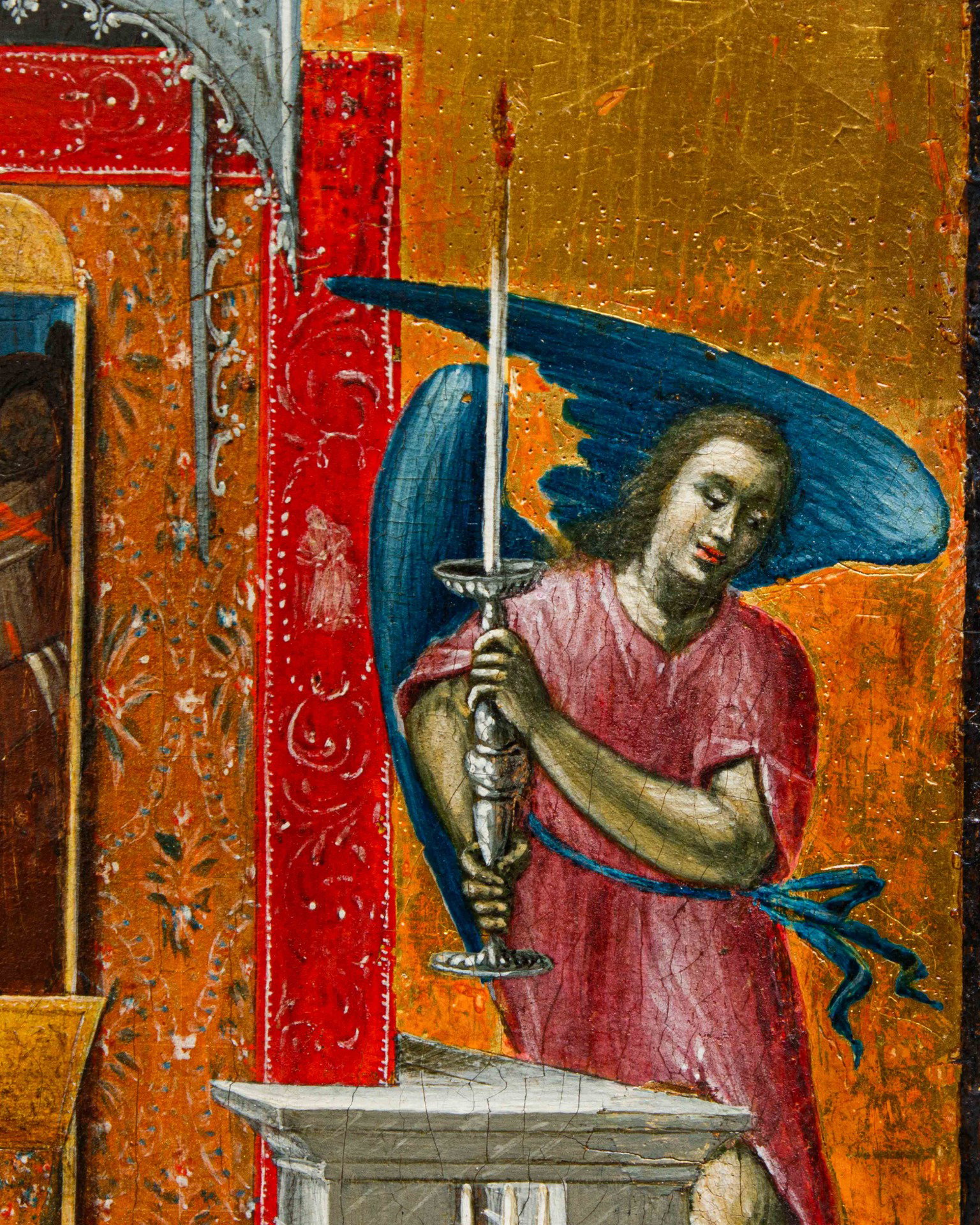
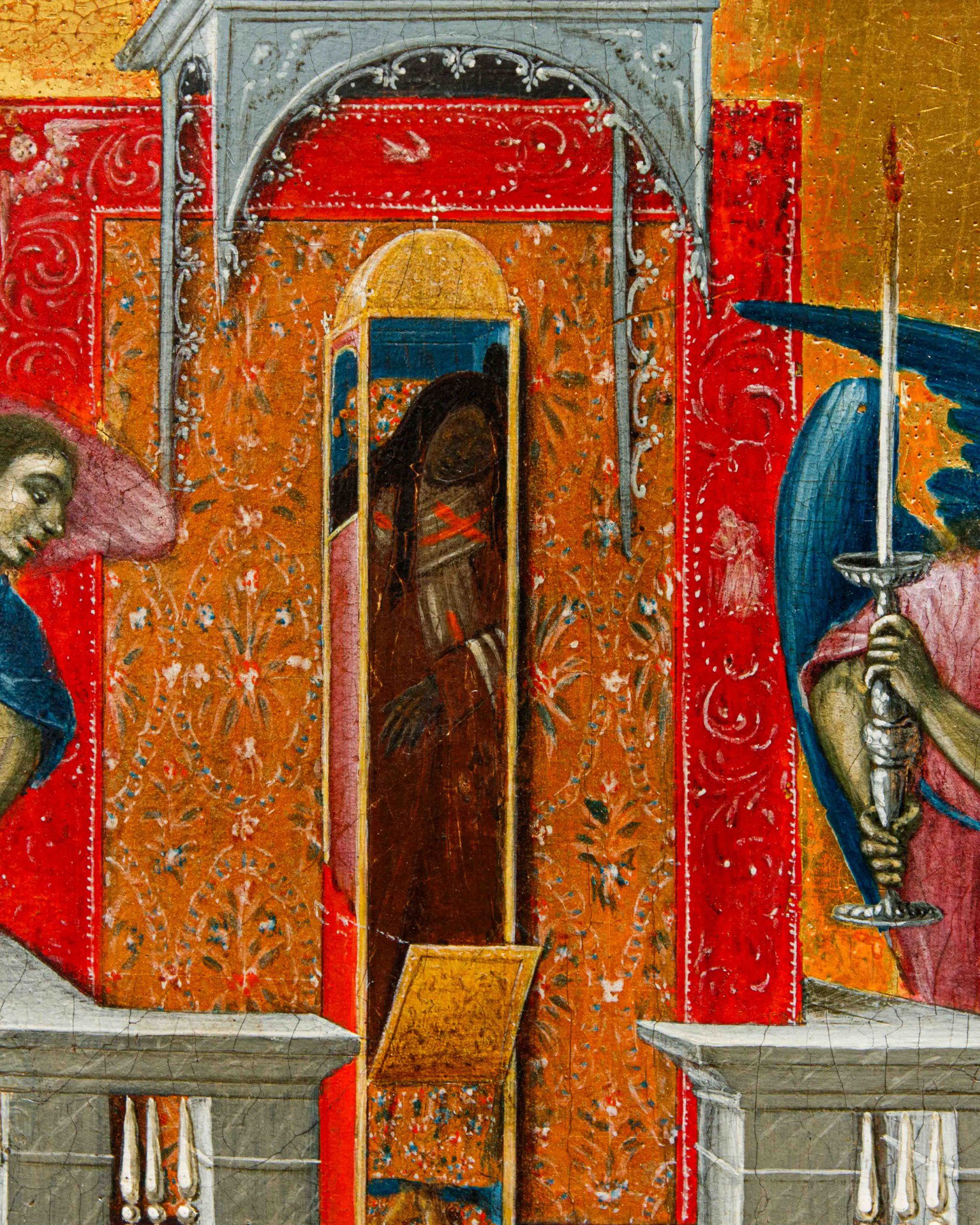
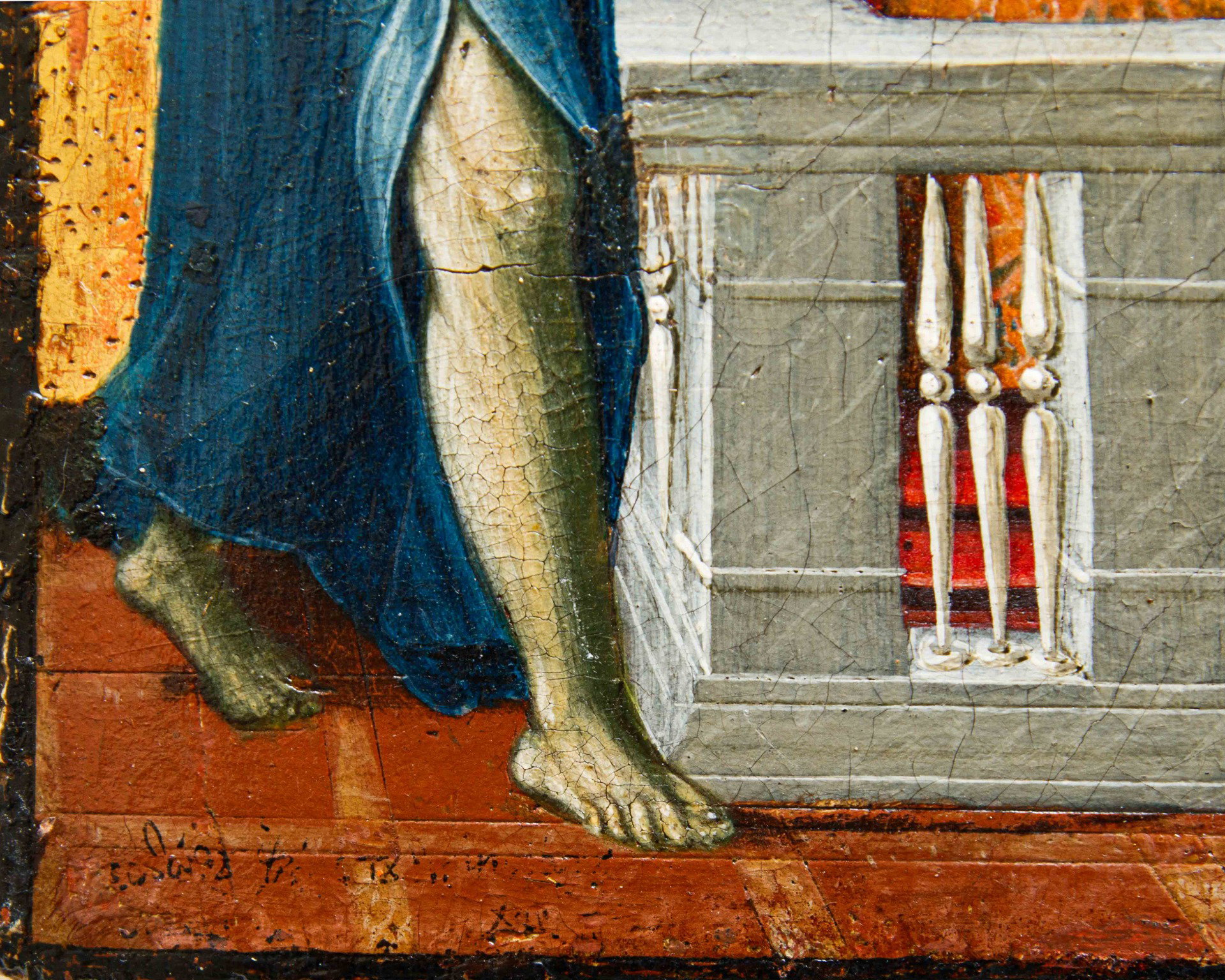
Saint Spyridon of Trimythous (c. 270 – December 12, 348) was bishop of Trimythous, now Tremetousia, on the island of Cyprus. Spyridon was born into a Christian family towards the end of the 3rd century in Assia, on the island of Cyprus. It is known that he spent his early years as a cattle herder but after the death of his wife, he dedicated his life to religion. He was appointed bishop of his hometown and during the persecution of Christians under Emperor Maximian, he was arrested and exiled. According to tradition, Spyridon participated in the First Council of Nicaea in 325, supporting the doctrine of the essential equality of Jesus with God the Father, but his presence is not documented. He died on December 12, 348, and was buried in the temple of the Holy Apostles in Trimythous. His biography has been passed down by the hagiographer Symeon Metaphrastes and the church historians Sozomen, Tyrannius Rufinus, and Socrates Scholasticus. After the conquest of Cyprus by the Ottoman Empire, his tomb was opened, and the relics taken to Constantinople. Sources claim that his body was incorrupt and smelled of basil, and this was considered proof of his sanctity. After the fall of Constantinople in 1453, the priest Georgios Kalochairetis transported the relics to Corfu, which at that time belonged to the Republic of Venice, in 1456 and they were kept by the monk's family and, later, by the Bulgari family until the construction of a dedicated church in 1589. The relic of the Saint's right hand was donated to Pope Clement VIII in 1592 and is kept in Rome in the Church of Santa Maria in Vallicella. In this 18th-century icon, two angels are presented in the act of protecting and guarding the relics of the saint at the temple of Kerkyra, on the Island of Cyprus, where the venerated relics were kept before the construction of the place of worship dedicated to the saint in the second half of the sixteenth century.
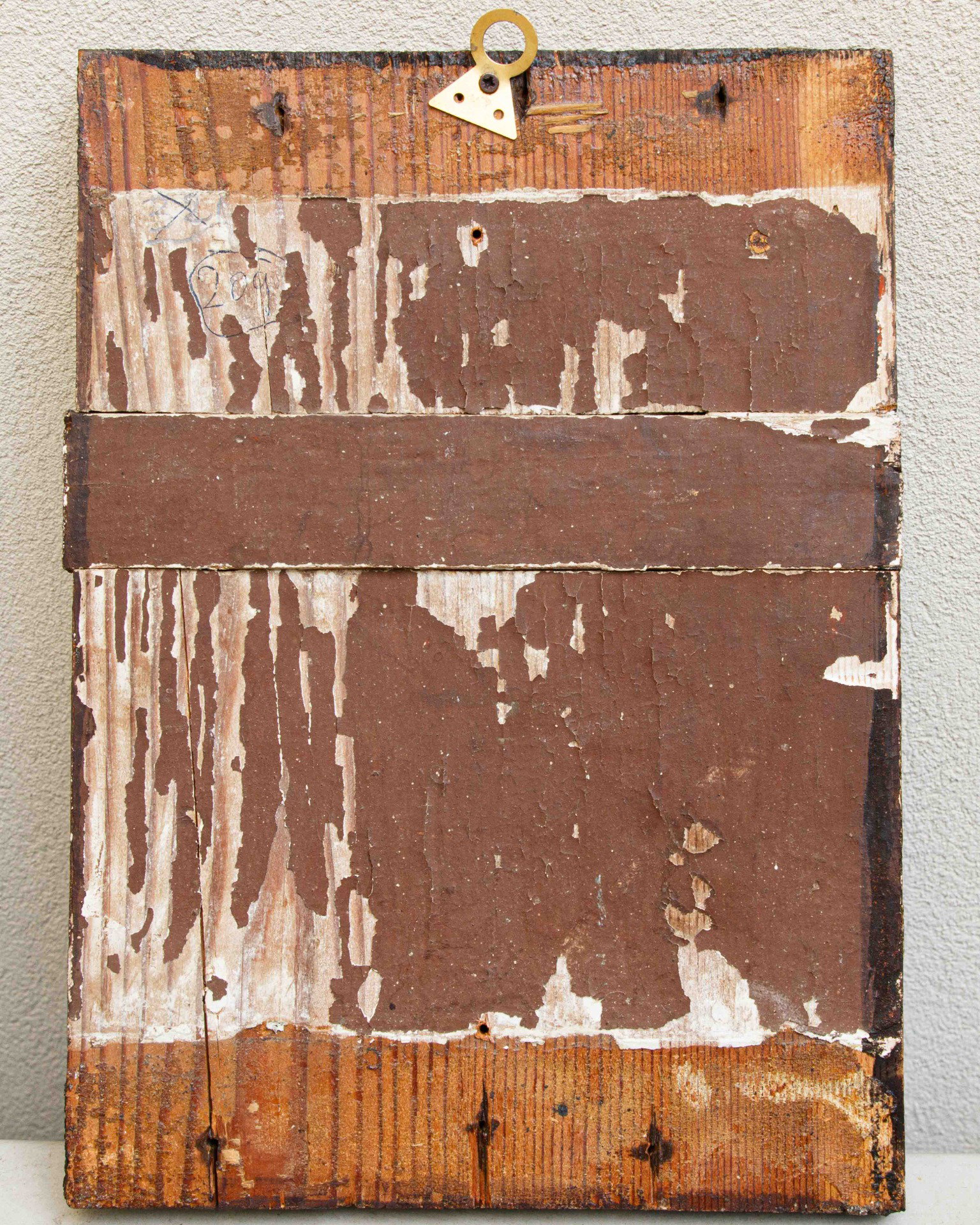
The peculiarity of the icons is evident already from the preparation of the support on which it is painted. The wooden board itself is a symbol of the cross, while the canvas is a symbol of the mandylion, that is, the veil of Veronica, or the Shroud; the plaster that is spread on the canvas, the levkas, is a symbol of the stone. The icons were painted on wooden boards, generally of lime, larch, or fir. On the inside of the board, a hollow was generally made, called the "chest" or "ark", in order to leave a raised frame on the edges. The icon is not a personal interpretation but a rite with precise canons to be respected; unlike paintings, of which the name of the author is often known, the icon must remain anonymous. Theology considered the icons to be works of God himself, made through the hands of the iconographer. The work can be attributed to a follower of the Greek Theodoros Poulakis (Crete, 1622 – Corfu, 1692), a leading exponent of the last period of the Cretan School and then founder of the School of the Ionian Islands. After his initial training in Candia, he moved to Venice around 1644, where he remained for about thirteen years. Here he came into contact with contemporary European painting, particularly Flemish and Venetian painting, the influence of which is manifested in his icons with an evident Baroque character. Subsequently, he settled in Corfu where he lived for much of his life, also traveling to Cephalonia. His works, more than 130 of which have come down to us, represent a bridge between the tradition of the Cretan School and the new Western trends.
With Ars Antiqua it is possible to defer all amounts up to a maximum of €7,500 at ZERO INTEREST, for a total of 15 INSTALLMENTS.
Ex. Tot. €4,500 = Monthly installment €300 for 15 months.
Ex. Tot. €3,600 = Monthly installment €720 for 5 months.
For amounts exceeding €7,500 or for a greater extension of time (over 15 installments), we can provide a personalized payment.
Contact us directly for the best quote.
LIVE TV
– SUNDAY 17.00 – 21.00 Dig.terr. 126 - Sky 824
– Streaming on our website www.arsantiquasrl.com and on our social media Facebook and Youtube
All works proposed by Ars Antiqua are sold with a certificate of authenticity in accordance with the law and an accurate in-depth sheet.
You can see the works directly at the showroom gallery in Milan, in via Pisacane 55 and 57.
We personally organize transport and deliveries of the works, both for Italy and abroad.