Dimensions: Width: 125; Depth: 60; Height: 89.4 [cm]
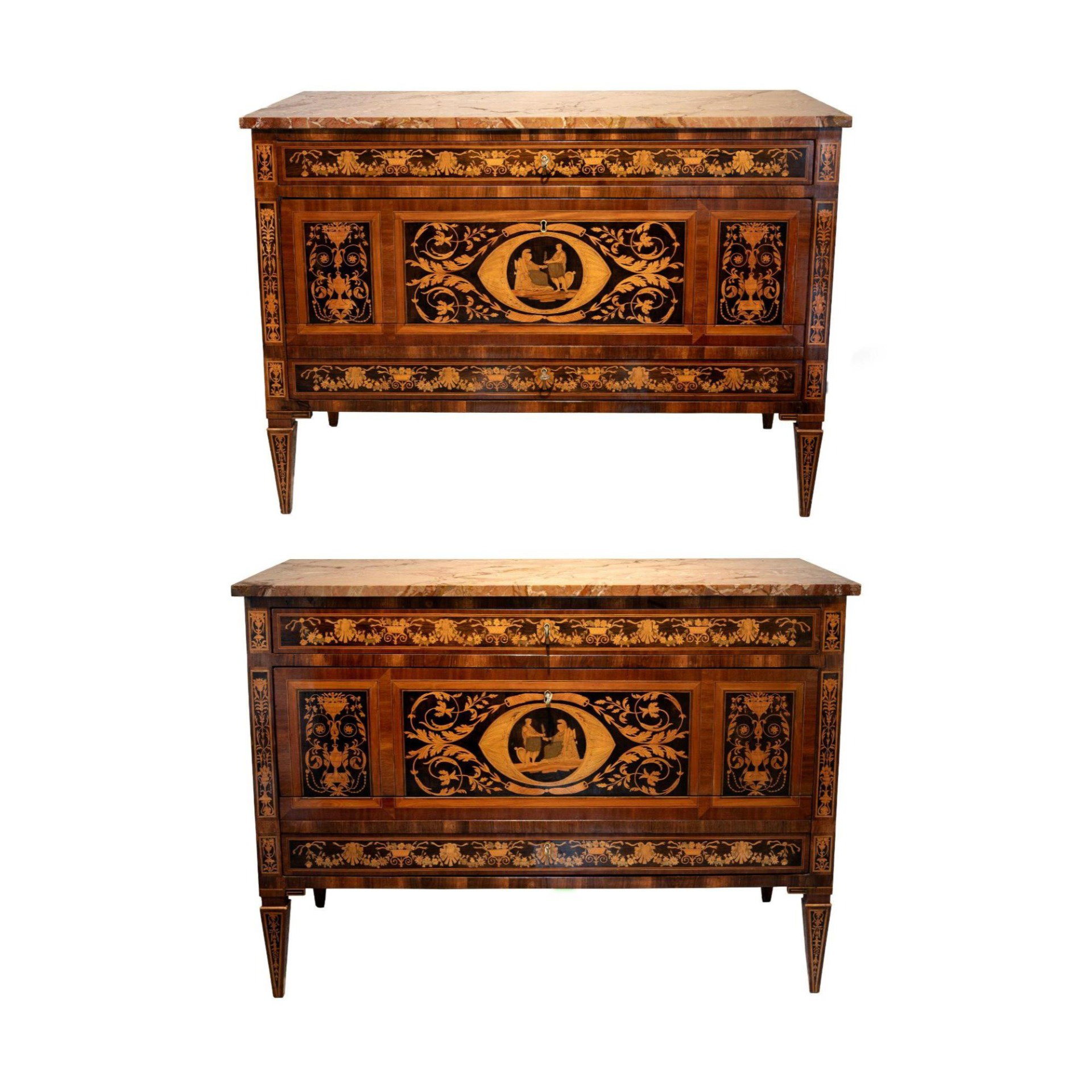
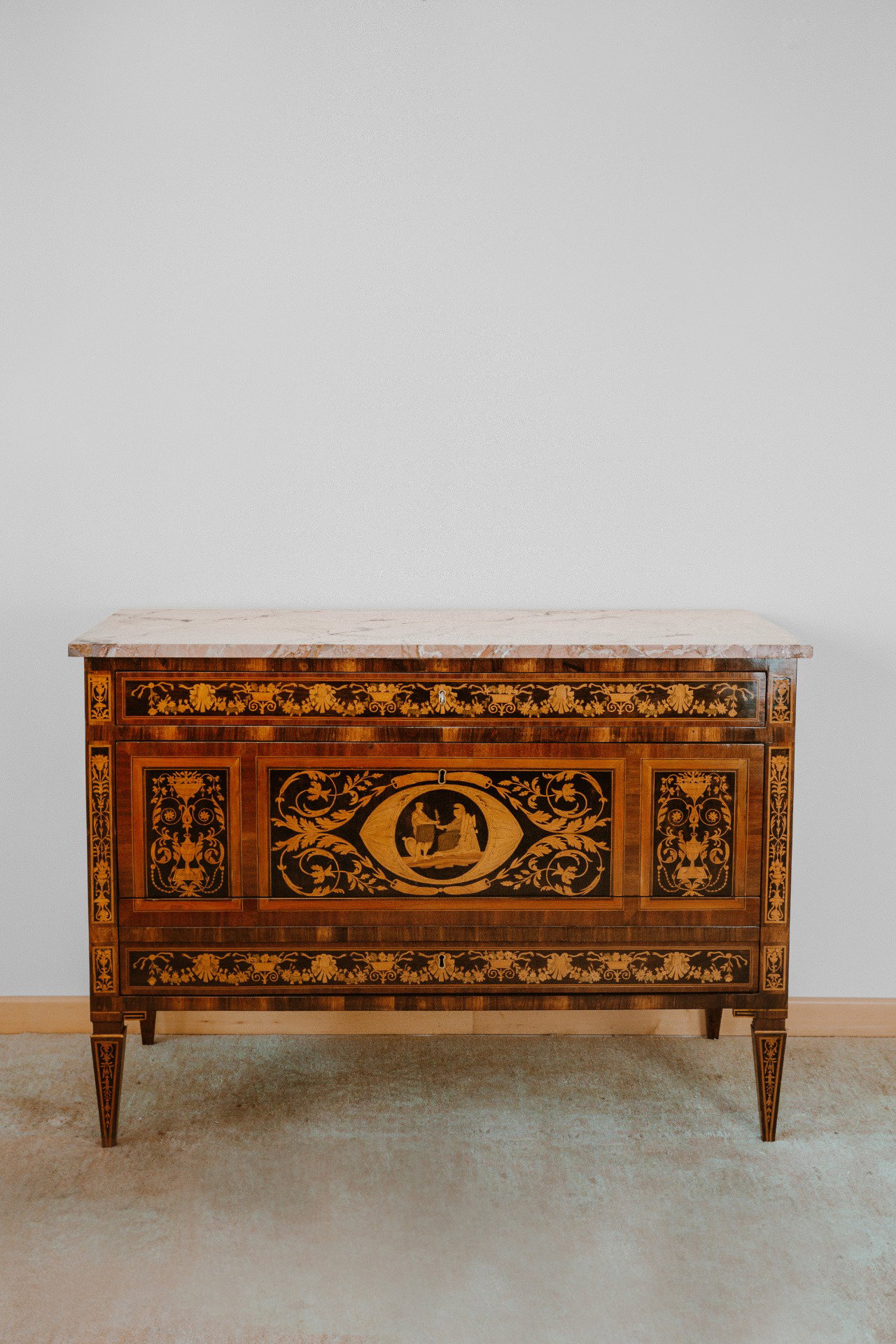
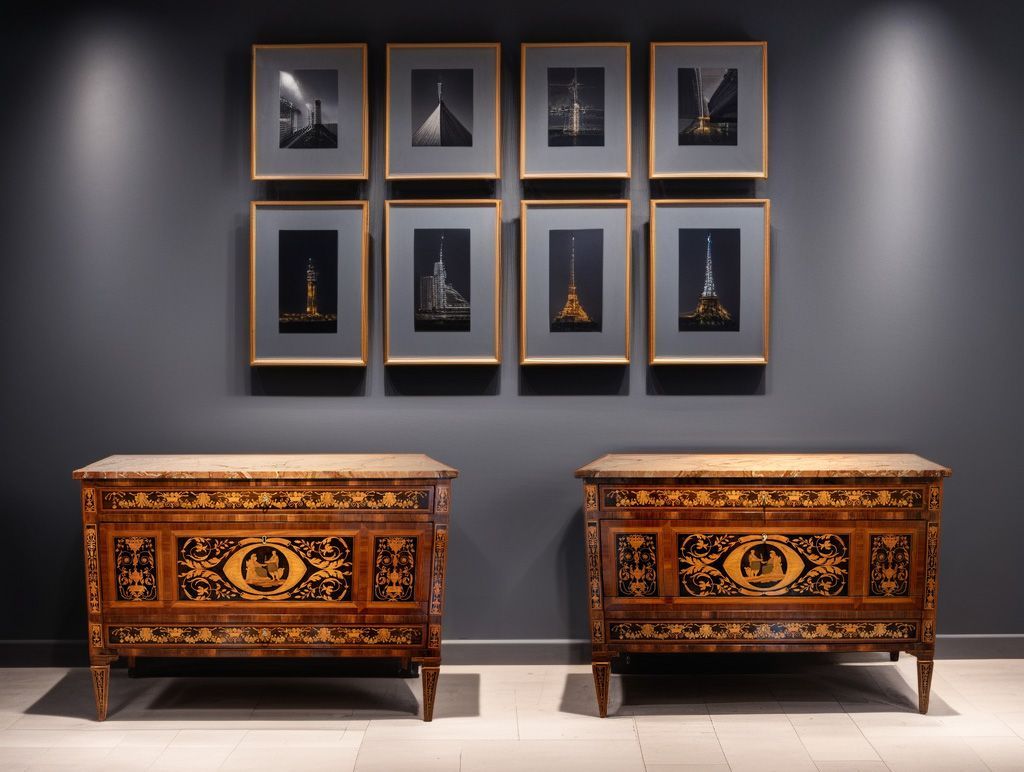
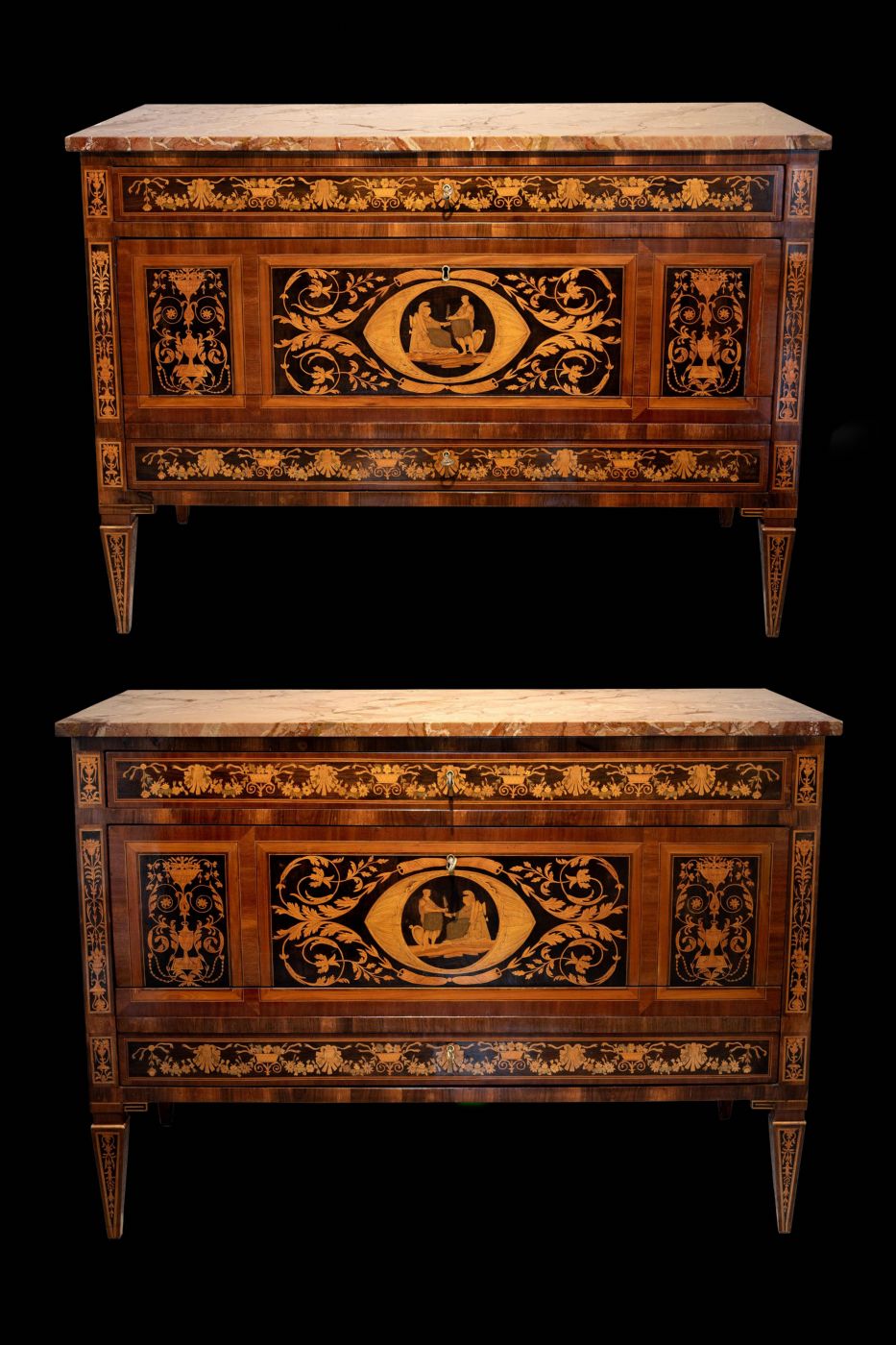
Exceptional pair of Louis XVI commodes in wood, richly inlaid on the front, sides, and 4 truncated pyramid legs. Pink marble top.
Original from the second half of the 18th century.
Exhibited at the Triennale Museum of Milan on the occasion of the exhibition "Il Salone, la Città".
Origin
Lombardy
Style
Louis XVI
Era
1780
Richness of inlay
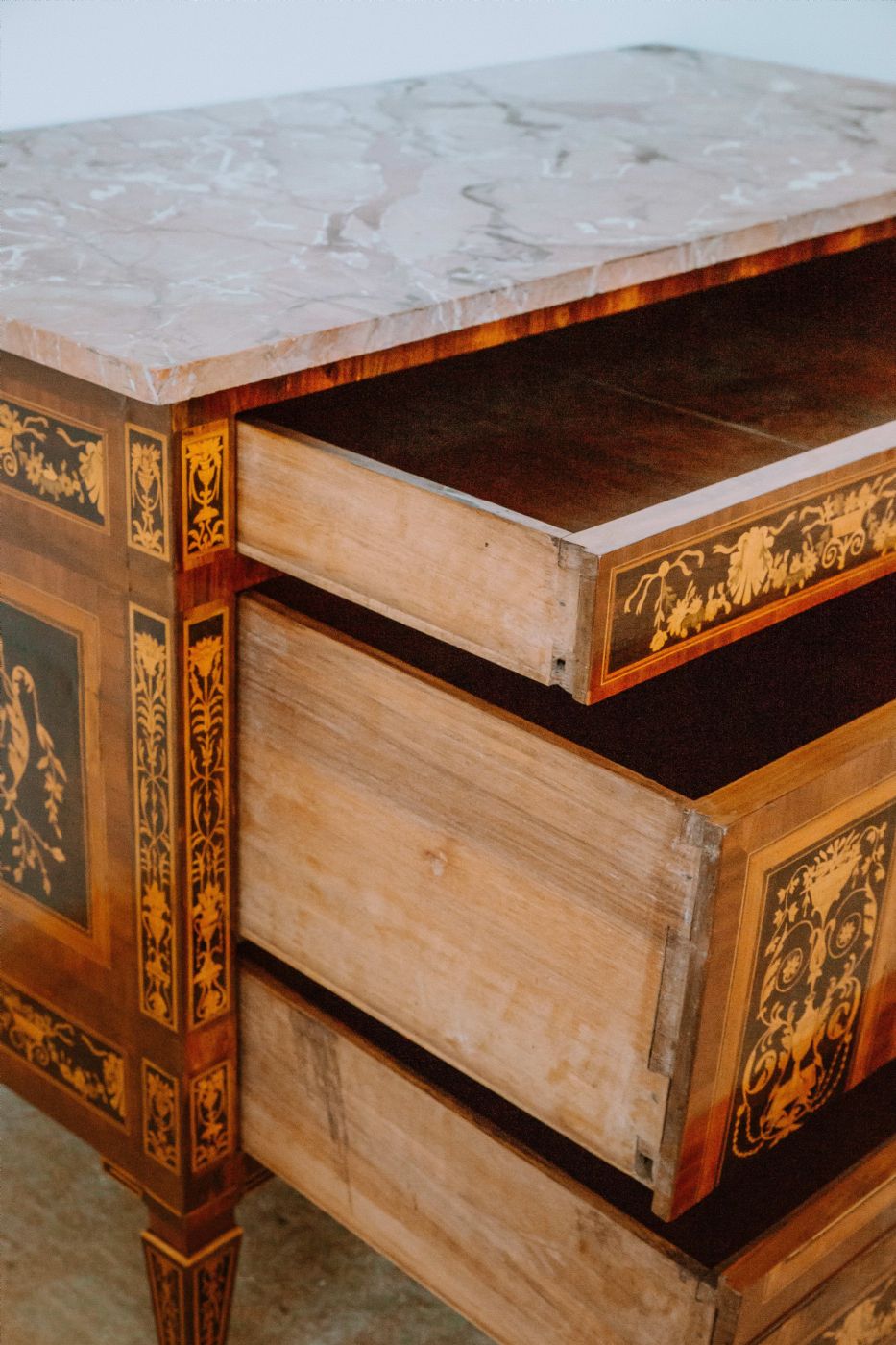
Regarding the inlays, we find on both the front and the sides, maple work on an ebony-dyed rosewood background. On the front, elegant neoclassical figures enclosed within ovals, and then floral racemes; the latter are also found on the sides and at the sides of the front panel. Each of these motifs is bordered by alternating rectangles of various woods:
maple, cherry, and then rosewood fillets. Walnut wood veneered drawer dividing band.
Refinement
Both feature a slim top drawer inlaid with a motif of garlands and flowers. The presence, on the front, of two slimmer drawers (one at the top and one at the bottom) and a single drawer in the center between the two, makes the piece of furniture, as a whole, much more elegant than those commodes that have three drawers of identical dimensions on the front.
Truncated pyramid legs
A complete lower cornice inlaid with burl walnut wood precedes four truncated pyramid supports inlaid on all 4 sides, which match the band with a reduction in section. Regarding the woods, we also find the use of various precious essences here: maple on an ebony-dyed rosewood background, maple fillets, and then walnut. At the top, contrasting maple edging.
The Neoclassical Furniture of the Eighteenth Century
The last quarter of the eighteenth century coincides with the affirmation of the neoclassical taste, in opposition to the previous Rococo or Barocchetto style, particularly widespread and appreciated in Lombardy. An echo of this transition is visible in the early works of Maggiolini, namely bombé commodes with high carved legs and Chinoiserie decorations.
Soon, however, the typology of Maggiolini's furniture became precise: sober and elegant furnishings, a form dominated by rigid geometries, with side bands and upper and lower chains that define the facades; the surfaces are large and smooth, with vegetal friezes or geometric ornaments enclosing medallions in the center of the tops, containing refined classical allegories or mythological figures. The leg is tapered and truncated pyramid-shaped.
Triennale di Milano
This pair of commodes was exhibited at the Triennale Museum of Milan on the occasion of the exhibition "Il Salone / la Città", a project conceived by the Museum of Italian Design of Triennale Milano for the Salone del Mobile. Milan. From September 4 to 12, 2021.
At the following link, you can view the Triennale Museum website: https://triennale.org
Authenticity
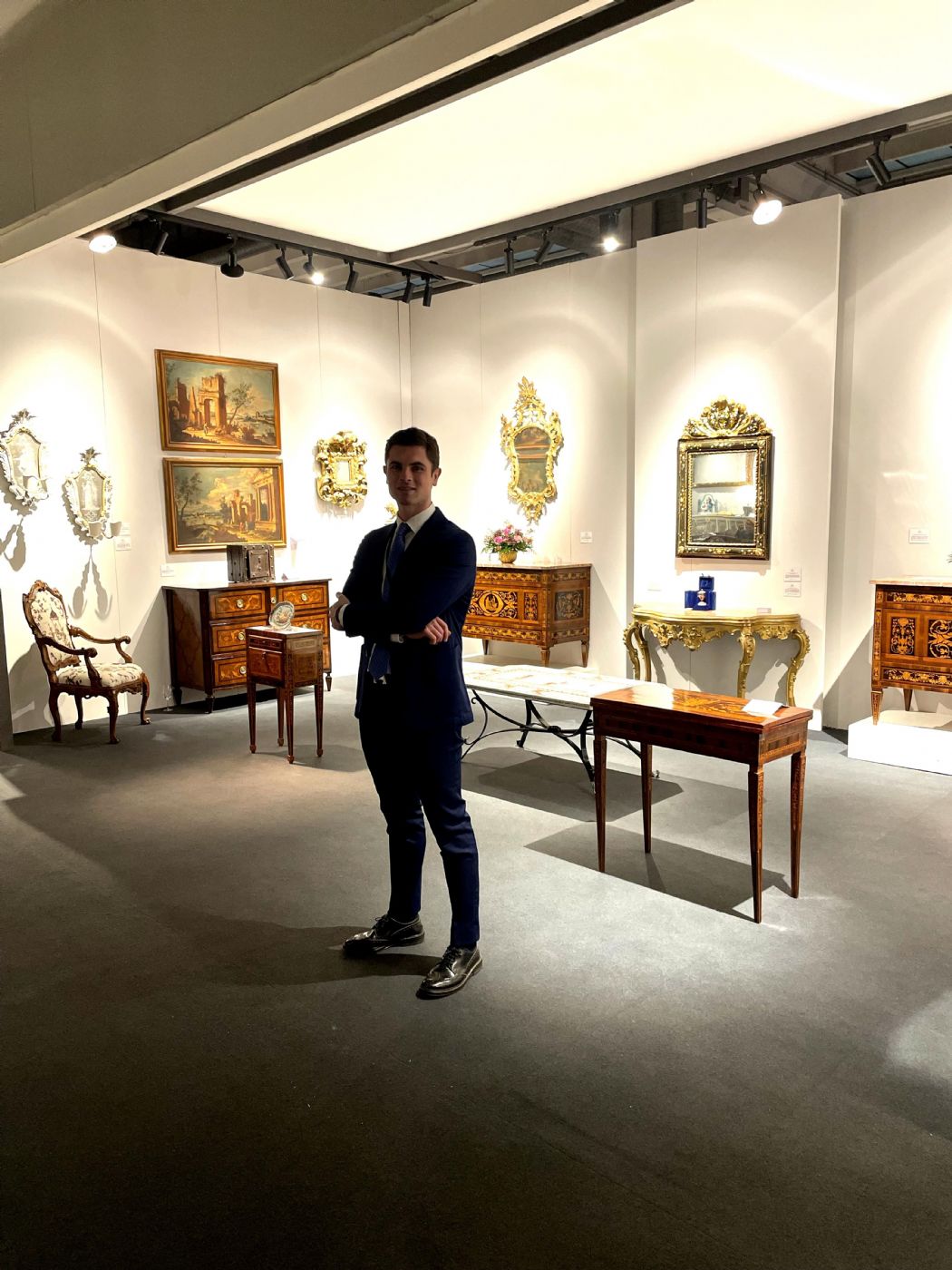
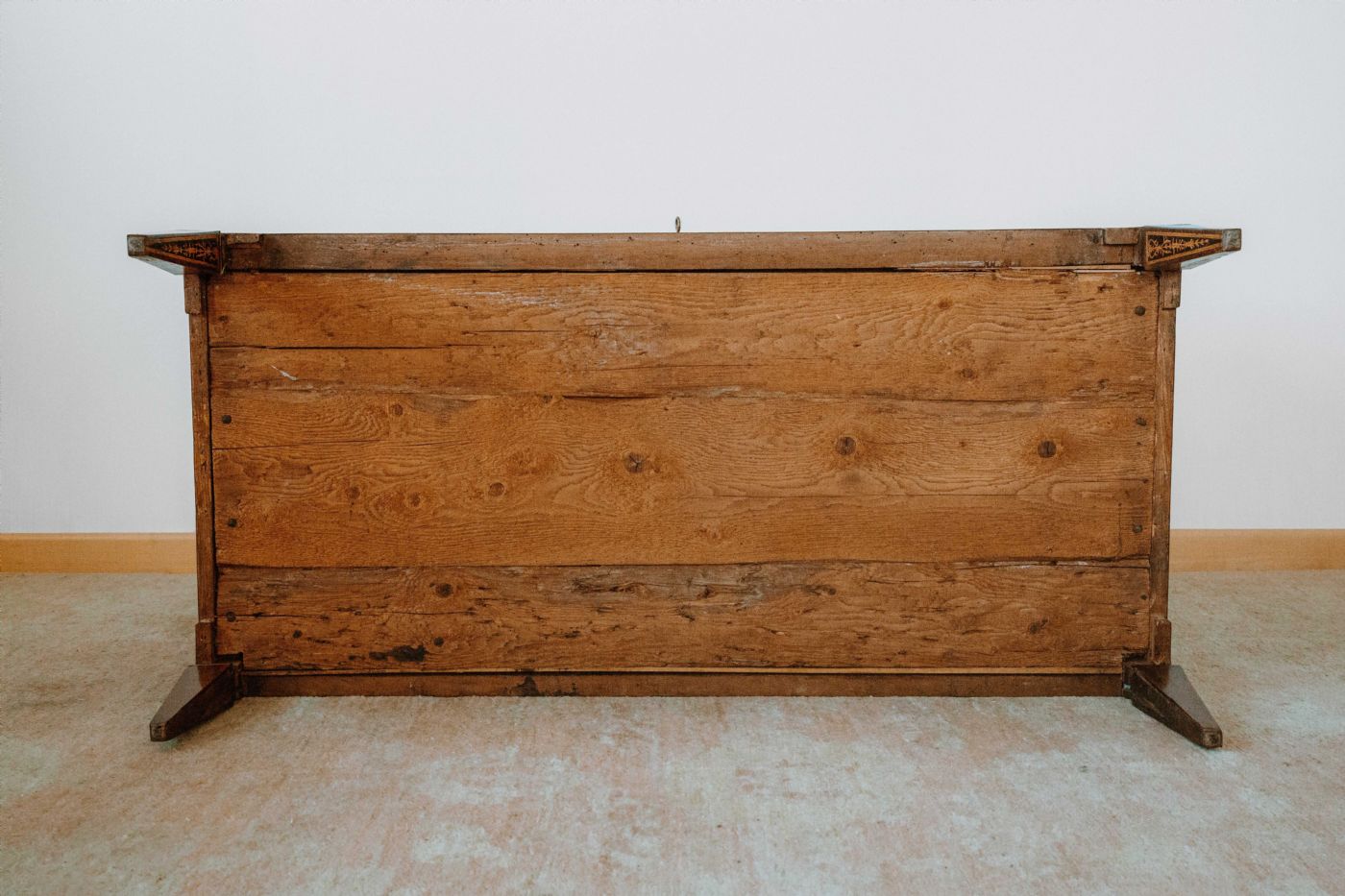
This pair of commodes has already been exhibited at important international Antiques fairs such as Modenantiquaria, where each item can be exhibited after passing an accurate examination of integrity and quality appropriate for the exhibition. This examination is conducted by a team of experts called the Commission. Furthermore, from the images below of the bottom and the back, it is possible to ascertain the integrity of the antique 18th-century wood.