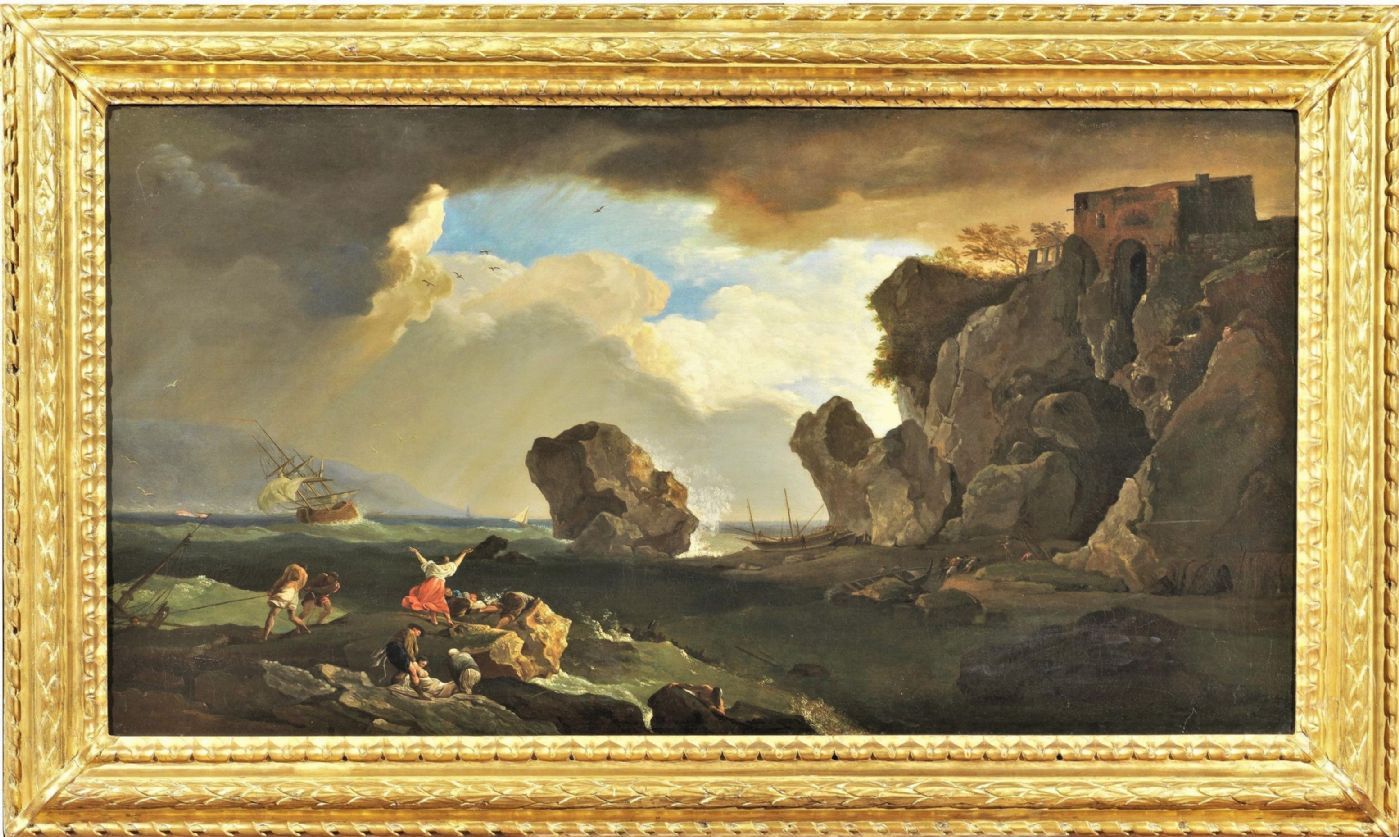
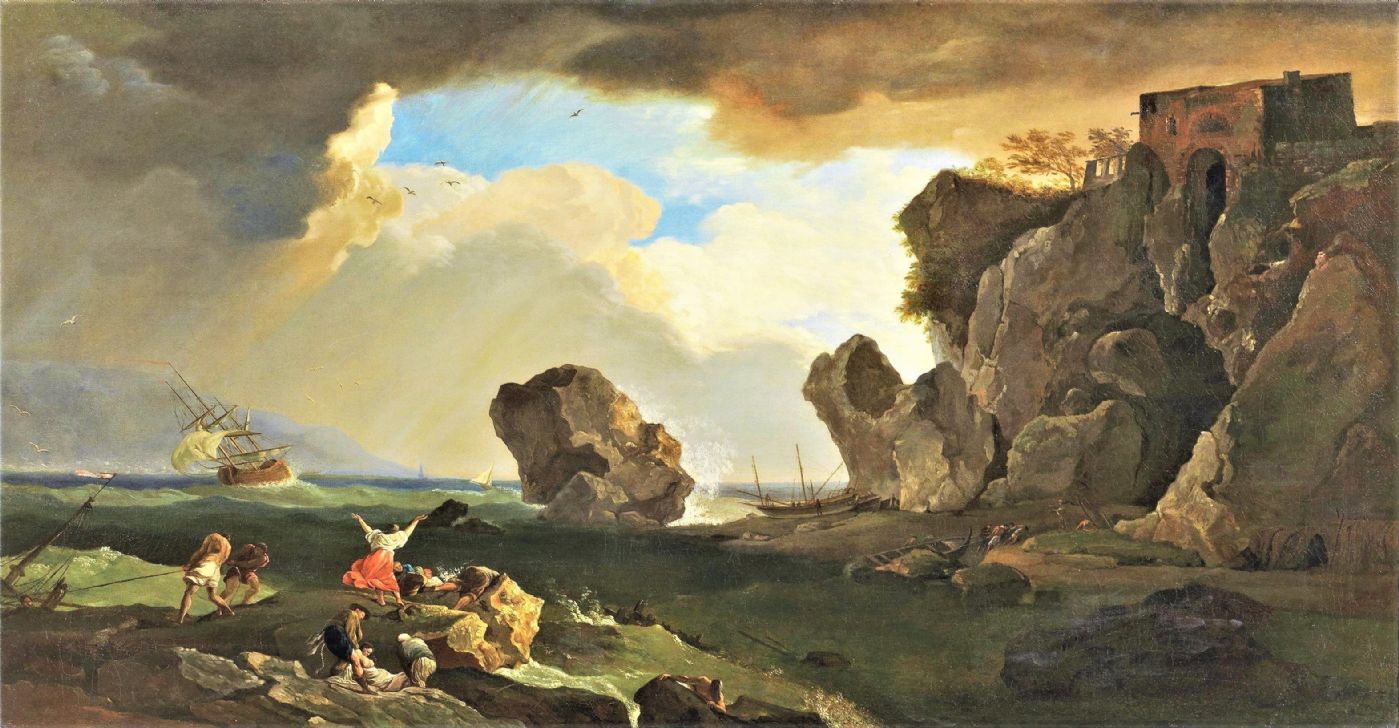
Shipwreck on the Cliff - Signed Vernet 1786
Description:
Claude Joseph Vernet (Avignon 1714 - Paris 1789)
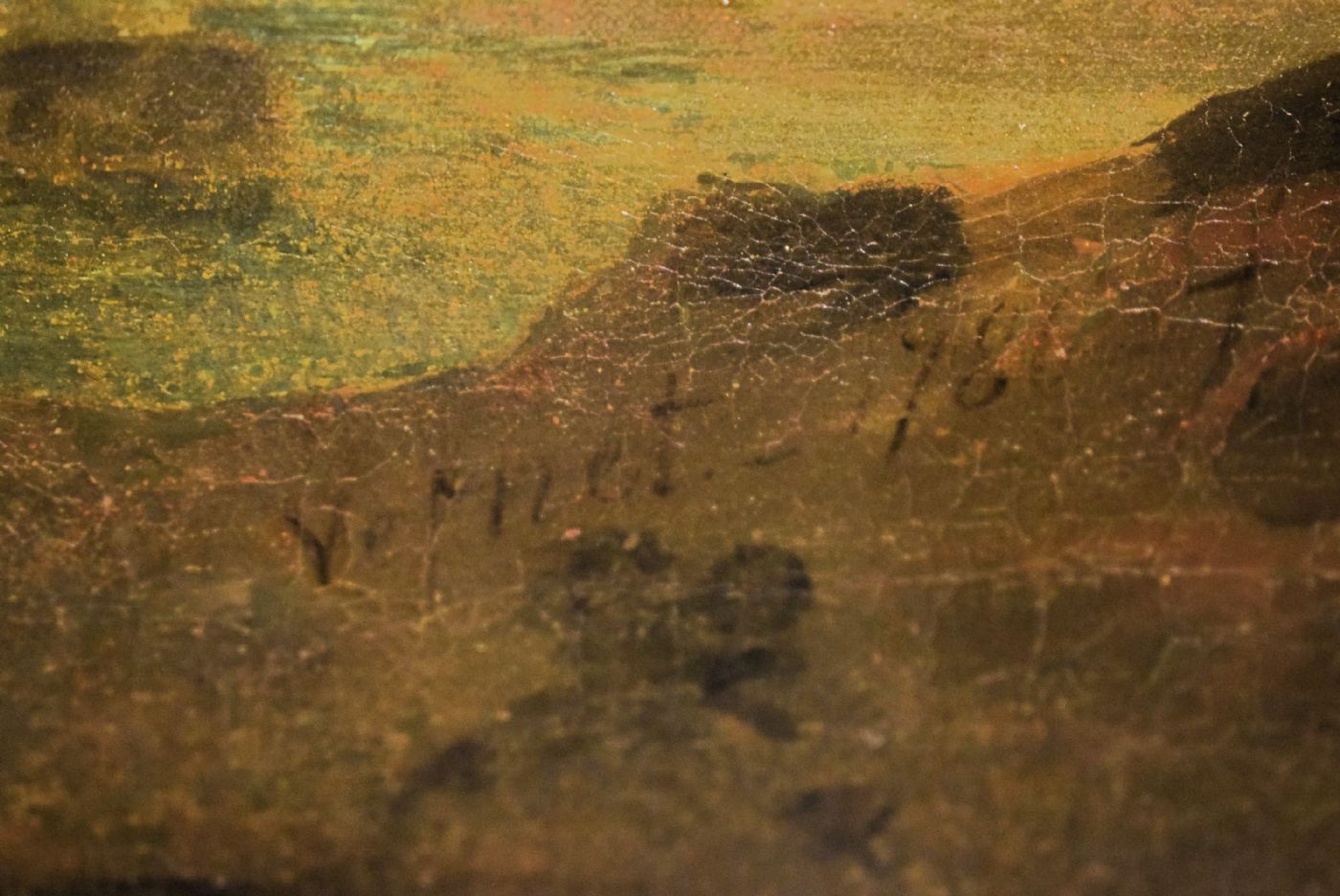
Signed and dated Vernet 1786
Oil on canvas
Period: 2nd half of the 18th century
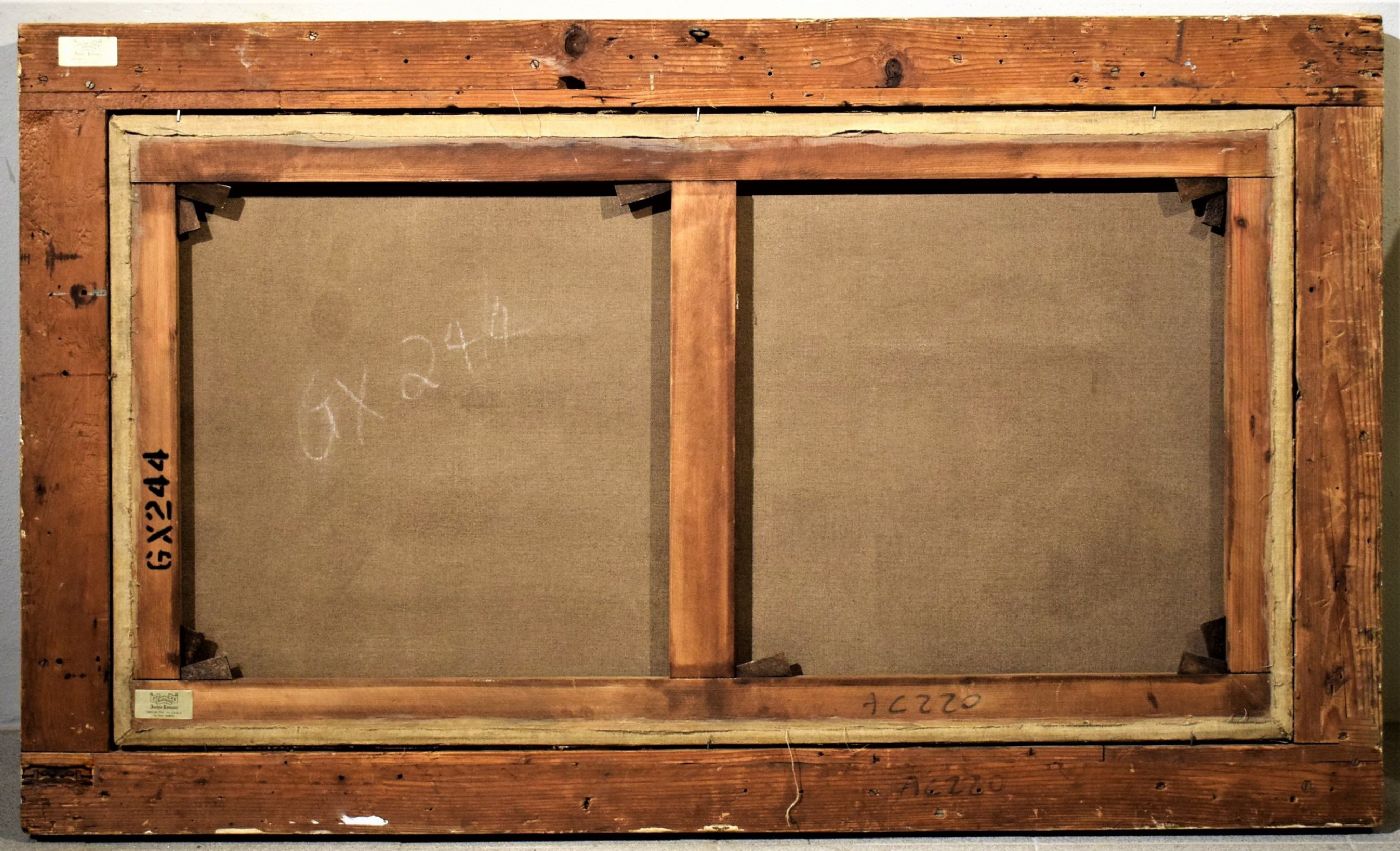
Canvas 112 x 60 frame 130 x 77
Excellent condition
Provenance:
25/03/1992
Christie's - Rome, Italy
AUCTION OF OLD MASTERS PAINTINGS
Lot no. 91
Claude Joseph Vernet
(Avignon 1714 - Paris 1789)
"Shipwrecked people begging for help on a rocky coast"
Oil on canvas
cm. 112 x 60
Estimate: (55,000,000 ITL - 60,000,000 ITL)
A very similar work was recently auctioned by Dobiaschofsky in Bern, Switzerland, with an estimate of over 200,000 euros.
Internationale Kunst
4.11.2022 lot 348
Claude Joseph Vernet
(Avignon 1714 - Paris 1789)
"Shipwreck"
Oil on canvas
Estimate: 200,000 CHF - 202,430 euros
(see details on our website)
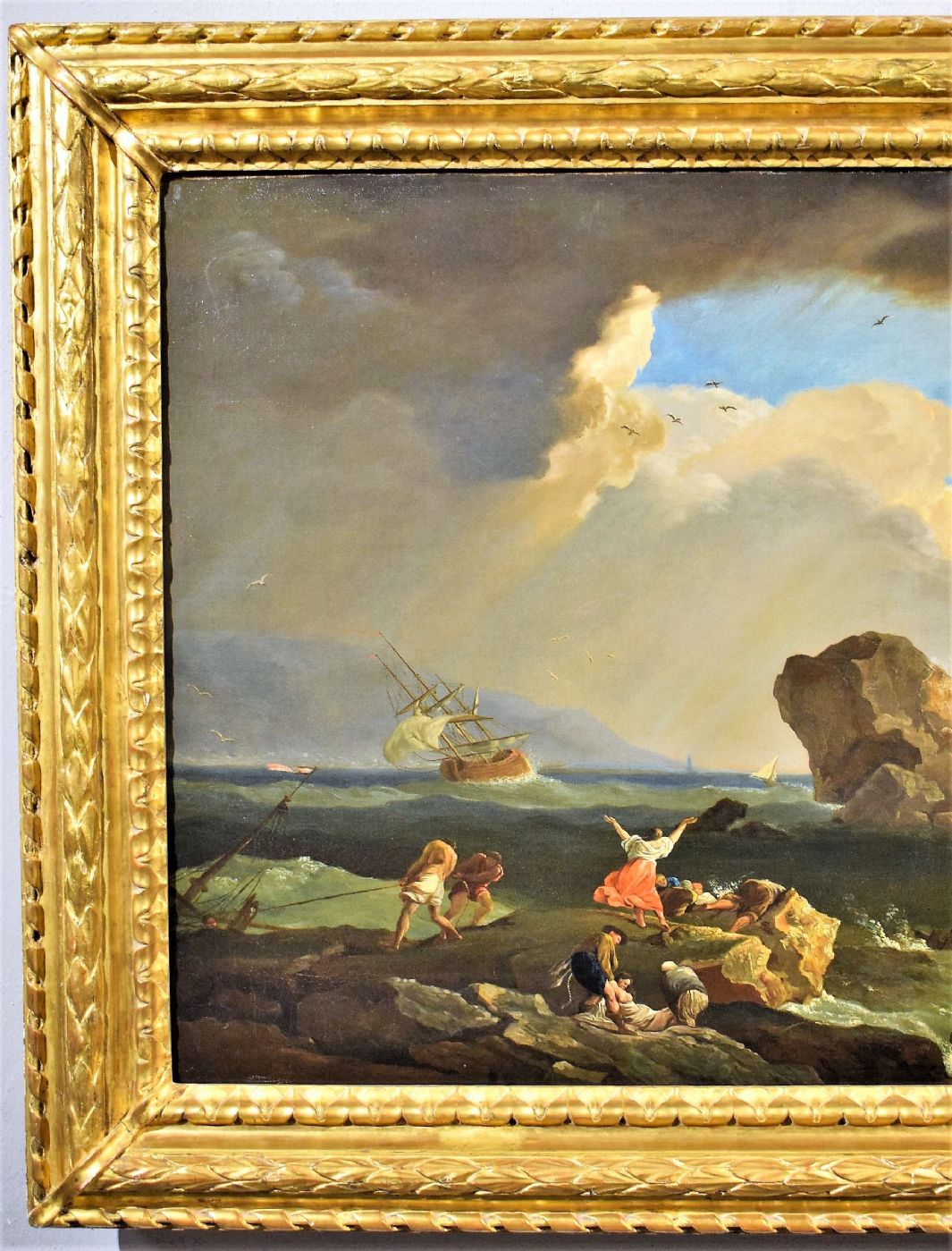
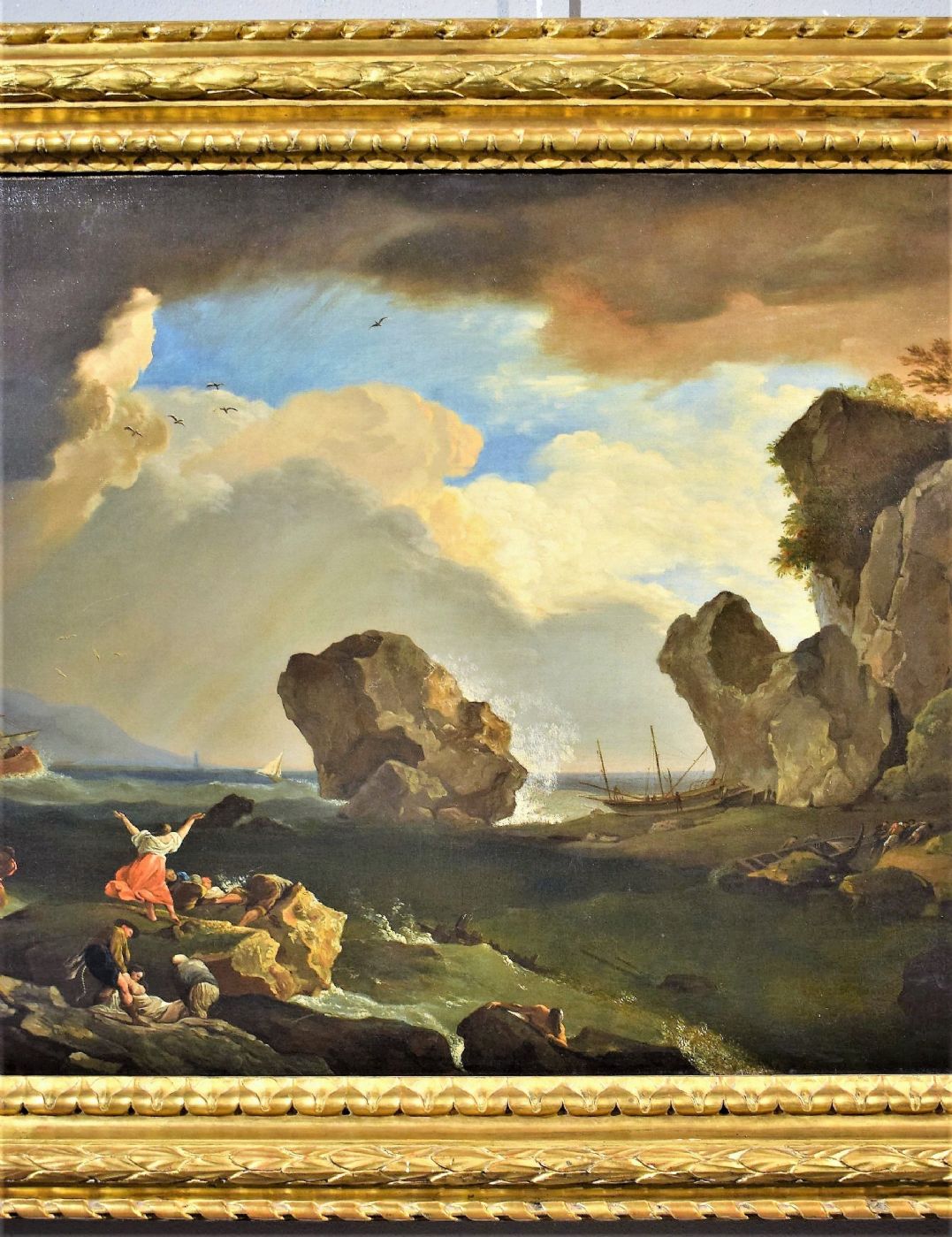
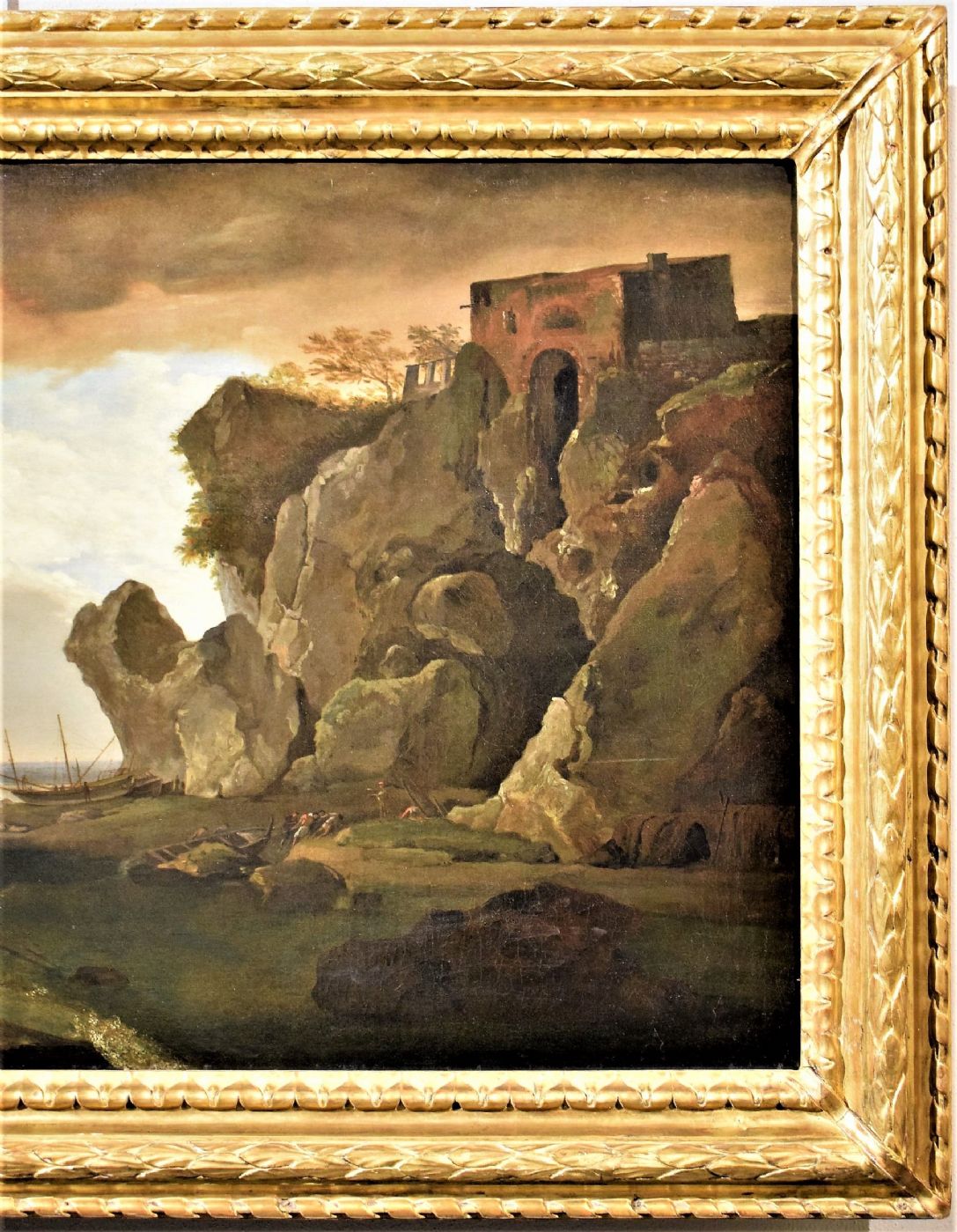
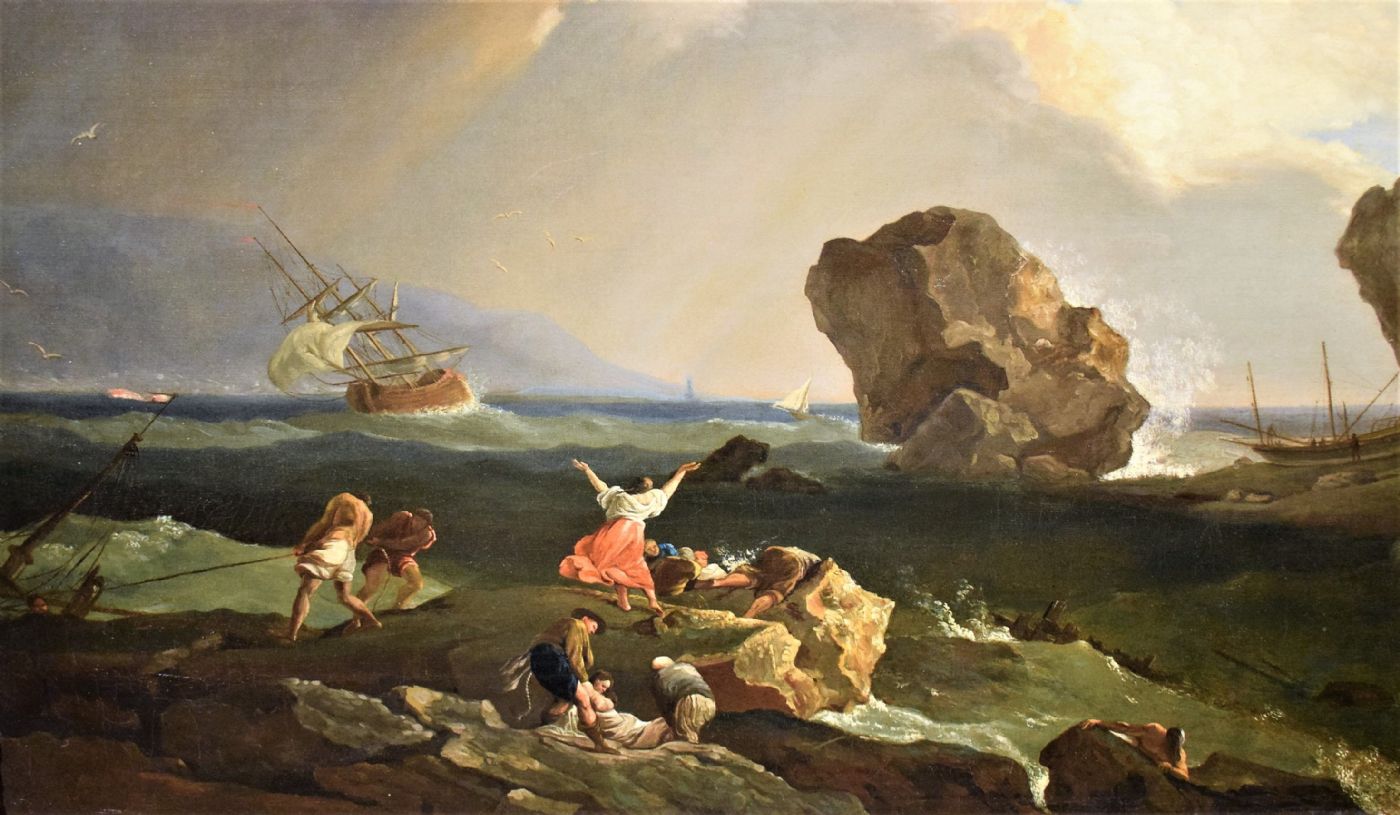
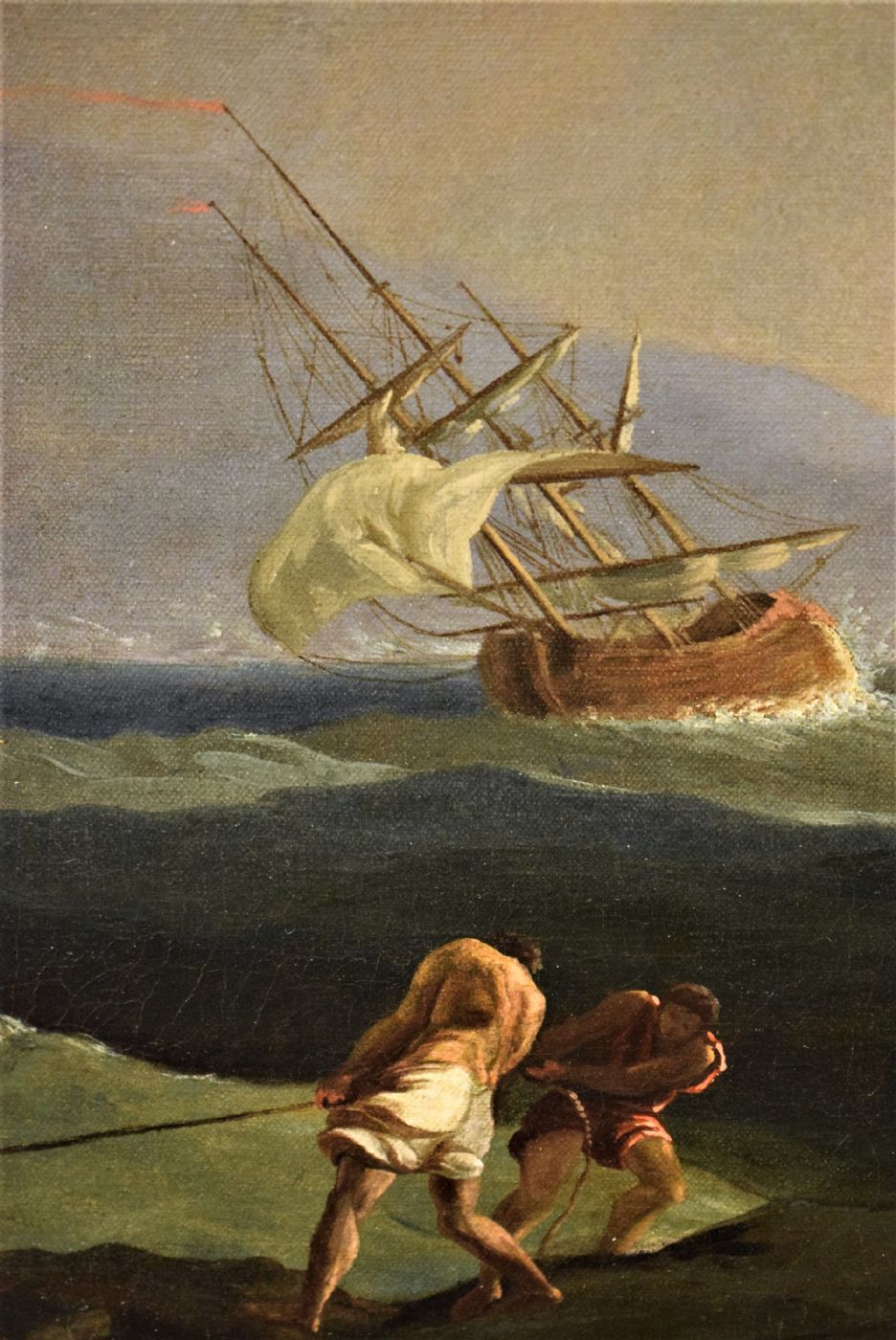
The splendid painting, of great charm and immediate, spectacular effect, depicts a lively shipwreck scene illuminated by a patch of blue sky opening up among the dark clouds after the storm.
The work, of remarkable beauty, highlights all the pictorial, chromatic, and descriptive characteristics of the marine landscapes of the great French Master Claude Joseph Vernet, in one of his most representative compositions, namely shipwreck scenes.
His famous depictions with extraordinary and inimitable atmospheric conditions, always balancing between dark and light, between calm and storm, express contrasting emotions, made even more intense by a palette of vibrant colors.
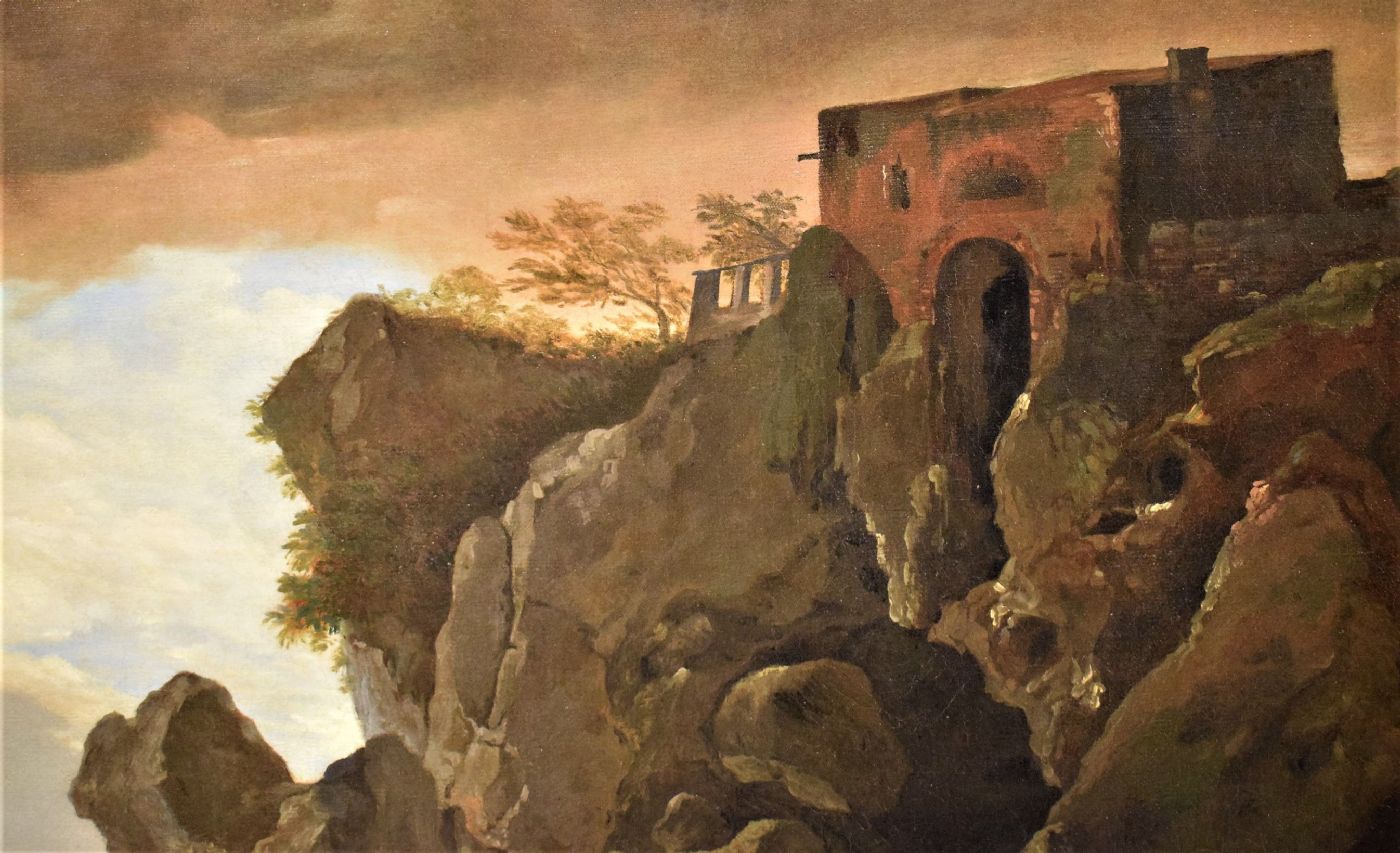
The canvas is generously sized and the elongated horizontal format, favored by the Author, allows him to capture a sequence of small scenes where the shipwrecked people struggle, scattered along the cliff. The dark rocky wall, seen in backlight with the fort towering over the sea, contrasts with the dazzling light of the blue sky, and is a peculiar element of his repertoire.
The work is in excellent condition, already perfectly cleaned and relined with a splendid finely carved and gilded frame.
The pictorial quality of this painting is decidedly high and, considering its dimensions, rivals the most beautiful productions of the great French Master.
Biography
Born in Avignon, in the heart of Provence, Vernet began his artistic studies in the south of France. He is attributed as a student of the painter Adrien Manglard, but even at 14 years old, he was helping his father Antoine Vernet (1689-1753), a painter specializing in decorations, with the most important phases of his work. However, painting panels for sedan chairs could certainly not satisfy his ambitions. Thus, in 1734, Vernet left for Rome to study the previous landscape masters and to learn from marine painters like Claude Lorrain, whose stylistic analogies can be seen in his later works.
Already upon departing for Italy from the port of Marseille, the sight of the French coasts and the journey to Civitavecchia deeply impressed him, so much so that upon arriving in Rome, he immediately joined the studio of Bernardino Fergioni, a renowned marine landscape artist, who became his most notable teacher. Gradually, Vernet attracted the attention of the Roman art scene. What distinguished him was the ability to depict in his canvases, almost always seascapes, particular atmospheric effects and phenomena: this made his works highly unusual and fascinating. Vernet, among other things, in representing nature, left vast spaces (up to two-thirds of the canvas) to the sky, as well as to scenes of daily life that animated the various locations.
Perhaps no landscape or marine painter has ever treated human figures like Vernet, considering them primary elements of the depicted scenes. In this, he was certainly influenced by Giovanni Paolo Panini, whom he met in Rome and alongside whom he most likely worked.
Vernet always applied himself to real subjects, but in no case did he interpret them sentimentally or emotionally. The overall effect of this attitude is a totally decorative-descriptive style. Vernet maintained this style practically unchanged throughout his life. His work as a landscape painter, always attentive to atmospheric phenomena, is combined with a vivid sense of pictorial harmony that recalls, not by chance, Claude Lorrain.
Vernet lived in Rome for twenty years. He depicted ports, coasts, storms, and calms, effects of moonlight. He became particularly popular among English aristocrats, many of whom visited Rome during their Grand Tour. In 1745, he married Maddalena Stern, a Roman woman of Bavarian origin, who was the sister of the painter Ludovico Stern.
Vernet was a Freemason, a member of the "Neuf Soeurs" lodge, belonging to the Grand Orient of France.
In 1753, Abel-François Poisson de Vandières, Marquis de Marigny, future Director of Buildings for Louis XV, called Vernet back to his homeland and commissioned him, by royal order, to paint 24 views of as many French ports, to inform the public about life in the ports. However, only 15 of them were completed, from 1753 to 1762 (partially preserved today at the Louvre, partly at the Musée de la Marine). These paintings are authentic testimonies of what life was like in the ports 250 years ago, and they made Vernet one of the greatest marine painters, for which he is best known.
Vernet eventually returned to his Italian themes, as evidenced by one of his last works, "The Beach," housed at the National Gallery. Upon his return from Rome, he was appointed a member of the French Academy and exhibited his works until his death, which occurred in his lodging at the Louvre Palace in December 1789.
A certificate of authenticity is issued in accordance with the law (affiliated FIMA)
Tracked shipping (DHL TRACKING) and fully insured with anti-shock packaging in a custom-made wooden crate.
Delivery within 3 working days of receipt of the bank transfer (DHL EXPRESS)
If the distance permits, direct delivery of the painting is possible.
Negotiable price - Personalized payment
ALL PHOTOGRAPHIC DETAILS ON link:
https://www.antichitaischia.it/it/prodotto/naufragio-sulla-scogliera