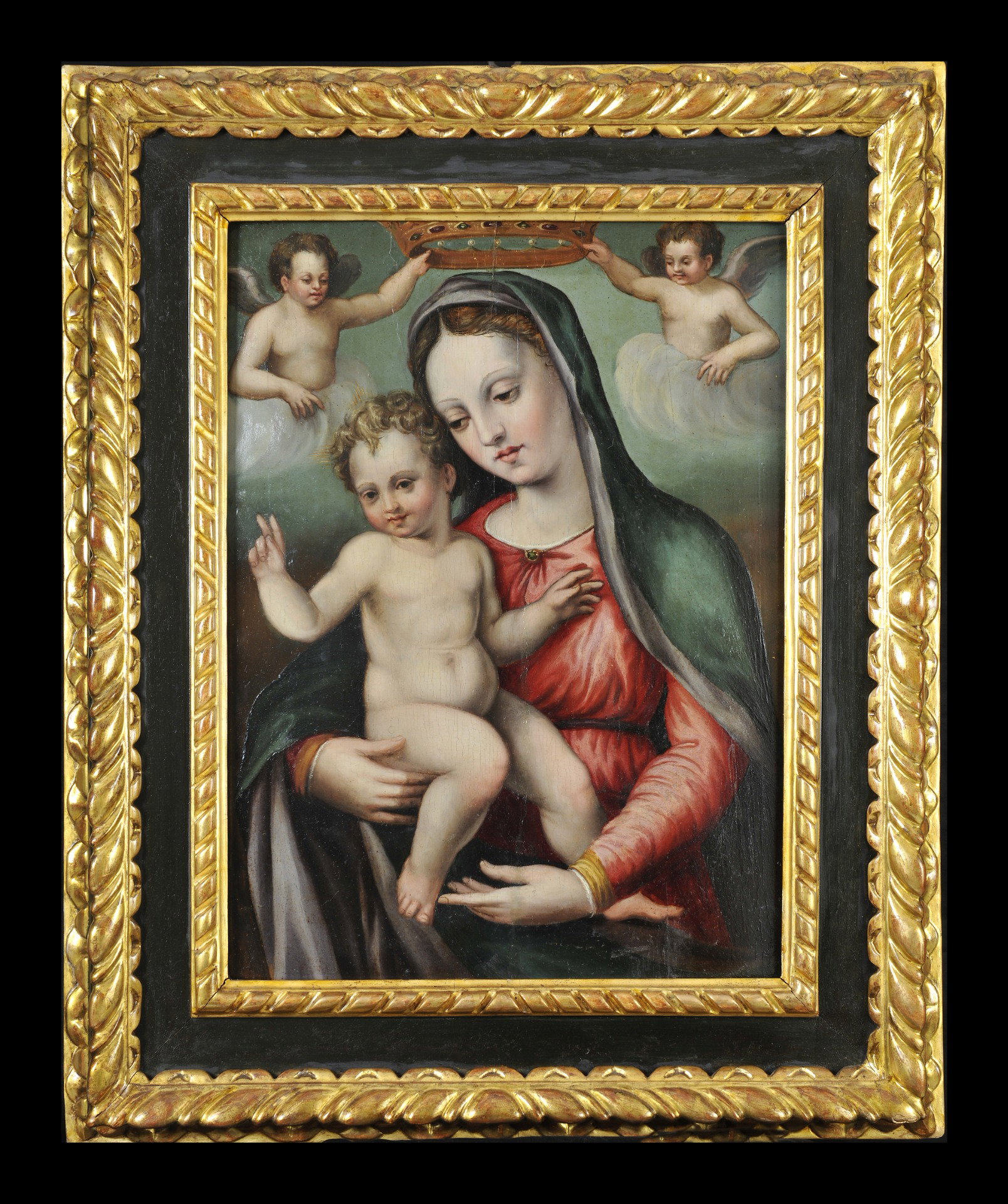
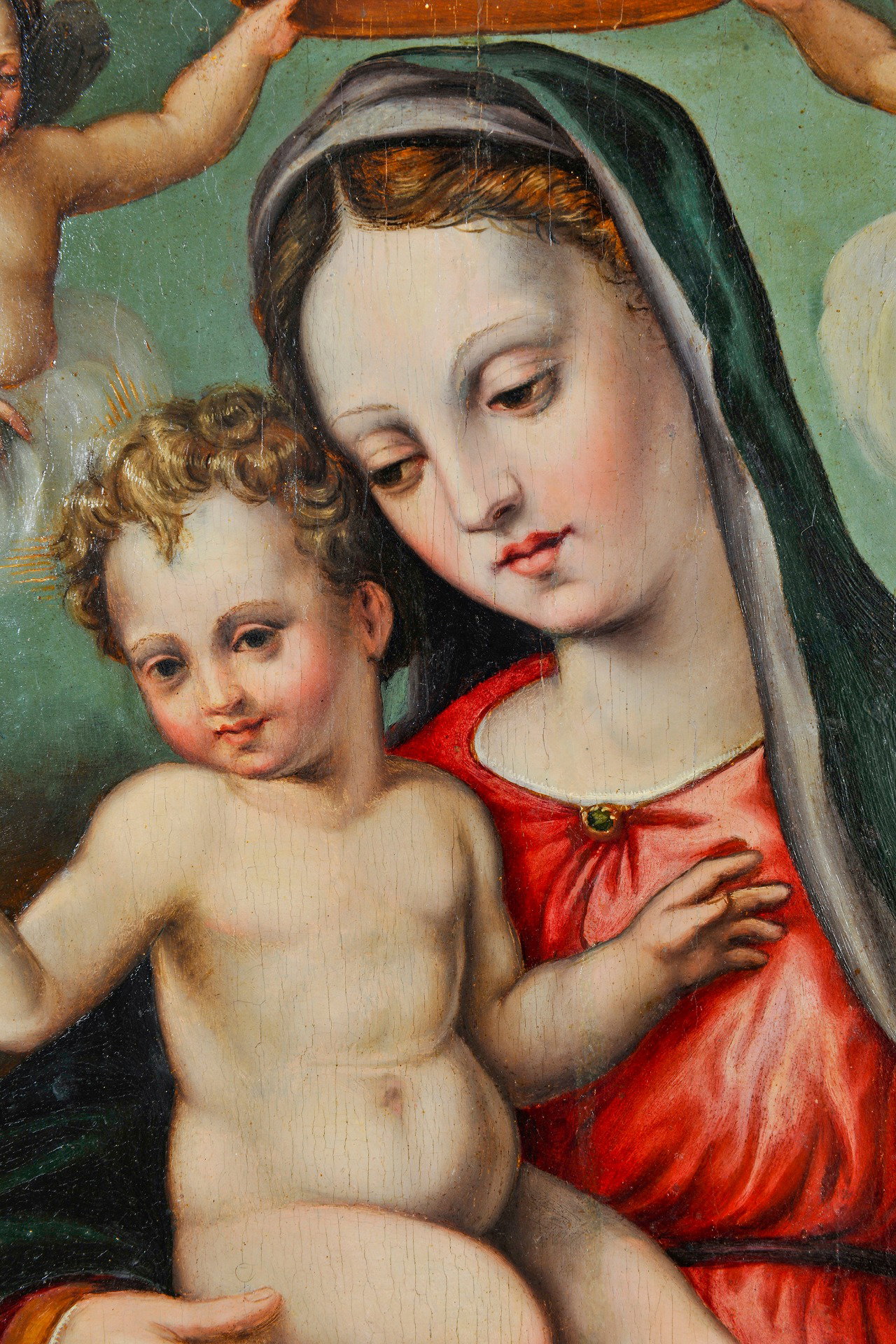
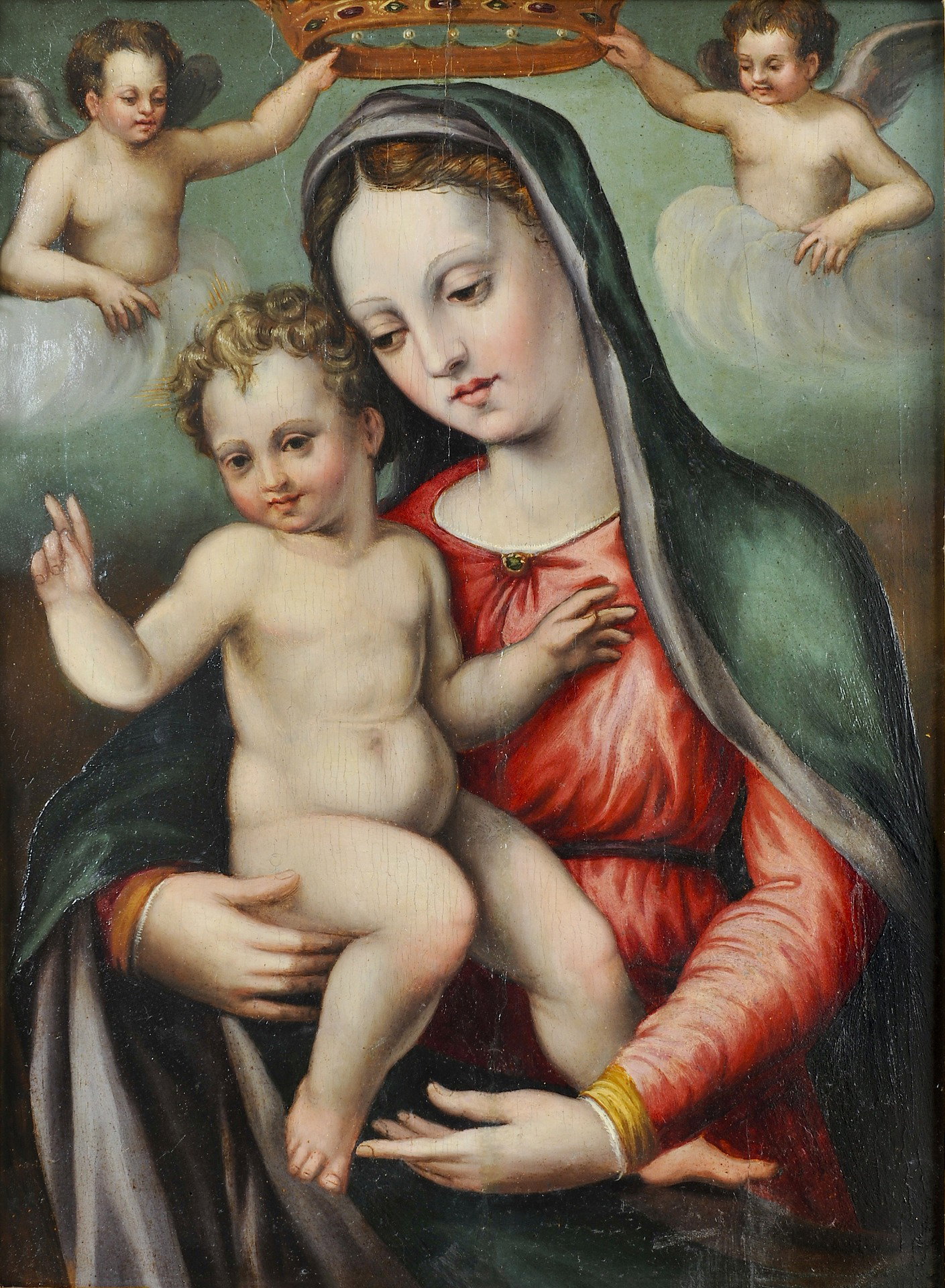
The painting depicts the Virgin Mary in a half-length pose, with her head slightly inclined towards the Child. Her expression is serene, meditative, and of maternal sweetness. Her gaze, directed downwards, conveys a profound tranquility typical of representations of the time. Oil on panel, it portrays the sacred subject of the Madonna and Child crowned by angels, typical of Christian iconography. The scene is dominated by the central figures, immersed in a dark background that strongly highlights them.
The work is contained in a gilded frame and recessed in an inner black frame, creating a visual contrast that emphasizes the sacred splendor of the painting.
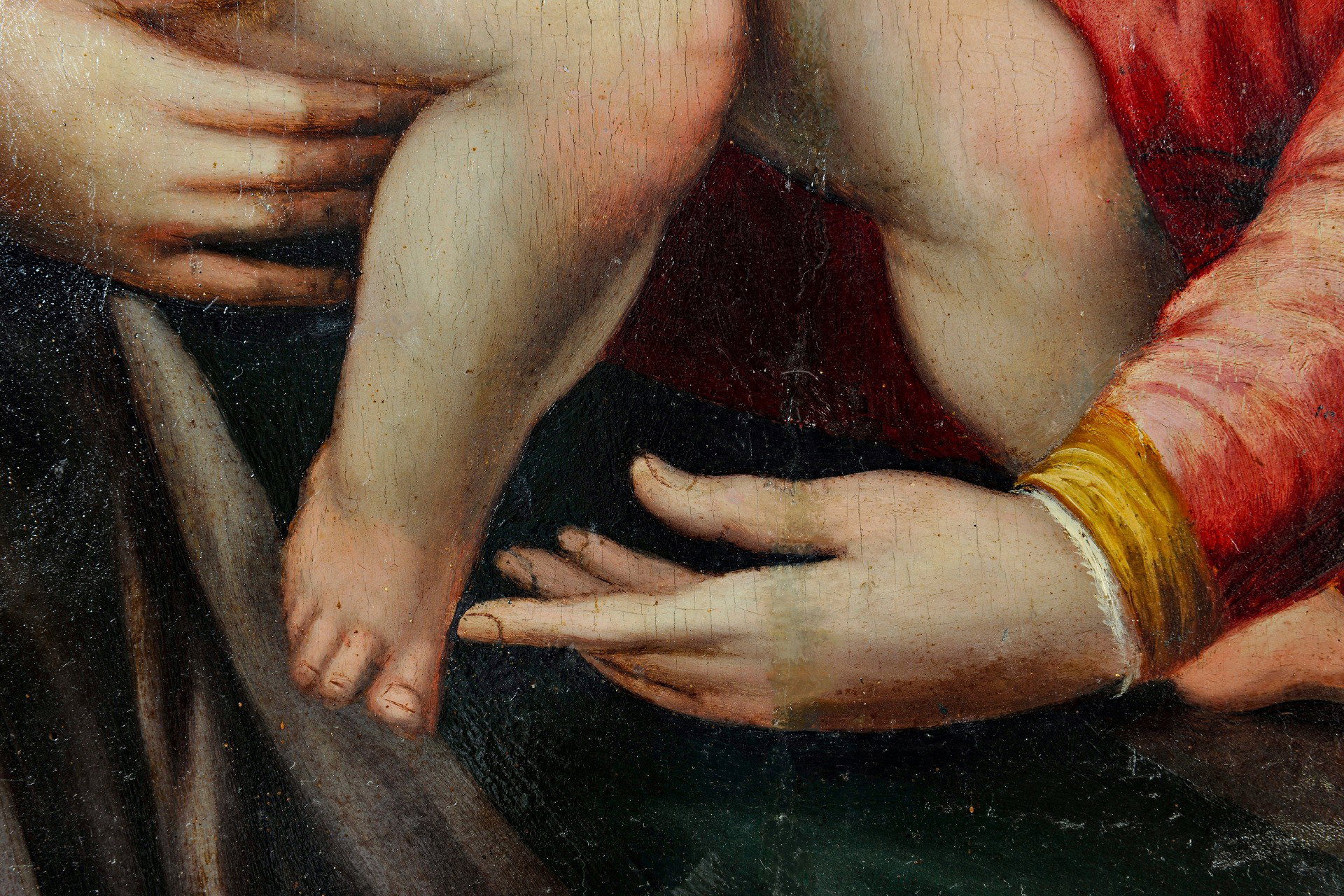
The Baby Jesus is seated on his mother's lap, with his body naked, robust, and chubby, typical of representations of the time. His right hand is raised in a gesture of blessing (two fingers joined), while his left hand rests on his mother, in a gesture of affectionate intimacy. The anatomy of the Child, with his luminous flesh, is rendered with care and plasticity. Above, on either side of the Virgin's head, two winged putti (or little angels) emerge from the clouds, almost forming a celestial scenic backdrop.
These angels together hold a crown (or a nimbus in the shape of a garland with rays) over the Madonna's head, symbolizing her celestial royalty as Queen of Heaven.
Analyzing the style of the painting, it is attributable to Pier Francesco Foschi (Florence, 1502 - 1567),
who was a Florentine Mannerist painter, active throughout the 16th century, trained in the workshop of Andrea del Sarto and was influenced by artists such as Pontormo and Bronzino, masters of Florentine Mannerism. The putti are depicted with infant and luminous anatomy, and barely visible wings.