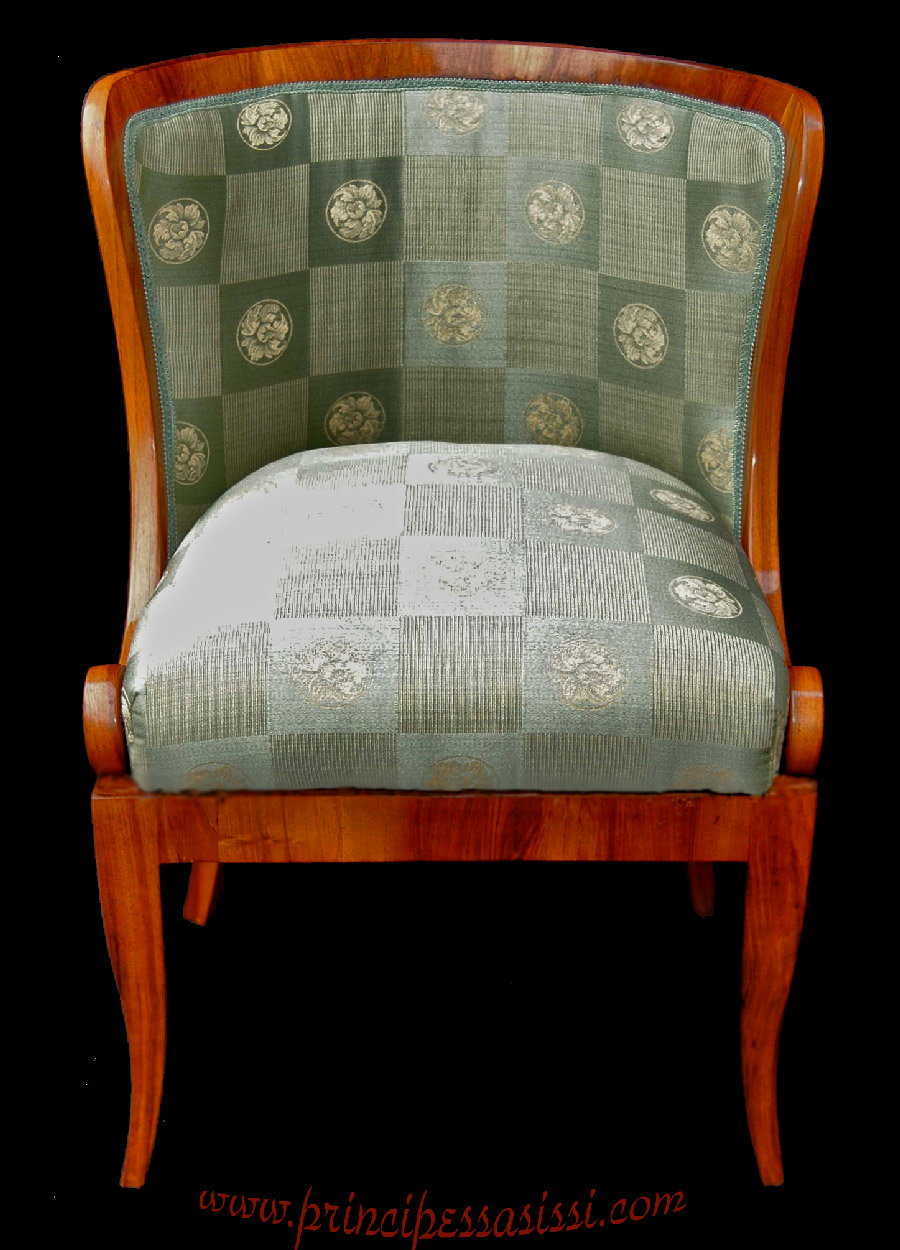
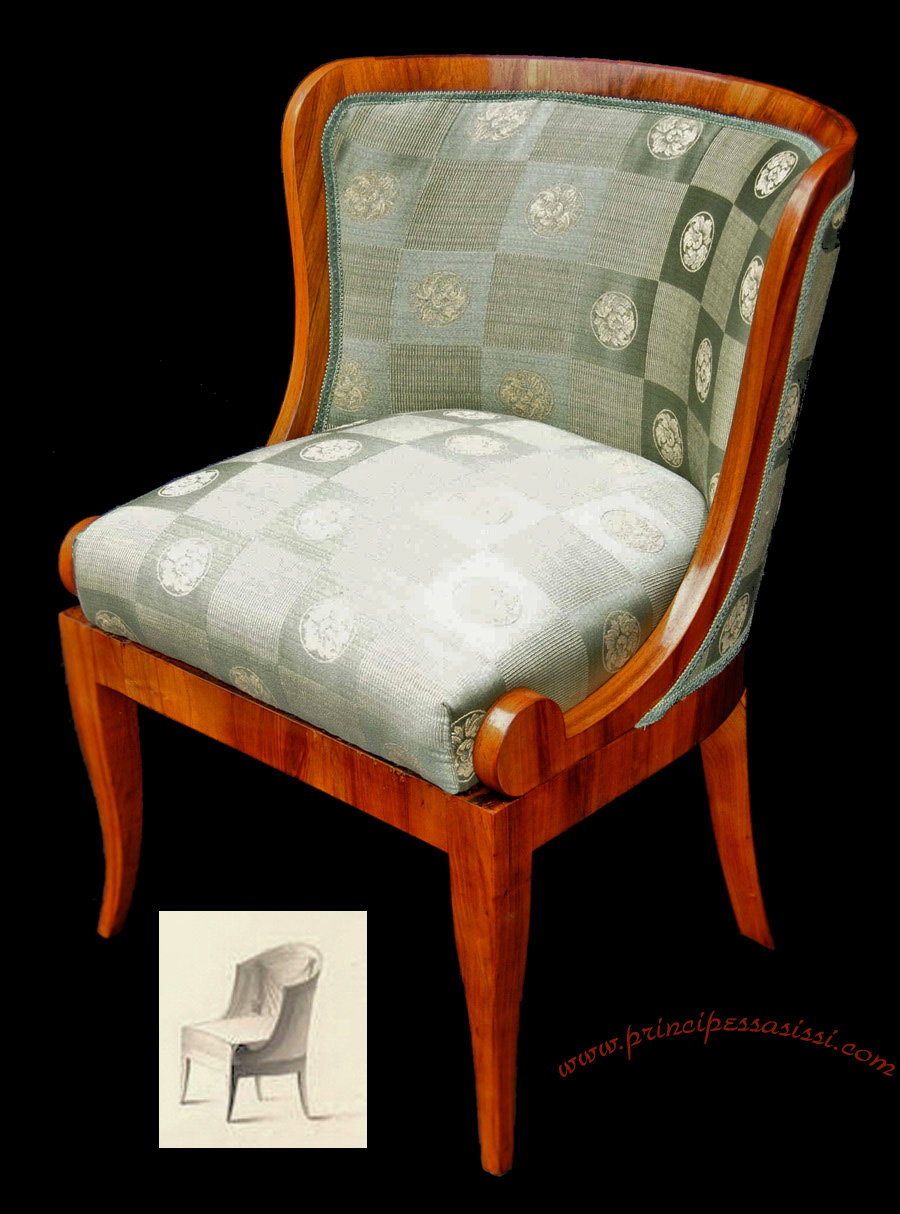
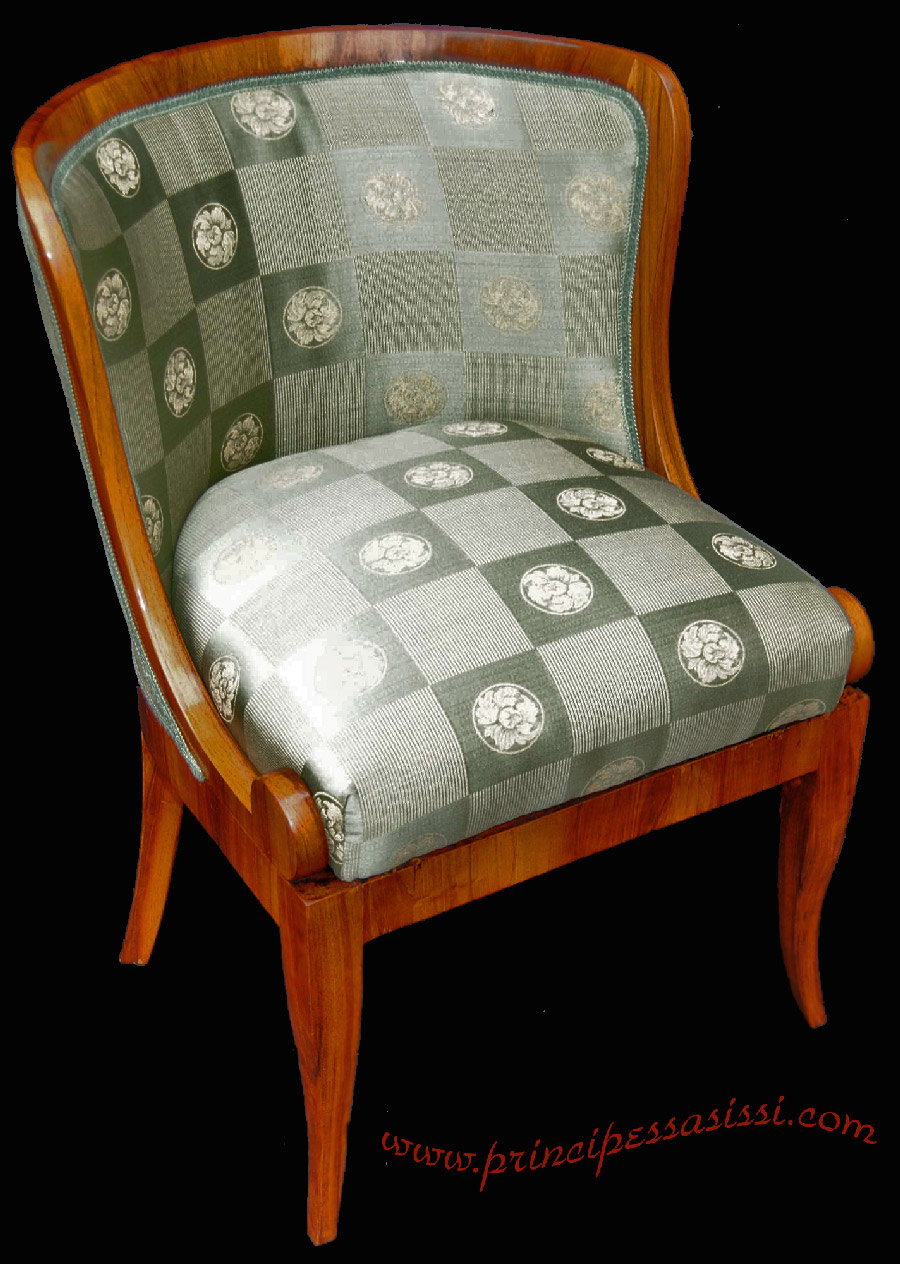
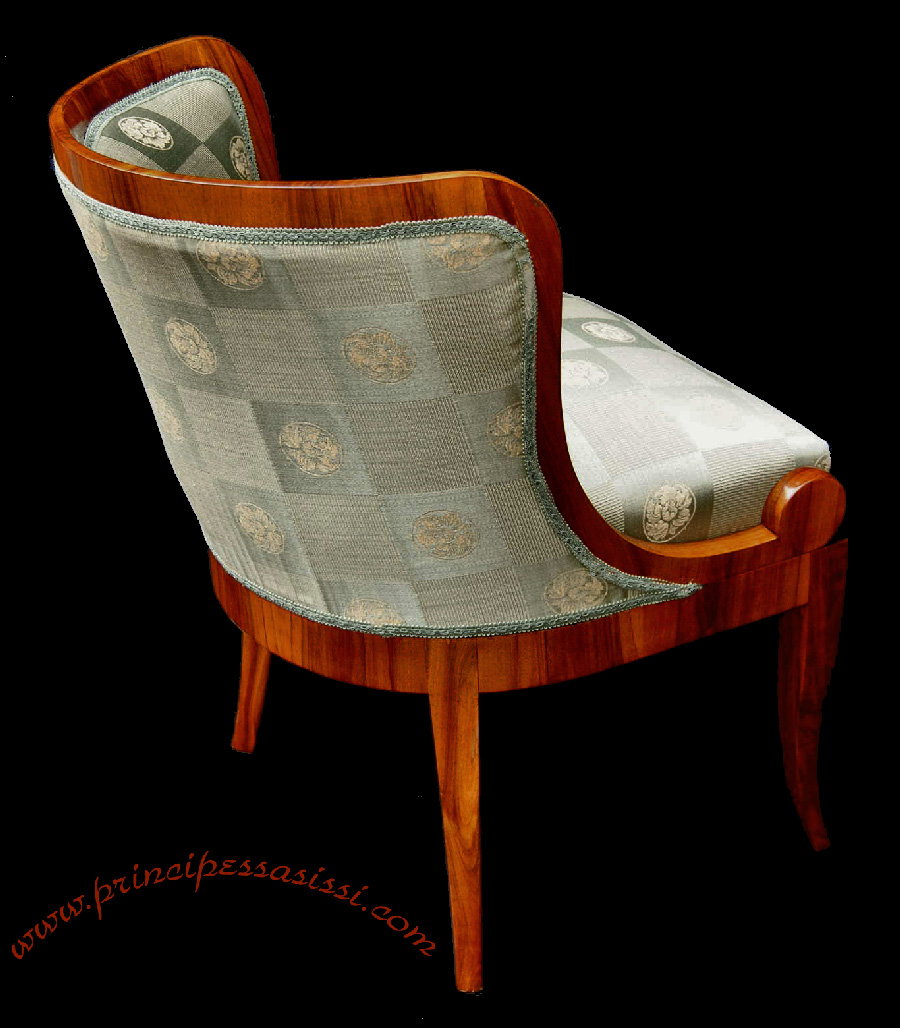
Vienna, circa 1815-25. Rare armchair from the early Viennese Biedermeier period, cherry feather veneered, by Joseph Danhauser or immediate circle
Description:
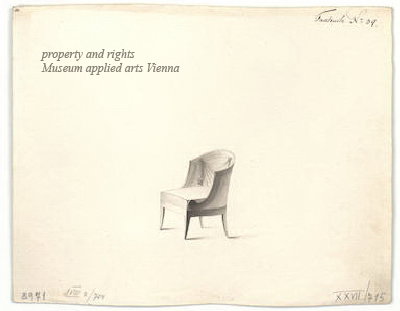
Rare armchair from the early Viennese Biedermeier period, cherry feather veneered, by Joseph Danhauser or immediate circle (see great affinity with the original armchair design no. 39 – property of the Museum of Applied Arts Vienna - in the miniature; small differences as a probable evolution from 1815 to 1825). The object is in museum-quality condition and of absolute integrity. With shellac finish by hand pad on first warm patina. It measures cm. 51 wide, 77 high, 58 deep; seat height 48. An object of museum quality at the dawn of modern design. It was also possible, after sanitization and cleaning, to preserve the original upholstery and also a good part of the fabric of the time, which is located below the refined Jaquard fabric in Empire style, in antique green, with which it was covered. Width 54, depth 57, height 77, seat height 48. At the bottom of the page is the design owned by the Museum of Applied Arts in Vienna, belonging to the part of the original catalog of Joseph Danhauser preserved and arrived to our time. Magnificent work with a design that "wins over time" with its sober and elegant line, also excellent for combining with modern high-end furniture for a unique, exclusive and refined elegance. From the warm golden pink color of the antique cherry patina with a true shellac finish applied with a pad. Joseph Ulrich Danhauser (1780-1829), a great Viennese cabinetmaker, sculptor and designer, documented his range of products in a vast designed catalog, parts of which (approx. 2,500) have survived the times and are now stored in the MAK (Austrian Museum of Applied Arts in Vienna). This catalog includes, among others, 153 chair models, 56 sofas, 179 types of chandeliers and 124 curtains. All these models were numbered consecutively. He boasted a high-ranking clientele from all over the Austrian monarchy and Germany. Danhauser's exceptional quality and uniqueness as a furniture creator lies in the harmonious combination of concreteness and abstraction, functionality and emotion. Thus, he assumed the role of mediator between individuality and anonymity and became one of the most important inspirations for the modern avant-garde movement. The Danhauser manufactory was founded in 1814. It is a point of reference in the history of design and furniture. His very rare original creations that have survived the times are preserved in a few museums, castles, important antique shops or prestigious private collections, mostly noble ones.
In accordance with the provisions of the New Code of Cultural Heritage, the selling company provides, at the time of sale, a detailed written photographic guarantee of the originality and provenance of the works sold. The data with which the works are described and then contained in the written guarantees are expressed determinations resulting from accurate and documented technical/historical/artistic investigations, even of expert importance.
Recognize the true Viennese Biedermeier of the first phase of the period, distinguishing it from late or Northern European imitations! Read the history of this elegant and sober style and learn to evaluate Viennese masterpieces without time of the designers from 1815 to 1830! Click on the link at the bottom of the page to read an unprecedented summary of our unique practical guide in Italy, with links and a virtual tour of museums and galleries in Vienna.