Bernardo Strozzi (1581-1664)
Philosopher
Oil on canvas
90 x 70 cm
The work is accompanied by a critical note by Camillo Manzitti.
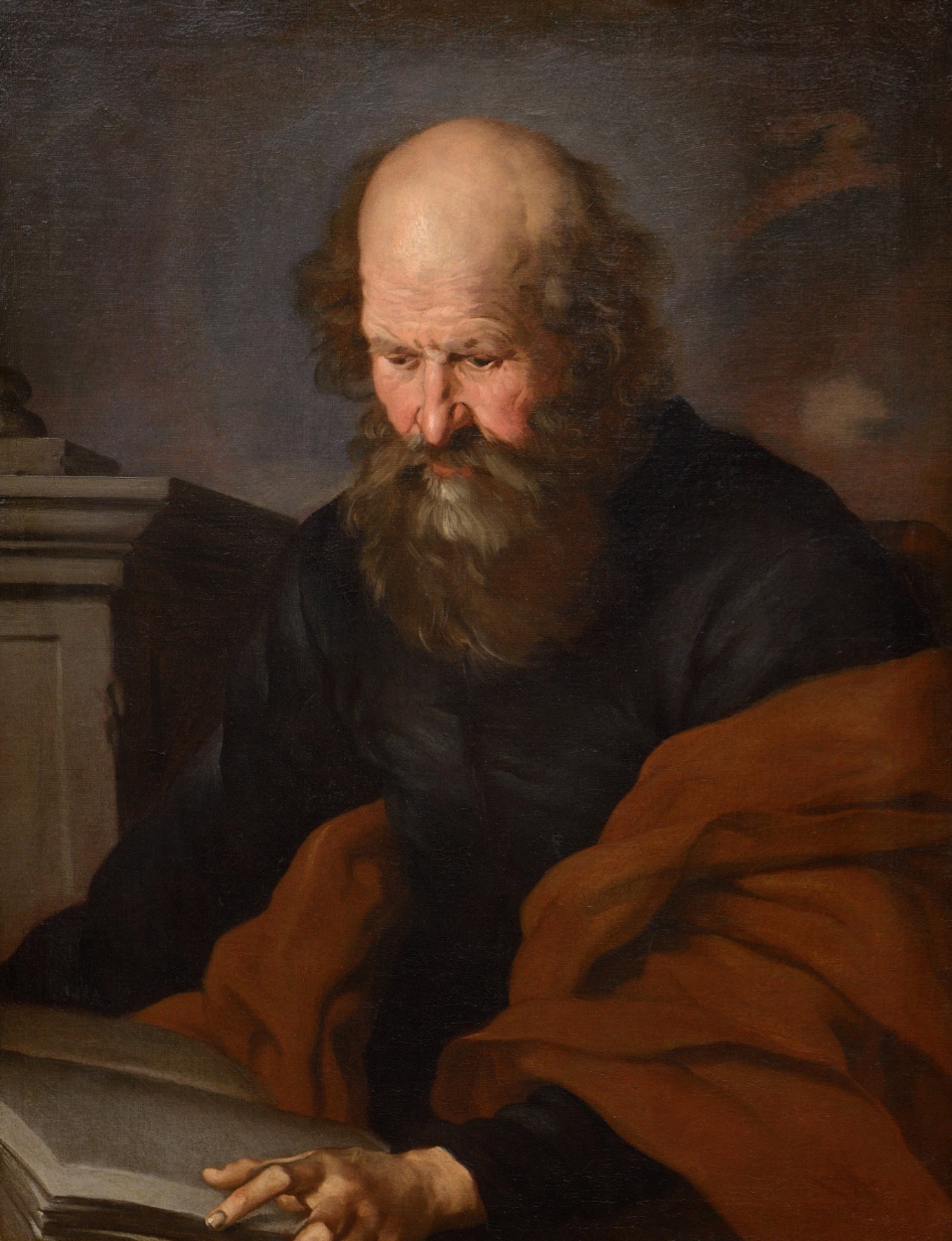
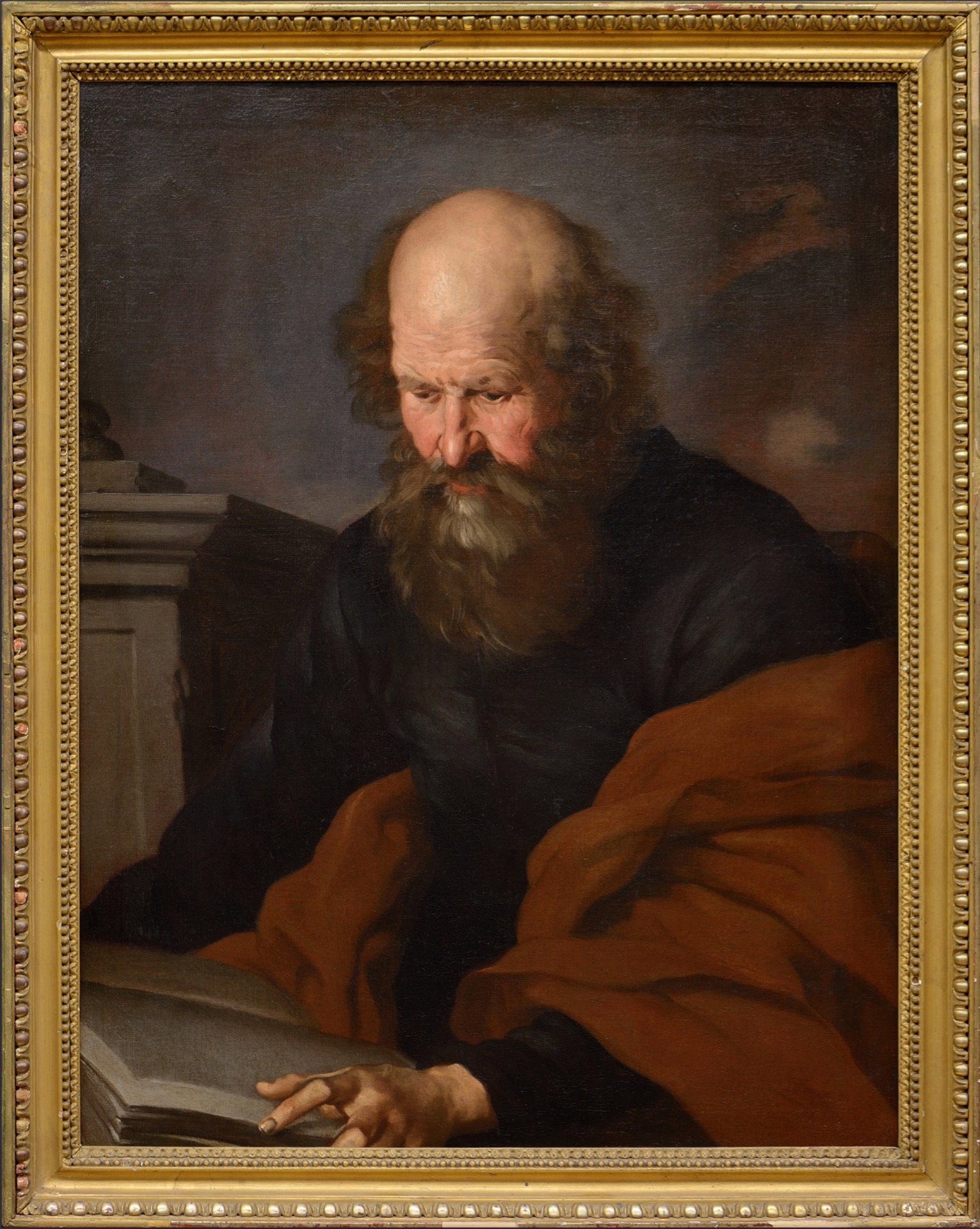
The half-bust depiction of saints, philosophers, and anchorites, according to the most common Counter-Reformation iconography, was very often requested of Bernardo Strozzi, who excelled in the expressive vigor that he knew how to instill in the faces, examples of a humanity interpreted with great realism, alien to any conventional and affected pathos, but where the severe expressiveness accentuated in the complexions furrowed with deep wrinkles and in the thick beards, which infused the faces with accents of importance and solemnity.
Fundamental, especially in the mature years, to which this work (oil on canvas, 90 x 70 cm) undoubtedly refers, is the use of light, learned early on from the study of works belonging to the Caravaggio current, which Strozzi was able to admire in the rich Genoese picture galleries. Here the light descends obliquely, like that which one guesses coming from a sort of skylight, to reveal in the severe cave, a living image and an attitude of absorbed meditation of an elderly character, which the absence of a halo suggests identifying as a probable philosopher, immersed in reading the heavy volume.
Bernardo's extraordinary mastery expresses itself in the rapid and material brushstrokes, with which he exalts with great effectiveness the most expressive features of every detail of the work, through a painting of rapid blotches, devoid of finishing and corrections, for a structural use of color, which builds the form without resorting to the help of preliminary drawing to create the limits of the backgrounds.
Thanks to the bold certainty of execution, it is possible to easily follow the entire path of the brushstrokes, which intersect and overlap one another without merging, each with infallible coherence and constant functionality to Bernardo's innate sense of form, a summariness that never concedes anything to chance.
If the progressive evolution of the painter is easily recognizable in the style that characterizes the works along the path of his first activity, starting from the last phase of the third decade, his modes now vary little. It is therefore not always easy to distinguish what was produced in the last Genoese years from the works executed in Venice, where Bernardo moved in 1633, to escape the persecution of the Capuchin friars who wanted to bring him back to convent life.
In this painting, however, the architectural plinth in the background, an unusual element in the Genoese works, when Bernardo depicted characters on a dark background, totally devoid of accessory details, according to the example of Caravaggio, seems to suggest that this work belongs to the more mature Venetian years.