Description:
Circle of Francesco Bertos (1678-1741)
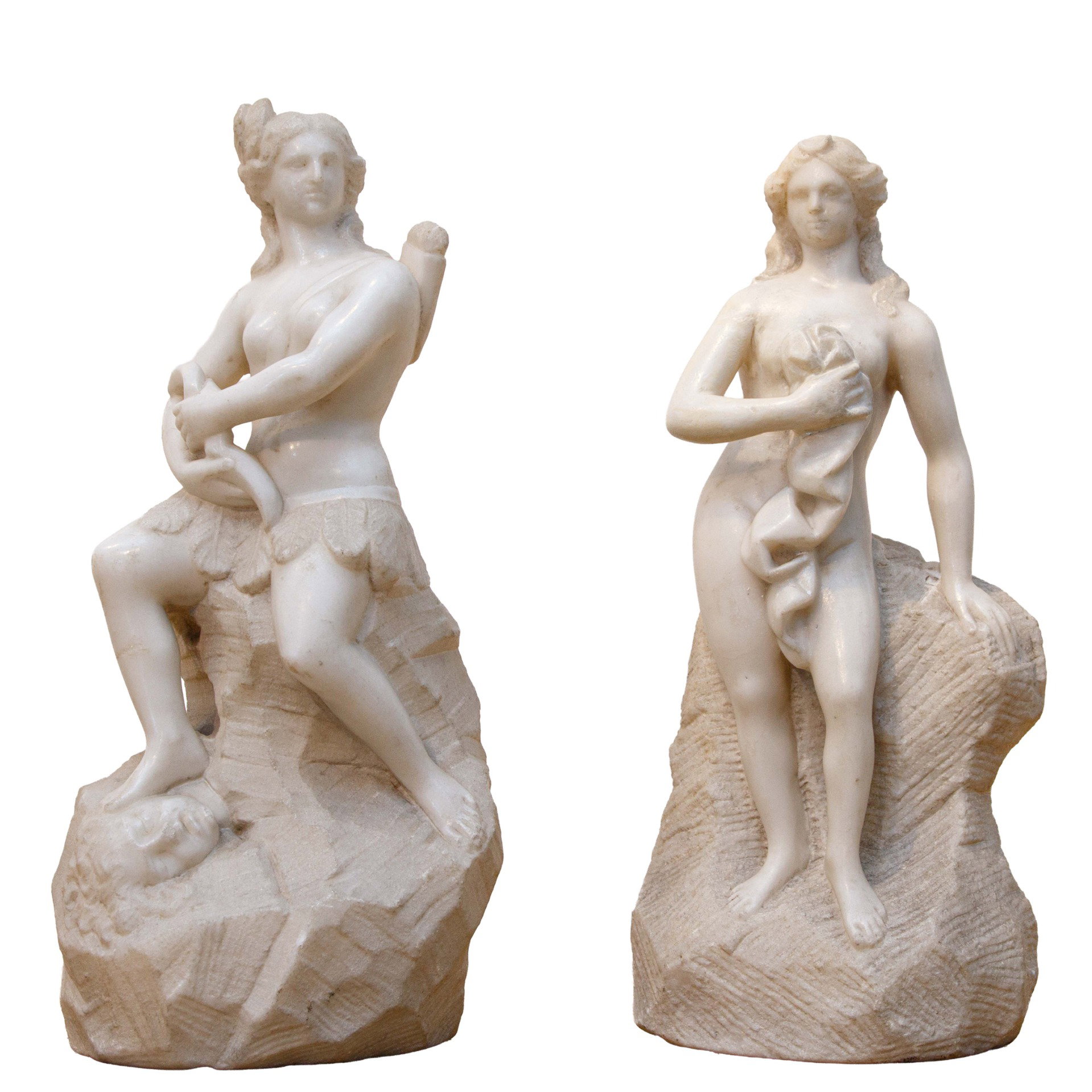
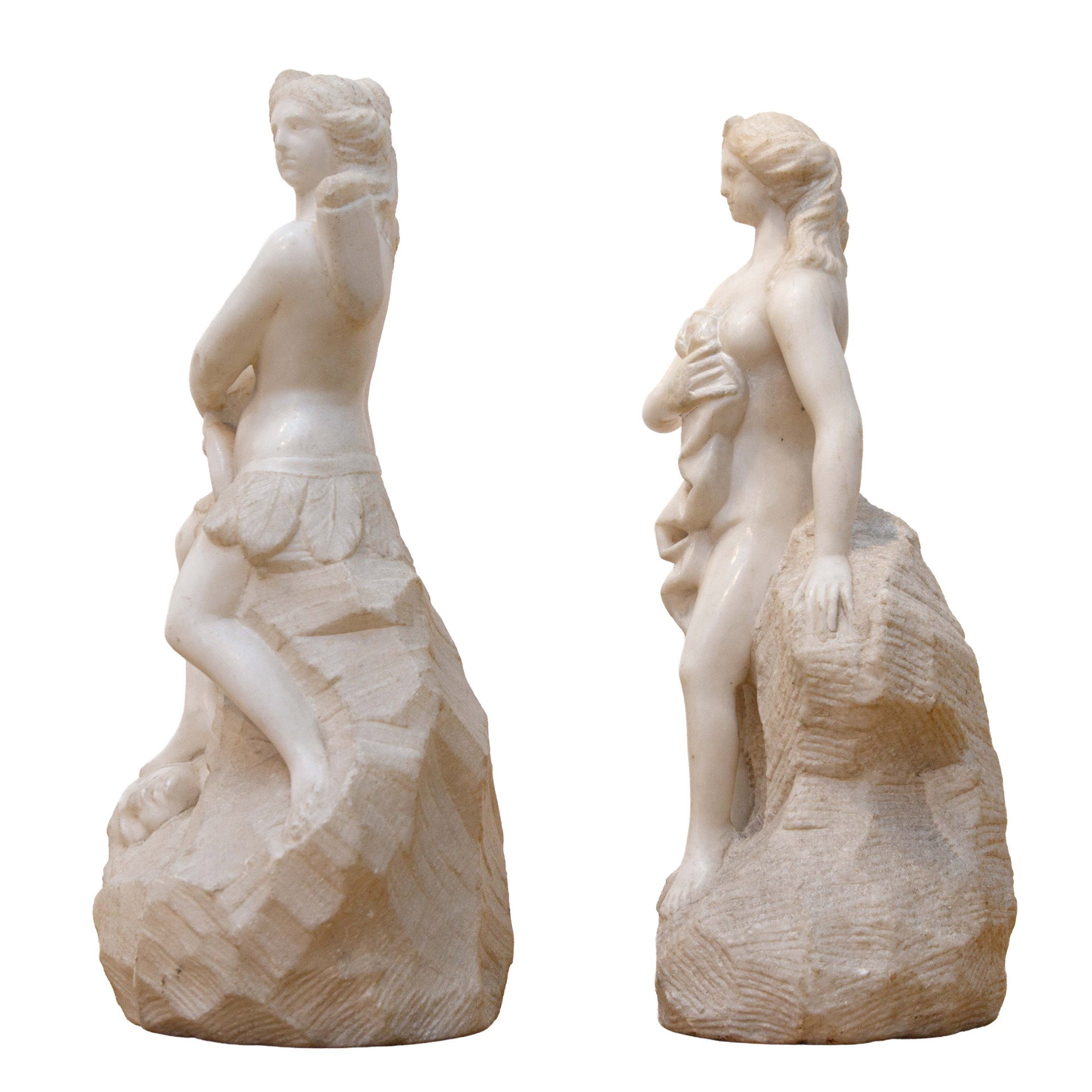
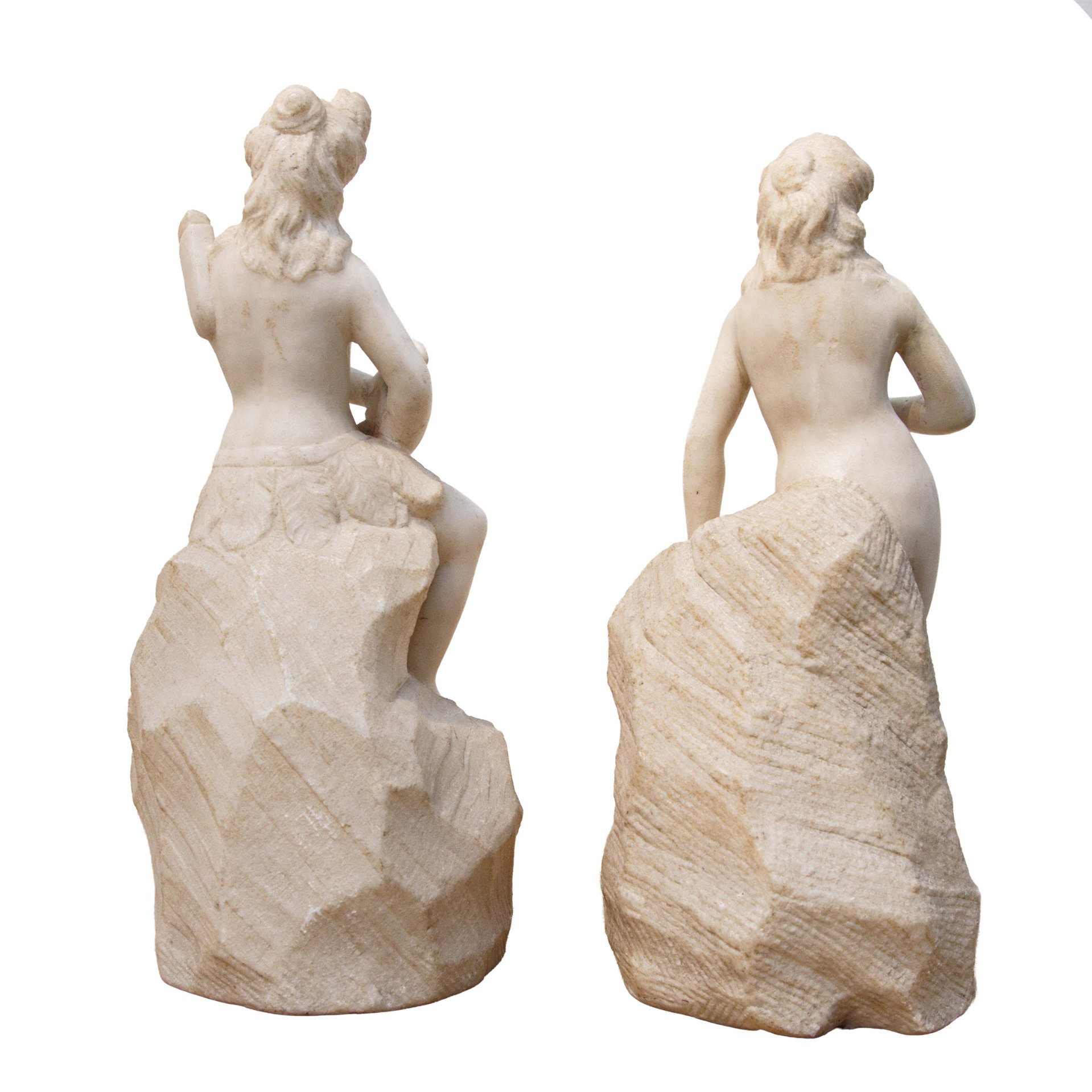
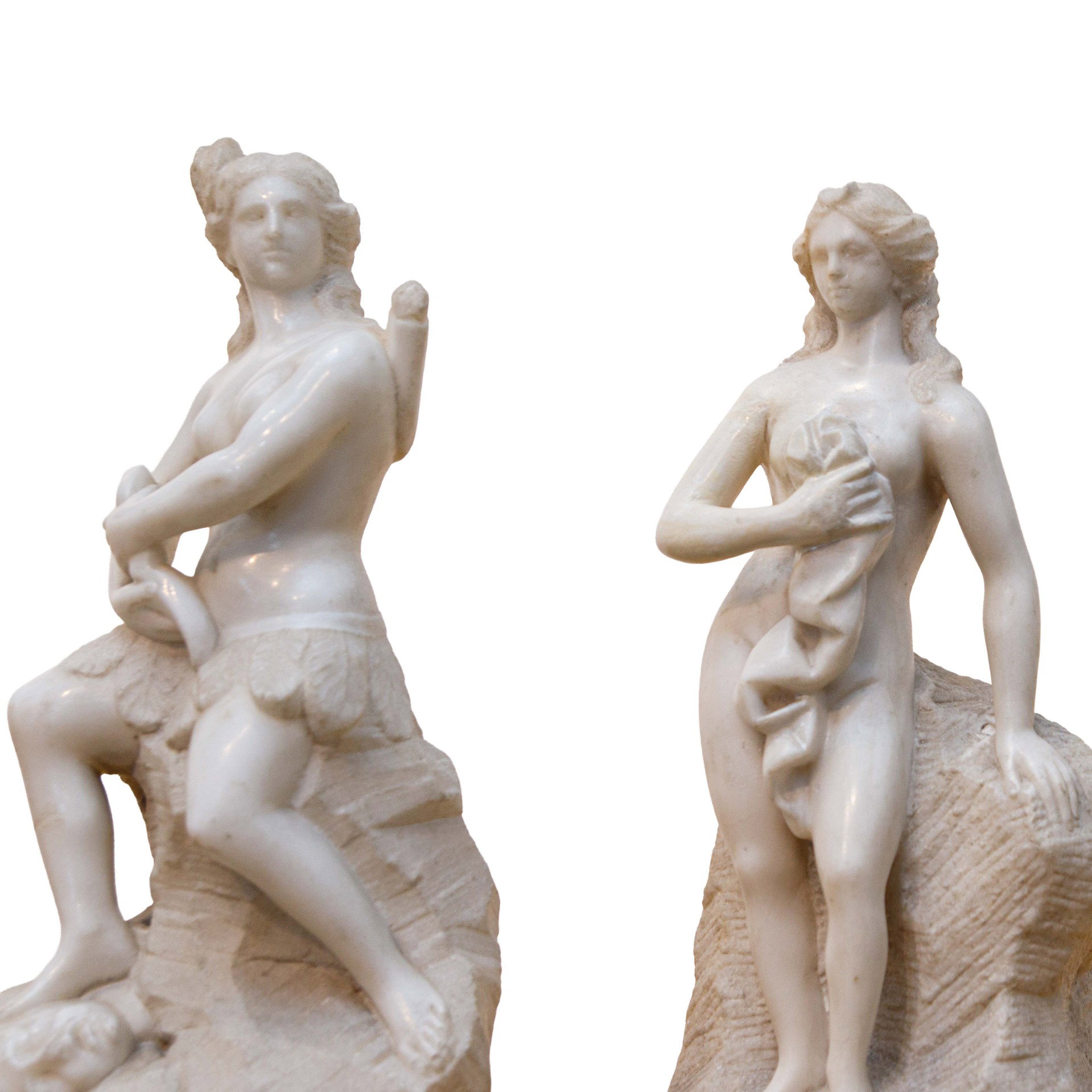
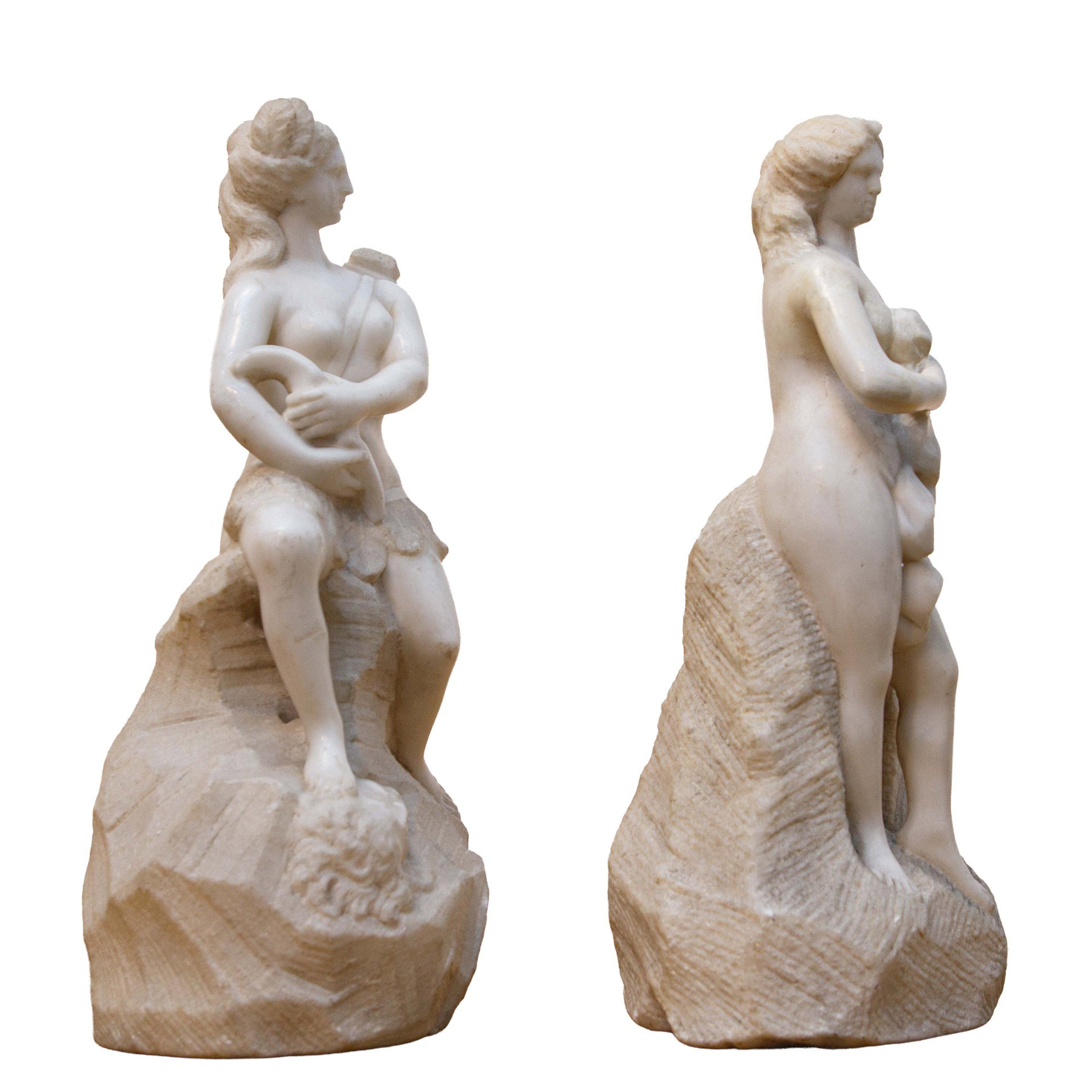
Female hunter figures
(2) Marble, height 30 cm
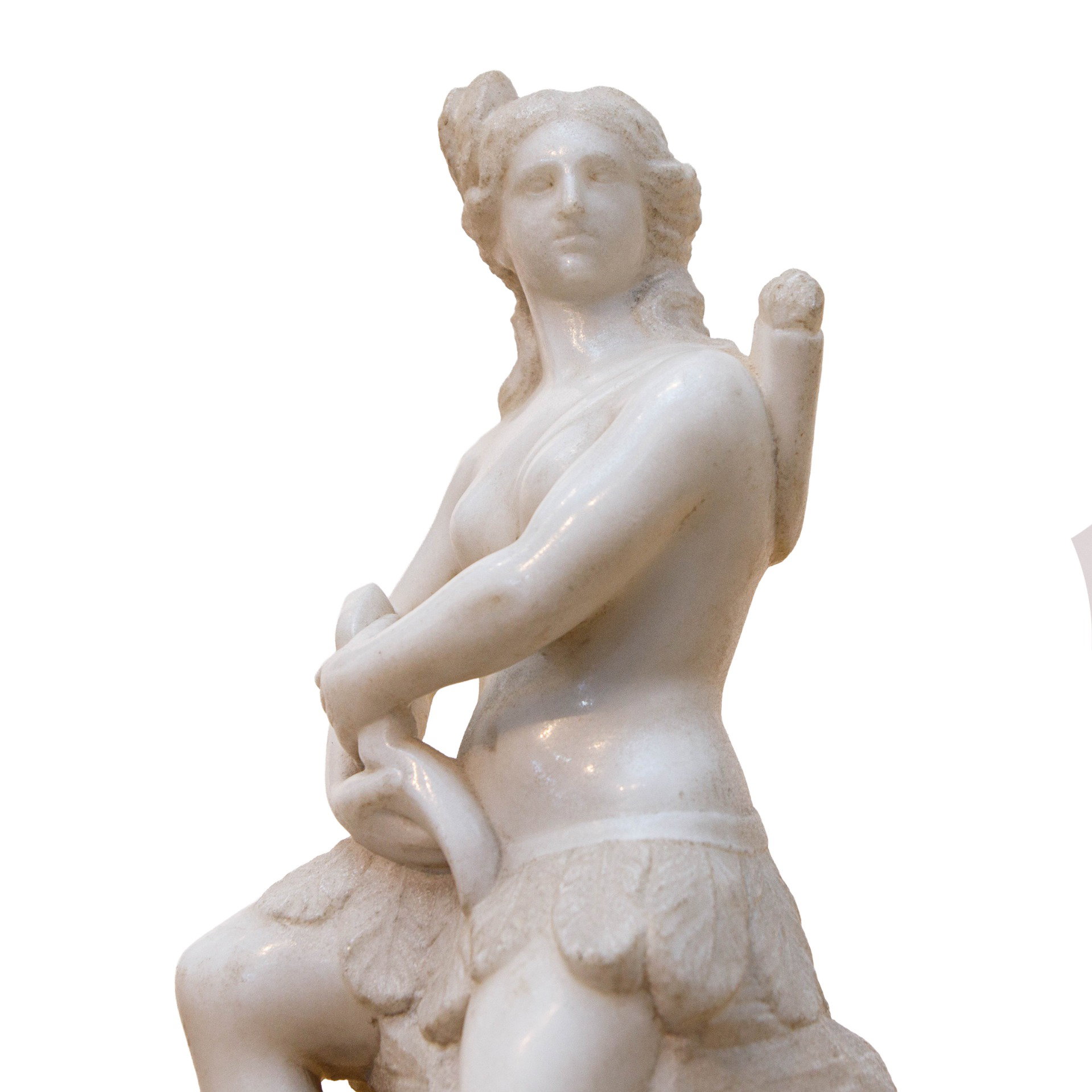
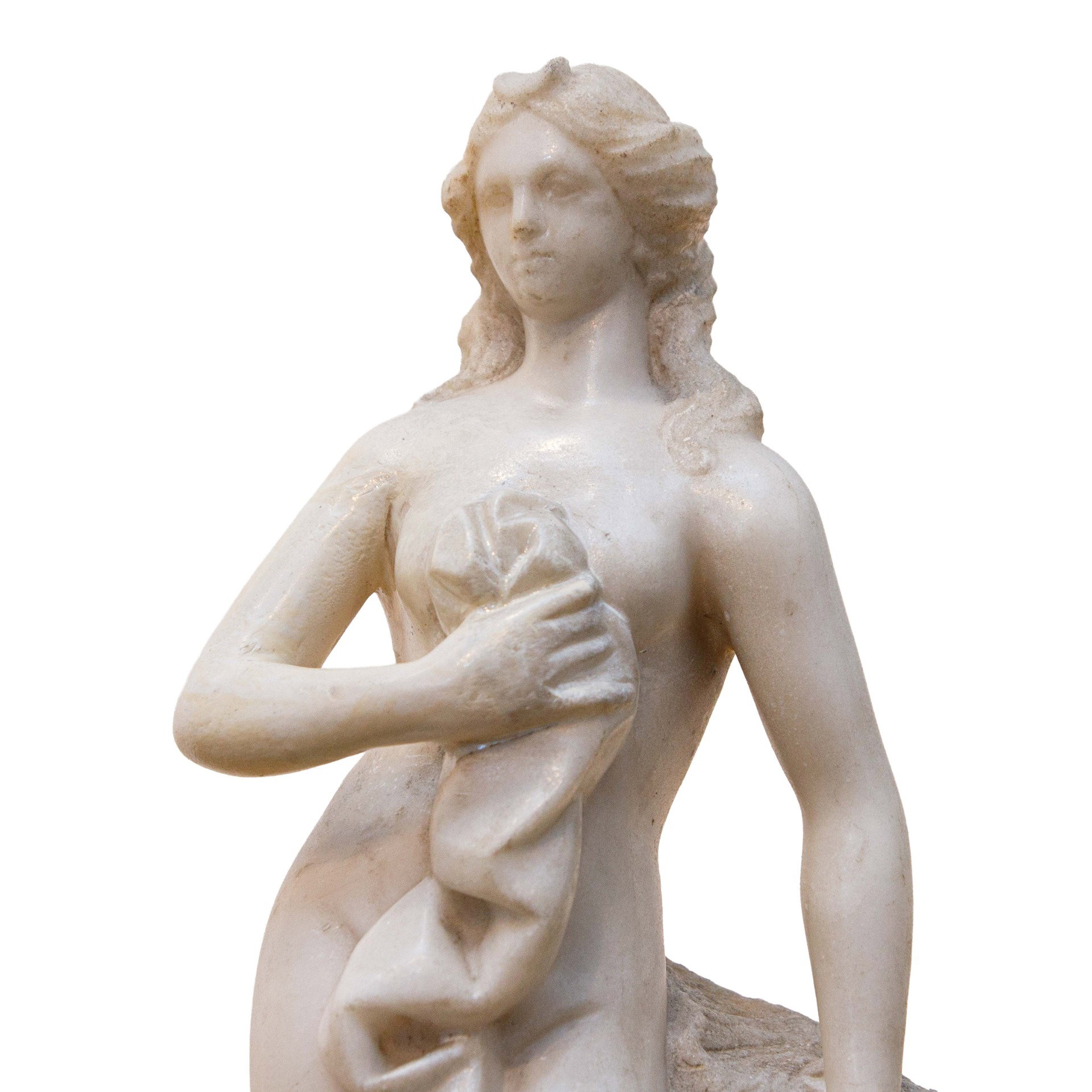
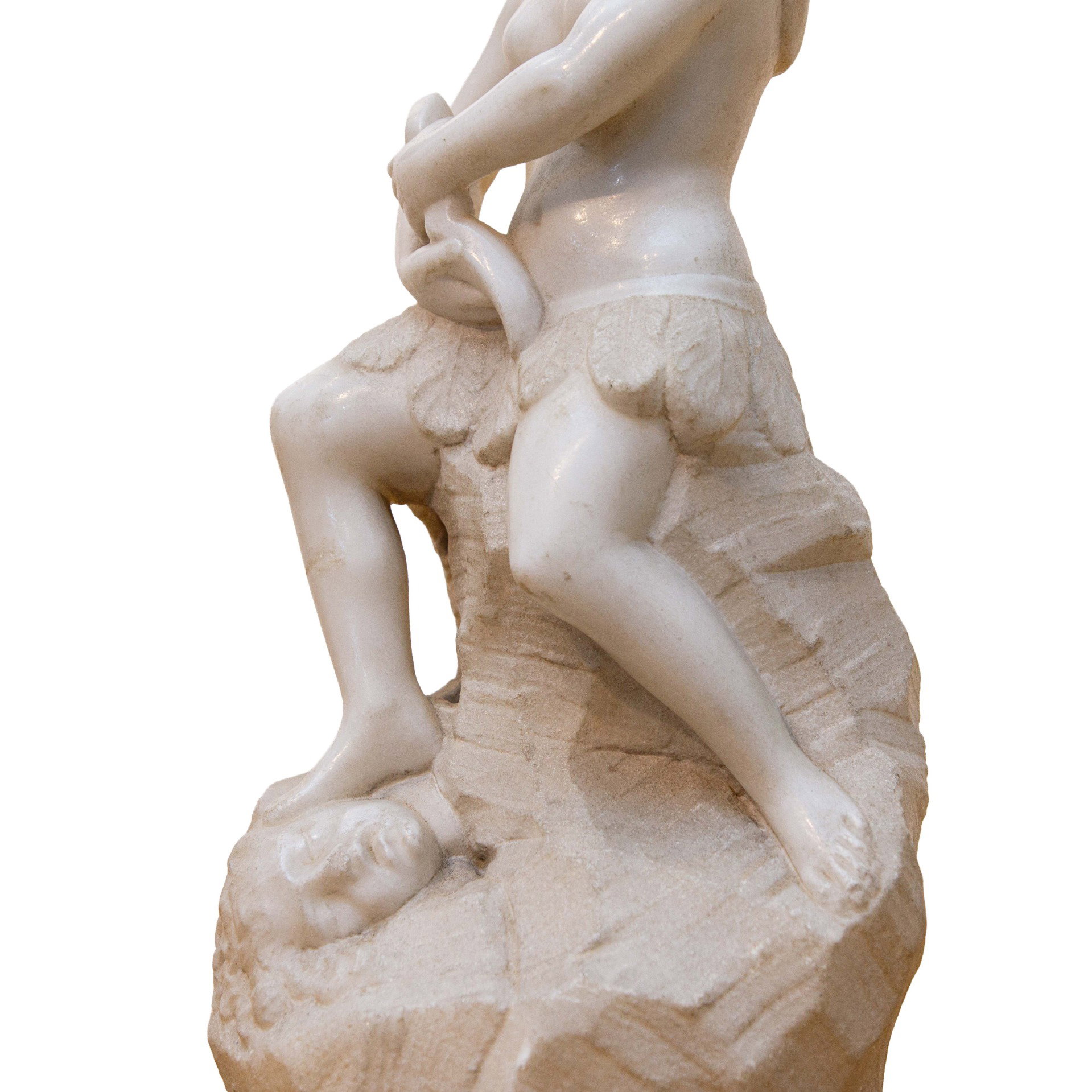
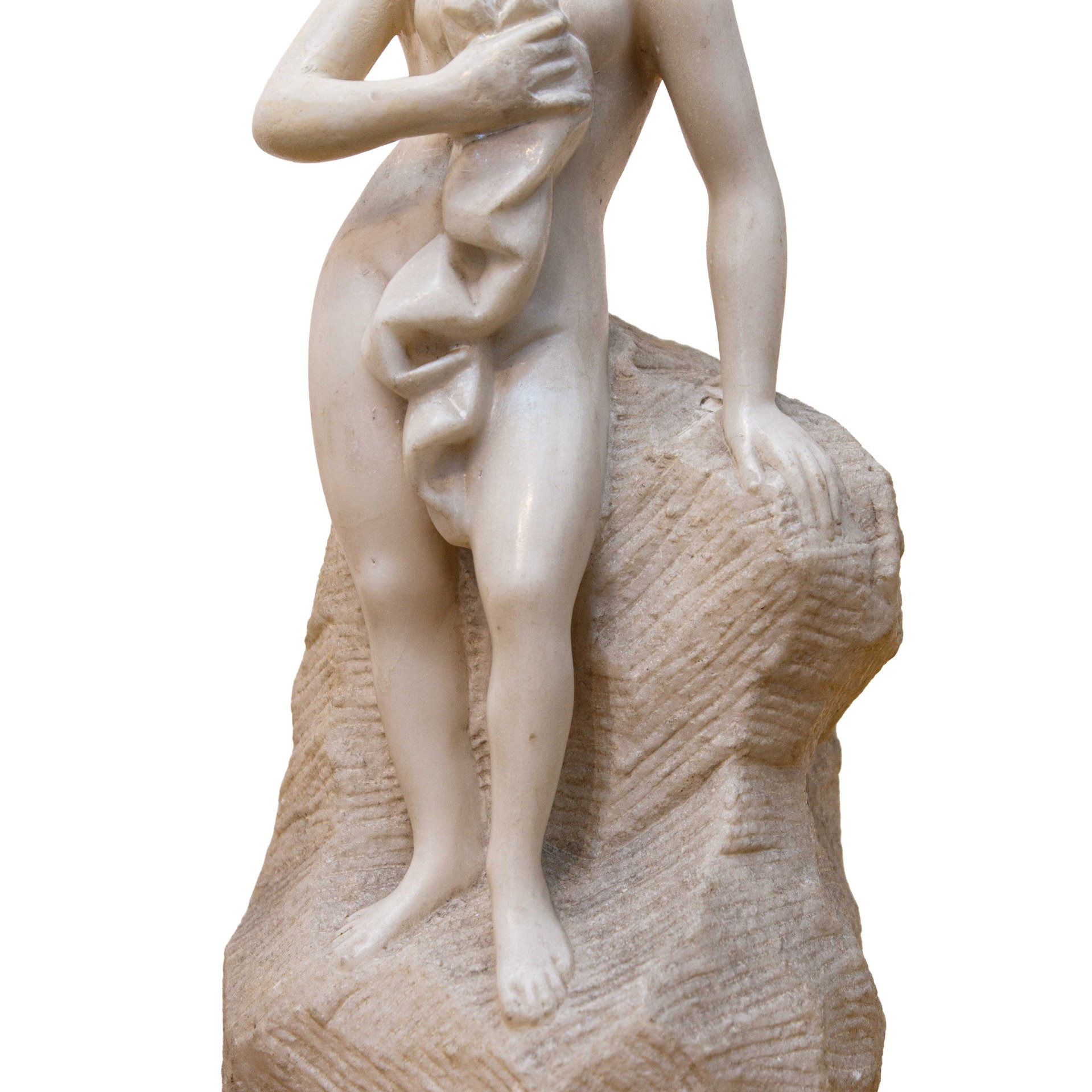
The pair of marble sculptures presented here fits within the Venetian sculpture of the early eighteenth century and in particular within the circle of Francesco Bertos, a sculptor and founder born near Venice, specifically in Dolo, along the Brenta river. The reconstruction of his biography has been very difficult for critics, so much so that they have not been able to confirm with certainty the long-ventilated hypothesis of a youthful trip to Rome. A more careful examination, carried out thanks to new studies made on the occasion of the recent exhibition dedicated to him at the Gallerie d'Italia in Vicenza, has instead deemed more plausible voyages and experiences in the Venetian territory or in the neighboring Romagna, thus outlining a formation linked to the land of origin, where the Bonazza workshop operated, founded by his contemporary Giovanni, of whom he was also a collaborator. The latter was a student of the Flemish artist Giusto Le Court, active in Venice and exponent of that virtuosity of the Flemish and German sculptors of the seventeenth century that so inspired Bertos in the meticulous realization of small sculptural groups in bronze and marble. Other sources of inspiration outside Venice were those of Tuscany, such as the works of the Florentine Giovanni Battista Foggini, a contemporary sculptor and architect in the service of the Medici, and those of Mannerist style of Giambologna, whose compositions - such as the Rape of two figures (1579) - were an inspiration for the most original sculptures of Bertos. In fact, his fame will be established among the great European patrons, such as Tsar Peter the Great, King Charles Emmanuel III of Savoy and Doge Alvise Pisani, thanks to works of reduced size but made with meticulousness and through compositions of extreme complexity and a dynamic structure free to expand in space. Bertos's incredible technical ability amazed his contemporaries so much that this mastery was considered almost superhuman, and even attracting the attention of the Inquisition, which accused him of having made a pact with the devil. In addition to this, much vaunted technical virtuosity, Bertos's sculptures conceal a cultured, allegorical, mythological and symbolic dimension that allows them to be interpreted as precious intellectual games, present, moreover, also in this pair of statuettes connected not only by genre but also by the hunting theme, treated by the artist also in other sculptures such as the Allegory of the hunt at the Royal Palace of Turin. If one can be interpreted as Diana, the Roman goddess of the hunt perhaps represented here in the act of drying herself after bathing, the other would seem to be a hunting divinity closer to the allegorical representation of the American continent, often depicted with a bow and arrows and in a vigilant and combative attitude. The dynamic and fluid poses, the accuracy of the workmanship, the reduced format and the subtlety with which the theme of hunting is treated allegorically thus appear as clear references to the art of this sculptor and to the culture of the period and the areas in which he lived and worked.