Rodolfo Morgari
(Turin 1827-1909)
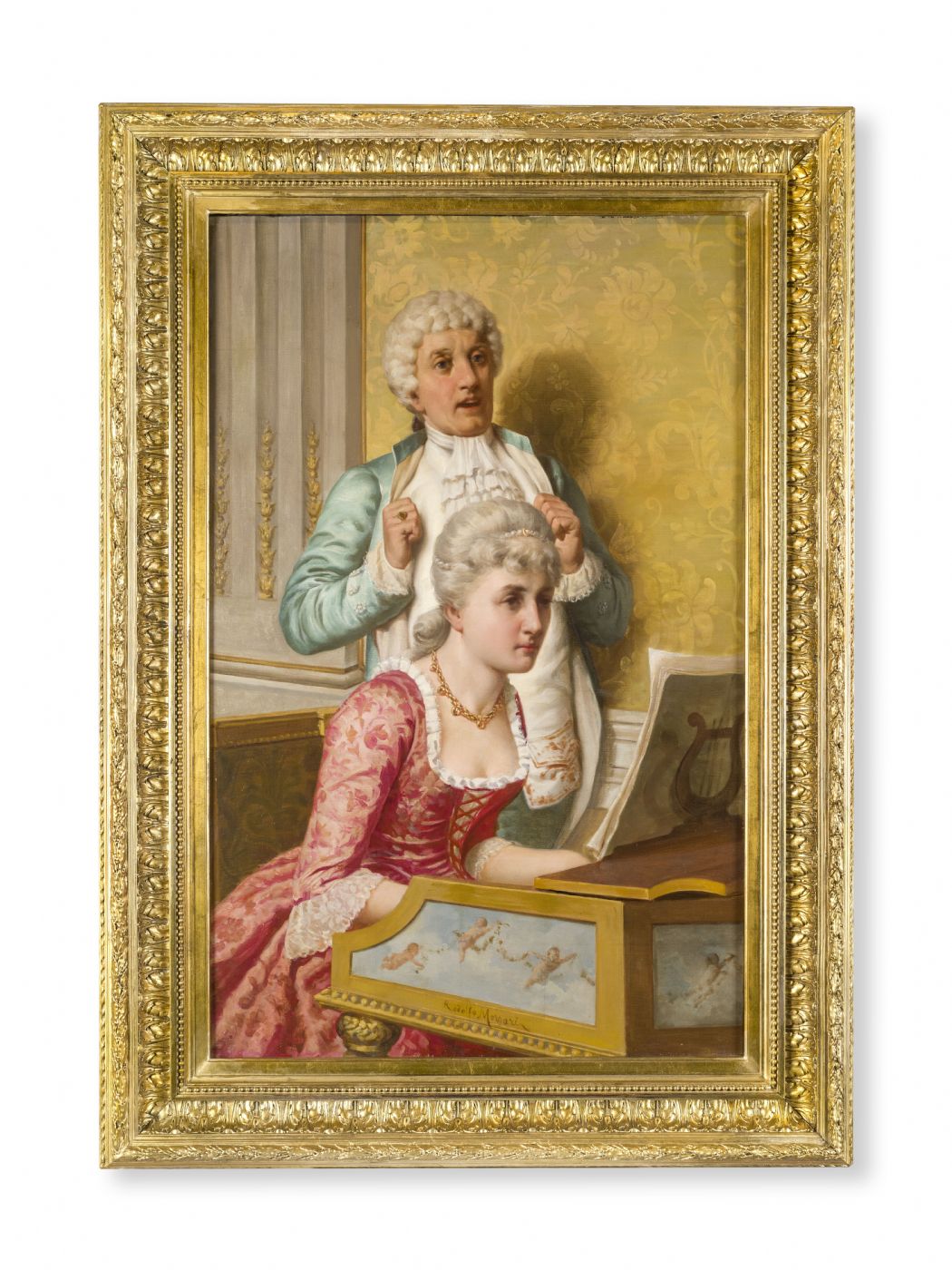
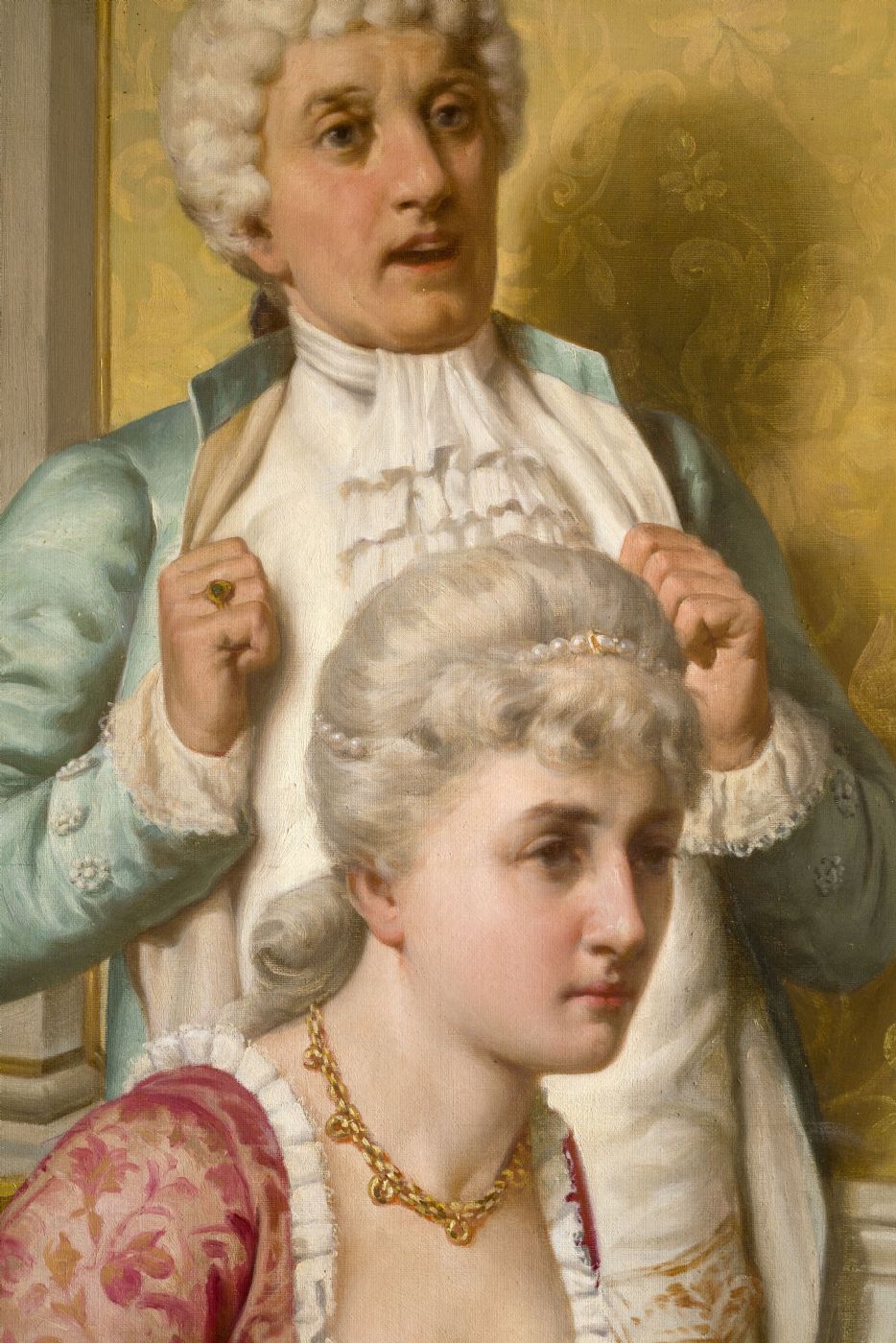
Music Lesson
Second half of the 19th century
Oil on canvas, 100 x 63 cm
Publications: unpublished
Characteristics: signed on the lower right
Rodolfo Morgari, son of Giuseppe and younger brother of Paolo Emilio, both painters, belongs to a dynasty of artists that stretches from the late eighteenth century to the first half of the twentieth century. He studied at the Albertina Academy and was a painter of historical paintings and a decorator. He is responsible for the decorations of some important buildings in Turin and Piedmont (Palazzo della Provincia, formerly of the Dukes of Aosta; Royal Palace, Palazzo Corbetta Bellini of Lessolo, Royal Castle of Racconigi) and a large number of churches in Piedmont. An appreciated artist, he also carried out an important activity as a restorer and in 1858 he was appointed by King Vittorio Emanuele II as restorer of the Royal Palaces. At the National Exhibition of 1884 he was awarded a gold medal for the imitation of ancient tapestries executed with particular skill. He taught for many years at the Albertina Academy of Fine Arts. He is best known to the general public as the author of vast frescoes of sacred subjects for numerous Piedmontese churches; in reality Morgari was also an excellent portrait painter, author of genre and historical scenes, and a refined painter of eclectic taste, with a strong inclination for a neo-eighteenth-century style of French taste, as demonstrated by the frescoes and decorations executed in 1888 for the vault of the Hall of the Factories of Paul V Borghese in the Palazzo del Quirinale.