Genoese School, Circle of Domenico Piola (Genoa, 1627 – 1703)
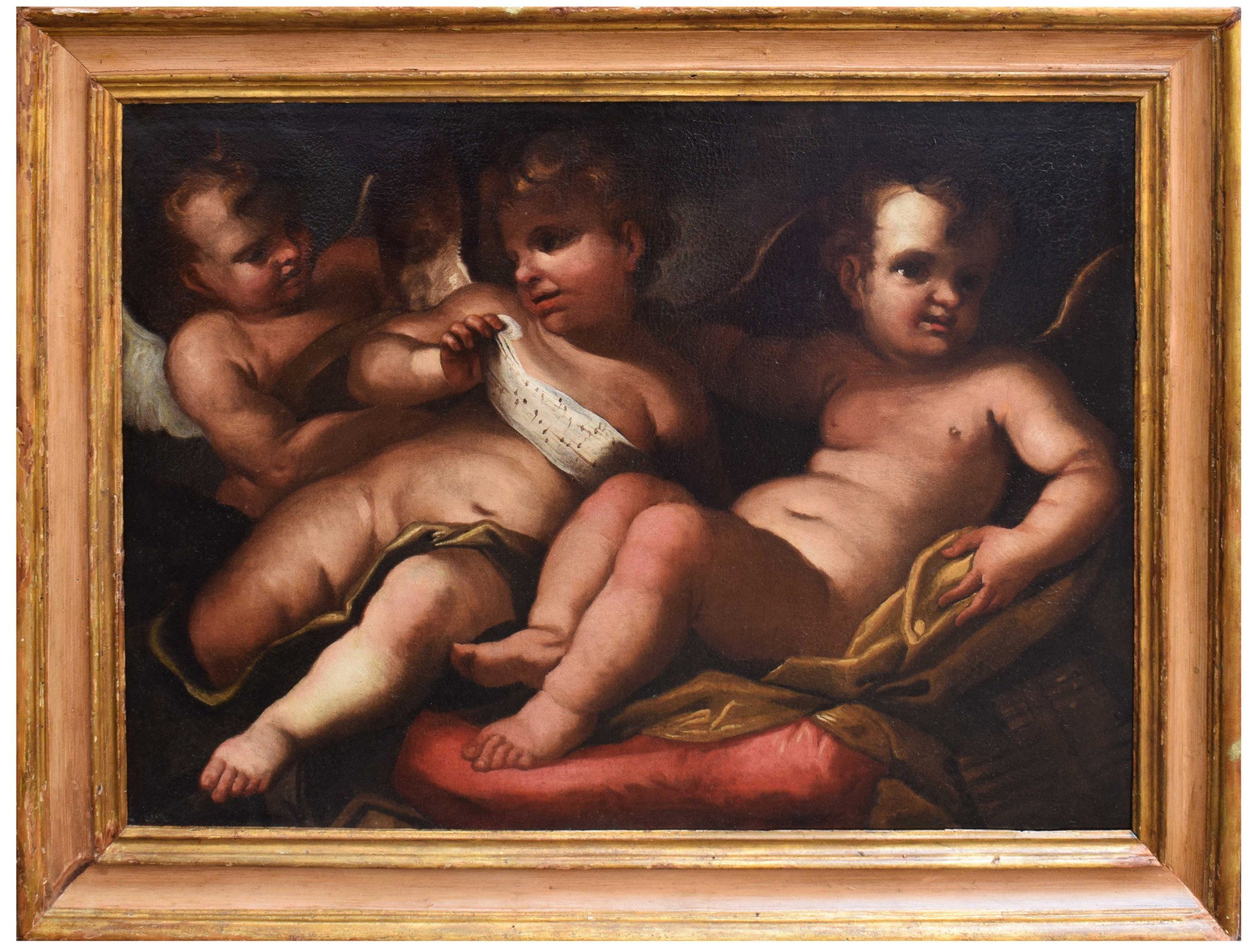
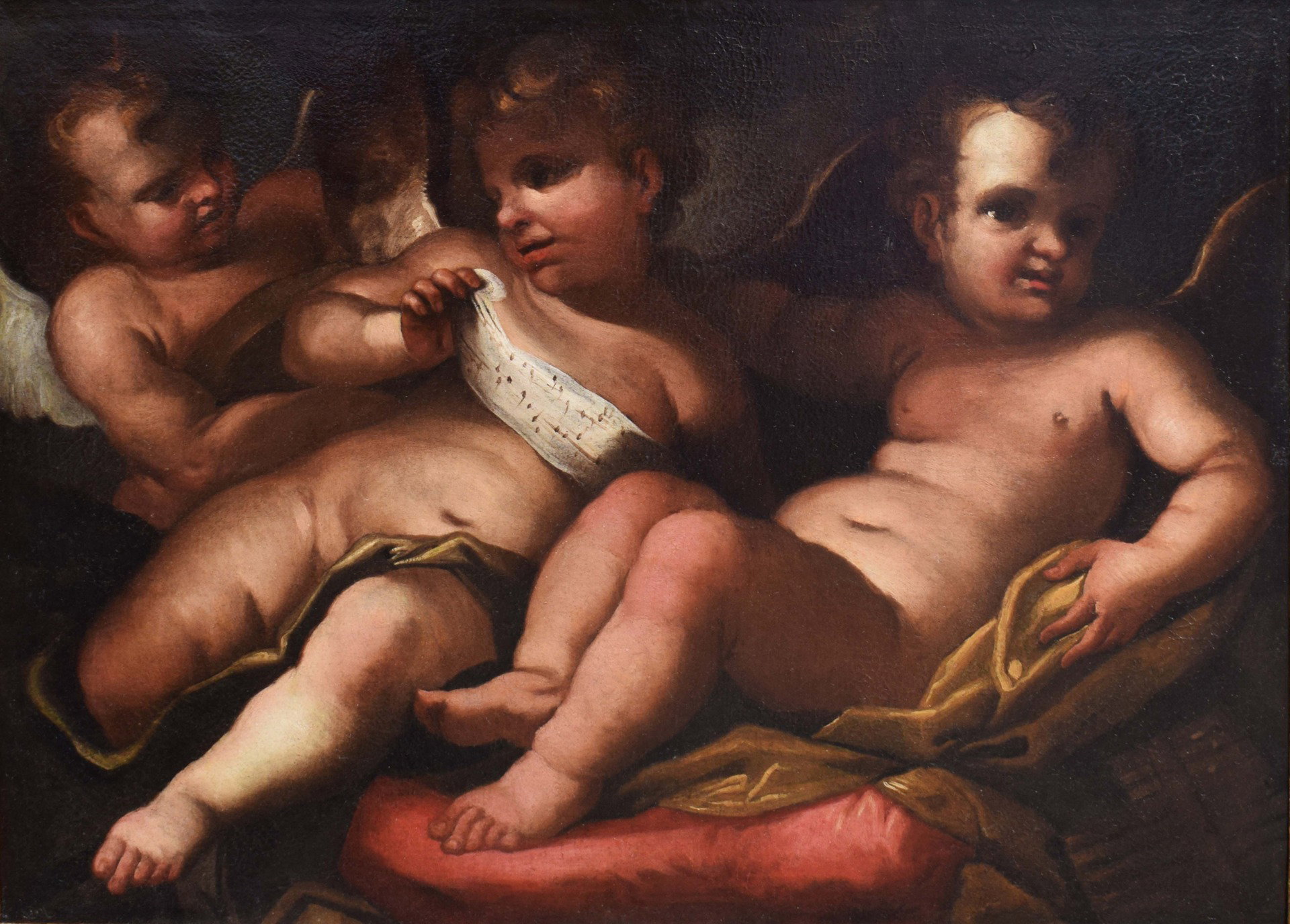
Musical Putti
Oil on canvas, 67 × 96 cm
Gilded and carved frame, 17th century, 86 x 110 cm
The examined painting depicts a group of three nude putti in an intimate and harmonious setting, typical of Genoese Baroque painting. The work is indeed placed in the heart of the Genoese seventeenth century, a period of great splendor for the city, characterized by the affirmation of a refined and theatrical Baroque language. The putti, personification of childhood innocence and joy, are represented here with particular emphasis on soft and luminous forms, a detail that further allows us to trace the work to an artist from the circle of Domenico Piola (1627-1703), one of the most important figures in 17th-century Ligurian painting. A pupil of his brother-in-law Stefano Camogli and then influenced by Valerio Castello, Piola knew how to combine the Genoese decorative style with classicist and naturalist suggestions, matured thanks to his knowledge of Emilian (Correggio, Guido Reni) and Roman painting. Founder of the Casa Piola workshop, he was at the center of intense decorative activity in Genoese palaces and churches, coordinating numerous collaborators and contributing to the spread of the Baroque language in Liguria. Alongside Piola, in the Genoese area, there were artists such as Gregorio De Ferrari, Giovanni Battista Gaulli (the Baciccio) and Valerio Castello, all involved in the decoration of churches and noble residences. Compared to his contemporaries, Piola shows a sweeter and more decorative vein, preferring a luminous and soft register, with figures with rounded modeling and rich but balanced compositions.
Piola's painting, compared to that of De Ferrari for example, is less dynamic and nervous, but more attentive to decorativeness and visual pleasantness. This taste is reflected in the predilection for playful and allegorical subjects, such as putti, often also used as ornamental elements in quadrature and frescoed ceilings.
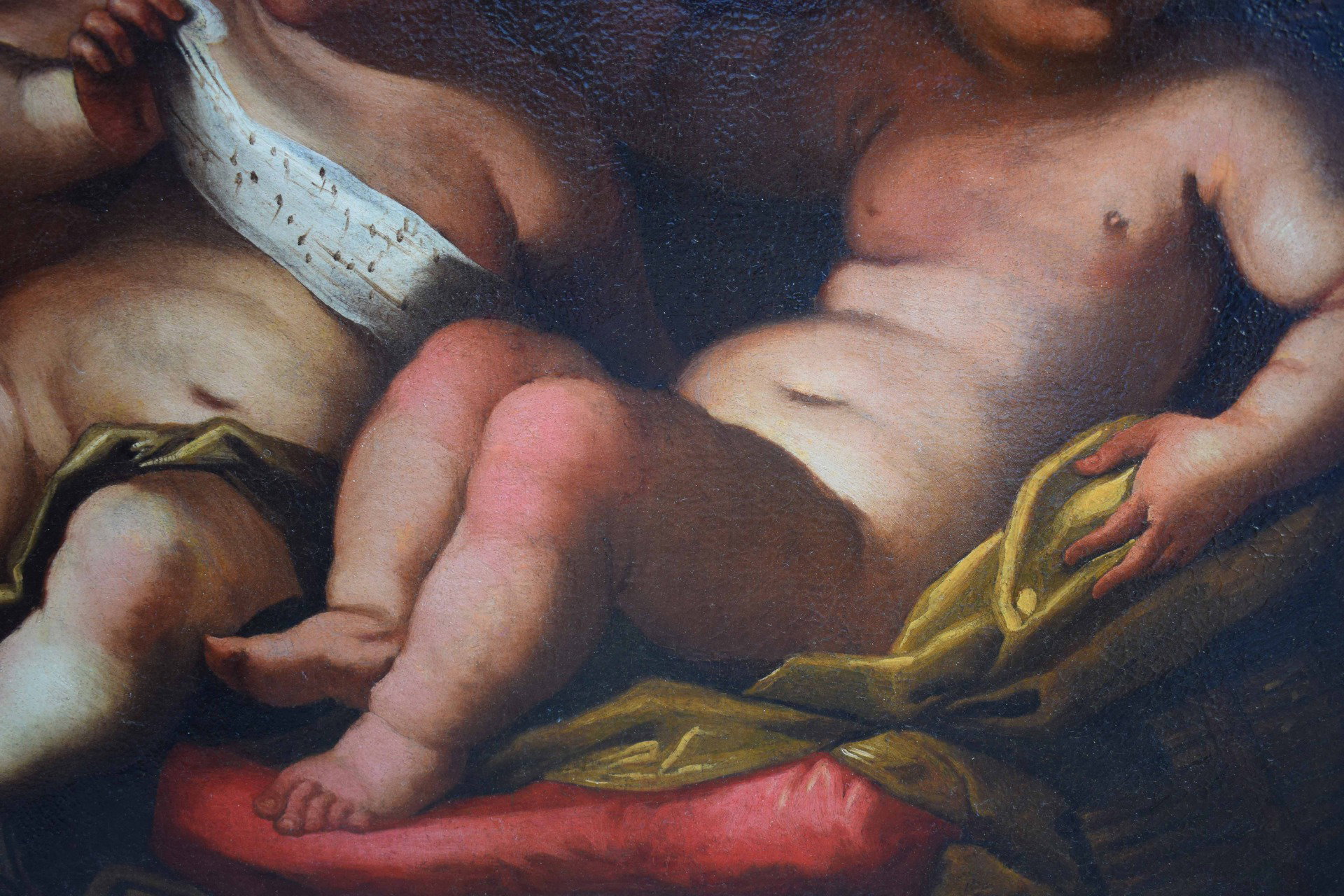
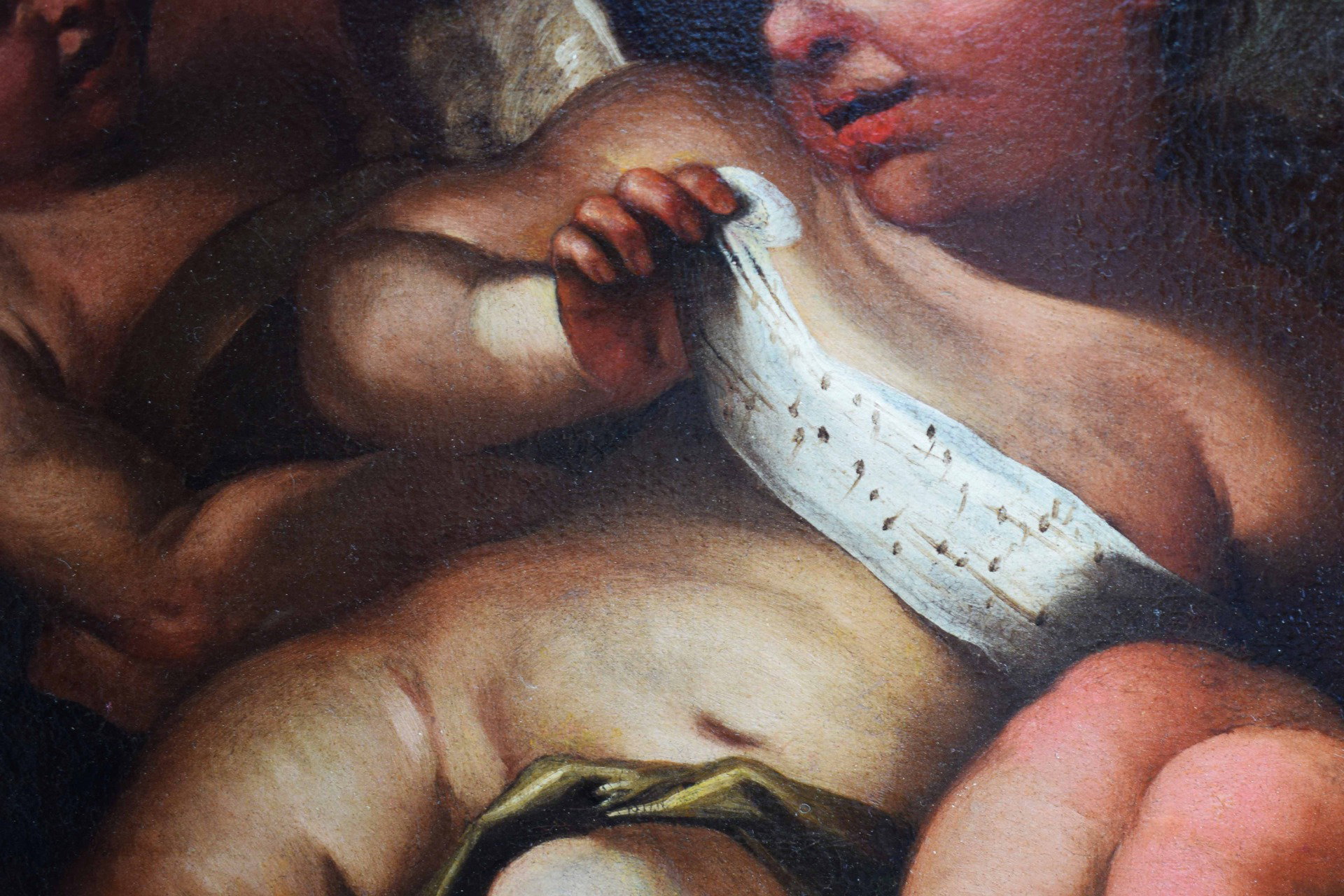
The central putto holds a musical scroll, while another seems to read or accompany it, suggesting an allusion to celestial music, a symbol of universal harmony and divine beatitude. The atmospheric rendering, obtained through a calibrated use of light and shadow, gives the group an almost sculptural presence.
The putti, Renaissance heirs of the classic "cupids", assume a polyvalent symbolic function in the seventeenth century: they embody lightness, childish joy, but also the spiritual and paradisiacal dimension. In Baroque painting, they are frequently associated with music, a symbol of cosmic harmony and divine praise. The musical scroll held by the central putto could suggest a reference to the harmony of the spheres or to the angelic celebration, themes dear to the Counter-Reformation tradition which saw sacred music as an instrument of spiritual elevation.
The use of music as a decorative theme fits fully into the Baroque poetics of sensory and emotional involvement, and in the Genoese context also responds to the aristocratic taste for the refinement of the decorative and musical arts.
📝All our works are accompanied by a detailed certificate of authenticity.
📦 Professional packaging and insured shipping to ensure maximum safety during transport.
📲 For more information, do not hesitate to contact us +39 3335747733 –
[email protected]
🔍Possibility of VIDEO CALLS and direct viewings by appointment in MILAN and OMEGNA (Vb).
🌐 More information and photographs: www.dequart.com