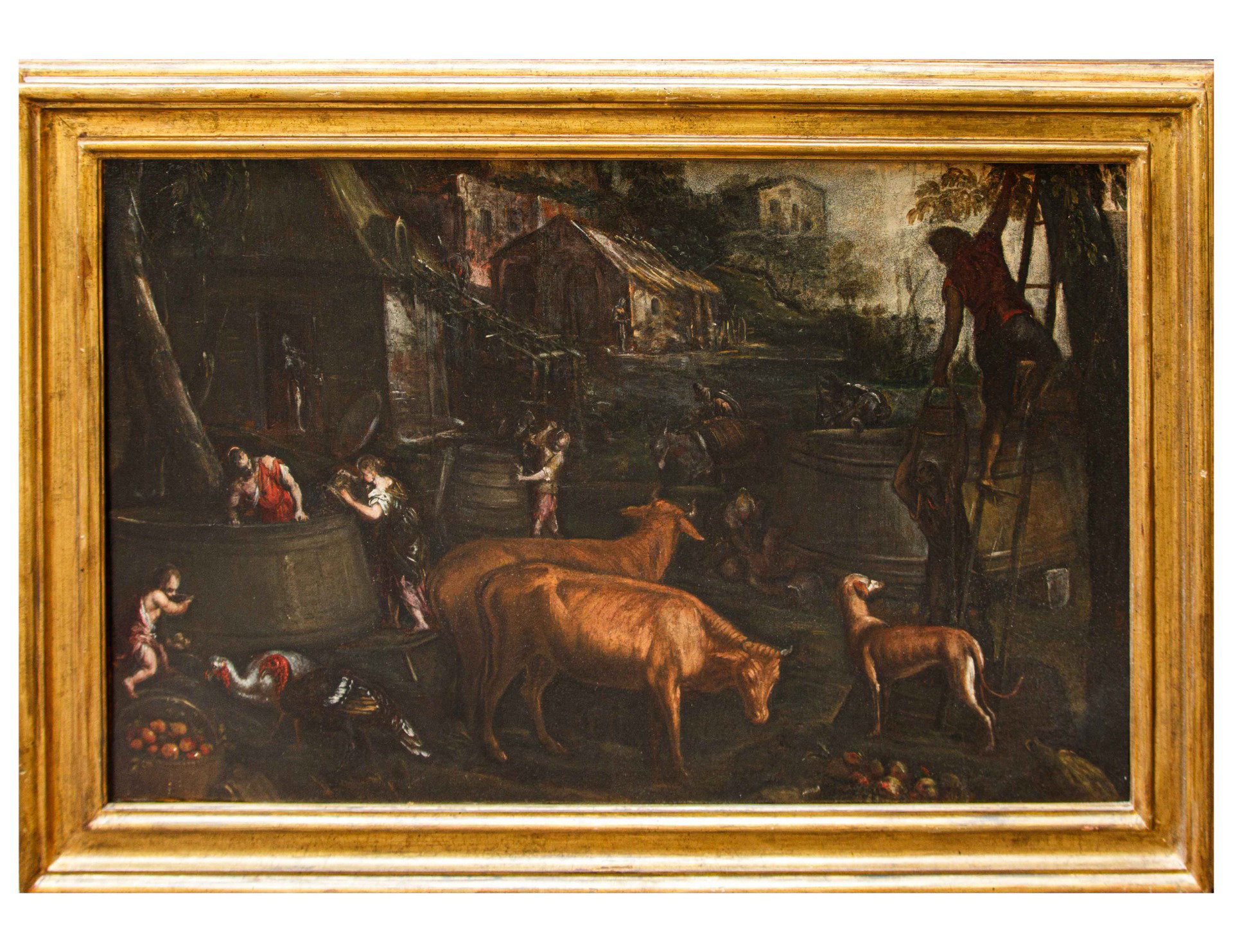
Francesco Bassano (Bassano, 1549 – Venice, 1592), Autumn
Description:
Francesco Bassano (Bassano, 1549 – Venice, 1592)
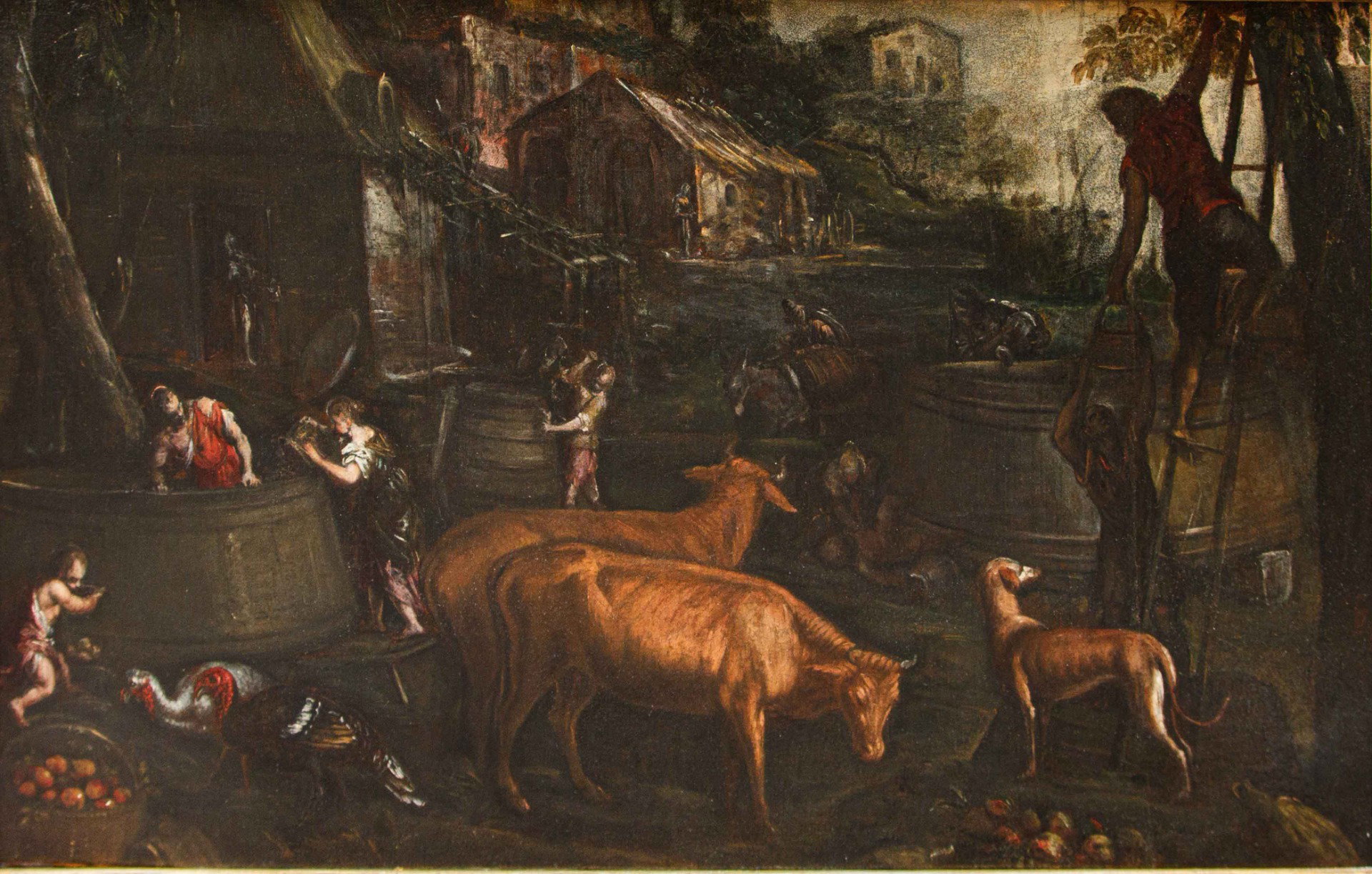
Autumn
Oil on canvas, 119 x 72 cm
With frame, 94 x 139 cm
The canvas belongs to the sphere of the large and fertile workshop originated by Jacopo Da Ponte in the Venetian city of Bassano. In the workshop, starting from the models of the founder Jacopo, the sons Francesco and Leandro and the other members of the family replicated and reworked pastoral, allegorical, sacred subjects and, as in the case under analysis, the series of the Four Seasons, particularly appreciated by collectors or of the Elements.
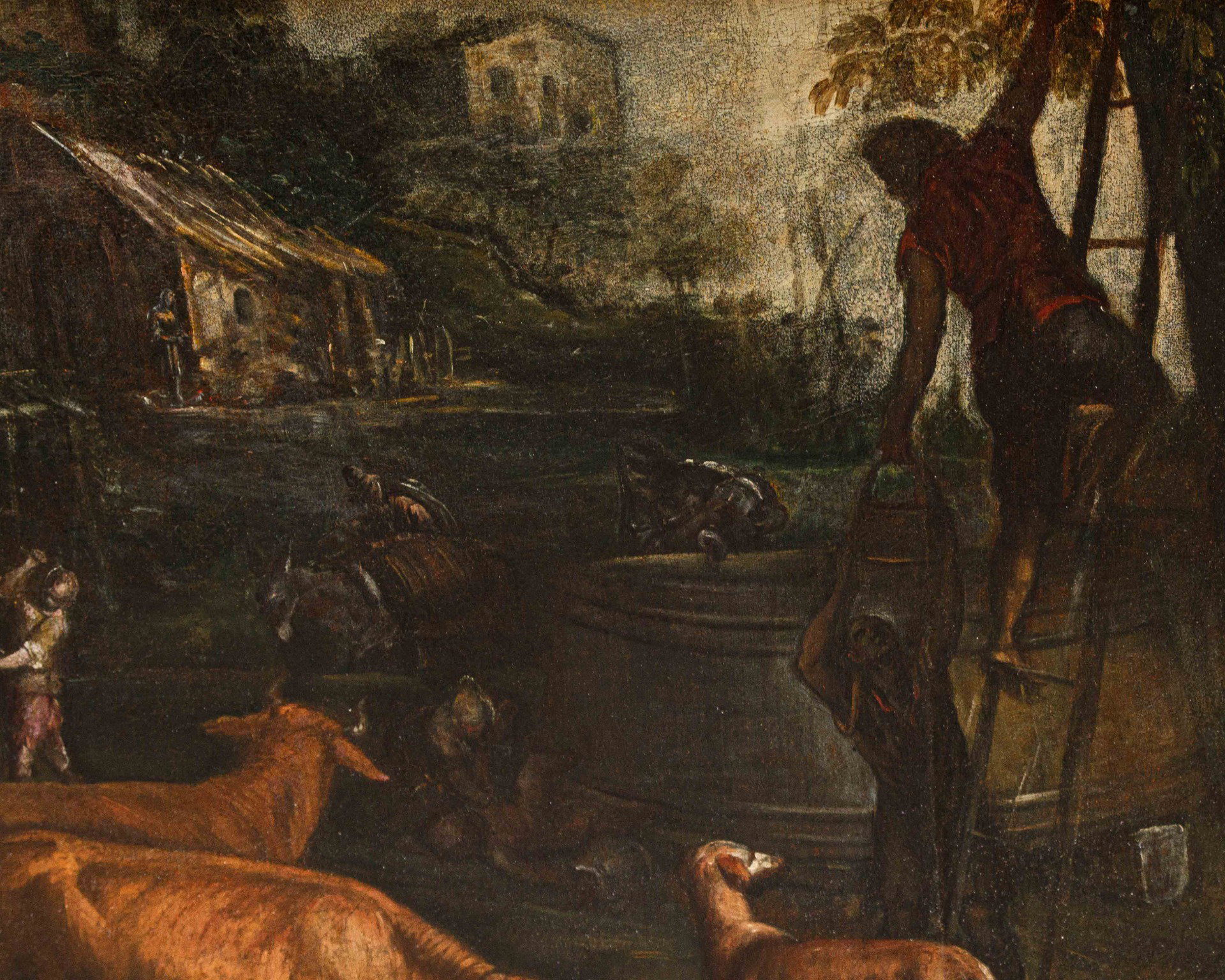
Given the characteristics of the painting, the canvas is to be attributed to a painter active in the circle of the Bassano. This is a version of Autumn that finds its origin in the cycles of the Seasons. In this context there are at least three series dedicated to this subject: the oldest, probably, is the one kept at the Kunsthistorisches Museum in Vienna, where Summer and Autumn are autograph canvases by Jacopo Bassano, while Spring and Winter are known thanks to the replicas by Francesco kept in the same museum.
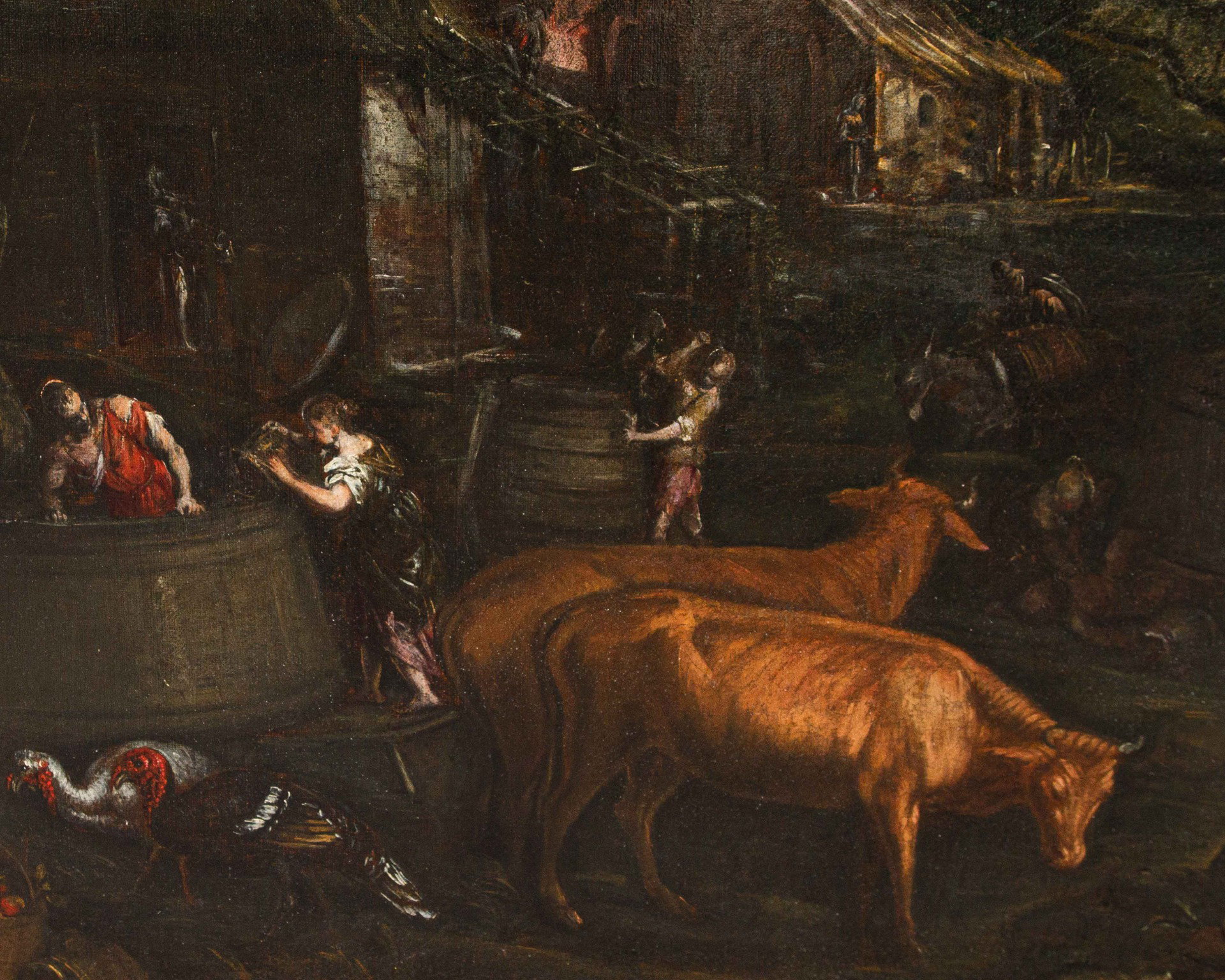
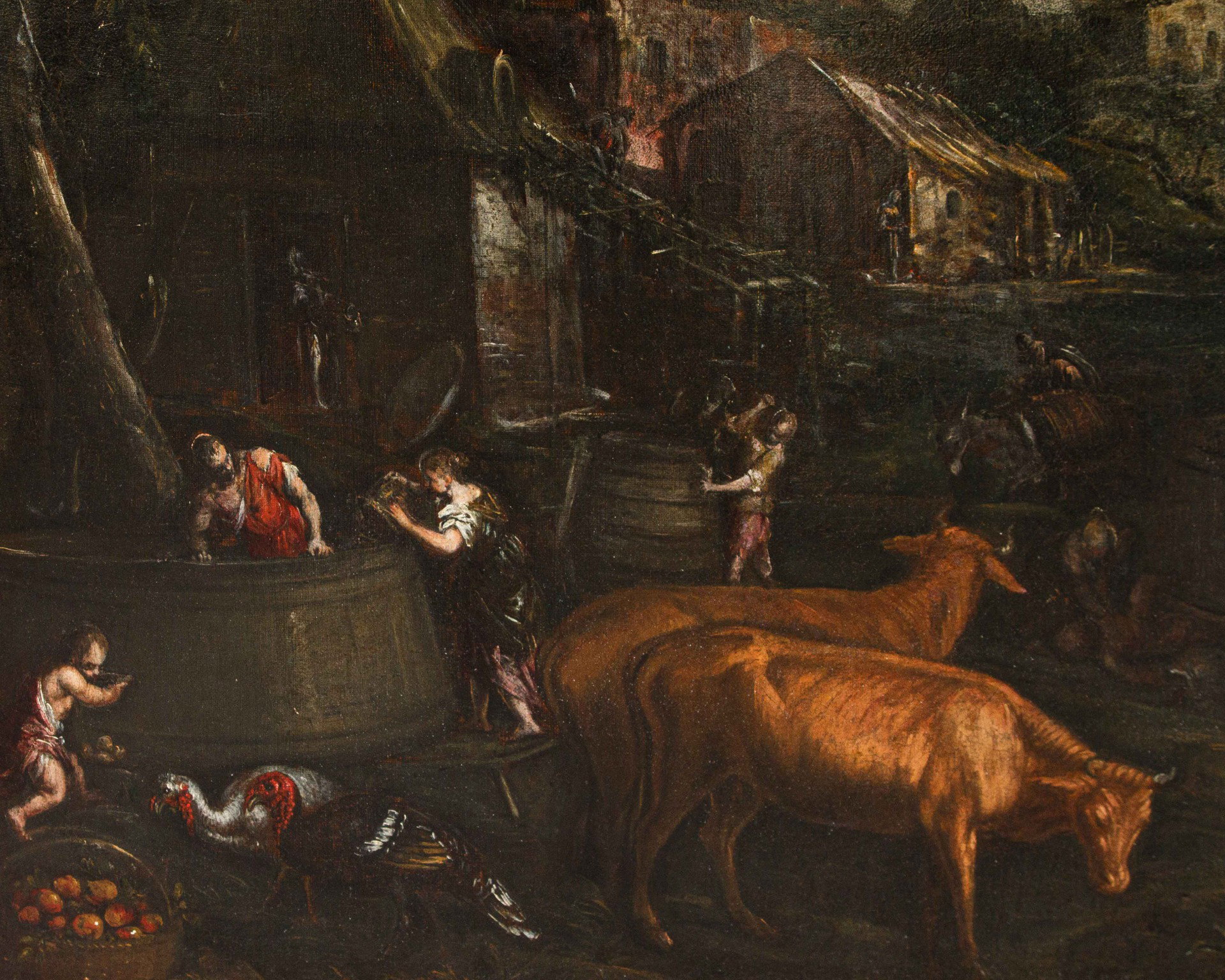
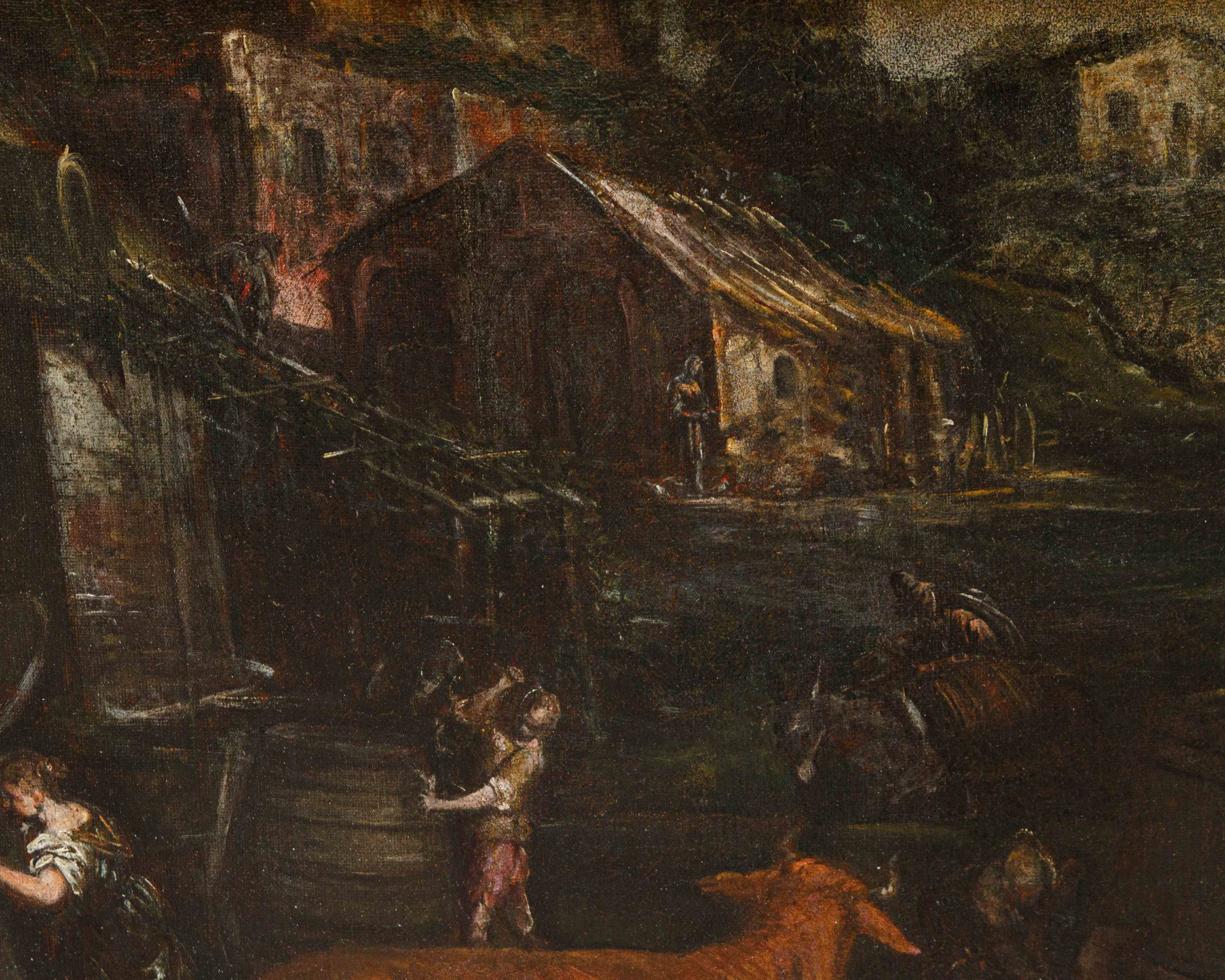
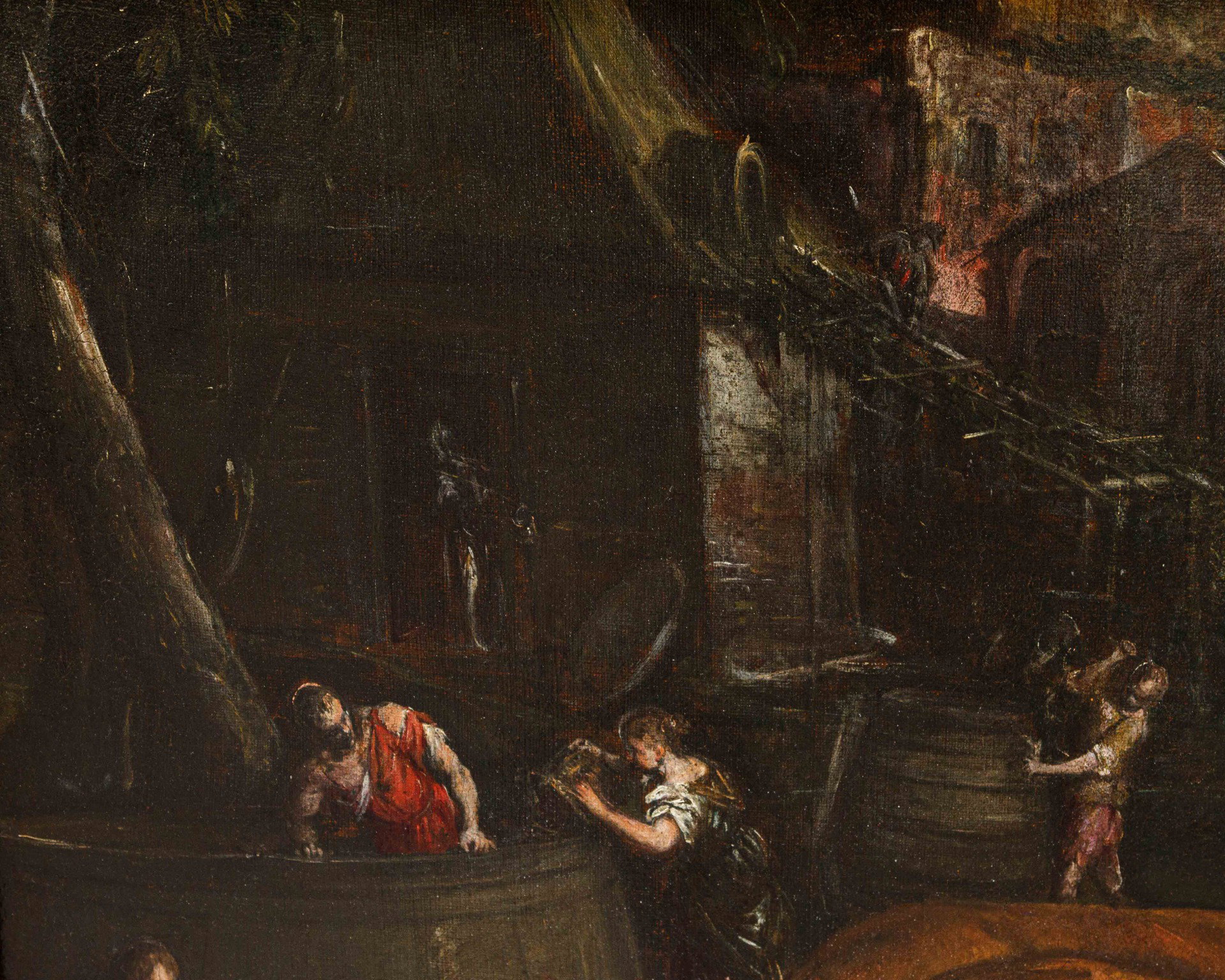
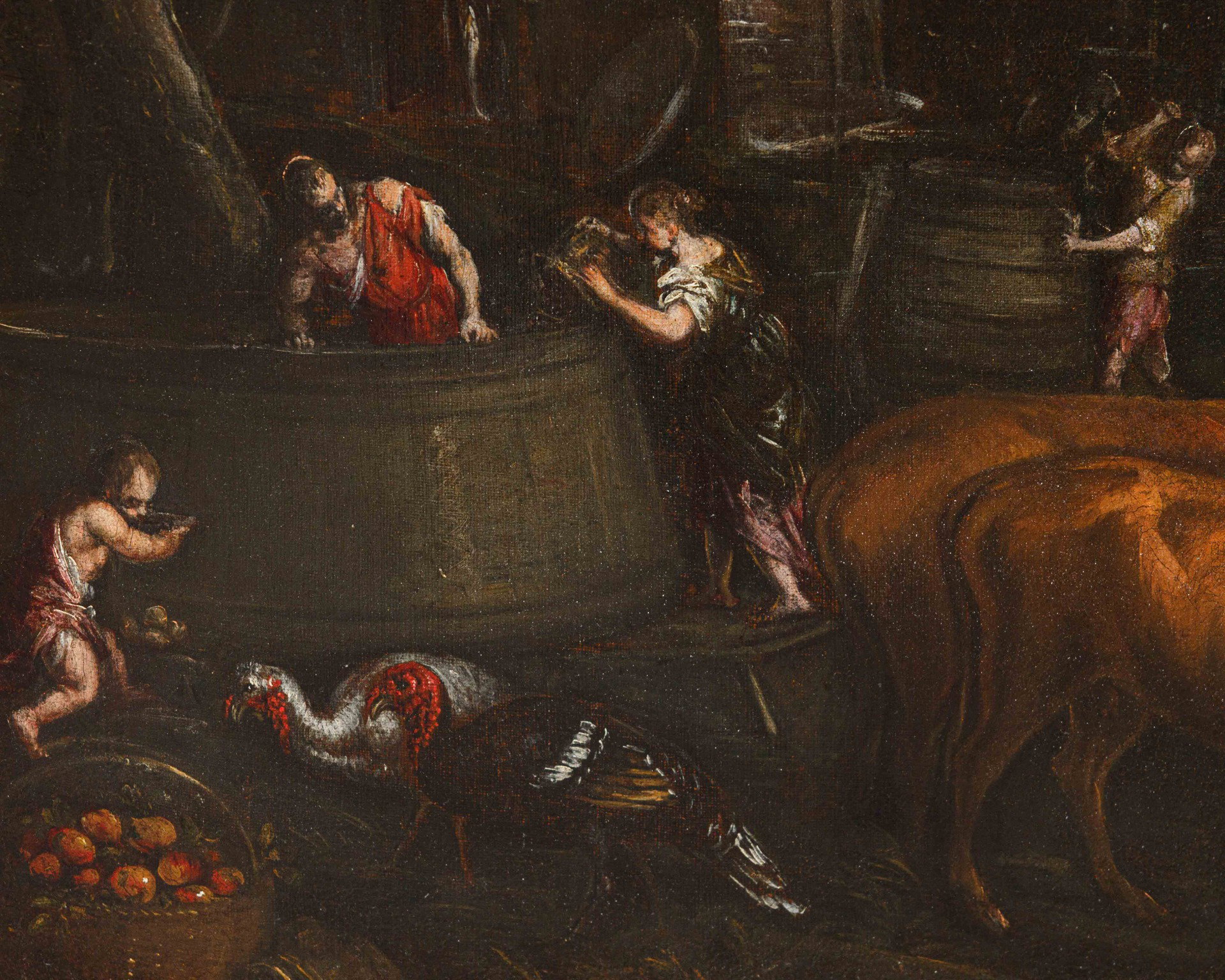
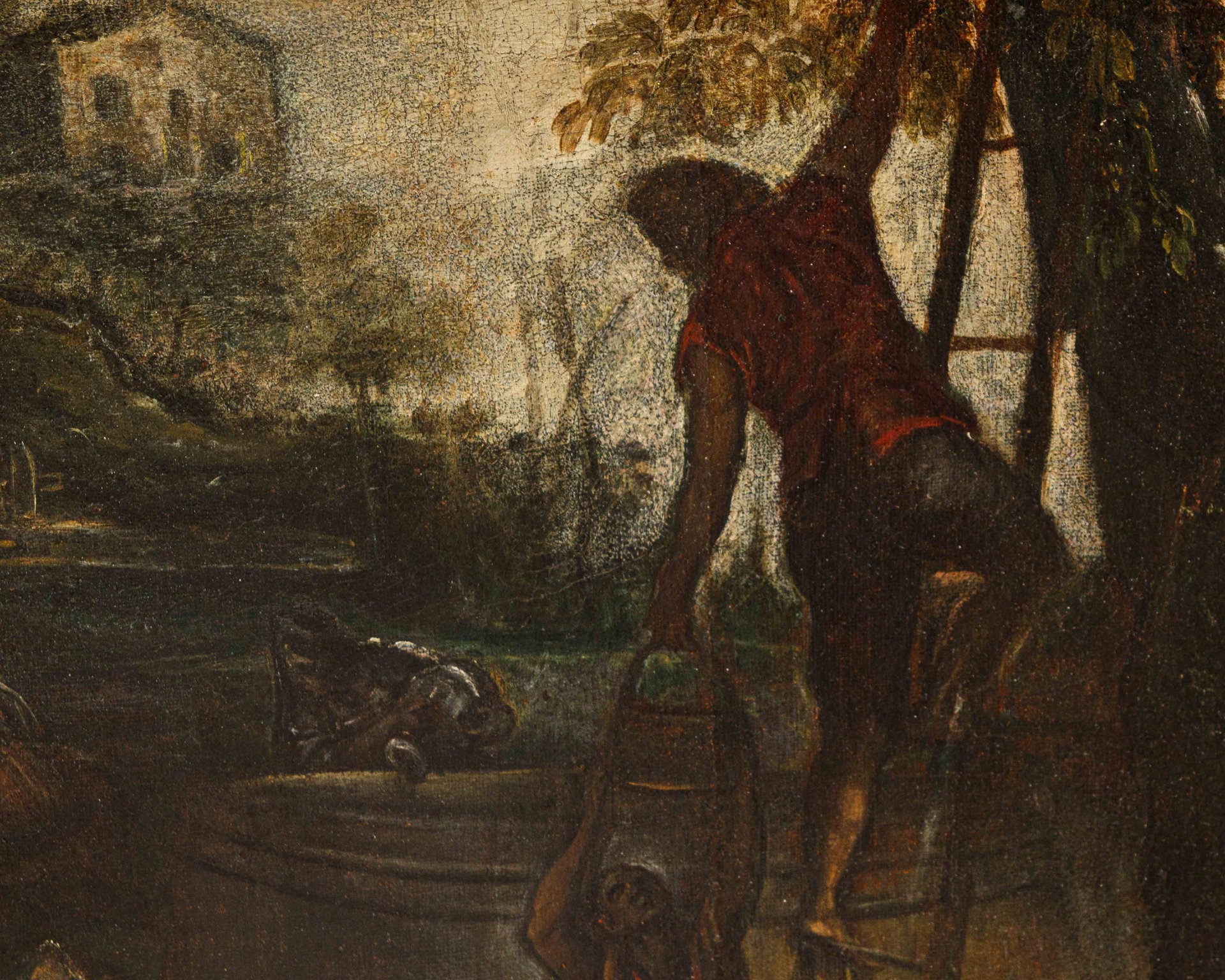
The workshop then replicated the series in four canvases, now at the Castello Sforzesco in Milan, dating back to 1573. Autonomous replicas by Francesco Bassano followed, taken from the first series, of which there is, for example, a complete cycle at Palazzo Spinola in Genoa. A third series, dispersed, is documented by a table from the "Theatrum Pictorium", a catalog of the art collections of Archduke Leopold William, published in 1660. Another cycle, however missing Summer, is kept at the Galleria Borghese in Rome. The examined painting is well connected to the canvases of similar subject mentioned, from which it differs with some details. Autumn is depicted through the representation of the gestures and craft works related to the harvest and the pressing of grapes. The whole is harmonious, rich in figures intent on autumn works and animals, built with brushstrokes that translate into violent bursts of light, with luminous flashes and minutes, while the rest of the composition remains in the light penumbra. In the foreground there are two cattle, to remember that in this season the herds are made to return from summer pastures, while the large vats are stored the must. From it will be formed the new wine, a symbol of joy and spring rebirth. In the central part of the painting a farmer is completing the banding of the barrel, thus ensuring against any failure of the wood. Characteristic of the production of the Bassano and in particular of the works of Francesco is the landscape glimpse that opens in the background, crossed by an almost golden light.