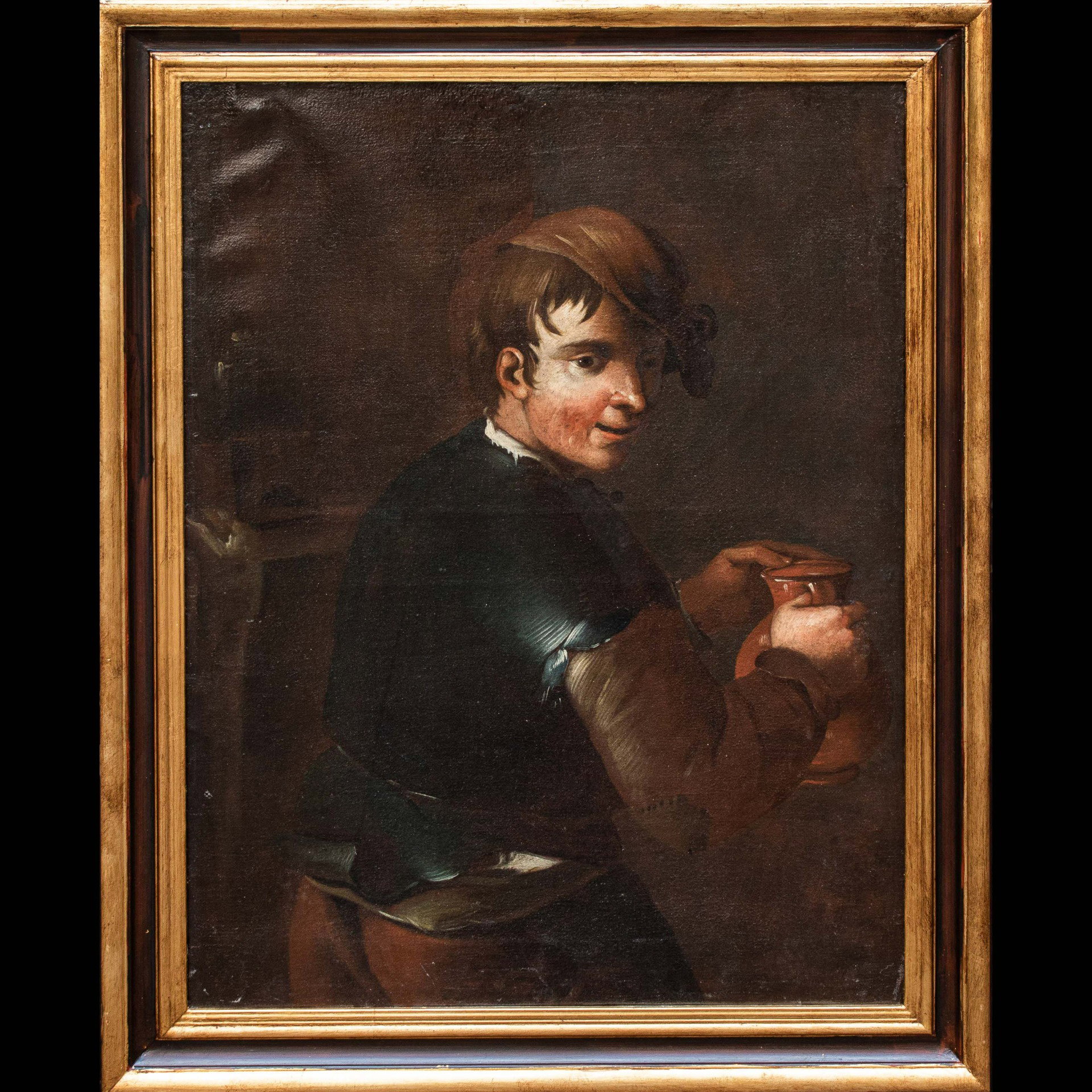
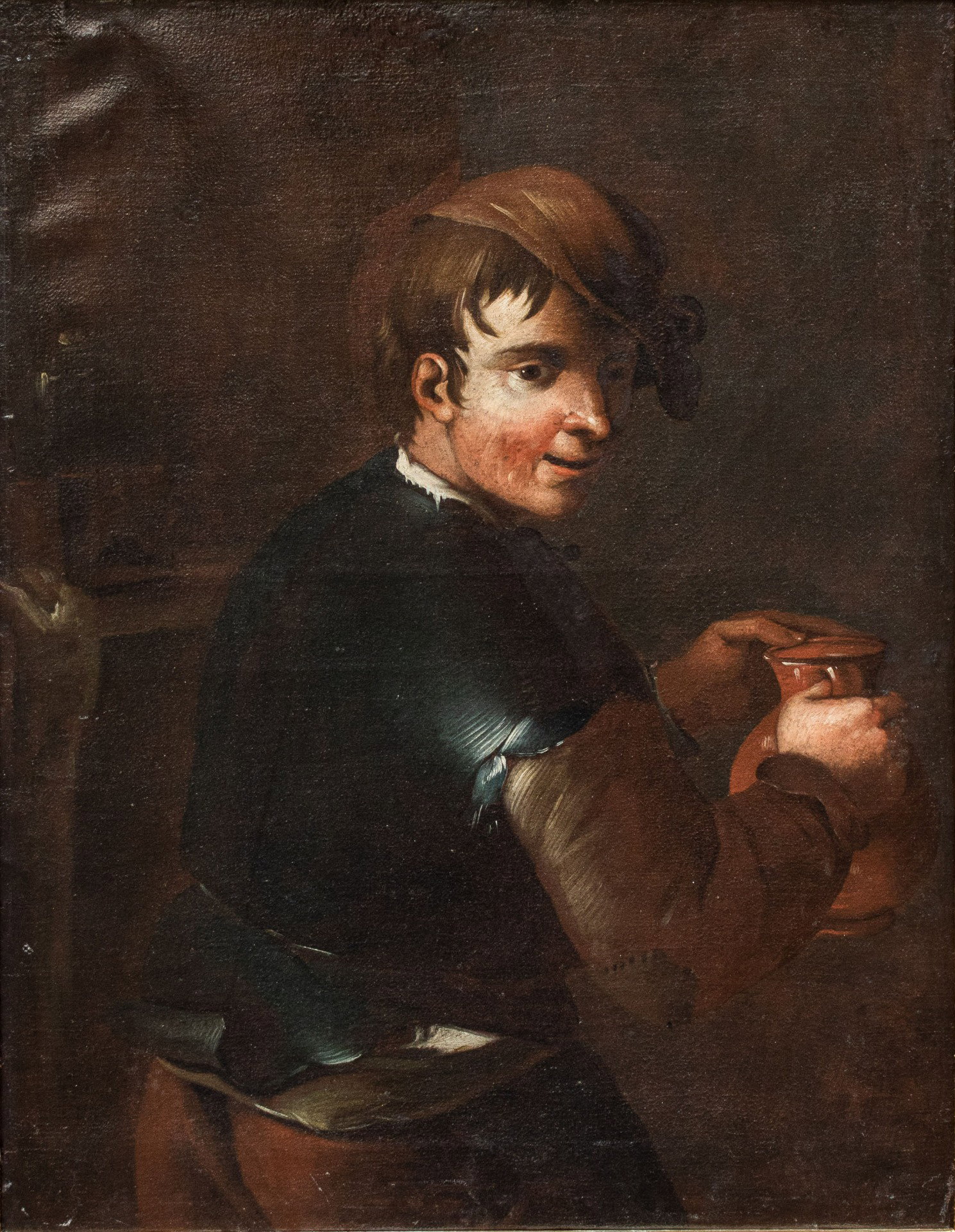
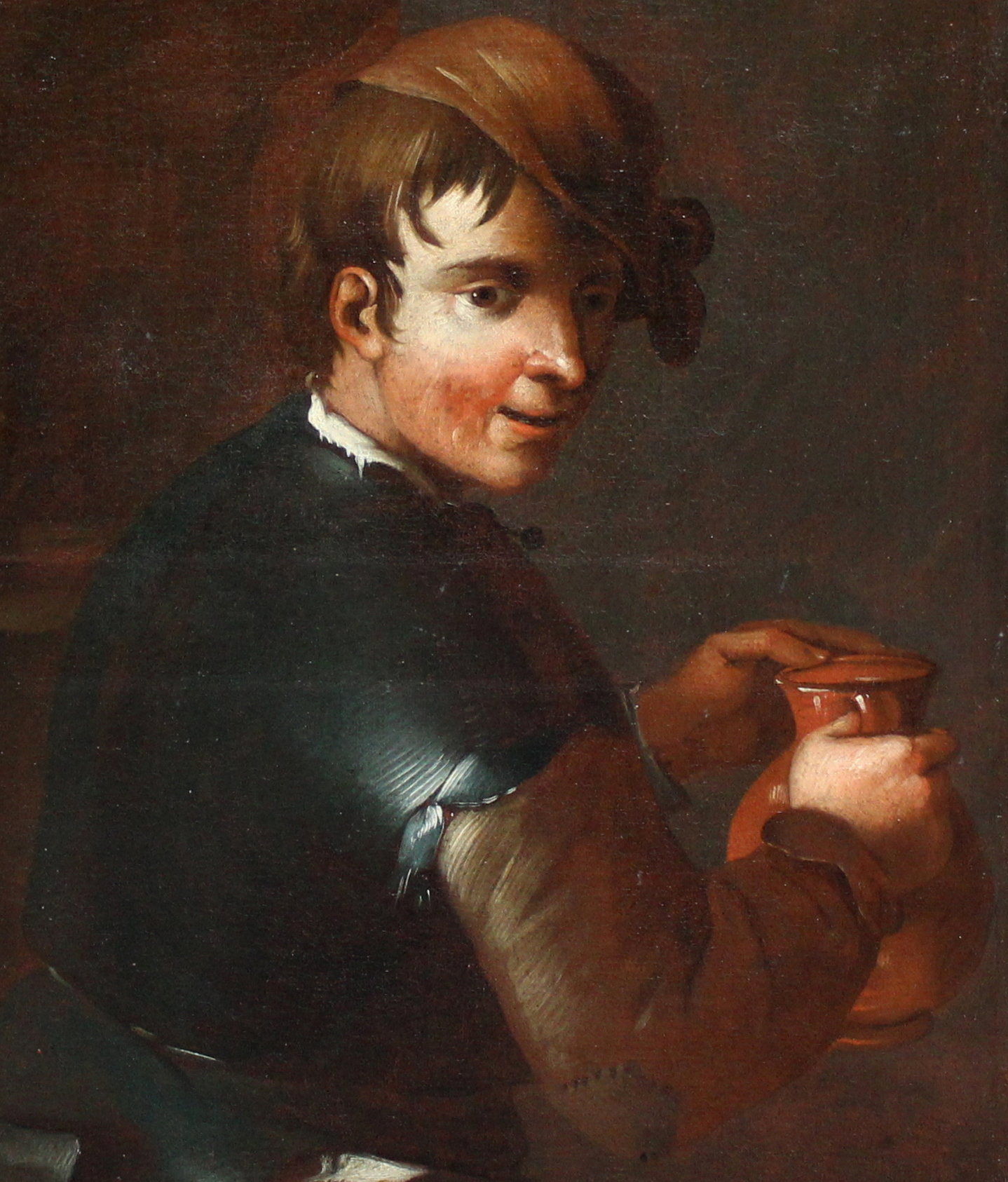
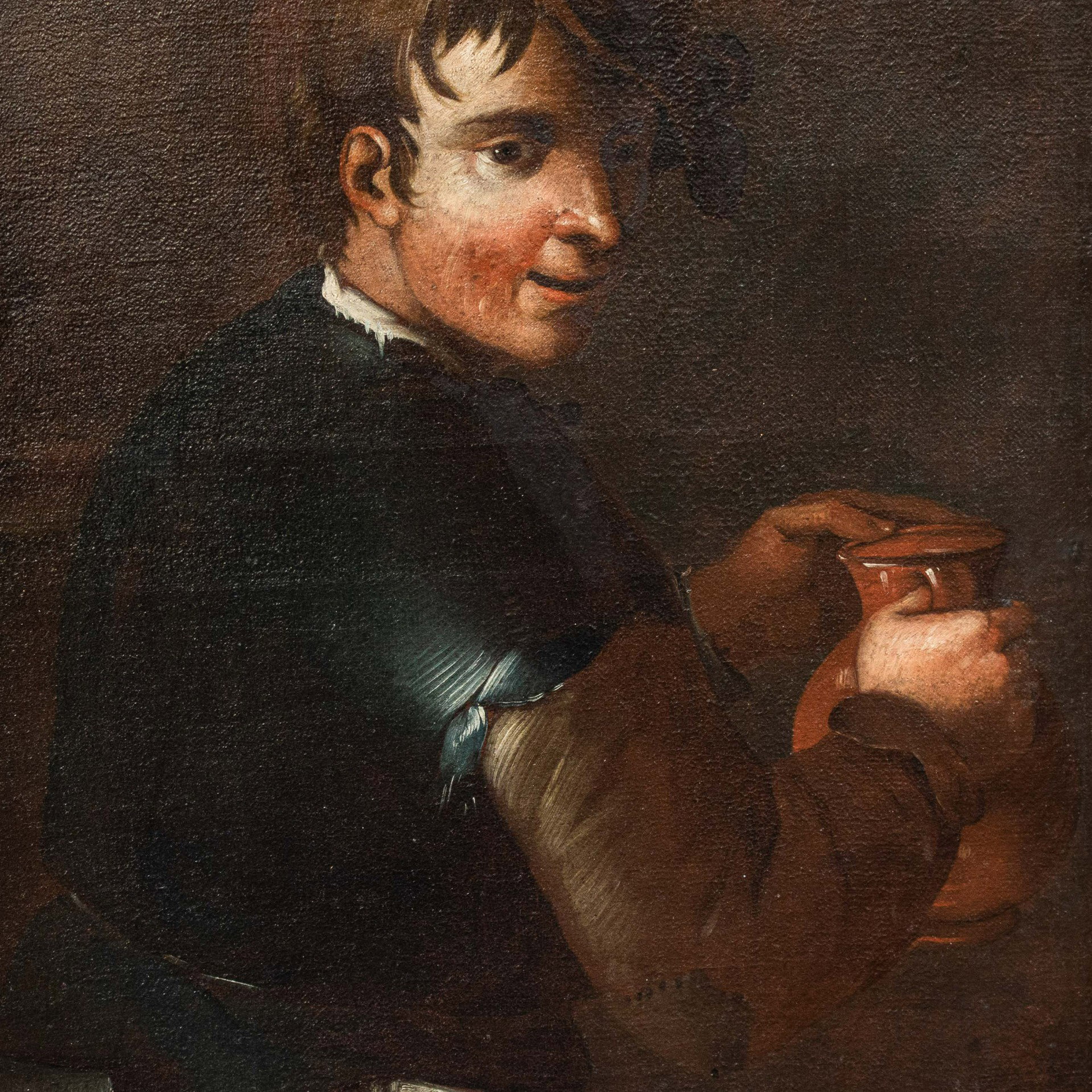
Circle of Antonio Amorosi (Comunanza, 1660 – Rome, 1738), Portrait of a young commoner
Description:
Circle of Antonio Amorosi (Comunanza, 1660 – Rome, 1738)
Portrait of a young commoner
Oil on canvas, 83 x 6 cm
With frame, 87 x 67 cm
The painting depicting a portrait of a commoner was created by an artist active within the workshop of Antonio Mercurio Amorosi (1660-1738), undoubtedly reflecting a Caravaggesque realism, but also evident affinities with Lombard naturalism and its Nordic contaminations. In the portrait examined, there are also analogies with the works of Giacomo Francesco Cipper, known as il Todeschini, given the 'bambocciante' character of the images, which Il Cipper, like Monsù Bernardo, offered in their descriptions of the humble, conditioned by a literary vein. This is a strand that distinguished a preponderant part of 18th-century Italian art, just think of Giacomo Ceruti known as il Pittocchetto or Gaspare Traversi, who produced works in which the comic tradition and social analysis reached results of extraordinary artistic validity. A pupil of Giuseppe Ghezzi, Amorosi worked mainly in Rome, dedicating himself to both religious painting (altarpieces for S. Rocco, S. Maria in Cosmedin) and genre painting. Amorosi's greatest fame is linked precisely to his paintings of "bambocciate": paintings of different formats and simple popular subjects, vividly appreciated by contemporaries. Of this production, preserved in museums and private collections in Europe and still little known, we can particularly recall: the Young Peasant with Nest and the Young Peasant Girl with Chick in the Devonshire collection in London, the Boy with Bunch of Grapes in the Schleissheim Gallery, the Young Man with Chalice, the Young Painter, and some paintings in the Municipal Art Gallery of Deruta, from the collection of the historiographer Lione Pascoli. These last ones are useful for a comparison with the canvases examined, as well as the different versions of Young Man with Pitcher, today in private collections.
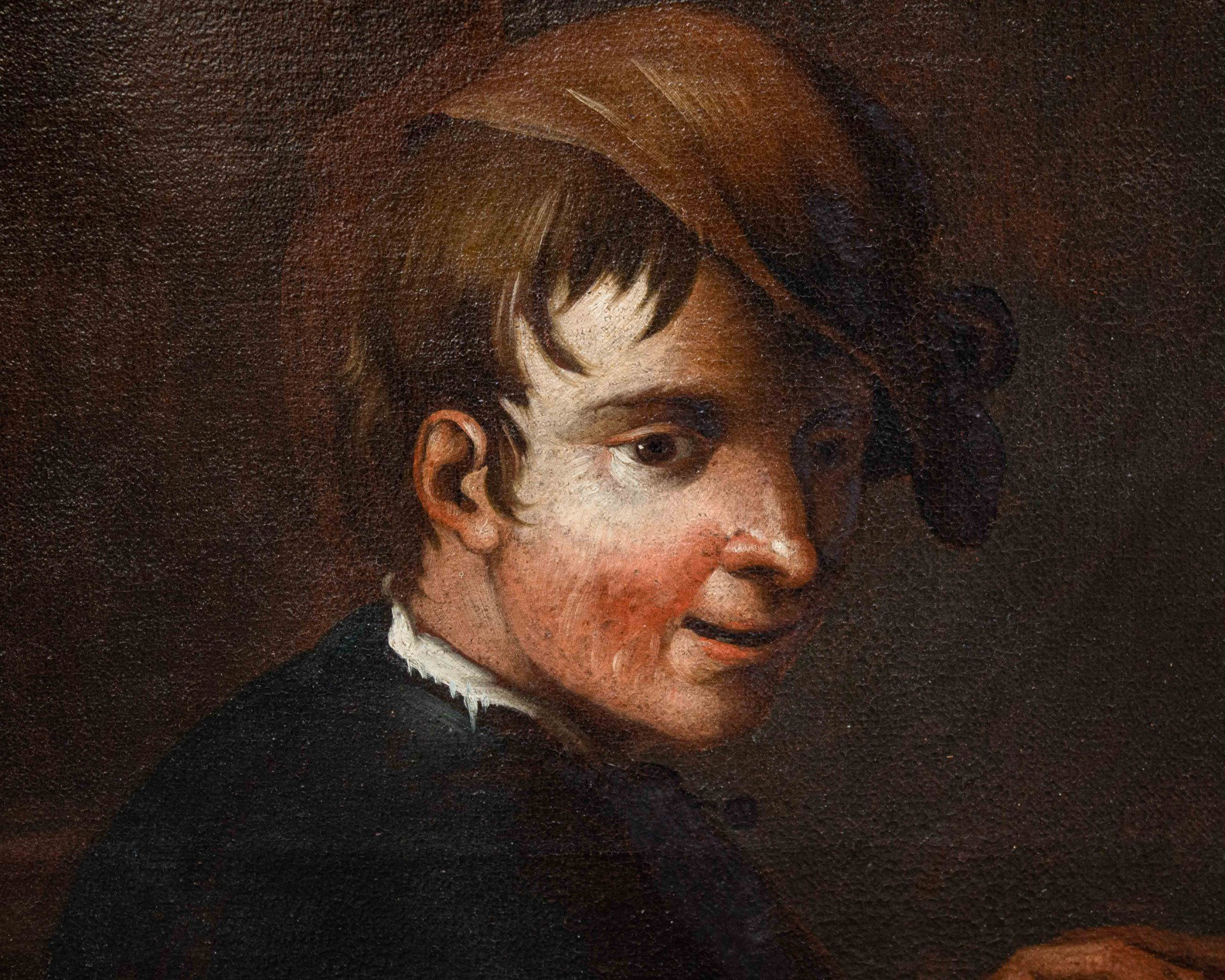
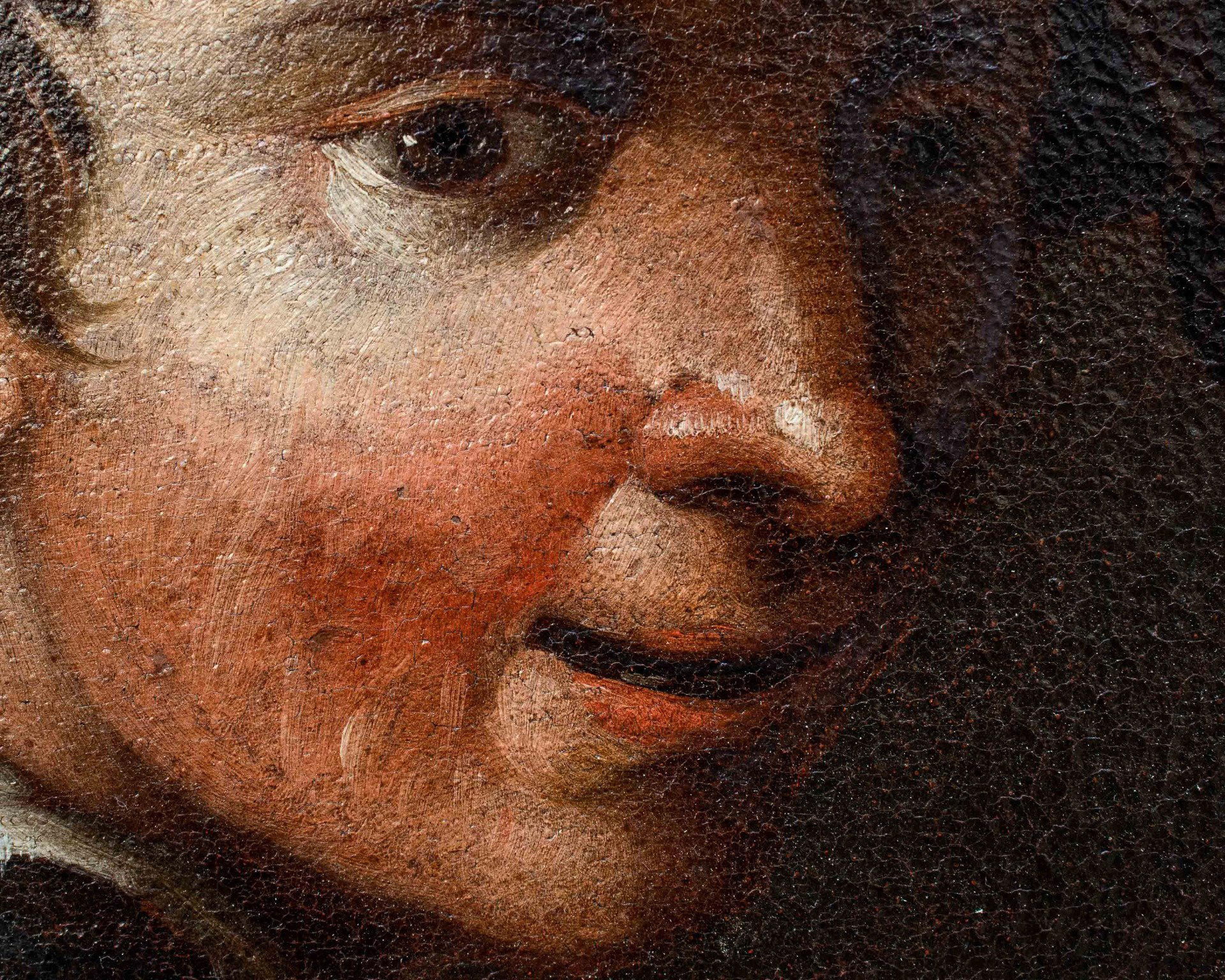
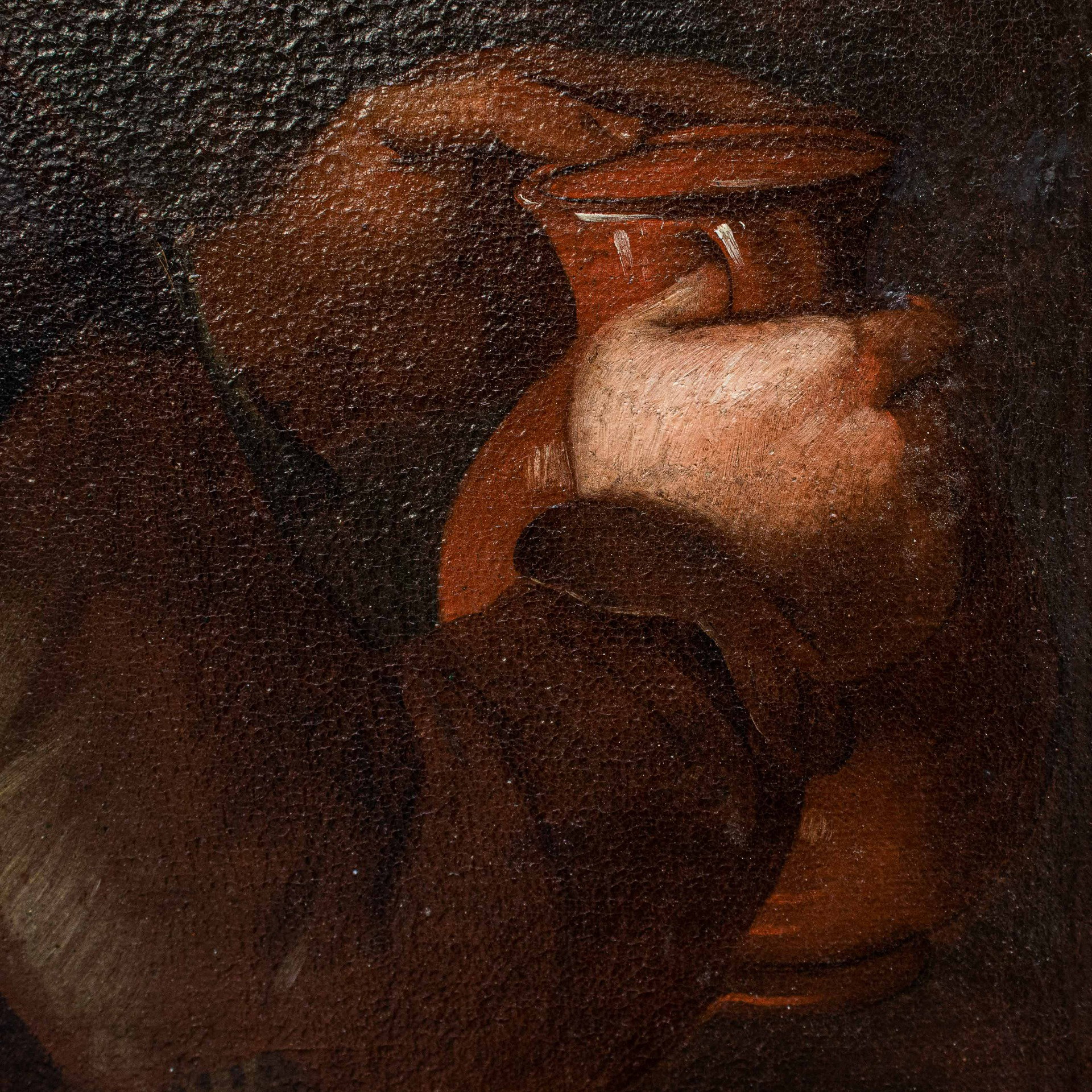
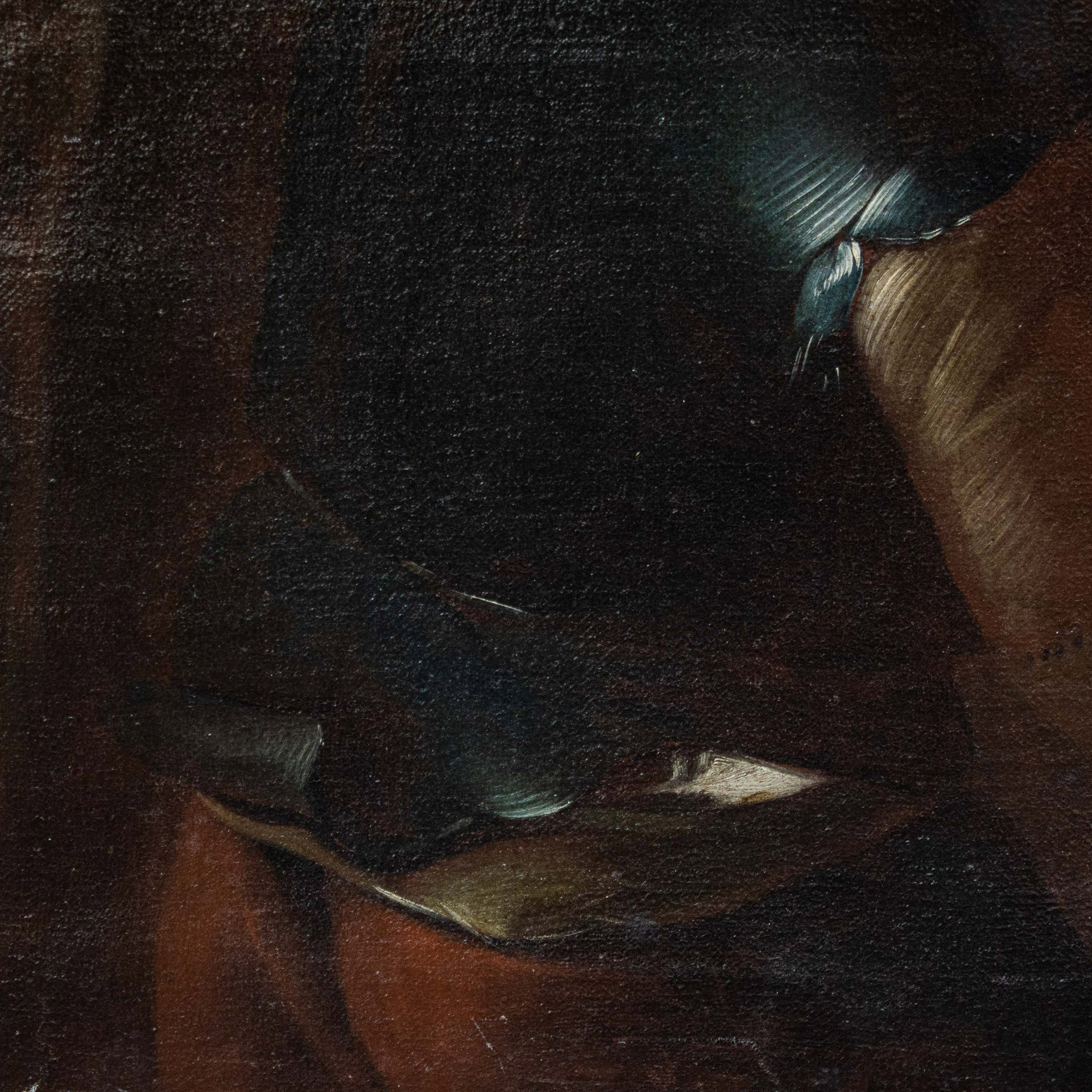
Lucid and direct is the pauperistic portraiture whose capacities for introspection and analysis of characters are applied here in the rendering of the protagonist. The young man is investigated with frankness and truth, highlighting, in line with the master's works, a completely new and devoid of moralism understanding of the marginalized reality of the poorest. Numerous details enrich the analyzed canvas, the crumpled clothes, the reddened cheeks, and the objects that make up the surrounding environment enrich the narration of the character, caught in the unfolding of daily actions. The man looks towards the viewer, with a participating gaze, as if he had just been called.