Saint Peter and the Centurion Cornelius FOR SALE
Description:
Saint Peter and the Centurion Cornelius
Attributed to Pieter Aertsen (Amsterdam, 1508-1575)
Expertise written by Prof. Didier Bodart.
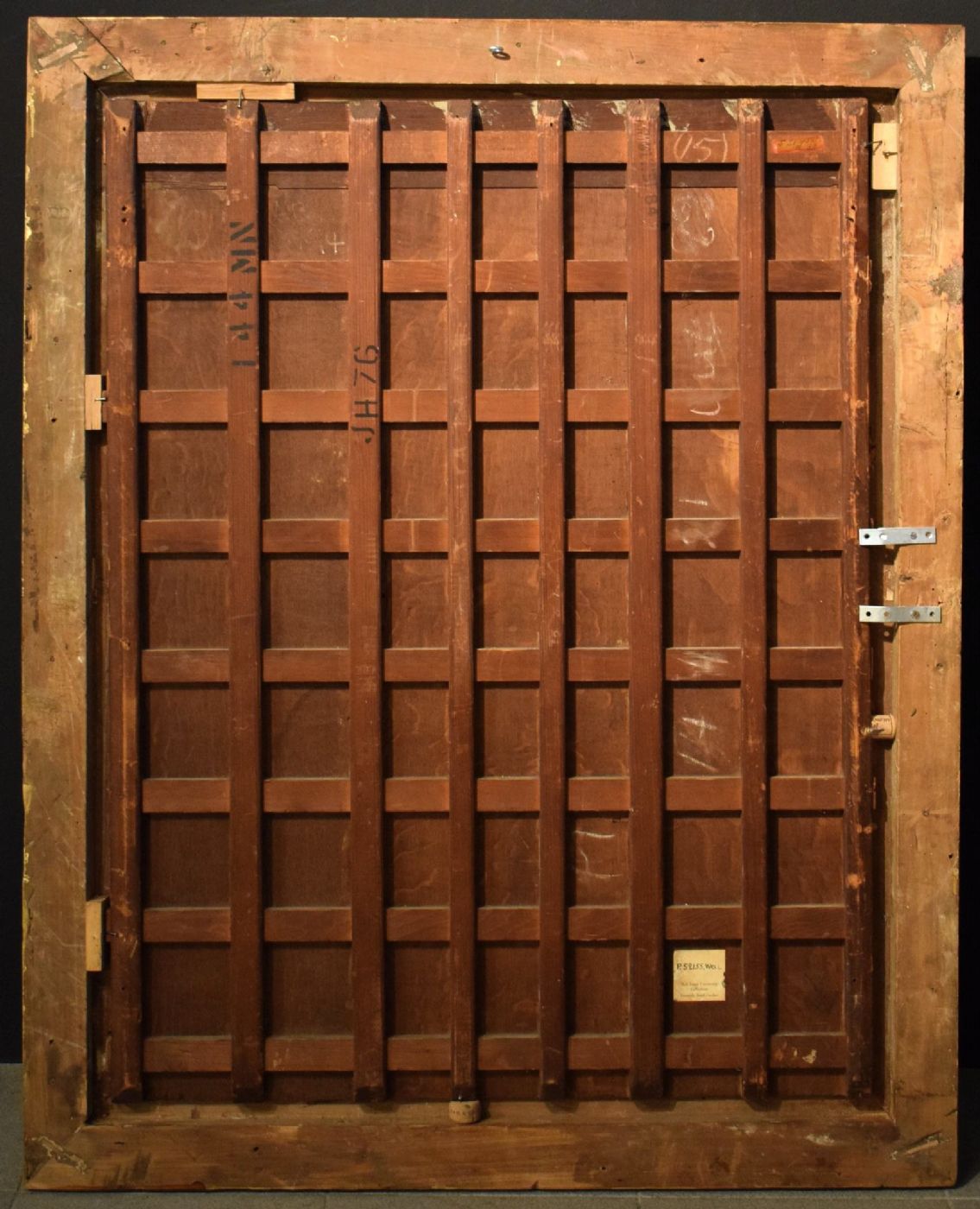
Provenance Bob Jones collection "University Gallery of Sacred Art"
Greenville (South Carolina) inv. P59.155.Wei.L
Oil on Panel
Second half of the 16th century
Carved and gilded frame
Panel cm. 75 x 98
Frame cm. 92 x 114
Excellent condition
Colors perfectly vivid and unaltered
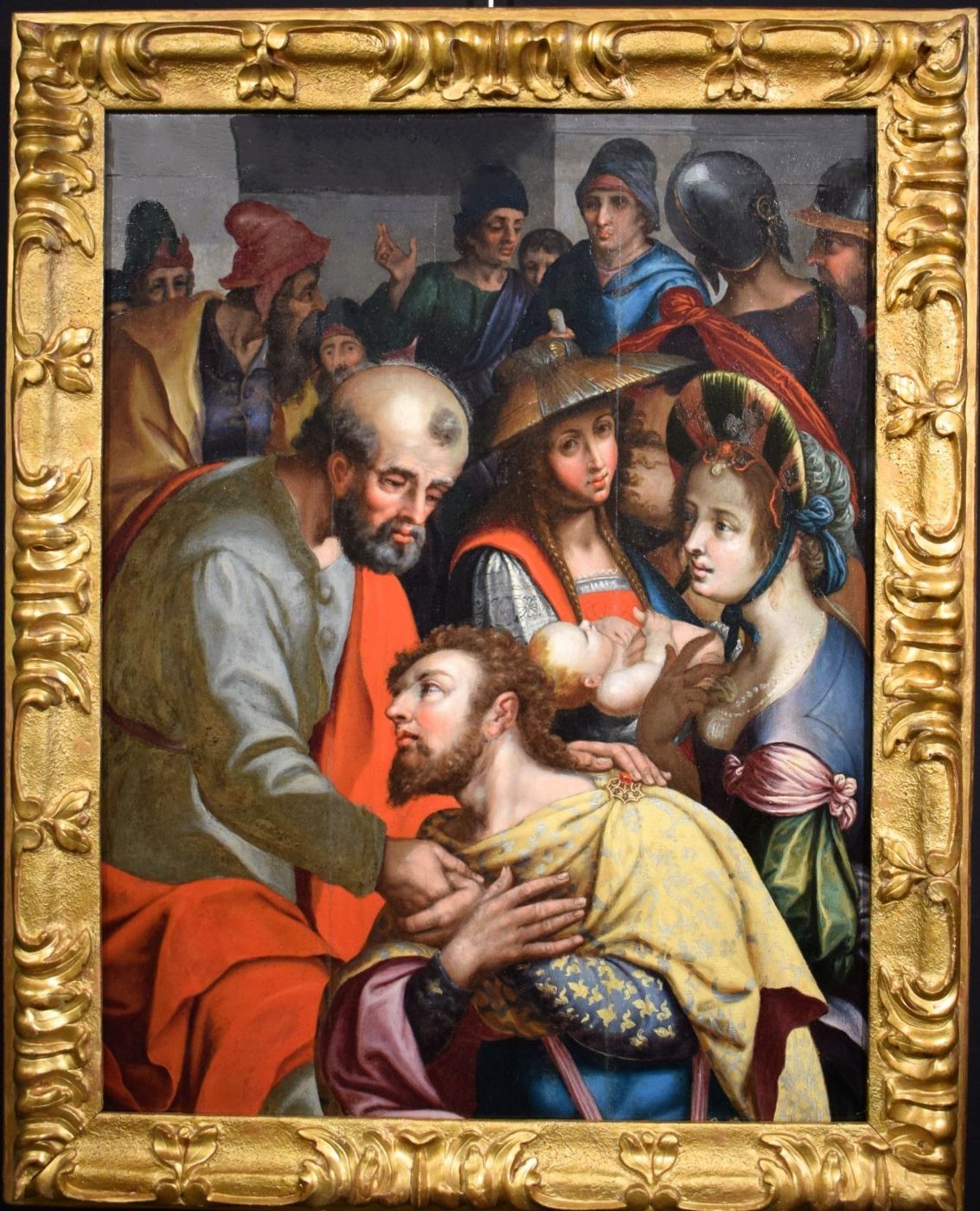
This important Flemish work, painted in oil on panel, depicts the evangelical episode in which the Apostle Peter converts the Roman Centurion Cornelius and his entire family to Christianity.
The conversion of Cornelius is narrated in chapters 10 and 11 of the Acts of the Apostles.
The event has a fundamental importance in the history of the early Christian communities, which were opening up to welcome even the uncircumcised, freeing themselves from the ancient Jewish traditions.
The event will have a considerable weight in the decisions taken by the Council of Jerusalem, which will decree the reunification of the so-called "Pillars of the Church".
Cornelius was a Roman centurion known as a pious and God-fearing man, who prayed and was generous with alms.
His residence was in Caesarea of Palestine, the seat of the Roman Governor.
Having come to know the Christian doctrine, his heart was drawn to seek God, no longer recognizing himself in the pagan gods.
One day, while praying to God desiring to know his teachings, he had a vision of an angel who, calling him by name, told him that his prayers and alms were pleasing to God. Then he invited him to send his men to Jaffa to invite to his house a man named Simon called Peter, who would instruct him on what he asked.
Cornelius then sent two soldiers in search of him; Peter had meanwhile had a vision that clarified God's will on the admission of uncircumcised Gentiles into the Church. (Admission to the Church was the prerogative of Jews only)
Therefore, having met Cornelius' messengers, Peter accepted the invitation and came to Caesarea in his house. Cornelius, surrounded by his family, when he saw him, welcomed him with the honors due to an envoy of God, prostrating himself at his feet, but Peter urged him to rise, beginning to preach the word of Jesus the Risen One: "all those who believe in me obtain the remission of sins and eternal life".
And as he continued in his apostolic speaking, behold, the Holy Spirit descended upon all those present.
With this new Pentecost, Peter clearly understands God's will, so he baptizes them, adding them to the Church, without the prescribed circumcision of the Law of Moses.
The Ecumenical Council of Jerusalem in the year 49 will definitively sanction this first great novelty from the birth of the Church.
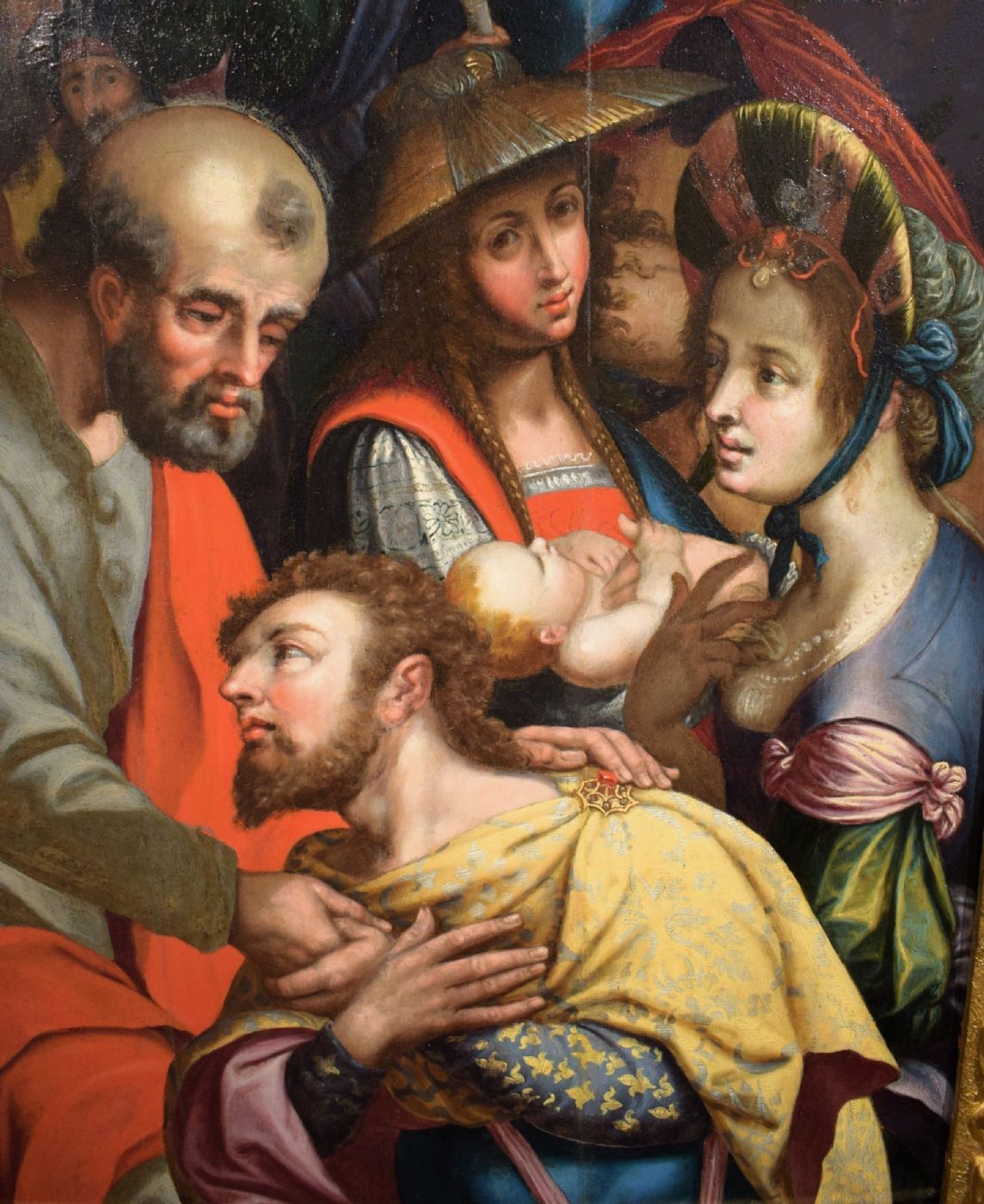
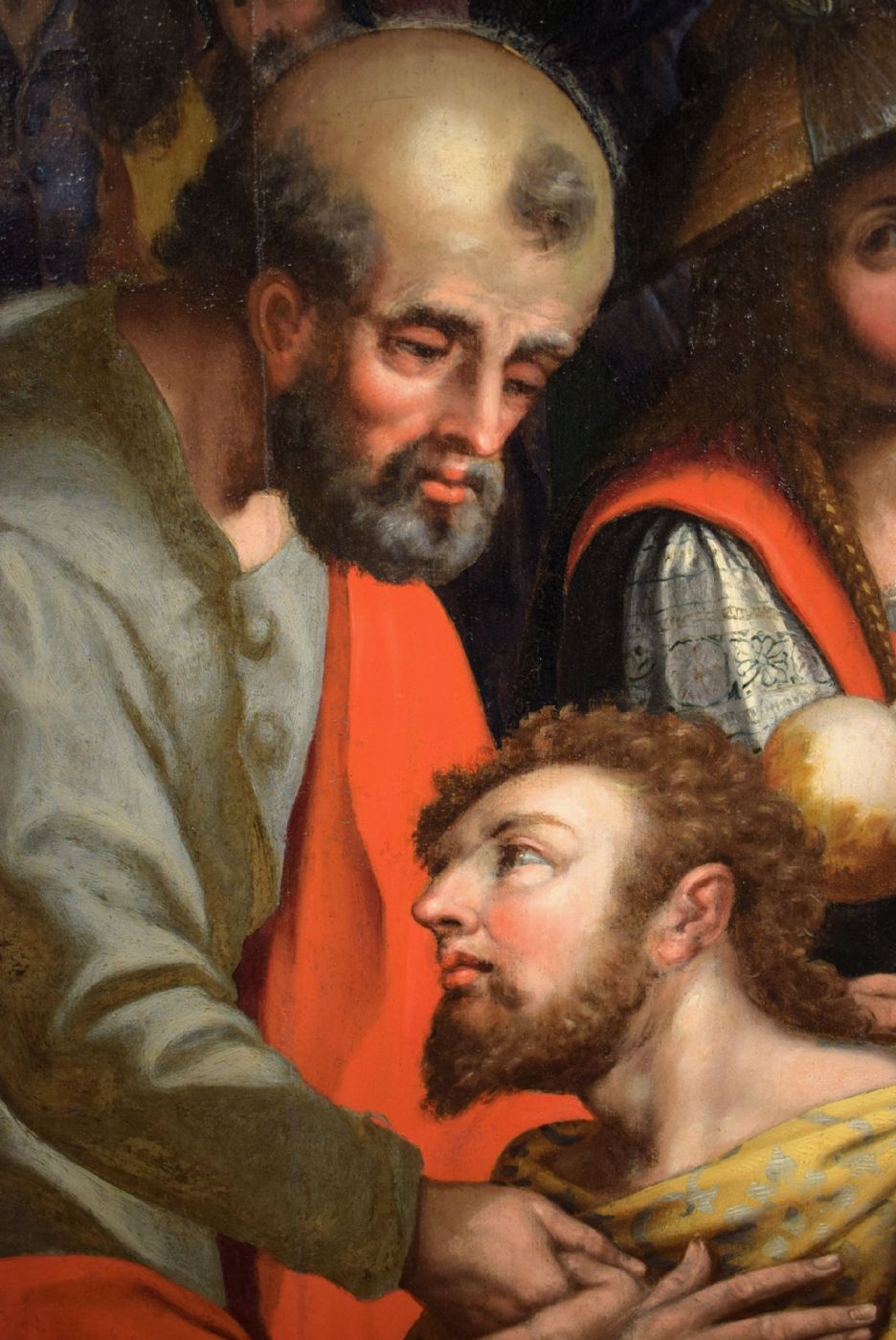
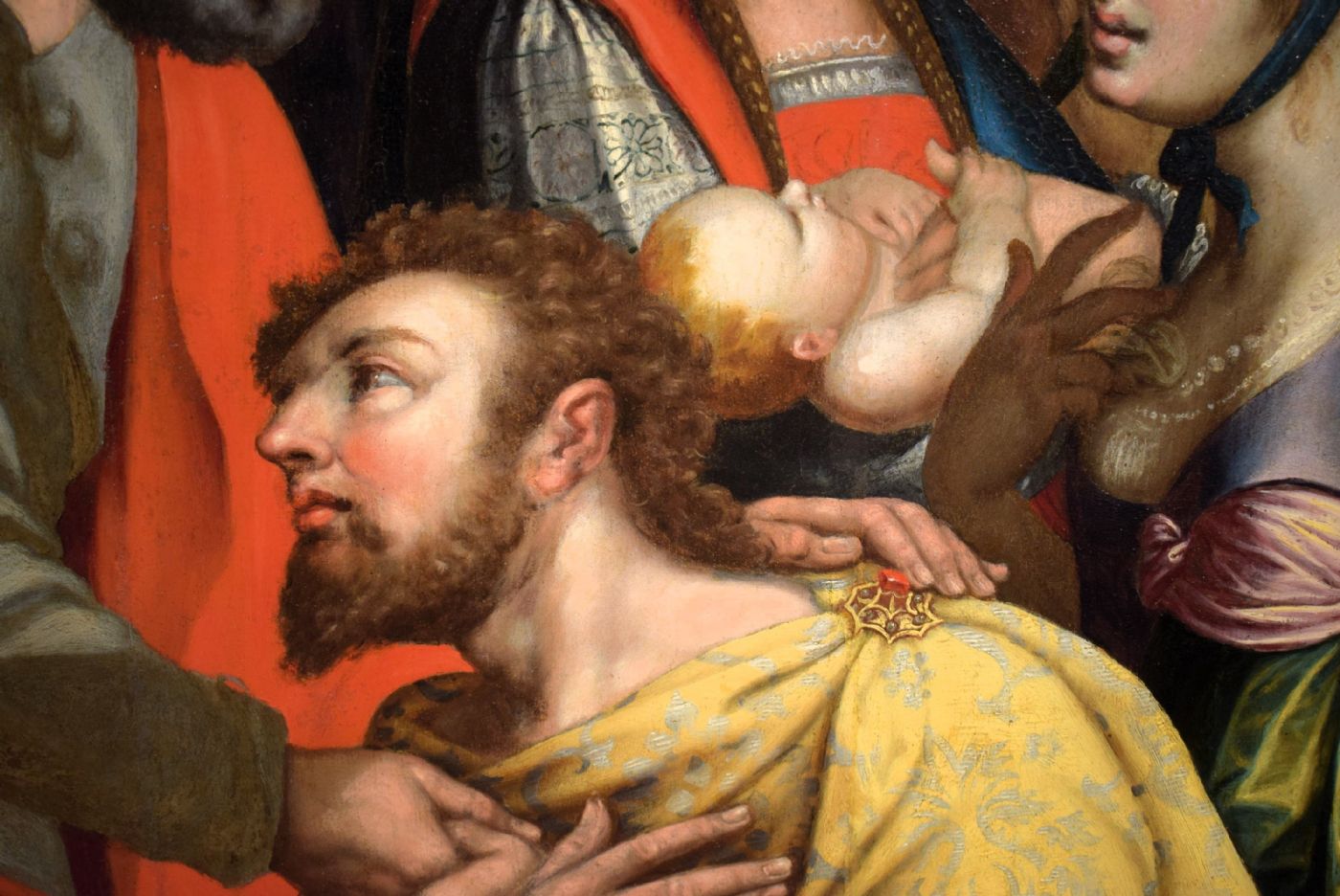
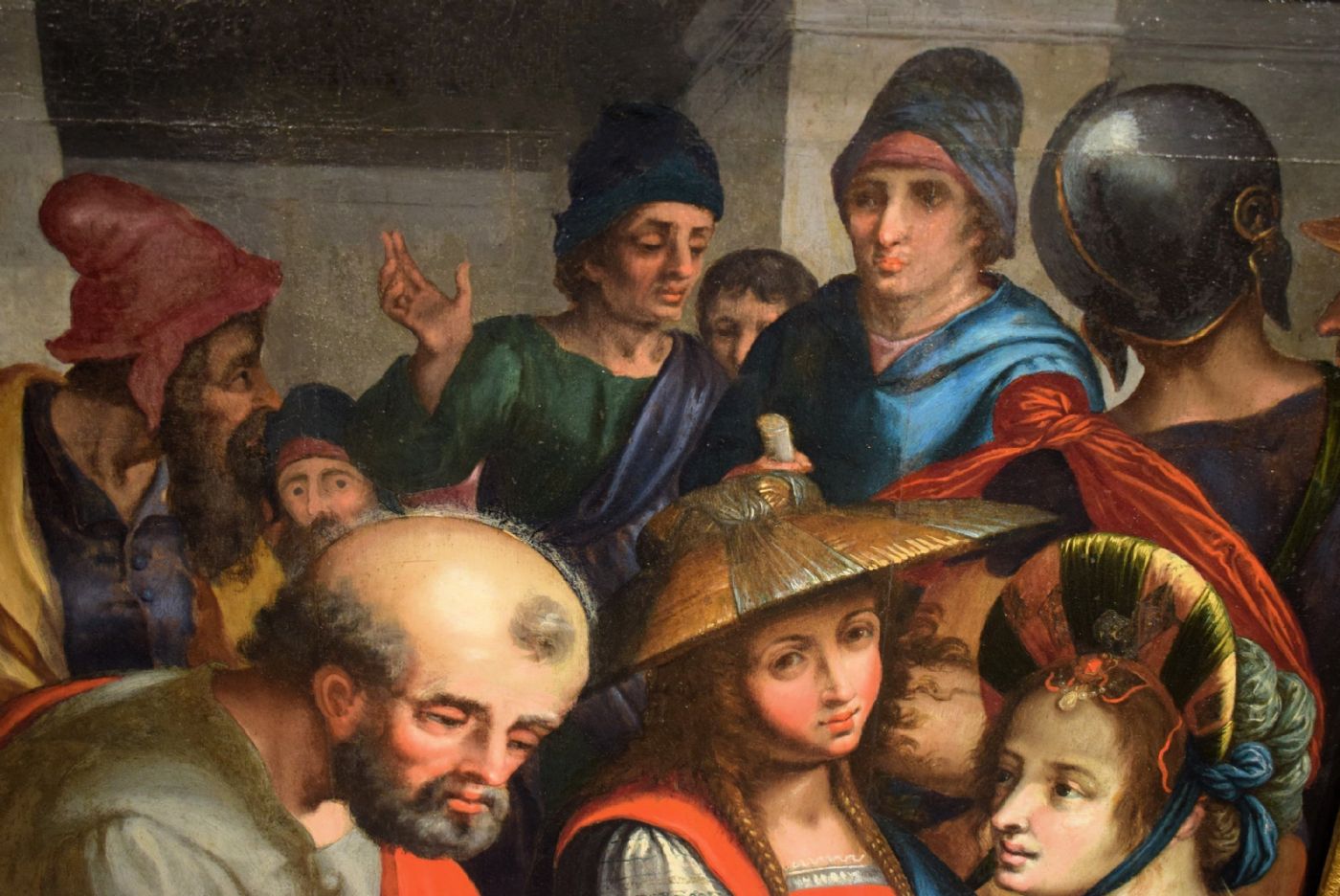
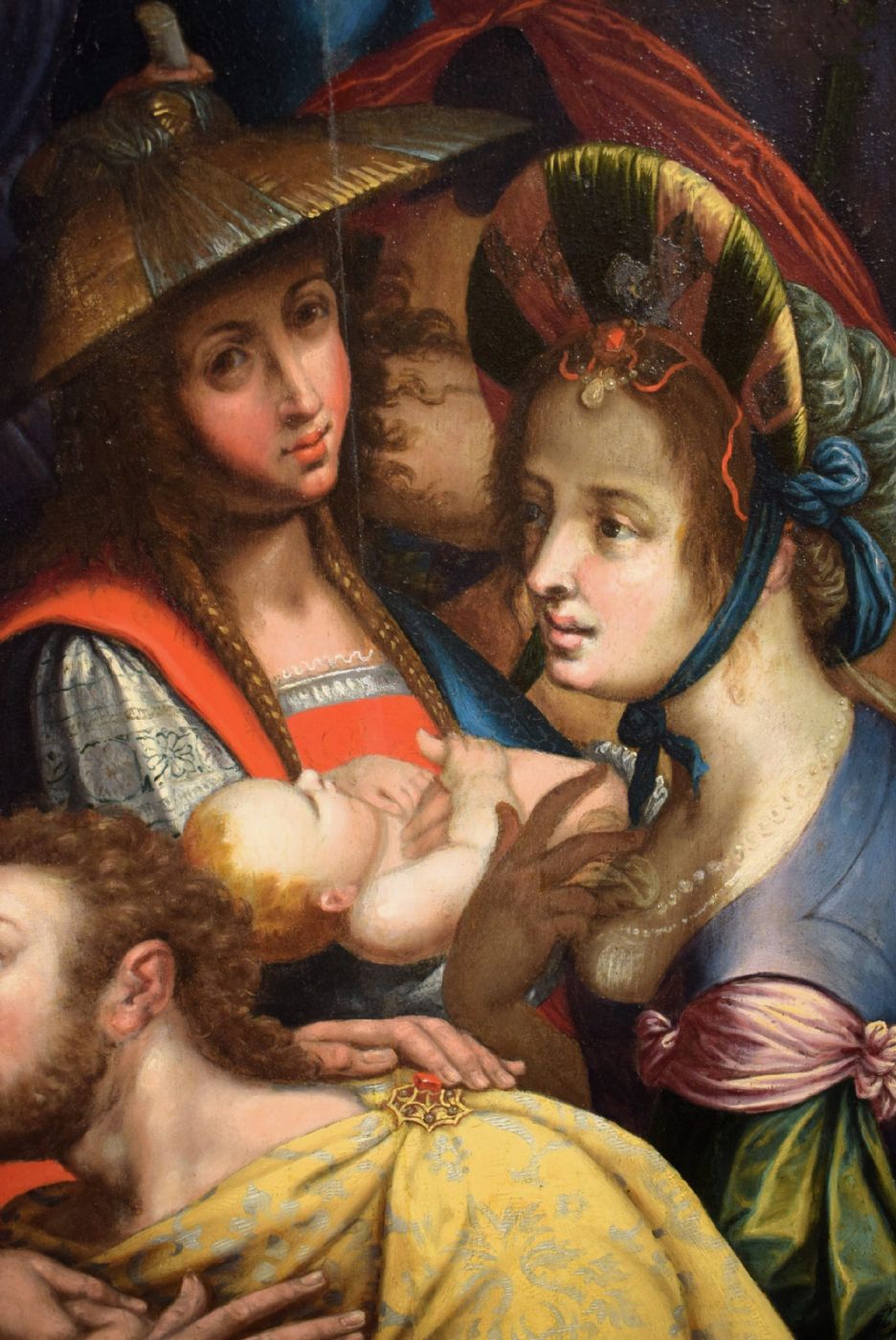
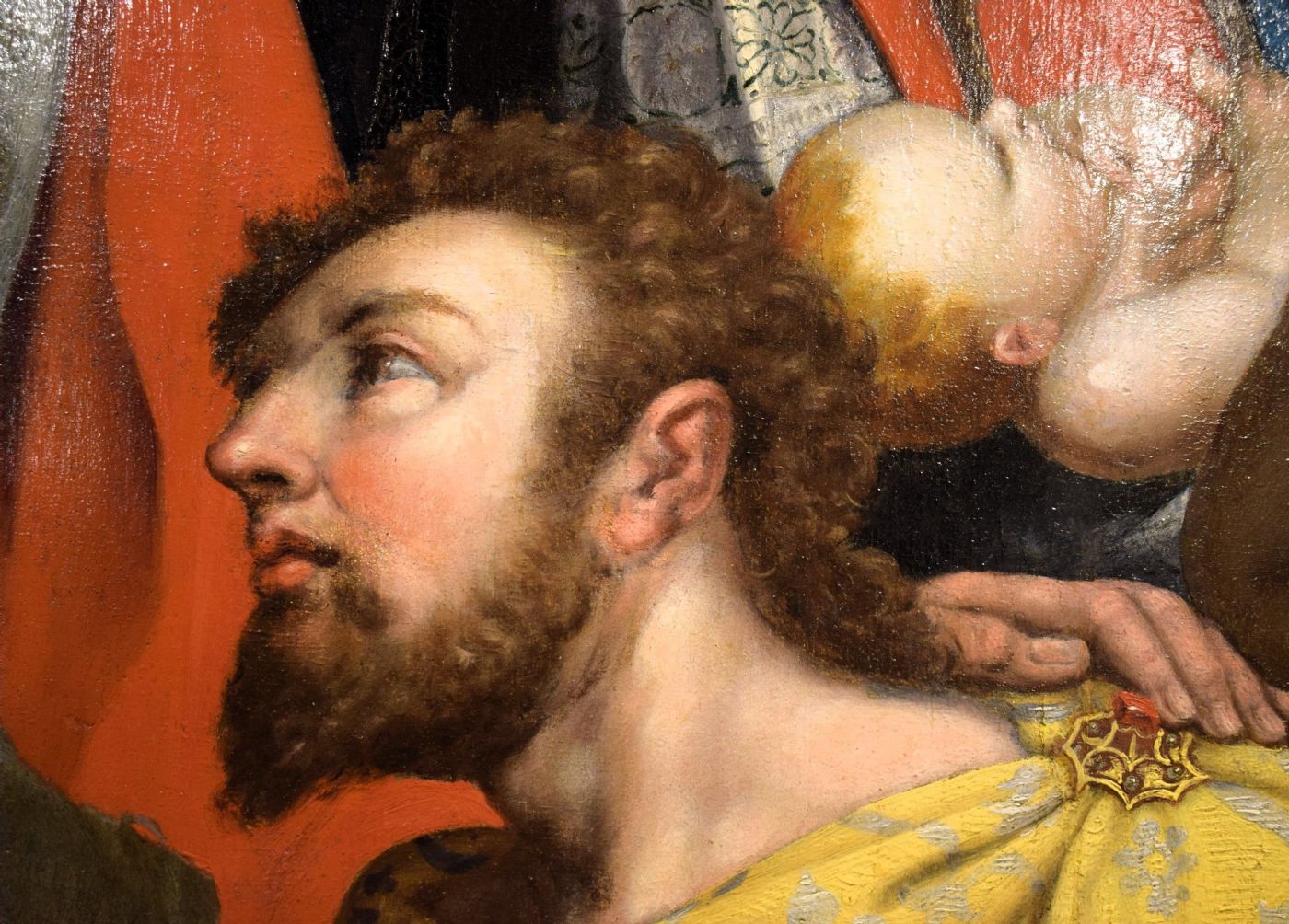
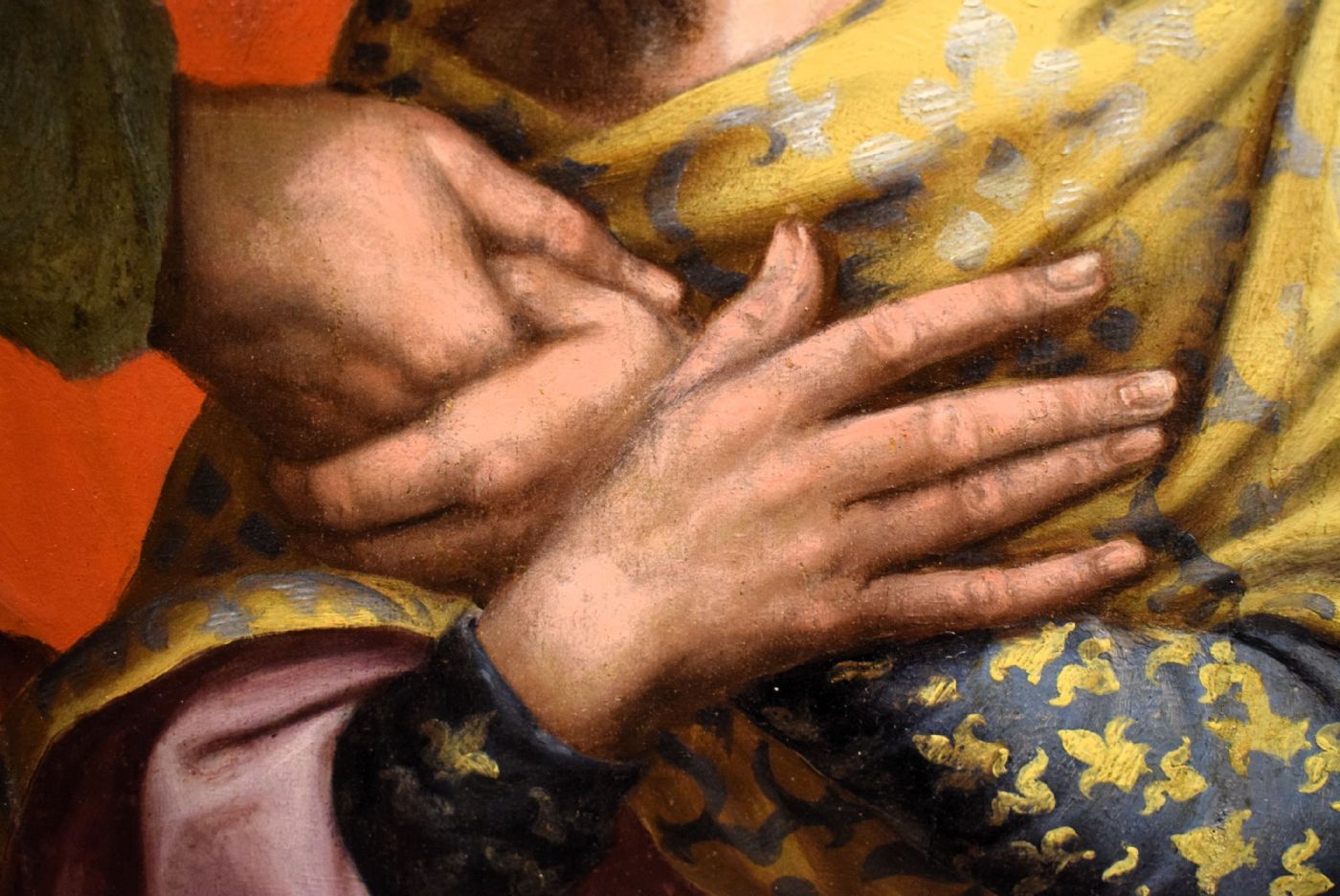
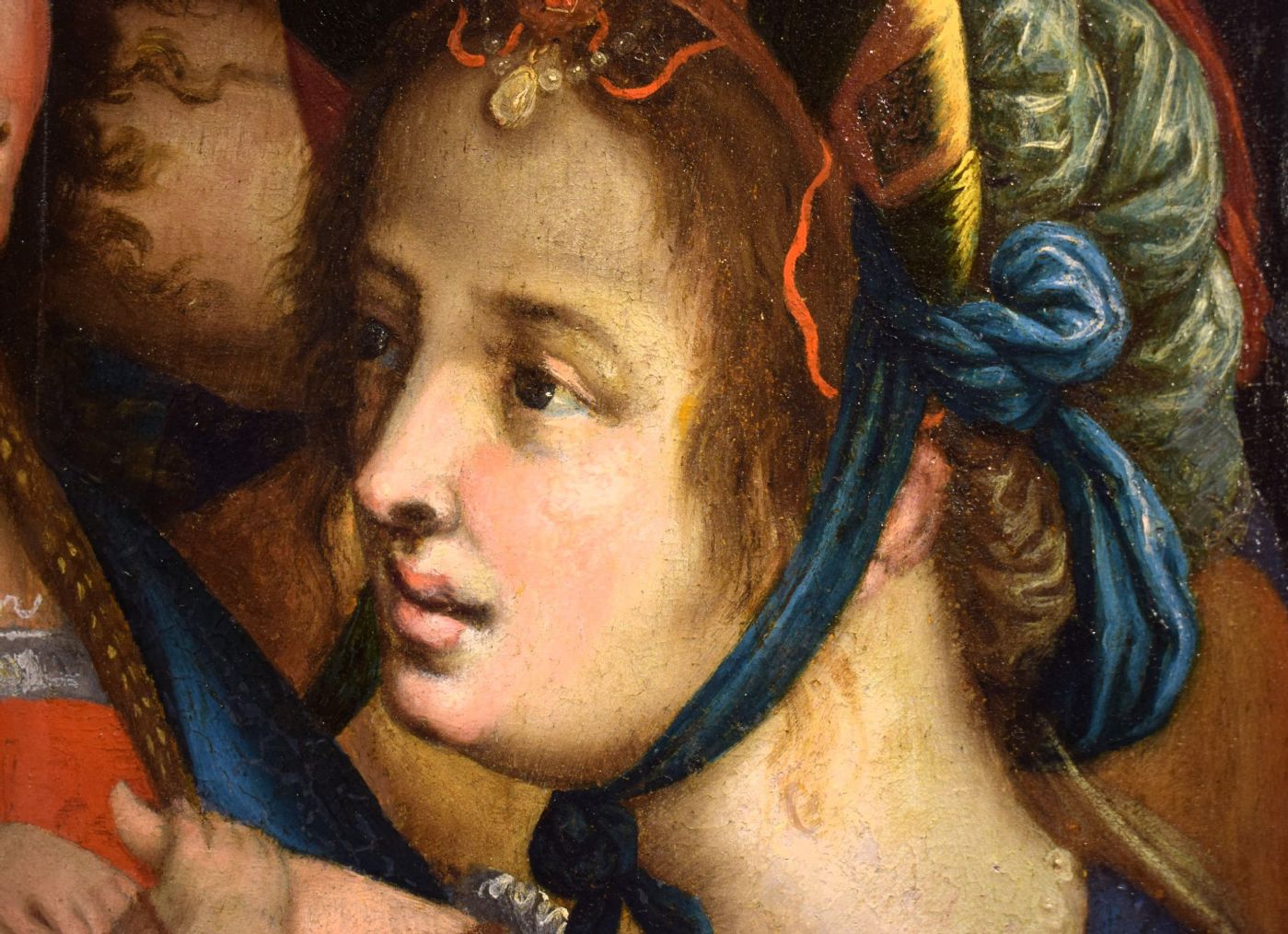
The painting magnificently describes the scene that sees the two protagonists in the foreground, Cornelius kneeling with his hands to his chest and Peter leaning over him in the gesture of making him rise. (As described in the Acts of the Apostles). Behind them are depicted two splendid women dressed in elegant clothes and typical Dutch hats of the time. One of them shows her little newborn lying in her arms.
In the shadows, a series of characters can be seen, including the two Roman soldiers sent by Cornelius to pick up Saint Peter.
The pictorial and coloristic setting presents the unmistakable characteristics of 16th century Flemish Art.
Professor Bodart, one of the most well-known experts in ancient Flemish art, places it directly in the production of the famous Master Pieter Aertsen (Amsterdam, 1508-1575) one of the greatest exponents of Northern Mannerism with written expertise d.d. June 22, 1990.
The work comes from the sale of some paintings from the famous Bob Jones collection "University Gallery of Sacred Art" in Greenville in South Carolina (inv. P59.155.Wei.L) which took place in the 80s of the last century.
We issue a FIMA certificate of authenticity and detailed descriptive sheet
Tracked shipping (DHL TRACKING) and fully insured with shockproof packaging in custom-made wooden crate.
Delivery within 3 working days from receipt of payment
Negotiable price and personalized payment
All the details of the painting are published on the private website:
https://www.antichitaischia.it/it/prodotto/pieter-aertsen--amsterdam--1508-1575--
Saint Peter and the Centurion Cornelius
Attributed to Pieter Aertsen (Amsterdam, 1508-1575)
Expertise written by Prof. Didier Bodart.
Provenance Bob Jones collection "University Gallery of Sacred Art"
Greenville (South Carolina) inv. P59.155.Wei.L
Oil on Panel
Second half of the 16th century
Carved and gilded frame
Panel cm. 75 x 98
Frame cm. 92 x 114
Excellent condition
Colors perfectly vivid and unaltered
This important Flemish work, painted in oil on panel, depicts the evangelical episode in which the Apostle Peter converts the Roman Centurion Cornelius and his entire family to Christianity.
The conversion of Cornelius is narrated in chapters 10 and 11 of the Acts of the Apostles.
The event has a fundamental importance in the history of the early Christian communities, which were opening up to welcome even the uncircumcised, freeing themselves from the ancient Jewish traditions.
The event will have a considerable weight in the decisions taken by the Council of Jerusalem, which will decree the reunification of the so-called "Pillars of the Church".
Cornelius was a Roman centurion known as a pious and God-fearing man, who prayed and was generous with alms.
His residence was in Caesarea of Palestine, the seat of the Roman Governor.
Having come to know the Christian doctrine, his heart was drawn to seek God, no longer recognizing himself in the pagan gods.
One day, while praying to God desiring to know his teachings, he had a vision of an angel who, calling him by name, told him that his prayers and alms were pleasing to God. Then he invited him to send his men to Jaffa to invite to his house a man named Simon called Peter, who would instruct him on what he asked.
Cornelius then sent two soldiers in search of him; Peter had meanwhile had a vision that clarified God's will on the admission of uncircumcised Gentiles into the Church. (Admission to the Church was the prerogative of Jews only)
Therefore, having met Cornelius' messengers, Peter accepted the invitation and came to Caesarea in his house. Cornelius, surrounded by his family, when he saw him, welcomed him with the honors due to an envoy of God, prostrating himself at his feet, but Peter urged him to rise, beginning to preach the word of Jesus the Risen One: "all those who believe in me obtain the remission of sins and eternal life".
And as he continued in his apostolic speaking, behold, the Holy Spirit descended upon all those present.
With this new Pentecost, Peter clearly understands God's will, so he baptizes them, adding them to the Church, without the prescribed circumcision of the Law of Moses.
The Ecumenical Council of Jerusalem in the year 49 will definitively sanction this first great novelty from the birth of the Church.
The painting magnificently describes the scene that sees the two protagonists in the foreground, Cornelius kneeling with his hands to his chest and Peter leaning over him in the gesture of making him rise. (As described in the Acts of the Apostles). Behind them are depicted two splendid women dressed in elegant clothes and typical Dutch hats of the time. One of them shows her little newborn lying in her arms.
In the shadows, a series of characters can be seen, including the two Roman soldiers sent by Cornelius to pick up Saint Peter.
The pictorial and coloristic setting presents the unmistakable characteristics of 16th century Flemish Art.
Professor Bodart, one of the most well-known experts in ancient Flemish art, places it directly in the production of the famous Master Pieter Aertsen (Amsterdam, 1508-1575) one of the greatest exponents of Northern Mannerism with written expertise d.d. June 22, 1990.
The work comes from the sale of some paintings from the famous Bob Jones collection "University Gallery of Sacred Art" in Greenville in South Carolina (inv. P59.155.Wei.L) which took place in the 80s of the last century.
We issue a FIMA certificate of authenticity and detailed descriptive sheet
Tracked shipping (DHL TRACKING) and fully insured with shockproof packaging in custom-made wooden crate.
Delivery within 3 working days from receipt of payment
Negotiable price and personalized payment
All the details of the painting are published on the private website:
https://www.antichitaischia.it/it/prodotto/pieter-aertsen--amsterdam--1508-1575--