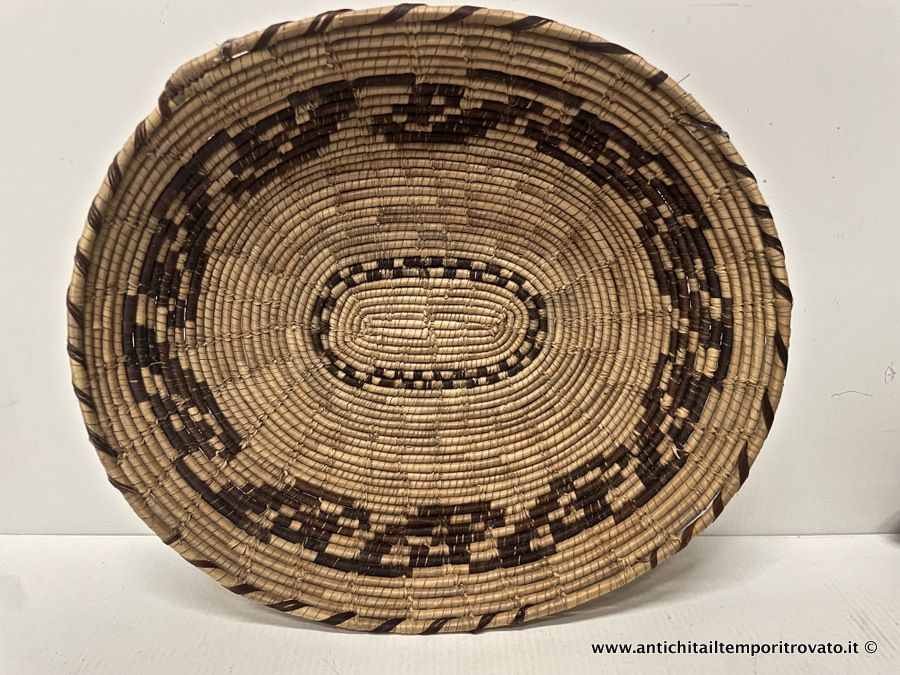
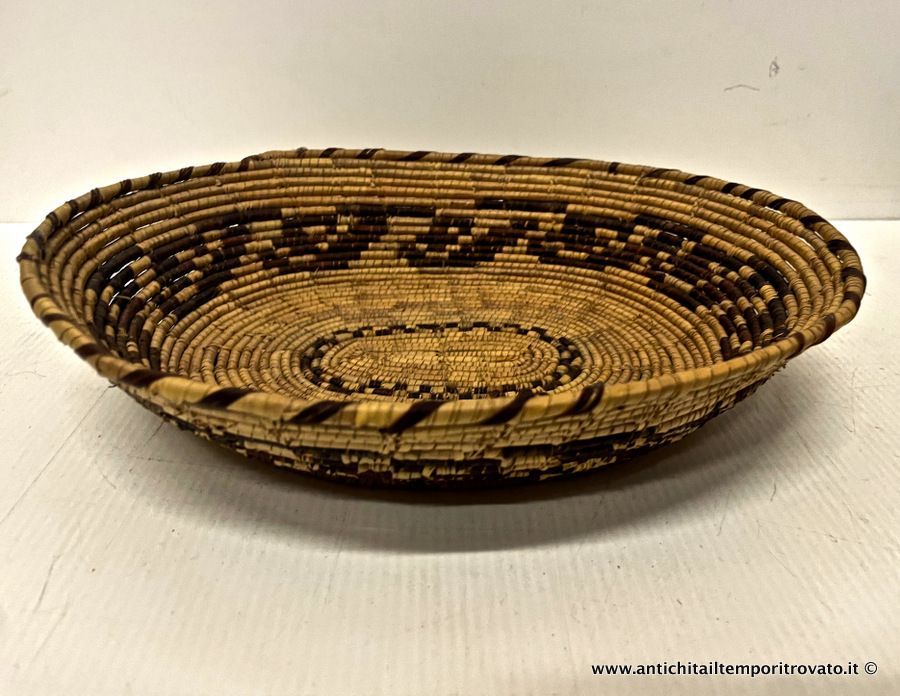
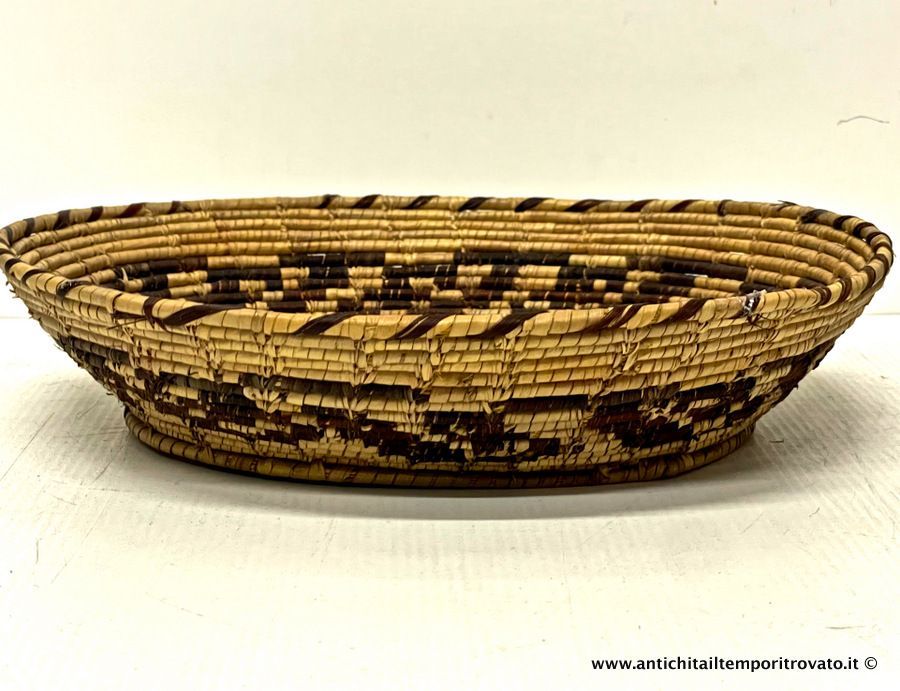
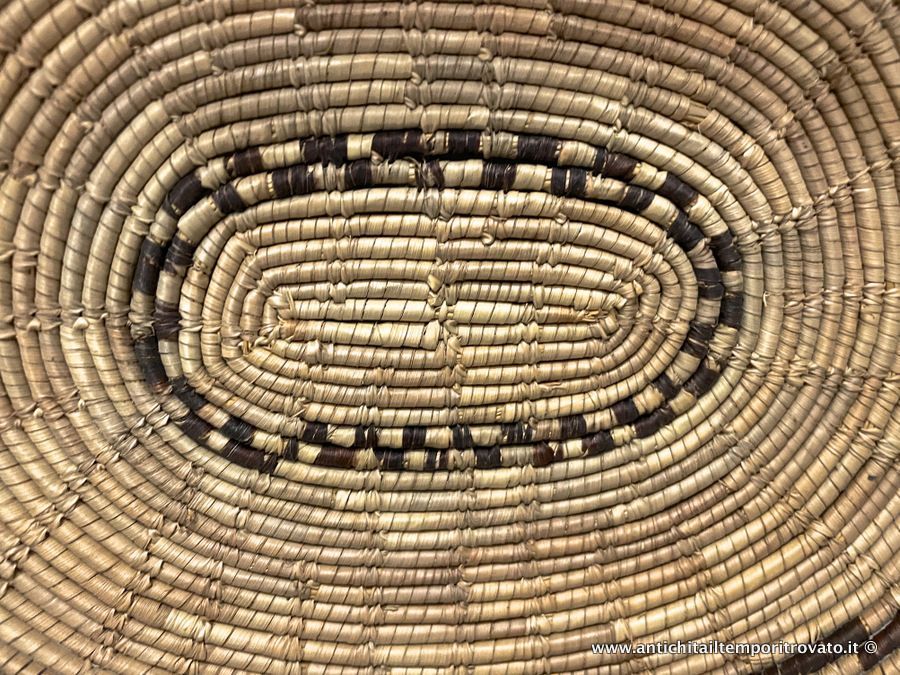
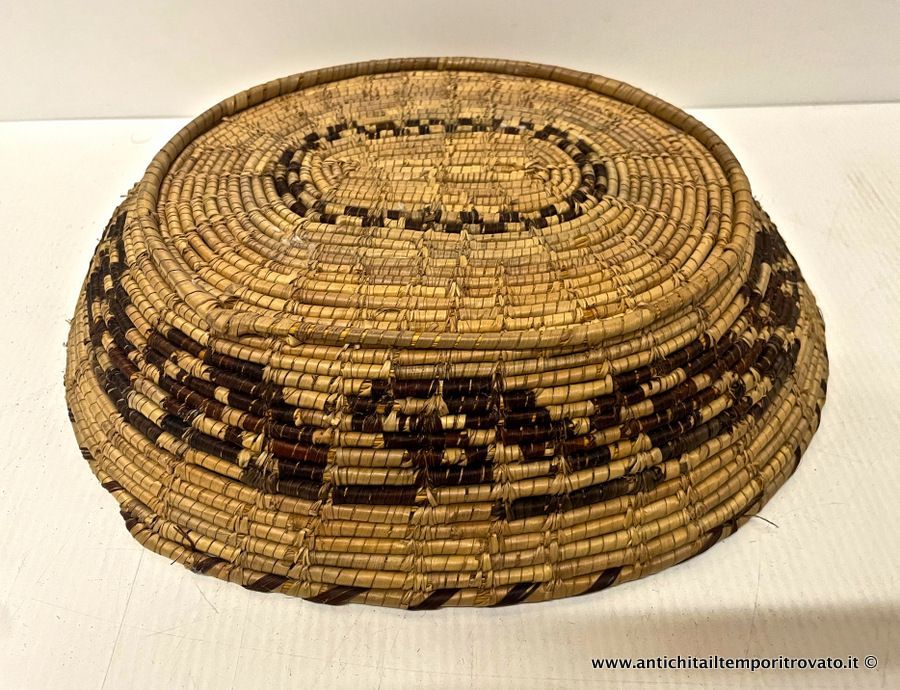
Elegant Sardinian oval basket in asphodel for storing sweets, bread called Sa cranistedda
Description:
Description:
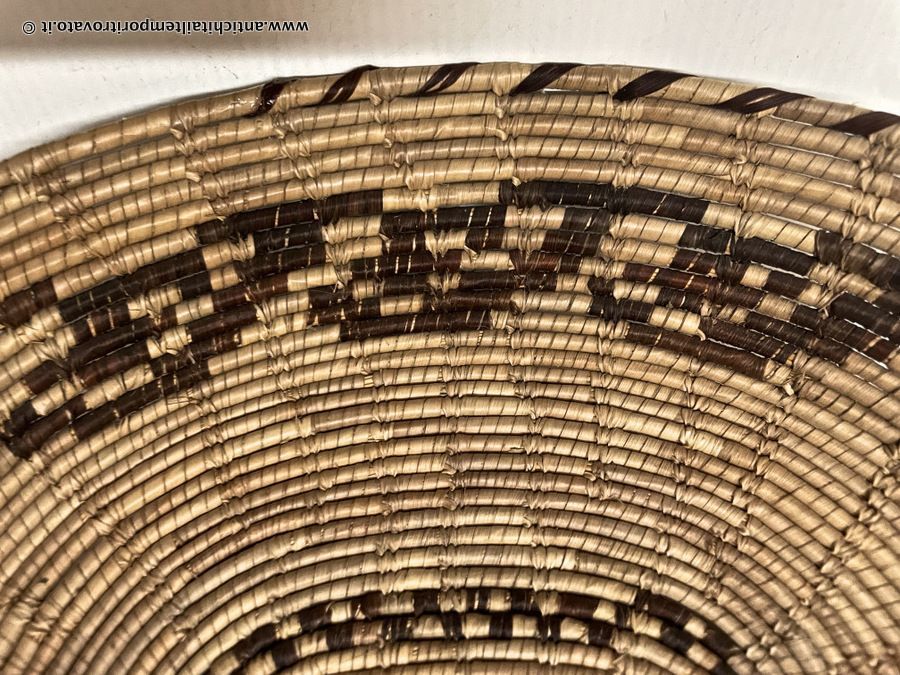
Elegant two-tone Sardinian oval basket from the Flussio area (Oristano), made of asphodel in the first half of the 20th century. Called Cranistedda (cm.26x24; h.5.5), fine weave and brown decorations (base cm.18x14), asphodel was used, in addition to Flussio, in other towns such as Olzai, Tinnura, Montresta, Ollolai, Urzulei, inland and hilly areas while the rush, dwarf palm and wheat are found in areas near the sea and ponds such as Castelsardo, Oristano, Cabras, San Vero Milis. Sardinian baskets without handles were broadly called Corbule and were used to contain sweets, bread, pasta, legumes, fruit... In the past they were entrusted by artisans to traveling horse traders who took care of selling them. Asphodel, a spontaneous herbaceous species throughout almost all of Italy, is one of the typical plants for weaving, but it is only woven in Sardinia and this testifies to an ancient specialization dating back to the Nuragic era. A plant that is reborn after fires, in Sardinia it was used to make scapulars or amulets: for example, some animal diseases were cured with asphodel crosses. The Greeks, believing that asphodel flowers grew in Hades, planted them near tombs so that the souls of the dead could feed on its tubers. They were also planted in front of the doors of country houses against evil influences. The stems are collected in spring with the flowers still in bud, then cut into strips and dried for more than a month in the air and sun. In order to weave them, they are then soaked for several hours to remove the cortical fibers afterwards. In that way fibers of two colors are obtained, brown or dark brown for the outer ones, and light brown or yellow for the inner ones. It is in a good state of preservation.