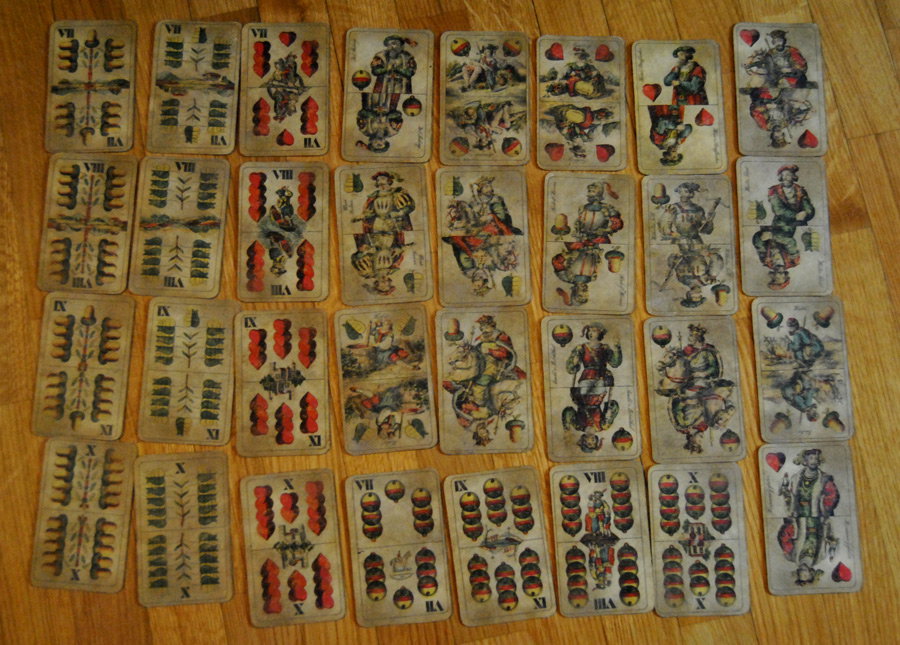
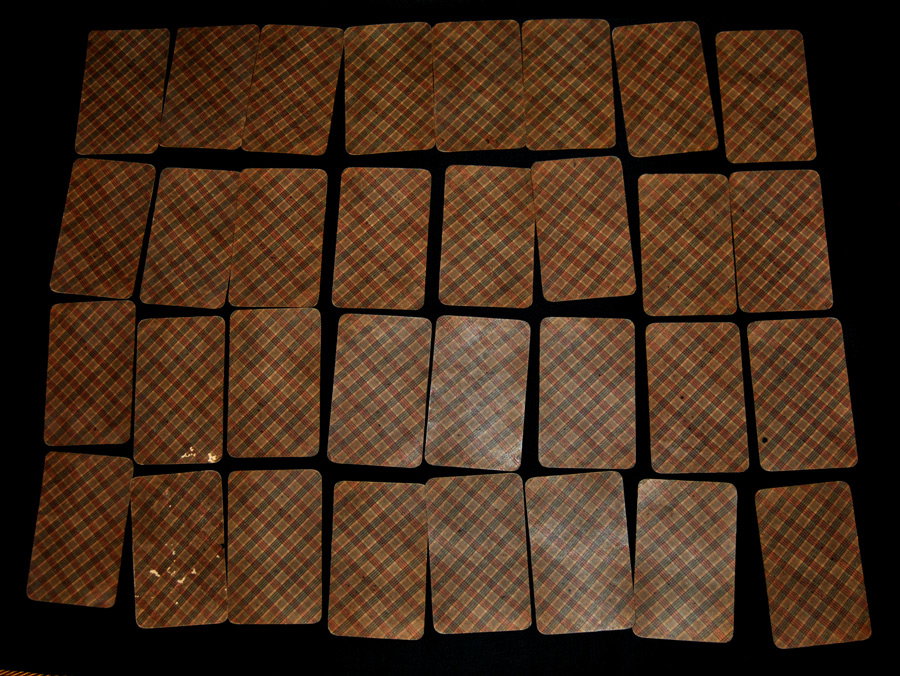
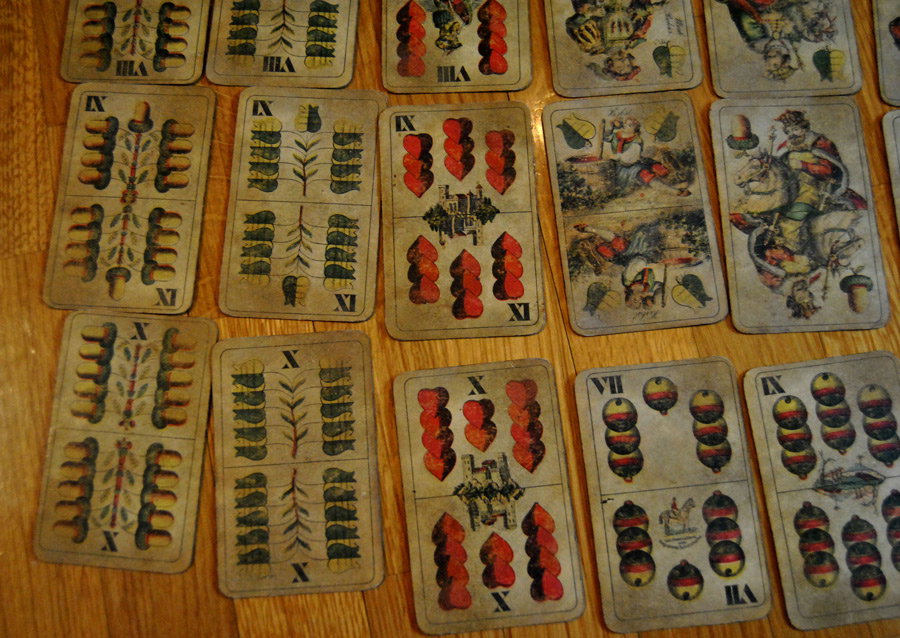
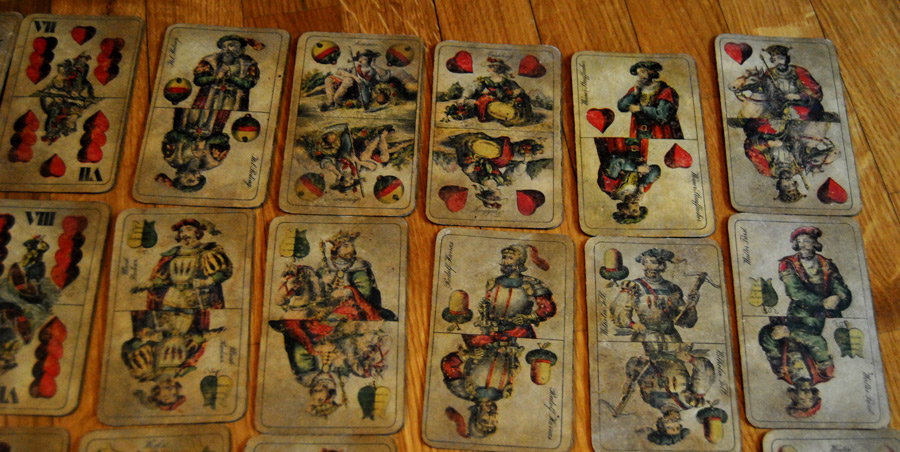
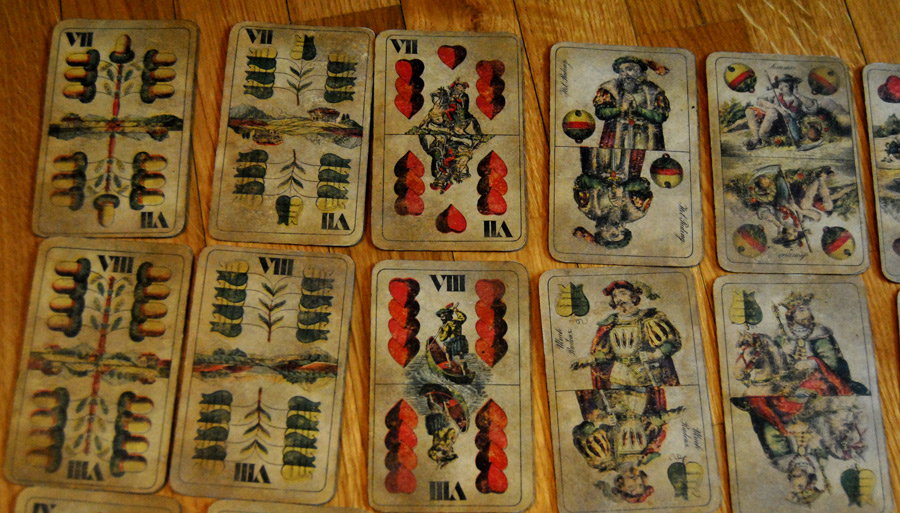
Rare deck of 32 fascinating playing cards from the second half of the 19th century, with wonderful illustrations. For the game of Skat.
Description:
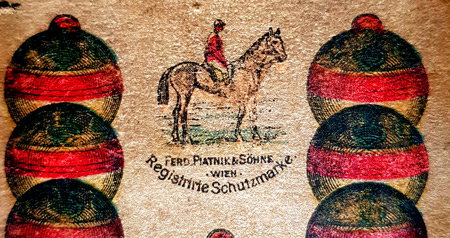
Rare deck of 32 fascinating playing cards from the second half of the 19th century, with wonderful illustrations. For the game of Skat, popular at the time in Central Europe (Bavaria-Austria-Bohemia-Hungary and Germany). The deck is intact and complete. Austria - Hungary, second half of the 19th century approx. From the prestigious manufacturer Ferdinand Platnik & Sons, with offices in Vienna and Budapest. The deck is in excellent condition with patina and signs of use consistent with the era, produced by the Viennese office. Legendary heroes such as William Tell are represented in the cards. Measurements of each individual card cm.11.5 x 7.3. Of high collectors interest or an original idea for a prestigious gift. They can be framed and hung on the wall. Literature: Das K.K. Nationalfabriksproduktenkabienett , Technik und design des Biedermeier, Technisches Museum Wien, p. 172 for similar cards.
PIATNIK is synonymous with playing cards. The Viennese playing card factory is one of the best known in the world. From its foundation when cards were painted on paper to today with high-tech digital printing, it has been a long road. The Viennese playing card factory has always satisfied the highest quality standards with the best printing techniques in all eras. The history of the Platnik family of card manufacturers (Ferdinand Piatnik the first) began in Budapest in 1824. Ferdinand Platnik died in 1882 and the manufacturer based in the Hütteldorfer Straß e in Vienna was renamed "Ferd. PIATNIK & Sons". The business then continued under the management of the widow and sons. The company operating in Hungary was called "Di PIATNIK Nandor Fiai". In 1899 it acquired Ritter & Cie" of Prague. The company still in business produces high quality playing cards.
Skat is (together with Doppelkopf) the most popular card game in Germany and Silesia. It is also played in US regions with a strong German presence, such as Wisconsin and Texas. Due to its origin and diffusion, the terms of the game too are commonly in German. It is a trick-taking game for three or four players. The deck consists of 32 cards: 7, 8, 9, 10, jack, queen, king and ace of each suit, without jokers. Some players in southern and eastern Germany and Austria prefer to use German decks, with the suits of bells, hearts, leaves and acorns. Until not long ago, for example, German cards were used almost exclusively in Saxony and Thuringia. In tournaments, today a deck of cards is used which is a sort of middle ground, being French-suited but German-colored: green spades to facilitate the association with leaves and yellow diamonds to facilitate the association with bells [1]. Moreover, the type of deck used does not modify the game mechanism in any way. Skat originated around 1810 in Altenburg, in the present Federal State of Thuringia, Germany. It was based on a variant of the three-card Tarot game, and on the four-player game of Sheepshead. Skat is frequently mentioned in Günter Grass's work The Tin Drum, where it serves as a common thread throughout the story. Also in "All Quiet on the Western Front", by Erich Maria Remarque, many soldiers play skat. The game finally appears in the episode "Three in the Dead Man's Boots" for the Inspector Derrick series.
In compliance with the provisions of the New Code of Cultural Heritage, the selling company provides photographic written and detailed guarantee of authenticity and provenance of the sold in conjunction with the sale. The data with which the works are described and then contained in the written warranties are expressed determinations resulting from accurate, thorough and documented technical/historical/artistic investigations.