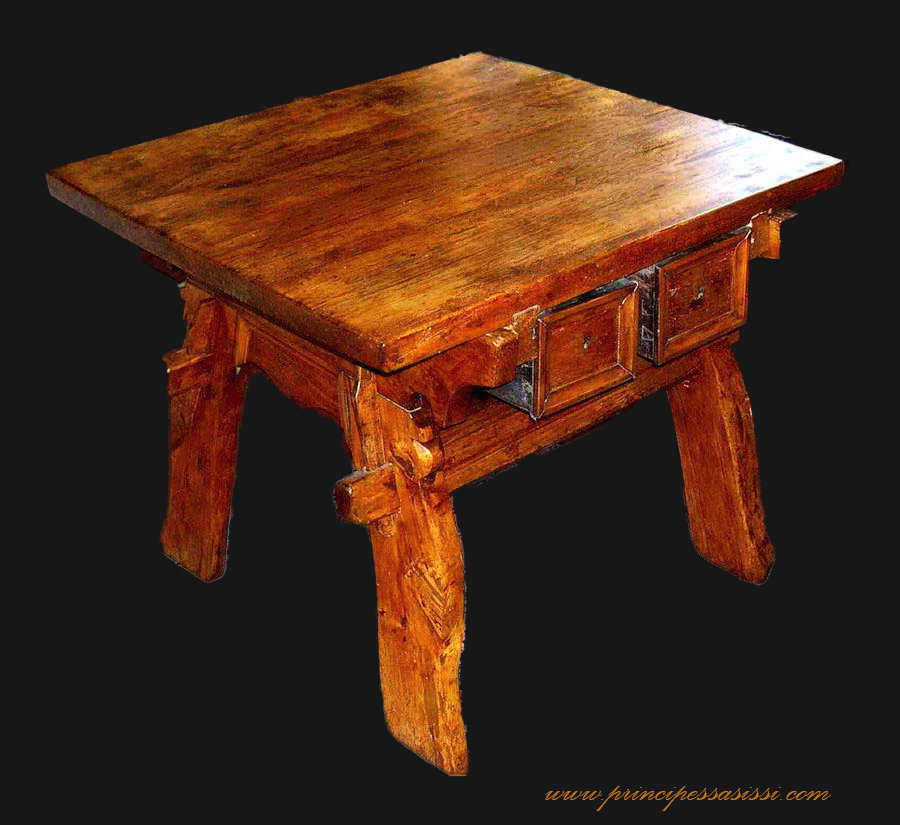
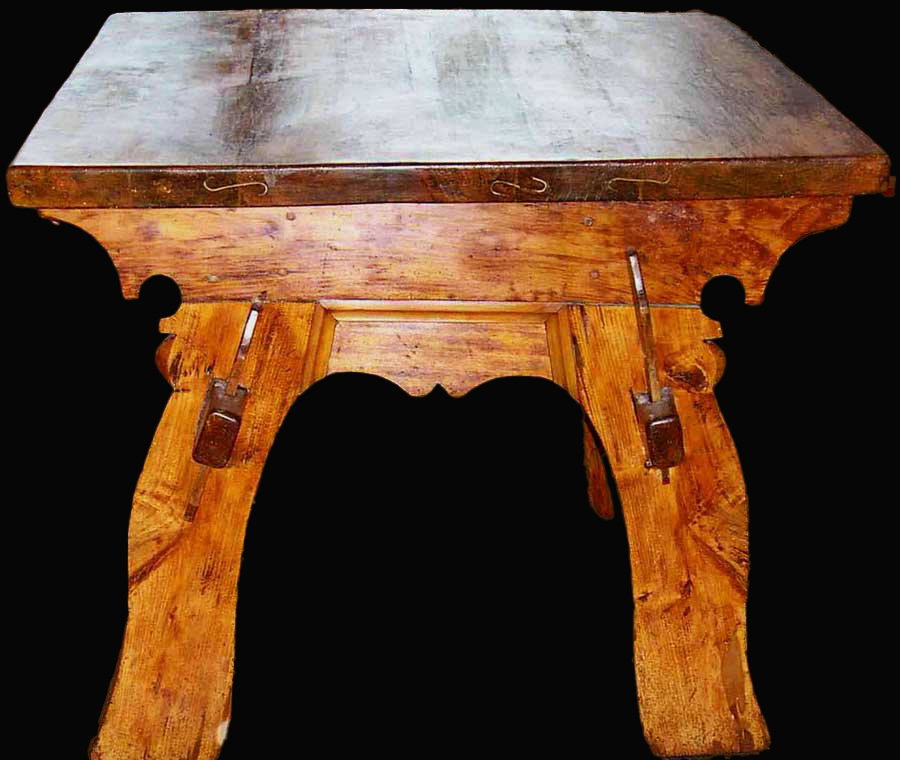
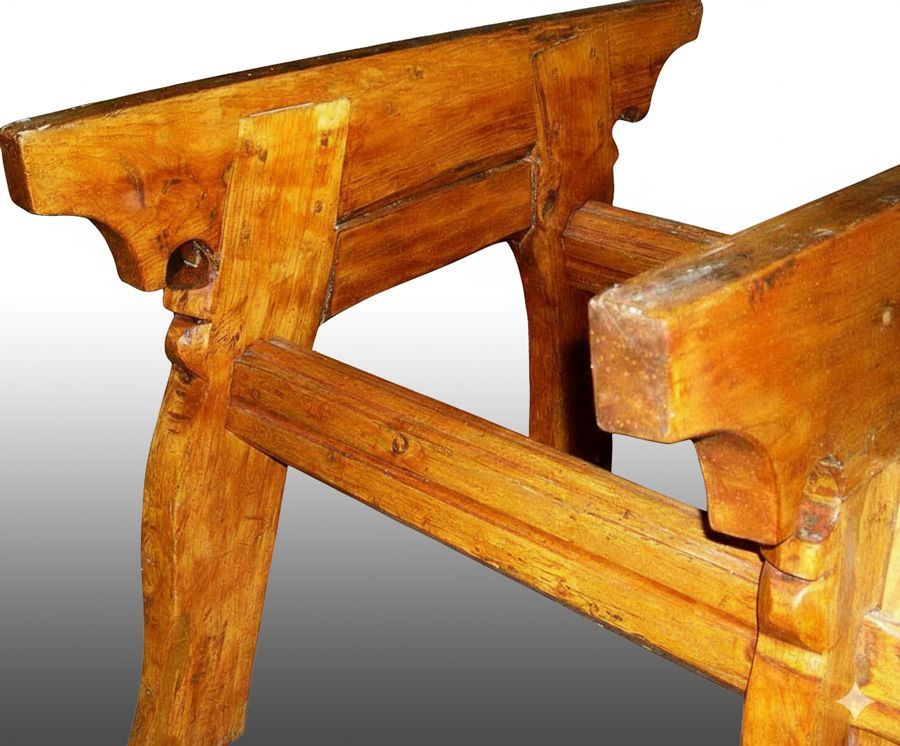
Charming Austrian 17th-century refectory table in practically intact condition. It is made of solid maple wood, with a splendid patina. Austria, probably Styria, 17th century. It measures cm 91x88 the top, which is cm 5 thick, and it is cm 76 high. The base measures cm 82x78. This type of "Bauern Moebel" furniture is called "Jogltisch" in German, particularly in the Styrian variant. A rare piece in practically intact condition and with patina. Restored, with a pleasant, light, semi-gloss polishing, suitable for this type of furniture, carried out with antique techniques using shellac, also for conservation purposes. Excellent for adding a touch of class, for example, to a prestigious mountain residence.
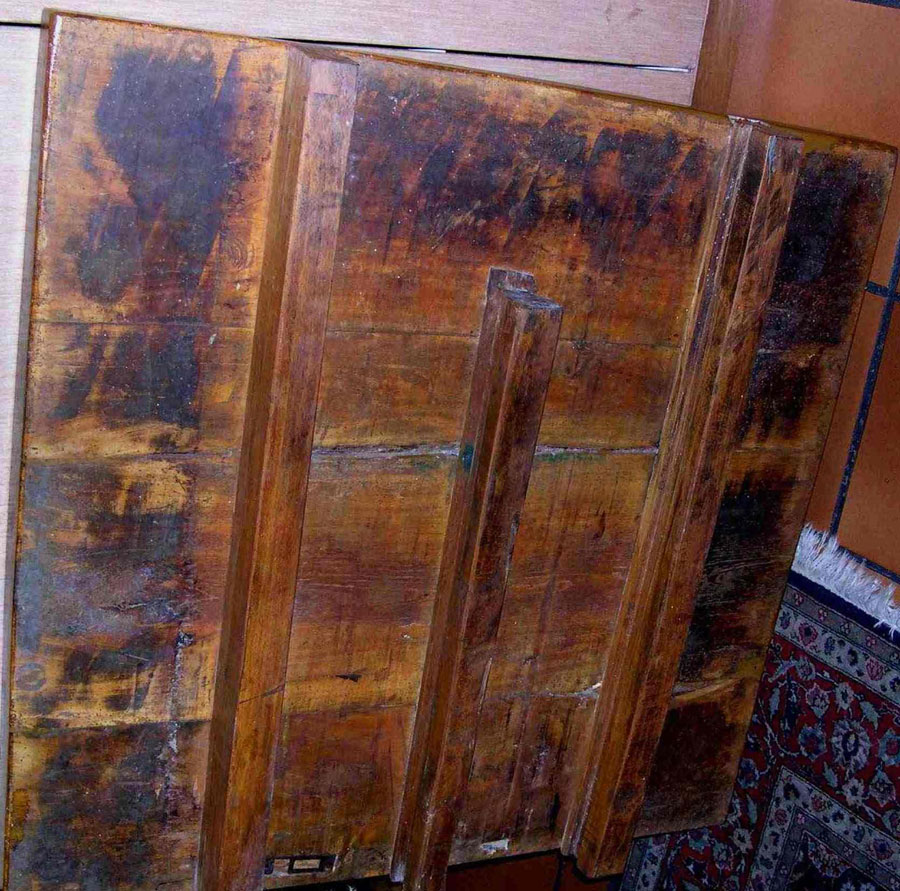
Interesting is the construction technique that involved the insertion of original forged metal dowels in the sides of the top to ensure the adhesion of the planks to each other.
"Jogl" table - the history. The Jogl table is a piece of furniture from an Alpine provincial residence (Stuebe) or "farmhouse" made in various variants with various woods, from fir to maple and rarely walnut just for the top, as it is heavier than other woods. It is also known as the "Rhöntisch" in the Rhön, the low mountain range in the border triangle between Hesse, Bavaria and Thuringia. The table top is usually removable; rarely, as in our work, was the table also completely disassembled to facilitate its movement from one room to another. Below the top are numerous compartments, a bread drawer and a further drawer for cutlery. Origin and historical significance The Jogltisch, also known as the Jokeltisch, was originally built in Joglland, a low, densely wooded mountain range in northern Styria, and was first mentioned historically around the middle of the last millennium by a monk of the Augustinian monastery of Vorau. Cultural significance This piece of furniture has always been the center of the social life of the farming family in Central Europe. Not far from the fireplace or the stove, which also served as a cooking place. People ate there and the family gathered around it; celebrated, mourned, talked, prayed and concluded contracts. Since many farming families of the time often did not have cupboards and cabinets, important documents and objects were often stored under the mobile table top. Today, this type of original tables are absolute rarities and are rarely offered on the market. They can still be admired in German-speaking countries in some courtyards of historic residences and museums on the subject.
In accordance with the provisions of the New Code of Cultural Heritage, the selling company provides at the time of sale a detailed written photographic guarantee of originality and provenance of the works sold. The data with which the works are described and then contained in the written guarantees are expressed determinations resulting from accurate, in-depth and documented technical / historical / artistic investigations.