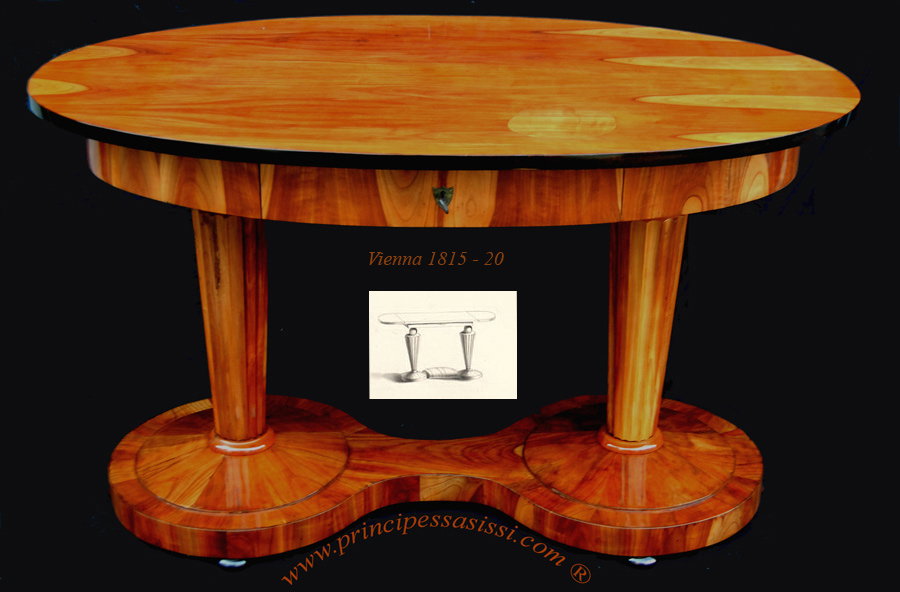
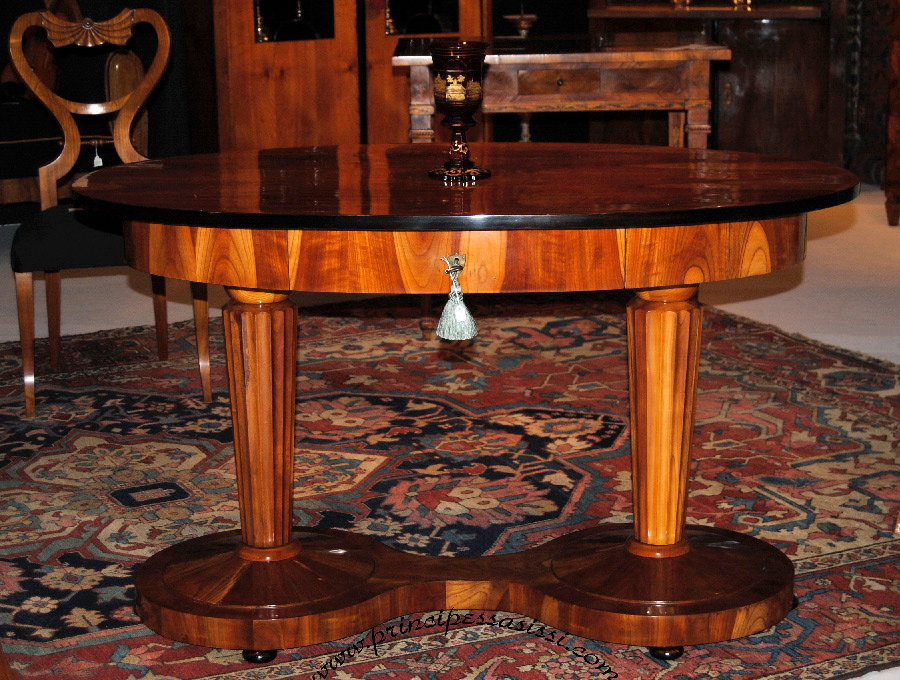
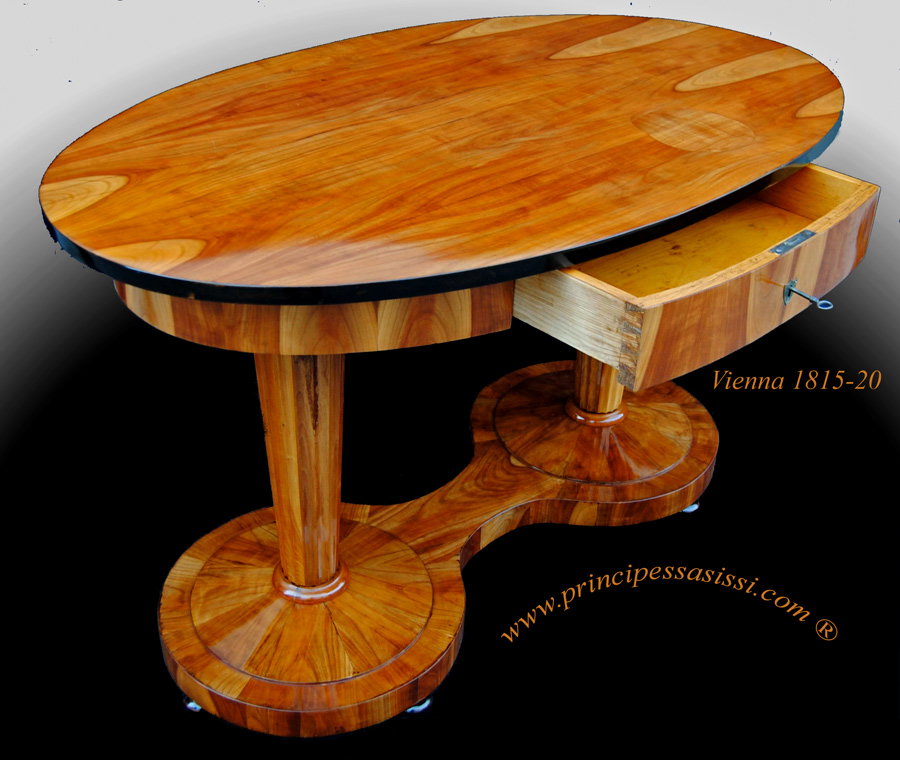
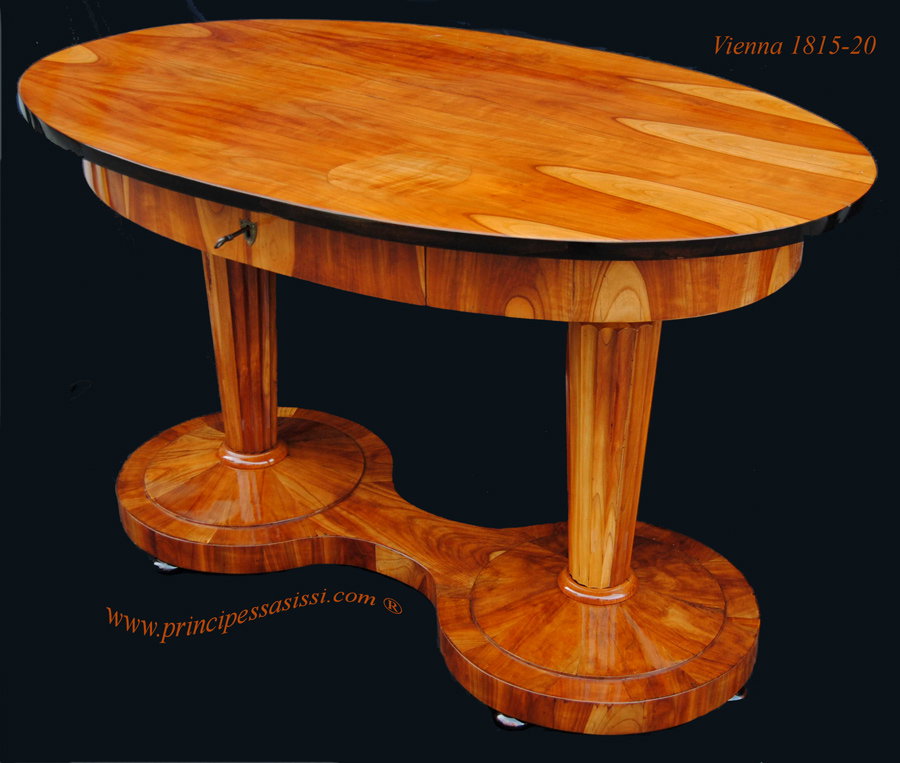
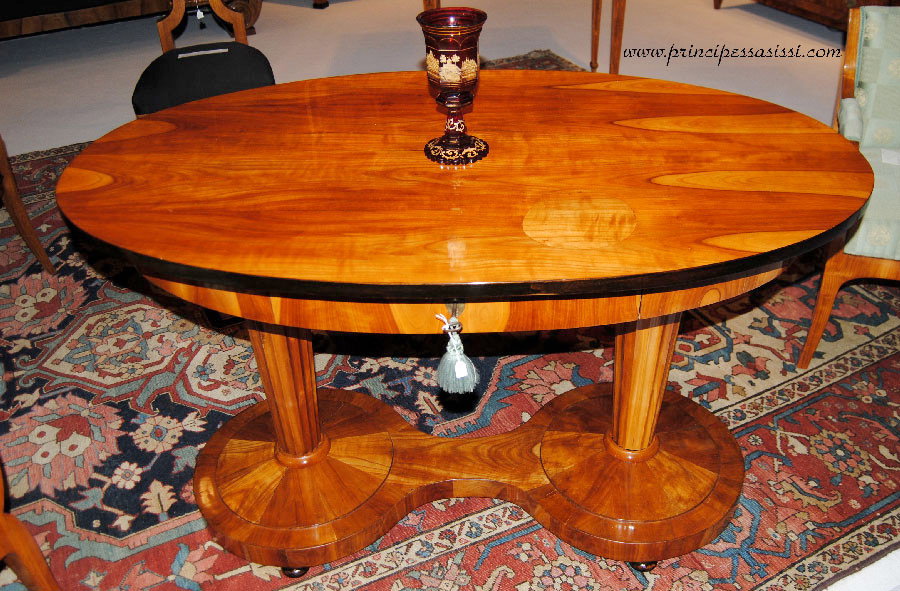
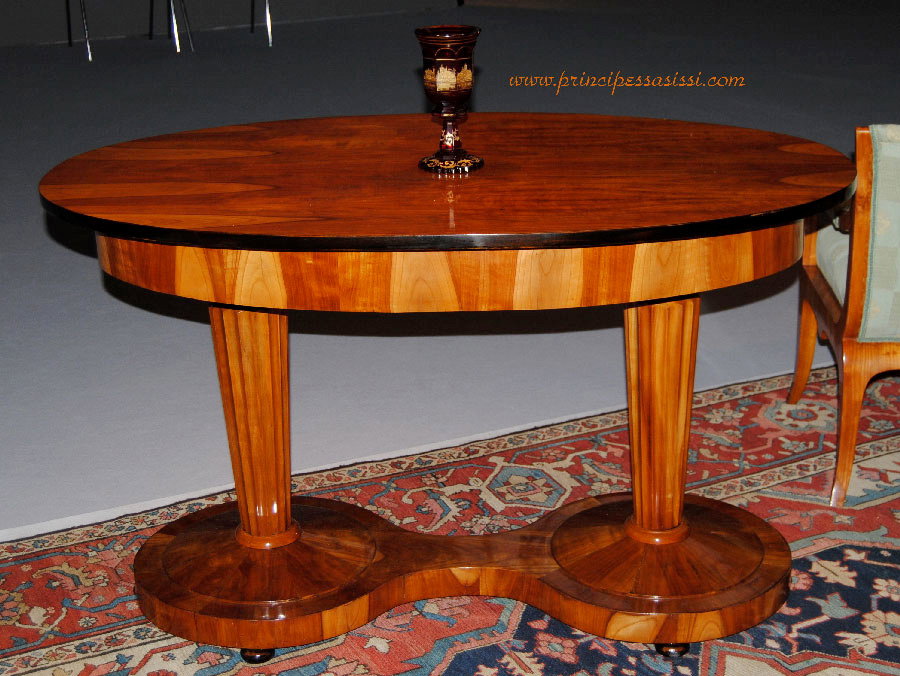
Important writing desk from the early Viennese Biedermeier period, a slight variation of n. 31, most likely by Joseph Danhauser.
Description:
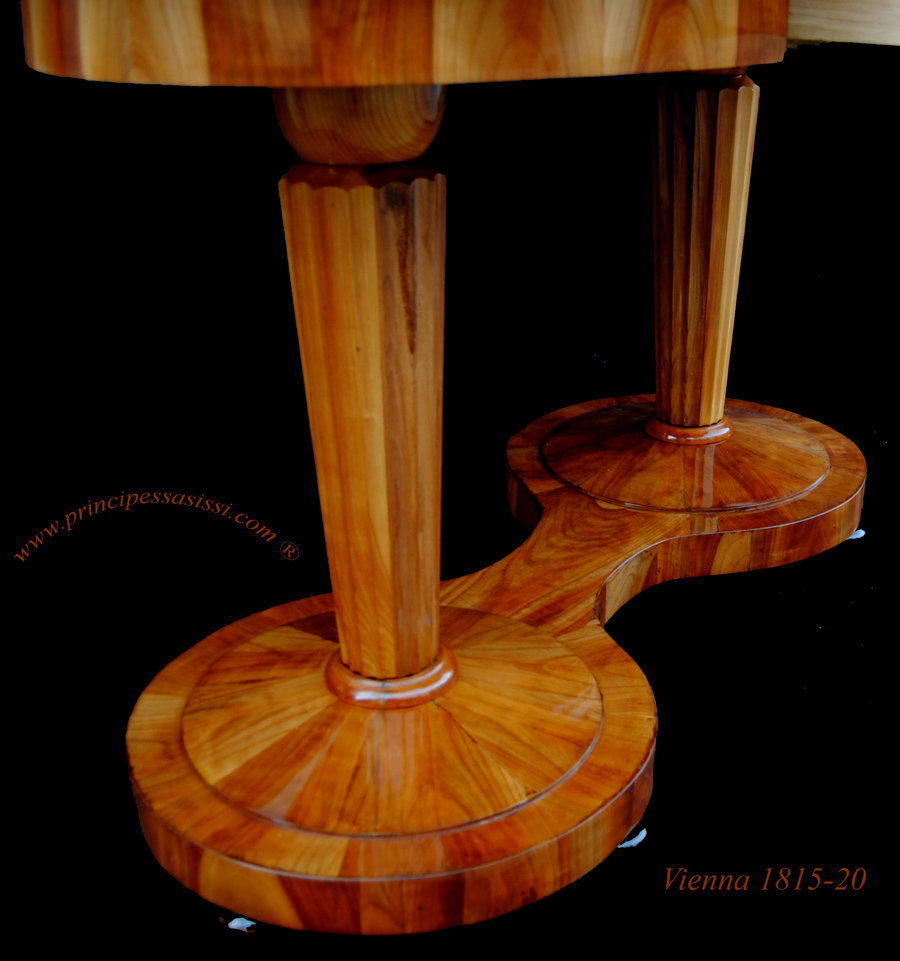
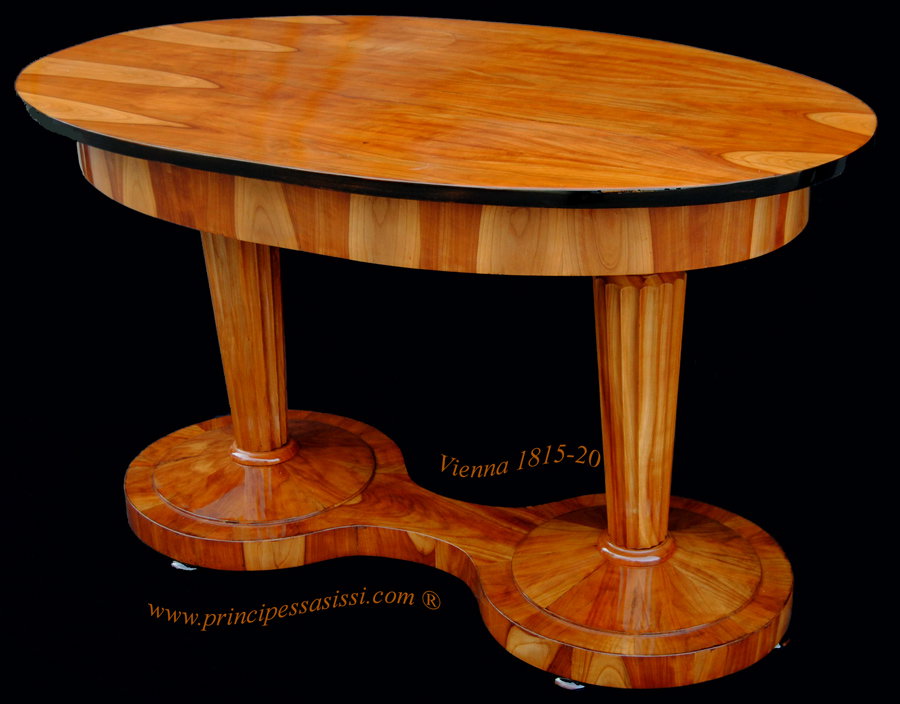
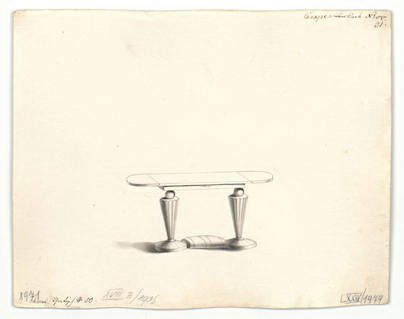
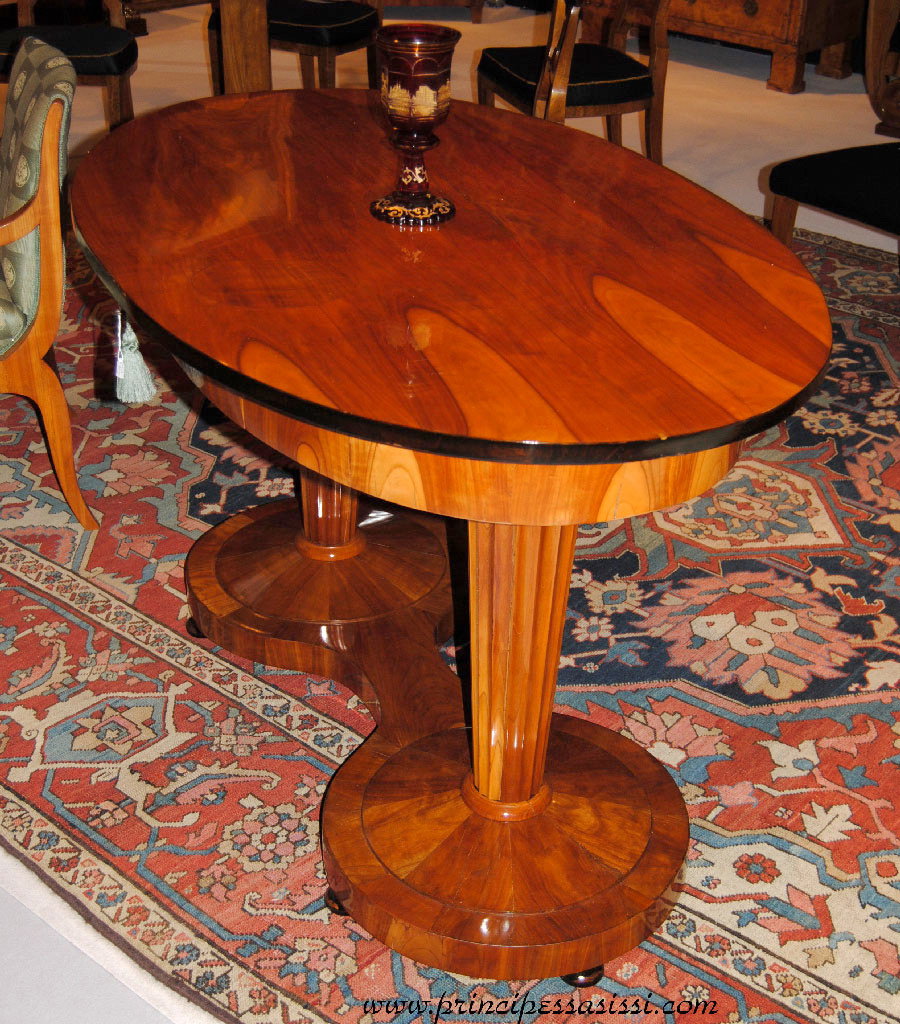
Important writing desk from the early Viennese Biedermeier period, a slight variation of n. 31, most likely by Joseph Danhauser or perhaps, but less likely, from the immediate circle of artists close to him. Vienna 1815-20. The work, of museum relevance, is in practically intact condition and retains its original patina. It is finely polished with shellac using a buffer, with museum-standard technique. It is veneered in cherry feather of incredible quality, with ebonized details. Even the internal and external hardware are original to the period. It is a variation or personalization of the famous desk n. 31, an example of which is kept at the Museum of Applied Arts in Vienna, at the beginning of the Empire and Biedermeier hall (see photo below already in the public domain - source Wikipedia). This same work in the possession of the Museum of Applied Arts of Vienna is a personalization - variation of the original design (see miniature below - property of the archives of the same Museum of Applied Arts of Vienna). The furniture in Vienna, in fact, while presenting the two liftable sides, does not have the grooves in the manner of a Greco-Roman column, which is instead present in the furniture we propose. These grooves are practically a "signature" and a typical characteristic of the furniture from the Joseph Ulrich Danhauser manufacture. The line, the material quality, and the executive skill lead to this furniture with high probability to the Danhauser manufacture of Vienna, to which it can be attributed. Literature "Biedermeier, di Erfindung der Einfacheit", Albertina exhibition in Vienna by curator Dr. Klaus Arbert Schroeder; Zeichnungen von Joseph Ulrich Danhauser - Sammlung MAK Vienna. Measurements: height cm.78, width 132.5, depth 81
Joseph Ulrich Danhauser, a great Viennese cabinetmaker and designer, documented his product range in an extensive drawn catalogue, parts of which (c. 2,500) have survived the times and are now preserved in the MAK (Austrian Museum of Applied Arts in Vienna). This catalogue includes, among others, 153 chair models, 56 sofas, 179 types of chandeliers, and 124 draperies. All these models were numbered consecutively. He boasted a distinguished clientele from all over the Austrian monarchy and Germany. The company had offices and sales agencies in Graz, Prague, and Budapest. The most prestigious work entrusted to Danhauser was the renovation of the Palace of Archduke Charles (today's Albertina, home to an important Viennese museum) around 1822. The Danhauser furniture factory holds a prominent position in the history of Viennese furniture making and interior decoration. Danhauser's designs allow us to follow the development of the Viennese furniture style, which was initially based on French models, such as those created by Percier and Fontaine, but soon gained its own precise and refined autonomy. Danhauser's exceptional quality and uniqueness as a furniture creator lies in the harmonious combination of concreteness and abstraction, functionality and emotion. Thus, he assumed the role of mediator between individuality and anonymity and became one of the most important inspirations for the modern avant-garde movement. The Danhauser manufacture was founded in 1814 by the sculptor and cabinetmaker Joseph Ulrich Danhauser (1780-1829), the father of the painter son Joseph Danhauser. It was one of the first companies in Vienna operating in the field of interior decoration. Having been granted a special production license, it was possible for Danhauser to integrate all the trades related to interior decoration with their respective specializations and thus carry out the necessary work under one roof. These included primarily the production of furniture and upholstery, the production of lighting fixtures, metalworking, and the creation of elaborate draperies. It is a point of reference in the history of design and furniture. Its very rare original achievements that have survived the times are preserved in a few museums, castles, great antique dealers, or prestigious private collections, mostly aristocratic.
In accordance with the provisions of the New Code of Cultural Heritage, the selling company provides at the time of sale a detailed written photographic guarantee of originality and provenance of the works sold. The data with which the works are described and then contained in the written guarantees are expressed determinations resulting from accurate and documented technical/historical/artistic investigations, even of expert relevance.
Recognize the true Viennese Biedermeier of the first phase of the period by distinguishing it from late or Northern European imitations! Read the history of this elegant and sober style and learn to evaluate timeless Viennese masterpieces by designers from 1815 to 1830! Click on the link at the bottom of the page to read a new synthetic practical guide of our own, unique in Italy, with links and virtual visits to museums and galleries in Vienna.