19th century, after Arnolfo di Cambio
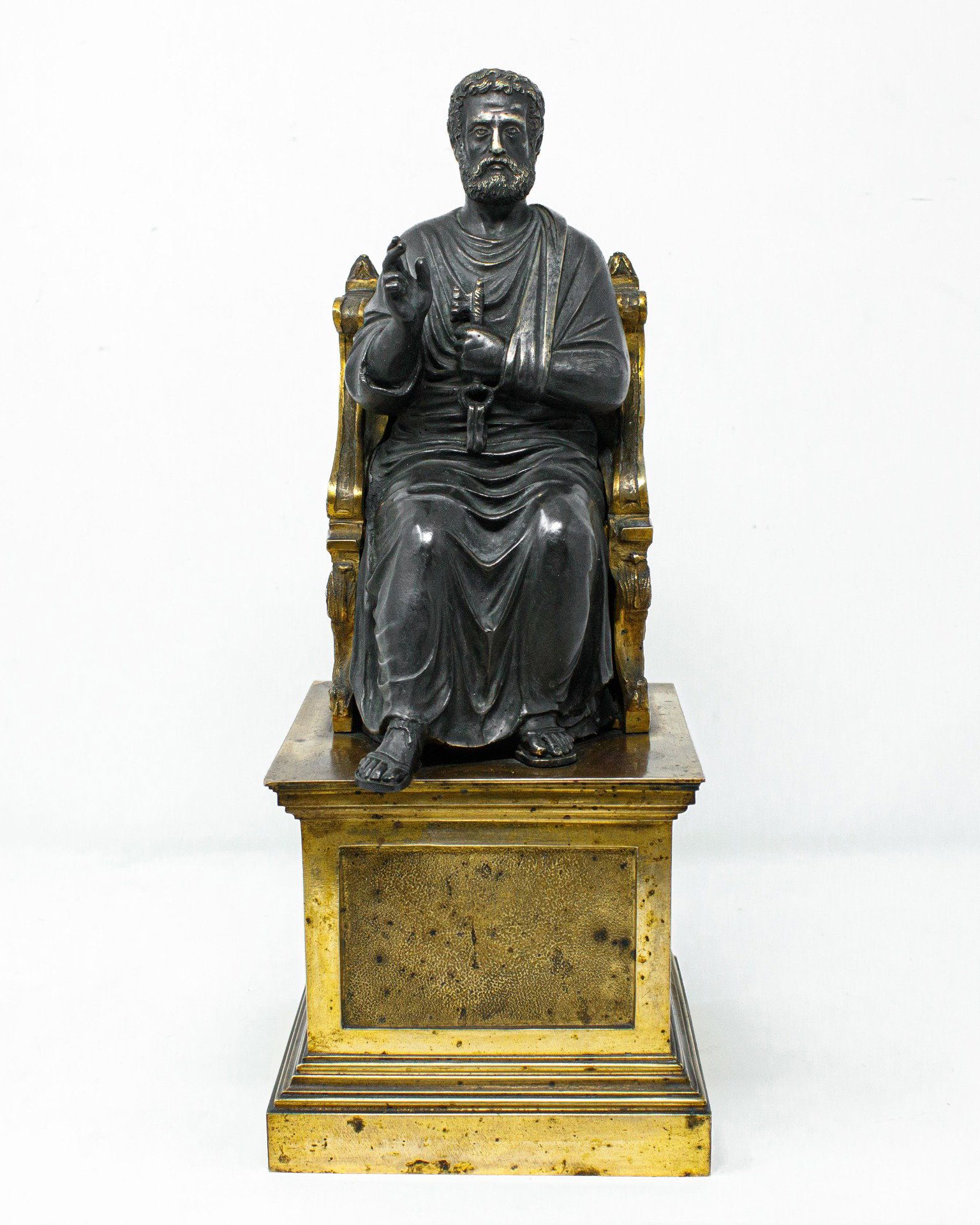
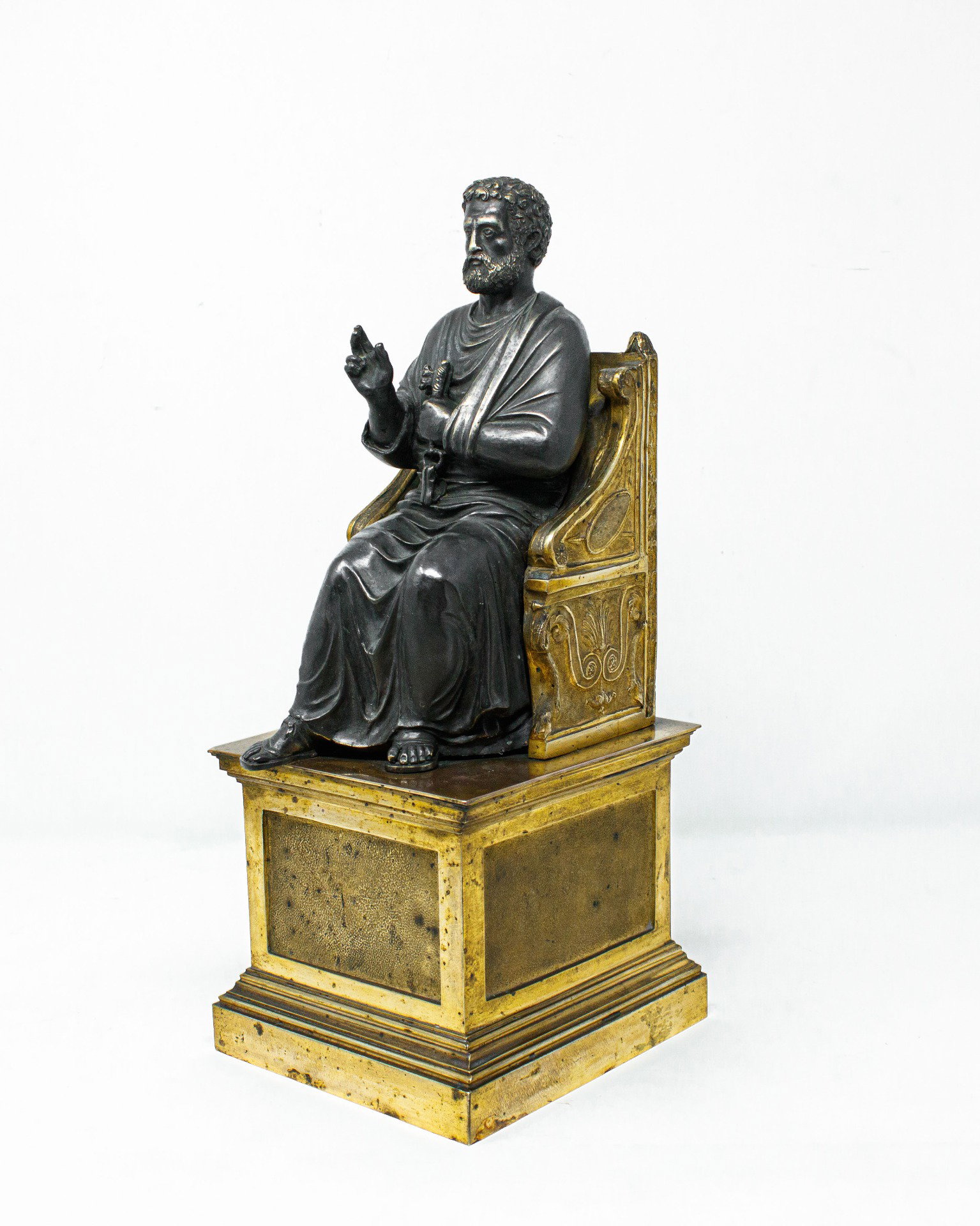
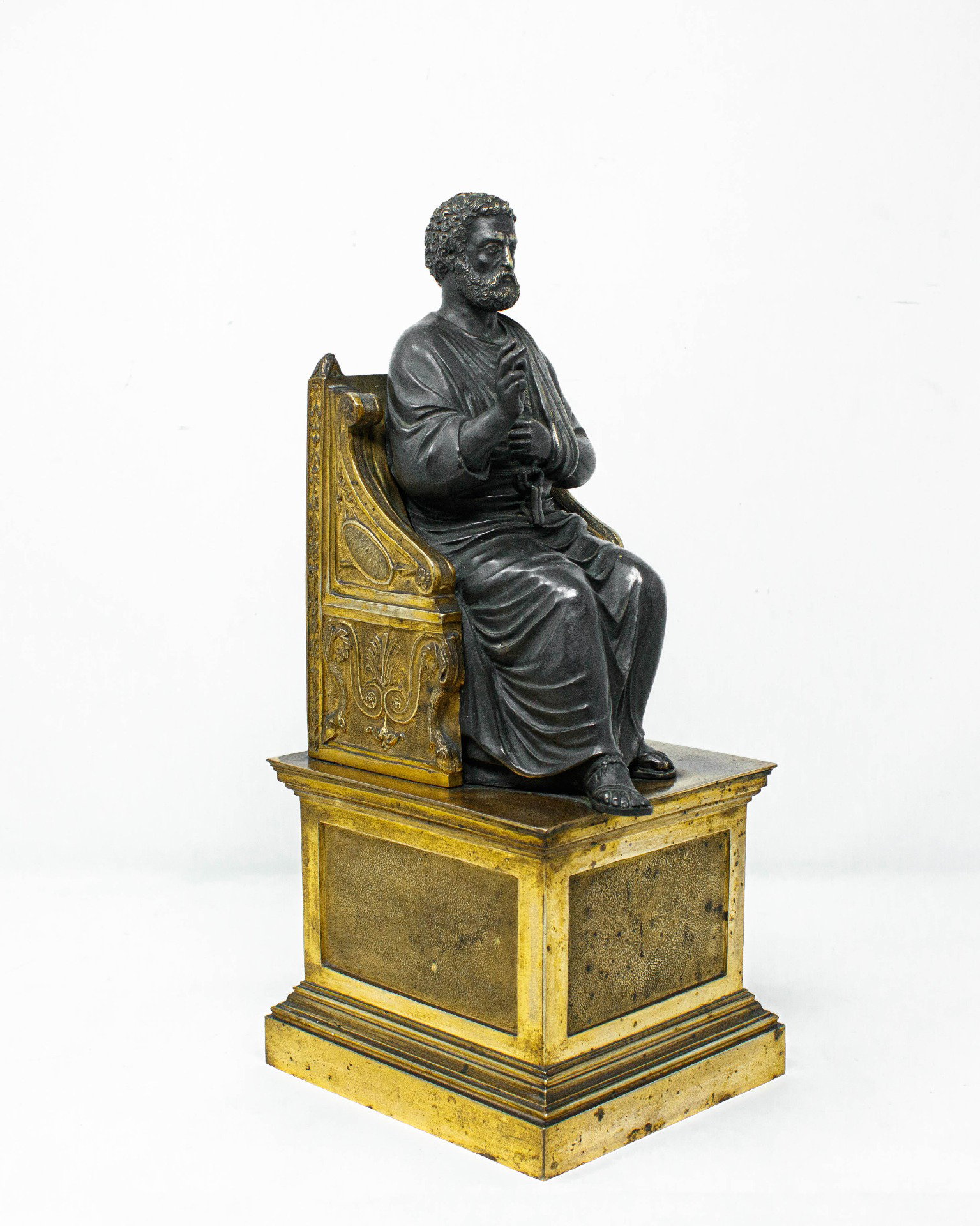
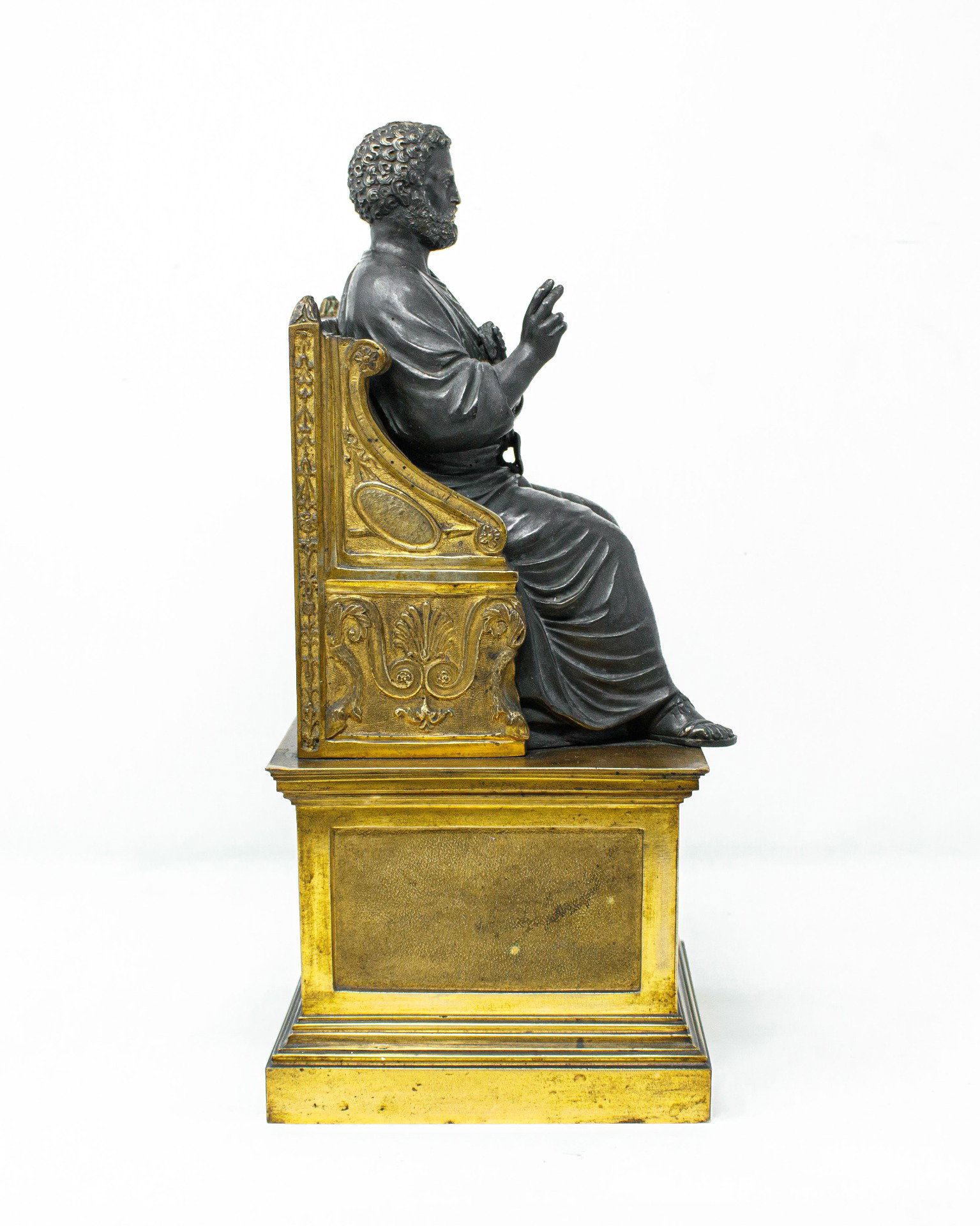
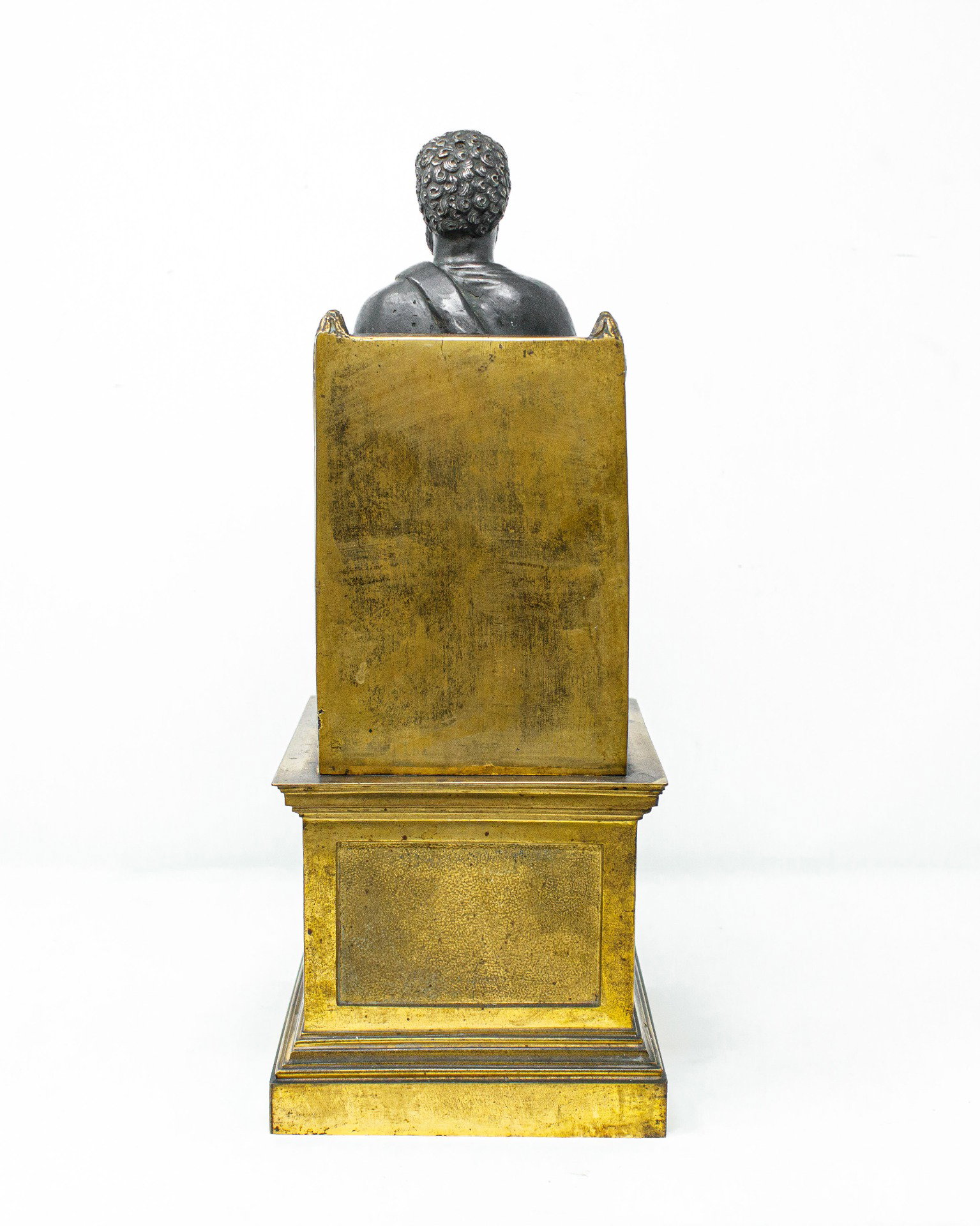
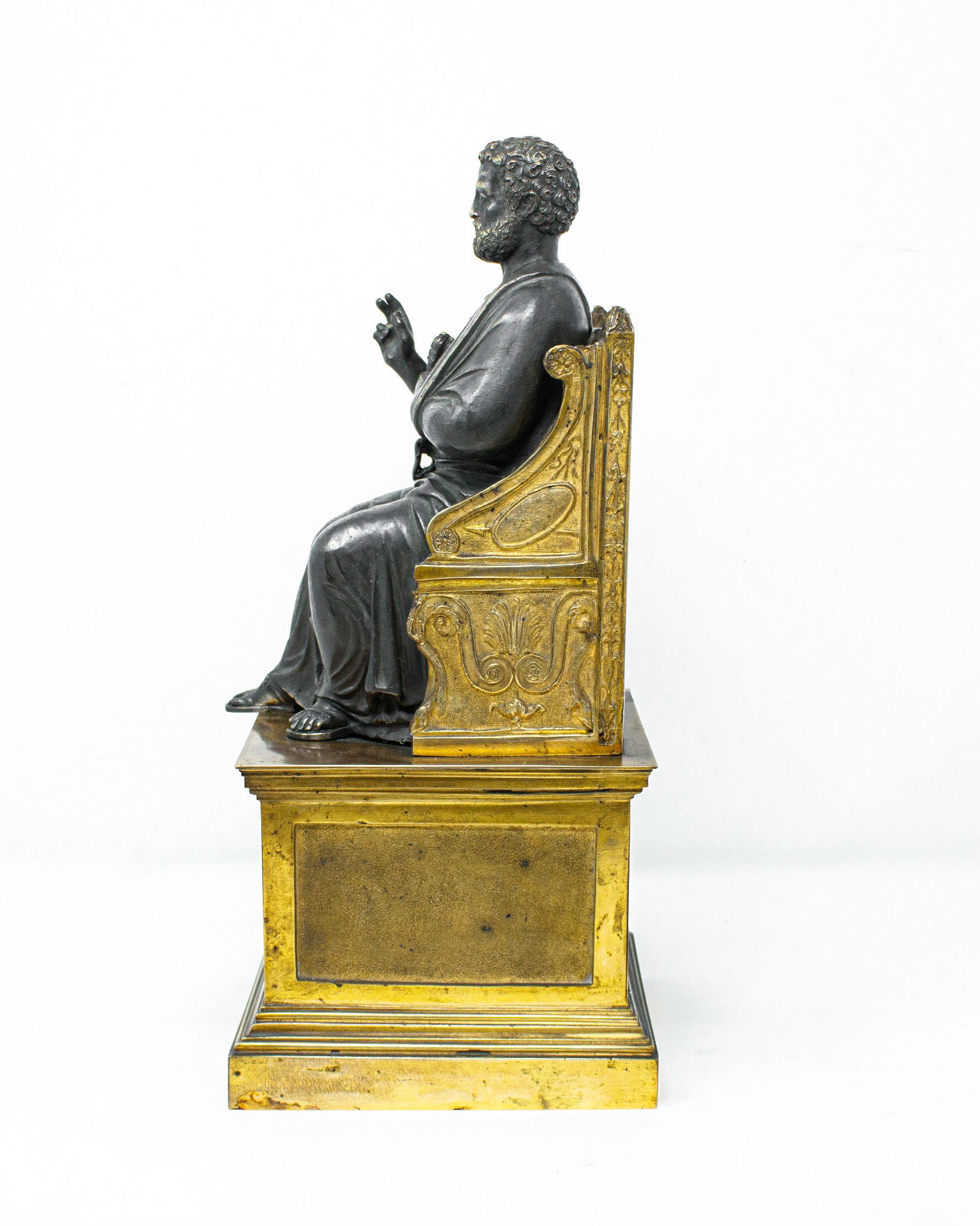
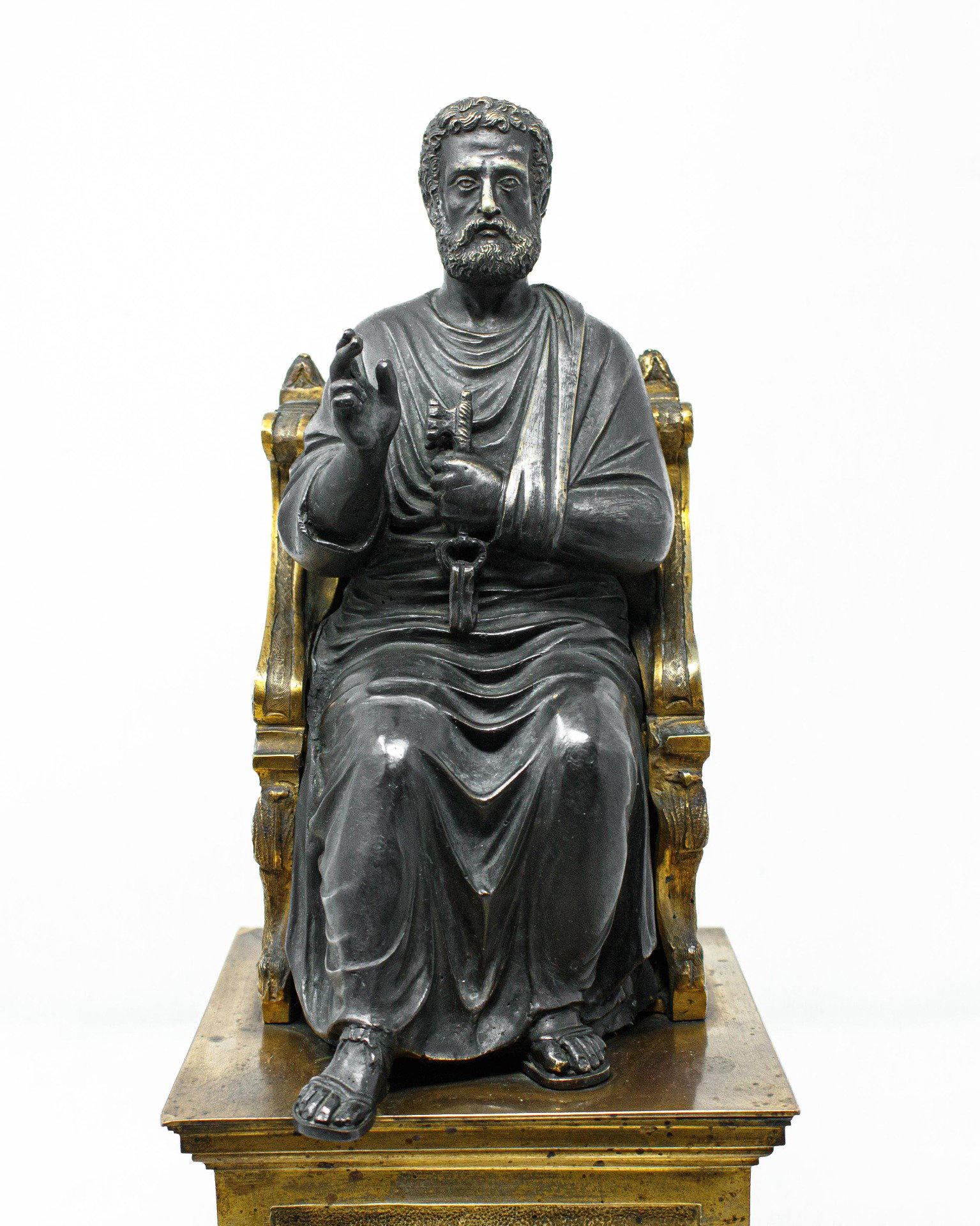
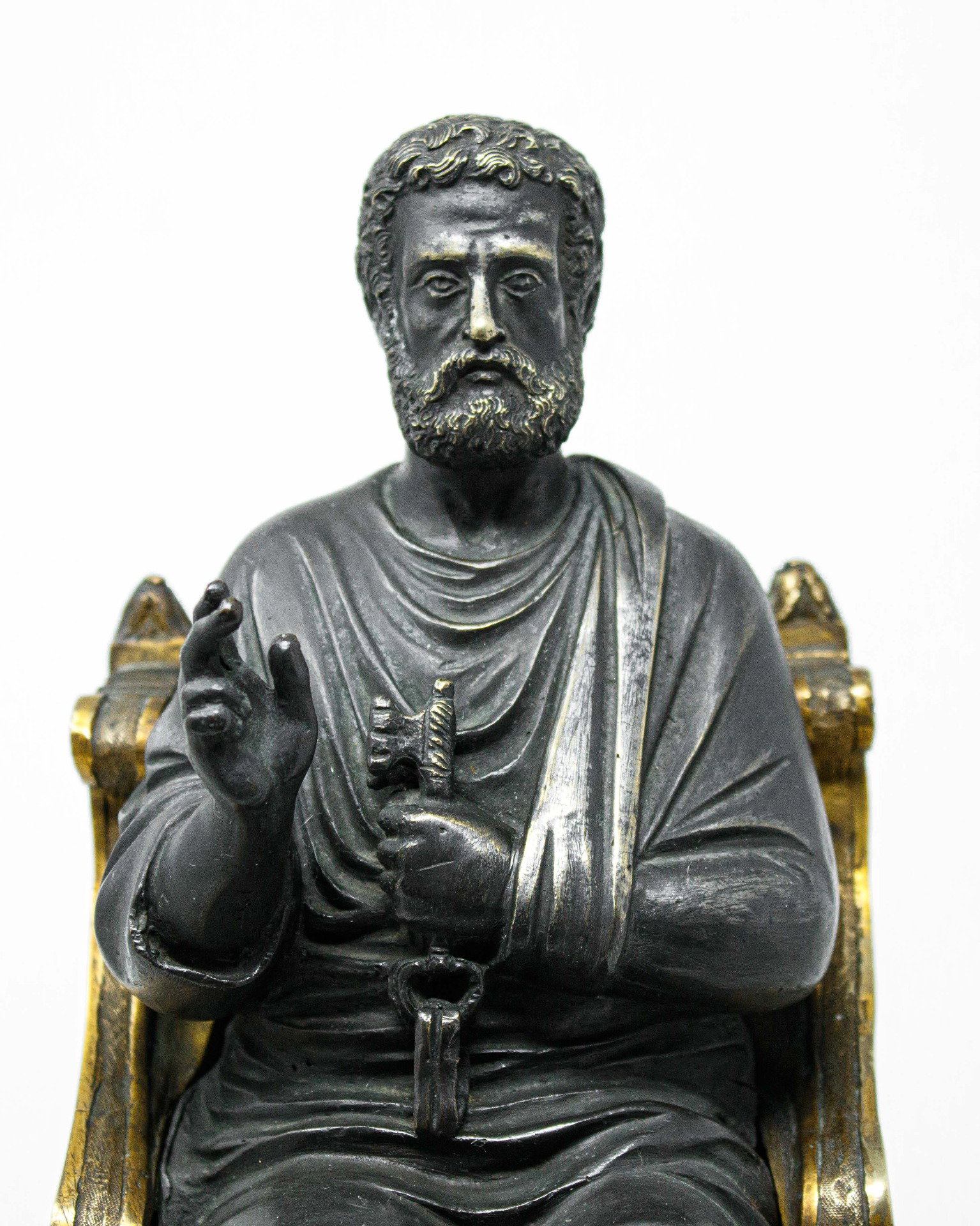
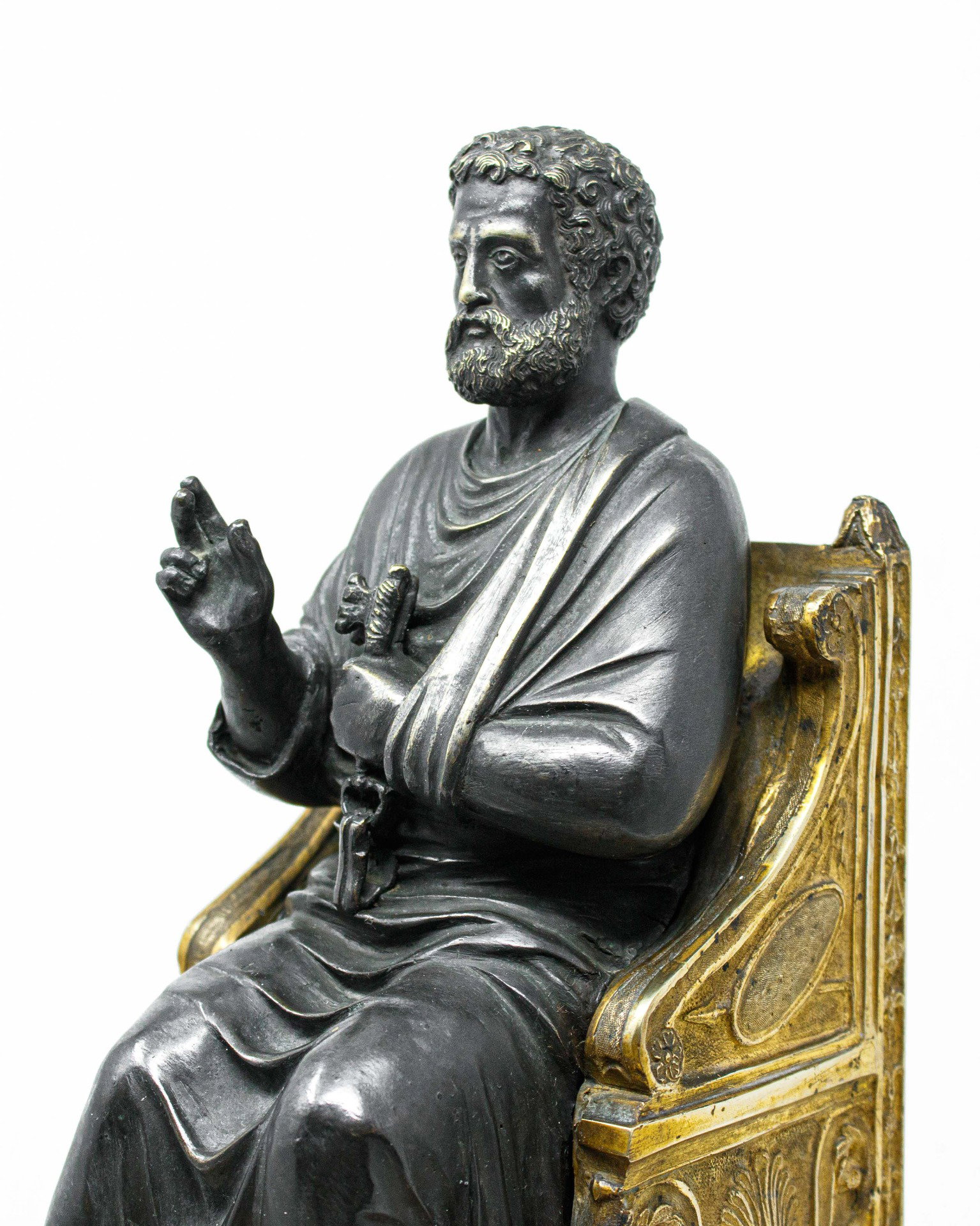
Saint Peter Enthroned
Bronze, cm 32 x 13.5 x 15
This small bronze sculpture depicting Saint Peter seated on the throne bears similar features to the bronze Saint of St. Peter's Basilica, made by Arnolfo del Cambio around 1300, although it was mistakenly considered to date back to the 5th century for a long time.
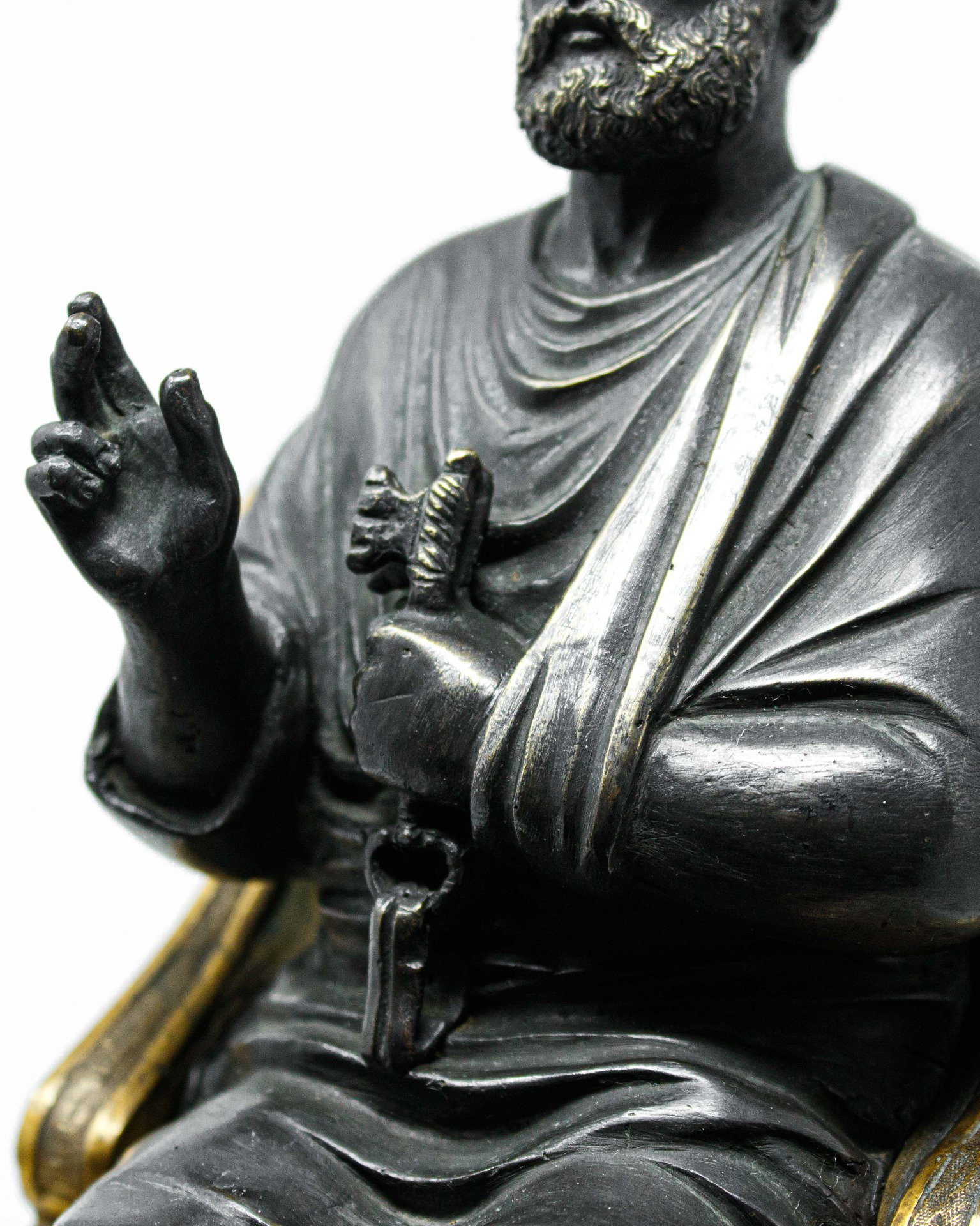
Saint Peter is seated on a throne while with his right hand he is in the act of blessing the faithful, with his left he holds the keys, a symbol representing the keys to Paradise, one of gold and one of silver, given by Jesus to Saint Peter and for this reason called "the keys of Saint Peter and his iconographic attribute."
Arnolfo di Cambio also known as Arnolfo di Lapo (Colle di Val d'Elsa, 1232 or about 1240 – Florence, 8 March 1302-1310 approx.), is an Italian sculptor, architect and urban planner active in particular in Rome and Florence at the end of the thirteenth century and the beginning of the next century. Arnolfo di Cambio trained in the workshop of Nicola Pisano and worked with him on the Arca di San Domenico in the church of San Domenico in Bologna (1264-67), on the pulpit of the Duomo of Siena (1265-1269). After leaving the workshop around 1270, having acquired professional autonomy, he moved to Rome where he followed Charles I of Anjou.
In Rome the artist had come into contact with the great works of the Roman past, and had absorbed the lessons of the Cosmatesque masters, whose decorative parties with inlays of colored marbles and gilded glasses will be reused in the ciborî of the basilica of San Paolo fuori le mura (1285) and Santa Cecilia in Trastevere (1293). Around 1289 is the funerary monument of Cardinal Annibaldi's nephew Riccardo Annibaldi (preserved at San Giovanni in Laterano, Rome). In this period he worked in Rome for other papal commissions: such as the monument to Pope Boniface VIII (1296) and indeed the bronze statue of St. Peter of St. Peter's Basilica (1300).&
The original attributed to Arnolfo di Cambio is kept in St Peter's Basilica in Rome; it is placed in correspondence with the last pillar on the right of the central nave and is today one of the works most connected to the devotion of pilgrims: popular tradition has it that it is a gesture of devotion to stroke the right foot of the statue, which after centuries of wear and tear is now considerably worn.
In addition to the Vatican version there are others: that kept in the cathedral of Notre Dame or even in the Co-cathedral of Jerusalem; another version is instead exhibited in the church of San Pietro in Porto Venere, in the Basilica of Lecco (wooden version), in the cathedral of Urbino and Cagli and finally in the complex of the Marian Sanctuary of Lourdes.
In the Palazzo della Battaglia, Museum of Memories and Landscape in the Land of Anghiari, there are also the only two miniature interpretations, known and visible to the public, of the Roman statue. They perfectly reflect the shapes of the original, but do not preserve the throne, probably made of perishable material (wood?). They are linked to the custom of pilgrims to bring with them the "souvenirs" of the places of pilgrimage, such as the shell of Santiago de Compostela.
The fact that there are in fact no small versions makes this specimen almost unique.
The object is in good condition
With Ars Antiqua it is possible to defer all amounts up to a maximum of € 7,500 at ZERO RATE, for a total of 15 INSTALLMENTS.
Ex. Tot. € 4.500 = Monthly installment € 300 for 15 months.
Ex. Tot. € 3.600 = Monthly installment € 720 for 5 months.
For amounts exceeding € 7,500 or for a longer period (over 15 installments), we can provide a personalized payment.
Contact us directly to get the best quote.
TV LIVE
– SUNDAY 17.00 – 21.00 Dig.terr. 126 + 809 SKY
- THURSDAY 21.00 - 24.00 Dig.terr. 134 + 809 SKY
– Streaming on our website www.arsantiquasrl.com and on our social media Facebook and Youtube
All works offered by Ars Antiqua are sold with a certificate of authenticity in accordance with the law and an accurate in-depth sheet.
You can see the works directly at the Milan showroom gallery, in via Pisacane 55 and 57.