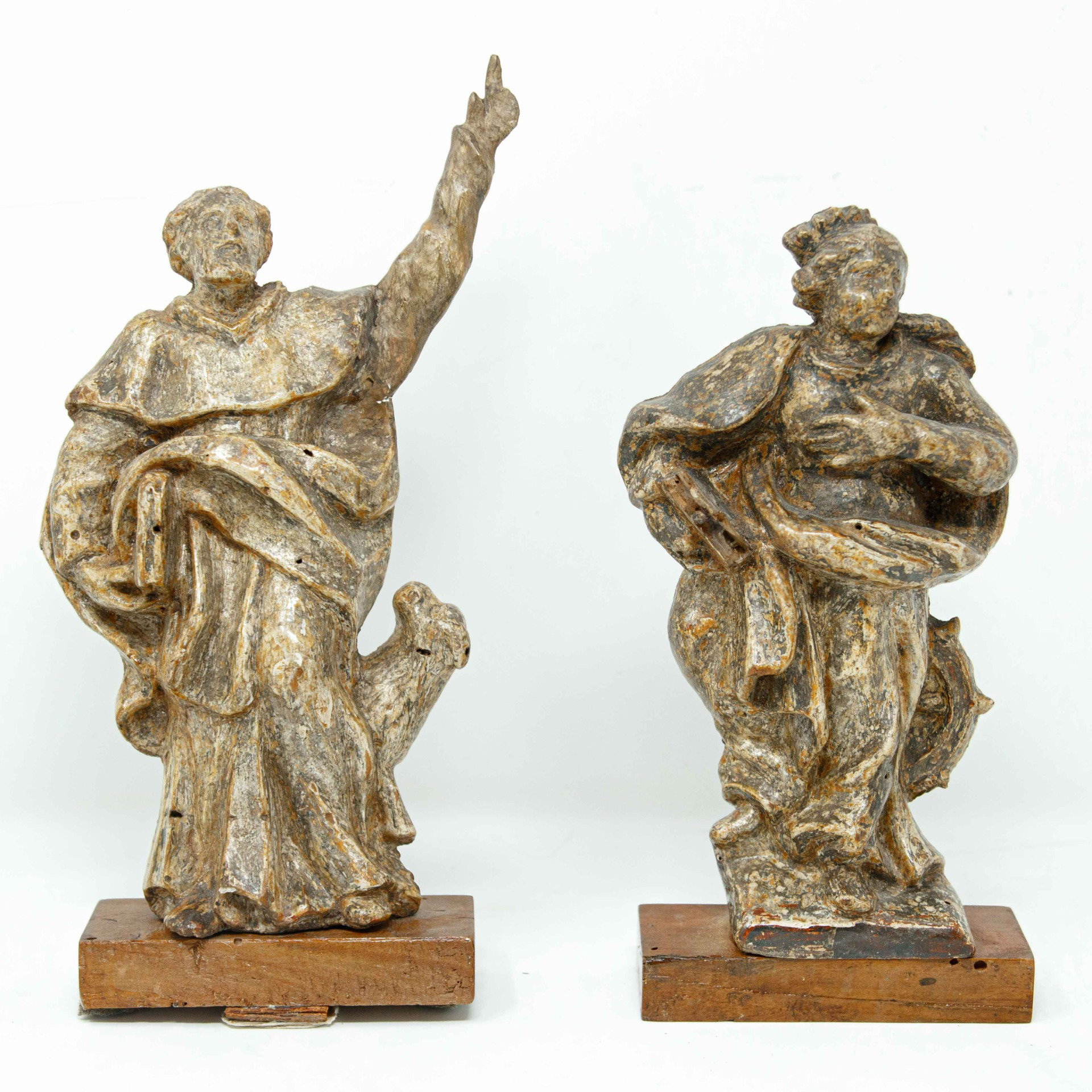
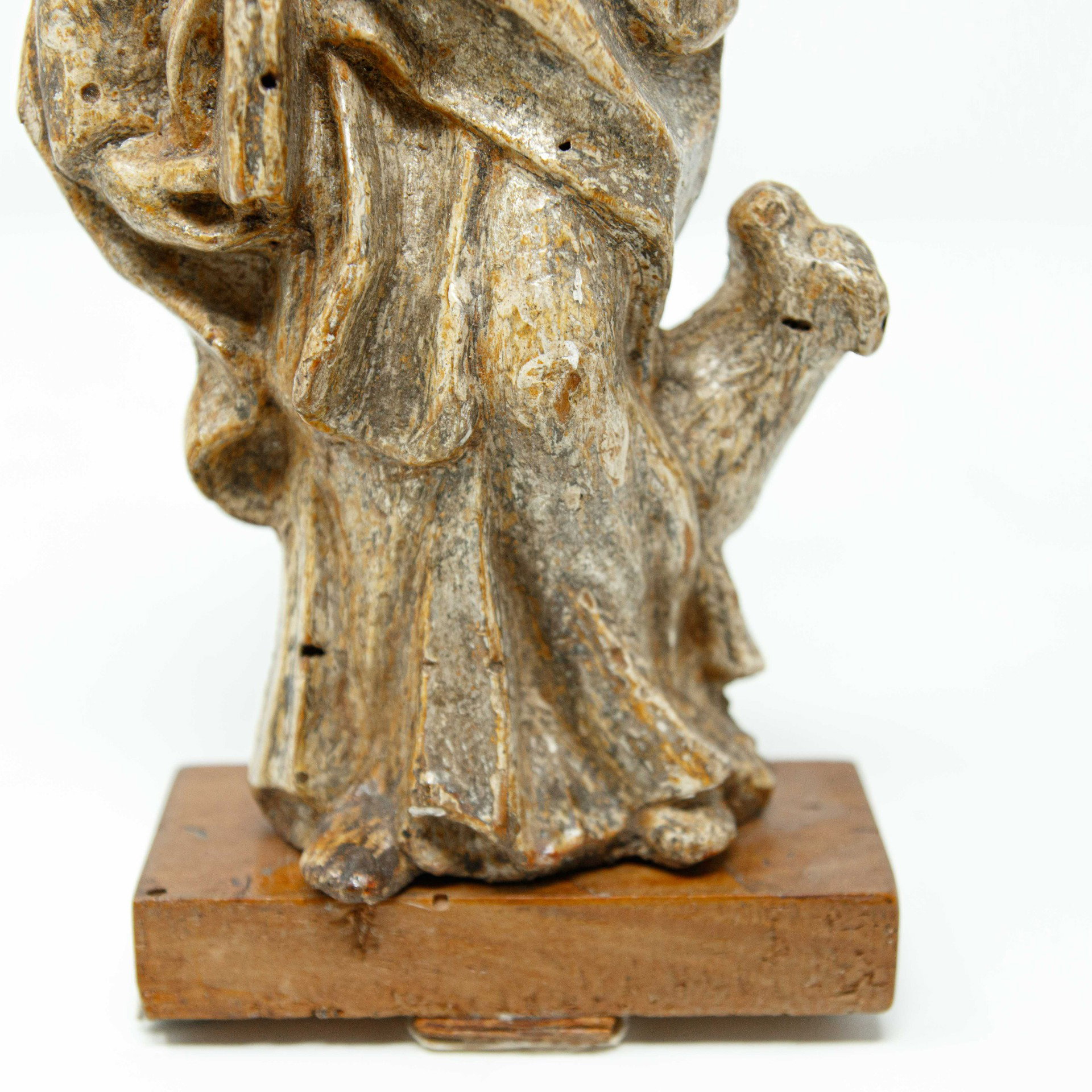
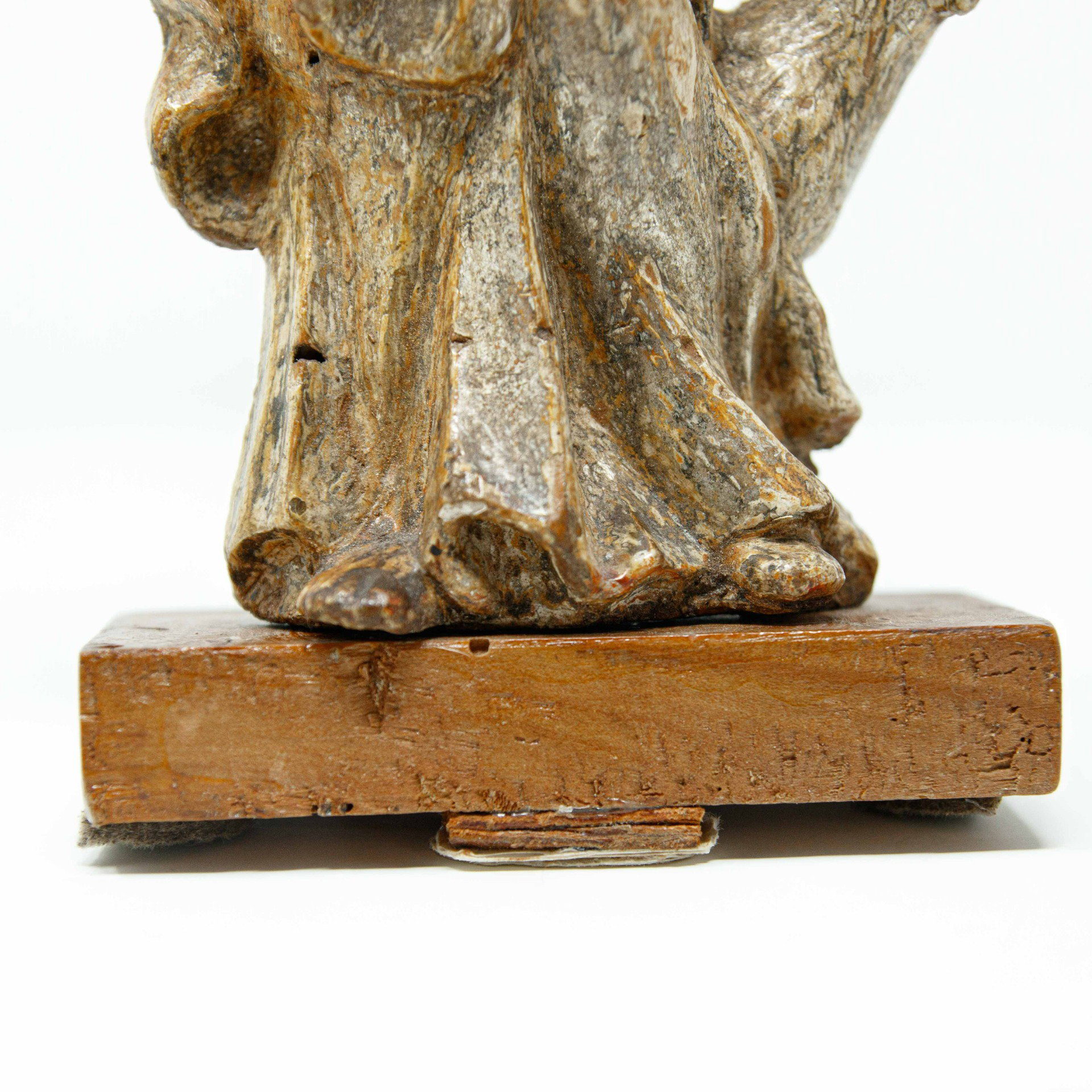
17th-18th century, Saint Catherine and Saint Dominic
Description:
17th – 18th century
Saint Catherine and Saint Dominic
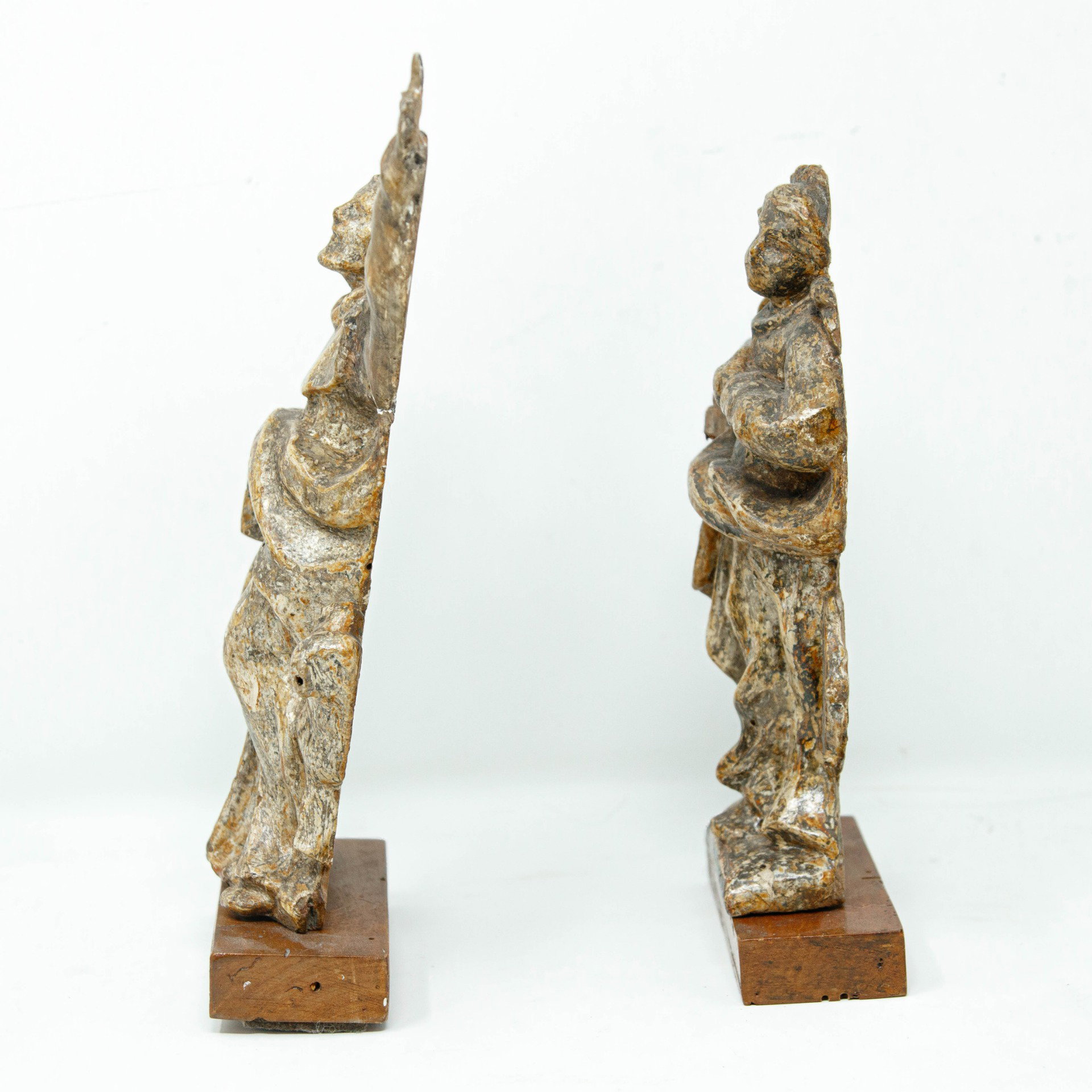
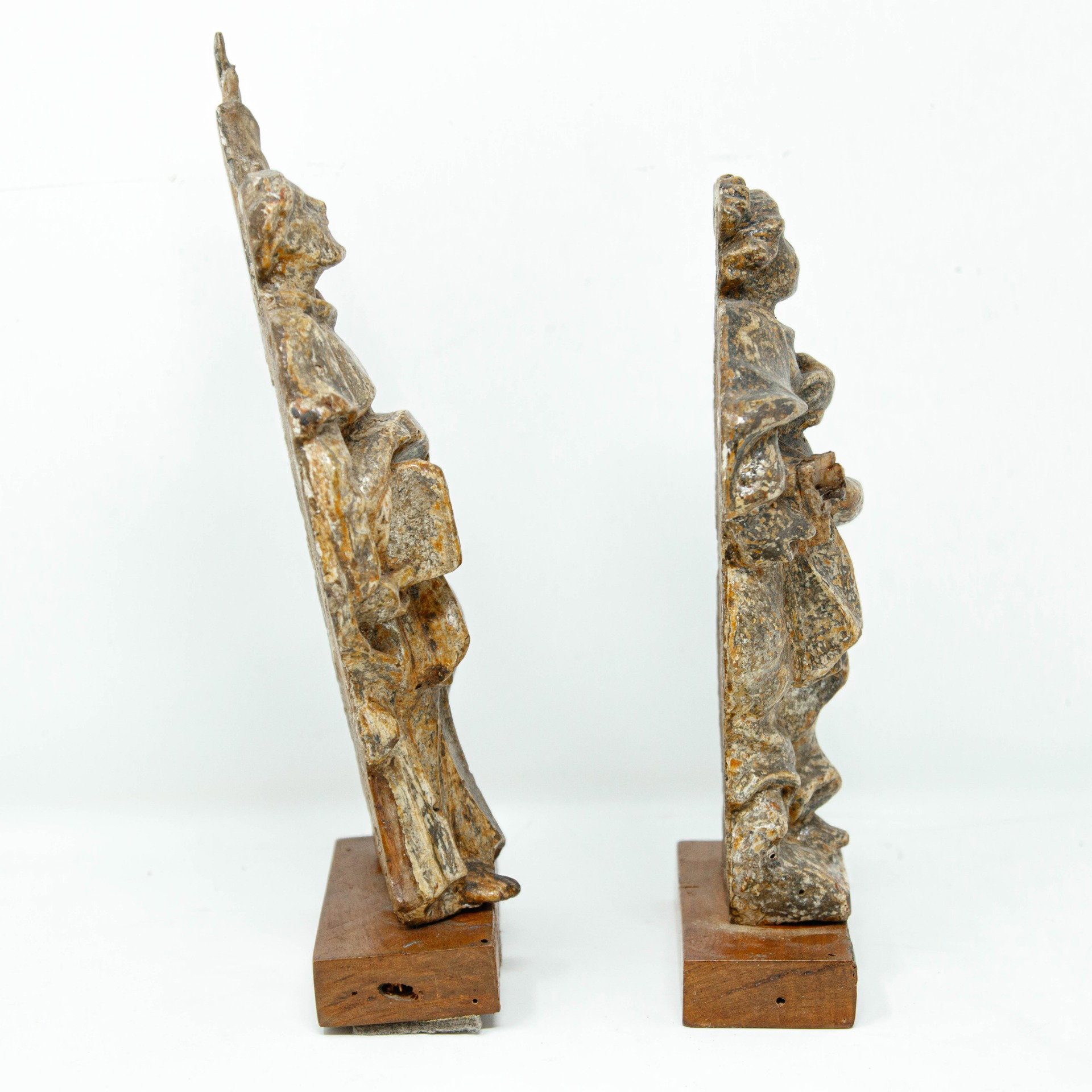
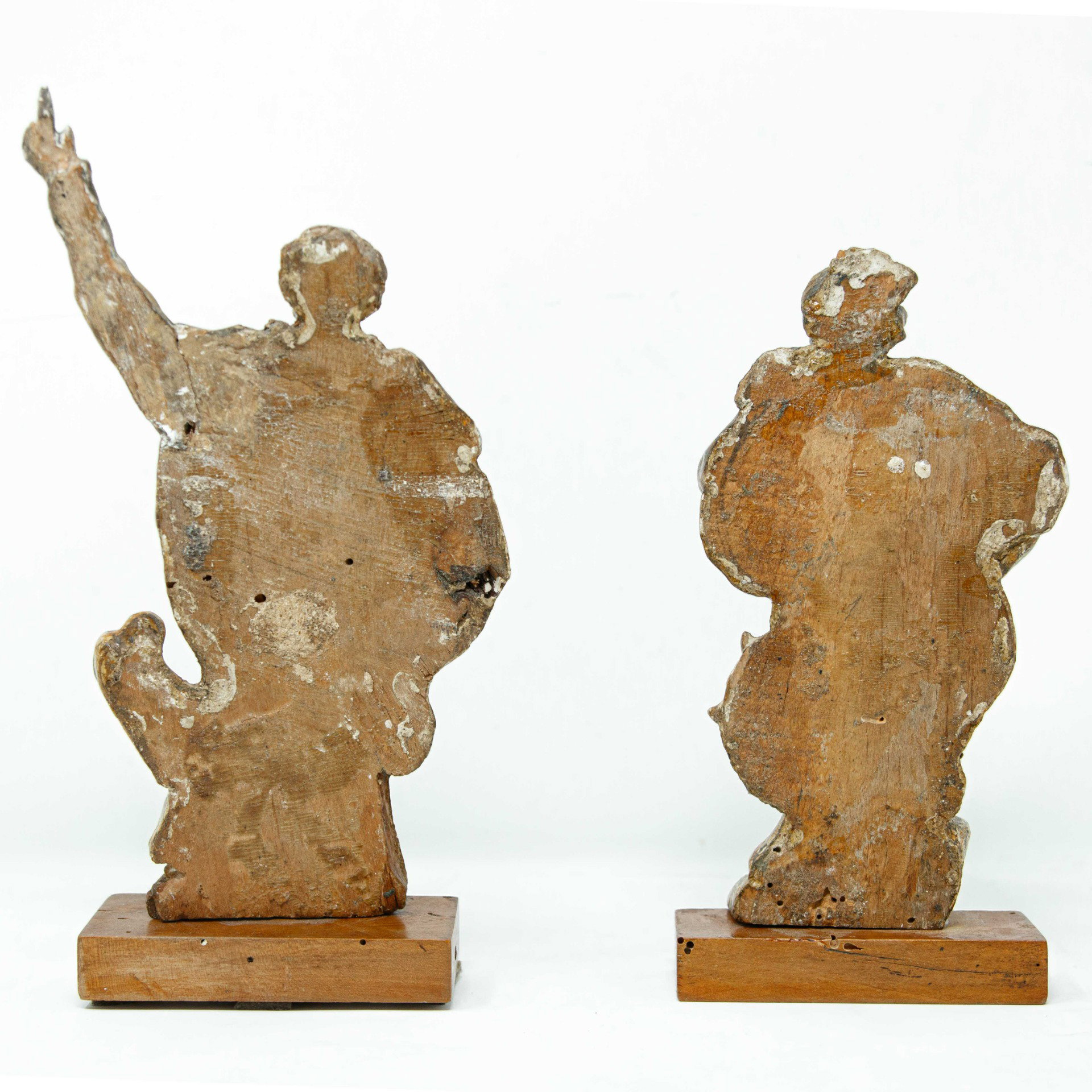
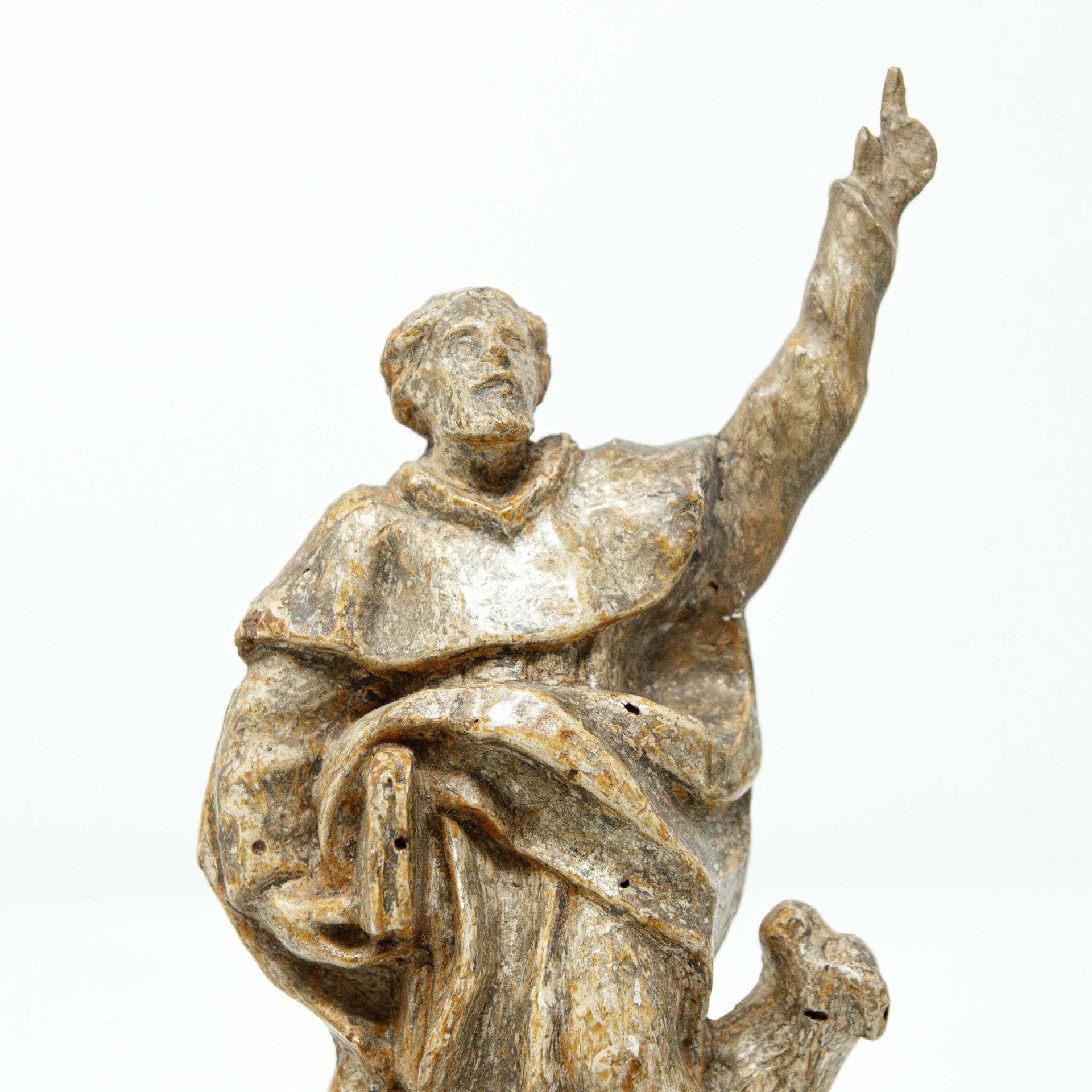
Pair of wooden sculptures, cm h 18 (without base cm h 17) and cm h 22 (without base cm h 21)
These wooden sculptures depict Saint Catherine and Saint Dominic. The iconography of Saint Catherine sees her portrayed with the wheel of martyrdom to which she was subjected in Alexandria, Egypt in 305 AD. According to tradition, Catherine was a young Egyptian; the Golden Legend specifies that she was the daughter of King Costa and that she grew up educated from childhood in the liberal arts. Catherine is courted by many men, but after the Madonna with Child appeared to her in a dream, placing a ring on her finger, she became a nun. The story of her martyrdom began with the grand celebrations that the Emperor held in his own honor in Alexandria. Catherine presented herself at the palace in the midst of the pagan celebrations with animal sacrifices, which many Christians were forced to participate in for fear of persecution. Catherine refused the sacrifices and asked the Emperor to recognize Jesus Christ as the redeemer of humanity, arguing her thesis with philosophical depth. The Emperor, struck by both the beauty and the culture of the young noblewoman, summoned a group of rhetoricians to convince her to honor the gods, also asking for her hand in marriage. However, thanks to the eloquence of the young woman, not only did they not convert her, but they themselves were promptly impressed by Christianity. The Emperor therefore ordered the death sentence for all the rhetoricians, and, after Catherine's umpteenth refusal, he also sentenced her to death by means of a spiked wheel. However, the instrument of torture and condemnation broke, and the Emperor was forced to have the saint beheaded, from whose head flowed milk, a symbol of her purity.
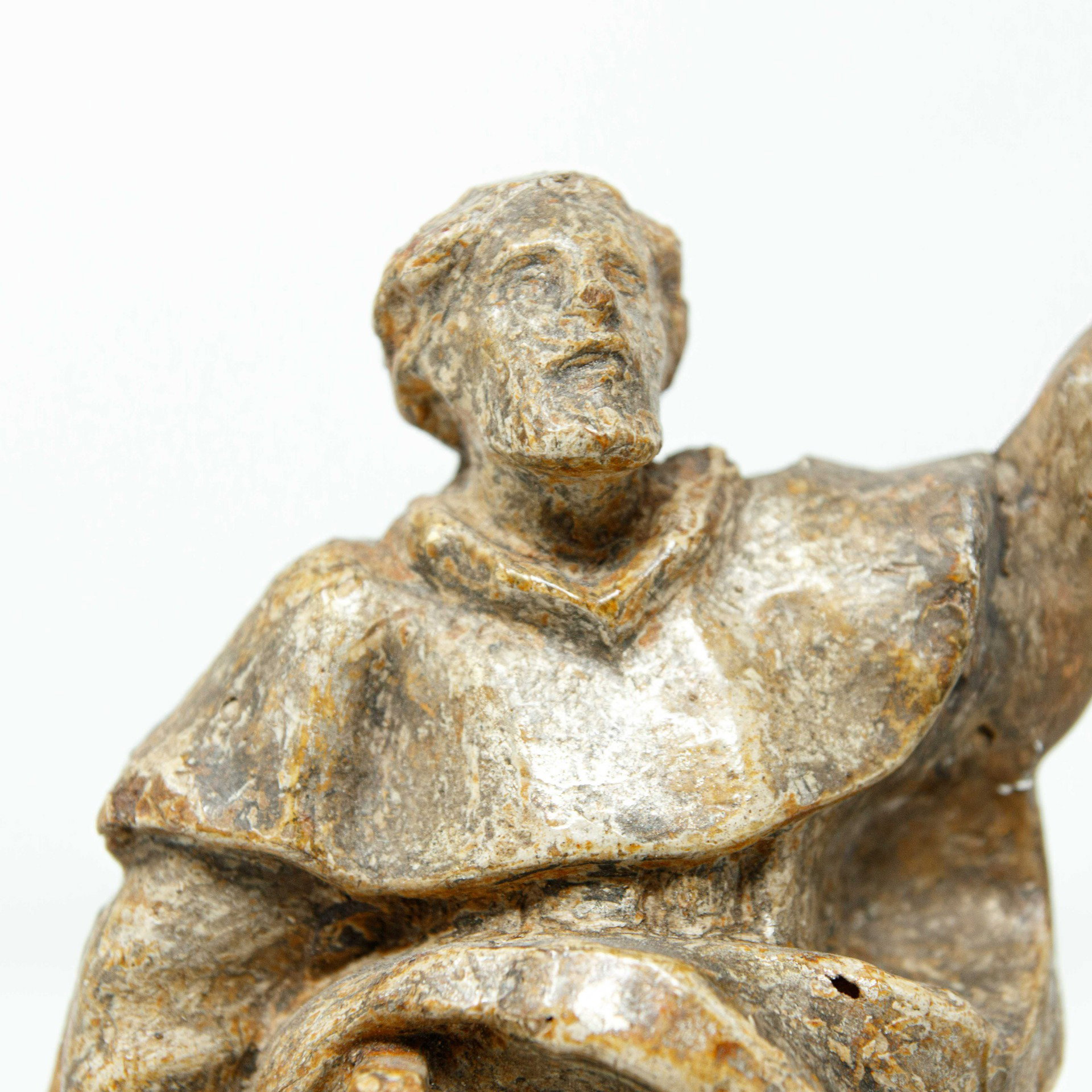
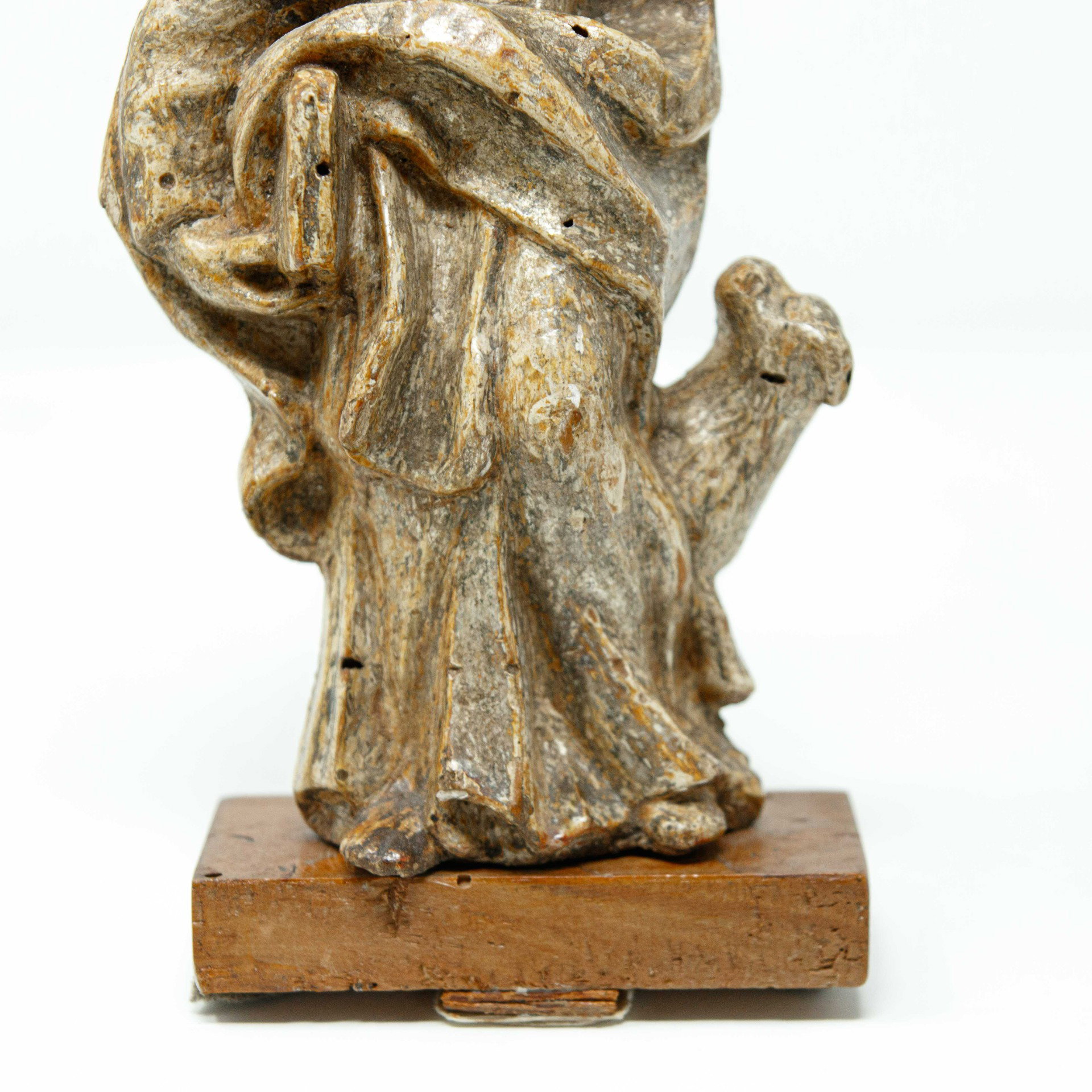
Saint Dominic, on the other hand, is identified by the dog that accompanies him. According to legend, the Dominican dog was born from a vision that the saint's mother had before he was born: the woman dreamed that a dog came out of her womb with a lit torch in its mouth. When she woke up, she interpreted that dream as a message addressed to her by God in person and decided to go on a pilgrimage to the monastery of San Domenico di Silos to ask for his intercession.
Shortly afterwards, she became pregnant and understood that the answer given to her by God was the creature she now carried in her womb, and that the child would light a fire in the world through his preaching; as a sign of homage to the Saint, therefore, she decided to give her son his same name. Saint Dominic founded the so-called Order of Preachers, who throughout the world are however called Dominicans; in Latin, Dominicans are translated as Dominicanus, similar to Domini Canis, The dogs of the Lord, as the preaching friars are still called today.
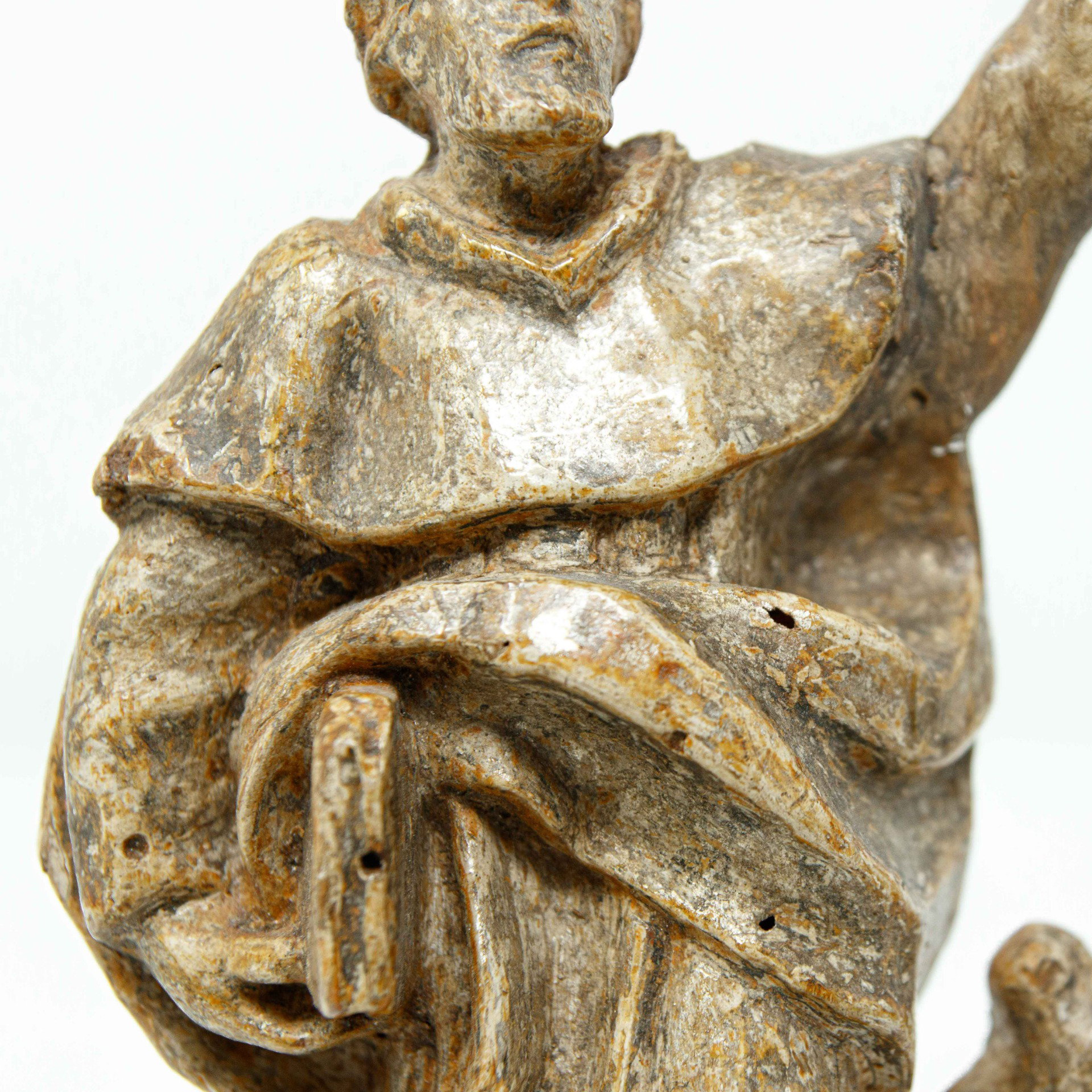
In these two small statues, the preciousness of the carving can be observed, especially in the ample drapery that envelops the bodies of the two saints, both at the waist, where they open up, pushed by an invisible breath of wind, and around the feet, where they ripple harmoniously.
The object is in good condition.
With Ars Antiqua it is possible to spread all amounts up to a maximum of € 7,500 at ZERO RATE, for a total of 15 INSTALLMENTS.
Ex. Tot. € 4,500 = Monthly installment € 300 for 15 months.
Ex. Tot. € 3,600 = Monthly installment € 720 for 5 months.
For amounts exceeding € 7,500 or for a longer time frame (over 15 installments), we can provide personalized payment.
Contact us directly for the best quote.
LIVE TV
– SUNDAY 19.00 – 23.00 Dig.terr. 126 + 809 SKY
- THURSDAY 21.00 - 24.00 Dig.terr. 134 + 809 SKY
– Streaming on our website www.arsantiquasrl.com and on our social networks Facebook and Youtube
All the works offered by Ars Antiqua are sold accompanied by a certificate of authenticity in accordance with the law and a detailed information sheet.
You can see the works directly at the Milan showroom gallery, in via Pisacane 55 and 57.
We personally organize transport and deliveries of the works, both for Italy and abroad.