18th Century, Tuscany
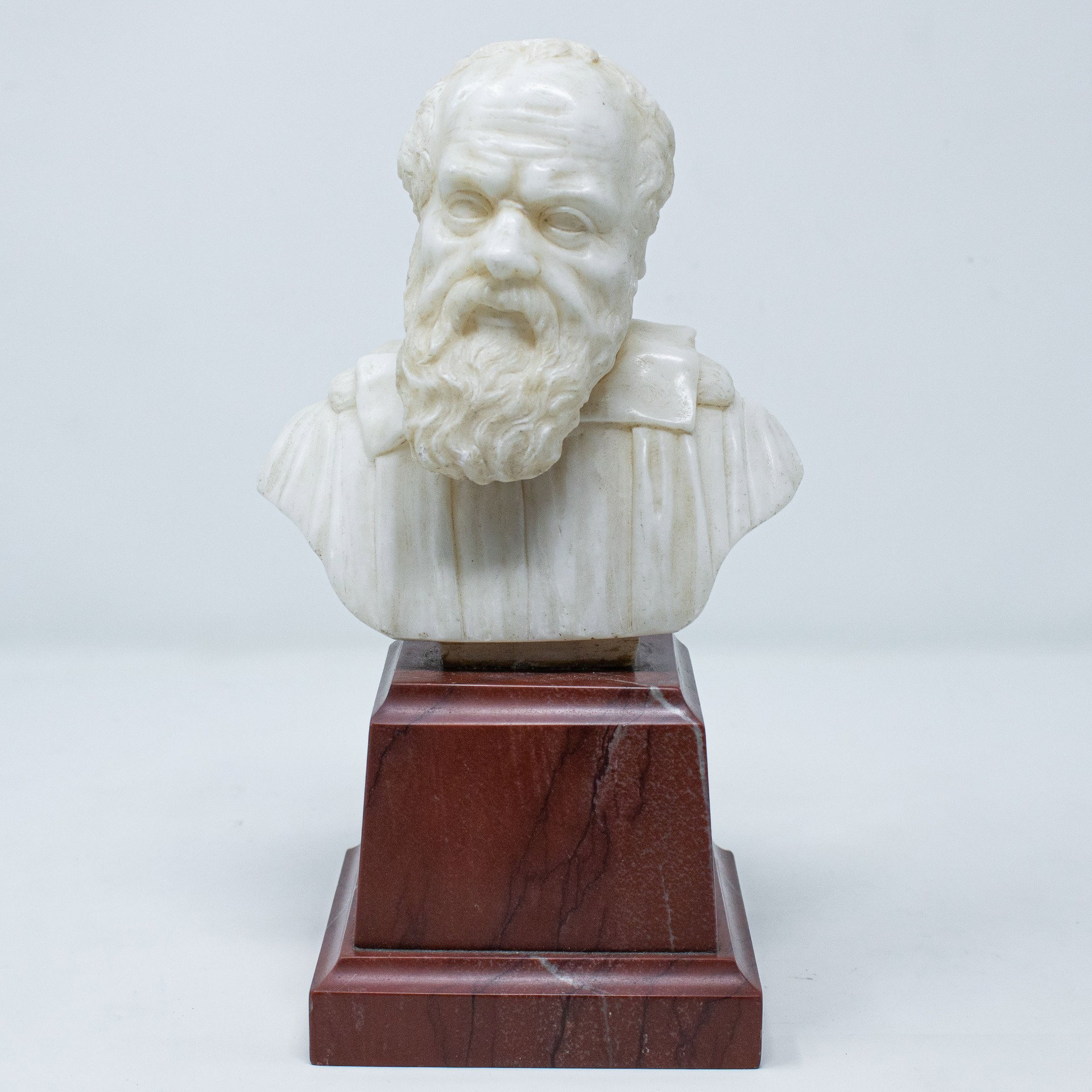
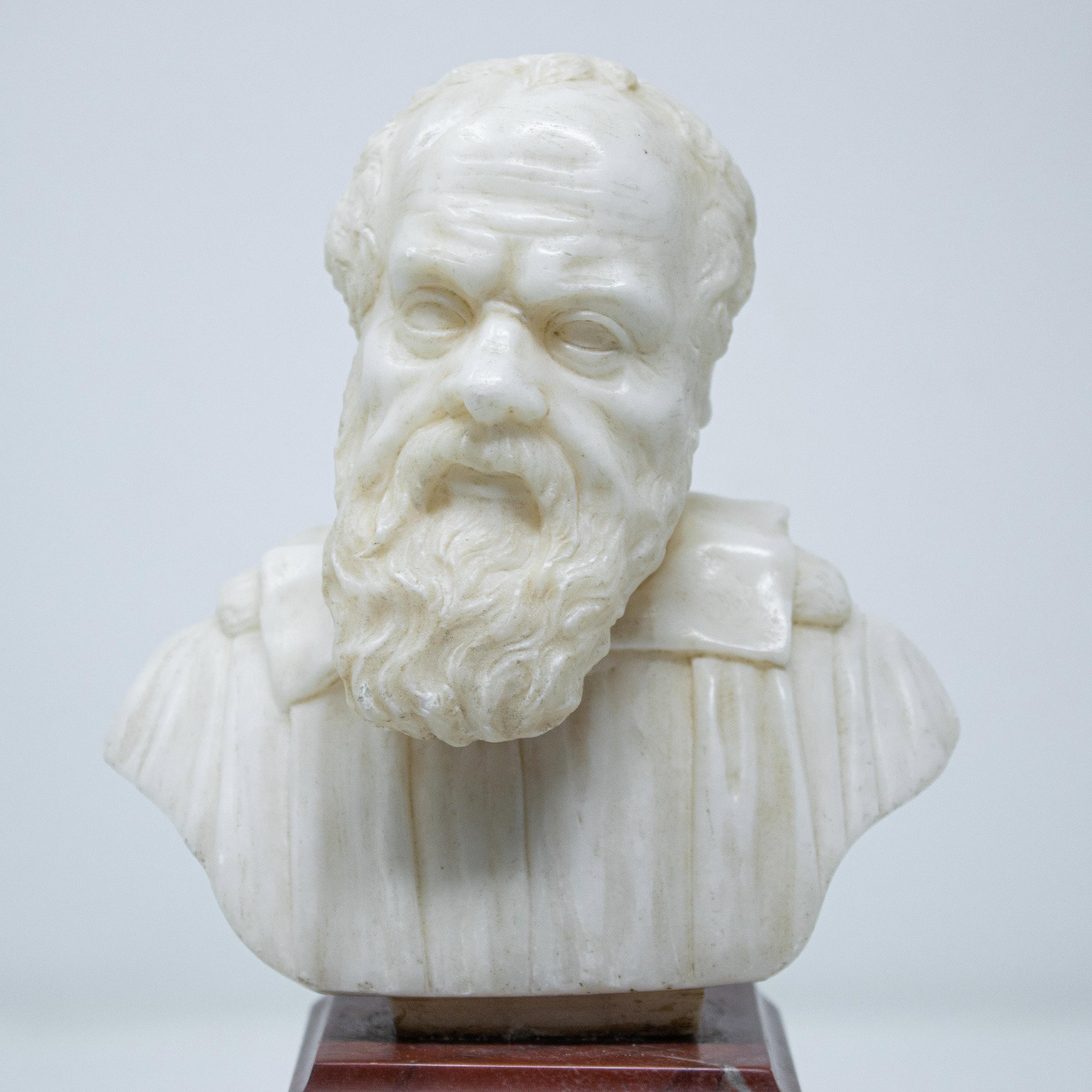
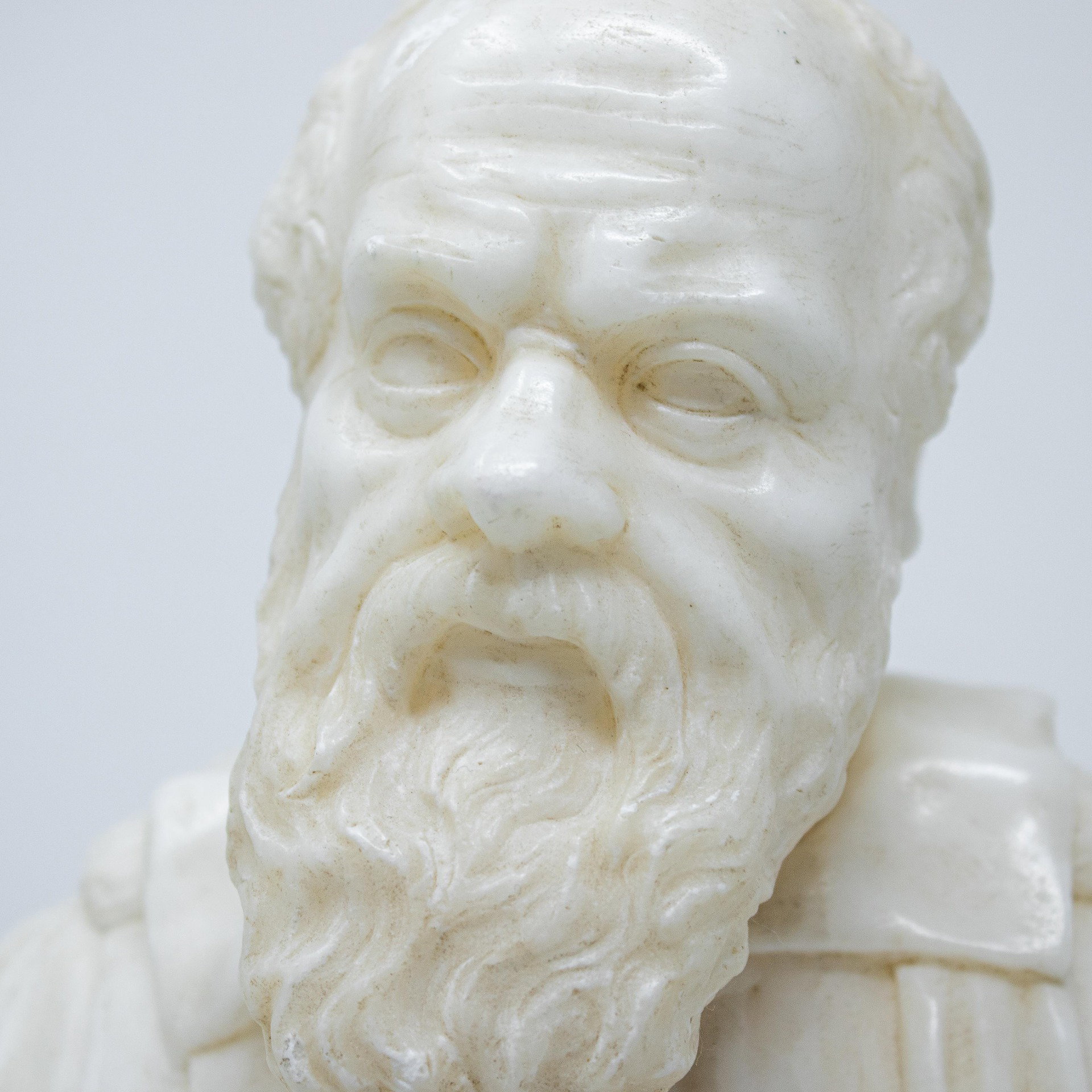
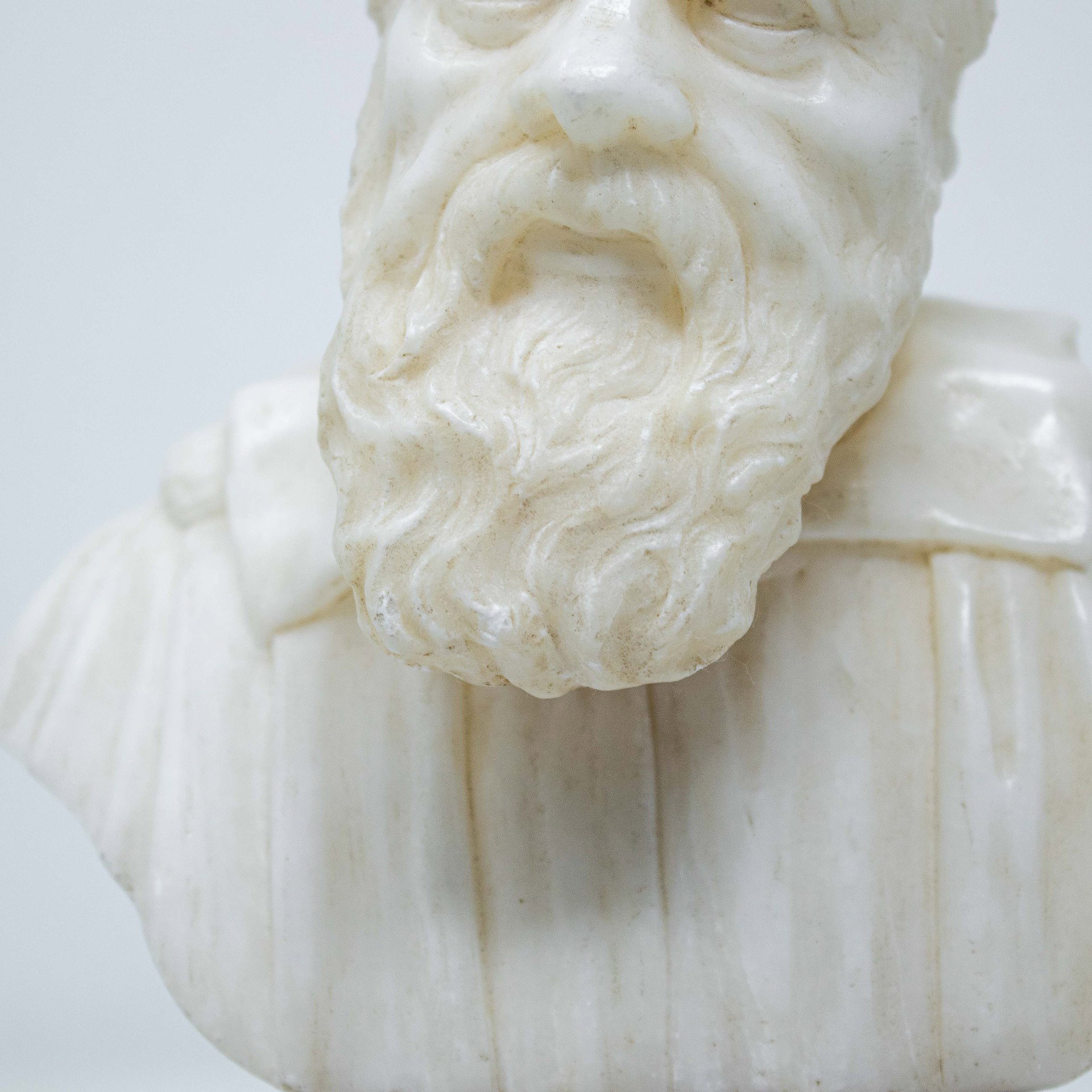
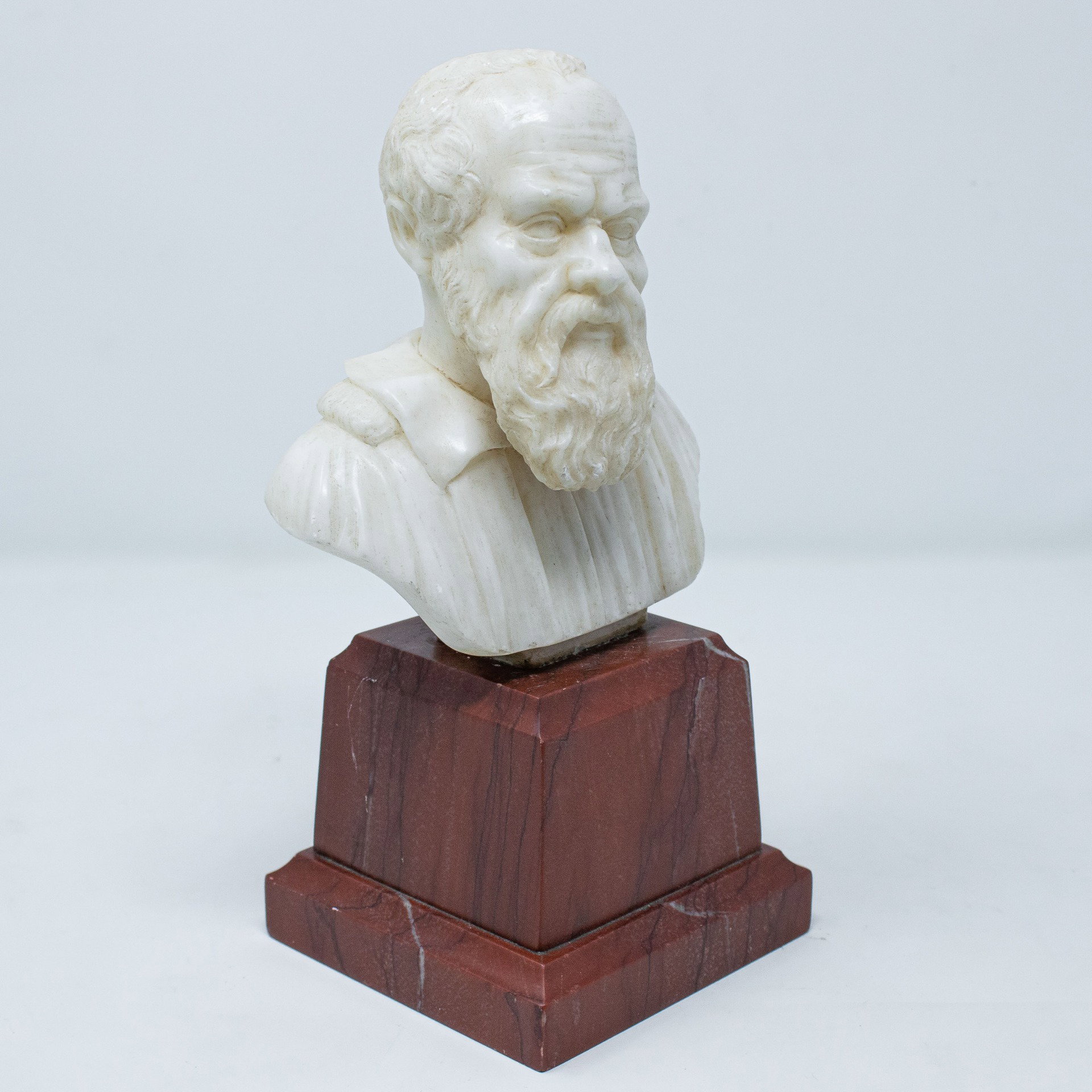
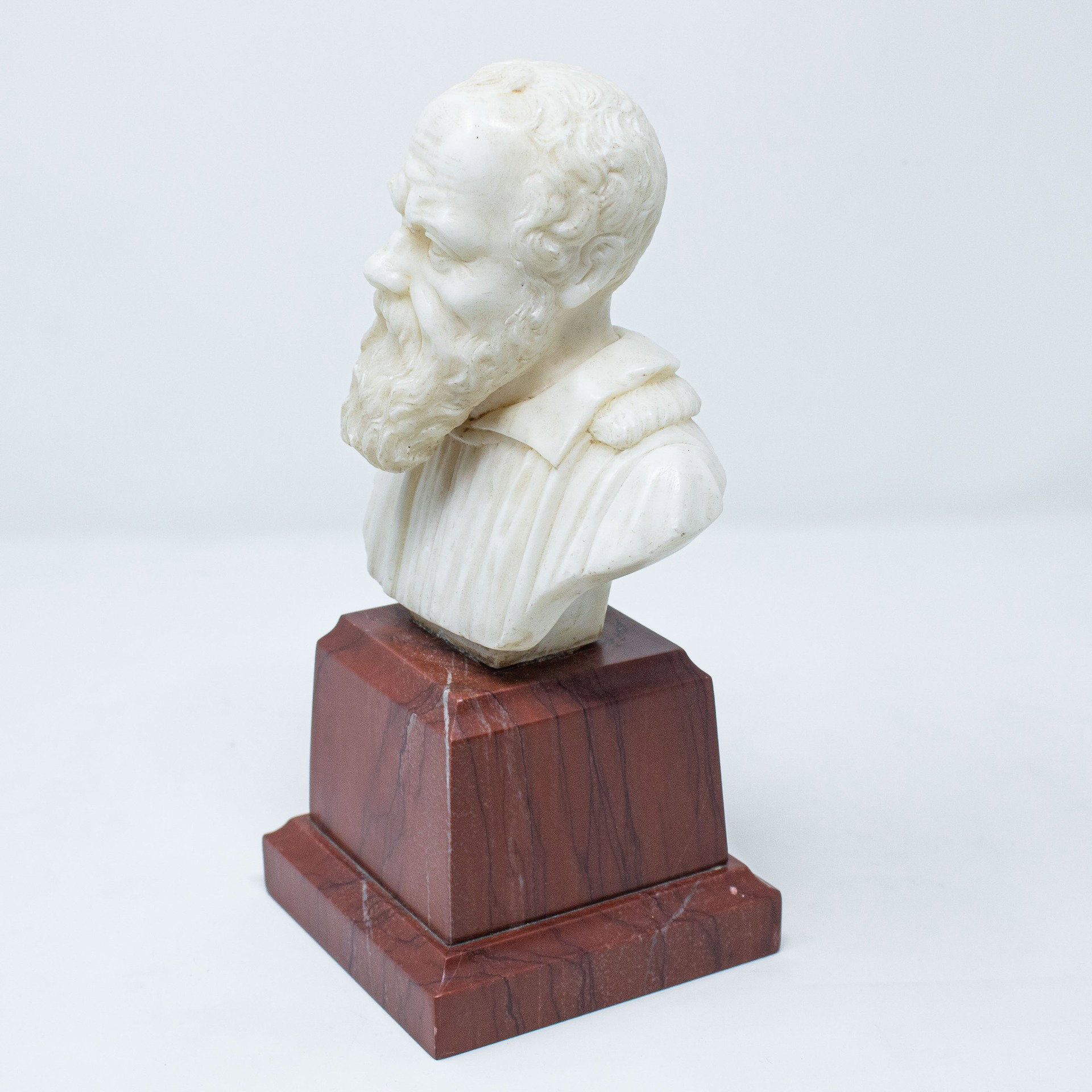
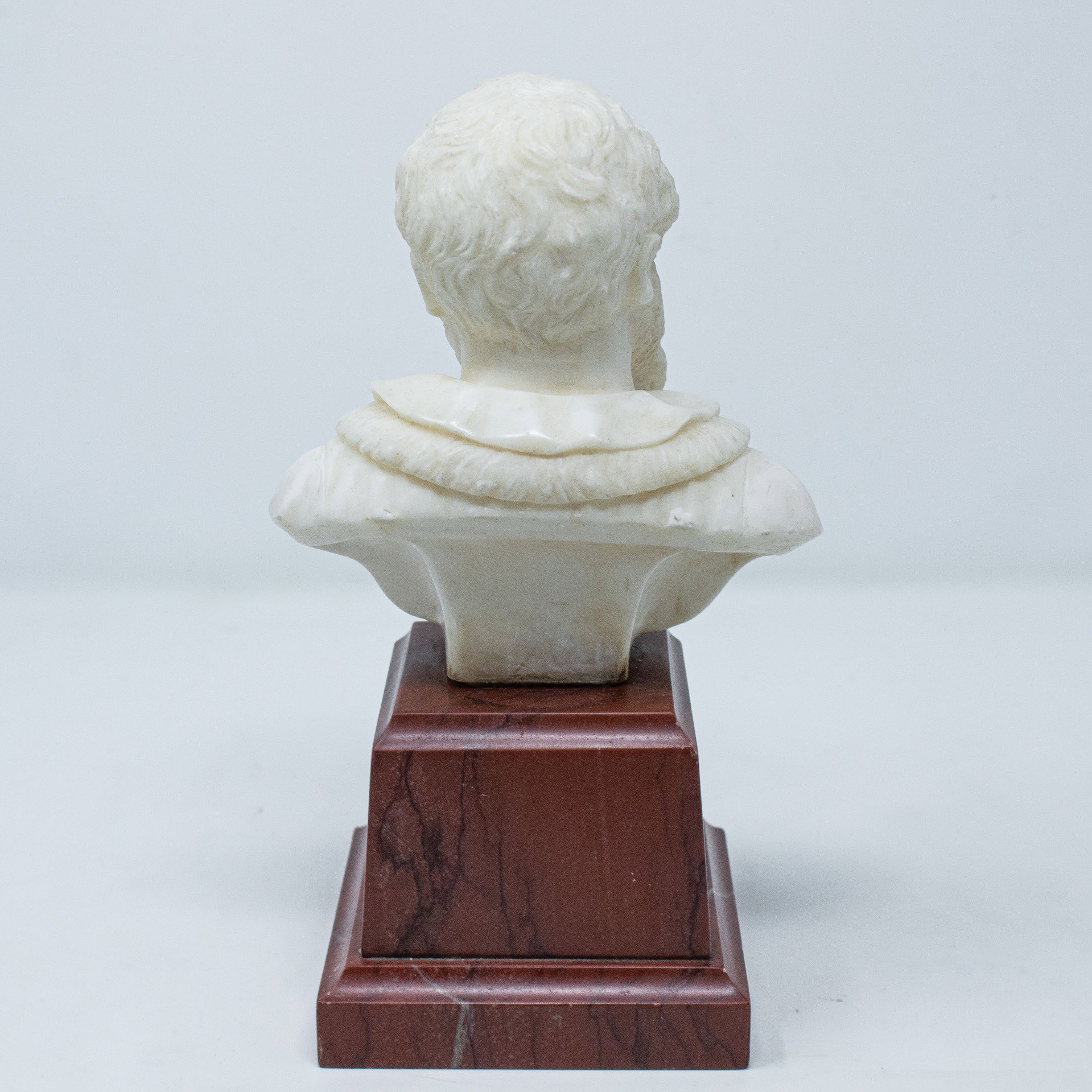
Bust of Galileo
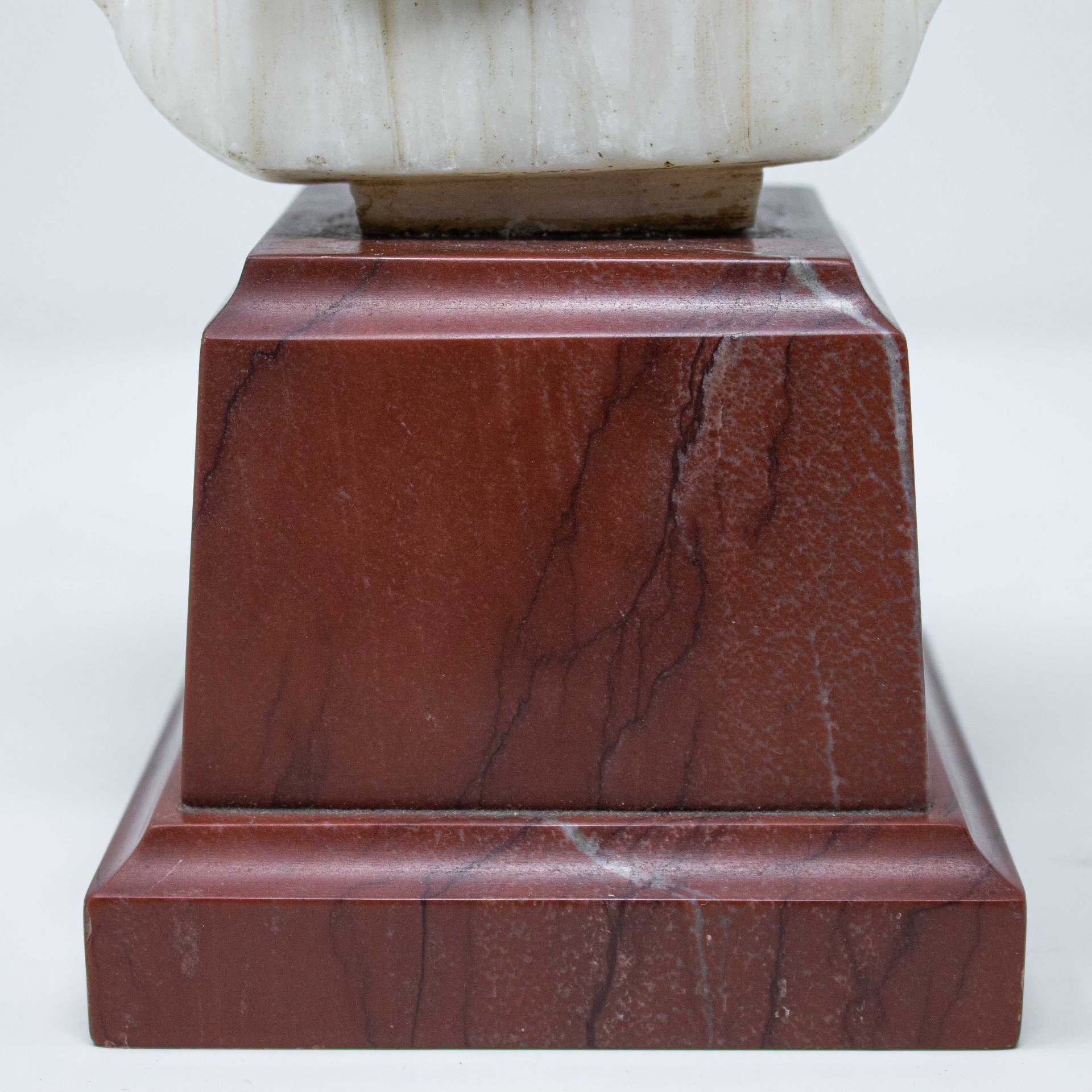
White marble, height 15 cm
On a red marble base, 24 x 14 x 11 cm (overall)
Representing the Italian physicist and astronomer Galileo Galilei, this small statue is part of the cult of busts of illustrious men.
Born in Pisa on February 15, 1564, to a family of ancient origins but modest means, Galileo Galilei was the first to refute the Aristotelian law according to which the motion of bodies is determined by their nature, so that a heavy object falls, for example, faster than a light one, an obvious fact when observing a stone and a feather. Upon the death of his father in 1591, Galileo was burdened with the responsibility of providing for his brothers and sisters; he was offered a prestigious position at the University of Padua, in the Venetian Republic. It is in this period that he approached Kepler and adhered to the Copernican theory of ideas. In July 1609, Galileo heard in Venice of a Dutch invention that served to observe objects from afar. In just one day, he built a prototype that he showed to the enthusiastic Venetian Senate. The notables of the Serenissima offered him a lifetime position in Padua, remunerated with a thousand florins a year. There, the scientist manufactured various lenses and several "cannon glasses," as they were then called, which he used to observe the sky, discovering, between 1609 and 1610, the four major satellites of Jupiter, the rocky and irregular nature of the lunar soil, the phases of Venus, and sunspots. But fame induced him to make a mistake: he began to defend the Copernican system, and the envious rose up. In 1615, the Dominican friar Tommaso Caccini went to Rome to denounce to the Holy Office the dangerousness of Galileo's theories. Among the evidence was a copy of a letter from the scientist himself with two phrases deemed incriminating because they contradicted the Holy Scriptures: "The Earth is not the center of the world, nor is it immobile, but moves by itself" and "the Sun is [...] completely immobile." Galileo was therefore accused of heresy and condemned, and to save himself from certain death, he abjured.
The object is in good condition.
With Ars Antiqua, it is possible to defer all amounts up to a maximum of €7,500 at a ZERO RATE, for a total of 15 INSTALLMENTS.
Ex. Tot. €4,500 = Monthly installment €300 for 15 months.
Ex. Tot. €3,600 = Monthly installment €720 for 5 months.
For amounts greater than €7,500 or for a longer deferral time (over 15 installments), we can provide a personalized payment.
Contact us directly for the best quote.
LIVE TV
– SUNDAY 7:00 PM – 11:00 PM Dig.terr. 126 + 809 SKY
- THURSDAY 9:00 PM - 12:00 AM Dig.terr. 134 + 809 SKY
– Streaming on our website www.arsantiquasrl.com and on our social media channels Facebook and Youtube
All works proposed by Ars Antiqua are sold accompanied by a certificate of authenticity according to law and accurate information sheet.
You can see the works directly at the Milan showroom gallery, in via Pisacane 55 and 57.
We personally organize transport and delivery of the works, both for Italy and abroad.