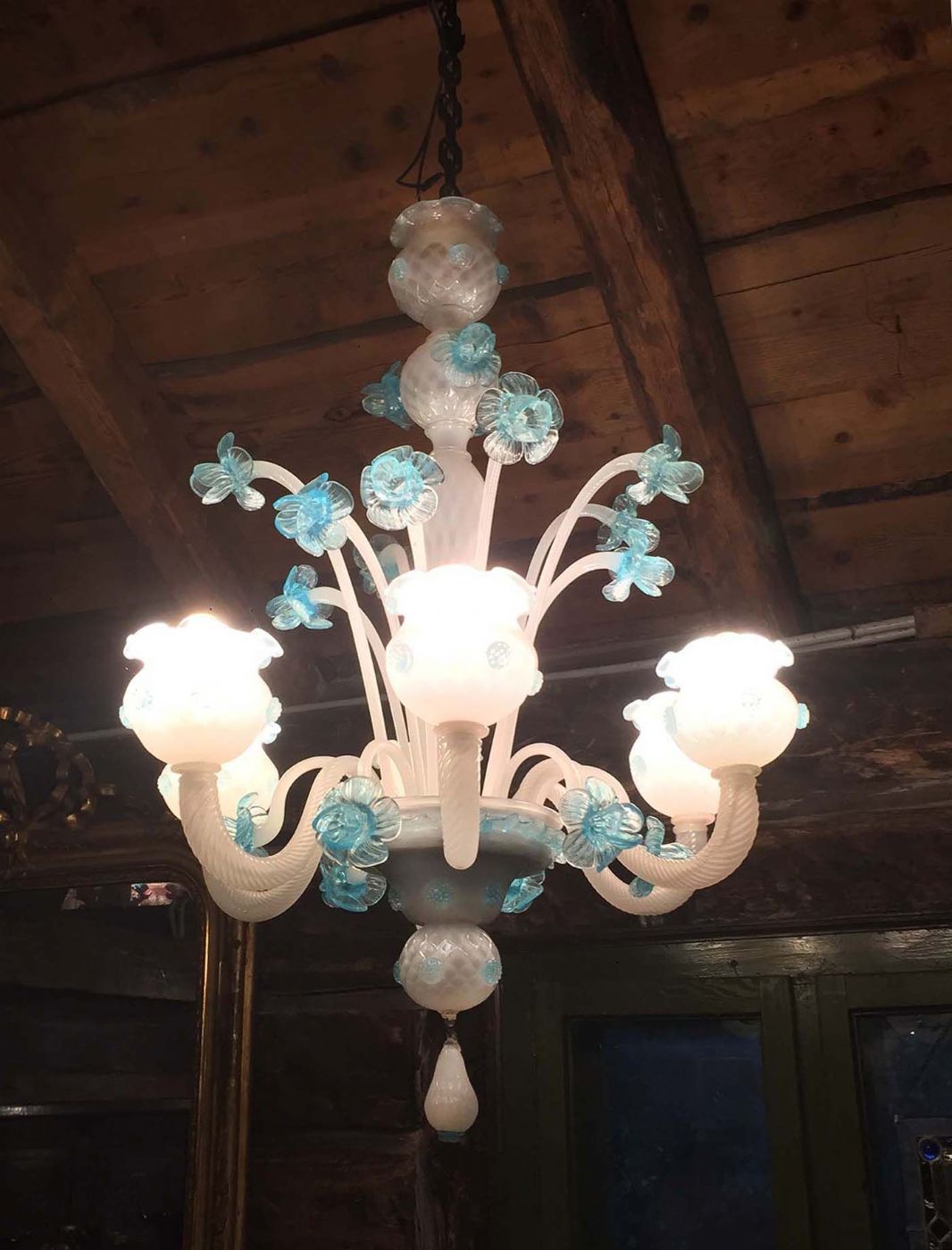
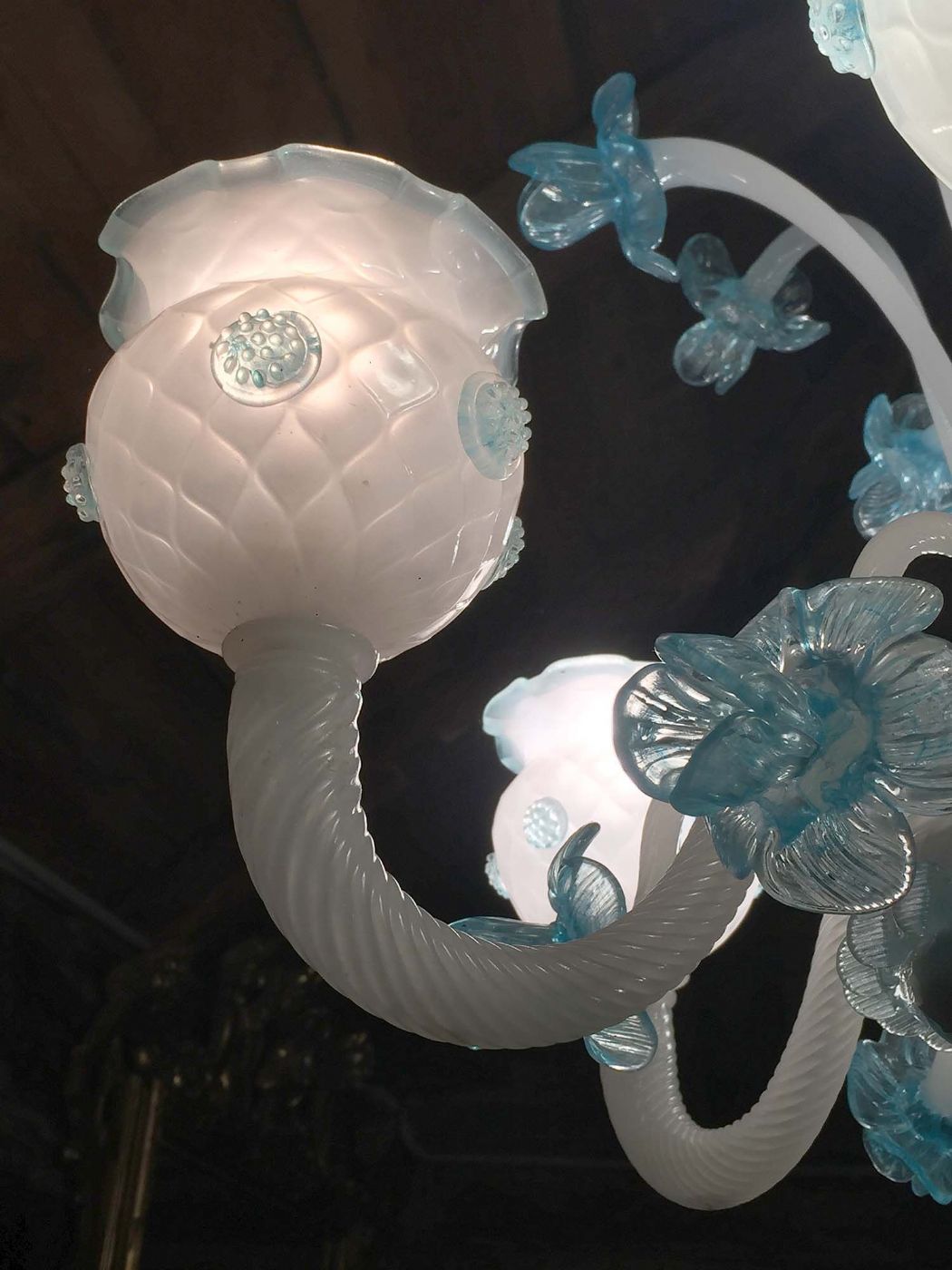
Elegant Murano opaline and light blue six-light chandelier
Description:
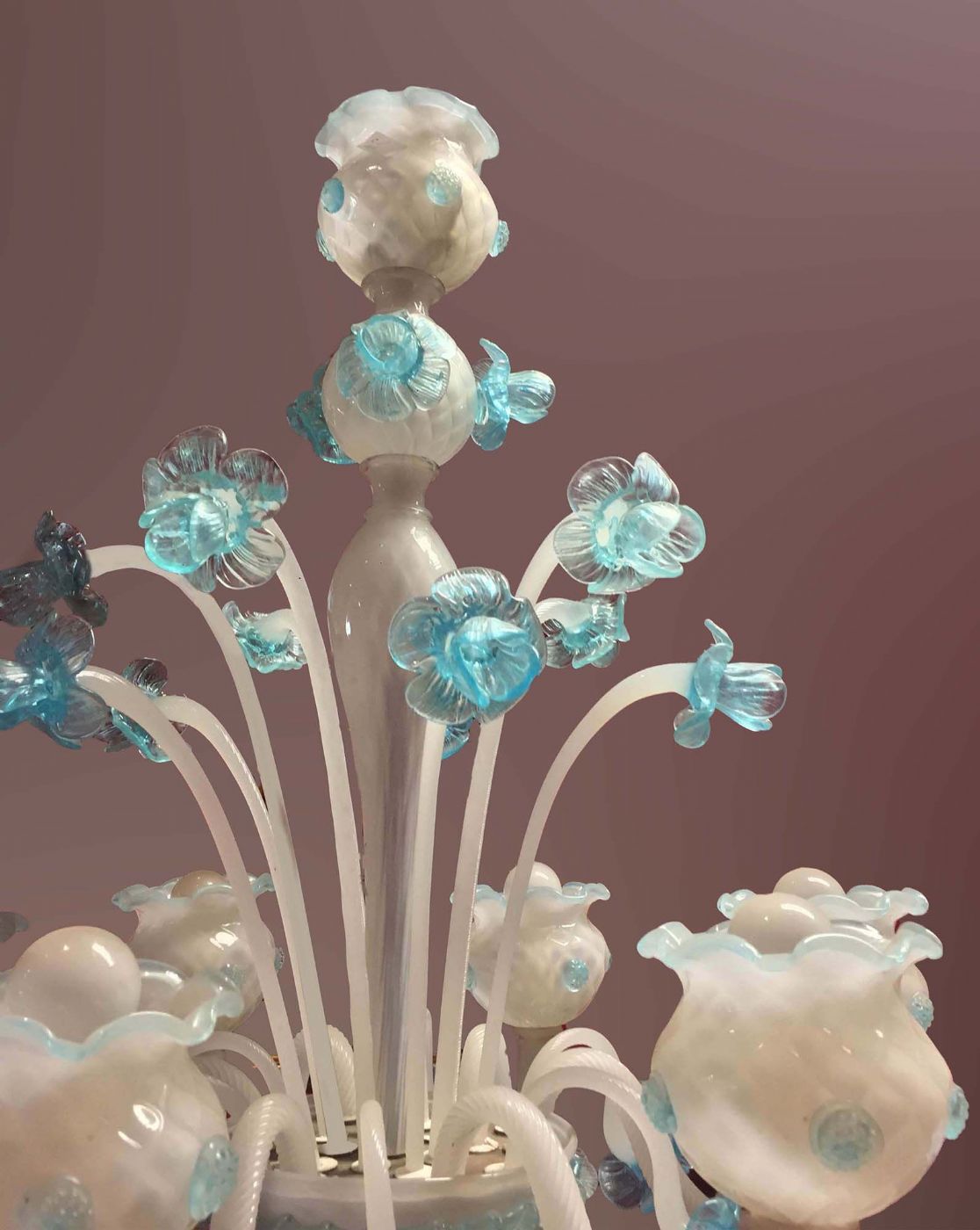
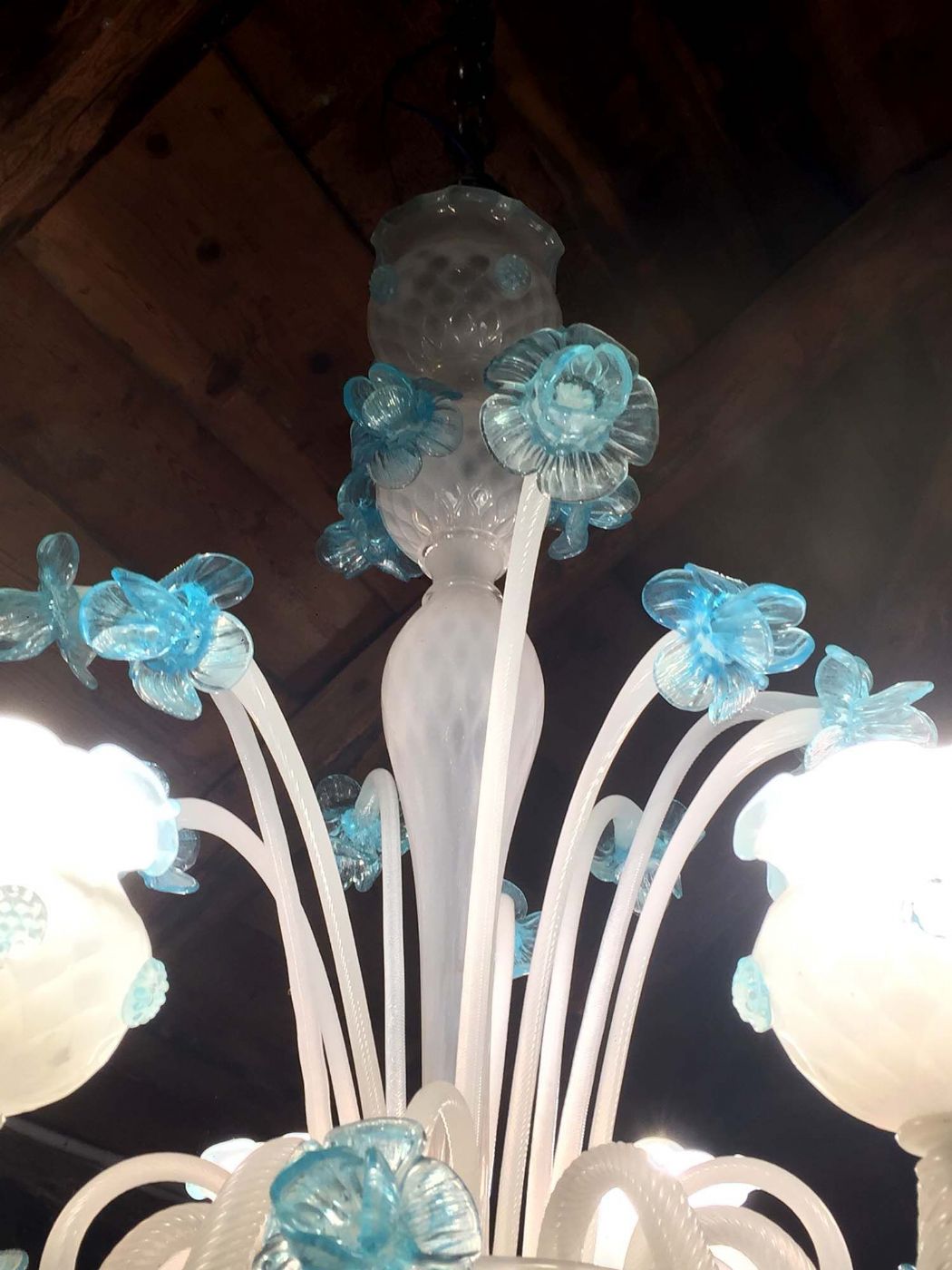
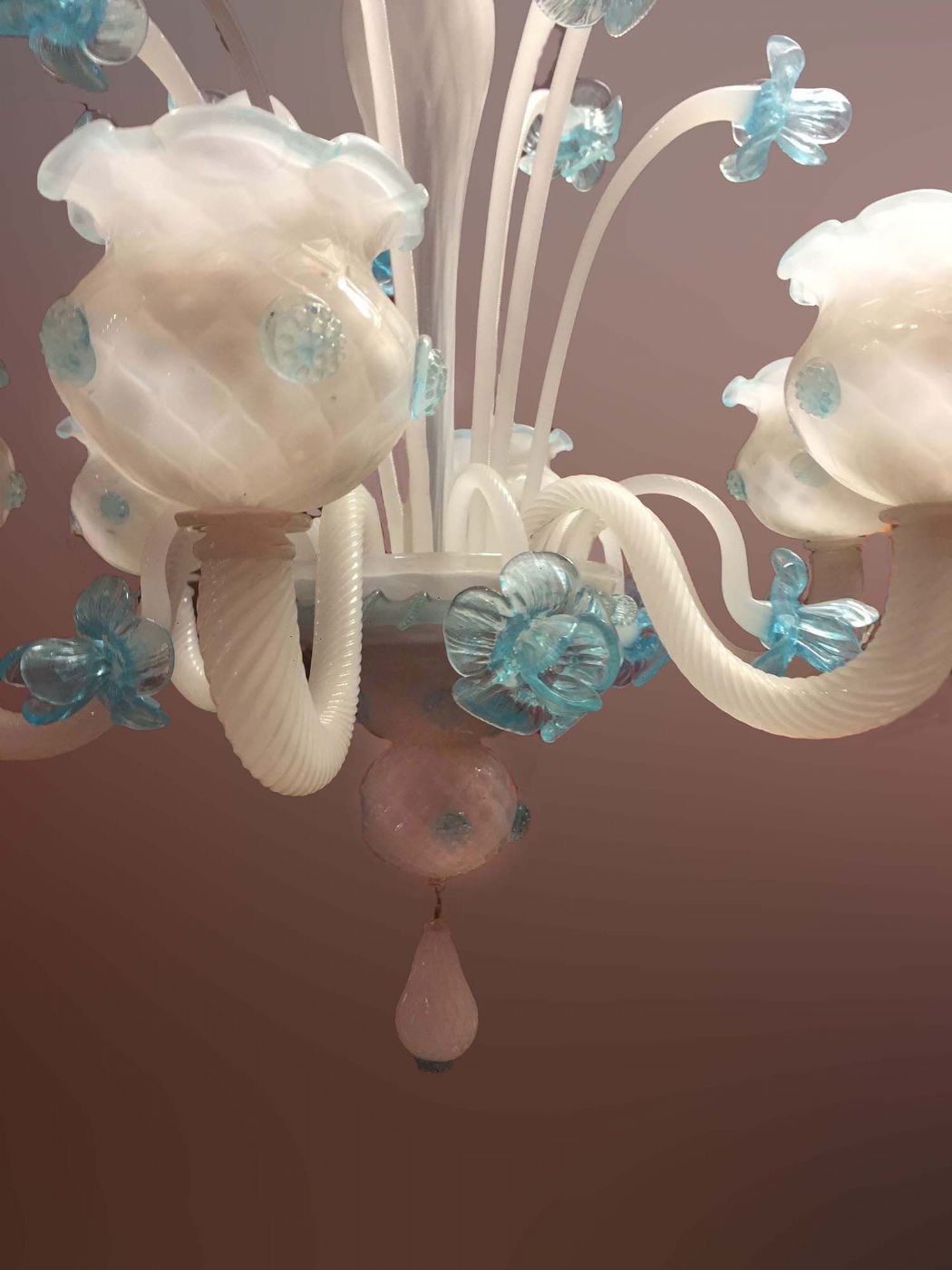
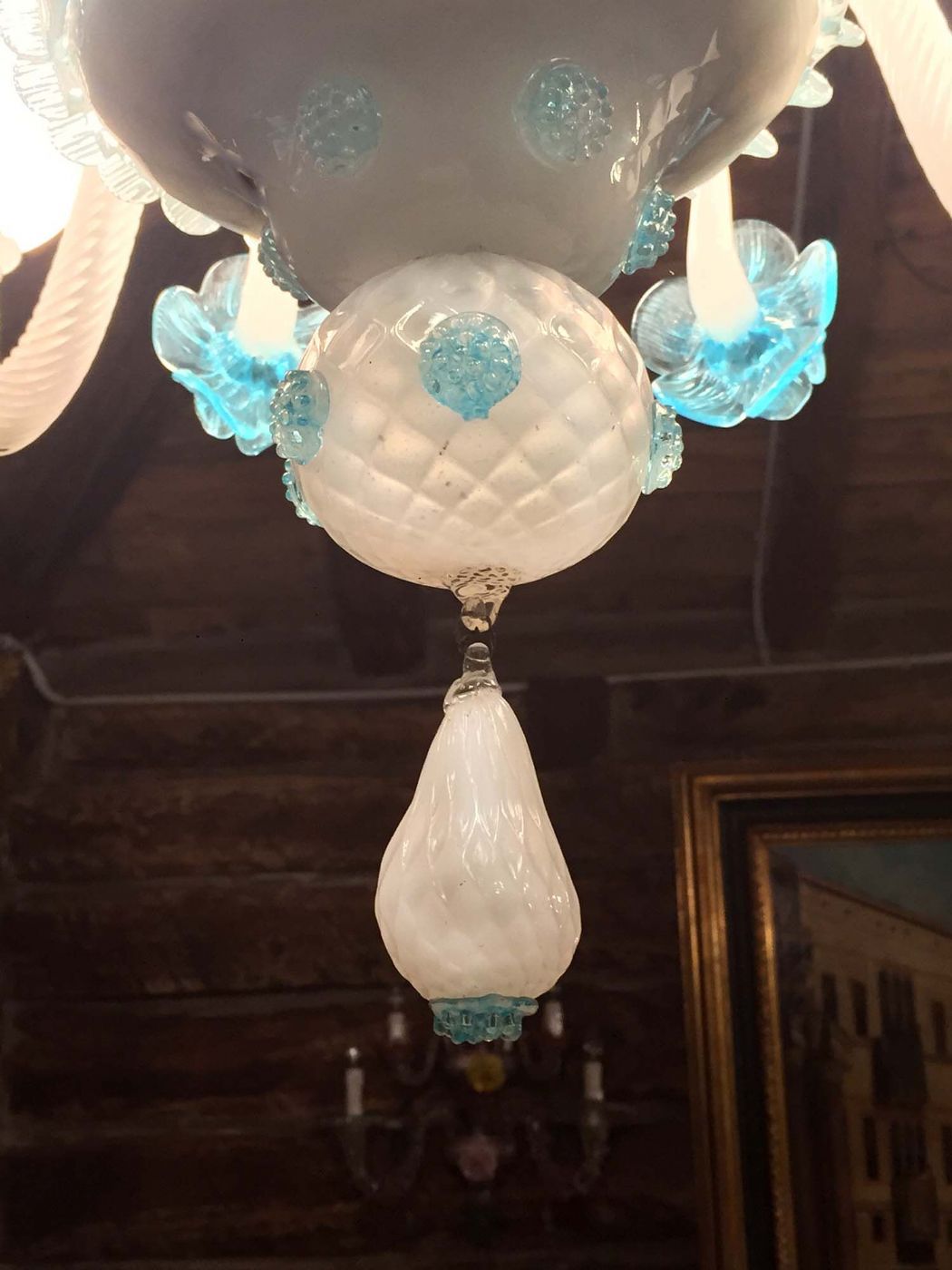
Elegant six-light chandelier, opaline with "more" applications in the "bala" in the cups, in the holster, in the final part, and in the terminal part of the bow or "finalino".
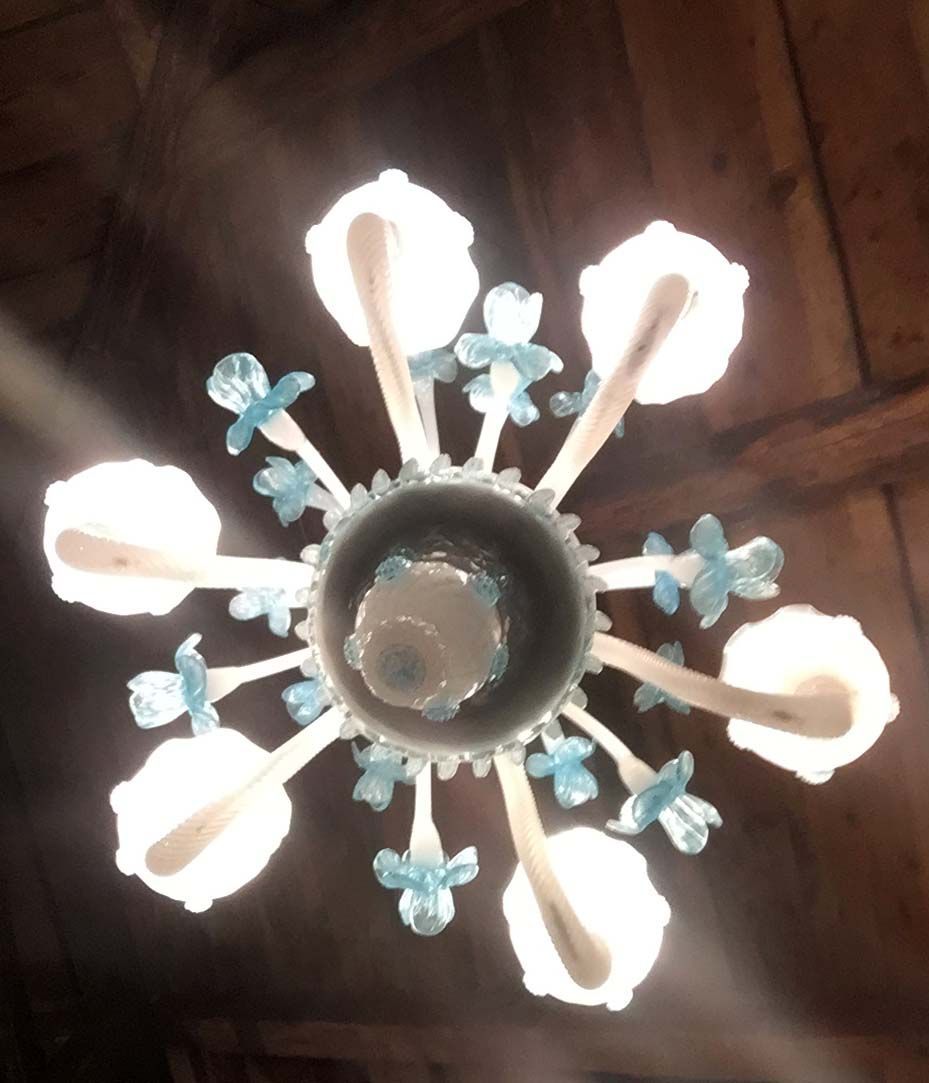
The arms are facing upwards with "torchon" (or "rigamenà") workmanship and cups worked with "cabochon" also known as "balloton", to better reflect the light in the room.
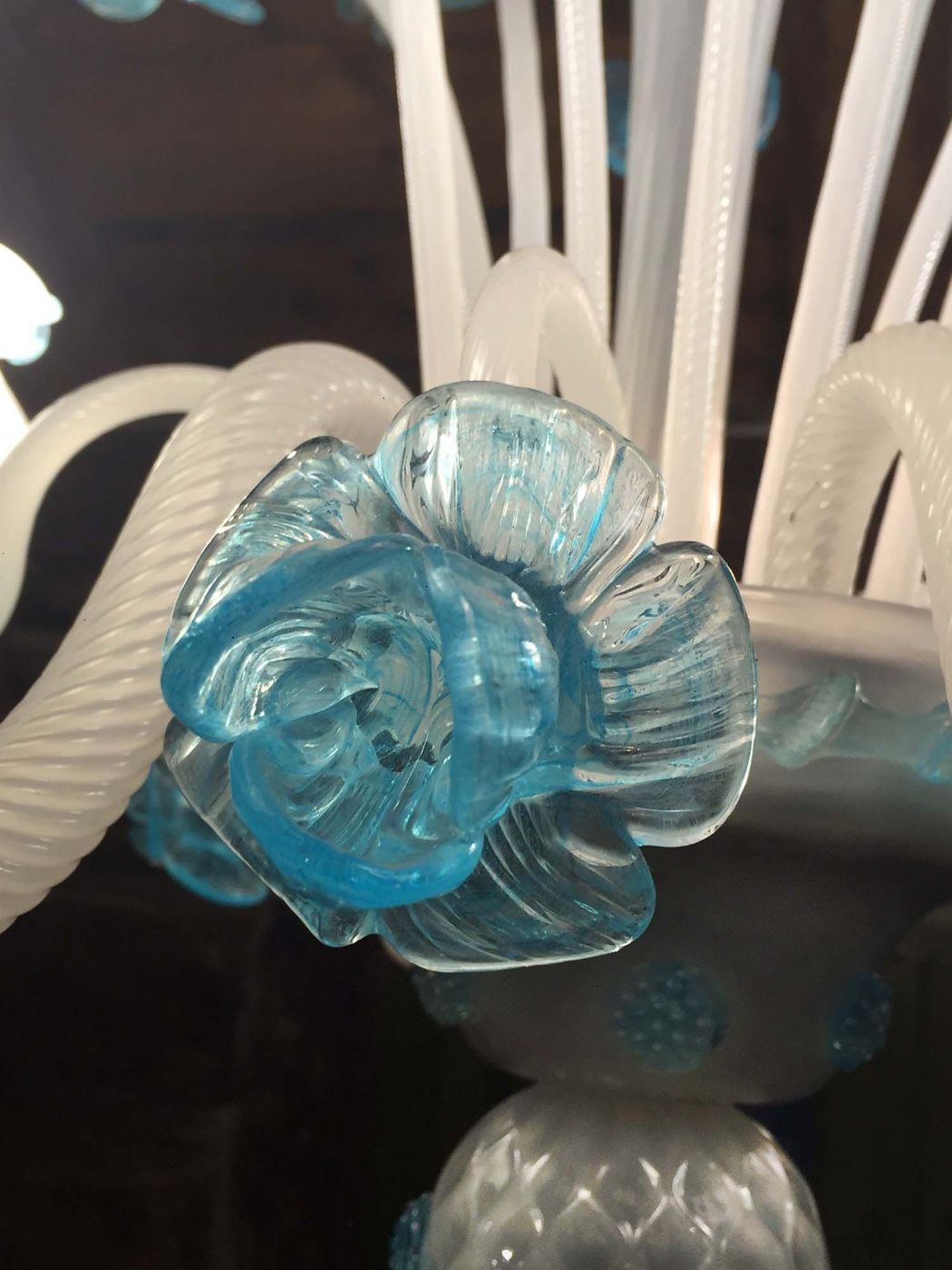
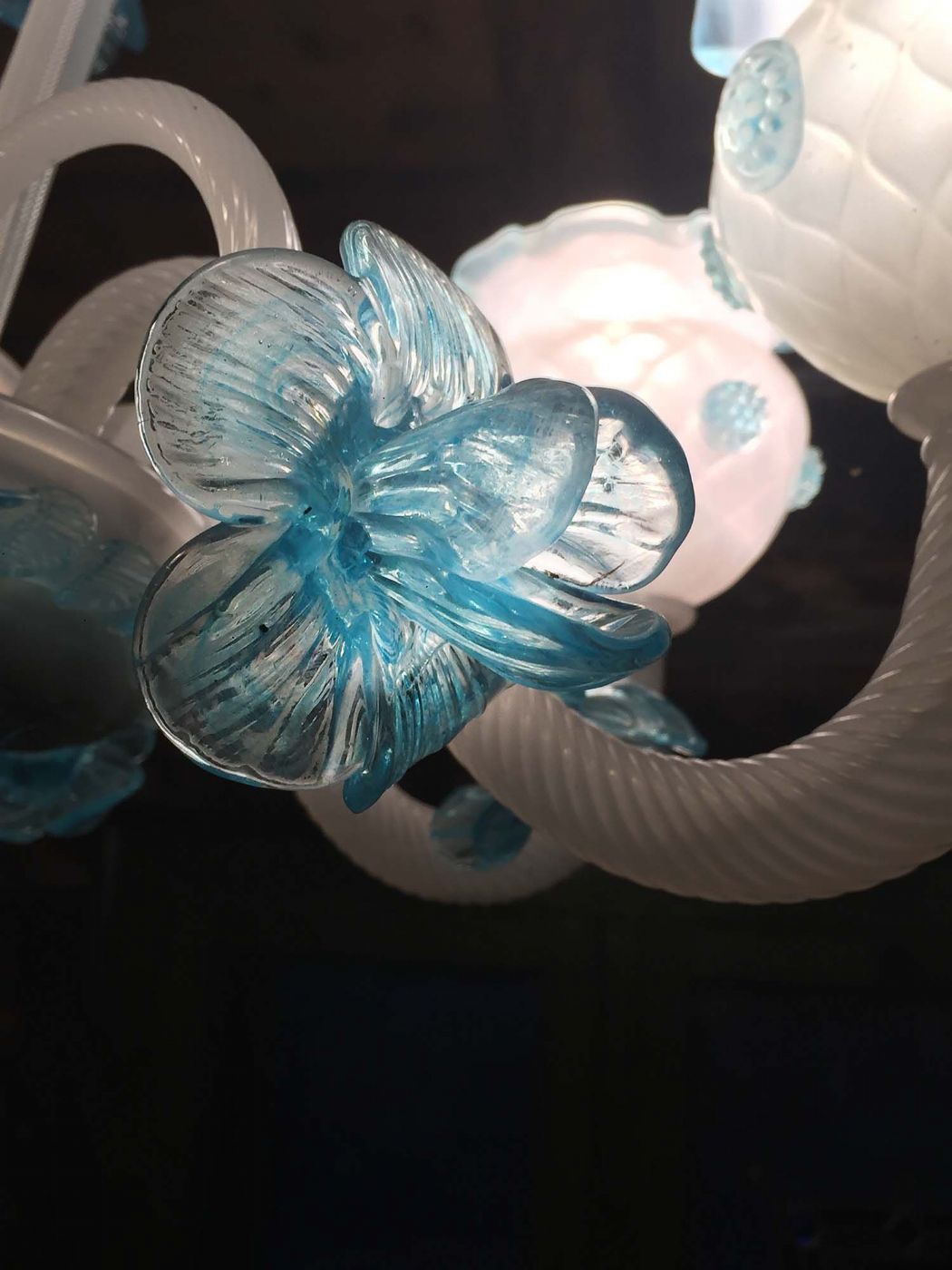
The flower stems have the same type as the arms with "hot" workmanship, and the flower, shaped like a daffodil, is "pinched".
The central garden of only flowers is very beautiful and appears like a bouquet of blue daffodils suspended in the air.
Particularly suitable for bedrooms, living rooms, entrances, bathrooms.
Venice: early twentieth century
Measurements: height cm. 90 width cm. 60
GLOSSARY:
RIGAMENÀ - TWISTED RIGADIN: a decorative motif used in the production of Murano chandeliers, which gives the glass surface its unmistakable spiral workmanship. The technique consists of inserting the vitreous blob, attached to the blowpipe, inside a bronze mold, called bronzin. The texture imprinted in the vitreous mass widens as it is blown out, forming the texture in question. It is important to remember that the mold imprints the decorative motif but not the shape, which is made entirely freehand.
BALLOTON: the term indicates a particular process with which the typical diamond pattern is given to the surface of the glass. This texture is obtained by inserting the vitreous blob, attached to the blowpipe, inside a rudimentary mold, called bronzin. When blown, the ribs imprinted by the mold widen, forming the mesh design. It is important to remember that the mold imprints the decoration but not the shape, which is made entirely freehand.
OPALINE OR MILK GLASS: Opaline or milk glass is an opaque, milky white glass, designed to resemble porcelain. It is obtained by opacifying the glass with tin oxide.
www.palazzodelbuonsignore.com
https://www.romagnavirtualtour.it/virtual-tour-palazzo-del-buon-signore/