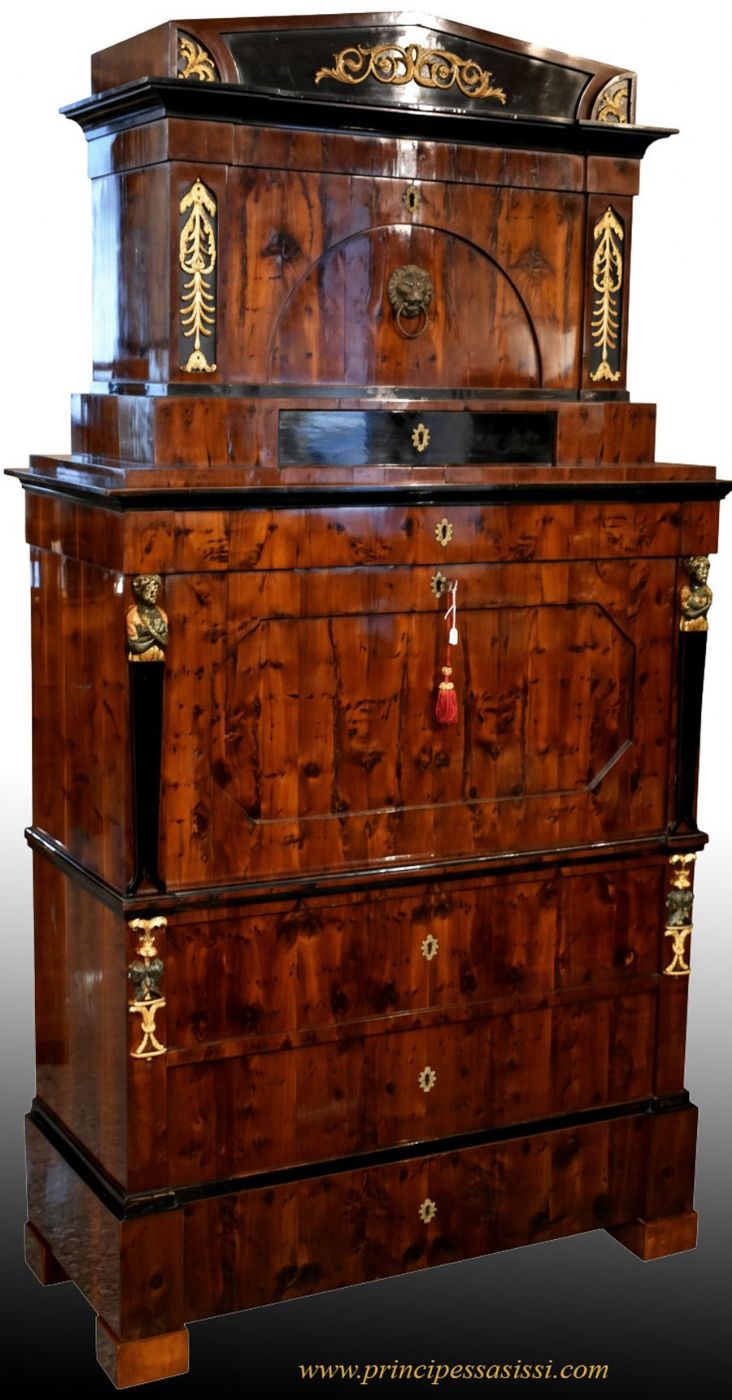
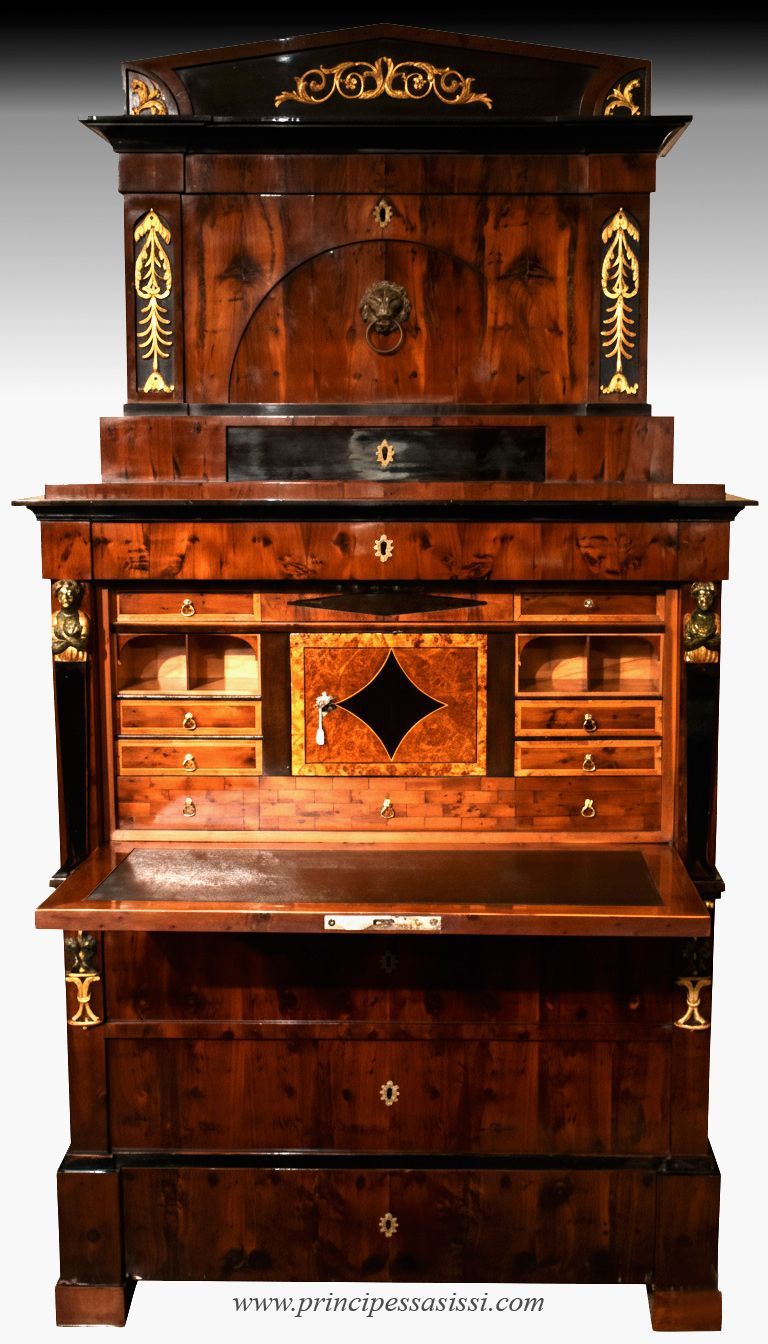
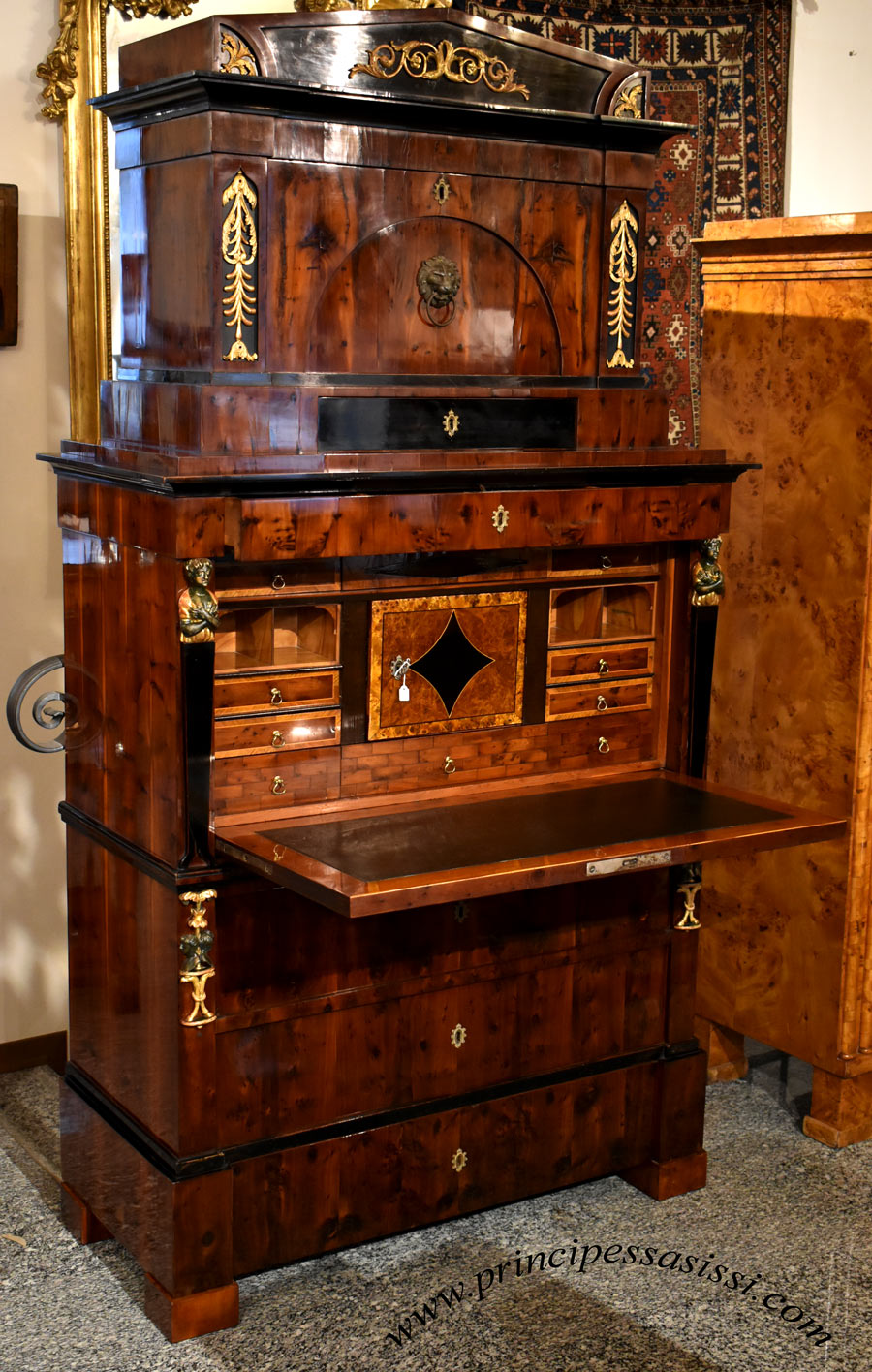
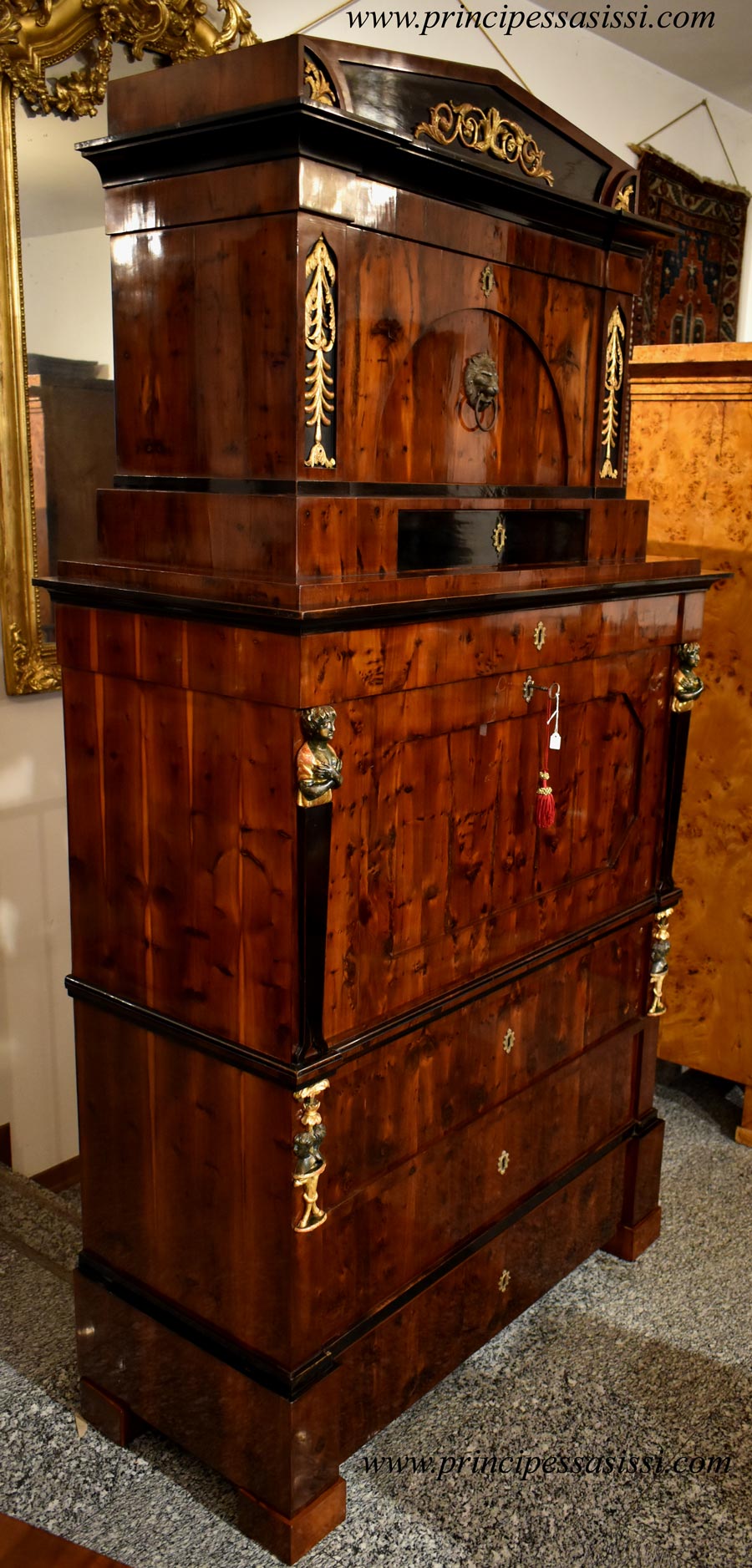
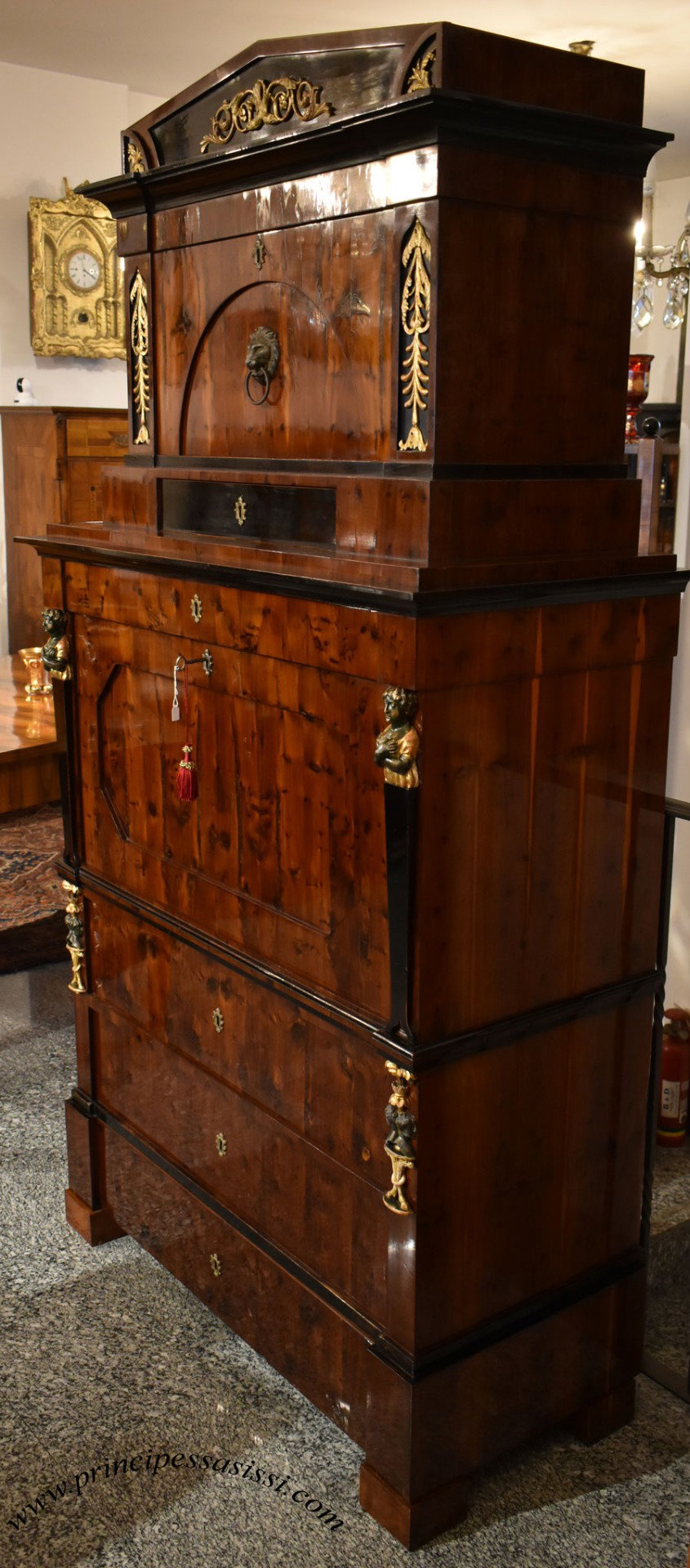
Vienna 1800-1810 approx., First Empire, likely workshop of Johann Härle, master in Vienna. Important "pyramid" secretaire.
Description:
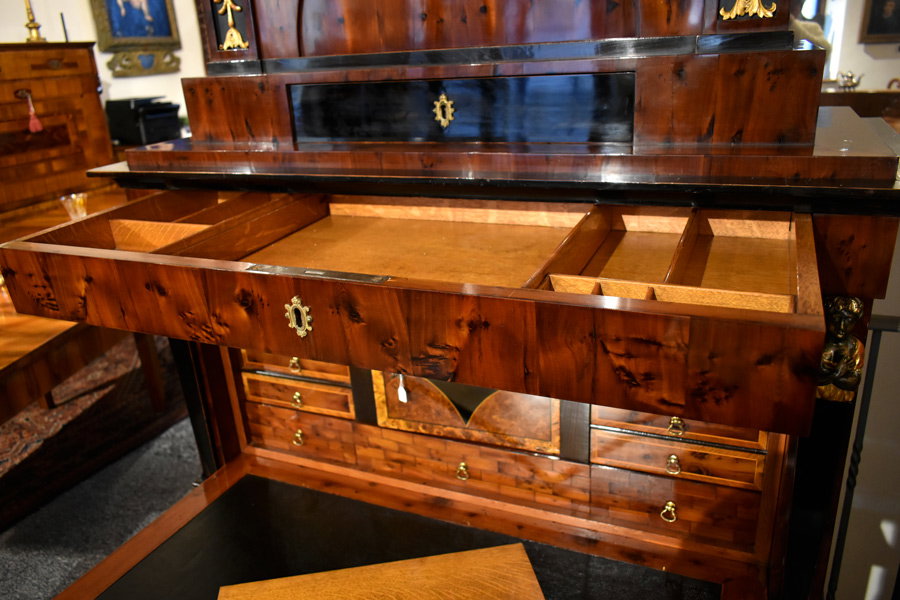
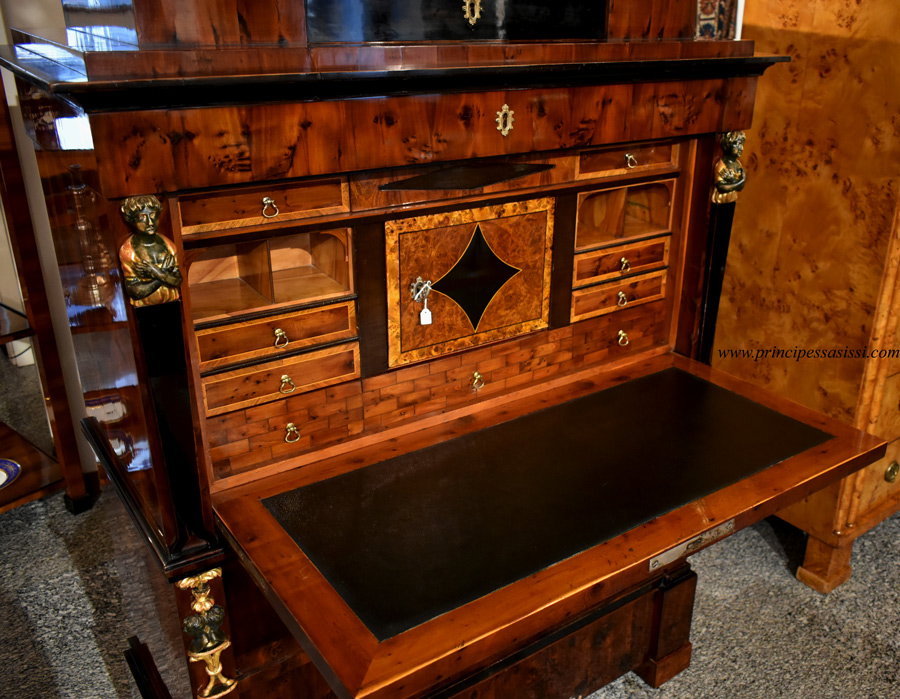
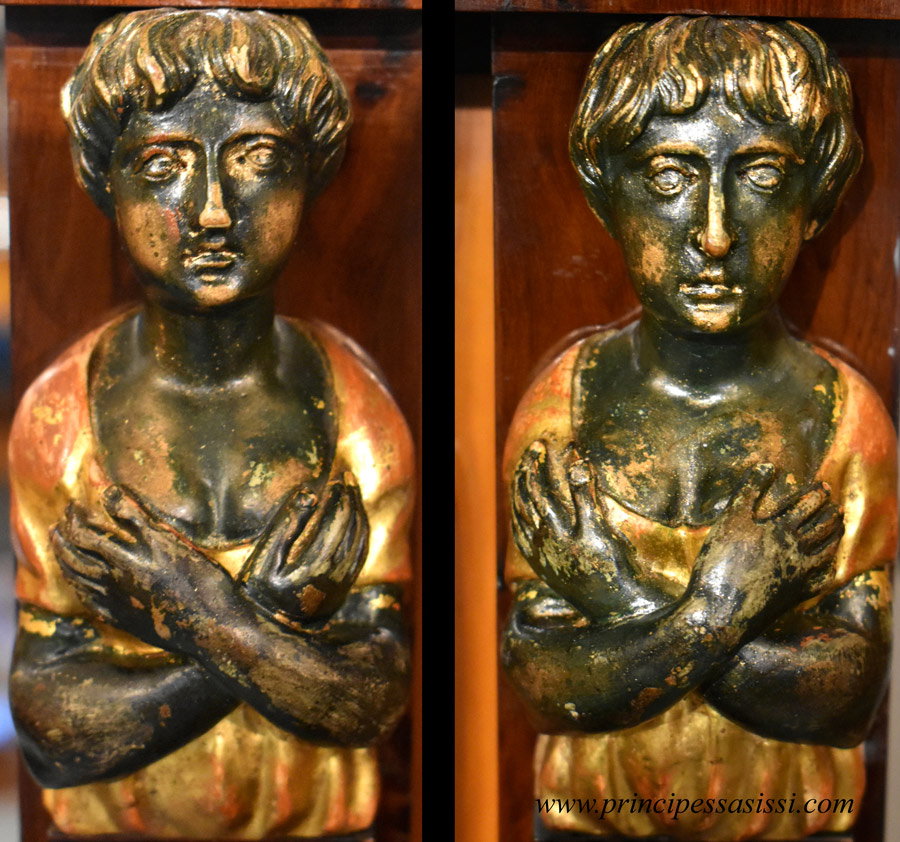
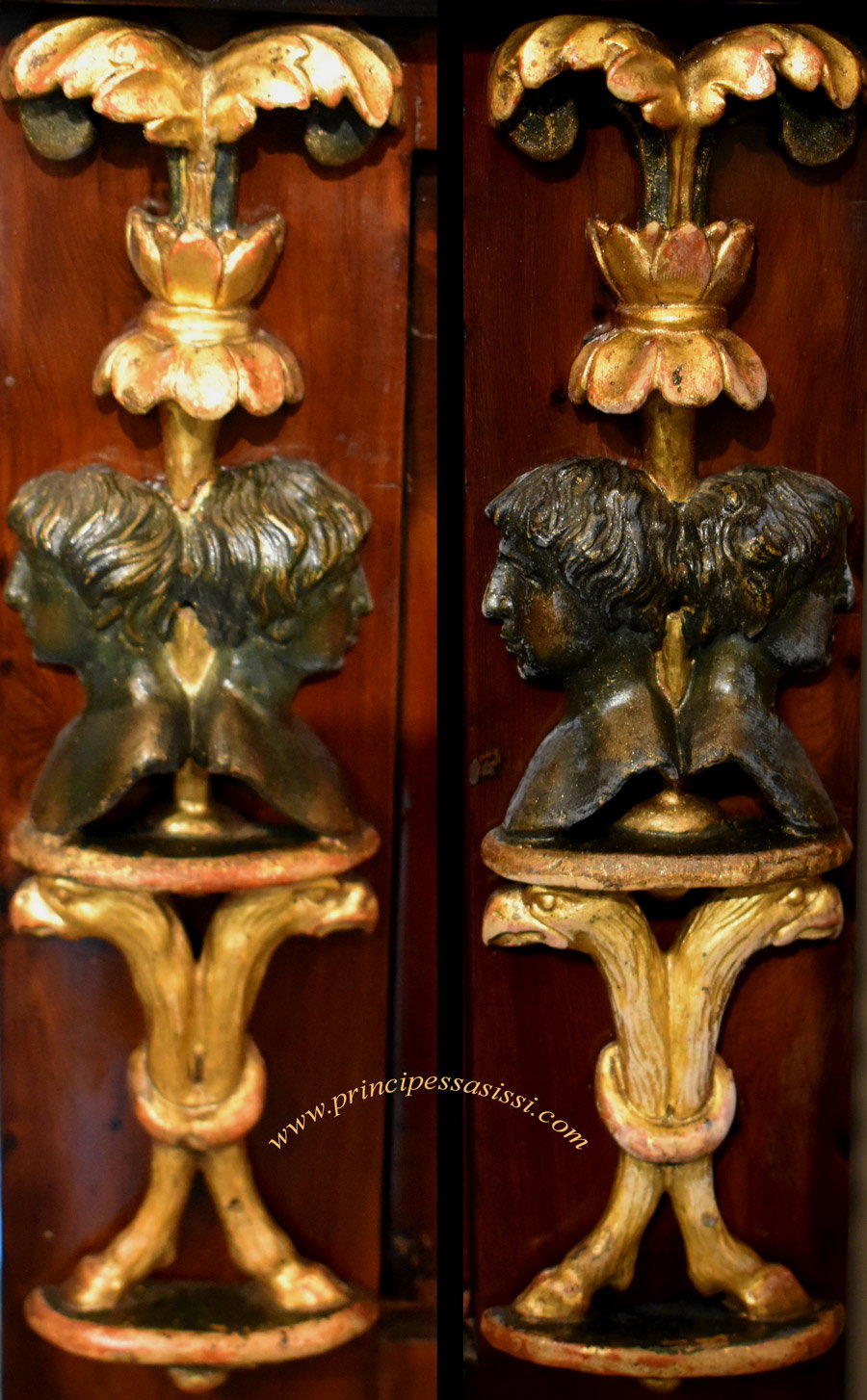
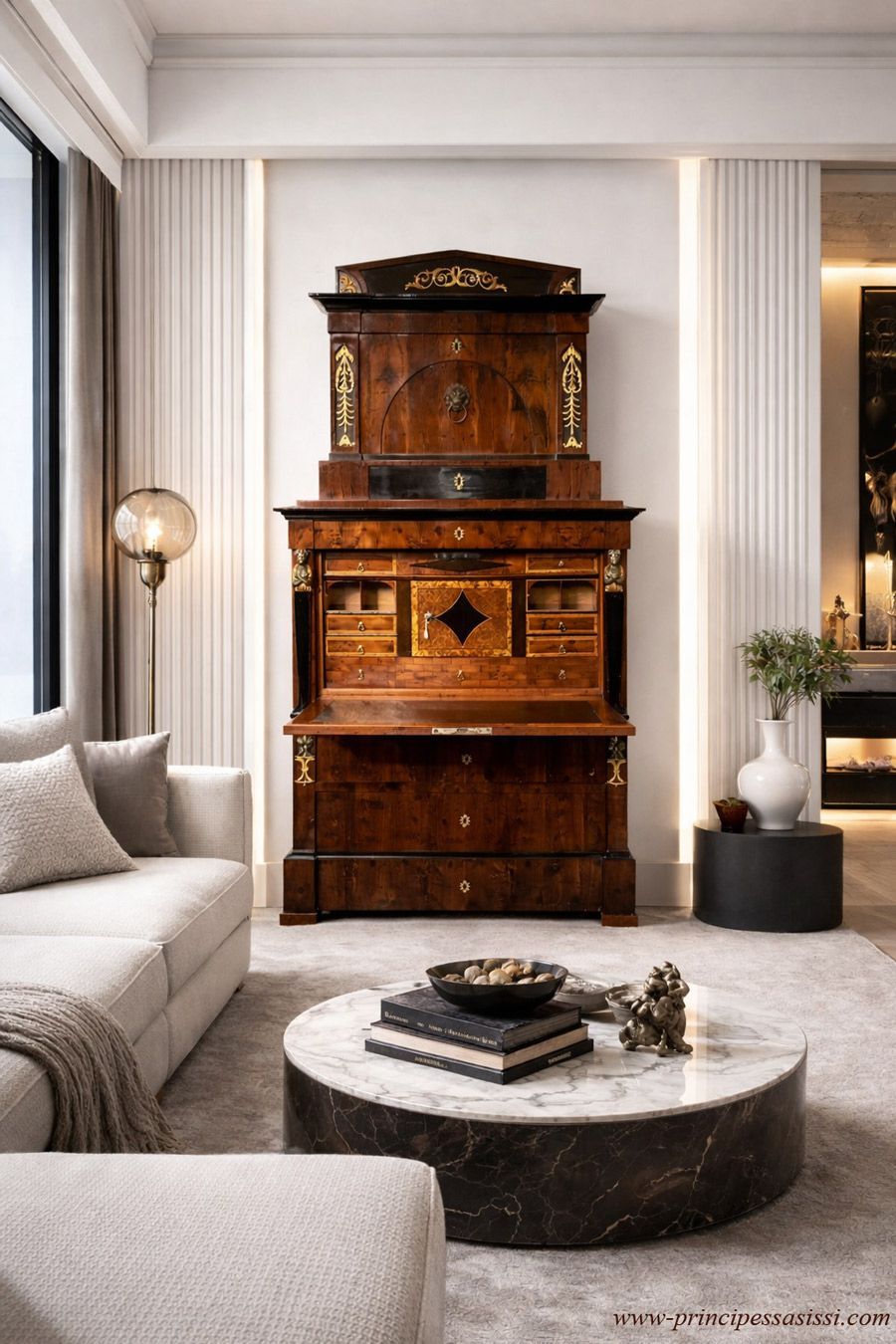
Vienna 1800-1810 approx., First Empire, likely workshop of Johann Härle, master in Vienna. Important secretaire of museum quality "pyramid" shape (the shape is inspired by the Egyptian stepped pyramids). Monumental work of the First Empire in practically intact condition and in original patina, with masterful shellac finish applied with a buffer using museum-standard technique. Originally commissioned by high nobility of the Austrian Empire, as certified by inscriptions and labels of the time applied by the original noble family, first owner and commissioner of the work. The Empire pyramid secretaire was made almost exclusively in the two capitals (Austrian - Vienna and Berlin - Prussian); but the perfect proportions, the elegance, the softness, the use of yew as the main essence instead of mahogany, the decorations in carved and gold leaf wood instead of fire-gilded bronze, clearly suggest a Viennese origin. There are affinities in technical details and decorative motifs with the works of the great Viennese cabinetmaker Johann Härle, two important works of whom are kept at the Vienna Museum of Applied Arts. The work is veneered entirely in the rare and precious essence of the yew shrub. This essence was used more frequently only for inlays in interiors. The use on the entire exterior surface of the furniture testifies to the high commissioning and the representative function. The interior, which boasts 4 different secret compartments with a total of 12 hidden drawers (in addition to the obviously visible ones) is finely veneered and inlaid in the precious essences of thuja, blond walnut feather, cherry feather, walnut burl, poplar burl. Maple and dyed maple wood fillets. Ebonized details. Body of internal drawers in maple and oak essences. Acanthus and palmette motifs carved and gilded in the elevation. Ebonized lozenge motifs. Lateral columns with vestals with folded arms carved and gilded with gold leaf with details in antique green lacquer. Opposed and diverging male heads carved and lacquered in antique green resting on carved and gold leaf griffins (the latter also heraldic symbol of the commissioning family). The opposed heads represent the Roman god Janus, who could look to the future and the past, guardian of every form of passage and change, protector of everything that concerned a beginning and an end. The works of the great ancient masters are also identifiable by the great knowledge and culture of mythology and theology that they had to have, which is evident from the themes and symbolism used. All the lacquers and gilding are original, spouts, lion head knob, working locks are also original. The feet are original and that slight chromatic difference in the front of the same is a deliberate decorative effect that recalls the tone of the writing top, veneered in the edges in thuja, just clearer. Original backs and bottoms. Patina, signs of use and antiquity consistent with the era. Measures cm. 208 in height, 110.5 in width, depth 50 - 86.5 closed/open.