Carlo Piacenza (Turin, December 3, 1814 – Castiglione Torinese, 1887)
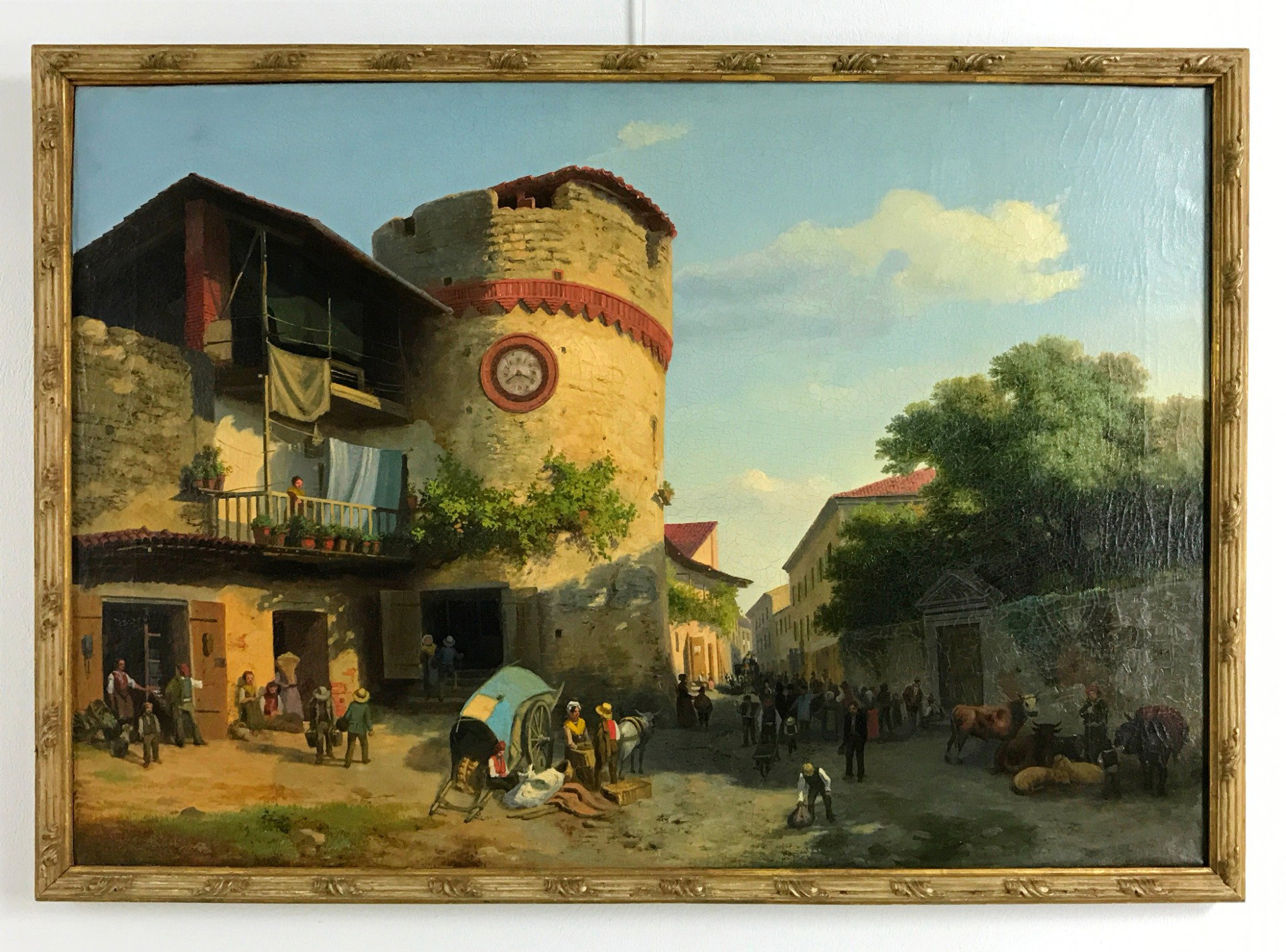
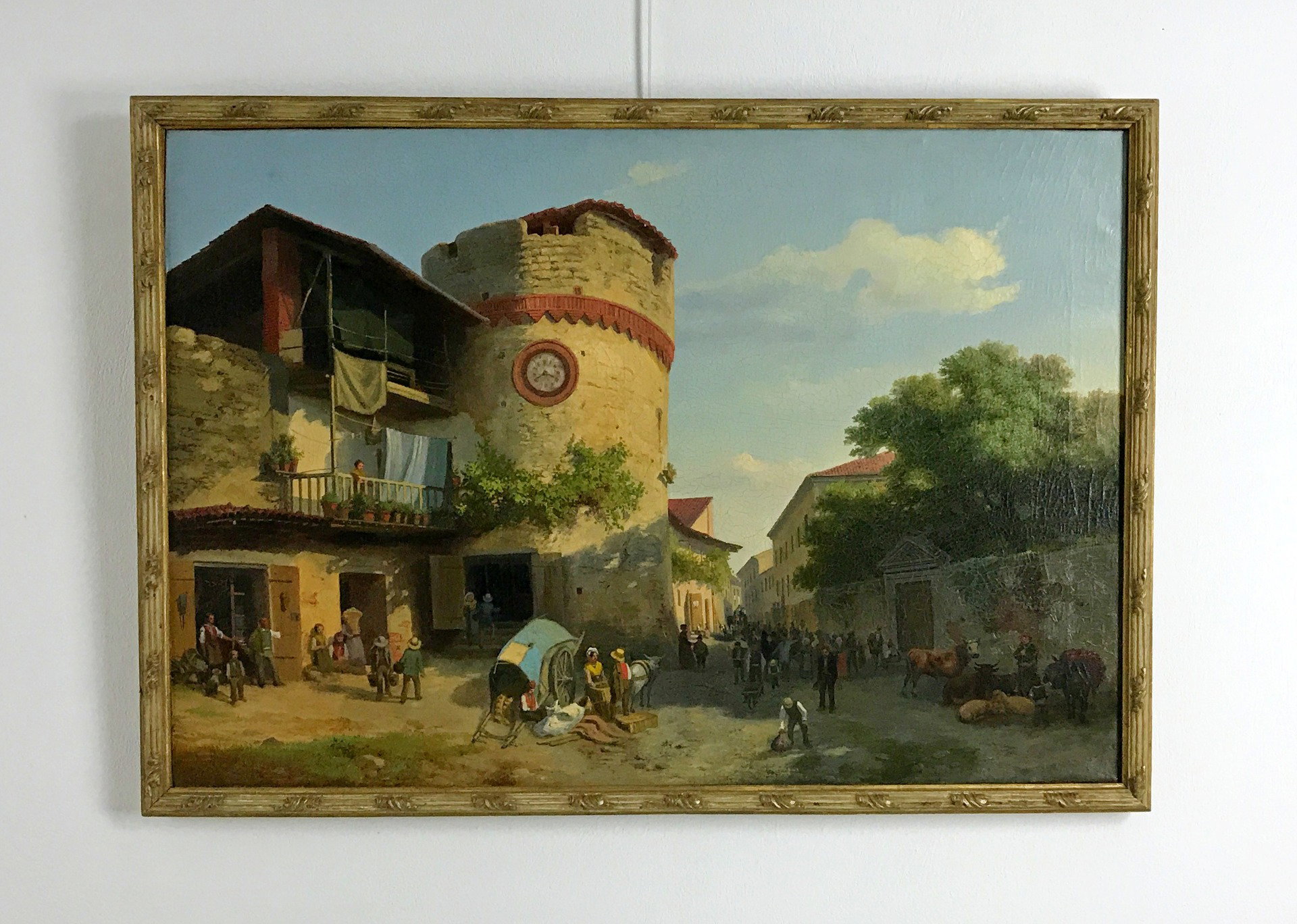
Market at the Tower of Giaveno
Circa 1850-'60
Oil on canvas, cm 87 x 123 cm
Price between euro 7,500.00 / 8,500.00
Item accompanied by a certificate of authenticity and expertise (attached at the bottom of the page)
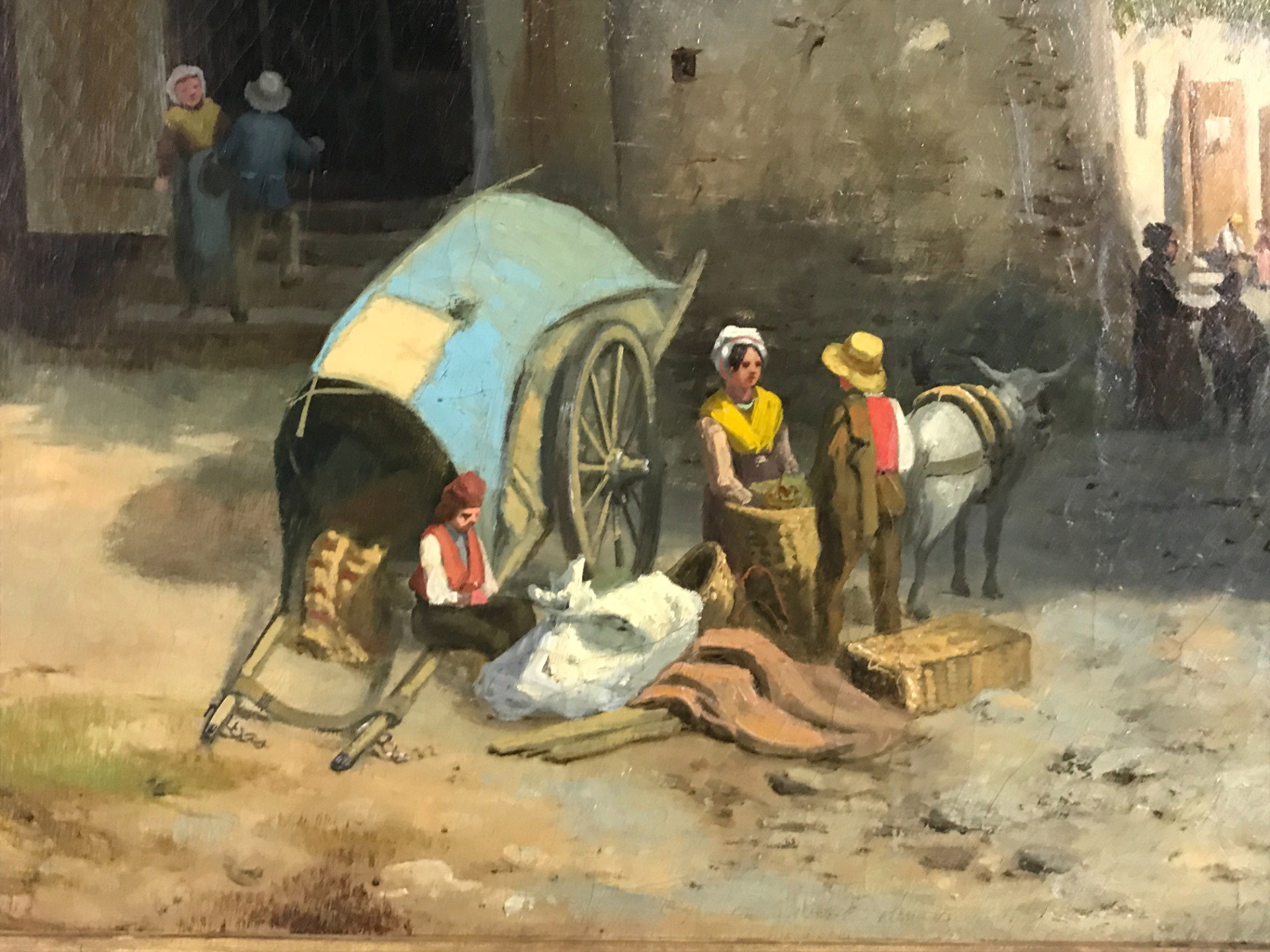
The painting, executed in oil on canvas, depicts a market scene in a town, dominated by a circular tower of medieval origin. The work can be attributed to the Piedmontese painter Carlo Piacenza (Turin, December 3, 1814 – Castiglione Torinese, 1887). Another comparable work by Piacenza is known, executed in oil on panel, signed and dated in the lower-left corner, depicting a Market at the Tower. The architectural context represented in the latter is the same as the canvas, although there are some minor variations. The same is true for the scene of daily life described. The painting on panel, now in a private collection, is published by Piergiorgio Dragone in Painters of the Nineteenth Century in Piedmont. Art and Figurative Culture. 1830-1865, Published by Banca CRT of Turin.
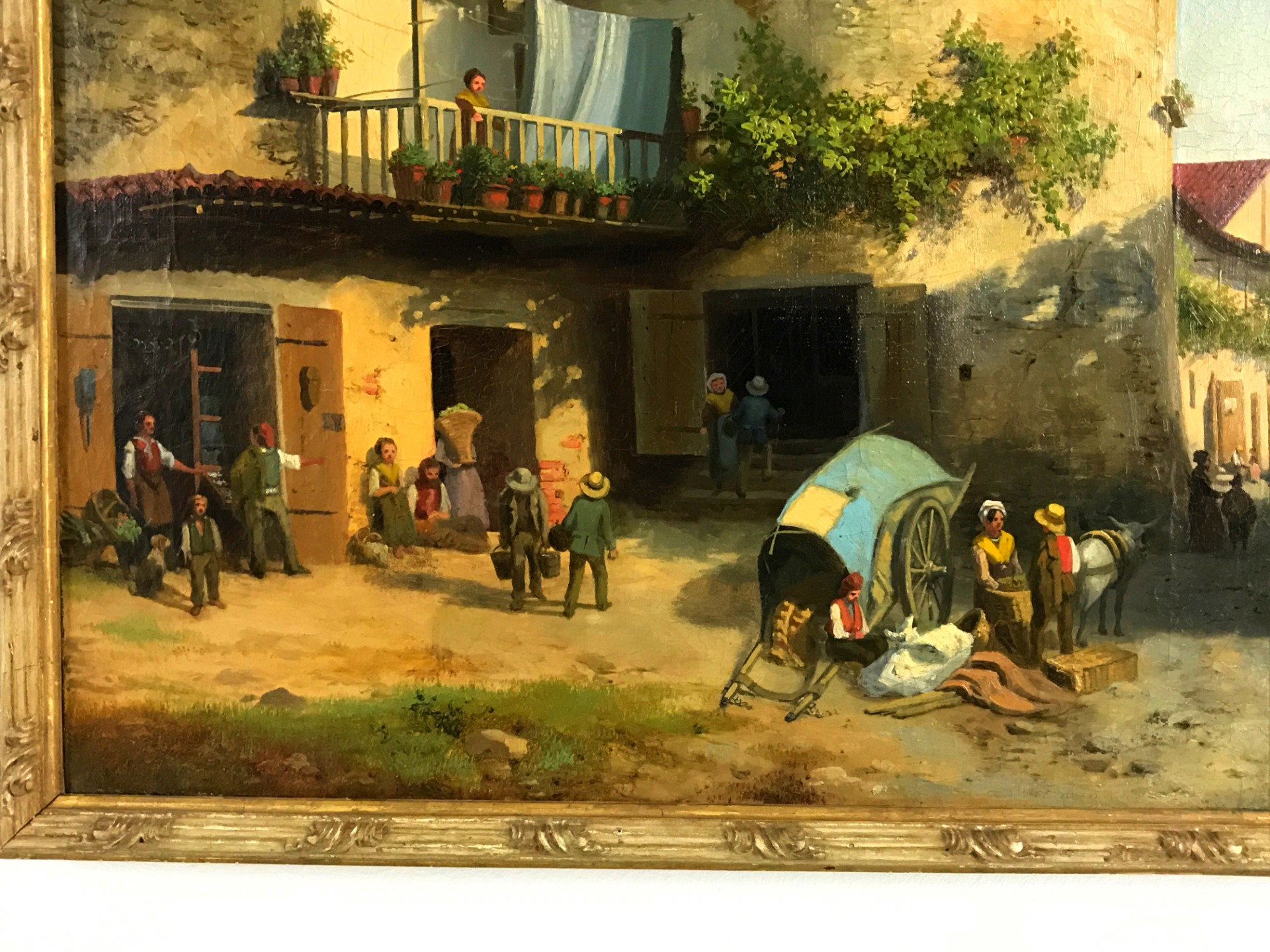
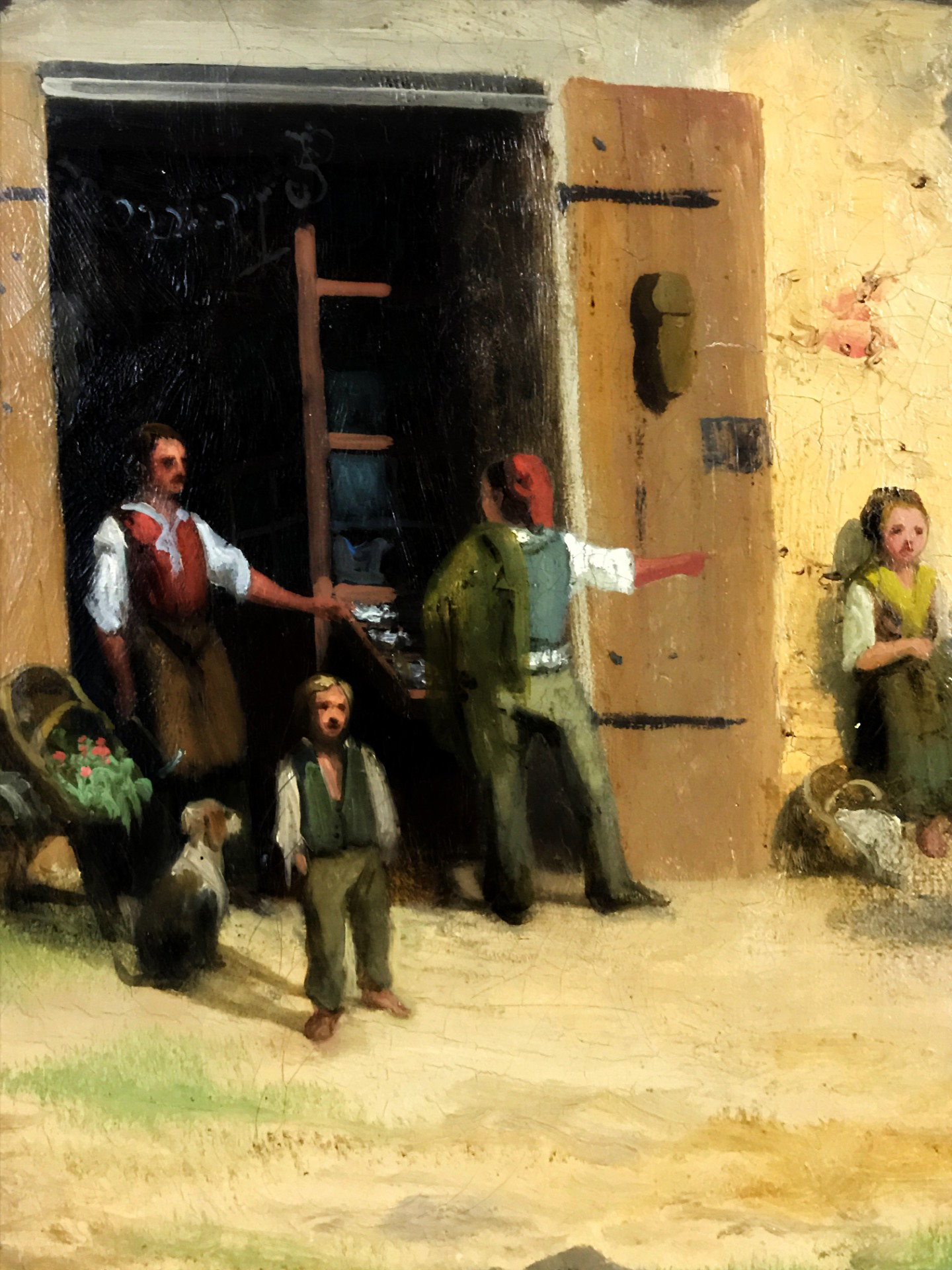
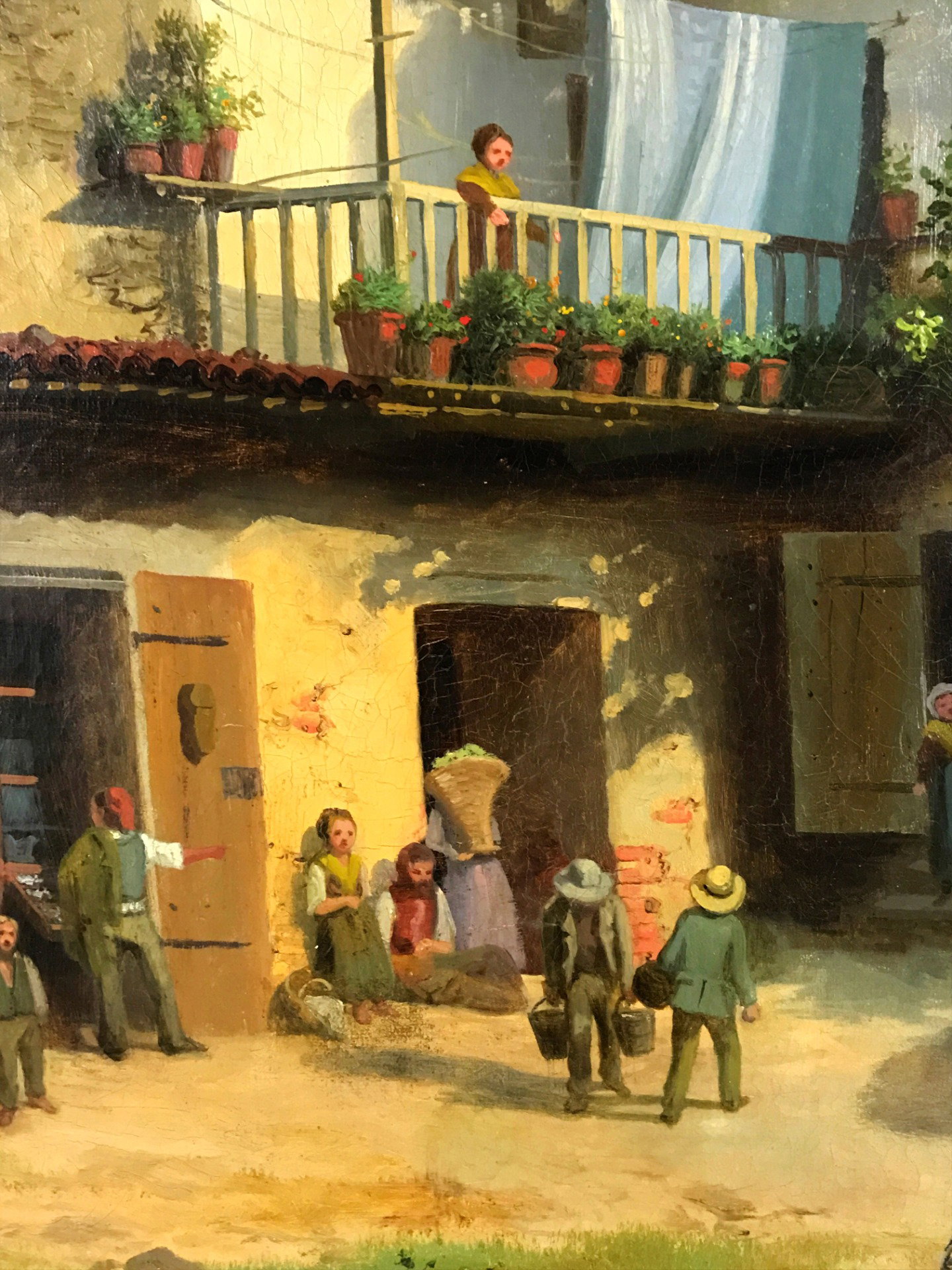
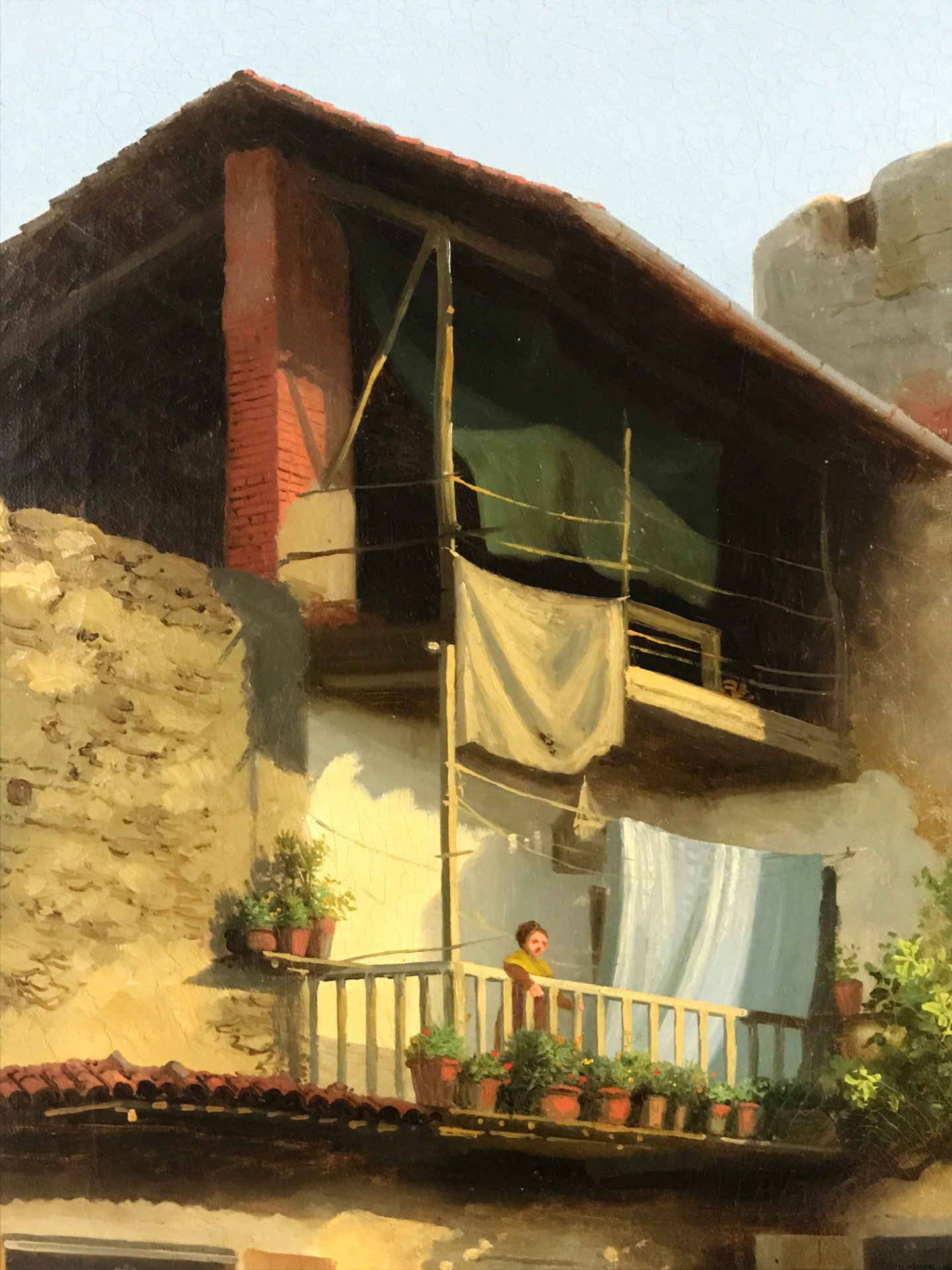
As evidenced by the comparison between the two works, the tower depicted is the same, as is the adjacent house on the left. Some differences can be noted by observing the steps to access the area housed in the tower, perhaps a shop, as well as the description of the wooden fences protecting the balconies of the house next door. In the canvas version, Piacenza inserts a clock surrounded by terracotta tiles into the tower's masonry and describes the buildings that follow on the right in a better state of preservation. The horizontal cut of the canvas also allows the painter a thorough description of the surrounding environment. On the right, a street of the town disappears in the horizon, while in the foreground, on the open space where the market is located, there is a wall that encloses a lush private garden. In both works, the clothes hanging out to dry, some terracotta pots with ornamental plants, the branch of a verdant plant climbing on the tower, as well as the inhabitants engaged in their commercial activities, reflect the life of the town and liven up the composition.
Through comparison with some documents found, it is possible to identify the exact place represented in the paintings: it is one of the medieval towers of the municipality of Giaveno.
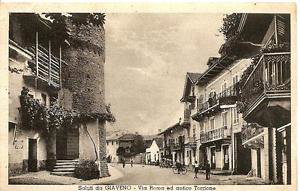
There is an etching signed by Francesco Mennyey (Turin 1889 - 1950), a painter and engraver known internationally in the first half of the 20th century, which depicts the same view described by Piacenza. Mennyey signs and titles the engraving Giaveno.
The comparison with the print, made around the 1920s of the 20th century, allows not only to ascertain the location of the painting subject, but also to demonstrate that the clock that Piacenza describes in the canvas is an invented addition that the artist perhaps thought was necessary to enrich the rather simple medieval architecture, balancing the whole with a chromatic reference in the tones of red.
The tower represented is still present today. Giaveno, a town not far from Turin and located at the entrance of the Val Sangone, has very ancient origins. The first settlement dates back to Roman times, but it gained importance in the central centuries of the Middle Ages, when it was subjected to the lordship of the powerful abbots of the Sacra di San Michele. In 1209, thanks to a donation from the Count of Savoy Thomas I, the abbots of San Michele fortified the square with a surrounding wall and built a castle. In 1347, Abbot Rodolfo di Mombello had the walls raised, interspersed with five circular towers. The perimeter of the Abbaziale Citadel is still clearly visible today in the current Via Roma. In fact, three towers have survived from the surrounding wall, although modified over the centuries. With a circular plan, in mortar and river stones, they have at the top a decorative band in bricks that forms a geometric design with arches. Some historical photographs show the opening and closing of some windows and the evolution of the site.
Carlo Piacenza was born in Turin in 1814 and was trained at the Accademia Albertina, a pupil of Cesare Biscarra and Pietro Fea. After a period of apprenticeship with the Bernese watercolorist Juillerat, he began to paint subjects inspired by the Piedmontese and Aosta Valley countryside, with the aim to depict the "truth" of nature. He debuted at the Promotrice of Turin in 1843 presenting some views characterized by a peaceful naturalism and a romantic and idyllic tone, sometimes melancholic. The qualities of a naturalist painter are intensified with the light research that the setting can offer. Piacenza thus achieves high results through his own and personal modulation of light, obtaining critical acclaim at the Turin exhibitions in which he regularly participates, in particular those held at the Promotrice and the Circolo degli Artisti. He dedicates himself to private teaching and has as students the children of Duke Ferdinand of Genoa, Tommaso and Margherita di Savoia. From 1856 he is also the holder of the chair of Drawing at the Turin Military Academy which he held until his death in 1887. The painting of Carlo Piacenza continues, alongside that of his friend and colleague Angelo Beccaria, a strand of serene landscaping that had distinguished the first half of the nineteenth century. Piacenza, however, stands out as innovative in the Piedmontese art scene for a marked attention paid to concrete moments of daily life, thus conferring connotations of verismo to his works.
The canvas object of this study appears significant in the context of Piacenza's artistic journey. The veristic description of the landscape is enlivened by the market scene and in which the chromatic research finds ample development in the rendering of the shaded areas and warm summer light. The work also appears as a document of historical interest for the architectural events that have affected the municipality of Giaveno, testimony of a place now strongly transformed by urban adaptations.
Carlotta Venegoni
Essential bibliography:
Bevilacqua E.; Minola M., Giaveno e la sua valle, Edizioni Susa Libri, Susa 2001
G.L Marini, Carlo Piacenza in Dizionario degli artisti e degli incisori italiani, vol.VIII, Turin 1975
Piergiorgio Dragone, Pittori dell’Ottocento in Piemonte. Arte e cultura figurativa. 1830-1865, Banca CRT, Turin 2001 and ibidem