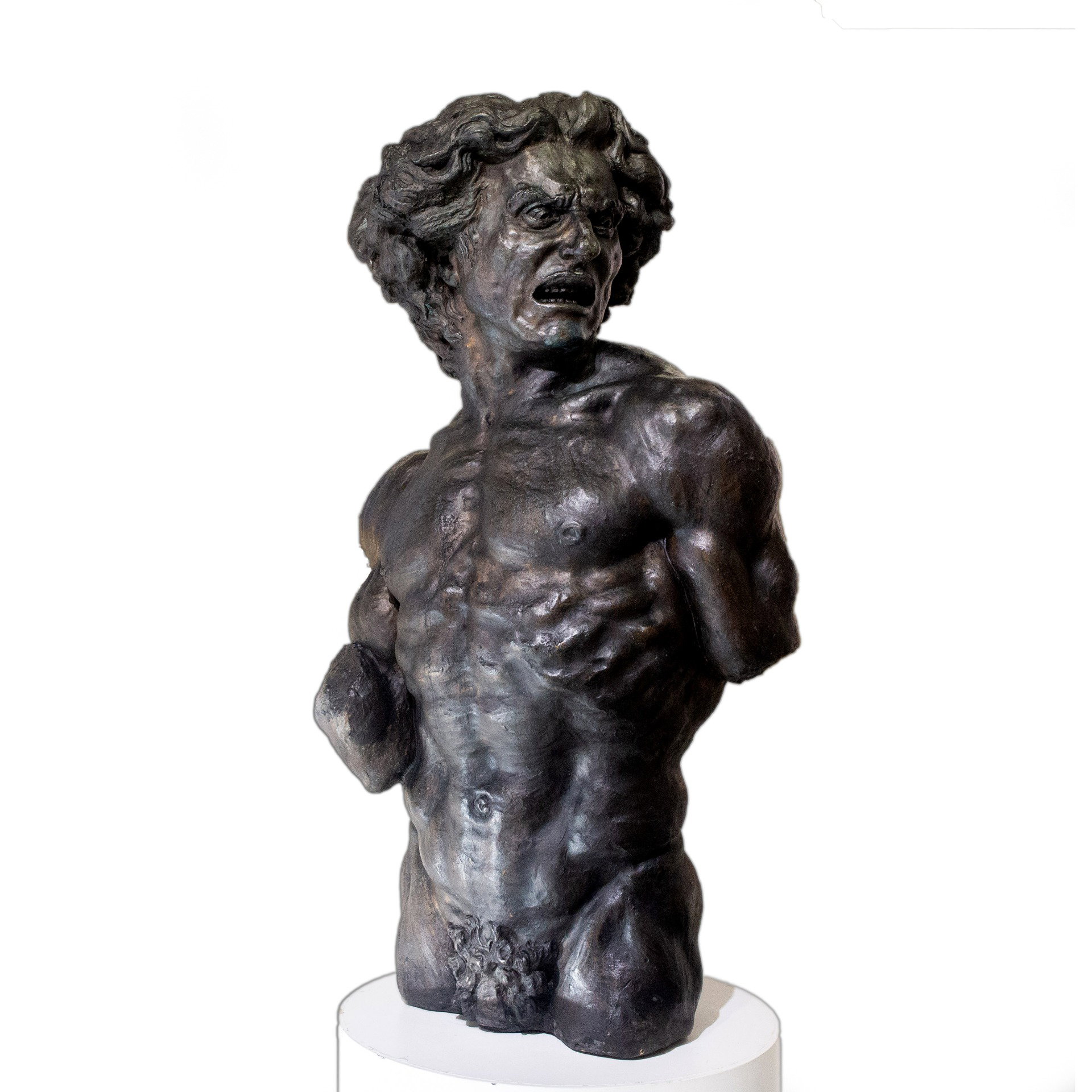
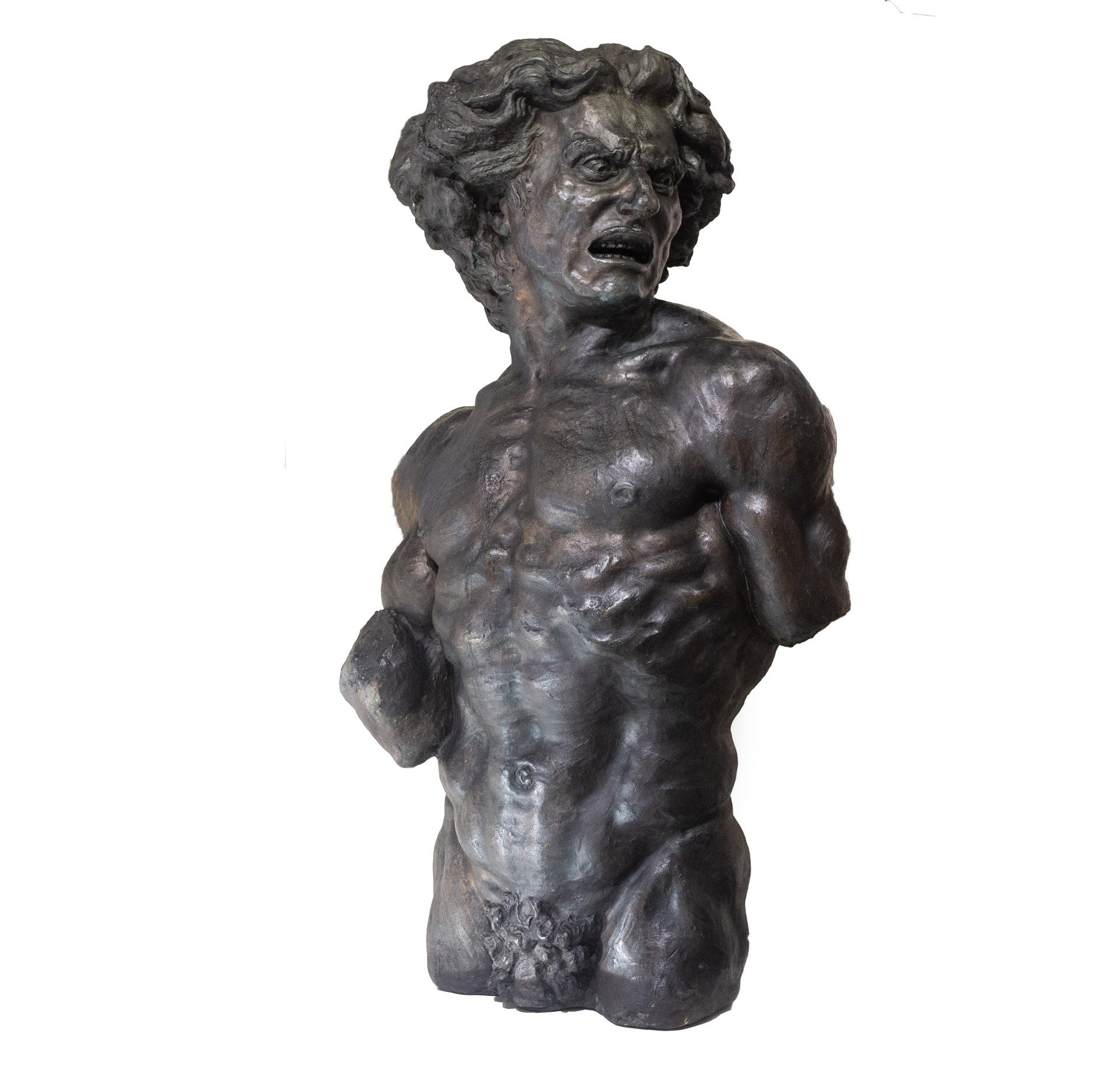
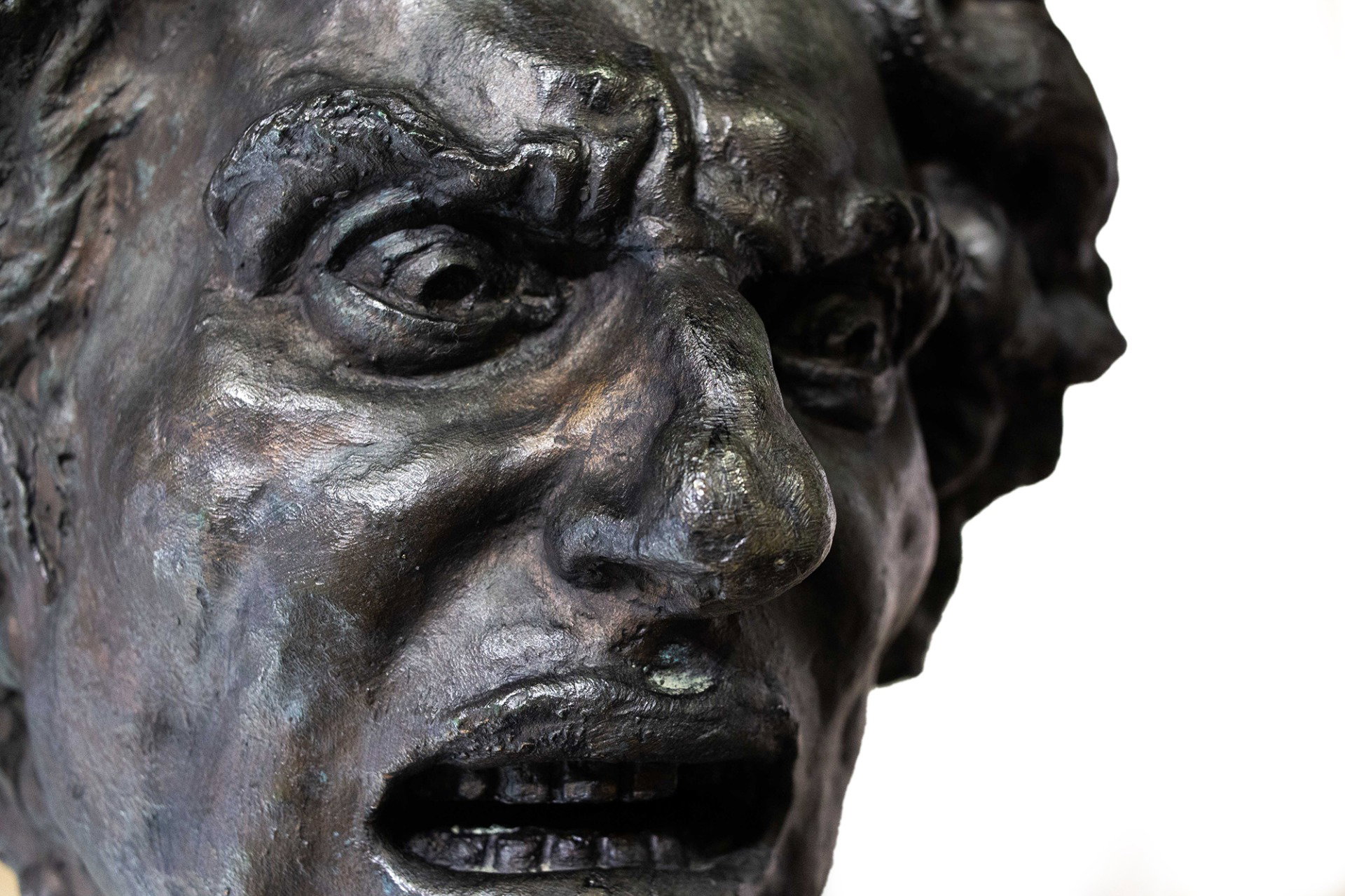
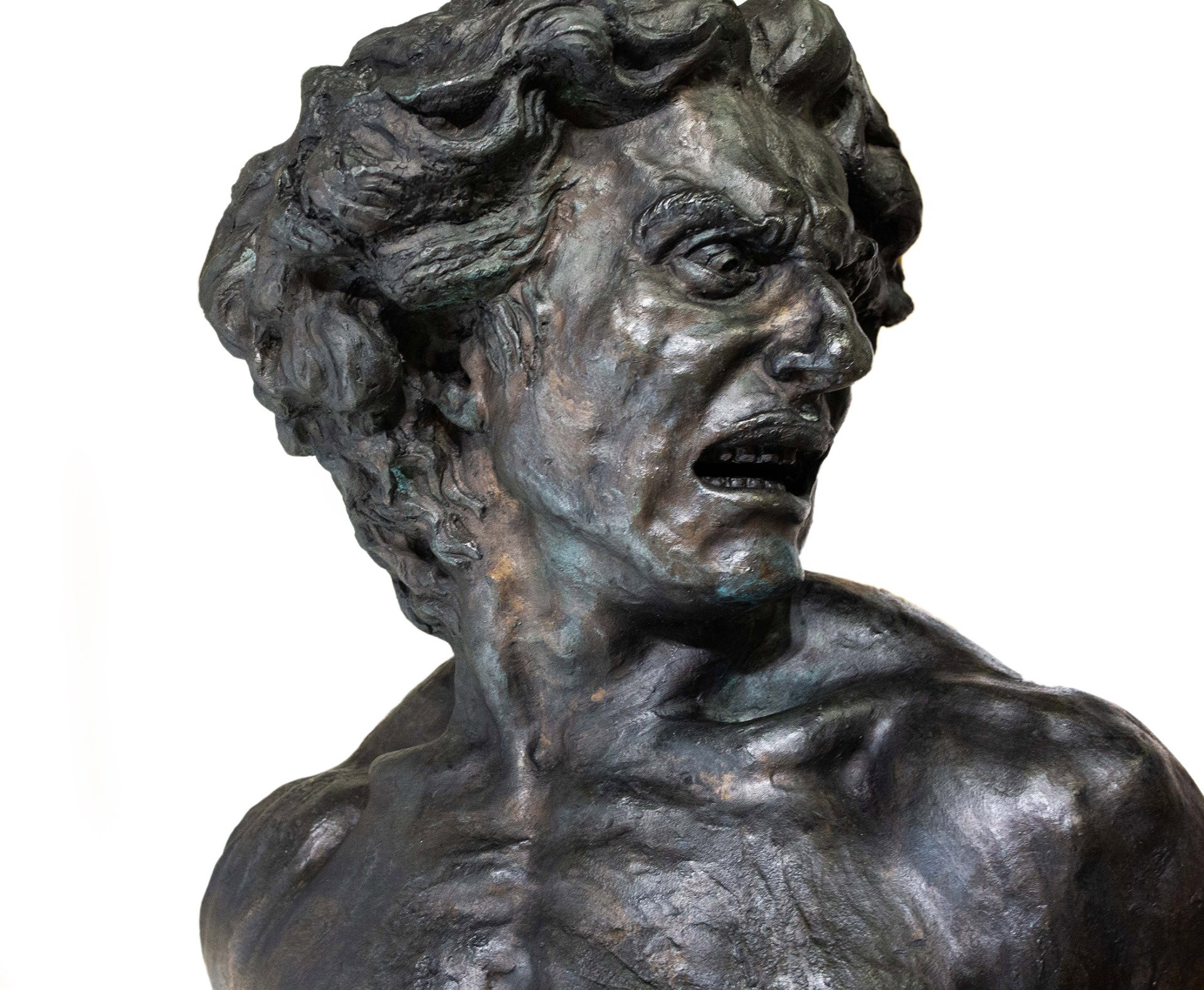
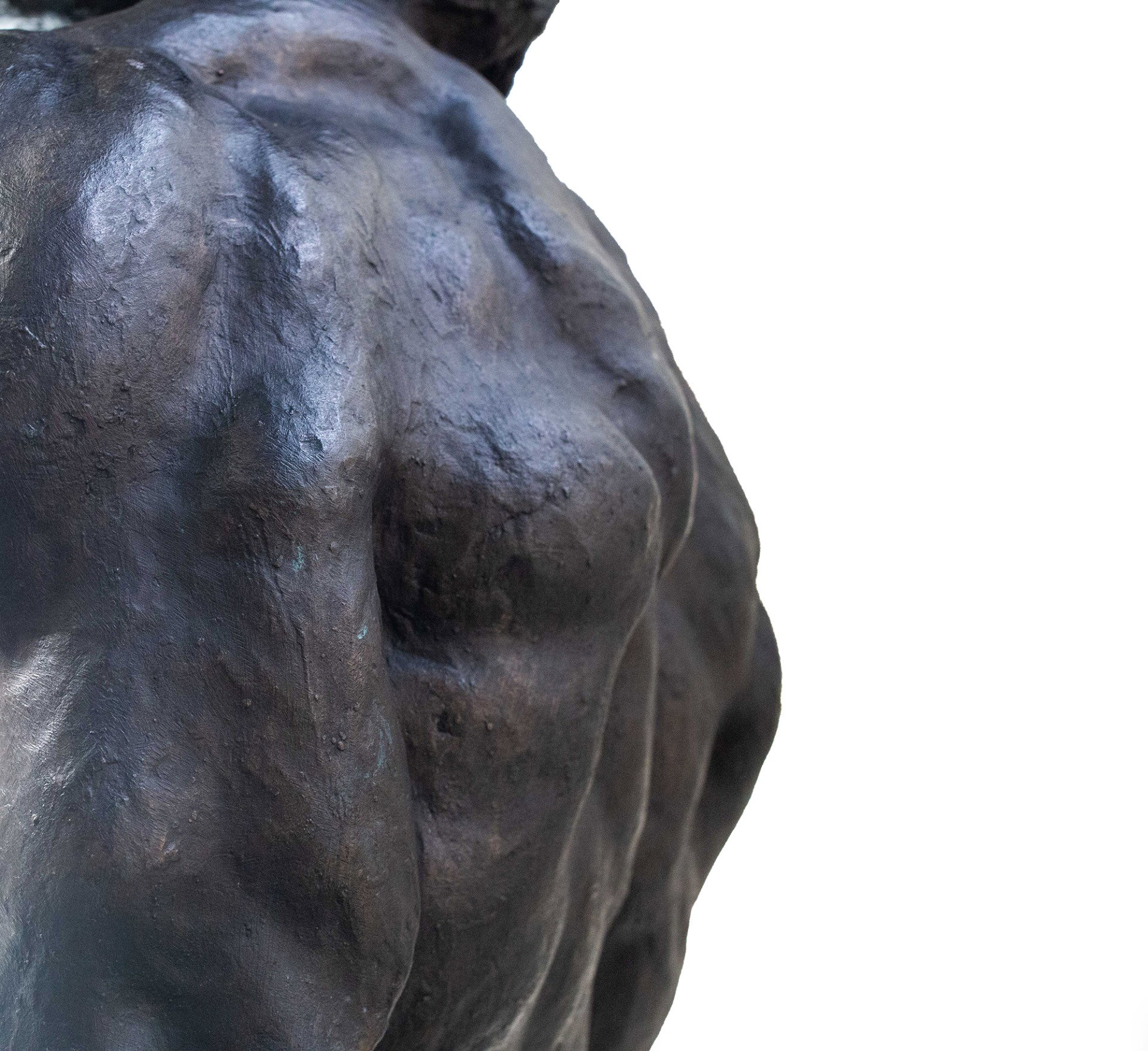
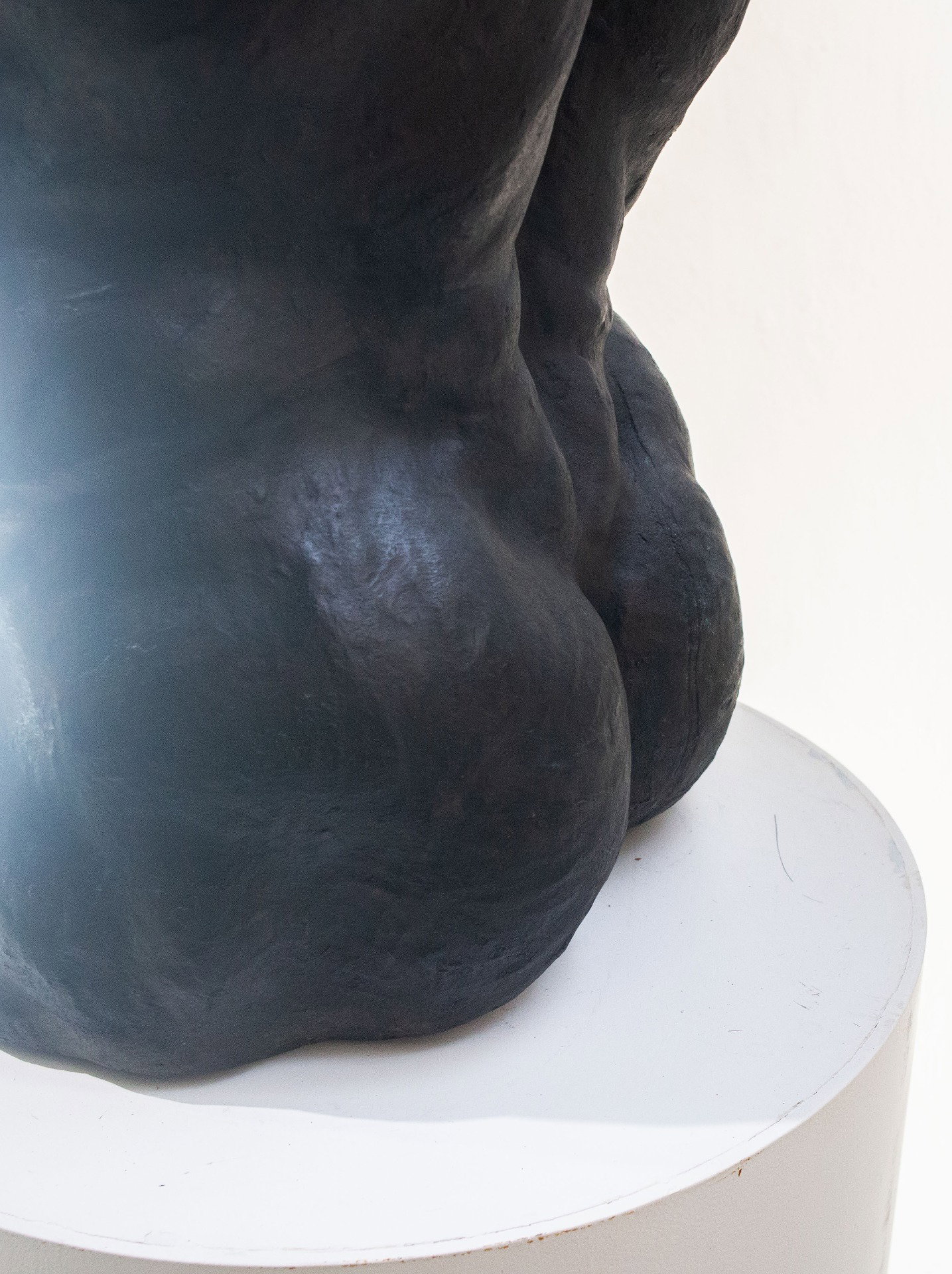
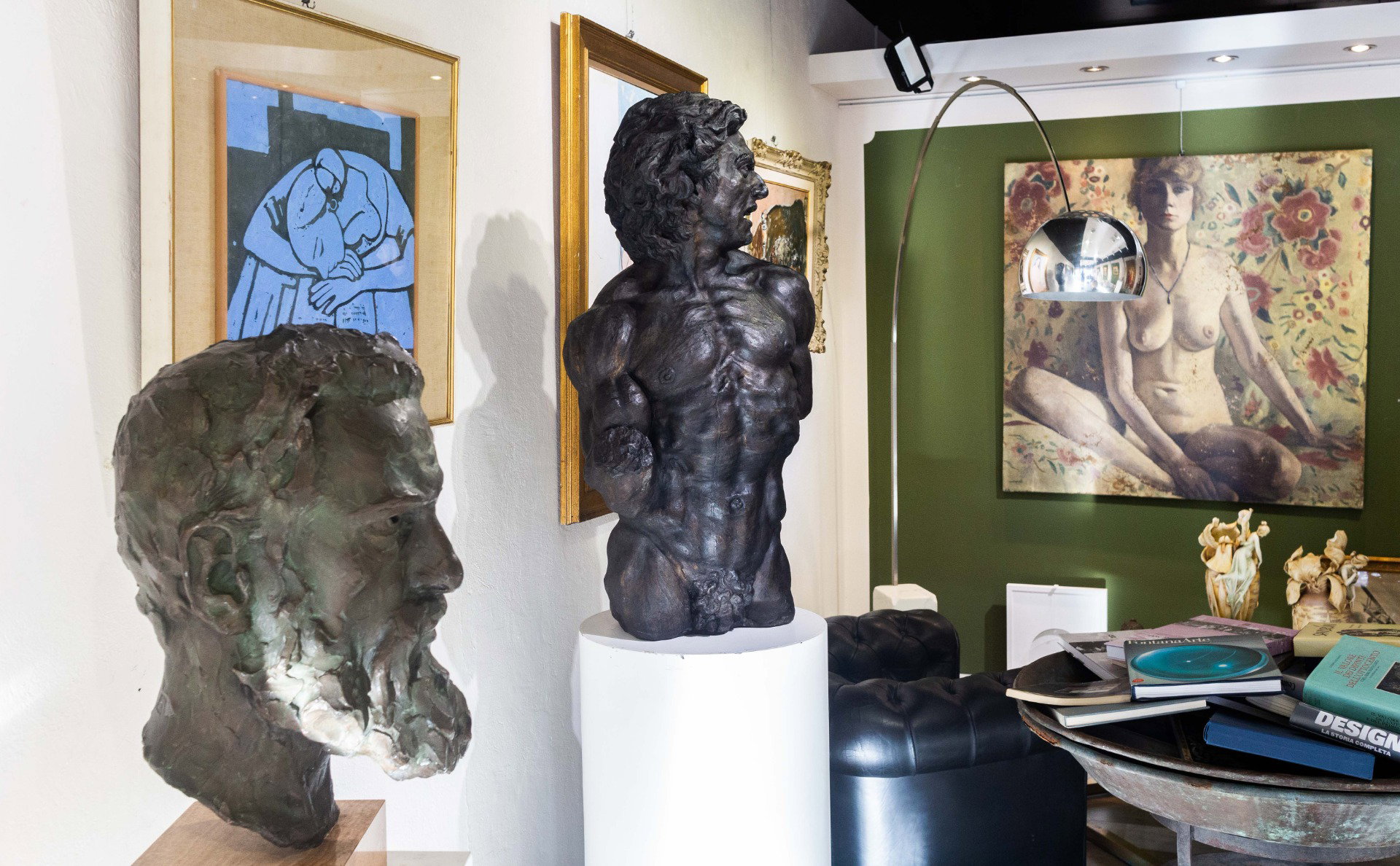
Bronze sculpture by Francesco Barbera, known as Sandrún, "Beethoven," from the 20th century.
Splendid and imposing bronze sculpture depicting one of the greatest figures of classical music, Beethoven.
Beethoven (undated).
Bronze, 55x106x42 cm.
Very good condition.
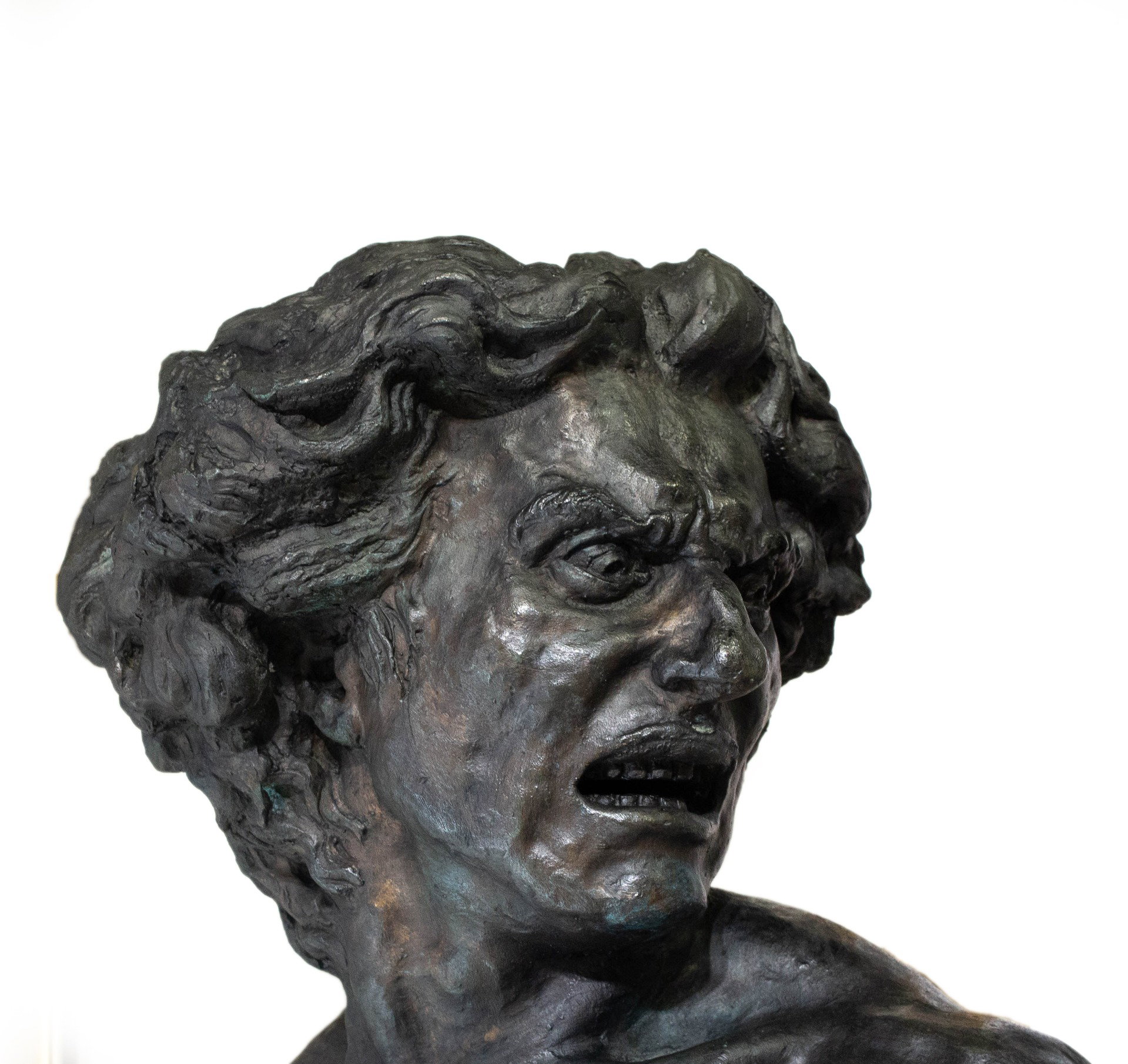
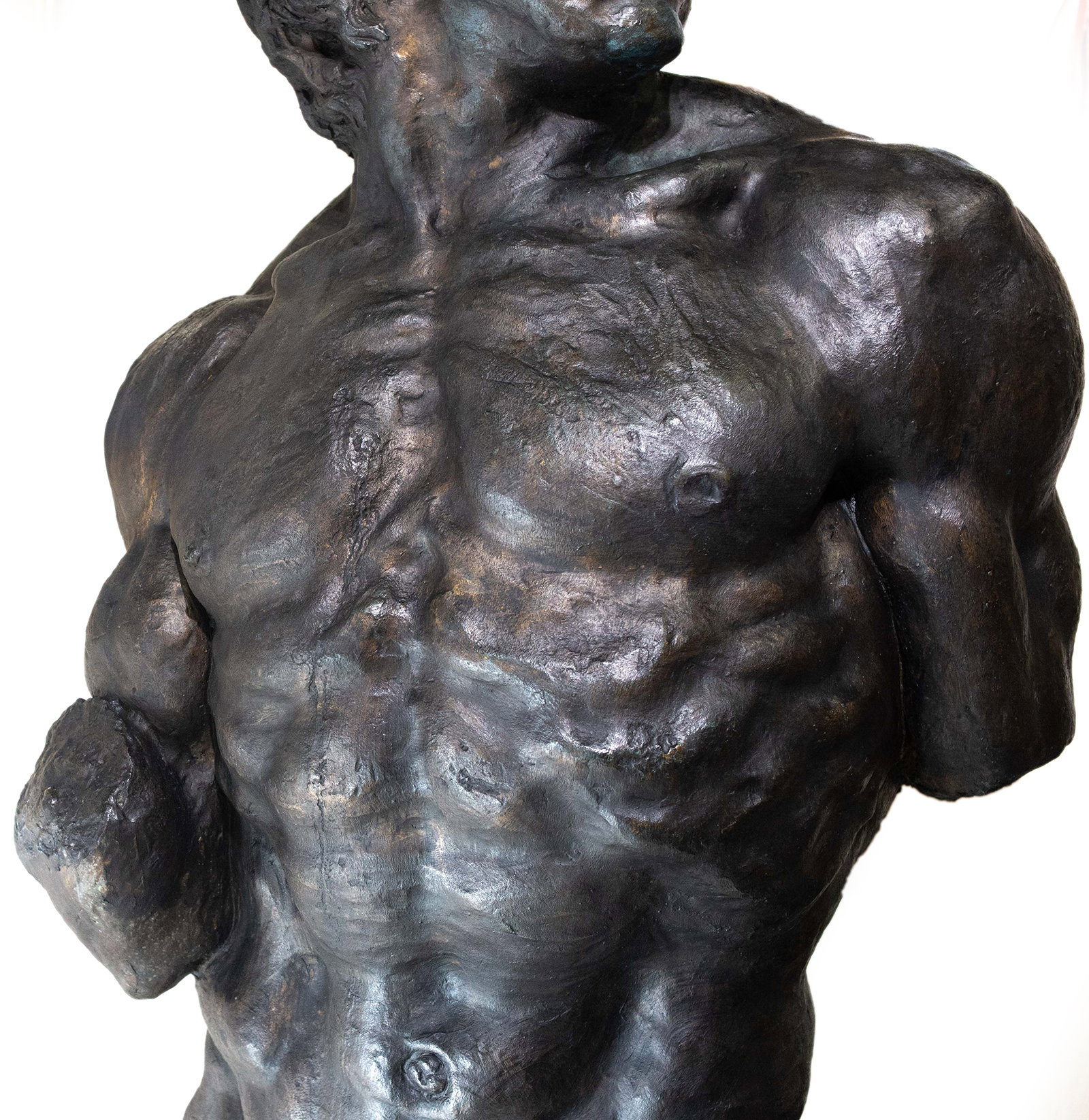
Sandrún's Michelangelism is evident in this powerful interpretation of the great Viennese musician, seen as a Homeric hero. The anatomical perfection, strained in the effort of artistic creativity, seems to focus on the contracted features of the face. The open mouth, the intense gaze, the Medusa-like hair: everything speaks of an exceptional, superhuman man who, above all - because of his lyrical and beautiful nudity - is true in the Sandronian sense of the term.
Measurements: 55x106x42 cm.
Biography
Franceschino Barbera was born in Sordevolo on March 10, 1927. He is known as Sandrún (Sandrone), the battle name he adopted during the partisan war and with which he would sign almost all his works.
[...] At the end of the war, he began his artistic adventure as a self-taught artist.
Turin Futurism appeared in the Biella area with the creation of the Civic Museum of Biella: local exponents include Nicola Mosso, Franco Costa, and Luigi Pralavorio. However, it met with the predictable hostility of an environment in which tradition continued to have a weight that had to be reckoned with. "Sandrún" breathed this "air" deeply, but he would continue to follow his own path, overcoming all the pressures from colleagues who wanted to "school" him and bend him to the canons of dominant taste. Of course, he would create the monument to the partisans, allow the terracotta multiplication of Lenin's face, and model Stalin with unusual proportions, but he would always remain stubbornly anchored in the severe French nineteenth-century sculptural tradition, made up of "hatchet strokes," strong, "heroic," dynamic lines, and, nevertheless, not without its own originality. From that admittedly heavy, "absolutist" climate, a very precise concept would remain with him, like a second skin: man at the center of his creative impulses and his works.