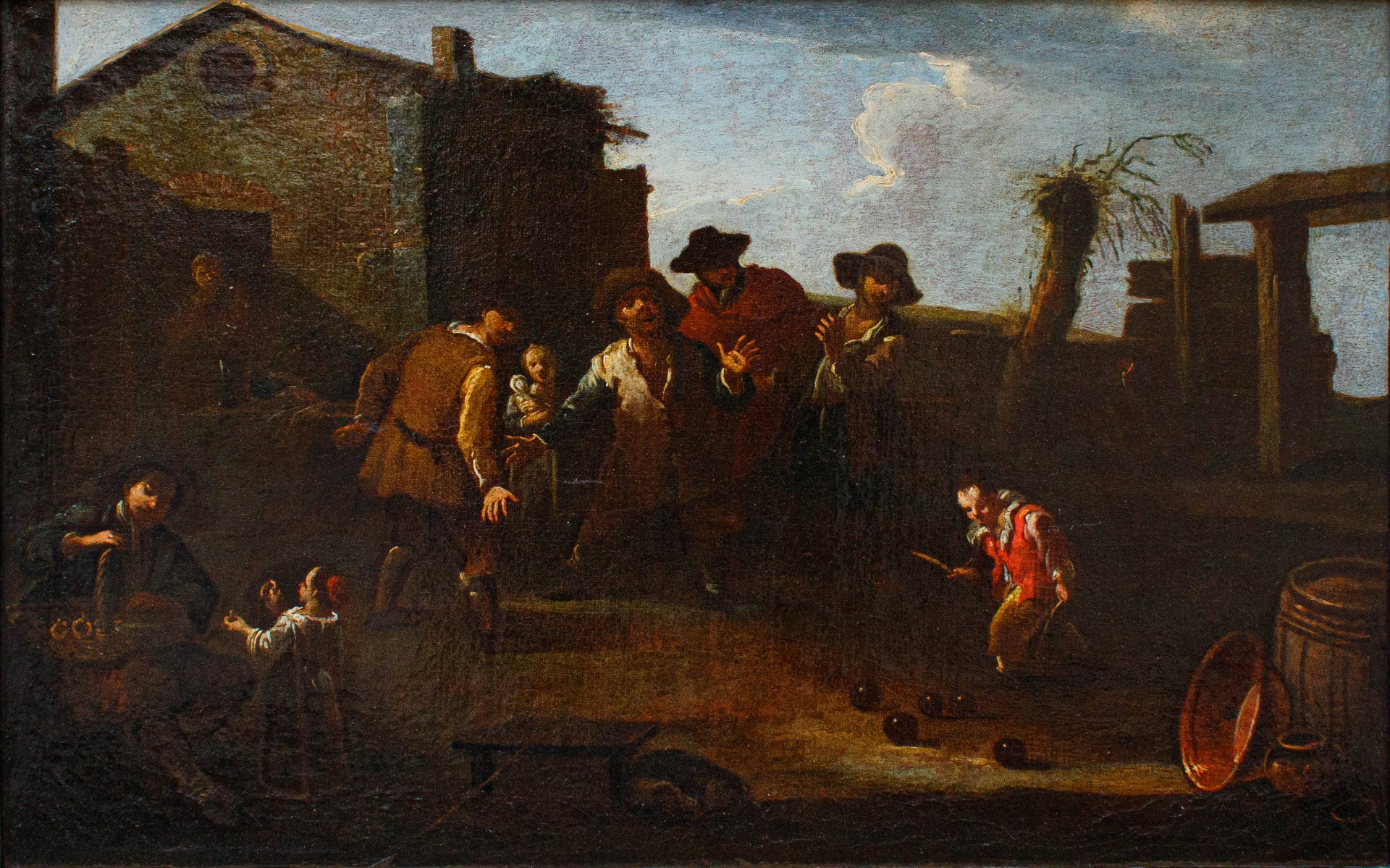
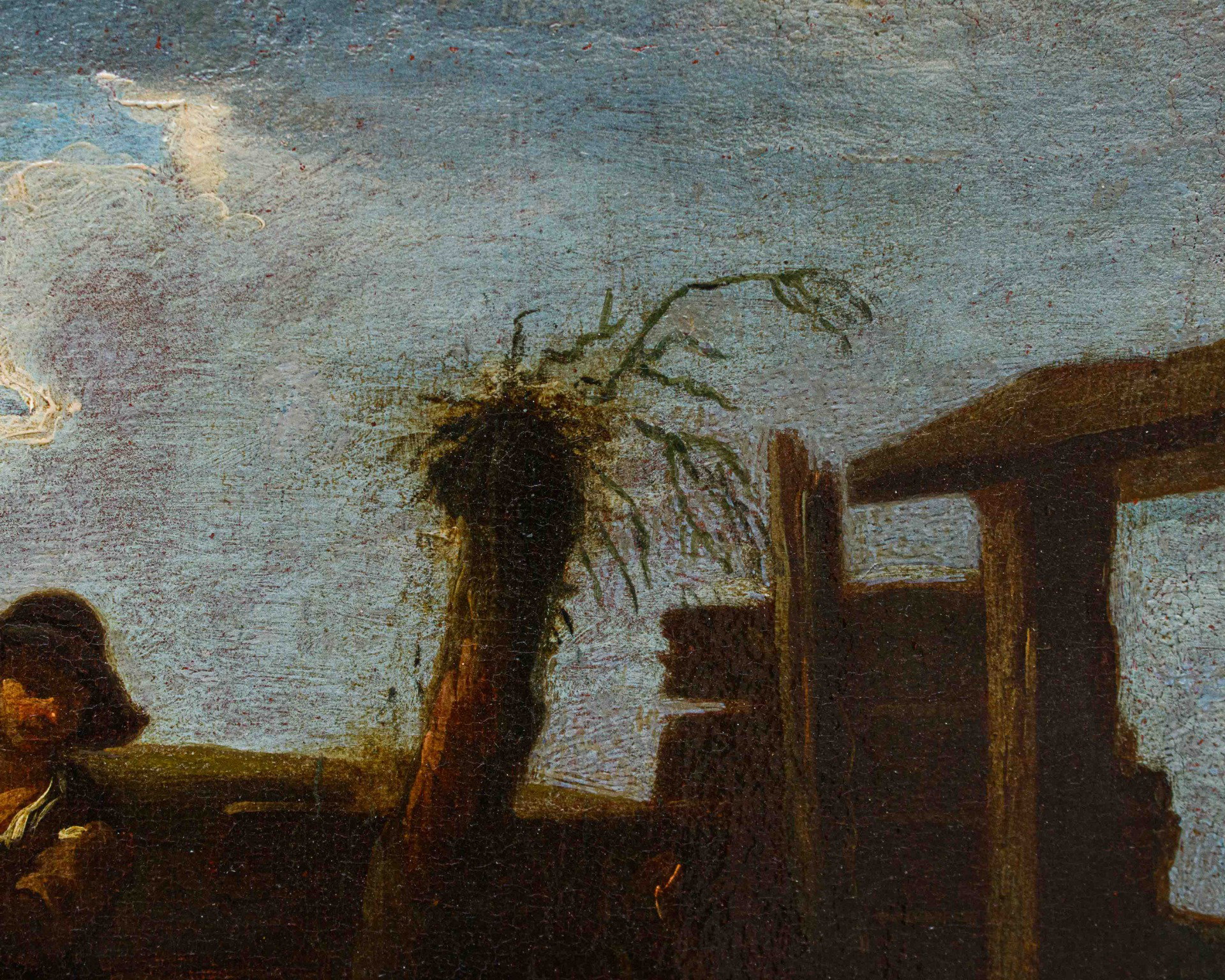
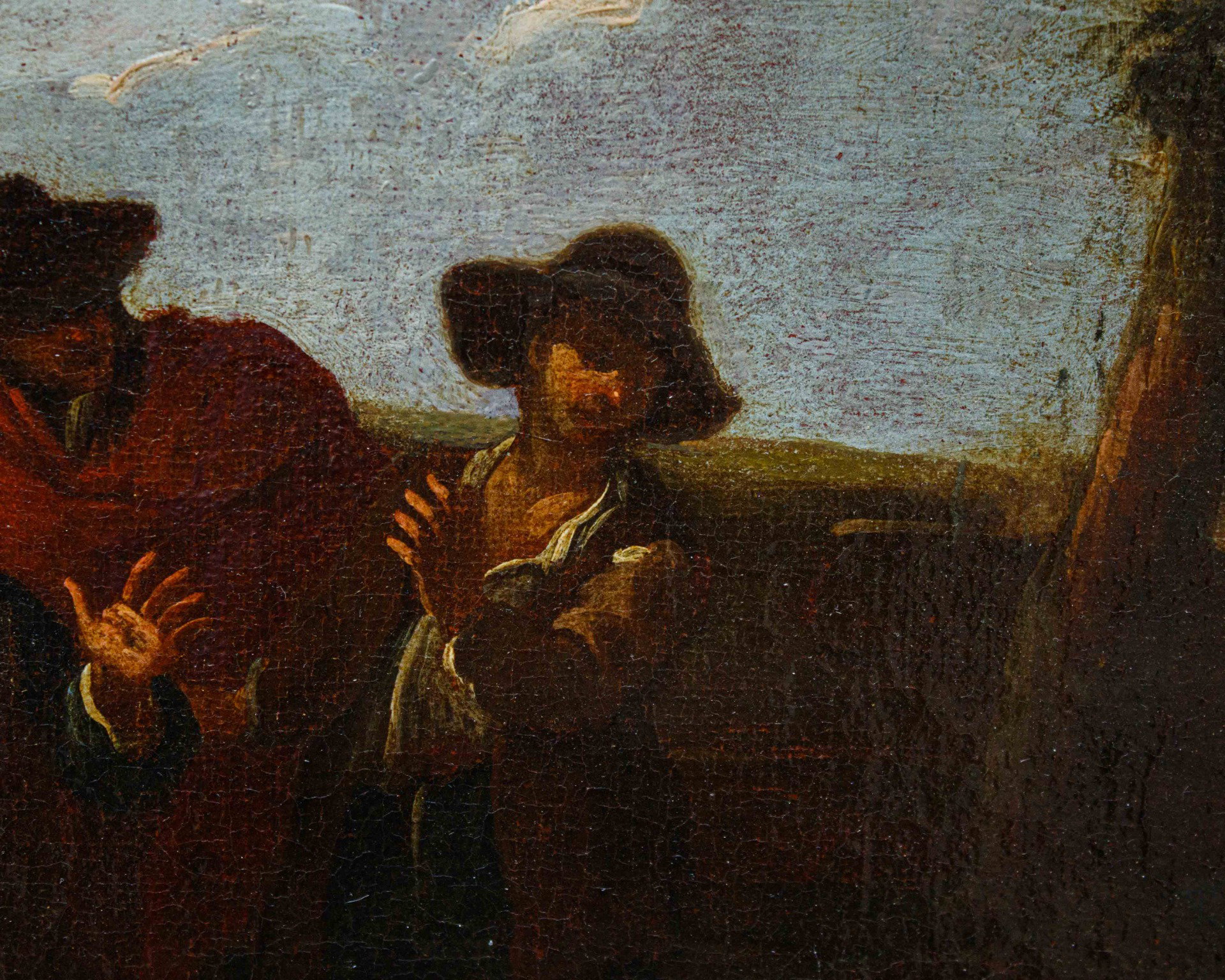
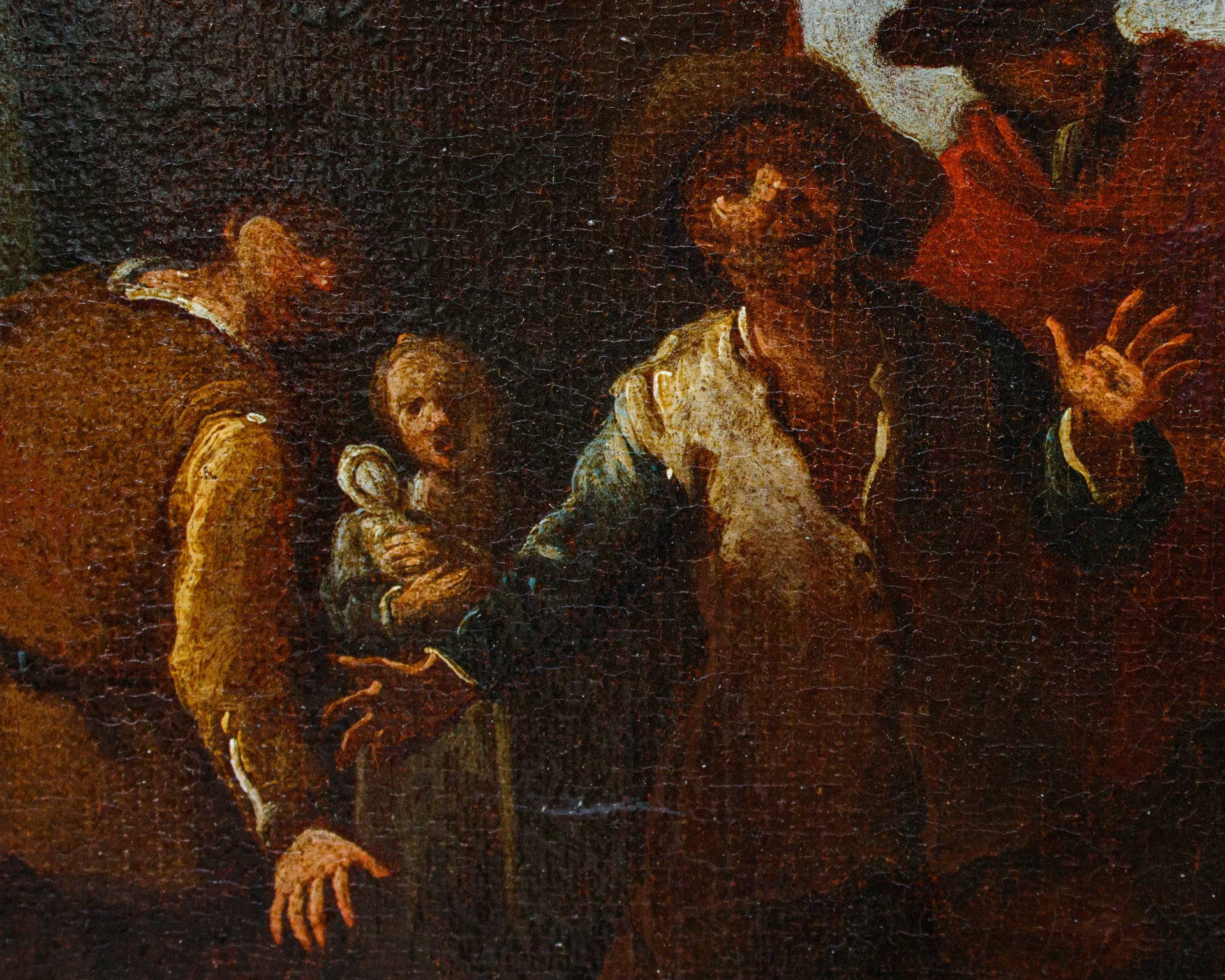
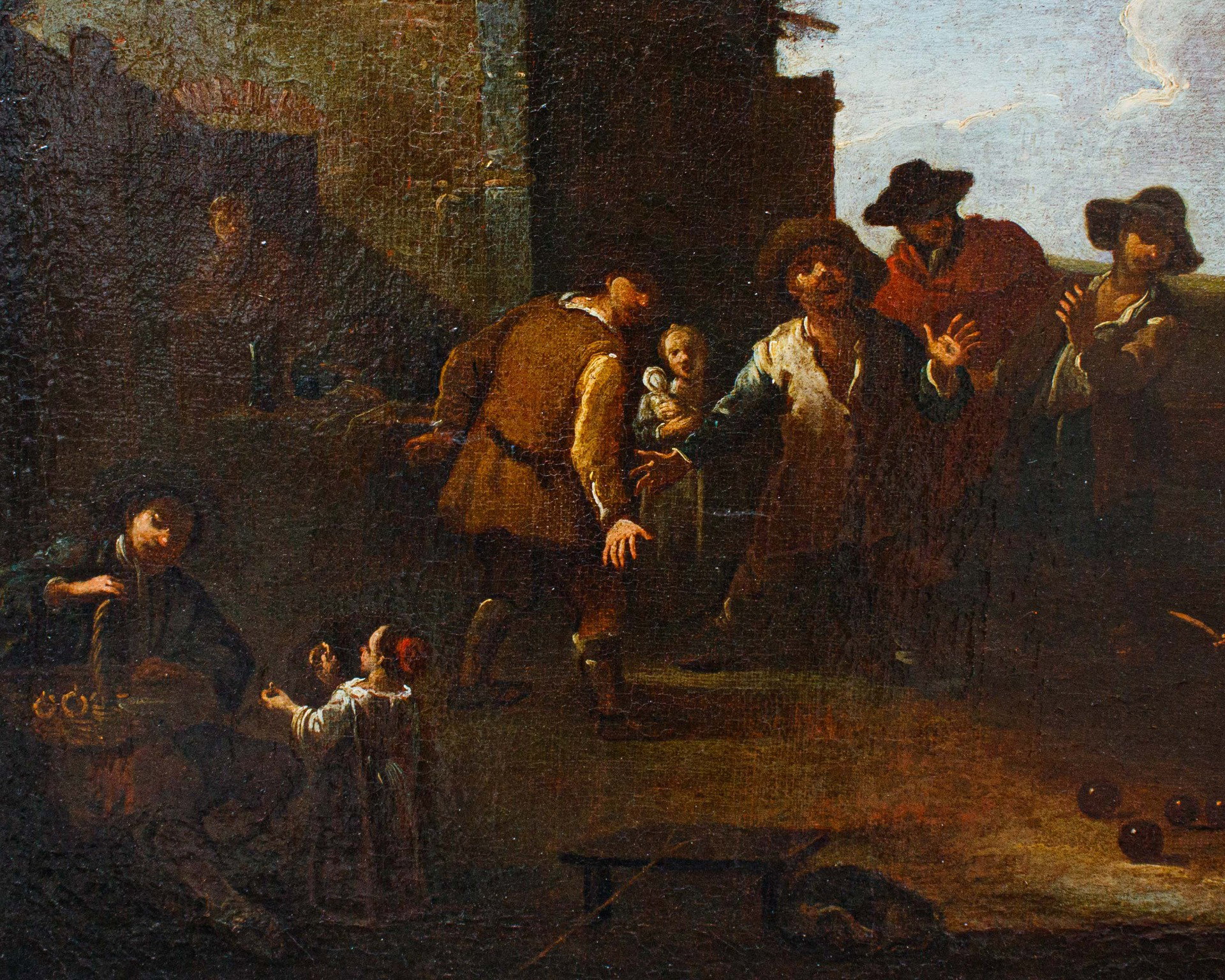
Domenico Olivero (1679 – 1755), Game of Bowls
Description:
Domenico Olivero (Turin, August 1, 1679 – January 13, 1755)
Game of Bowls
Oil on canvas, 43 x 65 cm
With frame, 54.5 x 76 cm
Expertise of Prof. Alberto Crispo
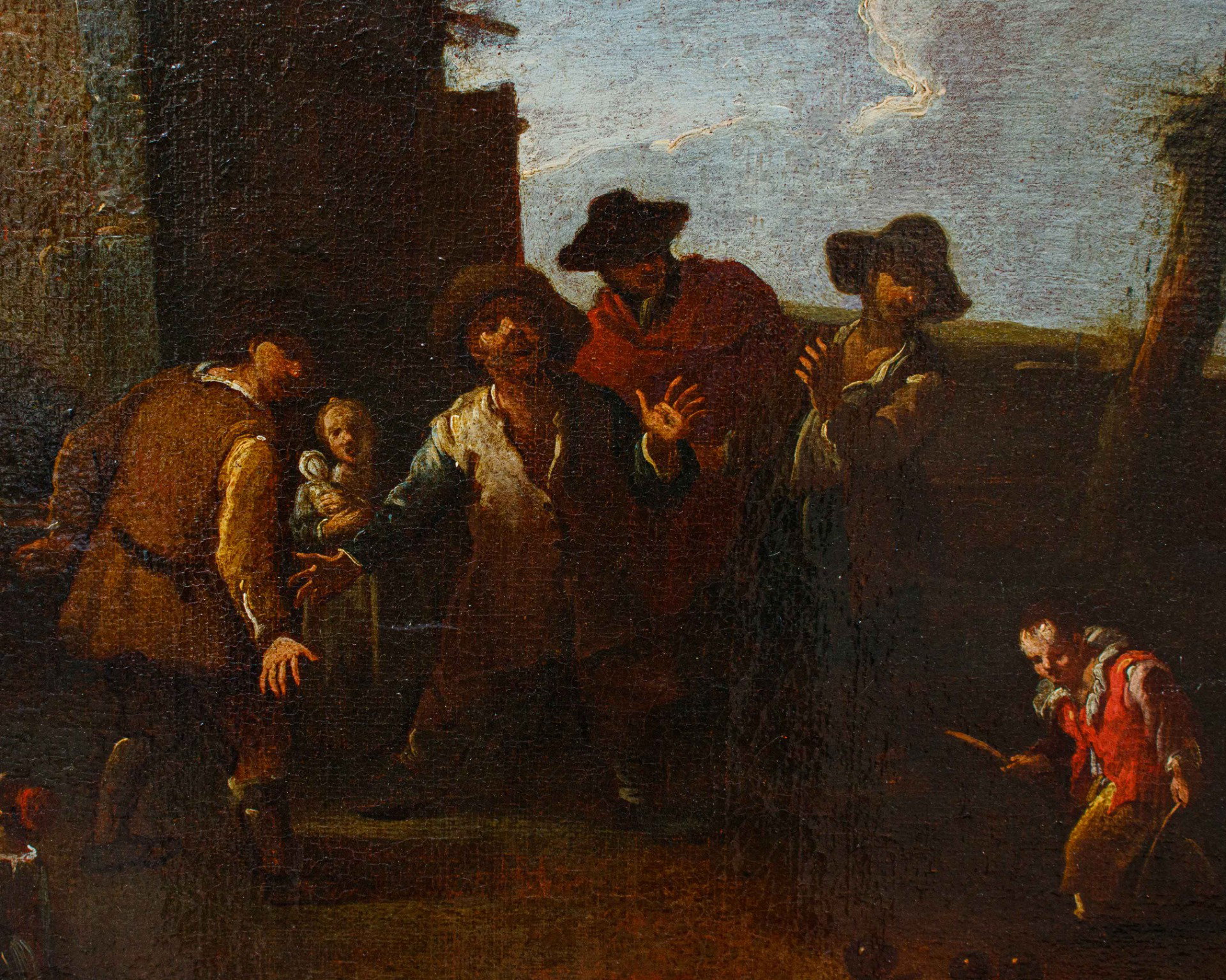
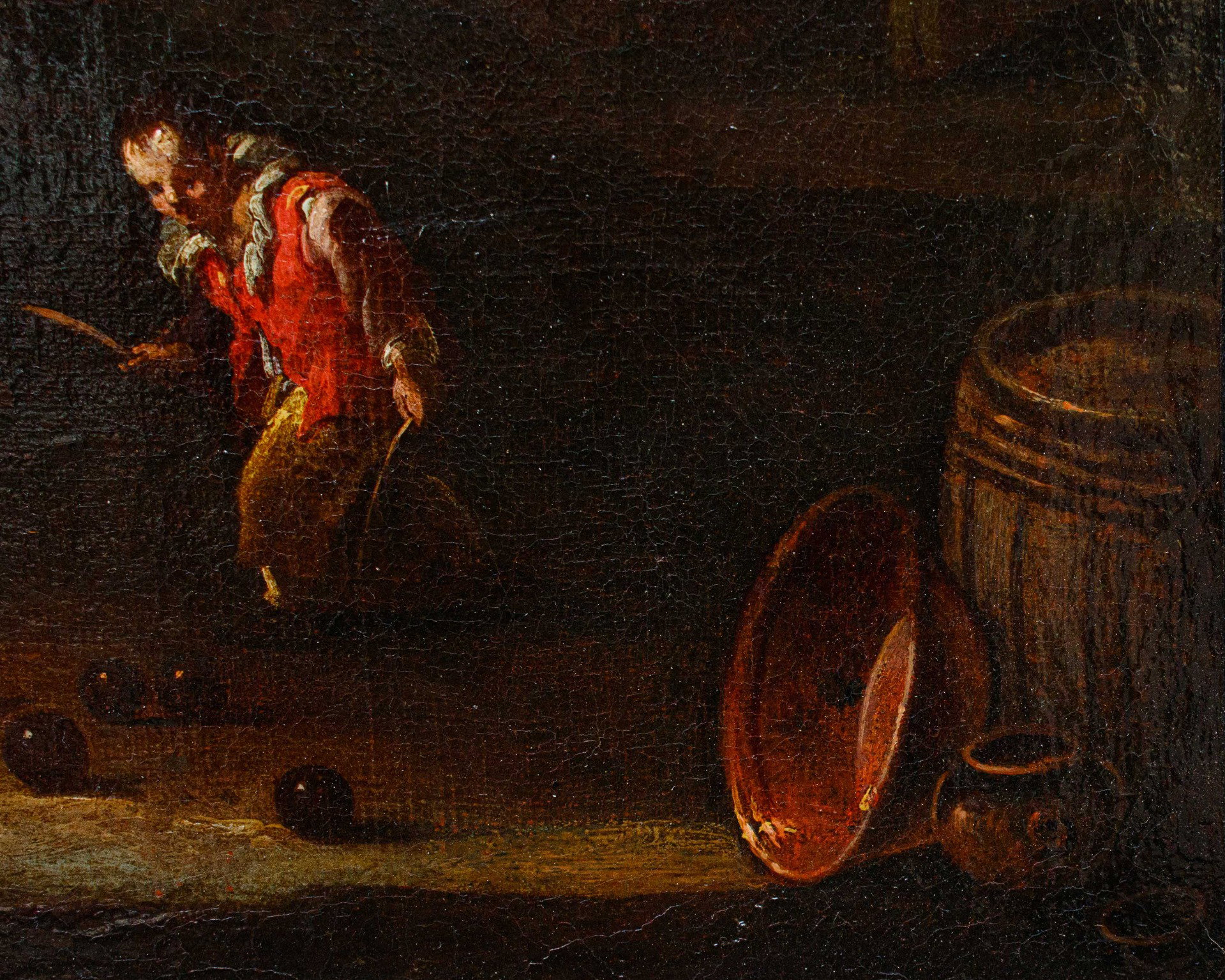
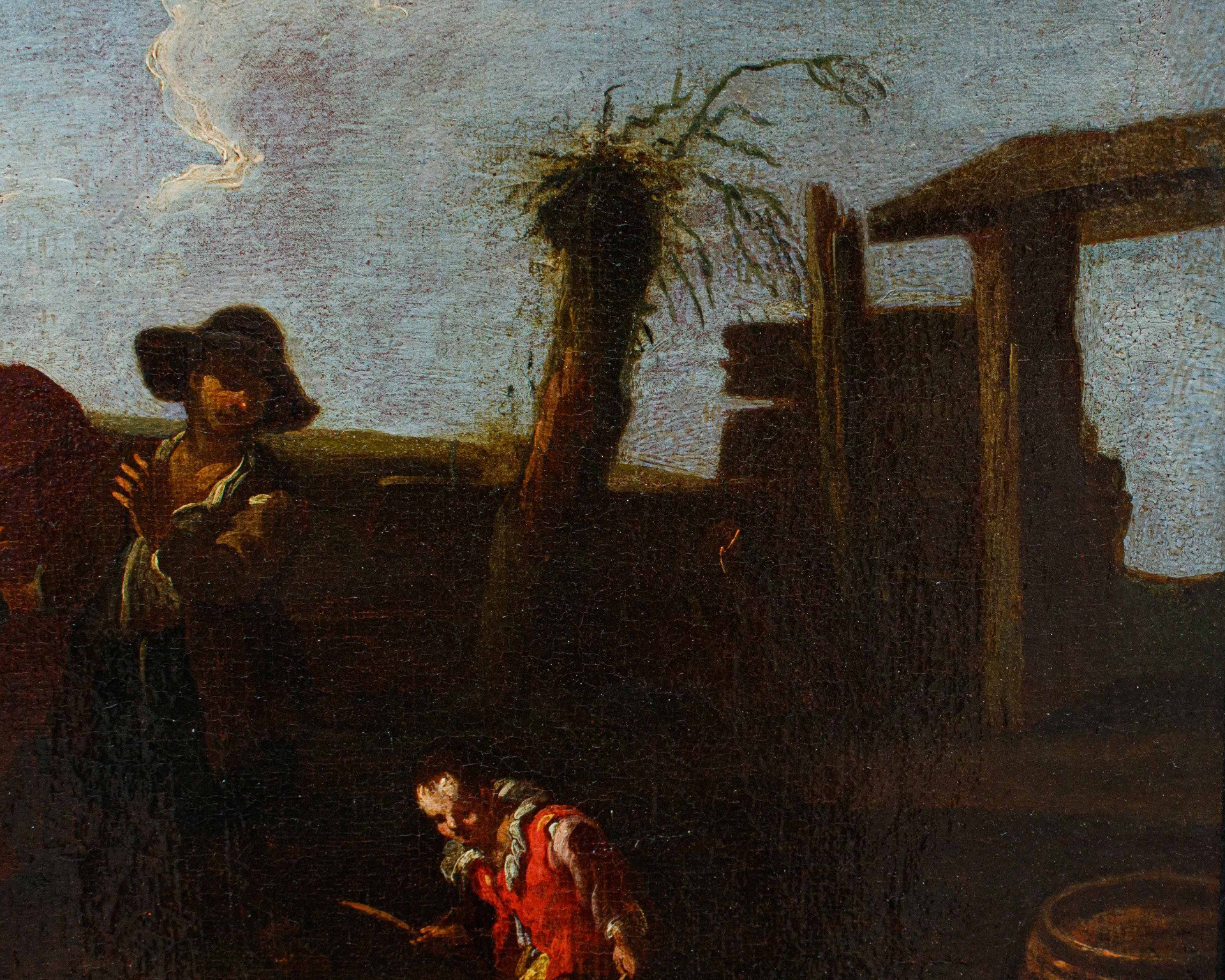
The painting here illustrated depicts peasants playing bowls near a farmhouse, while one of them offers sweets to a little girl. The canvas, in my opinion, can be attributed to the hand of Pietro Domenico Olivero (Turin, August 1, 1679 – January 13, 1755), as revealed by comparisons with other works by the artist, such as the Peasant Feast formerly at the Gilberto Zabert Gallery in Turin, where we find a very similar layout, with the figures crowded near the building, located on the left, and some household goods stacked on the right, including a copper cauldron almost identical to the one outlined in our painting. But see also other similar subjects painted by the Turin artist, such as the Game of Bowls formerly at the Cantore Gallery in Modena or the other version on the Genoese market in 2019, which, although radically different in compositional terms, confirm the painter's interest in playful themes and manifest the same ways of delineating the characters, with synthetic and robust brushstrokes. The artist was born in Turin, in the parish of San Tommaso, on August 1, 1679, to Giovanna and Francesco, a carver by profession. He trained in the workshop of the painter and architect Melchiorre Baldassarre Bianco. He was appreciated by Vittorio Amedeo II of Savoy, who commissioned paintings for the Venaria Reale (1714), for the Royal Palace of Turin (1716), and for the castle of Rivoli (1724), as well as by his ministers Pietro Mellarède and Carlo Vincenzo Ferrero di Roasio, Marquis d'Ormea, whose collections included many works by the painter. The success on the Turin art scene earned him the election as prior of the Academy of San Luca of Turin (1726). In 1731 he painted the eleven canvases with Stories of Franciscan saints in the sacristy of the church of San Tommaso in Turin, while in 1734 he created the Wedding at Cana for the sanctuary of Oropa. The Savoy commissions continued with the ten canvases made for the castle of Agliè (1737), the decoration of the third room of the new Archives in the Royal Palace of Turin (1739-41), and the thirty or so works for the Stupinigi hunting lodge (1748-51). The painter also ventured into the design of stage designs for the Teatro Regio of Turin (1745-46). He made his will on November 15, 1754, and died in his native city on January 13, 1755. Olivero's genre scenes, such as the one commented here, reveal his attention to Flemish painting, in particular by David Teniers the Younger, Peter Mauritz Bolckman, Theodor Helmbreker, and Cornelis de Wael, as well as to the Roman Bamboccianti, such as Pieter van Laer, Michelangelo Cerquozzi, and Jan Miel. His students and continuers of his style were Angela Maria Pittetti and Giovanni Michele Graneri.
With Ars Antiqua it is possible to defer all amounts up to € 7,500 at ZERO RATE, for a total of 15 INSTALLMENTS.
Ex. Tot. € 4,500 = Monthly installment € 300 for 15 months.
Ex. Tot. € 3,600 = Monthly installment € 720 for 5 months.
For amounts exceeding € 7,500 or for a greater deferral over time (over 15 installments), we can provide a customized payment.
Contact us directly for the best quote.
LIVE TV
- SUNDAY 5:00 PM - 9:00 PM Dig.terr. 126 + 813 SKY
- Streaming on our website www.arsantiquasrl.com and on our social media Facebook and Youtube
All works offered by Ars Antiqua are sold with a certificate of authenticity in accordance with the law and a detailed study sheet.
You can see the works directly at the gallery showroom in Milan, at Via Pisacane 55 and 57.
We personally organize transport and deliveries of the works, both for Italy and abroad.