Pair of Egyptian-style lacquered and gilded wooden armchairs
Description:
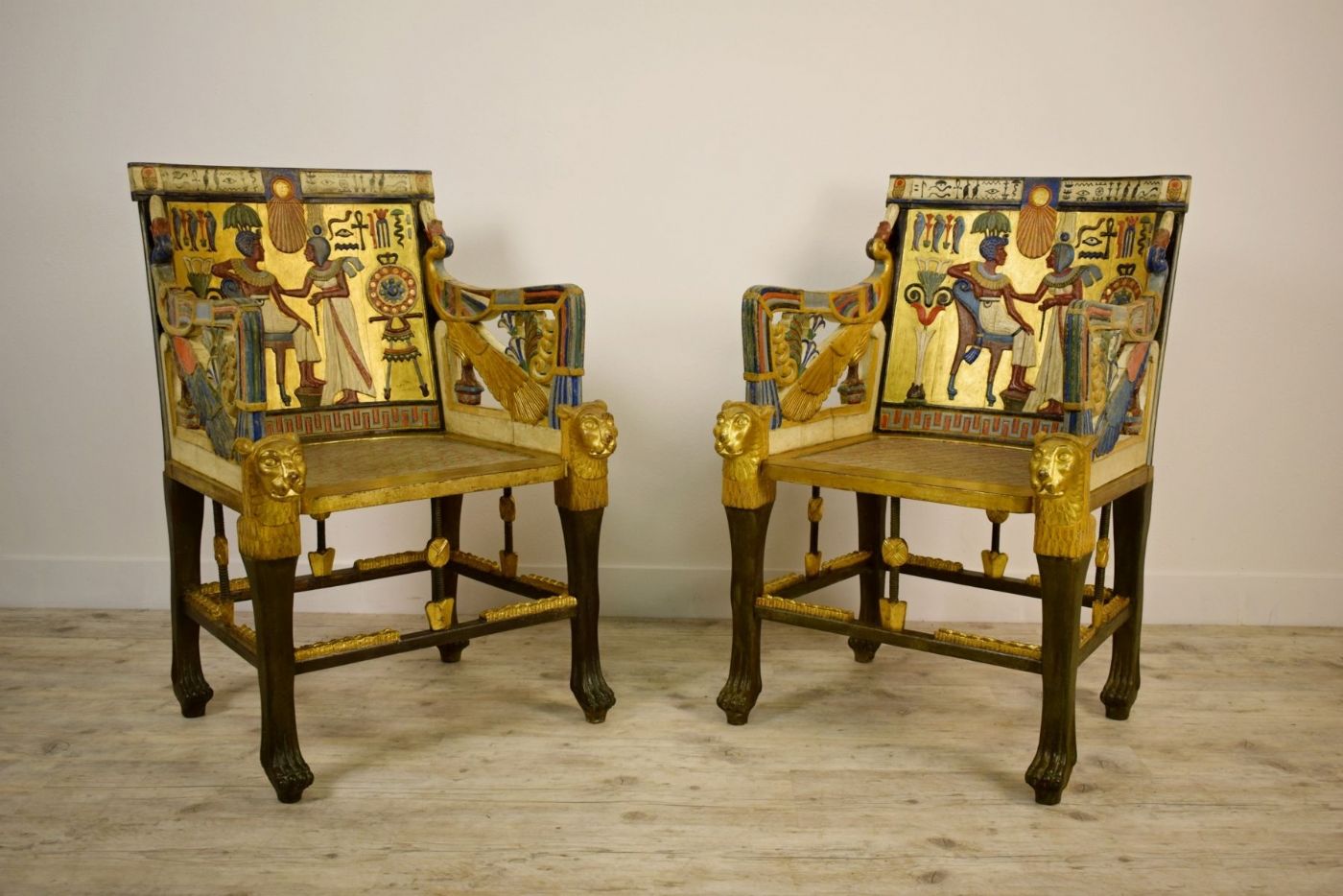
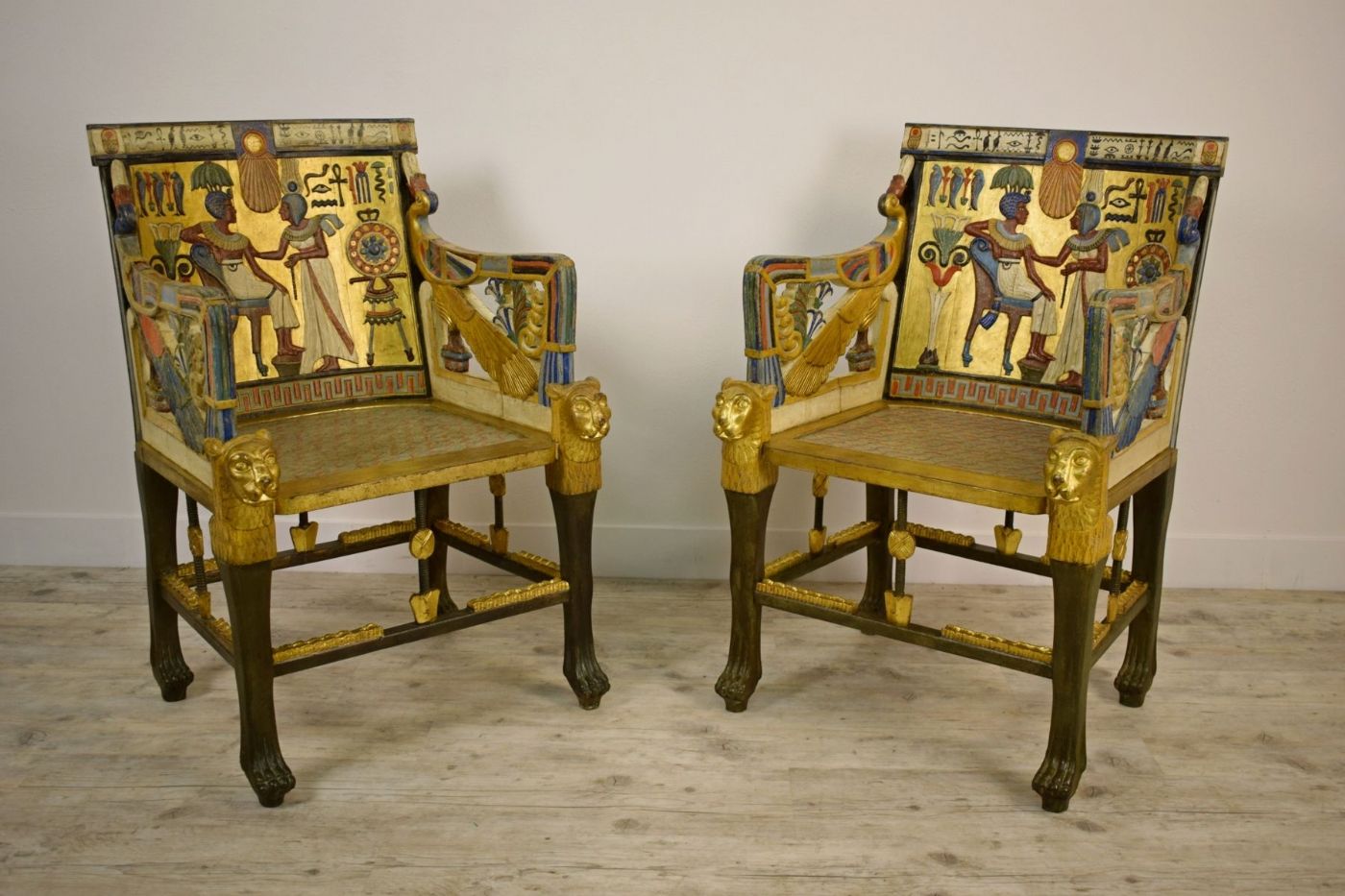
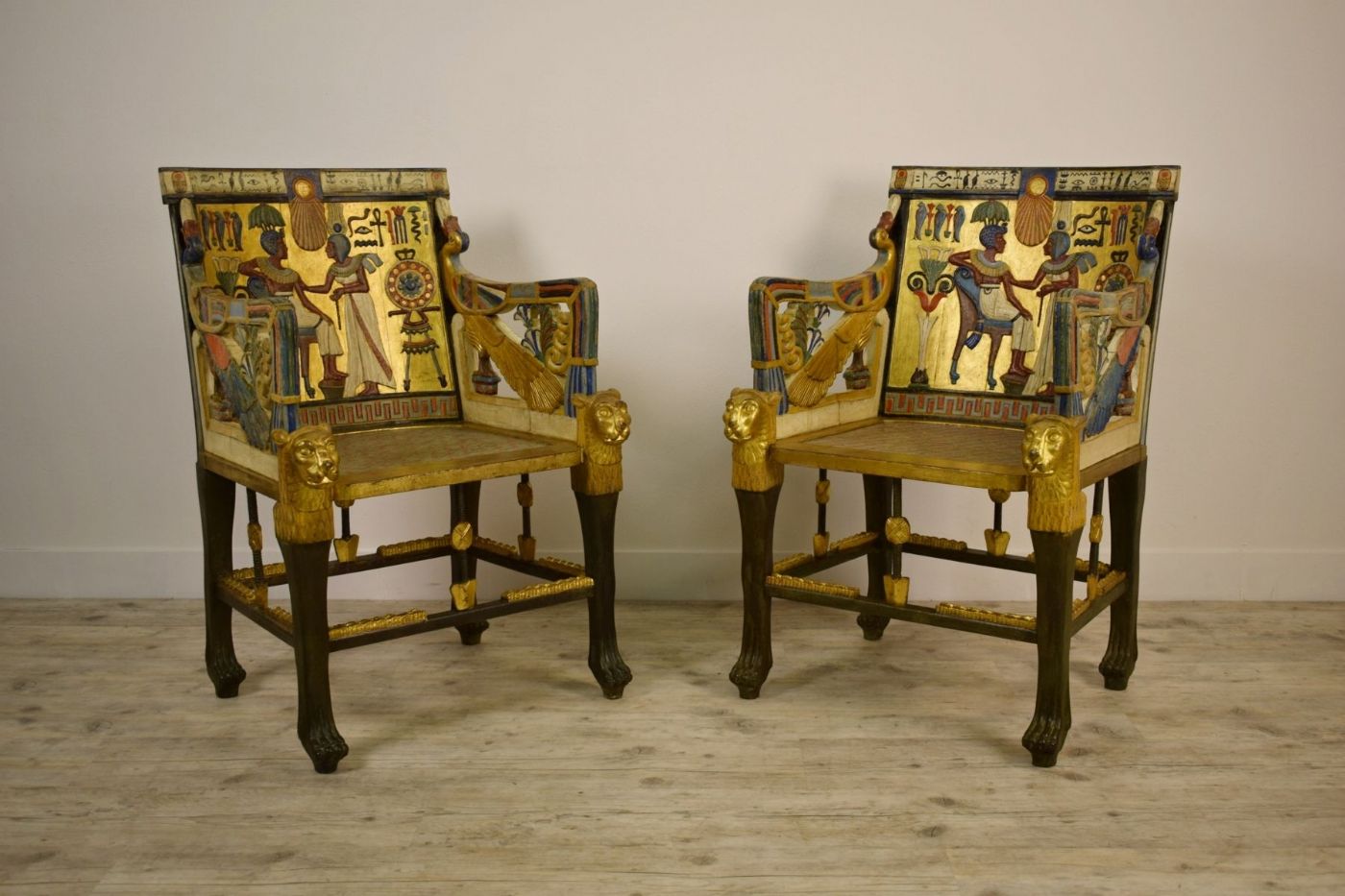
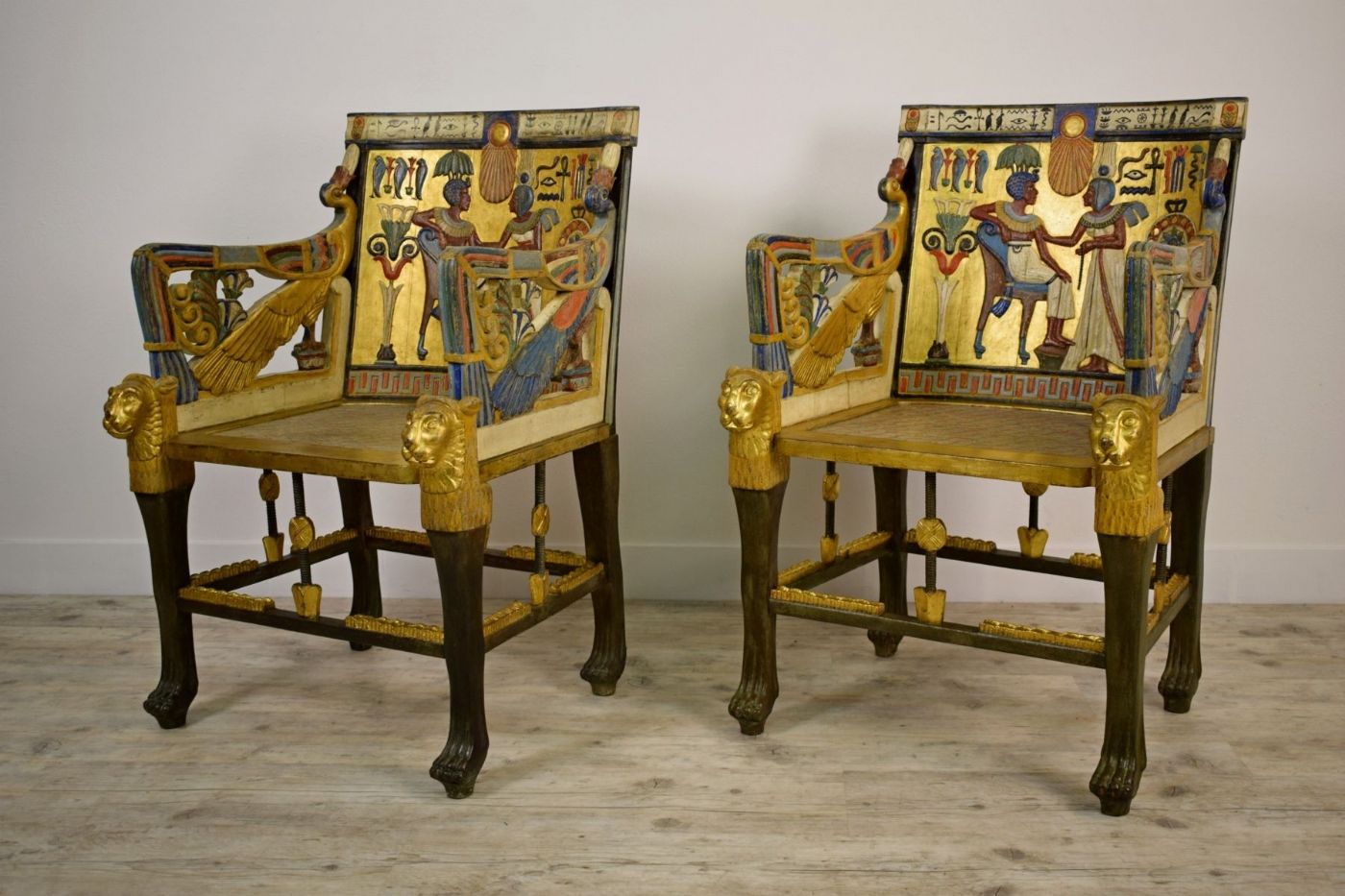
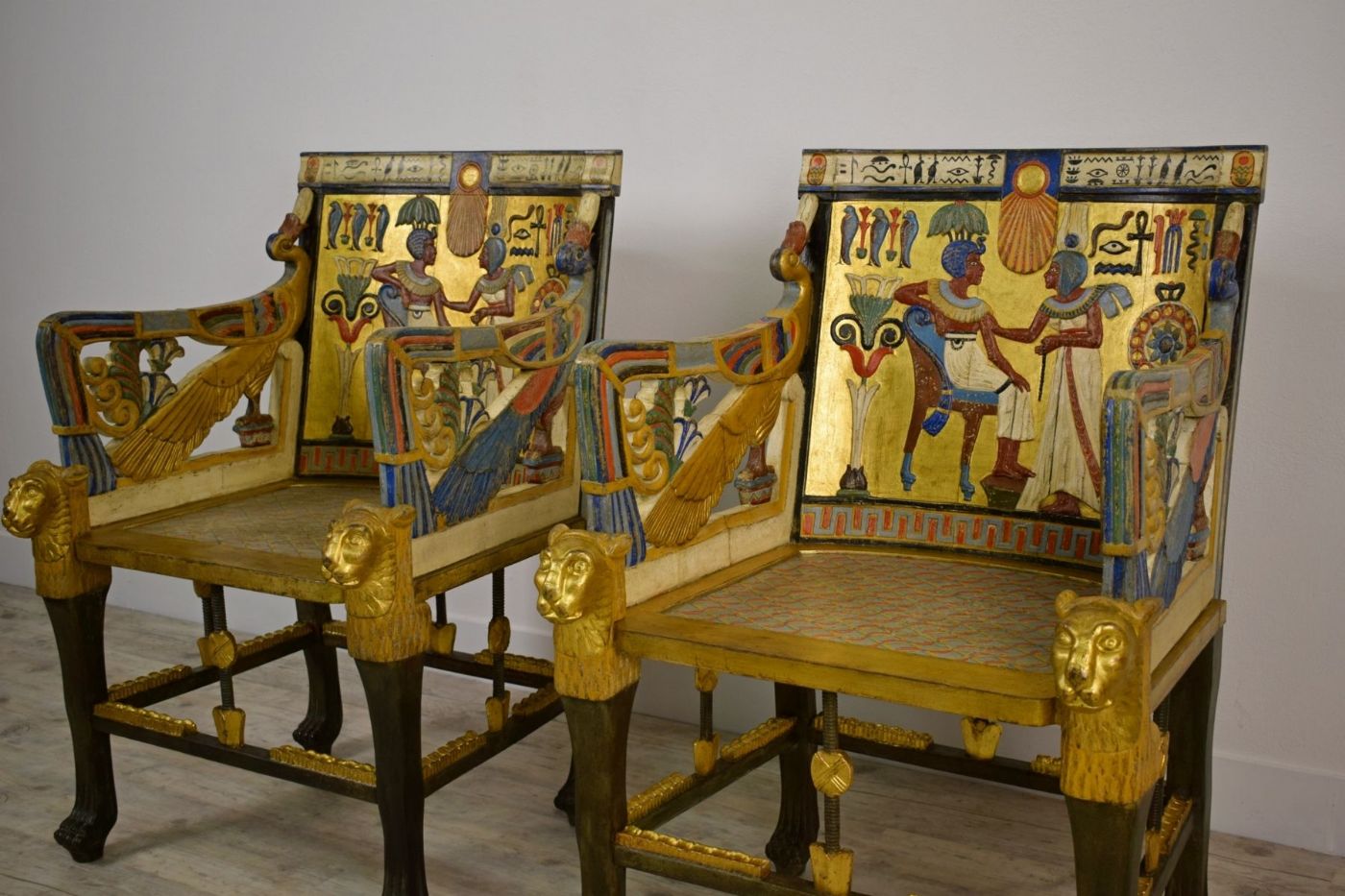
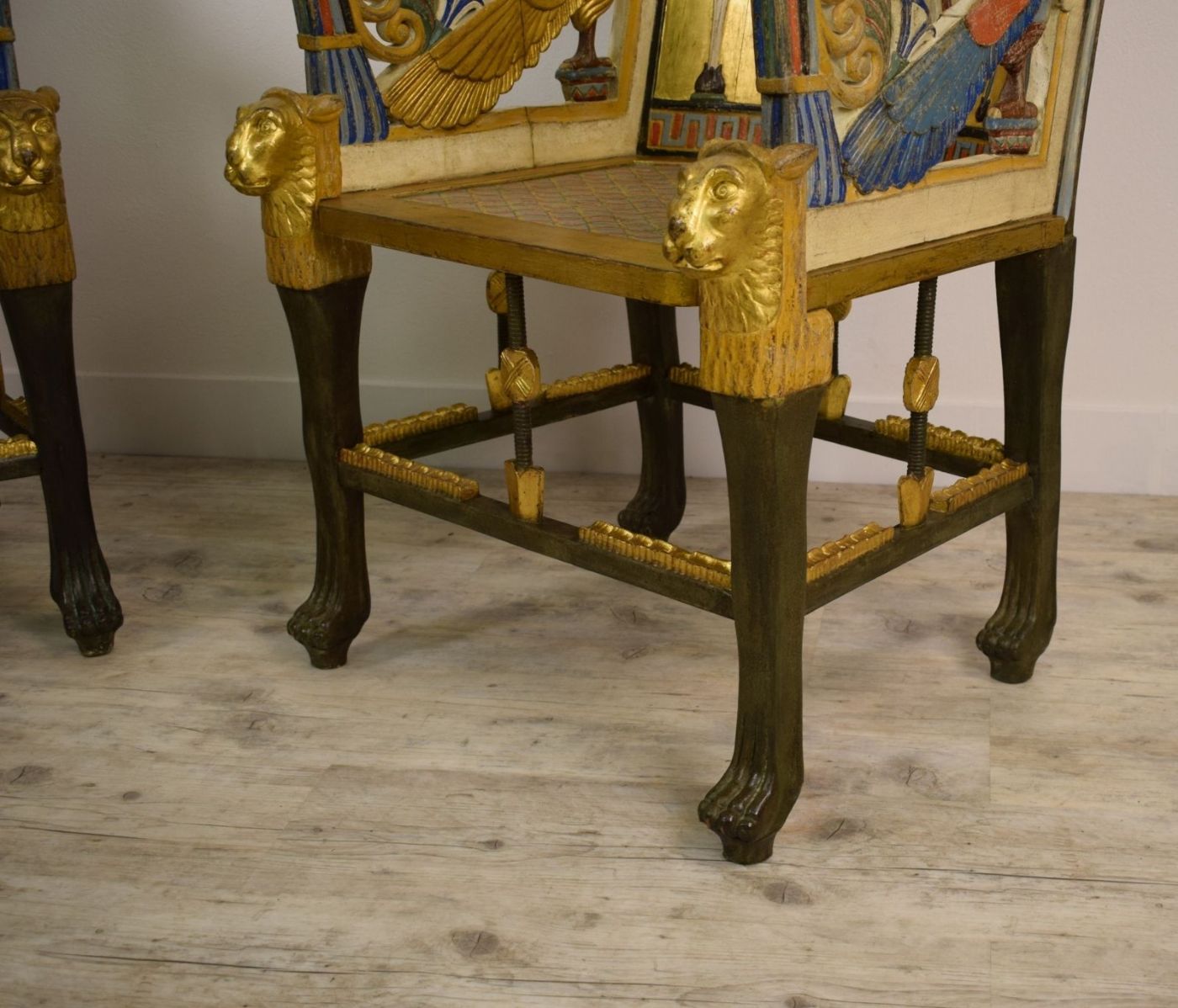
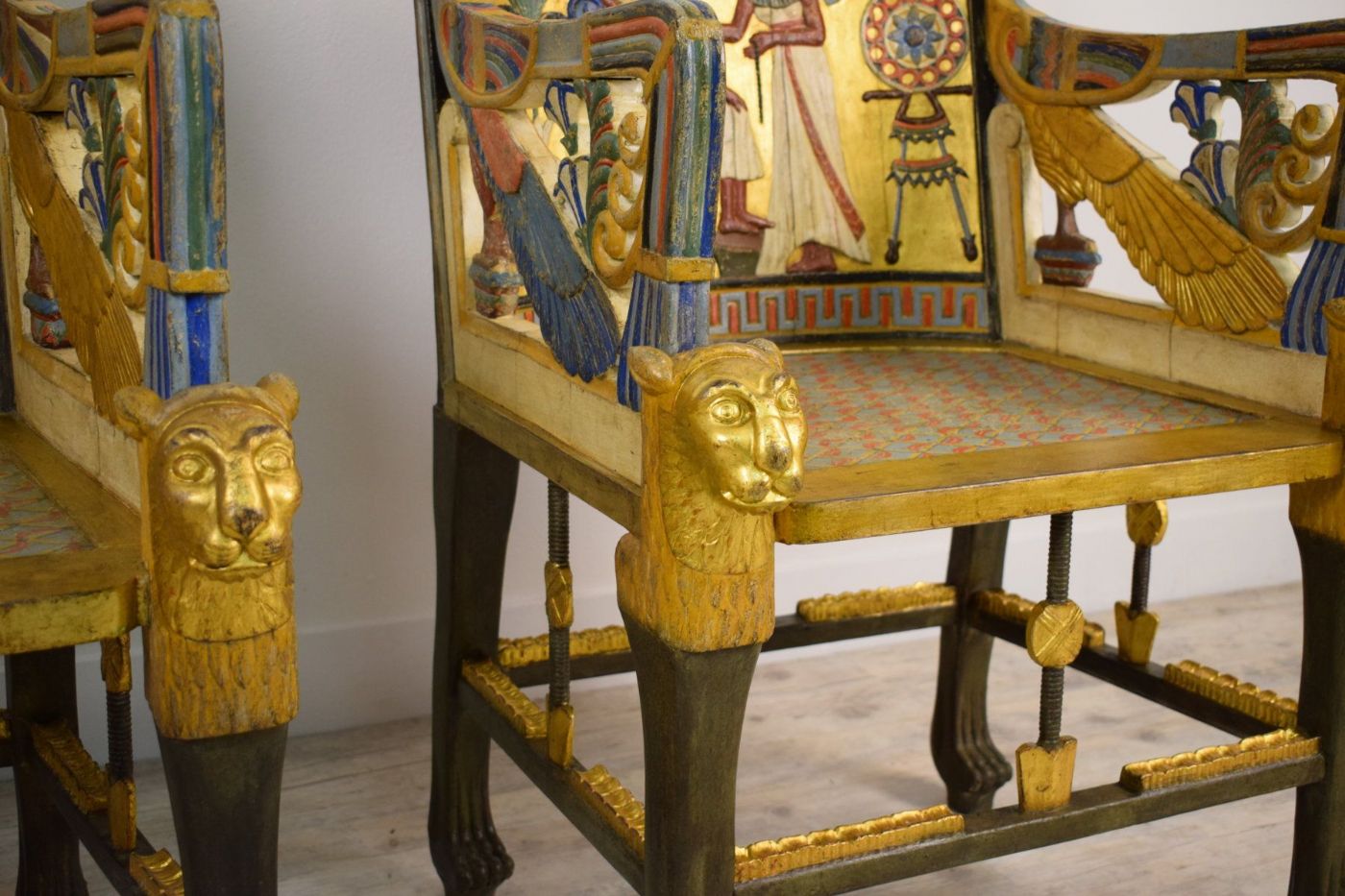
Pair of Egyptian-style lacquered and gilded wooden armchairs.
Measurements: cm H 100 x W 70 x D 55
Private negotiation
Object accompanied by a certificate of authenticity
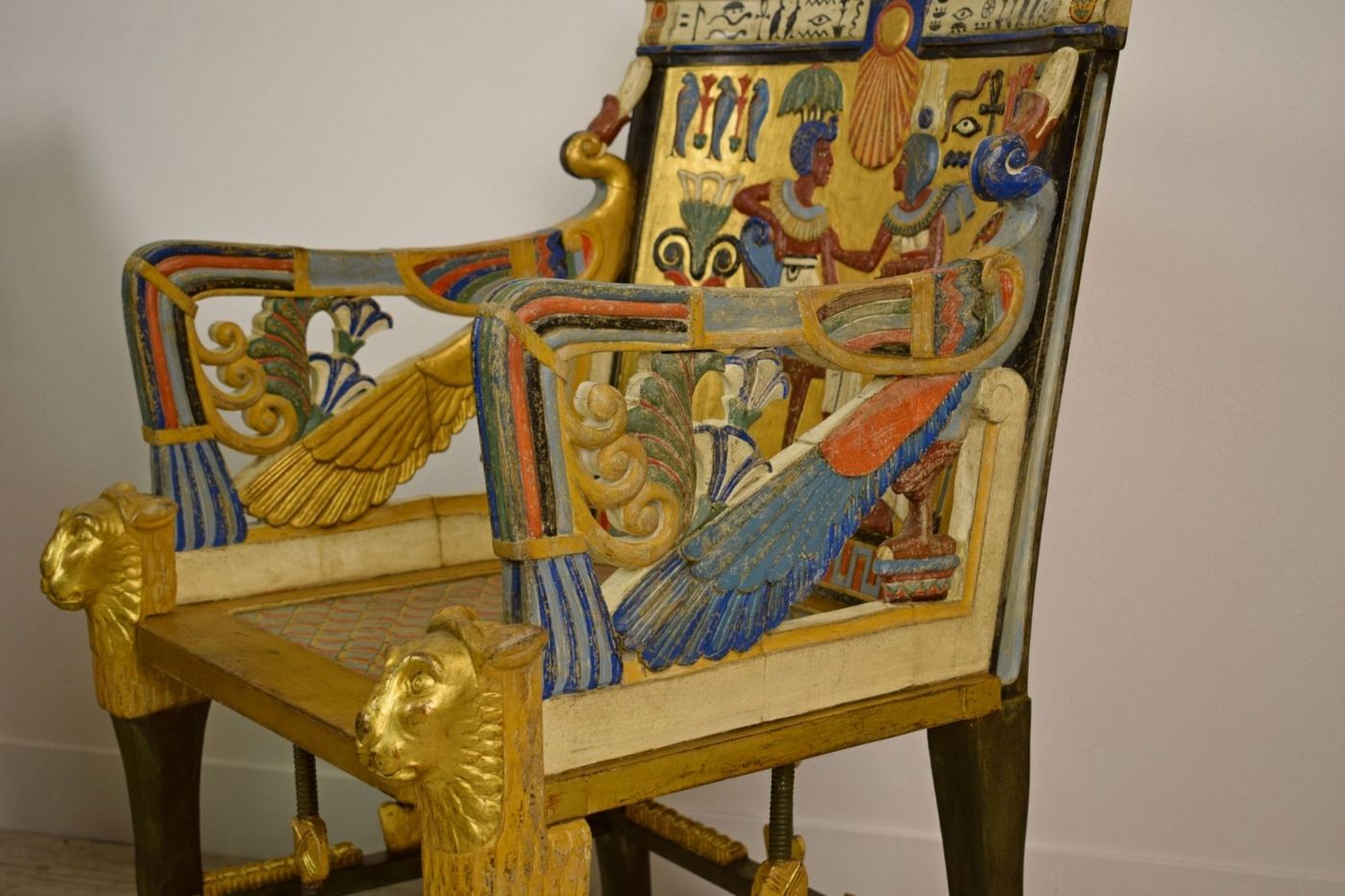
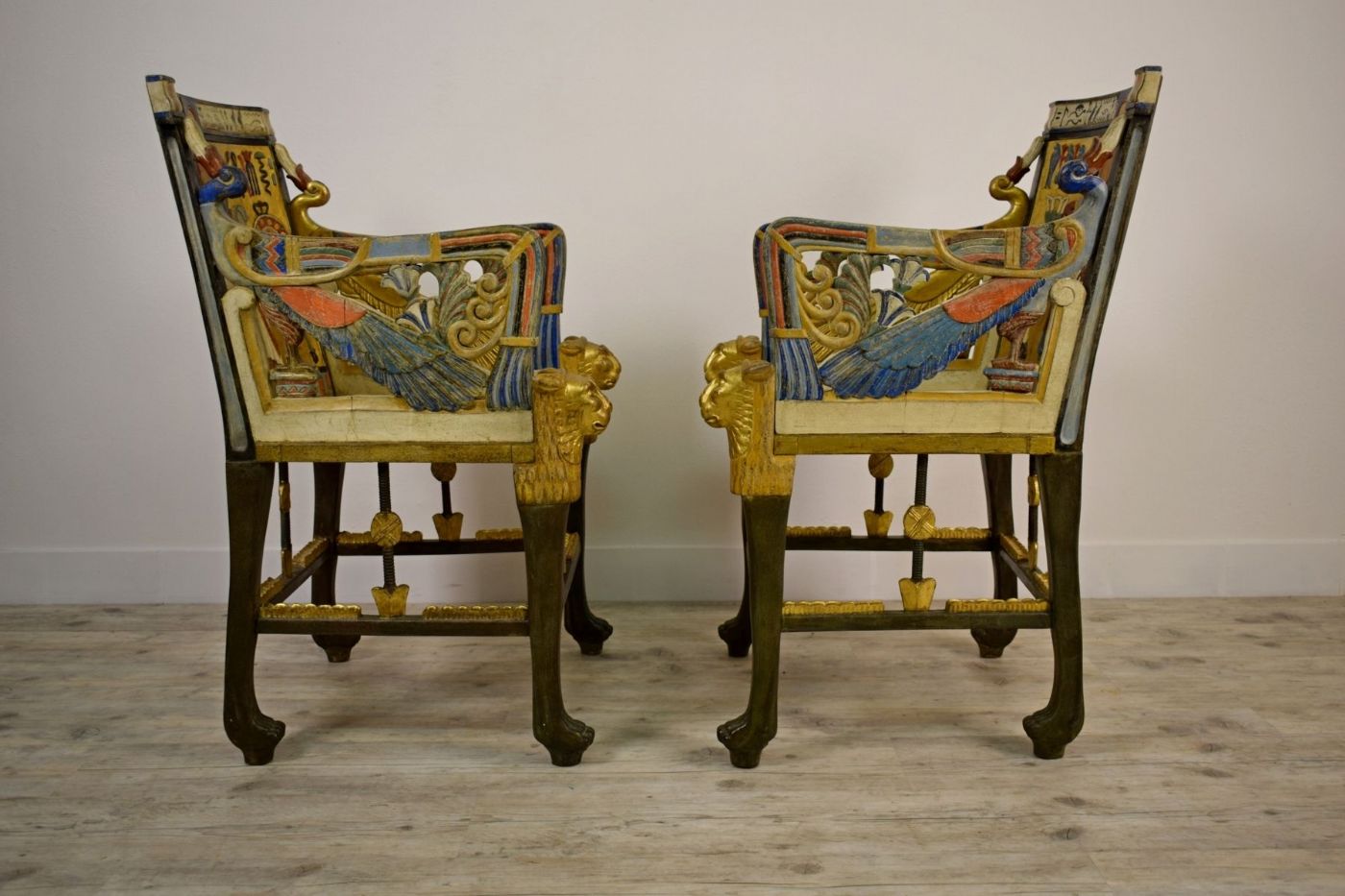
This particular pair of armchairs, made of carved, lacquered and gilded wood, is very bright and decorative. The armchairs can be placed in any furnishing context as they are very particular objects that lend themselves to being combined with both antique and contemporary styles.
They are in the Egyptian style and are inspired by the famous golden throne of the pharaoh Tutankhamun, whose tomb was discovered in the Valley of the Kings, in Egypt, in 1922 by the archaeologist Howard Carter. The discovery of certain objects in Egypt, including this throne, greatly influenced artistic taste, from fashion to architecture, to applied art, in the era of Art Deco throughout Europe.
Not many replicas of the throne are known and therefore this pair of armchairs is to be considered rare and precious, as well as very decorative and curious.
The Golden Throne of King Tutankhamun is a masterpiece of art, not only in the times of Ancient Egypt, but also in the history of art of humanity in general. A symbol of authority and prestige, the throne was built at the beginning of the reign of the pharaoh Tutankhamun in the Amarna style.
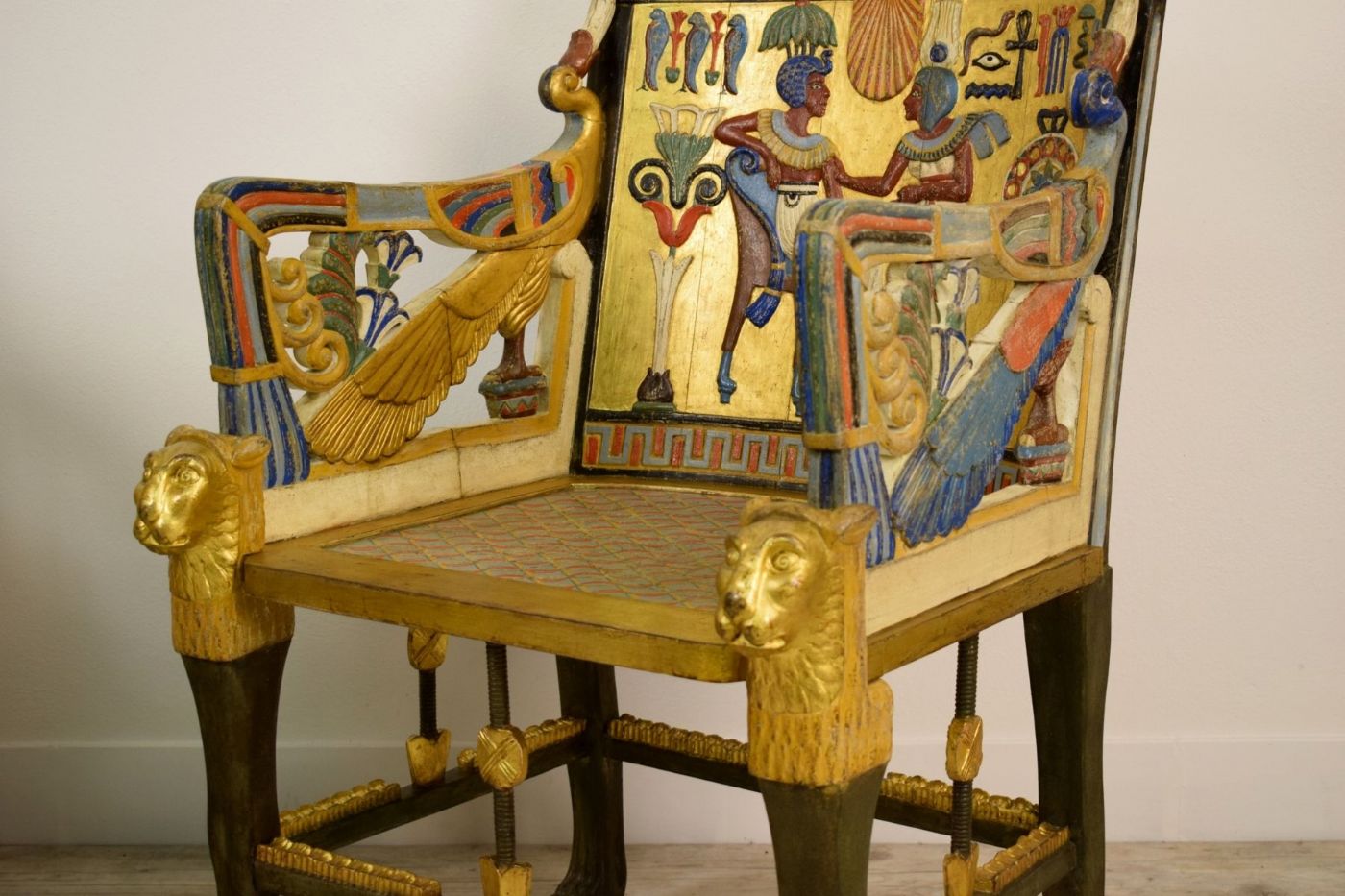
The main scene on the back of the golden throne represents Tutankhamun sitting on a throne in front of his wife Ankhesenamen, depicted while bowing and touching his shoulder, massaging the king's body with particular types of perfumed ointments. The scene is full of signs of love and affection between the royal couple, enhanced by some decorations present around: flowers and fruit are considered symbols of love and affection in ancient Egyptian art.
The king is represented with a composite crown with snakes, a solar disk and feathers. He wears a large collar that covers much of his shoulder and chest and the very long and pleated royal kilt. He rests his feet on a stool. In front of the king is his Queen and wife Ankhesenamen wearing a composite crown with two feathers, a solar disk and two horns. She has a wig and her dress is made of silver.
The decorations present on the rest of the throne are part of a very specific iconographic program that the pharaoh wanted to underline his control of Upper Egypt (represented by the lotus plant) and Lower Egypt (its symbol is the papyrus plant). The wings that decorate the armrests personify the union of the territories.
The lion heads, present next to the seat, and the lion paws with which the four legs of the throne end, are intended to recall the ferocity and power of the king. Since lions were believed to live on the edge of the desert, they are also considered the guardians of the eastern and western horizons, the places of sunrise and sunset, symbols of the past and the future, a bridge between earthly life and the eternal life of the afterlife.