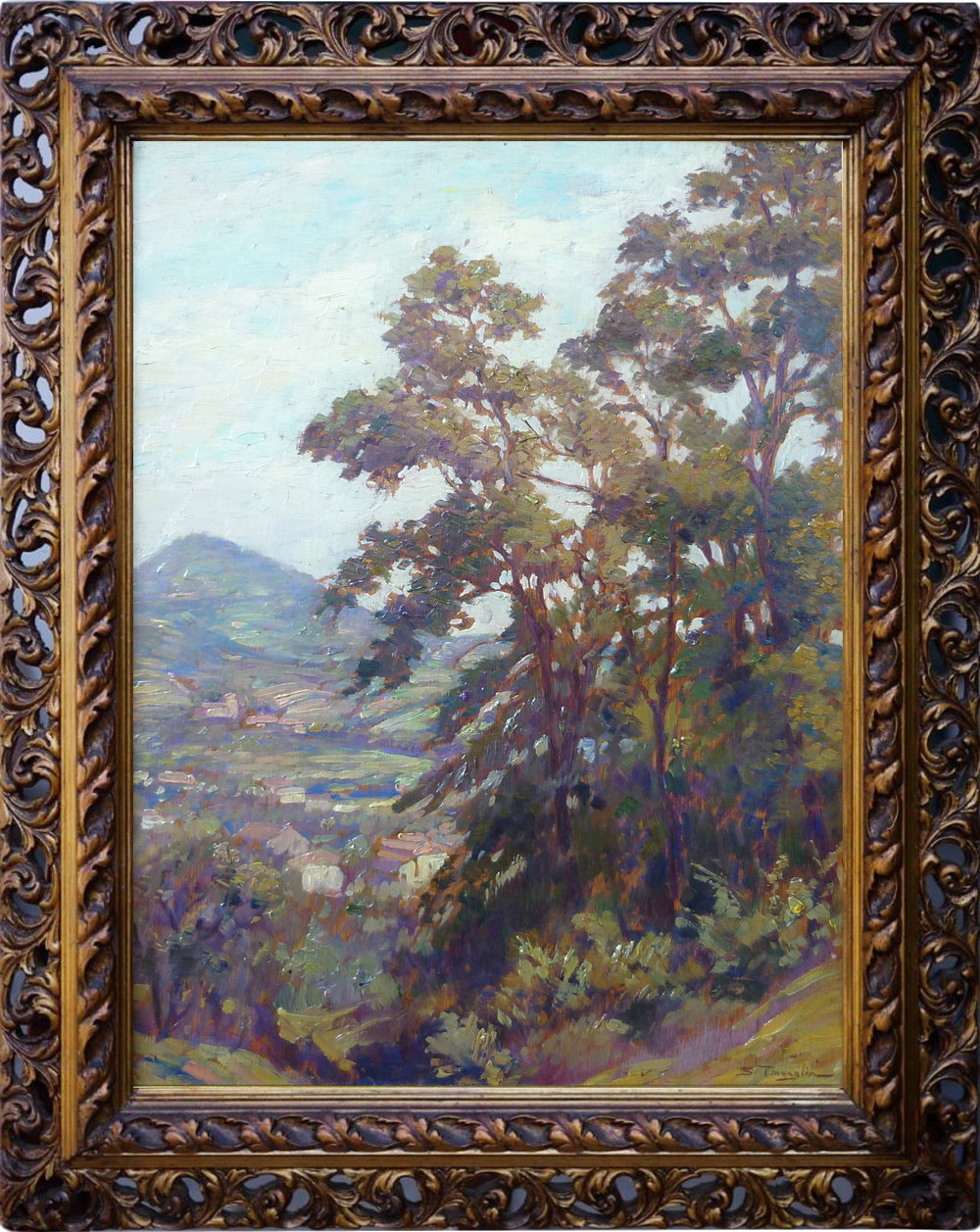
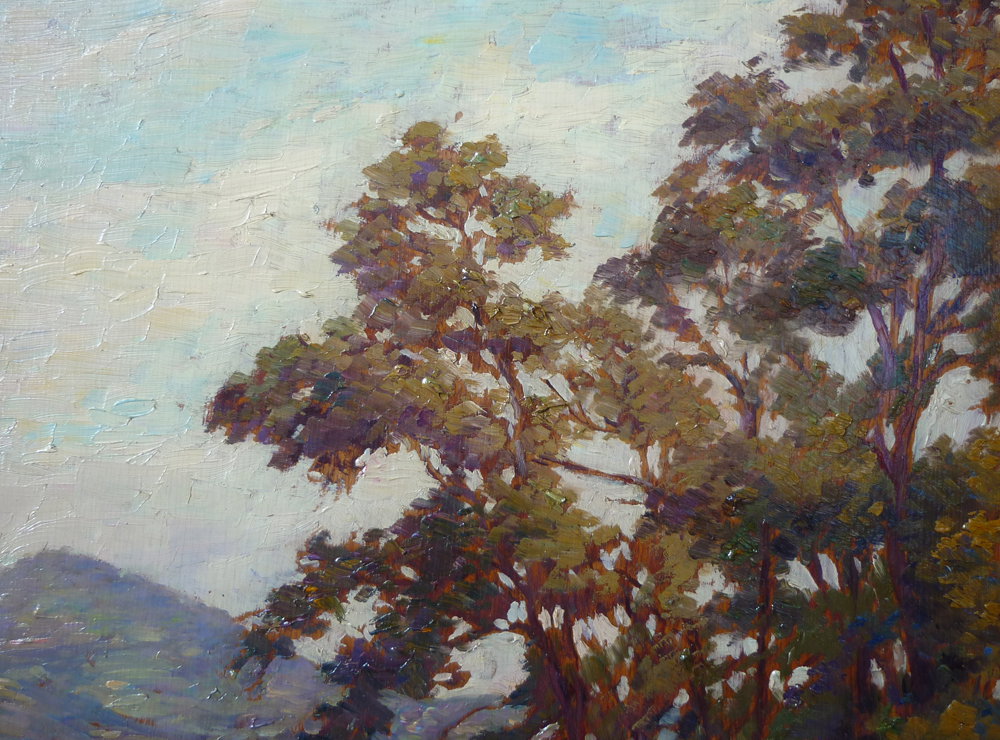
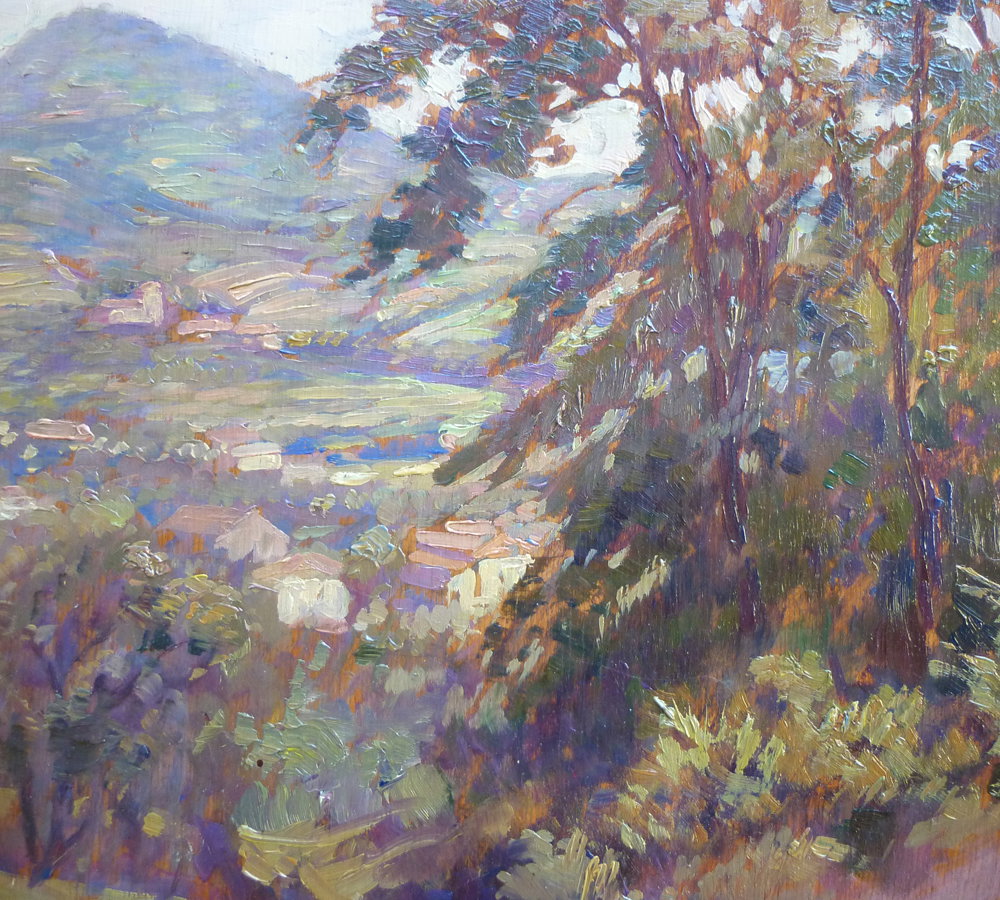
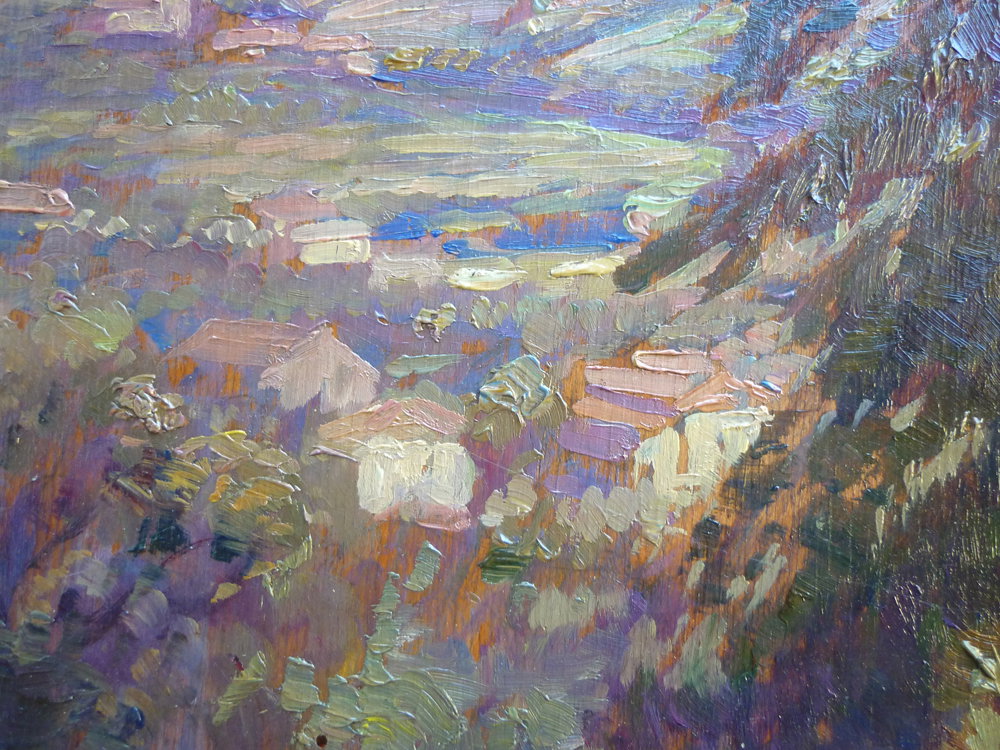
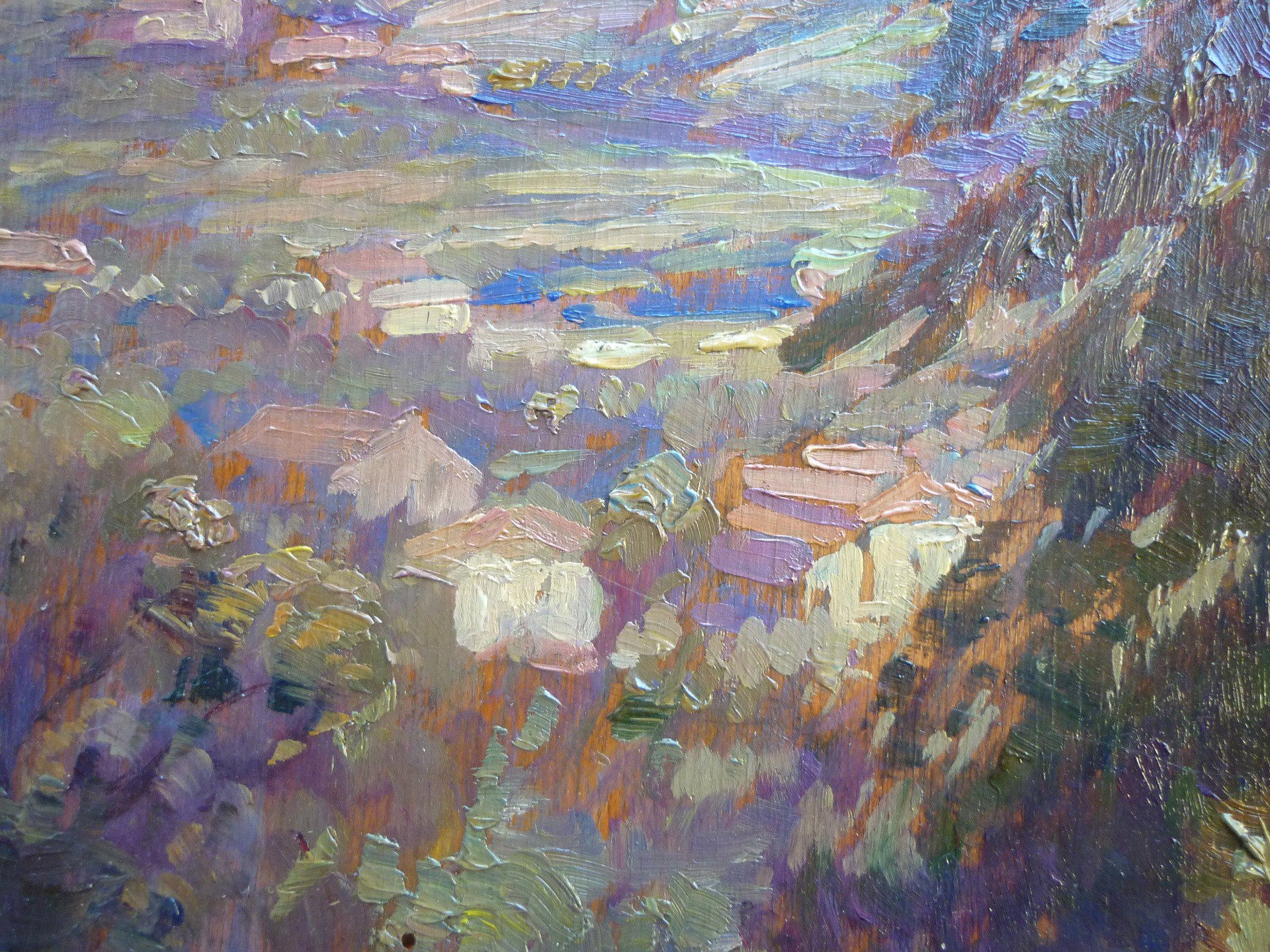
Silvio Travaglia – Mount Cero on the Euganean Hills
COD: Q112
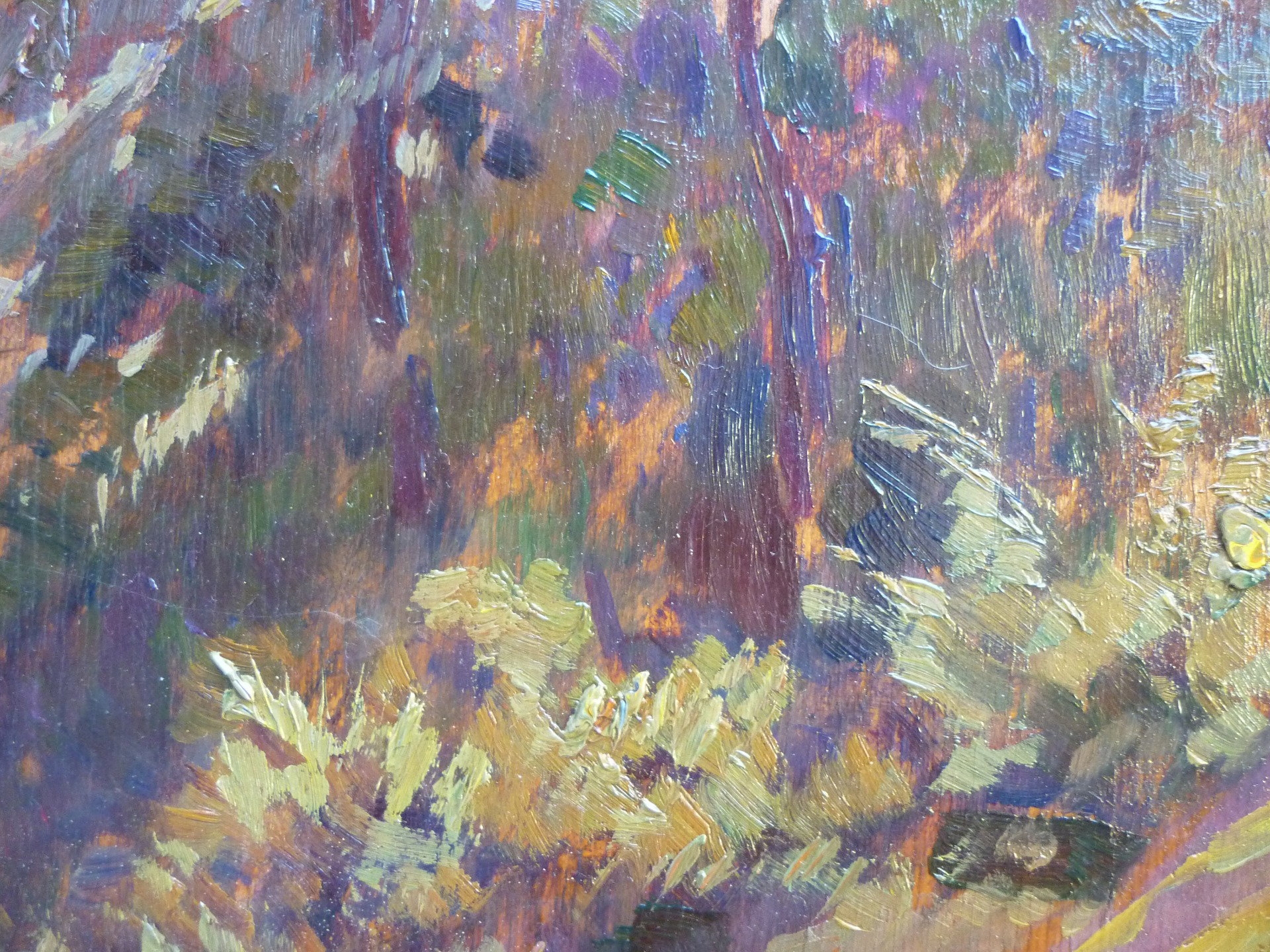
45cm x 35cm (frame excluded) – oil on panel, 1930s
TRAVAGLIA SILVIO
Born in Monselice (Padua) on October 11, 1880, died in Padua on December 3, 1970. At the age of sixteen, he moved to Venice to attend the Academy of Fine Arts where he became a student of Guglielmo Ciardi and became friendly with Emma and Beppe Ciardi, Ugo Valeri, the Romanian Aiescu, the sculptor Gianatasio and Antonio Soranzo from Padua, with whom he maintained a deep friendship that lasted a lifetime. He taught at the School of Art in Este, where he established a special course for industrial design; he later participated in the war and once he overcame the parenthesis, during which the family took refuge in Tuscany because of the retreat of Caporetto, he lived in Sacile, accepting the professorship at the Istituto Magistrale; a professorship that he retained with long and appreciated dedication. A talented musical composer as well as a painter, author of numerous suites for large orchestra (Sinfonietta goldoniana, Vendemmiale, Venezia misteriosa, and others). He presented his pictorial activity in Verona, Turin, Padua, Wiesbaden, Berlin, Sao Paulo, New York, Philadelphia. In particular, the personal exhibitions he held in Sao Paulo, Brazil, and in Milan in 1966 at the Galleria Cairola were remarkably successful. From 1922 to 1935 he created numerous works of sacred decoration, collaborating with his brother-in-law Antonio Soranzo; we remember: the altarpiece of Santa Teresa in the church of San Luca in Padua; the decorations on the ceilings of the parish churches of Camin, Chiesanuova, Mestrino, Saletto, Montagnana, in the province of Padua. In collaboration with Laurenti he created the decoration of the well-known Sala dell’Albergo Storione, in Padua; a work that was destroyed. He was a landscape painter, intuitive and in admired amazement in front of the beauties of nature, which he expressed with sweetness and by genuinely listening to his inner needs.
Click here to see more images.