Giuseppe Mascarini (Bologna 1877 - Milan 1954)
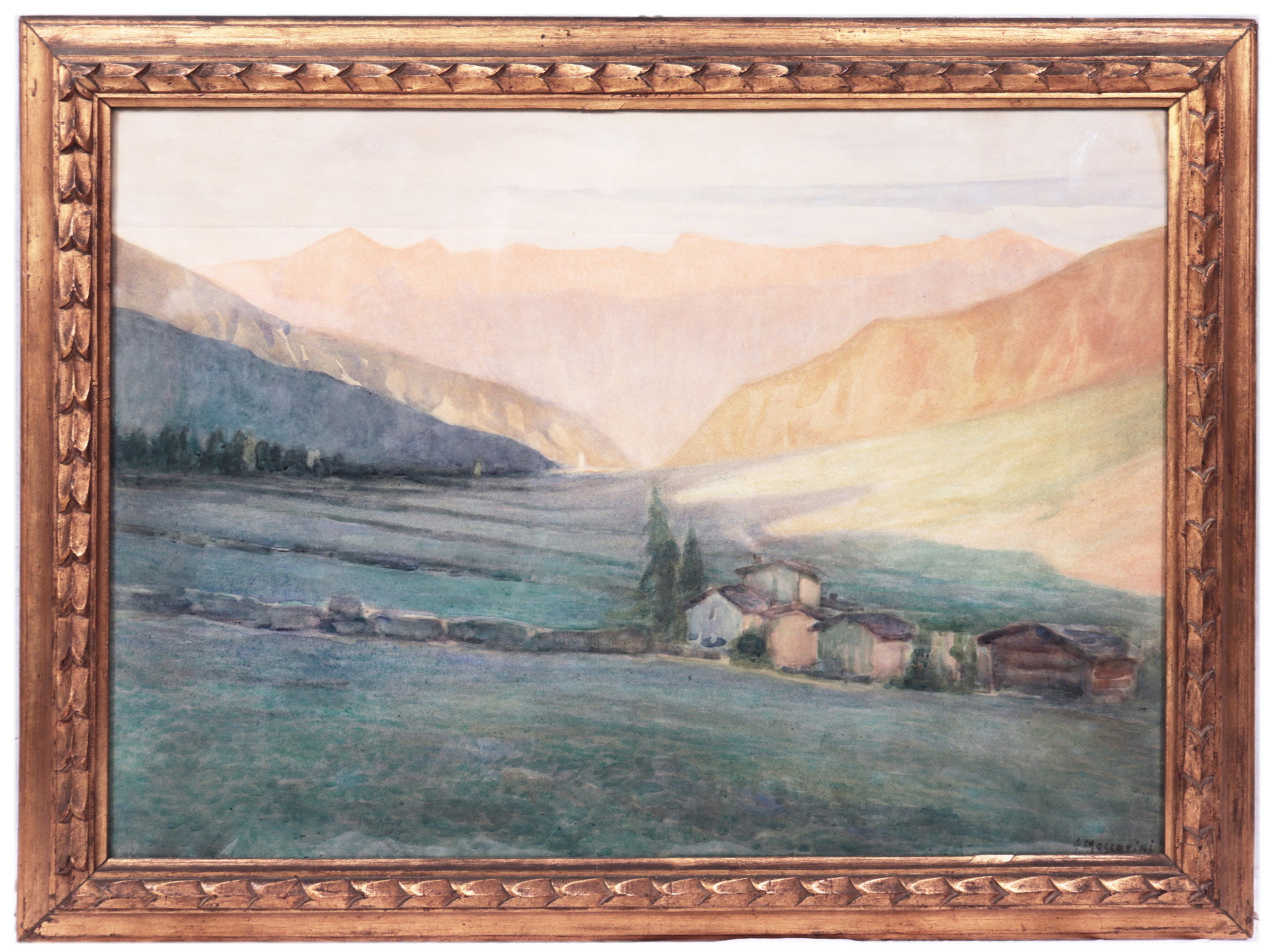
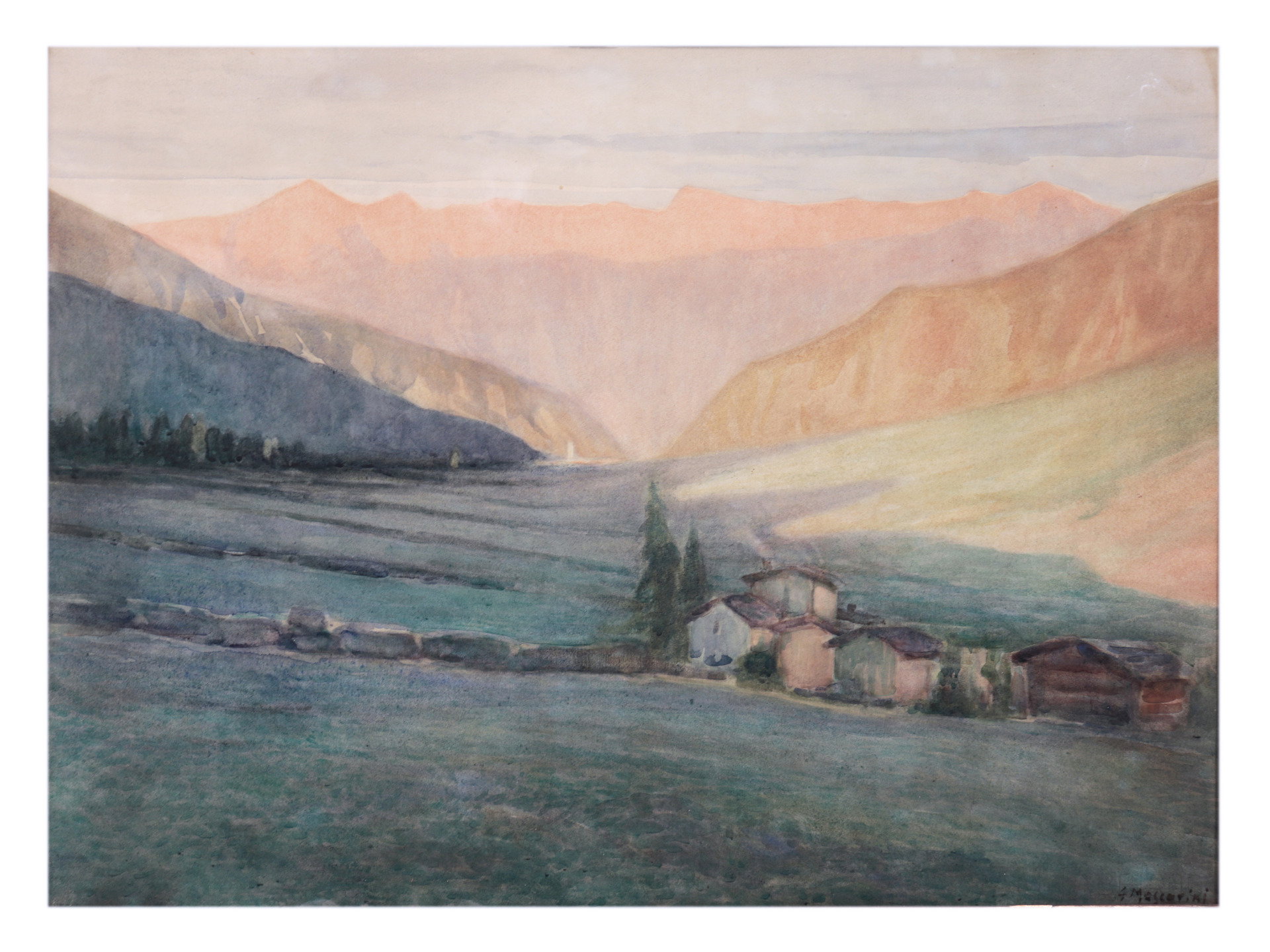
Watercolor painting on Fabriano paper depicting a landscape in Bregaglia created in 1919
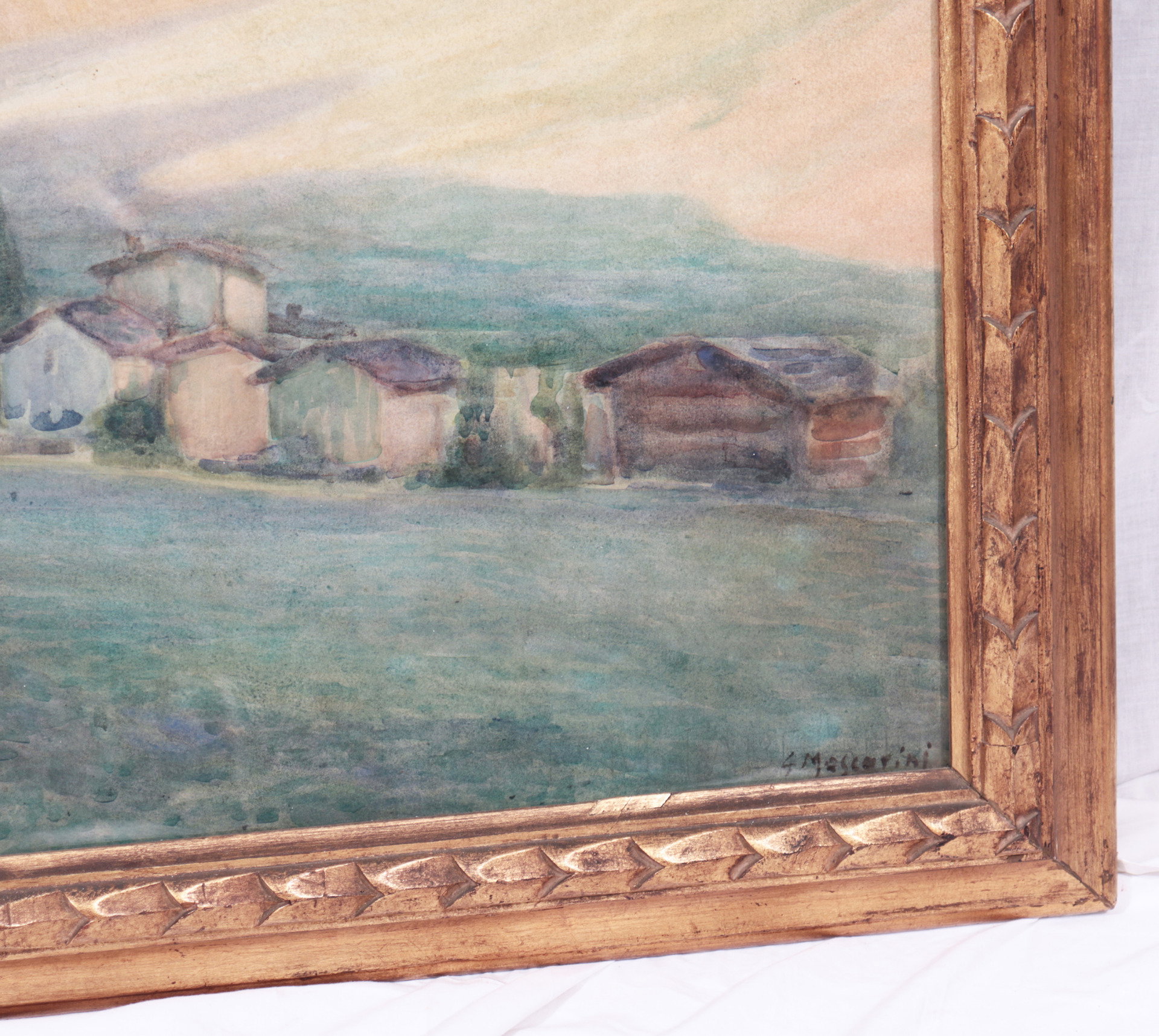
Coeval frame
Paper measurements: width 97 cm, height 72 cm
Signed lower right G. Mascarini
Published in Monograph "Giuseppe Mascarini 1887-1954. A palette between two centuries" Skira Edition 2016 - page 180 plate 288
He lived and worked always in Milan. He studied at the Brera Academy. Gifted for drawing and painting, he won prizes in 1896 and 1897 when he participated for the first time in the Brera exhibitions.
In 1900 the Academy appointed him "Honorary Member" and later he was called to be part of the permanent painting commission. He spent the first years of the century in Paris where he studied the painting of the great masters of the past and followed the new pictorial trends that advanced in the climate of general renewal. Influences of themes such as symbolism, divisionism, are found in his paintings of the first decades of the 20th century. The large canvases "The Dream" 1909, "The Visitor" 1909, "Ancient Ballad" 1916 and the large alpine landscapes where the tripartition of the horizons, the divisionism, the skies that lead towards the infinite, the visual perception bring back to reminiscence of Puvis Chevannes, Hodler and Segantini belong to this period.
Mascarini loves the mountains, and during the summer stays the beautiful Val Bregaglia is the scene of many landscapes represented by him. But there is not only the landscape painting for Mascarini but also the human figure because nature and humanity are in him two equally lively terms, both generators of inspiration.
In his figure paintings he prefers to observe rather than interpret with arbitrariness, to keep as close as possible to the subject rather than loading it with extreme meanings. His brushstrokes, the strength of the design and the warmth always suggest a vision of calm and familiar serenity, a warm unity of tone, a measure, a contained and spontaneous impetus.