Description:
GIOVANNI RIVA
(Turin 1890 - 1973)
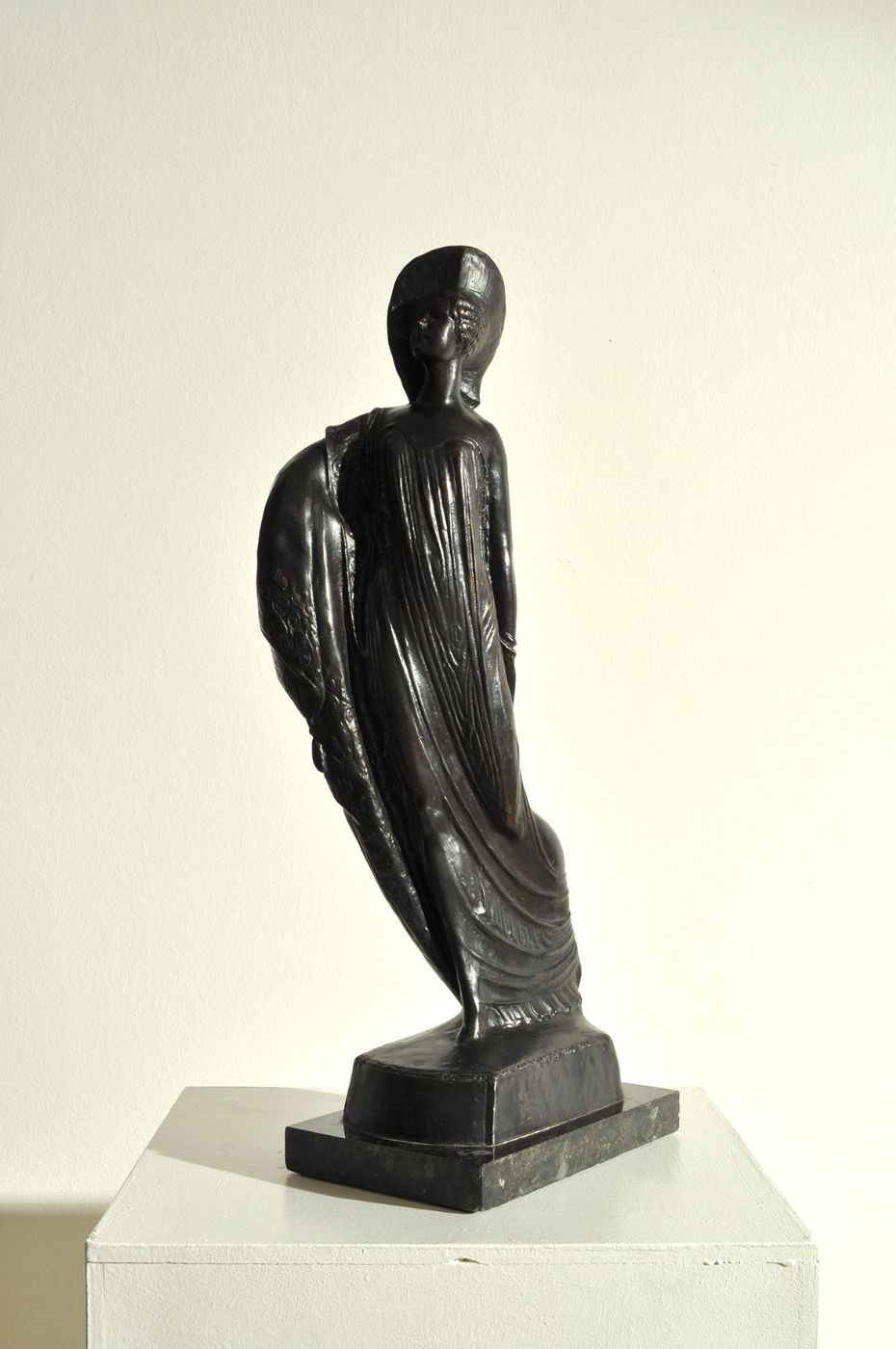
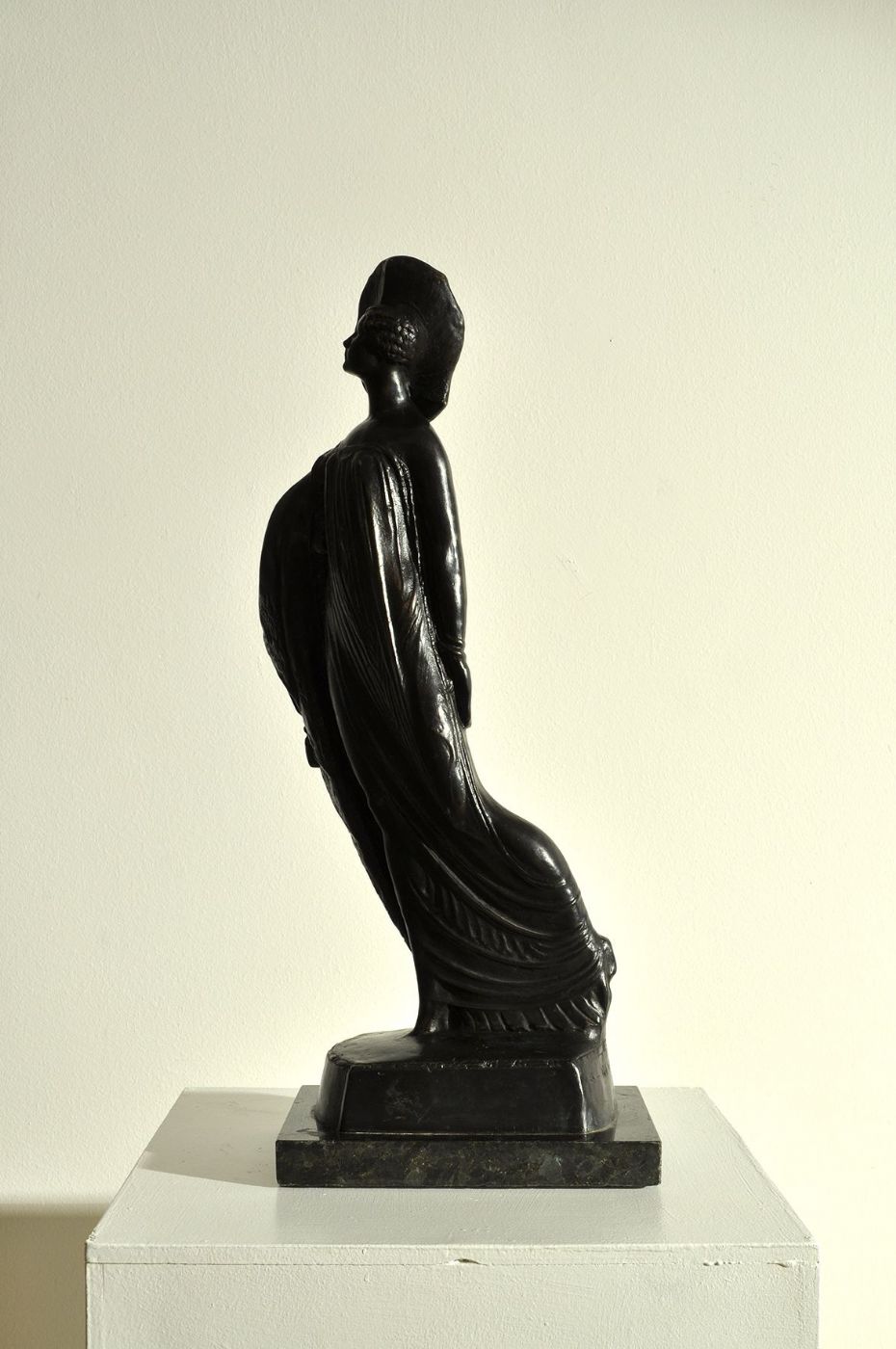
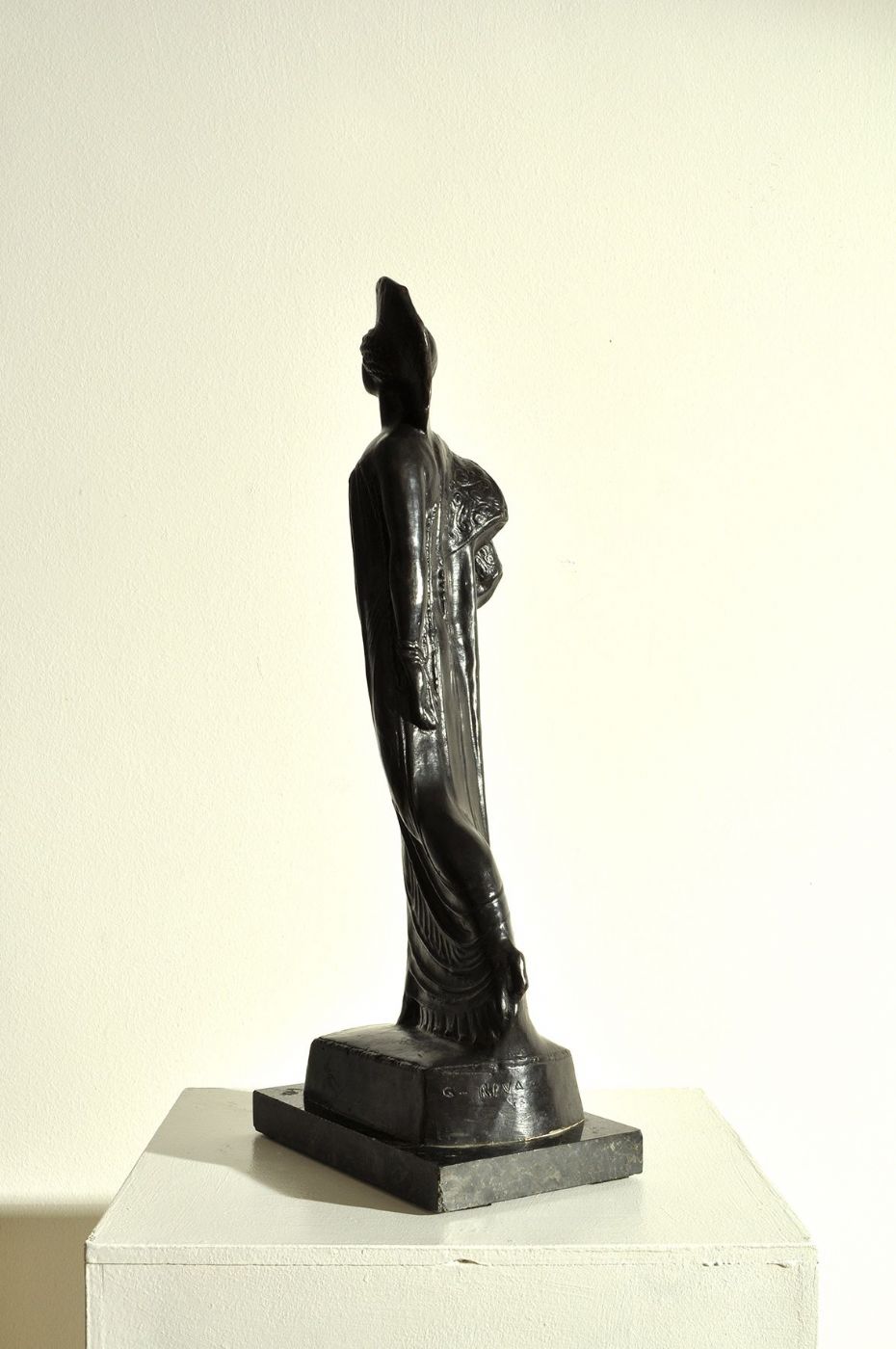
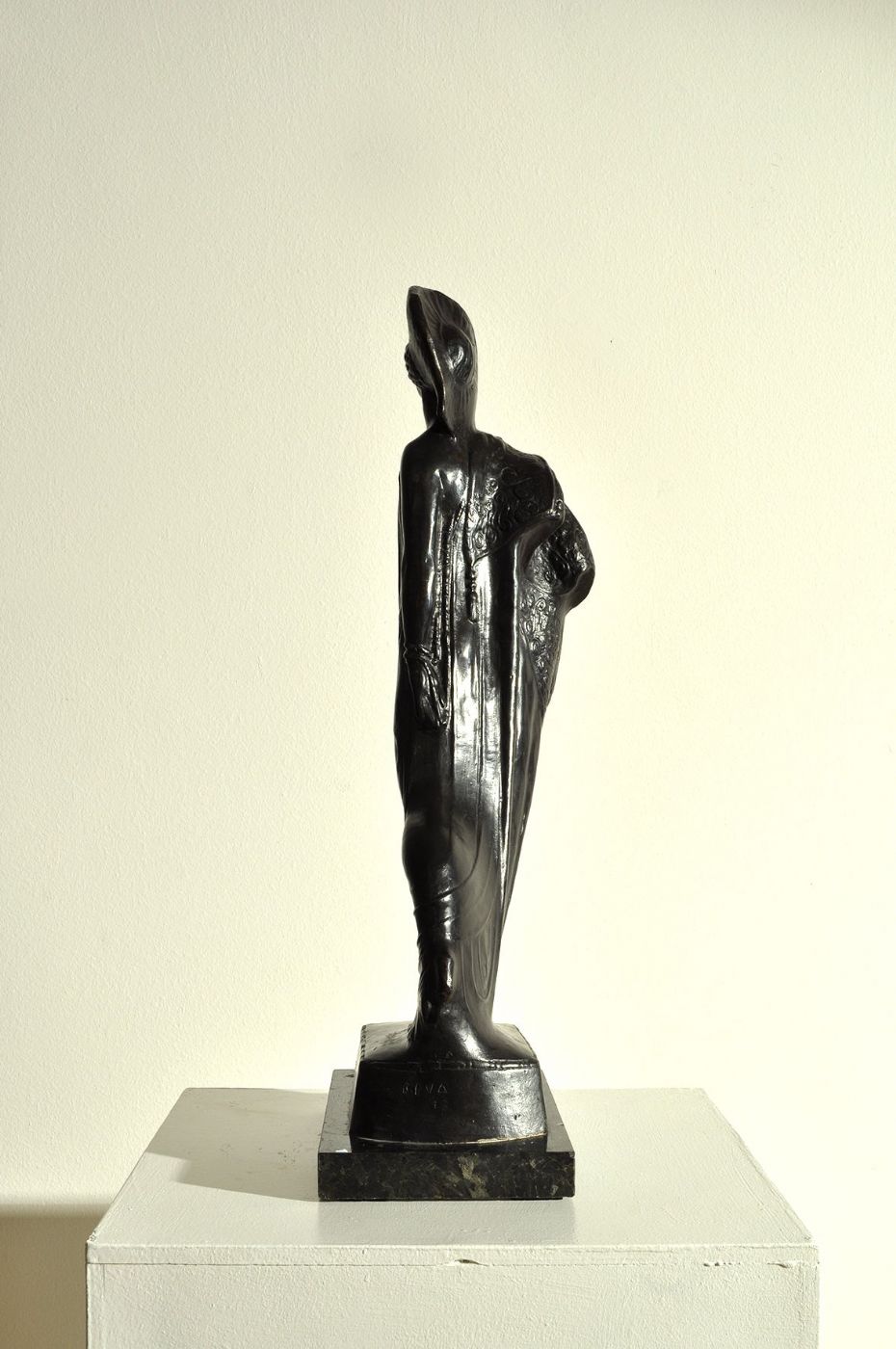
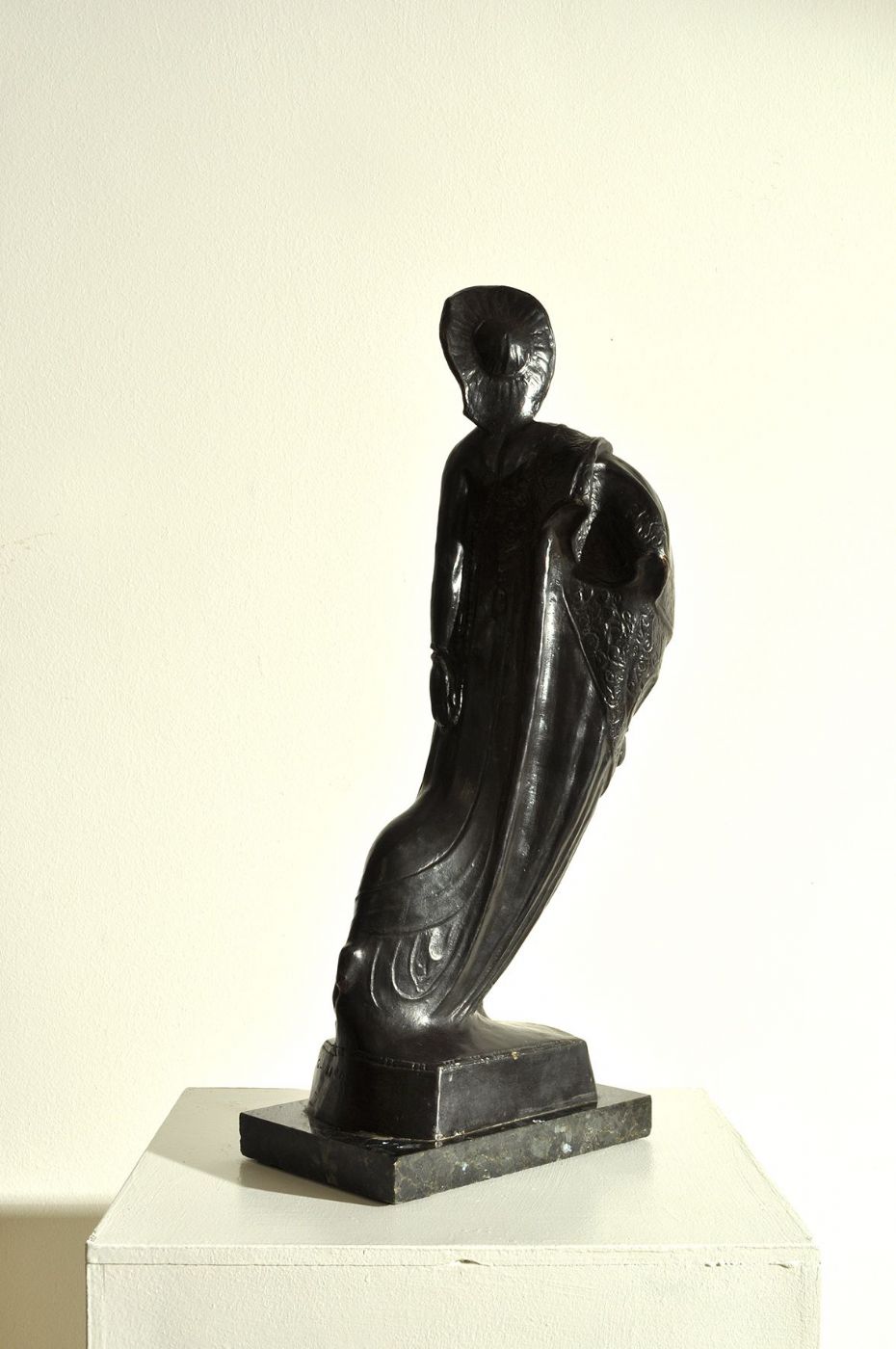
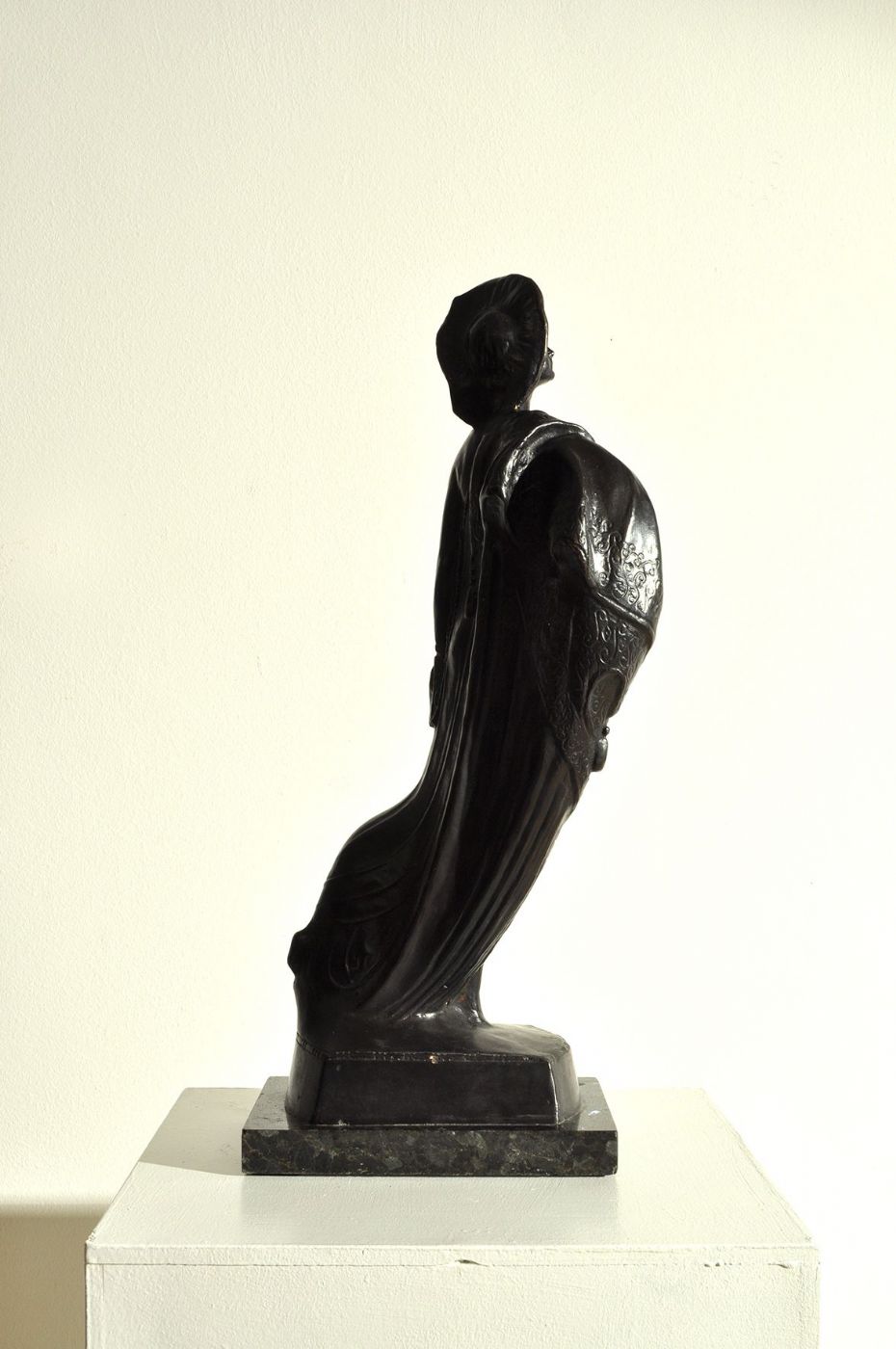
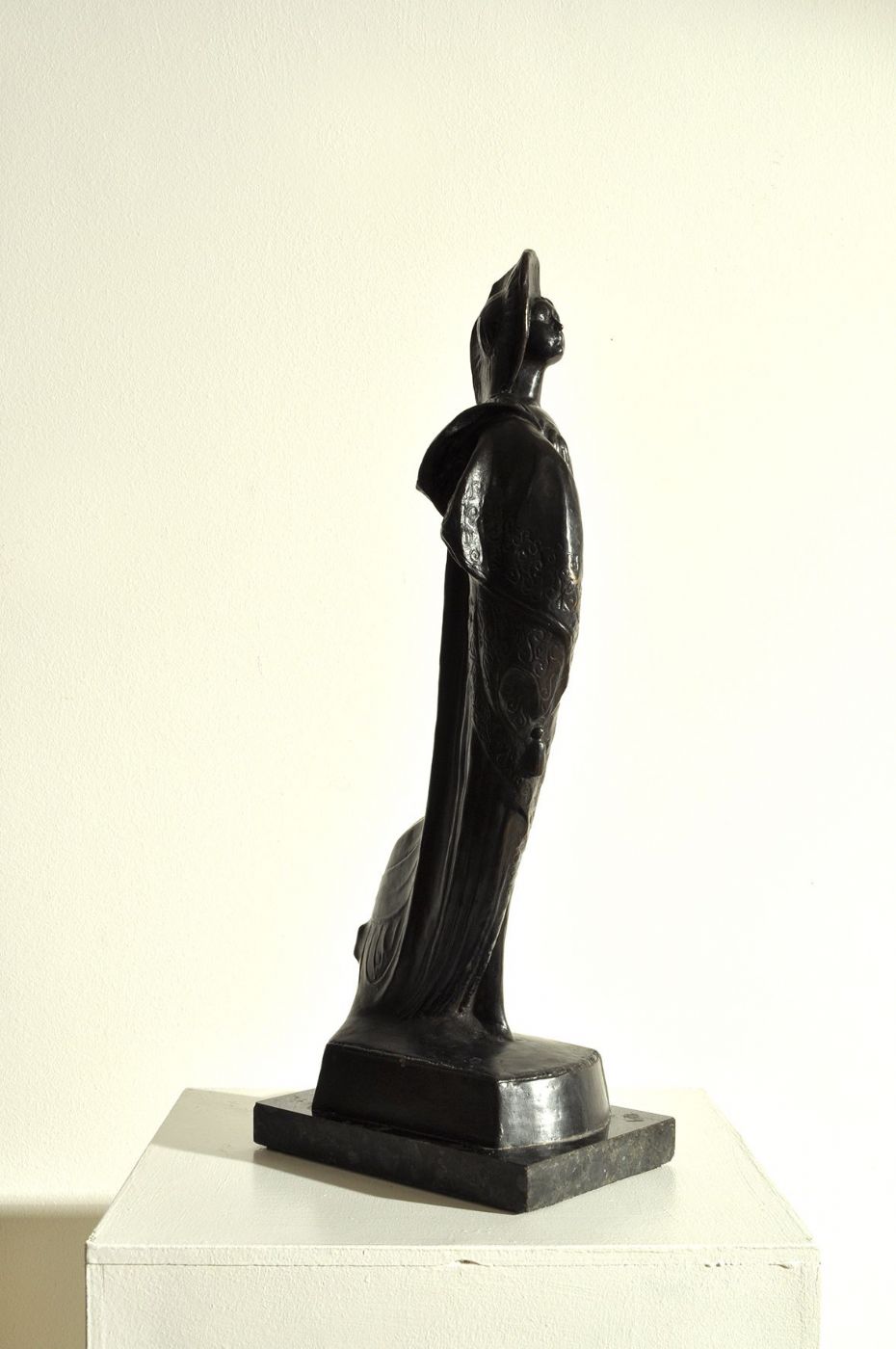
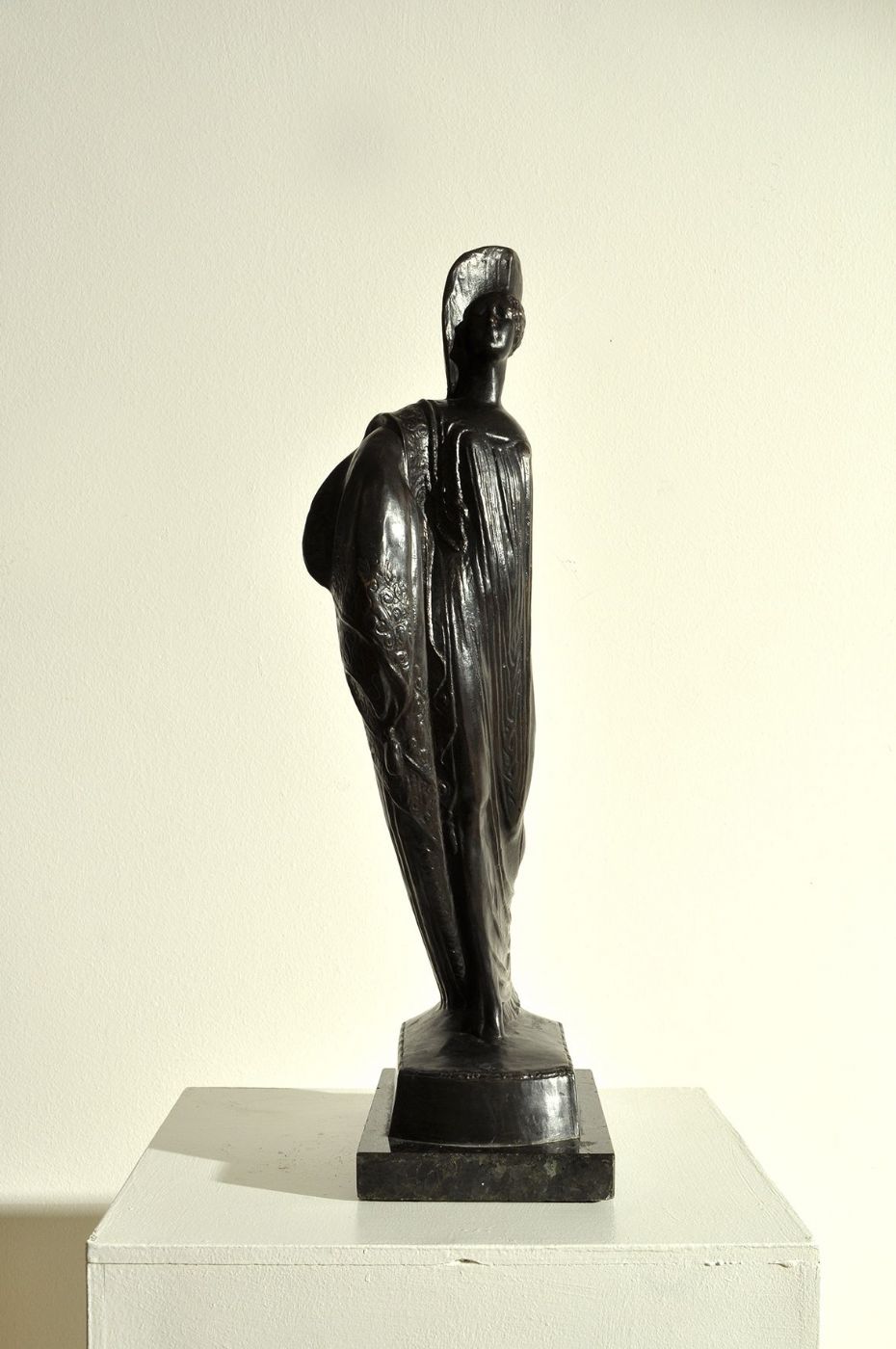
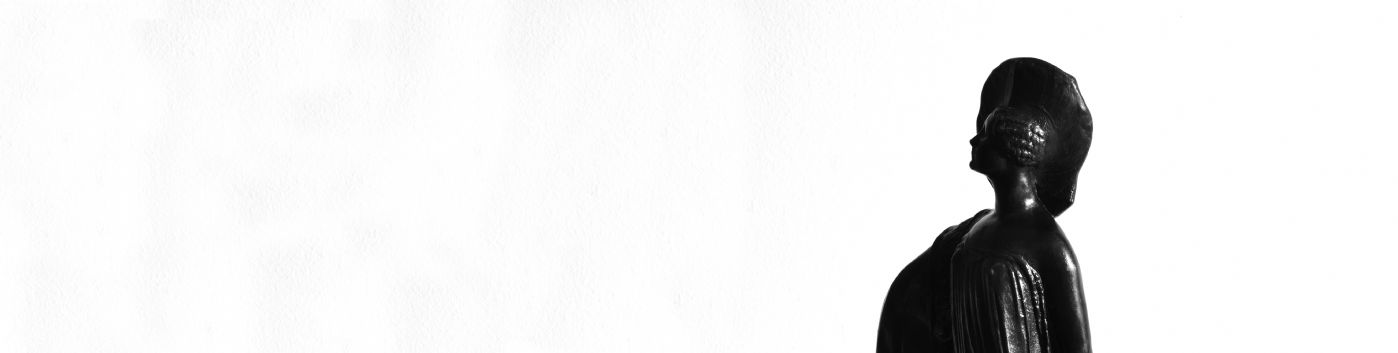
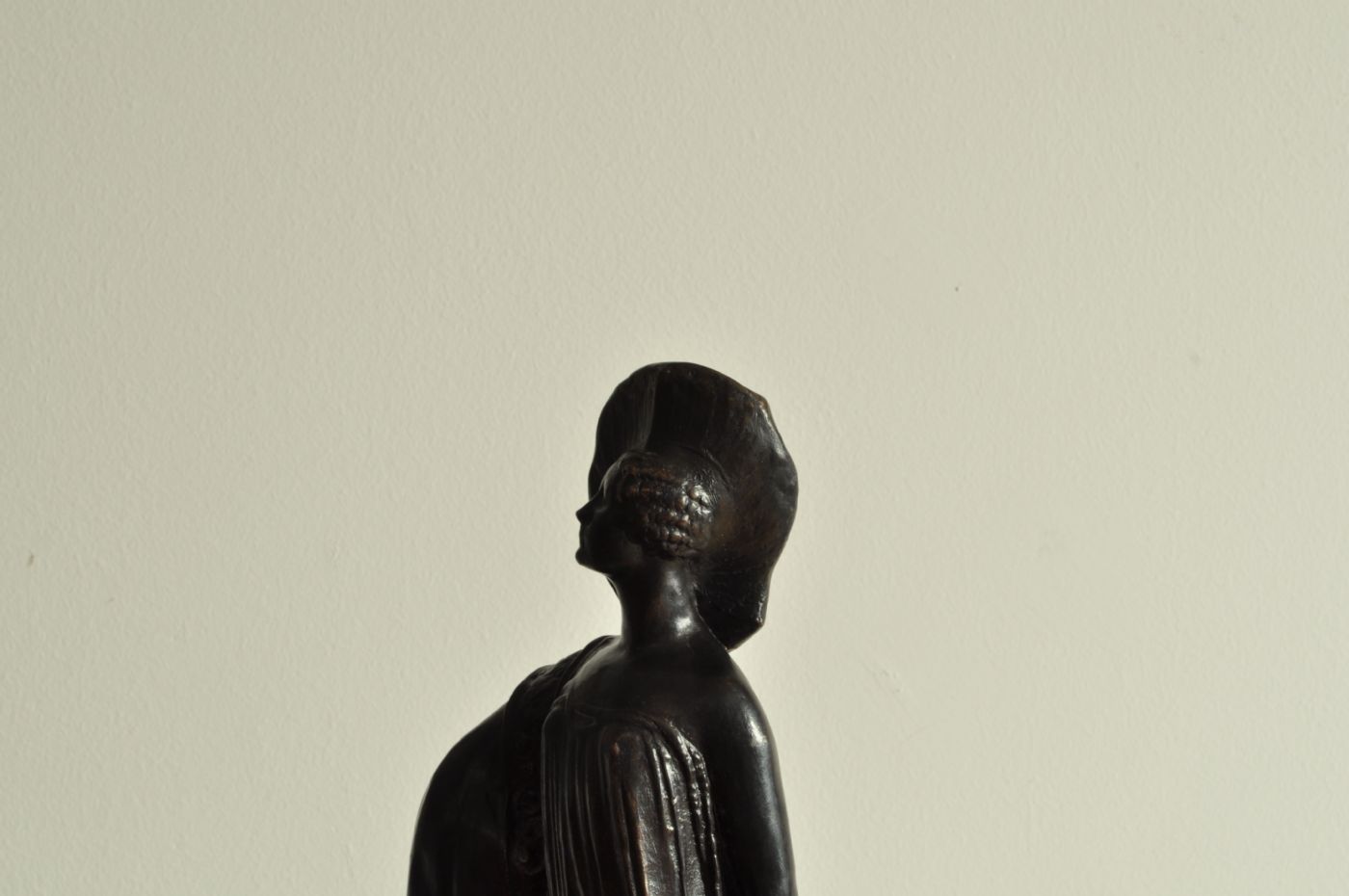
Leda Gys, 1913
Bronze, height 55 cm.
Signed and dated on the base on the back "G RIVA/13"
Marble base
Bibliography: Chimeras Myths allegories and plastic symbolism, pg. 6, fig.18 (copy of the National Cinema Museum Coll. Turin, 1915)
Leda Gys, stage name of Giselda Lombardi
(Rome, March 10, 1892 – Rome, October 2, 1957)
Native of Trastevere, she was born into a petty-bourgeois family, from Giulio and Teresa Ilardi.
She was introduced to the show business at the age of twenty by the Roman poet Trilussa, with whom she had a romantic relationship. In fact, her partner recommended her to work in the film studios of Celio Film and Cines in Rome, and he himself, by anagramming her given name, also coined her stage name, Leda Gys.
Hired as a «young actress», in 1913 she made her debut as an extra in the film After Death. In the same year she achieved her first success with the film L'Histoire d'un Pierrot in the role of Louisette. In that period she acted alongside the divas of the moment such as Francesca Bertini and Hesperia.
She was also noticed in brilliant films such as Leda in Love (1915), the first film to have her name already in the title and a parody of the film divas of the time.
She was the film partner of Mario Bonnard in numerous films shot between 1915 and 1916 with Caserini Film, before returning to Cines where she acted among others in the film Christus in the role of the Madonna.
Subsequently, she was hired by the Neapolitan Polifilms where she was noticed by the distributor-producer Gustavo Lombardo. Gys left Trilussa and began a romantic relationship with Lombardo that lasted a lifetime. In 1920 their son was born, and future owner of Titanus, Goffredo, and they married in 1932.
She was «first actress» of Lombardo Film from 1917 (then from 1928 Titanus) and starred in numerous films, including The Children of No One, based on the novel by Ruggero Rindi. The greatest artistic success of Gys's career came with the comedy Santarellina of 1923, based on the theatrical piece Mam'zelle Nitouche by Henri Meilhac and Albert Millaud.
The film with which she concluded her career, moreover the last silent film of Titanus, was La signorina Chicchirichì, and she retired from the scenes to take care of her son.
She starred in over 80 films, specializing in the Neapolitan genre, which had great success not only in southern Italy but also among emigrants in the United States of America. Her acting, lively and spontaneous, detaches itself from the clichés of Italian silent cinema of those years.