MICHELANGELO CERQUOZZI
(Rome, 1602 - 1660)
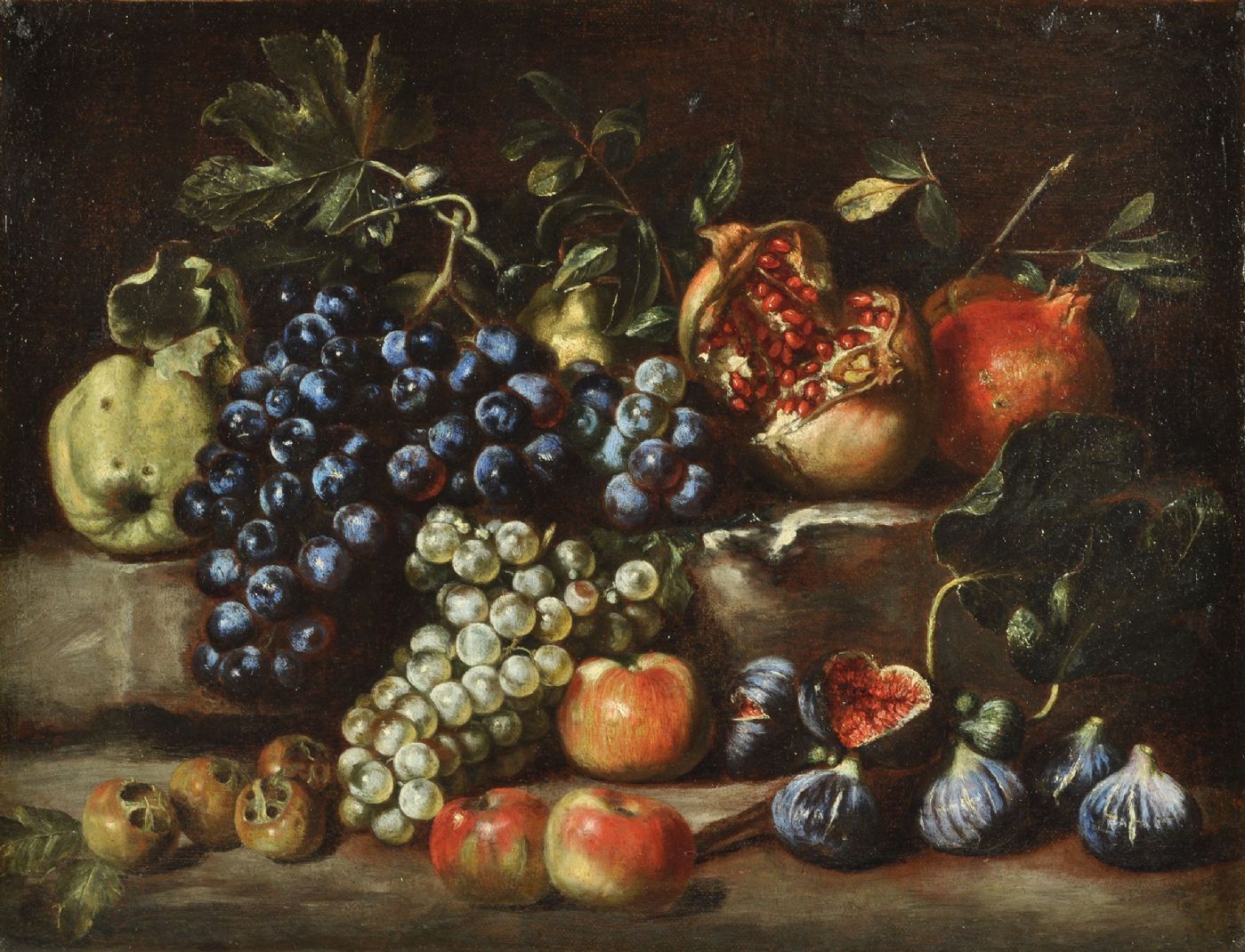
Still life with fruit, around 1625
Oil on canvas, cm 50x65
How does still life evolve after Caravaggio? How can one deviate from the "thought" without appearing gaudy or, more simply, ornamental?
Michelangelo Cerquozzi, a sublime example of a painter of bambocciate, battles, and still lifes, follows his natural path, lightening his compositions of intellectualism, enriching them with what he does best: painting.
The brushstroke loses definition, not at the expense of quality, but to the advantage of a more vibrant pictorial rendering, the layout is enriched with elements, the balances so studied and sought after suddenly become sought after through masses of color.
This work, which we could define as transitional, represents an initial detachment from Caravaggio's naturalism, which is still present with regard to, for example, the representation of the signs of time on some fruits.
Even the use of light for scenographic purposes is totally abandoned, in favor of a more natural (!) and frontal diffused light.
Cerquozzi, as mentioned, abandons spirituality in favor of pure painting, freeing his style and personality and laying, obviously completely unconsciously, the foundations for the next Baroque still life painting, overflowing with elements and color, dedicated to the most luxurious and golden environments of the Italian and European nobility.
G.C.