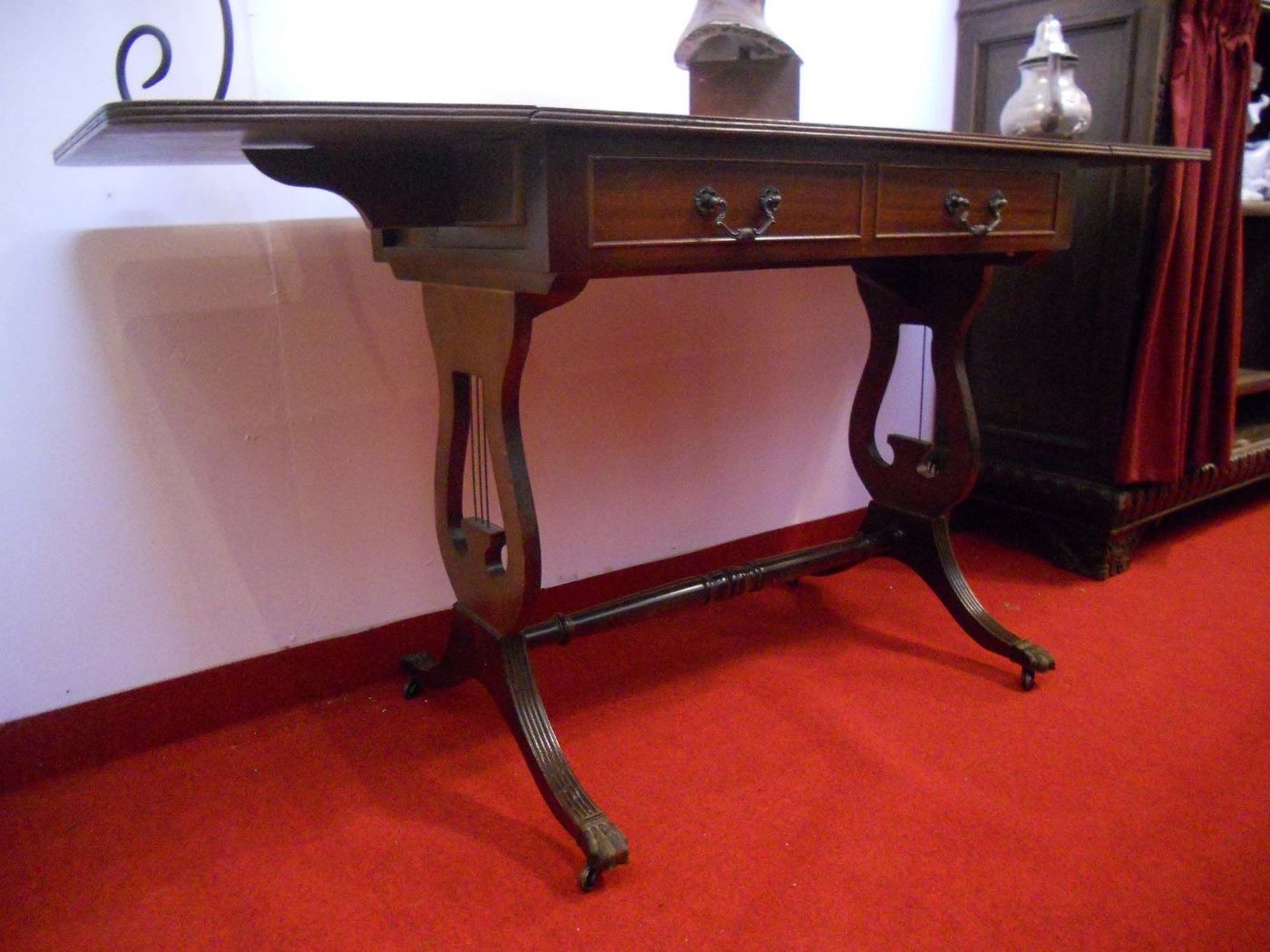
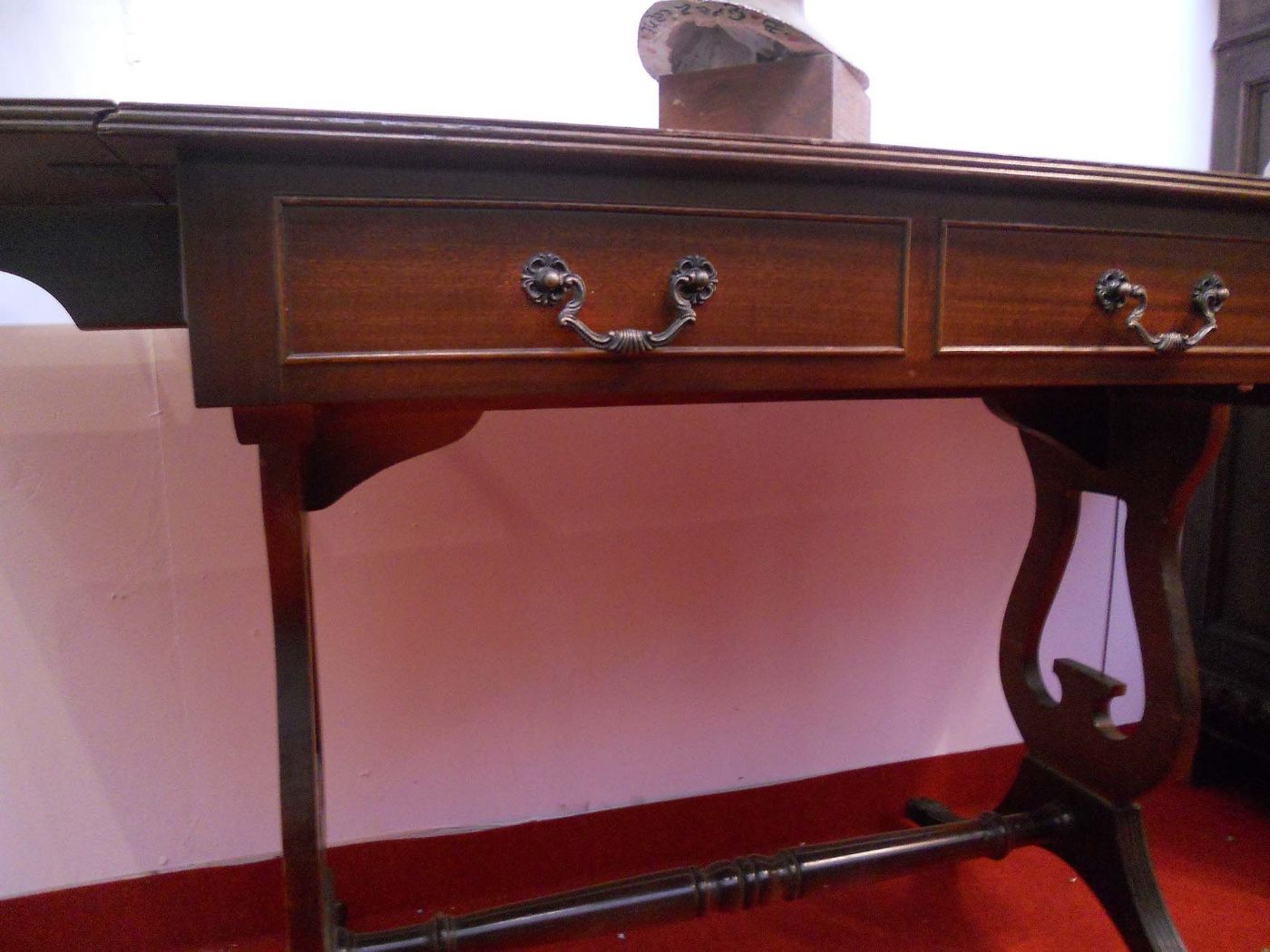
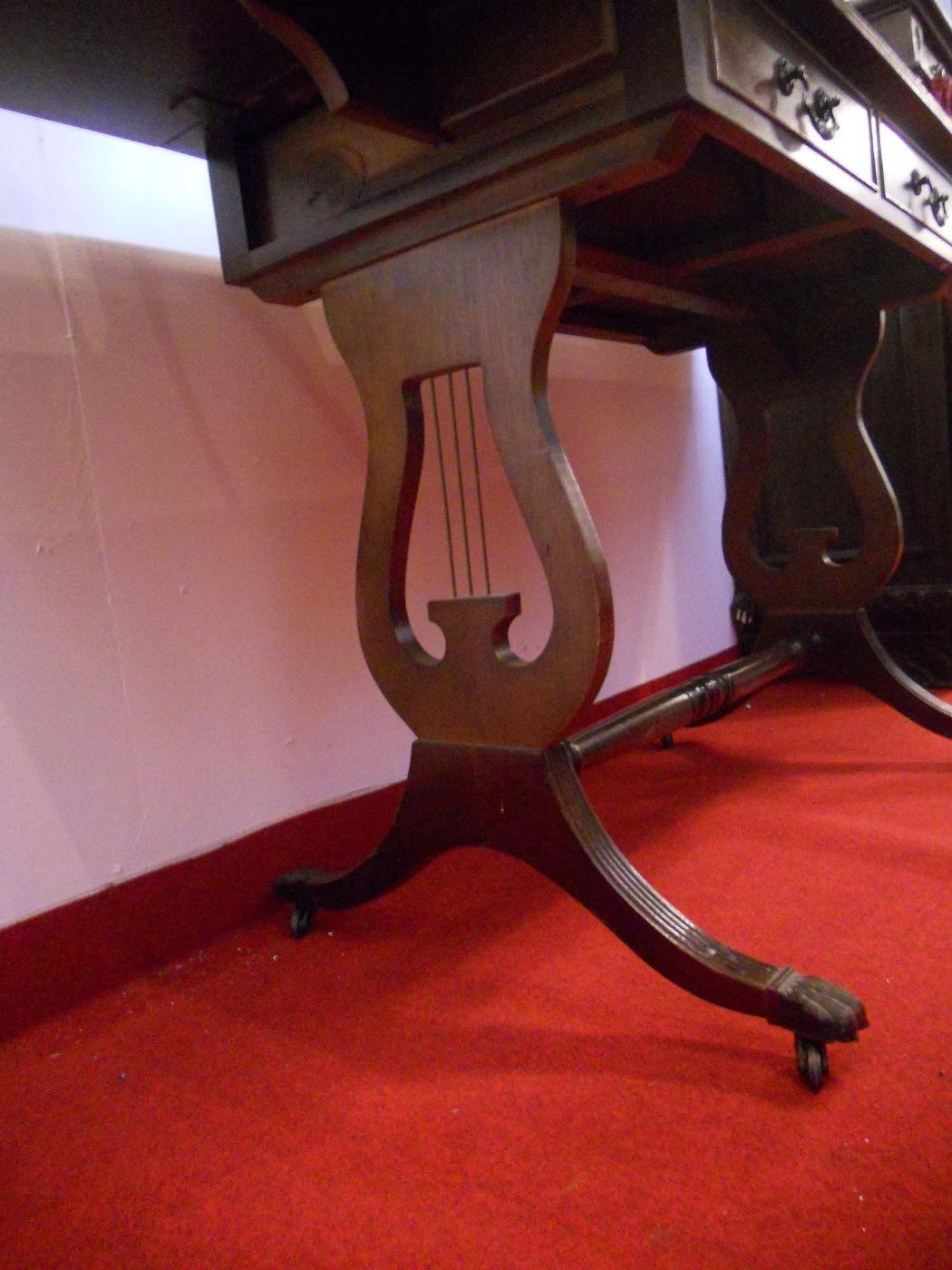
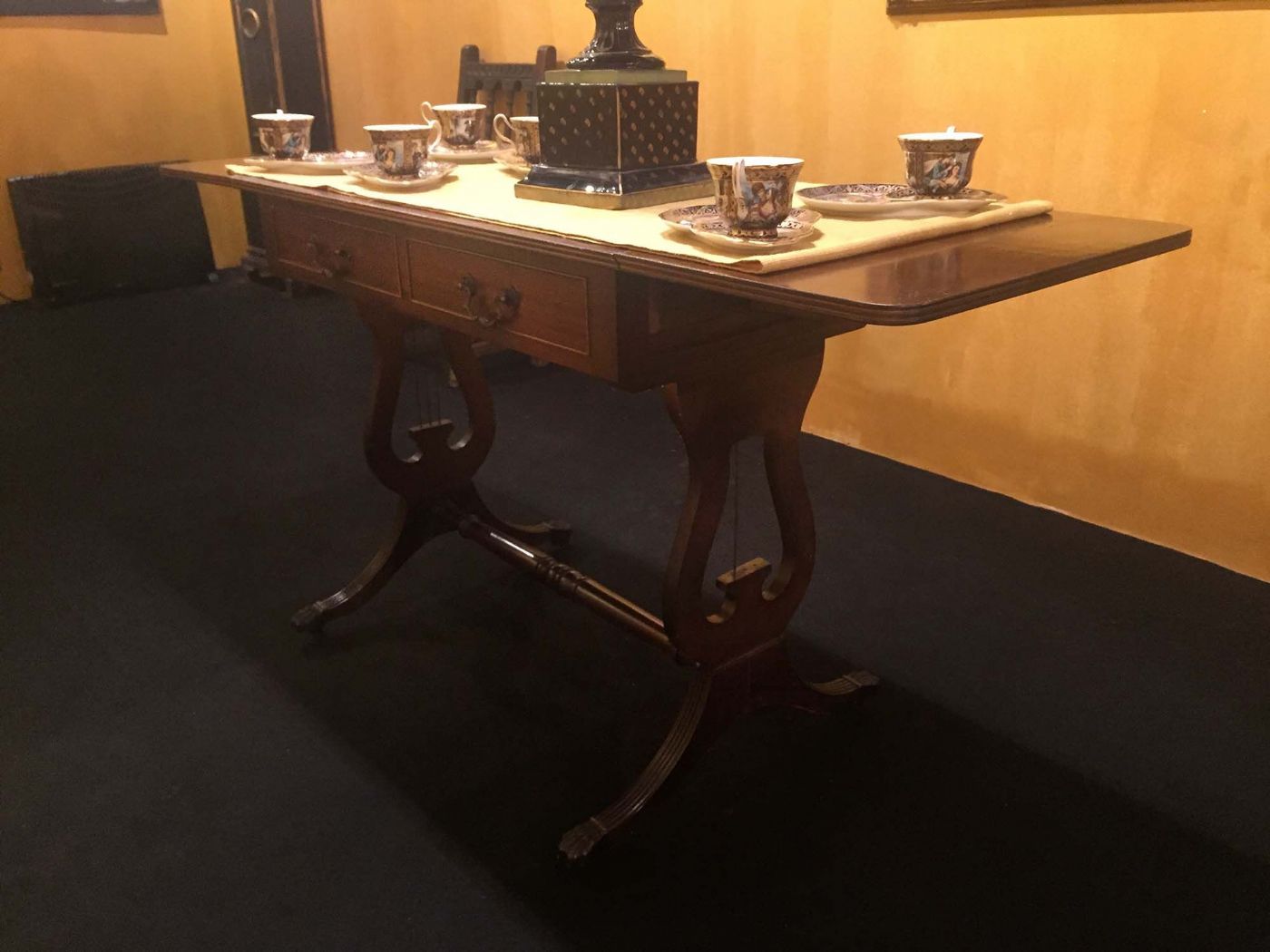
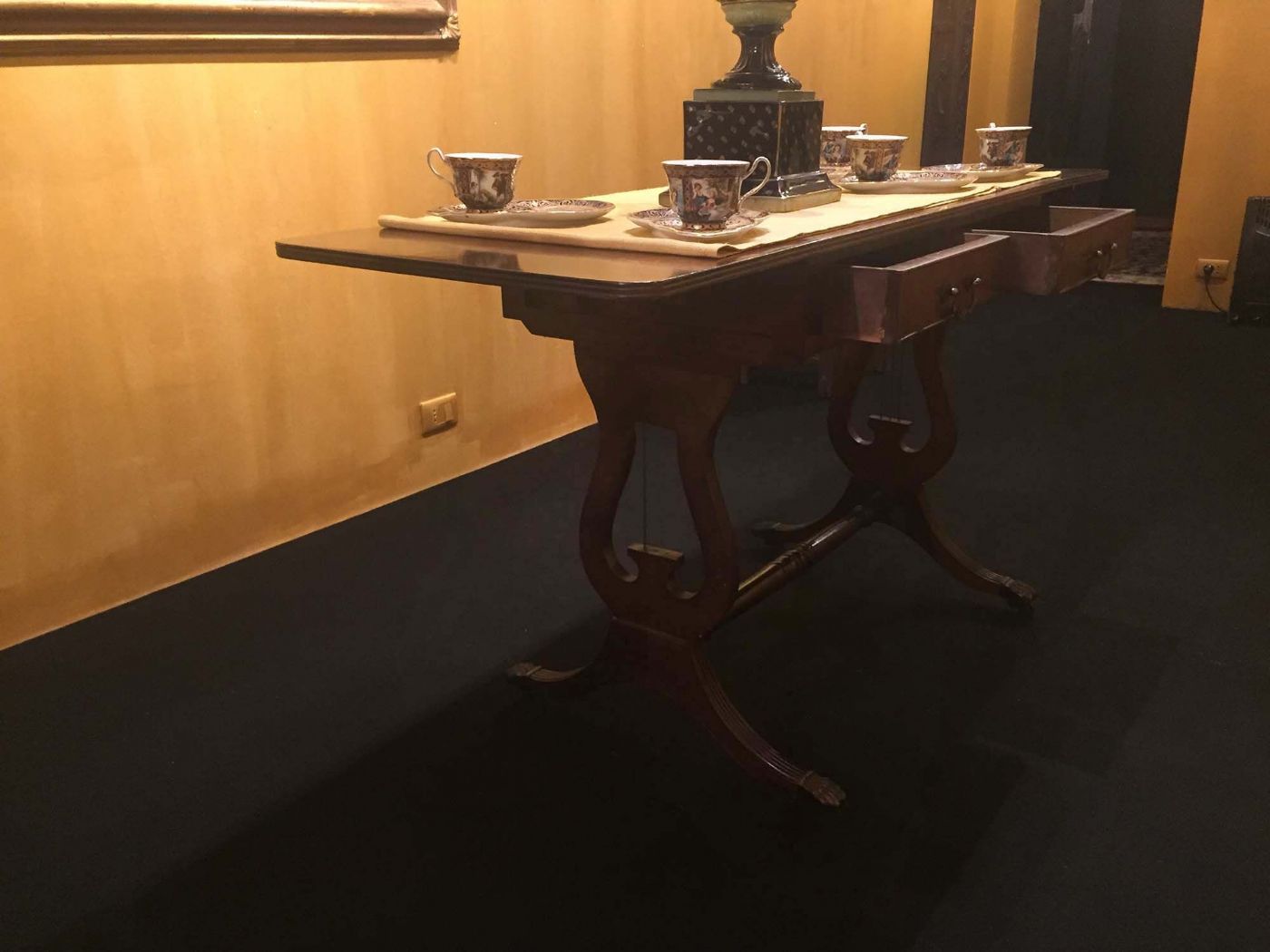
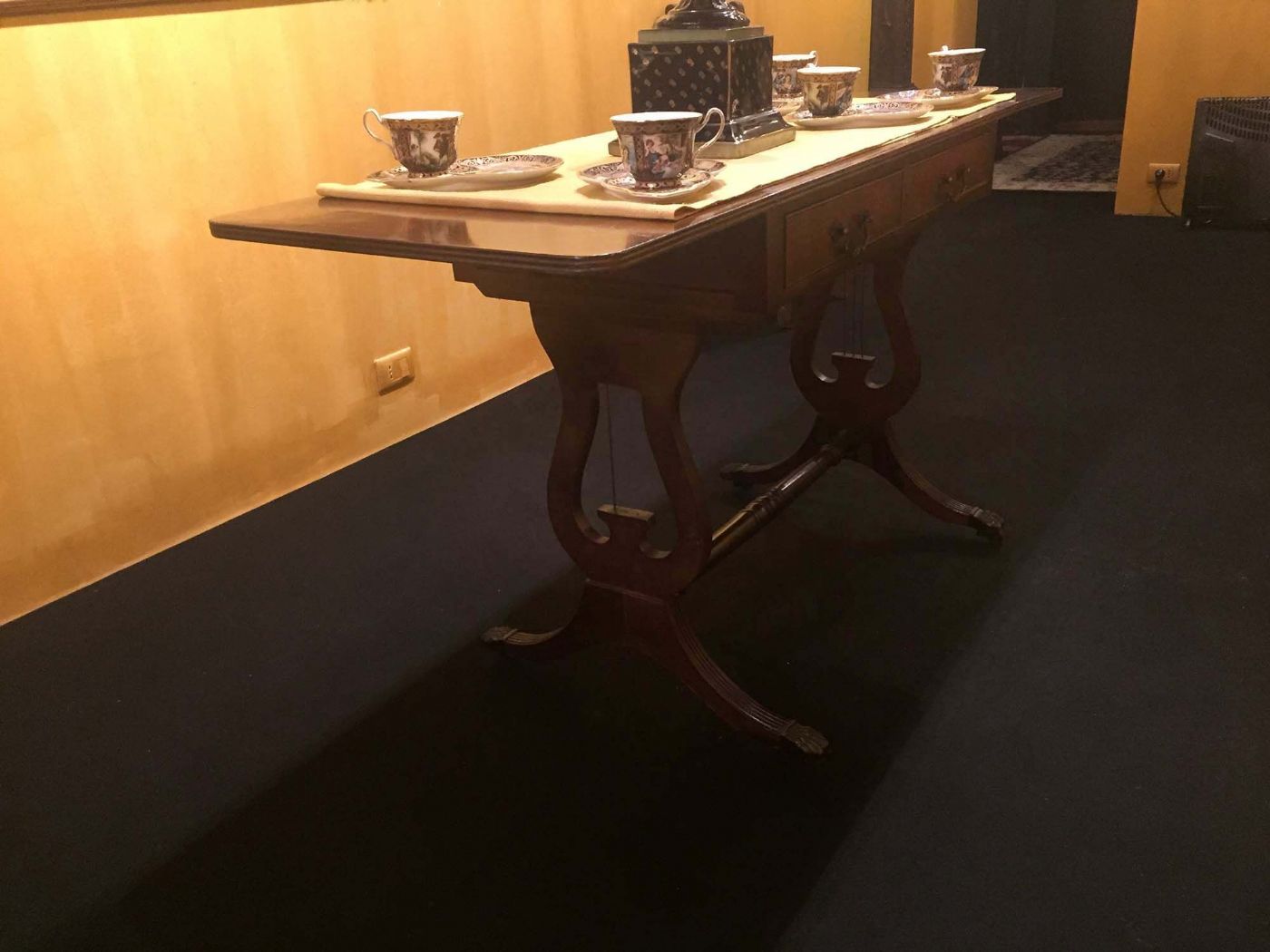
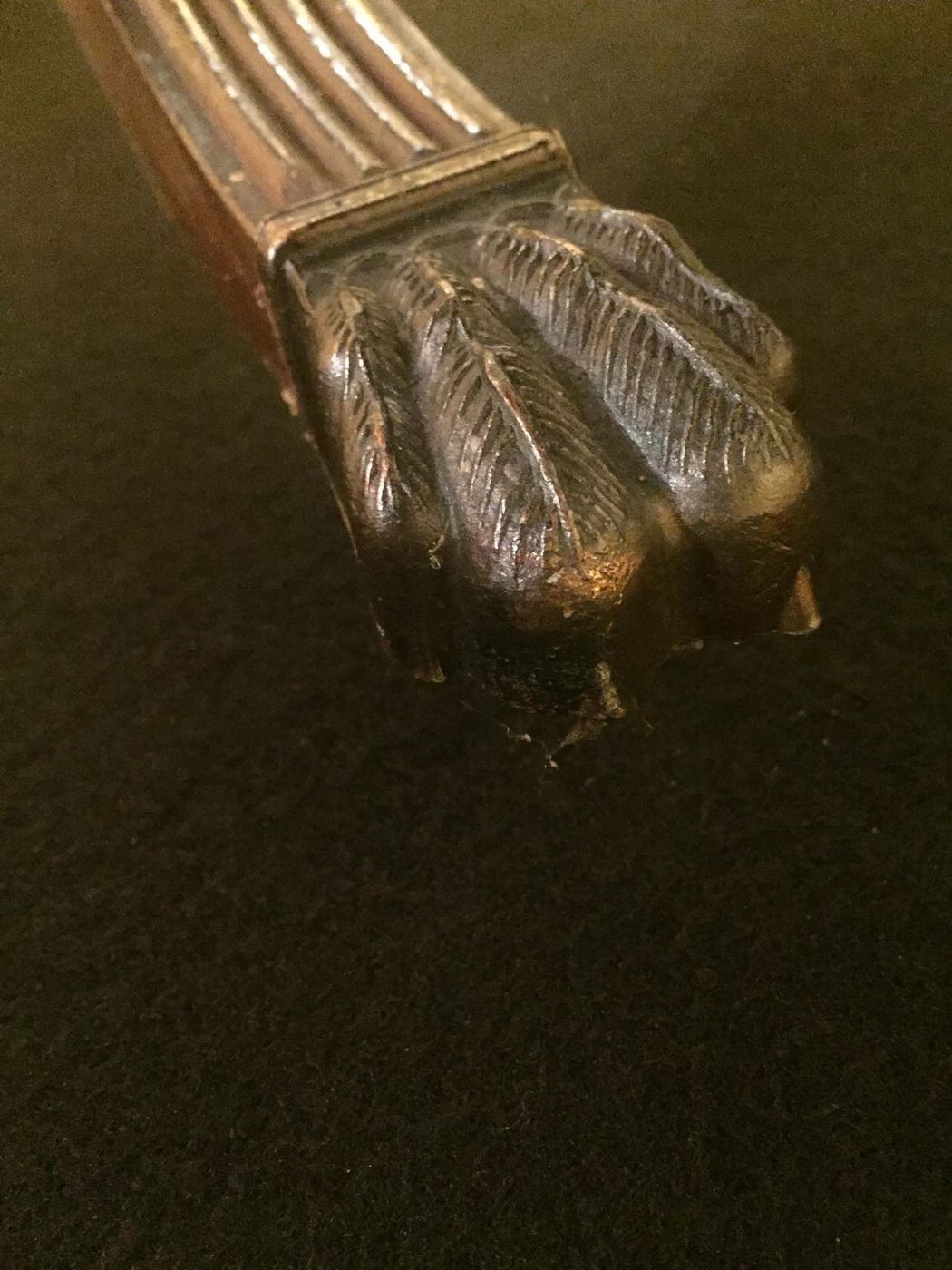
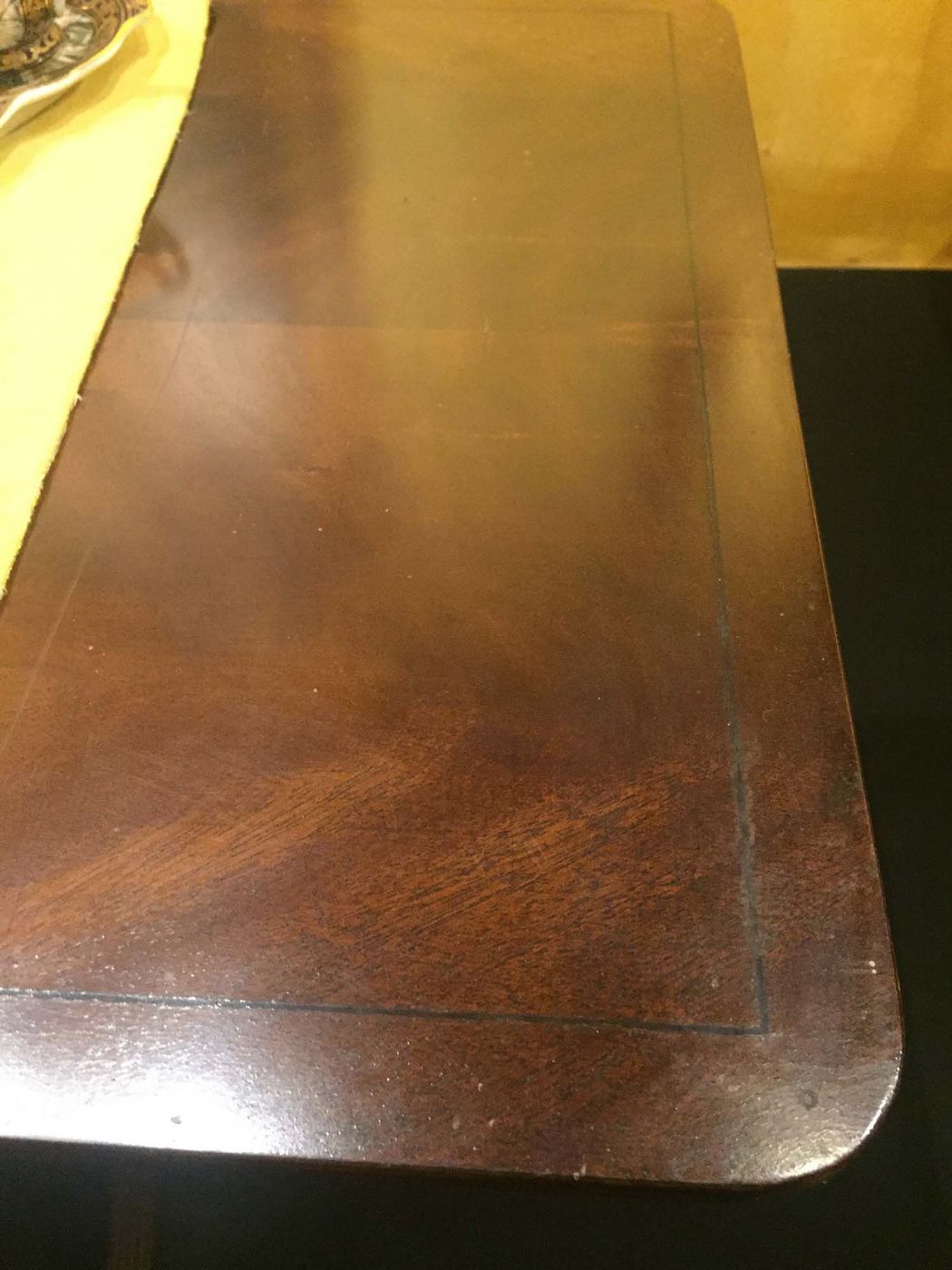
Elegant English Regency center table – desk in mahogany. The top is supported by two elegant lyre-shaped supports that recall the musical instrument of the same name due to the presence of "strings" inside them. The legs are typically curved and fluted with their final part in brass in the shape of a feral foot concealing the small wheels. In the central band of the table - desk there are four opposing drawers (of which a pair are fake) with finely crafted brass handles. The top, with ebony stringing, has two side flaps that can be lowered individually (leaning against the wall, for example) or both.
England: 19th Century
Measures: Length: cm. 85
Length with two flaps cm. 148.5
Width: cm. 50
Height: cm. 78
REGENCY STYLE (1811-1830):
The Regency style, named after the regency of Prince George of Wales (1811-1820), later crowned as George IV, King of England (1820-1830).
This style was characterized by the revival of forms and motifs from the ancient world (neo-Greek, neo-Egyptian, neo-Roman styles), from the Gothic age (neo-Gothic) and from the Far East (taste for chinoiserie and lacquered furniture). Among the exponents of the style were the architect H. Holland (author of the new interiors of Carlton House in London, the former residence of the Prince of Wales), the cabinetmaker and upholsterer G. Smith. One of the most original products of this period were the fabrics, including "chintz", printed with a characteristic decoration of flowers and birds of Indian derivation.