Description:
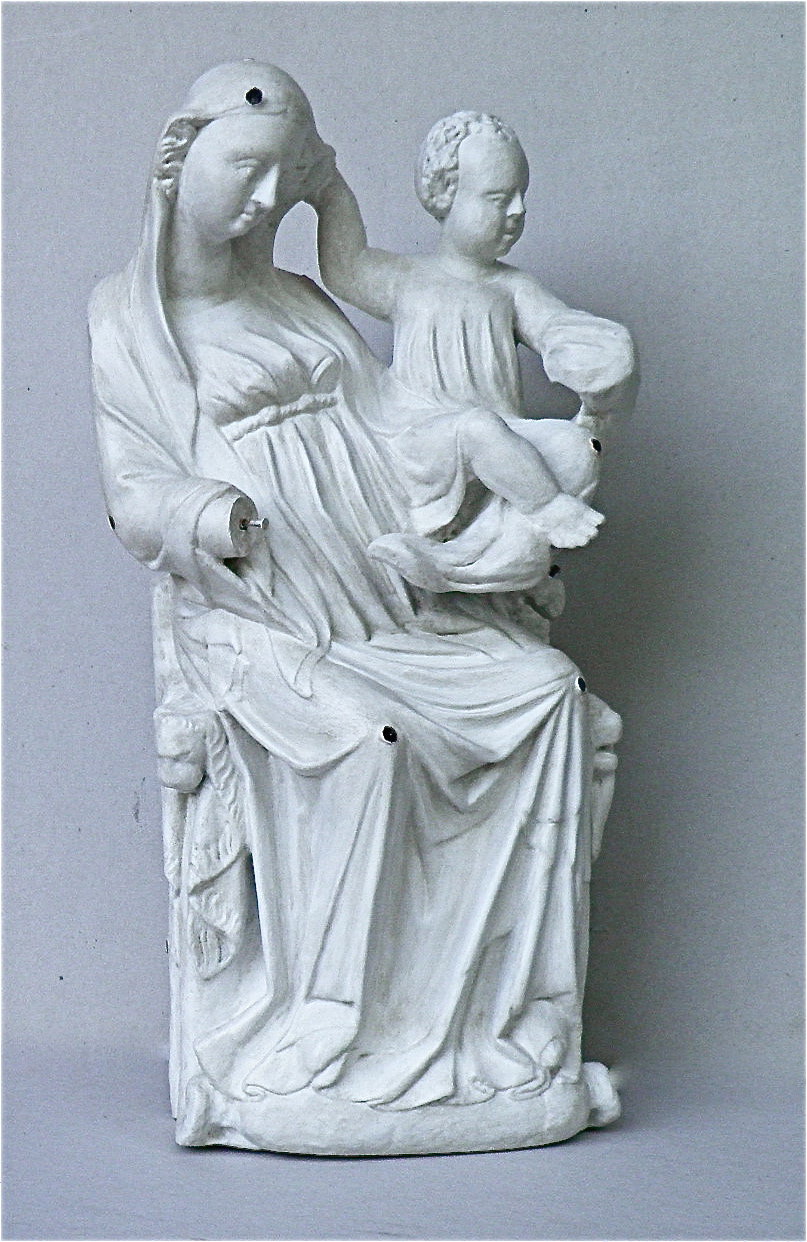
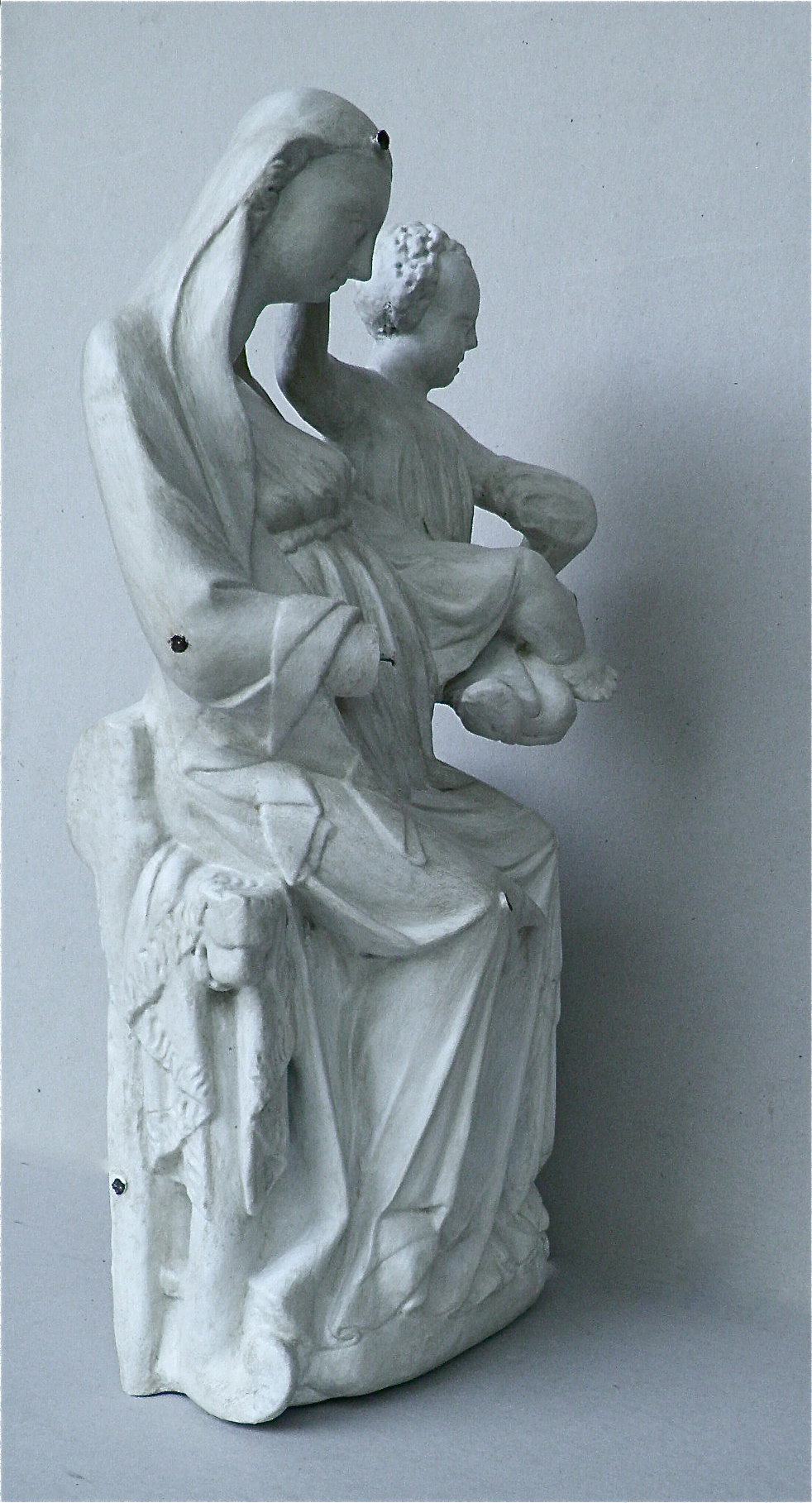
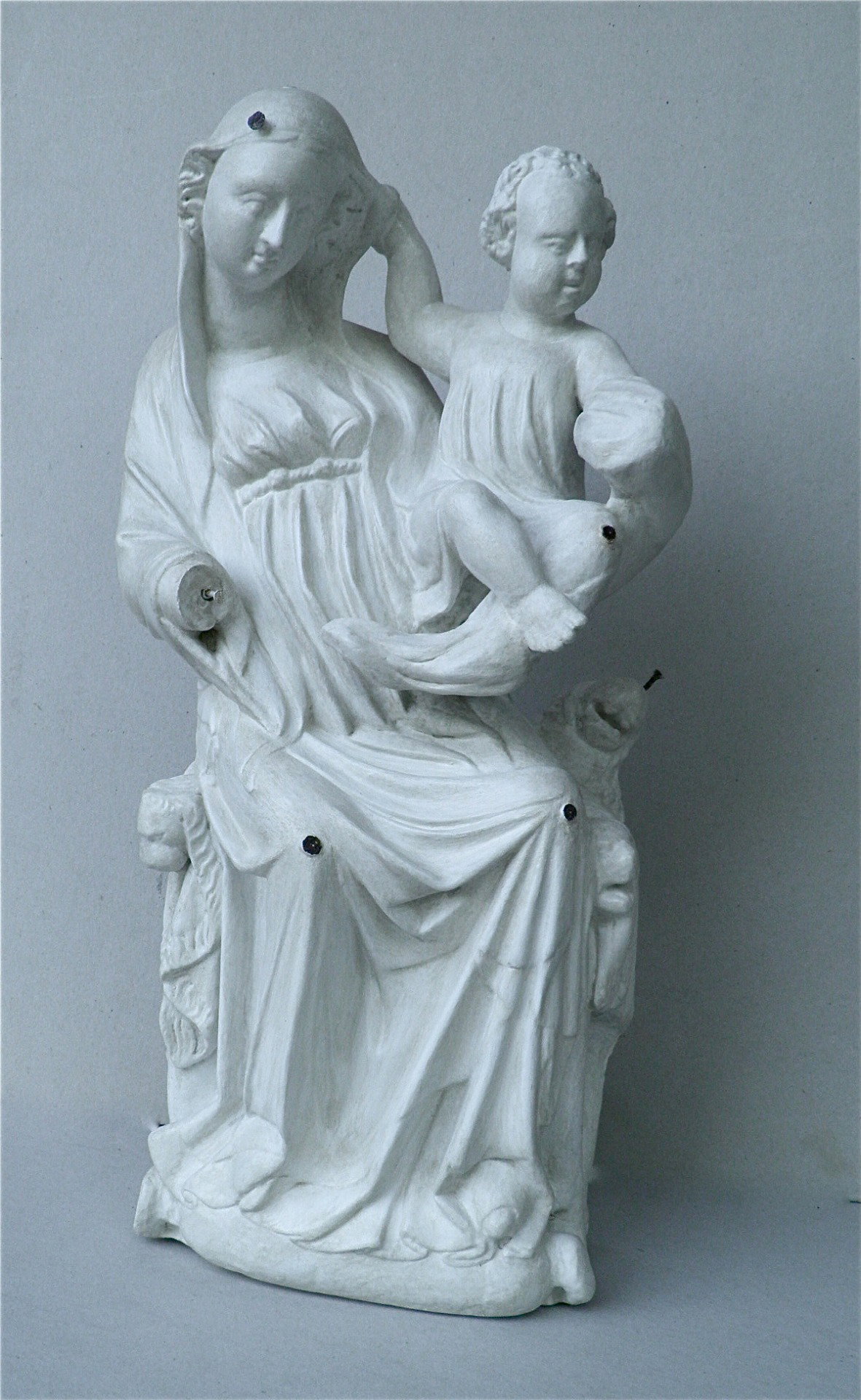
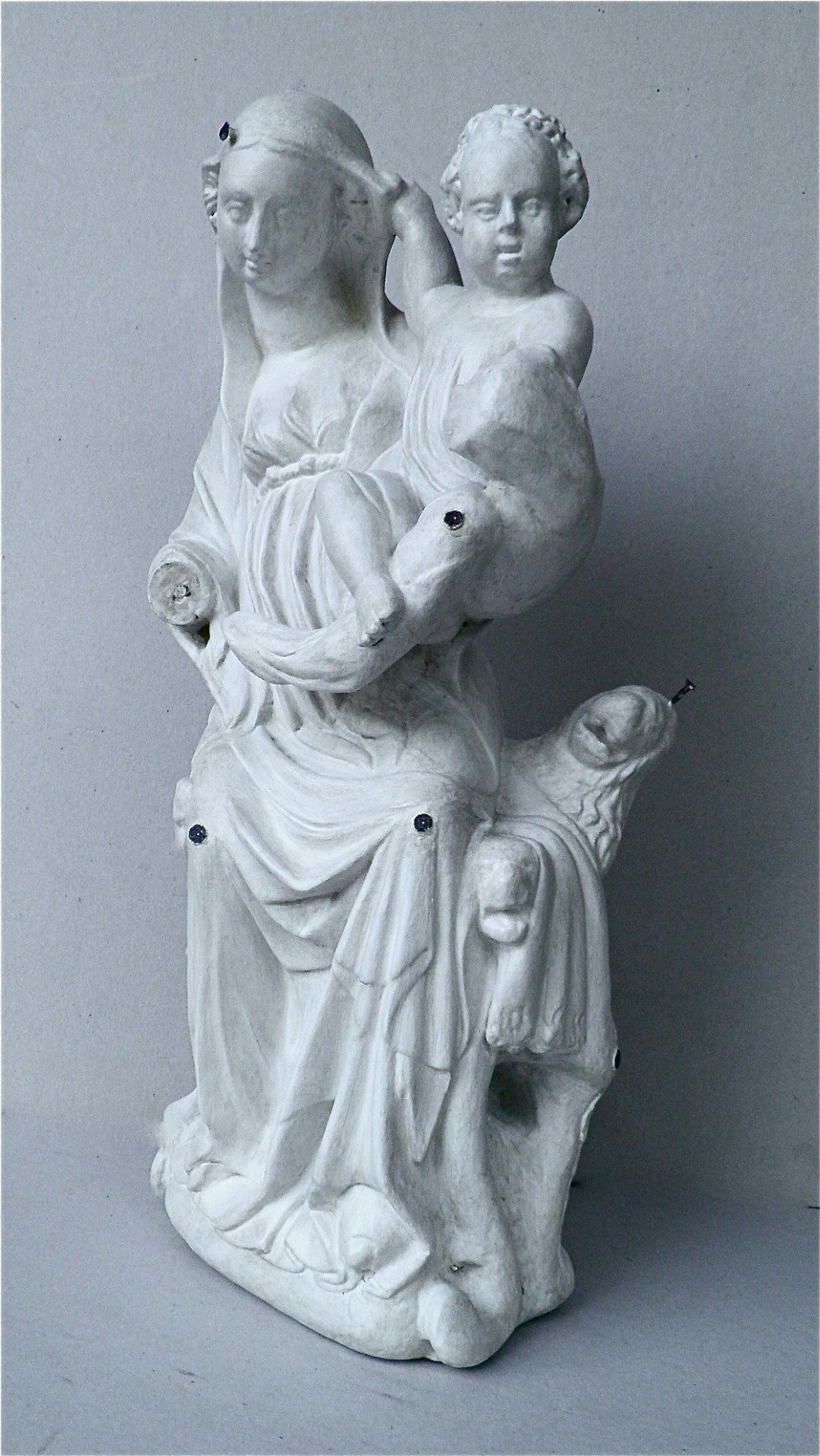
Madonna and Child, plaster sculpture by Alceo Dossena.
Period: late 19th and early 20th centuries.
The sculpture comes from the workshop of Alceo Dossena in Parma, the city where the sculptor settled in the first decade of the 20th century, coming from his native Cremona, where he trained with a marble worker specializing in antique copies.
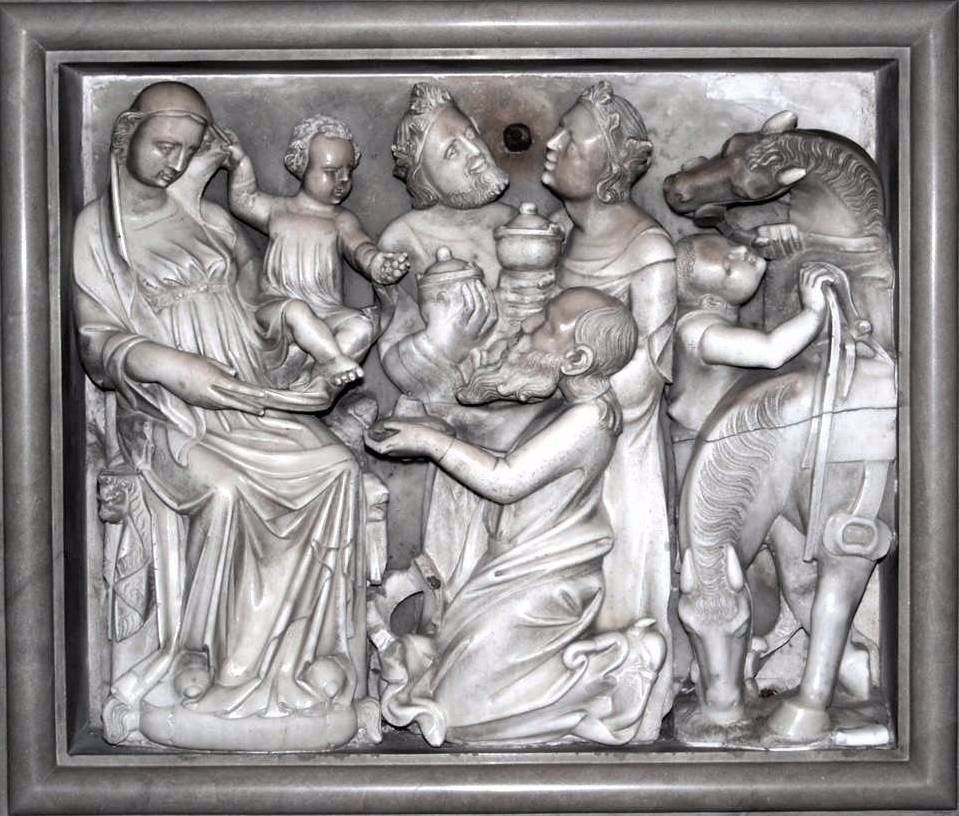
The composition exactly reproduces the Madonna and Child, which forms the left part of the 14th-century Adoration of the Magi (last photo attached) kept in the Church of San Bassiano in Pizzighettone, near Cremona; the Adoration of San Bassiano is a marble high relief made by an artist of Transalpine origin indicated by scholars with the conventional name of Maestro di Pizzighettone (*).
Alceo Dossena had identified the model of Pizzighettone when he still resided in Cremona; once the copy was made, it remained in the Parma workshop even after the workshop itself was sold to another marble worker, following Dossena's move to Rome, and it only passed to local collections in the mid-20th century.
The measurements of the original and the copy correspond, suggesting with all likelihood that the copy was made using casts.
The iron spikes protruding from various parts of the sculpture are the terminals of the internal armature beams, necessary to support a plaster structure, which Dossena did not bother to mask because the cast evidently served only as a medium in the process of creating a definitive work in marble or a harder material, now lost or perhaps not completed.
The finding of this methodology in Alceo Dossena is of particular interest in relation to the resounding career that led him to become one of the most famous forgers in the history of art: from his hands came "ancient" unpublished and surprising pieces, of extraordinary originality and beauty, which unscrupulous merchants placed (perhaps without his knowledge) not only in large private collections but also in the most important museums; his "ancient" works appeared so convincing that there were experts who defended their antiquity even after Dossena had publicly admitted to being their author.
Measurements: height cm 56, max width cm 23, max depth cm 20.
(* ) The Adoration of the Magi of San Bassiano belongs to a series of three Stories of the Childhood of Christ made in Milan in the 14th century for Azzone Visconti by the "Maestro di Pizzighettone"; in 1613 the three Stories were transferred to Pizzighettone by Diego Salazar, a senior official of the Spanish administration in Lombardy, as decoration for his funerary chapel in the Church of San Bassiano (still existing). For the figure of the Maestro di Pizzighettone and for the events of the works of San Bassiano, see in the bibliography: Laura Cavazzini, "Per il Maestro di Pizzighettone", in Nuovi Studi - Rivista di arte antica e moderna n.18, 2012, pages 5 et seq., with copious photographic documentation.