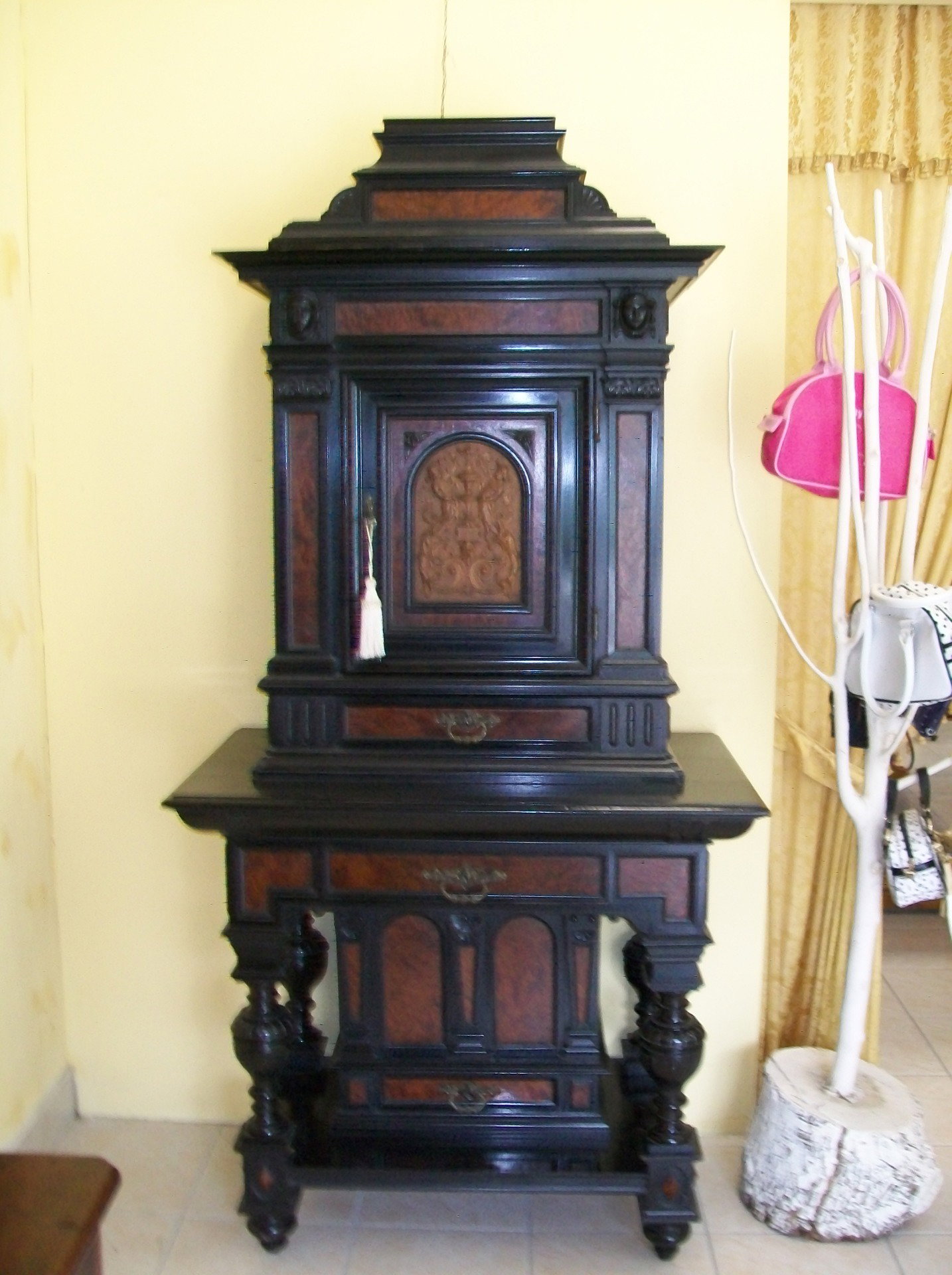
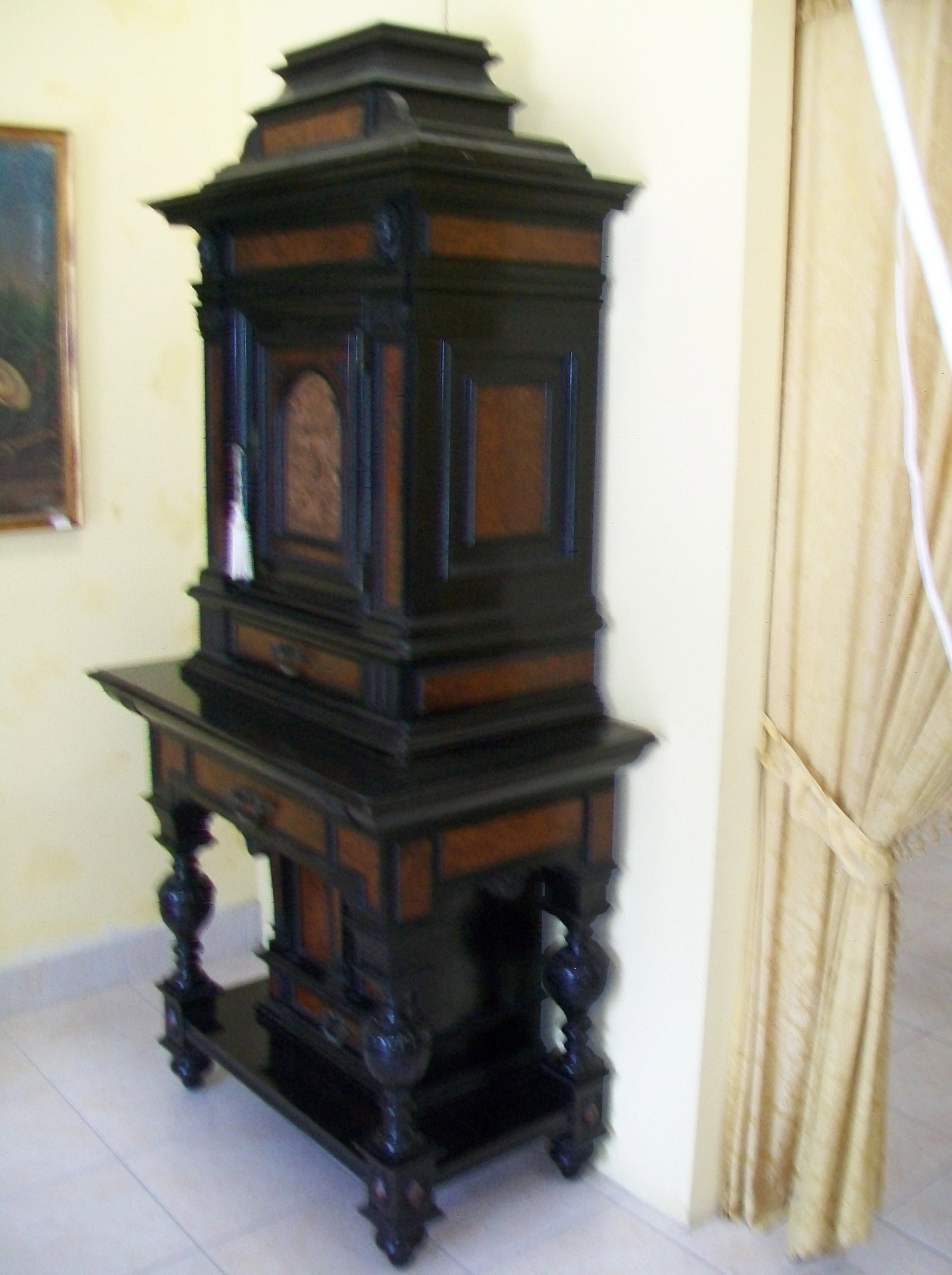
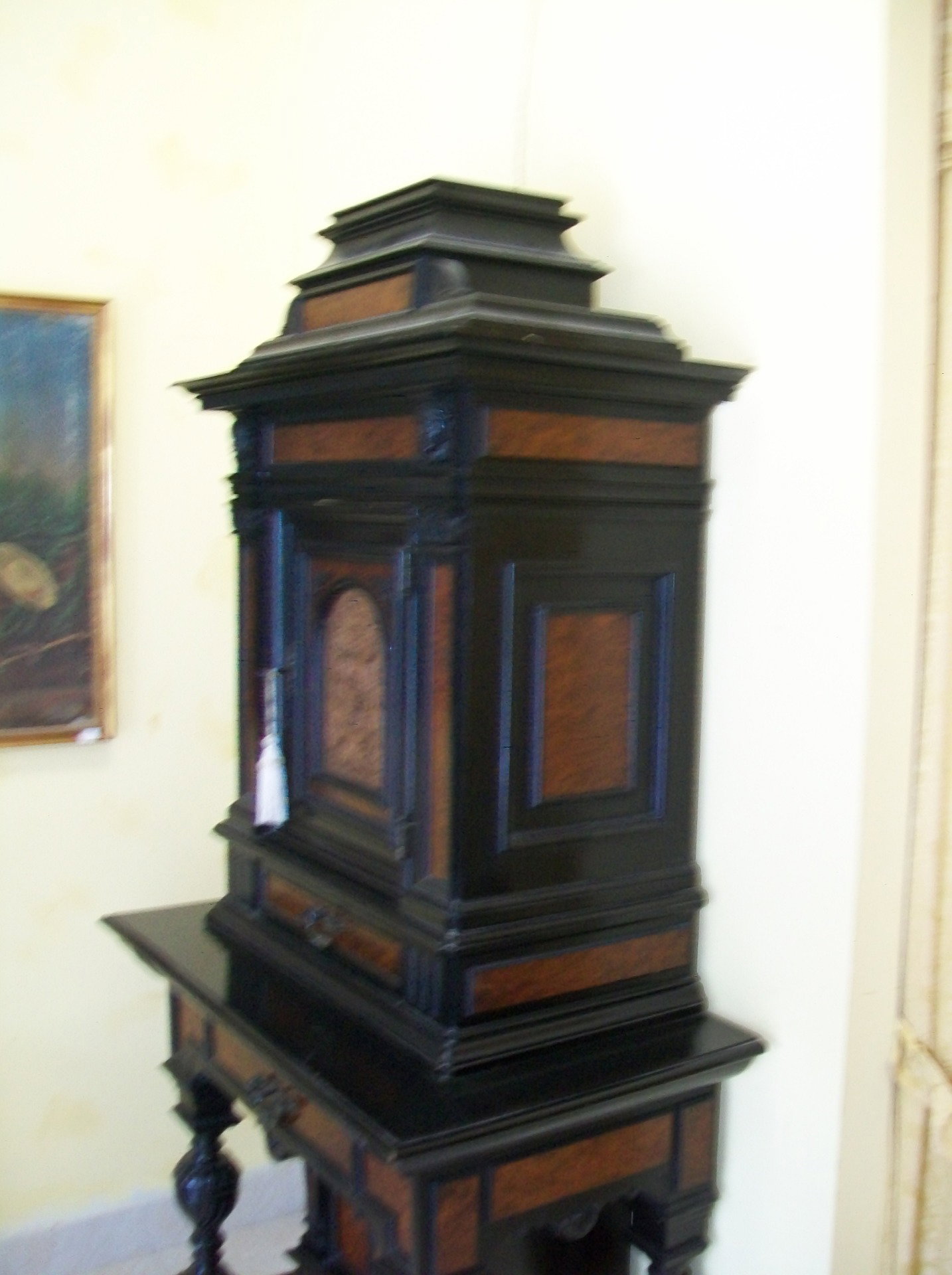
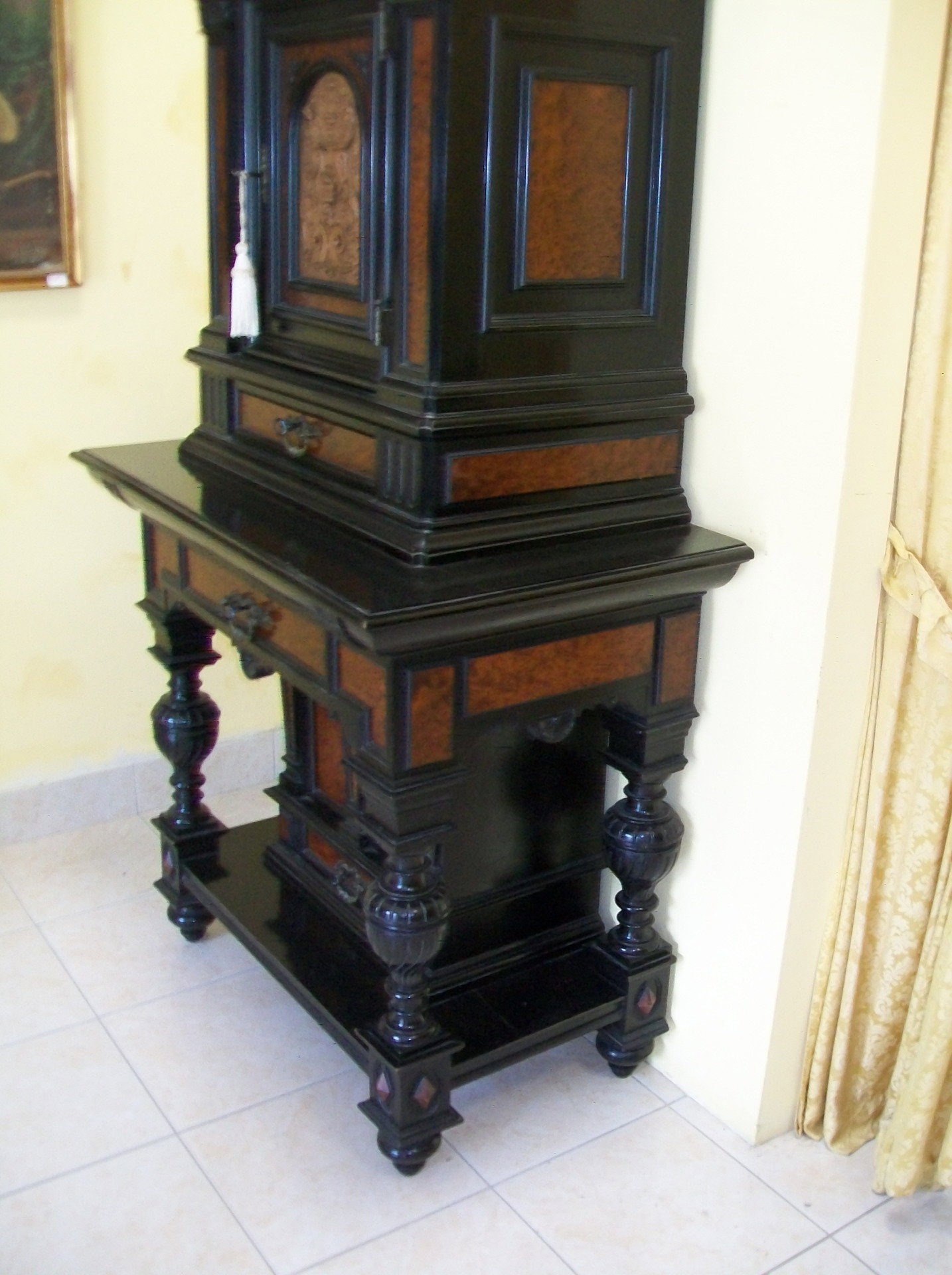
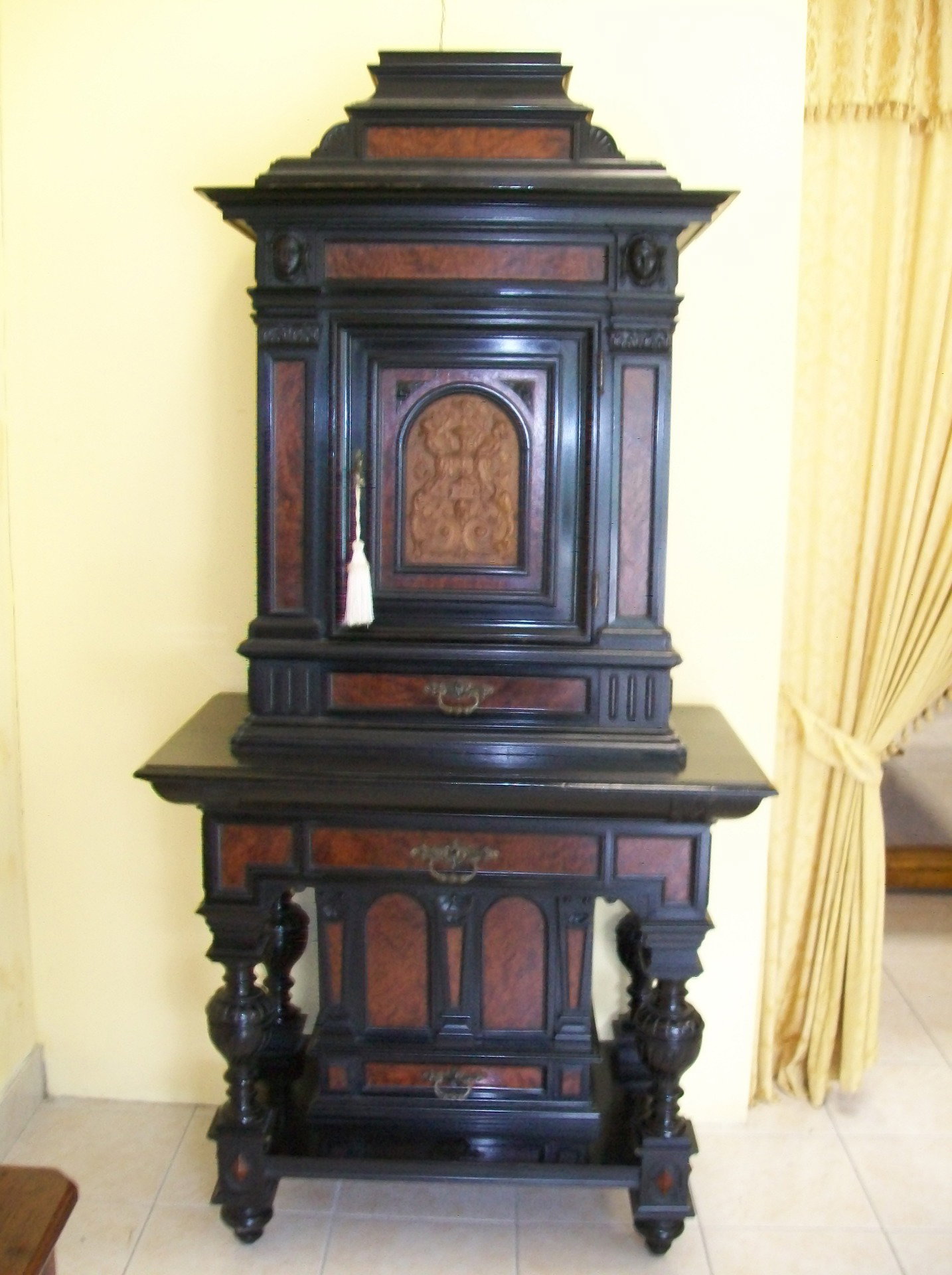
Important cabinet furniture, dating back to 1860 and of representation. 100 w x 208 h x 59 d.
Description:
Very rare, elegant and robust double-body ebanized, in thuja (burl), of representation and dating back to 1860.
The cabinet has a rectangular structure and features a structural symmetry that favors a refined, elegant and well-defined aesthetic and is composed of two stackable bodies with joints.
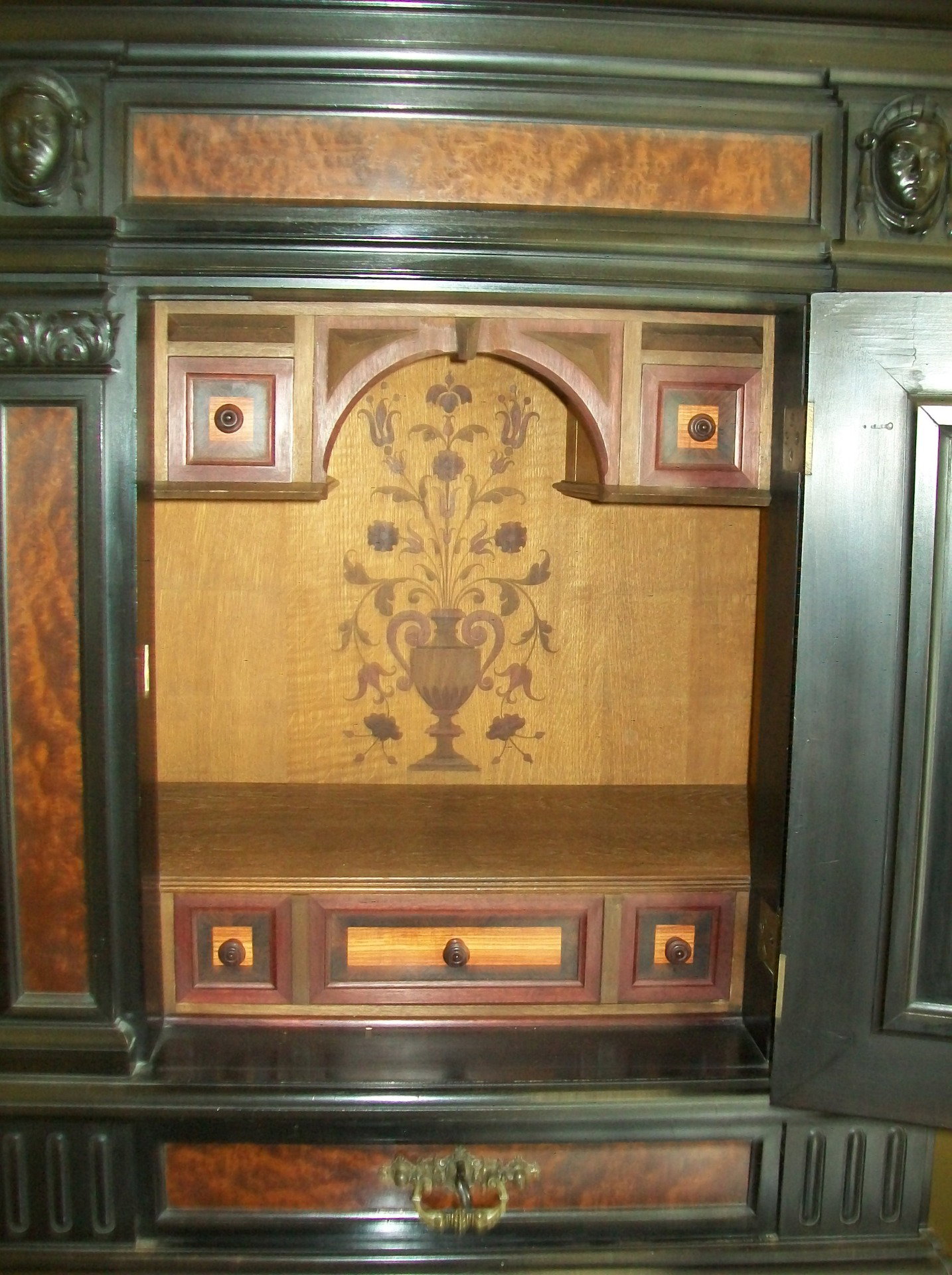
In the first, if you open the door, you can identify a large central space where many small drawers are housed and on the wall a unique and simple composition (drawing).
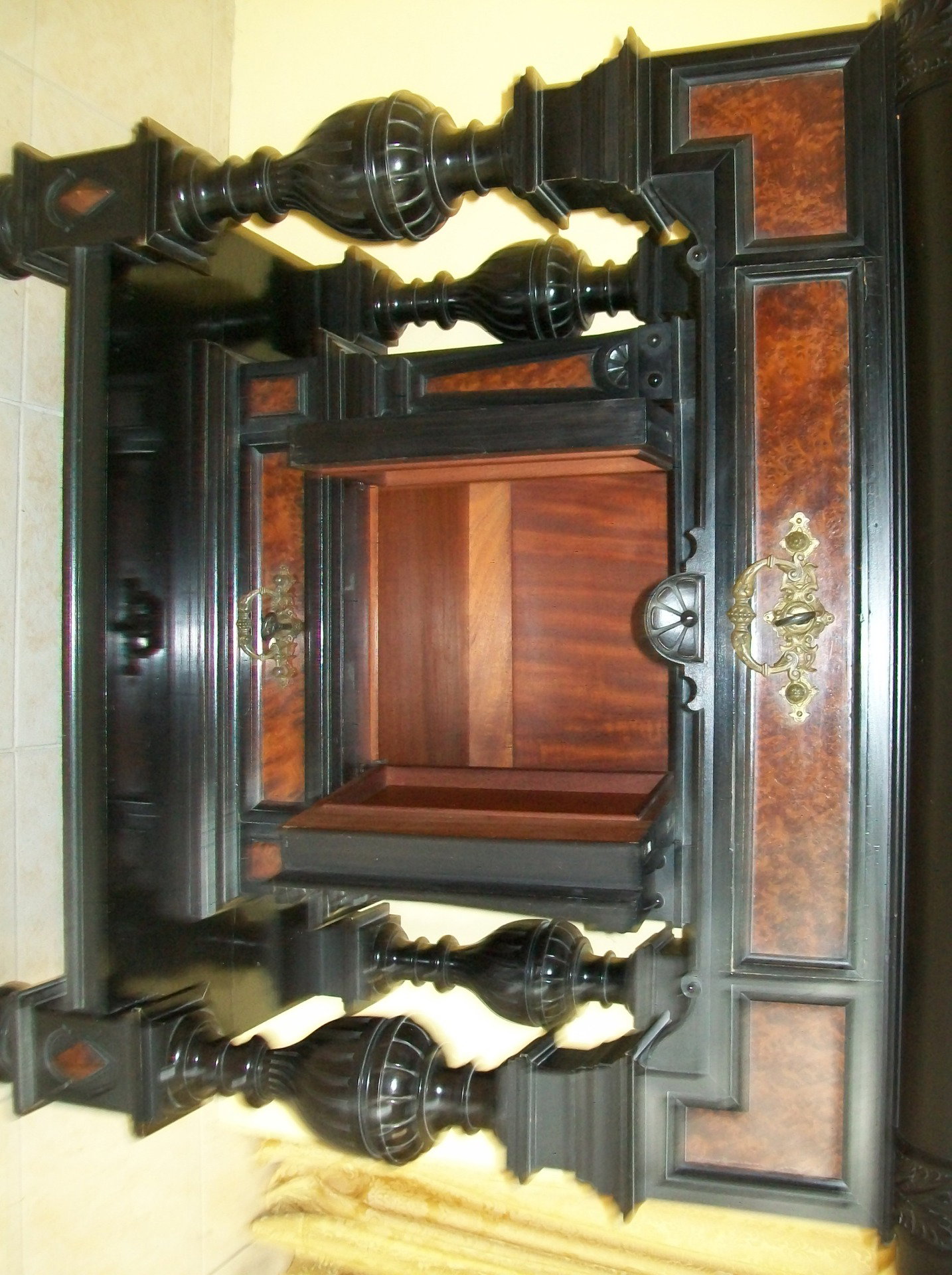
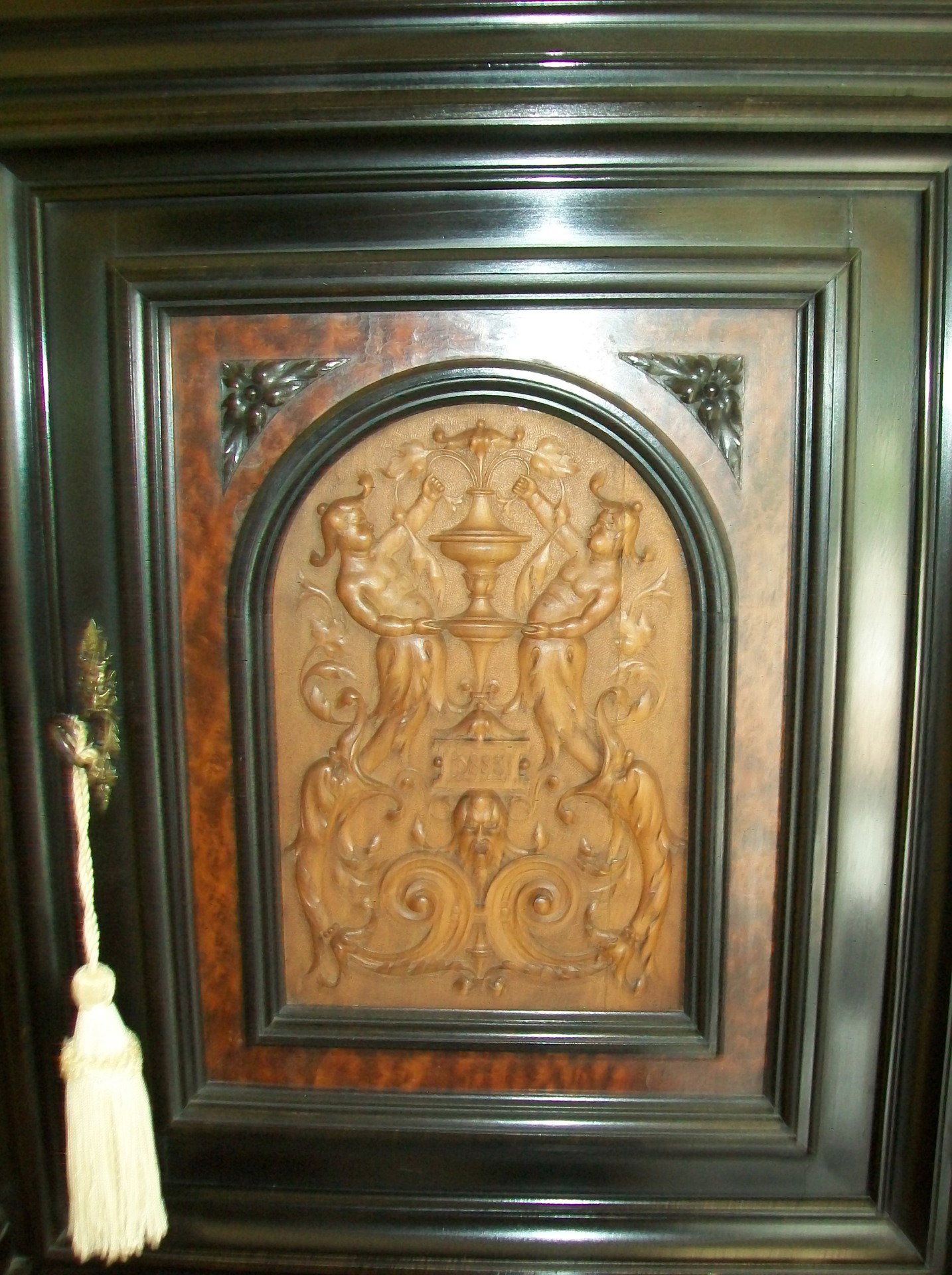
The second has a compartment inside, which can be opened through a hidden button. Decorative elements of the cabinet that can be found in the furniture are the inlays or plaster ornaments such as the columns, which connect one plane to another; details that simulate a palace in reduced dimensions. Also noteworthy are the splendid and defined carvings on the door and the faces that depict images anchored to past times.
It is a stately piece of furniture, present in the homes of nobles.