PARTICULAR CREDENZA - BOLOGNESE WALNUT CABINET IN TWO SECTIONS OF LATE SIXTEENTH-CENTURY DESIGN - (NEW ENTRY)
Description:
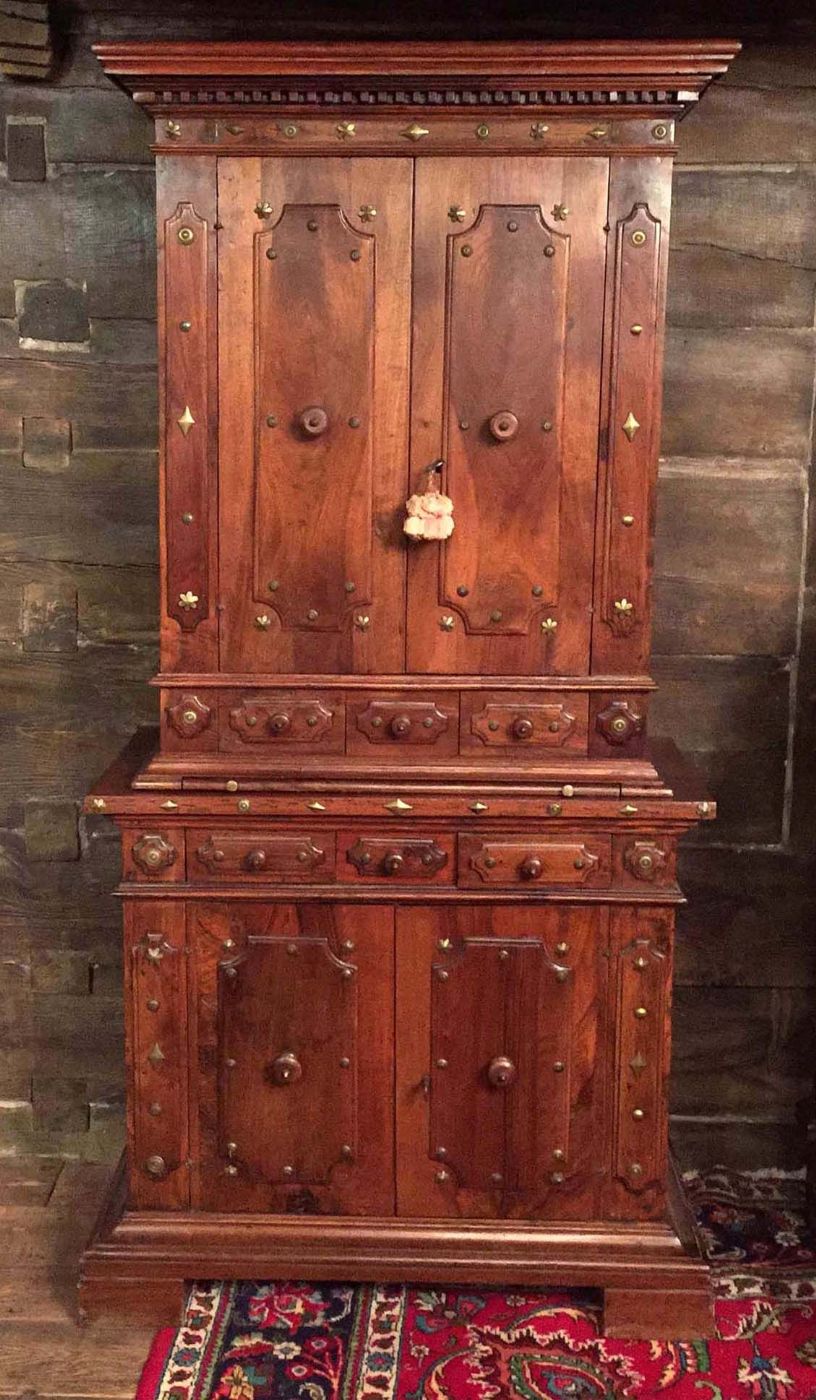
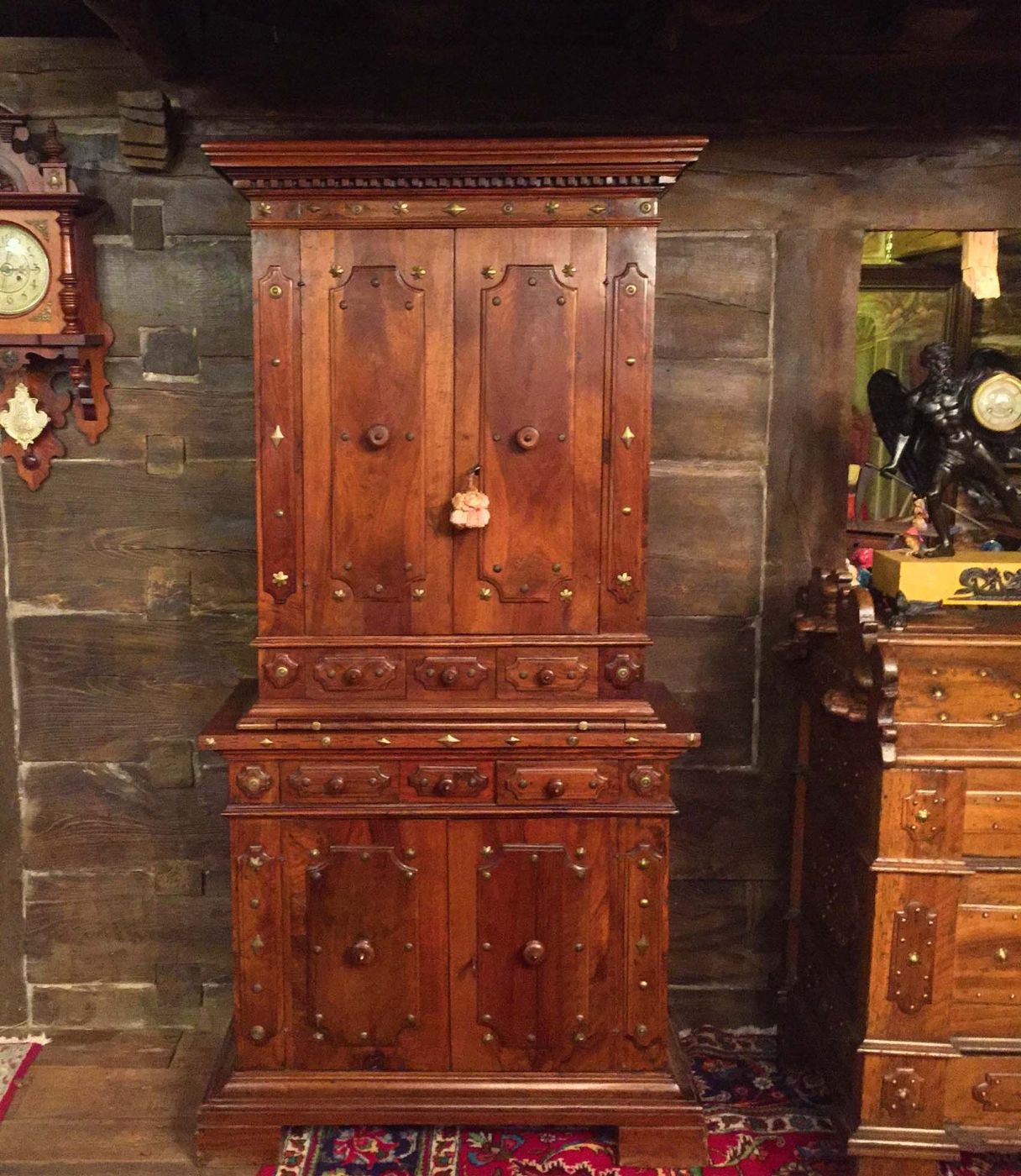
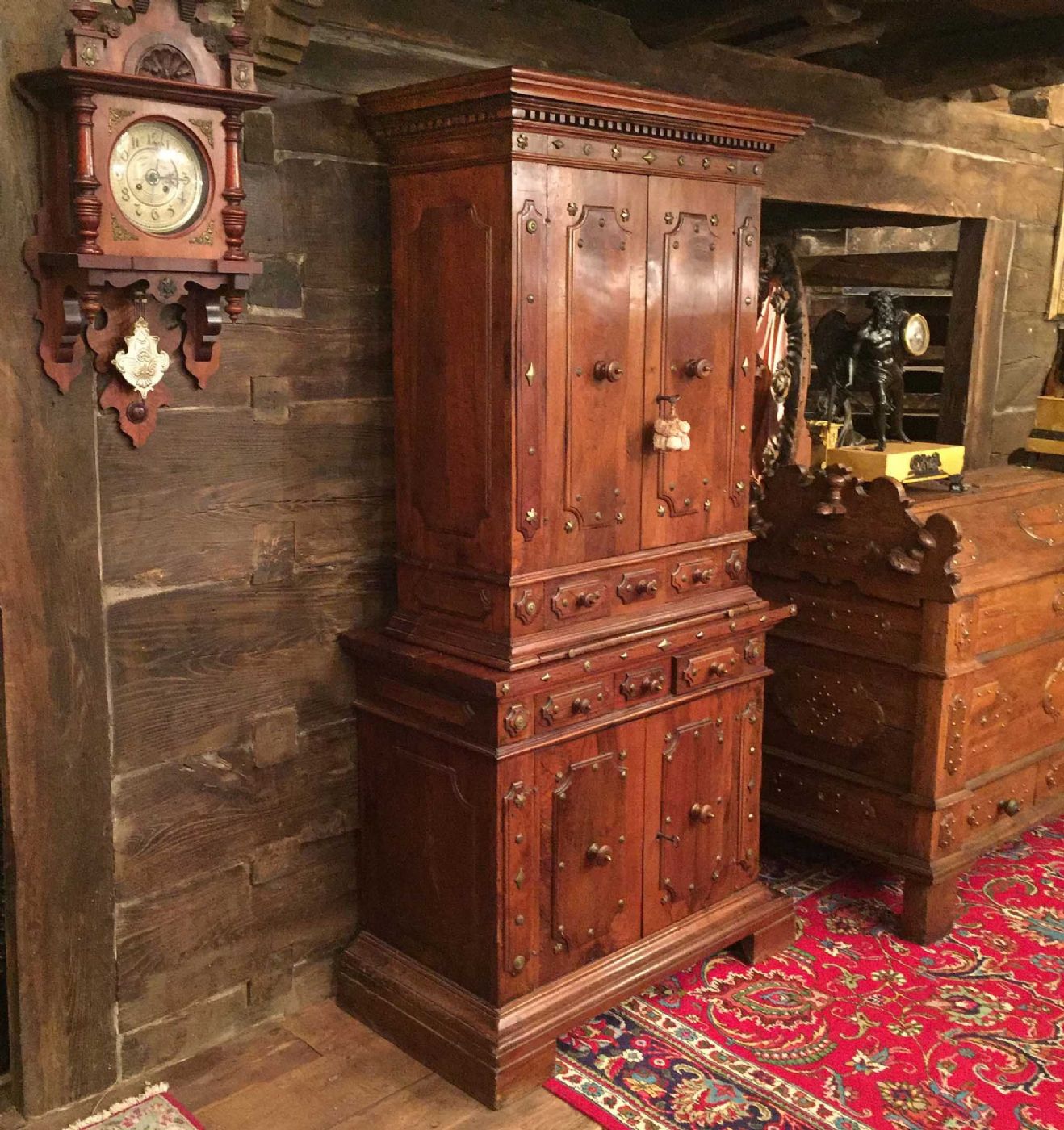
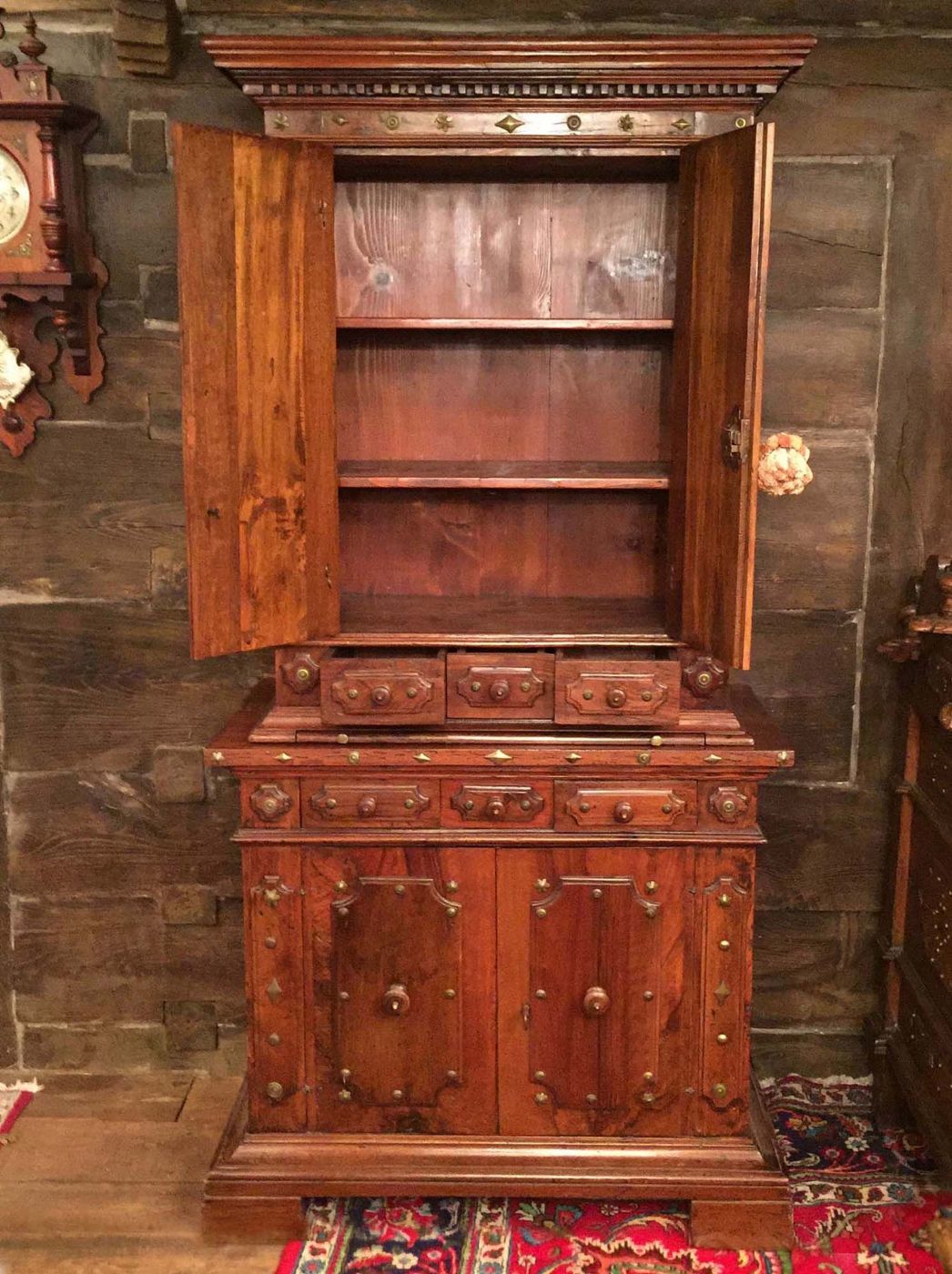
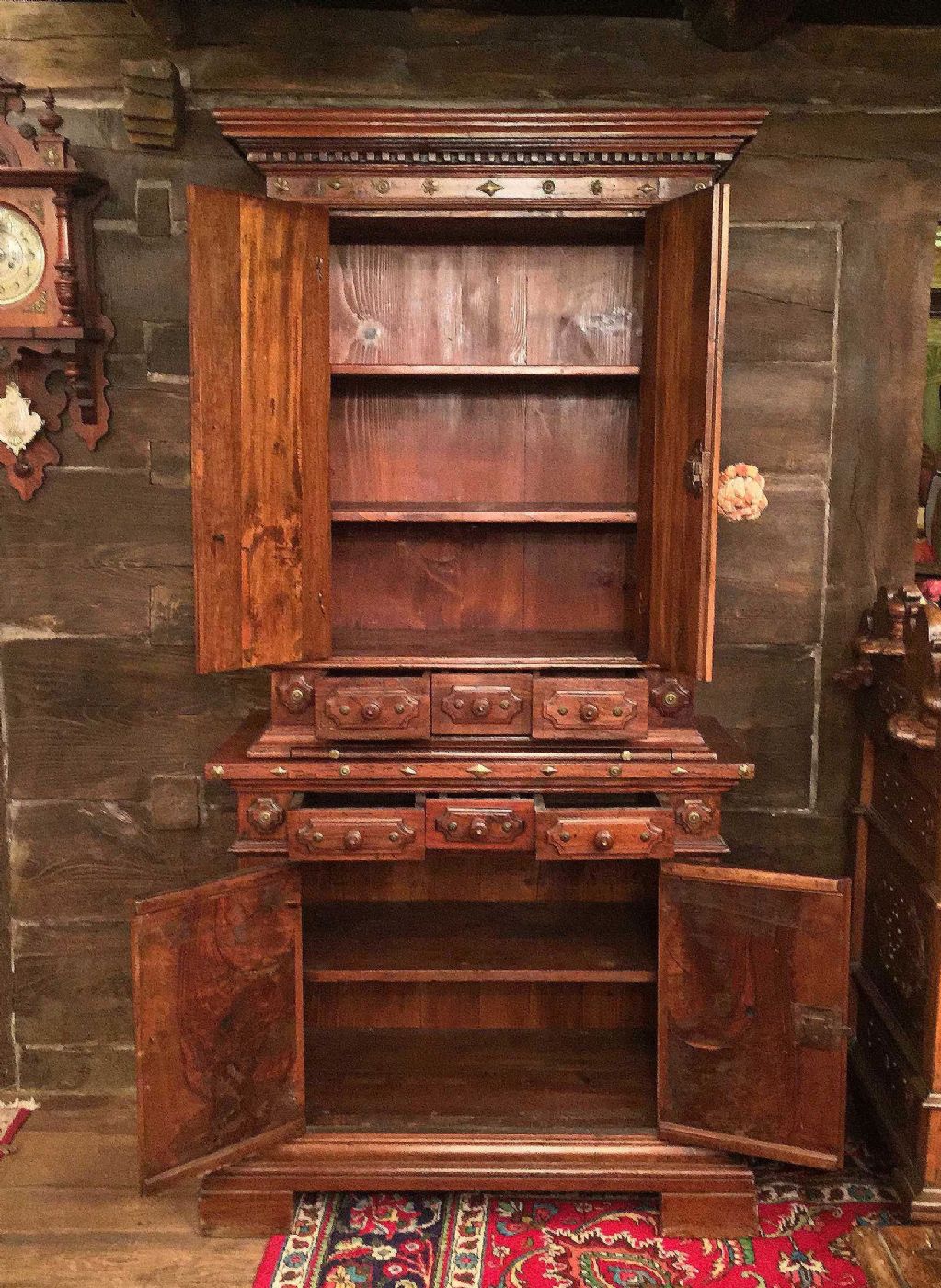
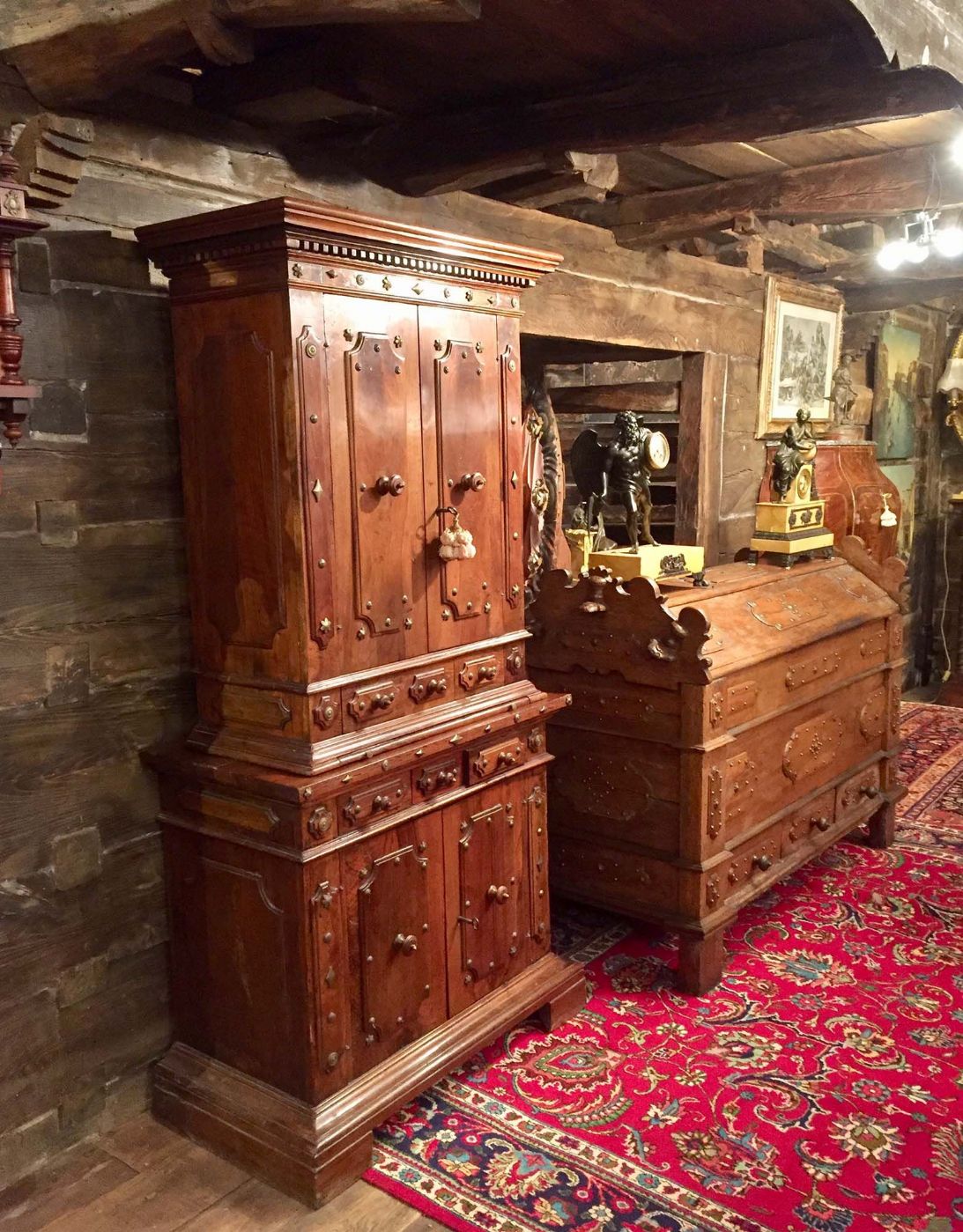
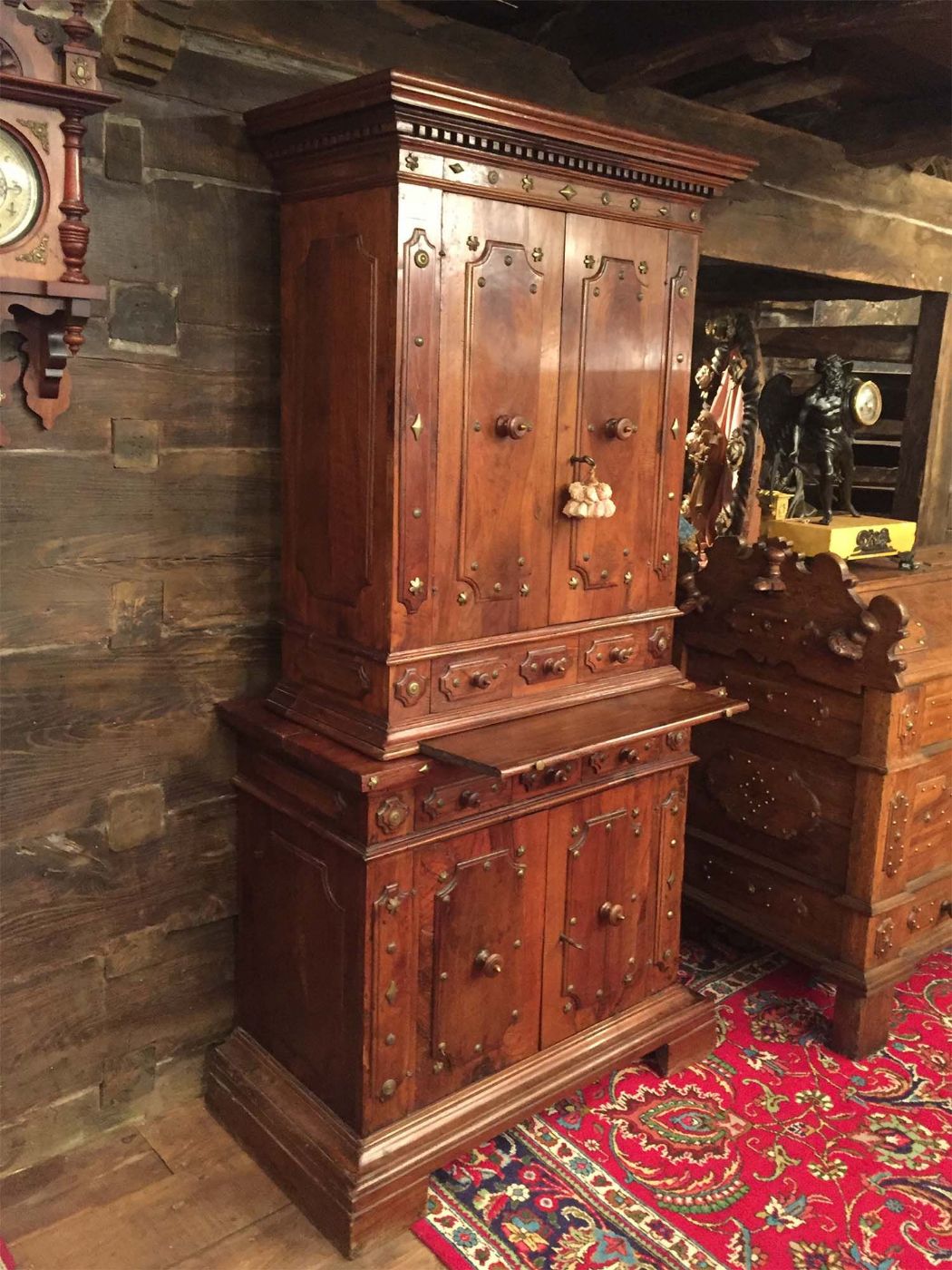
The upper section, or "stipo", slightly set back and narrower, rests on the lower cabinet's surface and features two doors or panels with raised bossed frames and two central knobs. The top, highlighted by recessed frames, juts out over the front of the piece. At the base of the upper section, there are three small drawers with a hidden "pull-out shelf" concealed in the gap between the two sections. The base, or lower cabinet, has three similar small drawers at the top and two doors or panels, also with raised bossed frames.
The double front is richly decorated and emphasized by numerous bronze and brass studs. The upper section contains two shelves, the lower one contains one. The widespread studding reflects the late sixteenth-century Bolognese fashion of enriching furniture with elements that would highlight its importance. Furniture of this type, commonly called "two-section" or "double-section", does not have a precise typological history because, as evidenced by their shape and the use that was made of them, they are a harmonious and functional fusion of specific furnishings, such as: chests of drawers, cabinets, stipi with a container (as in our case), with a vertical development, which constitutes the so-called superstructure. These double sections were used in noble residences to conveniently store all the dishes (plates below, cutlery above). They were also used for bedrooms to store valuable linens (upper part) and sheets (lower part). They were also present in studies and small studies if used to archive files, documents, and valuable books. In this case, as in our interesting model, there was sometimes a pull-out shelf (or drawer) hidden in the intermediate part between the two sections, an element that constituted an original and also convenient writing surface immediately ready for use.
The furniture is typical of the late sixteenth-century and early seventeenth-century Bolognese tradition, although, due to the evident late nineteenth-century interventions (particularly on the backs and bottoms of the drawers), it must be considered a sixteenth-century "revival" piece, that is, reproducing, in still ancient times, stylistic paths of previous centuries.
Dimensions: total height cm. 195 – maximum width cm. 100 – maximum depth cm. 54 - height of lower section cm. 86.5 – height of upper section cm. 108.5 - depth of lower section cm. 39.5 – width of upper section cm. 83
Bologna - 19th century