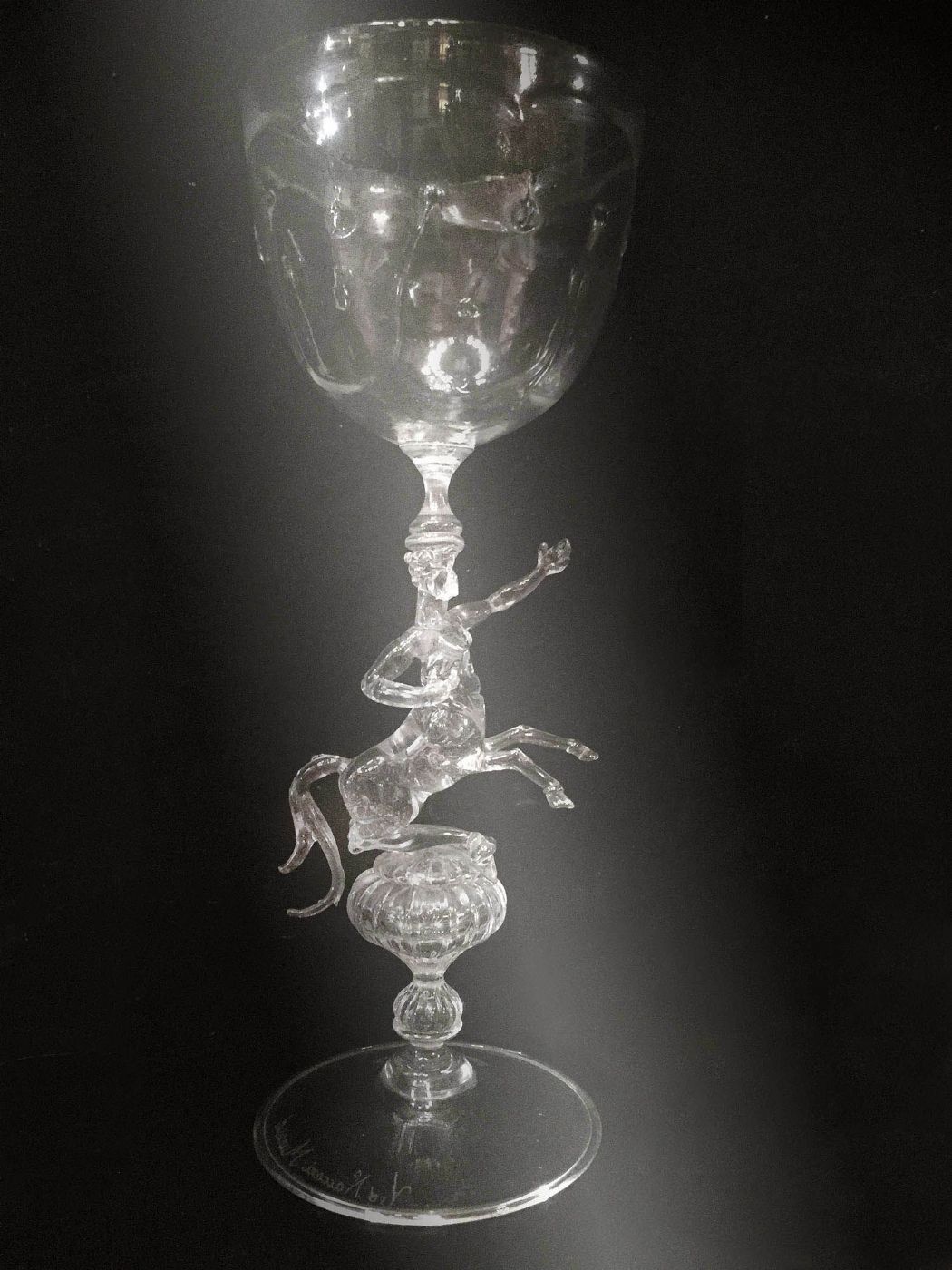
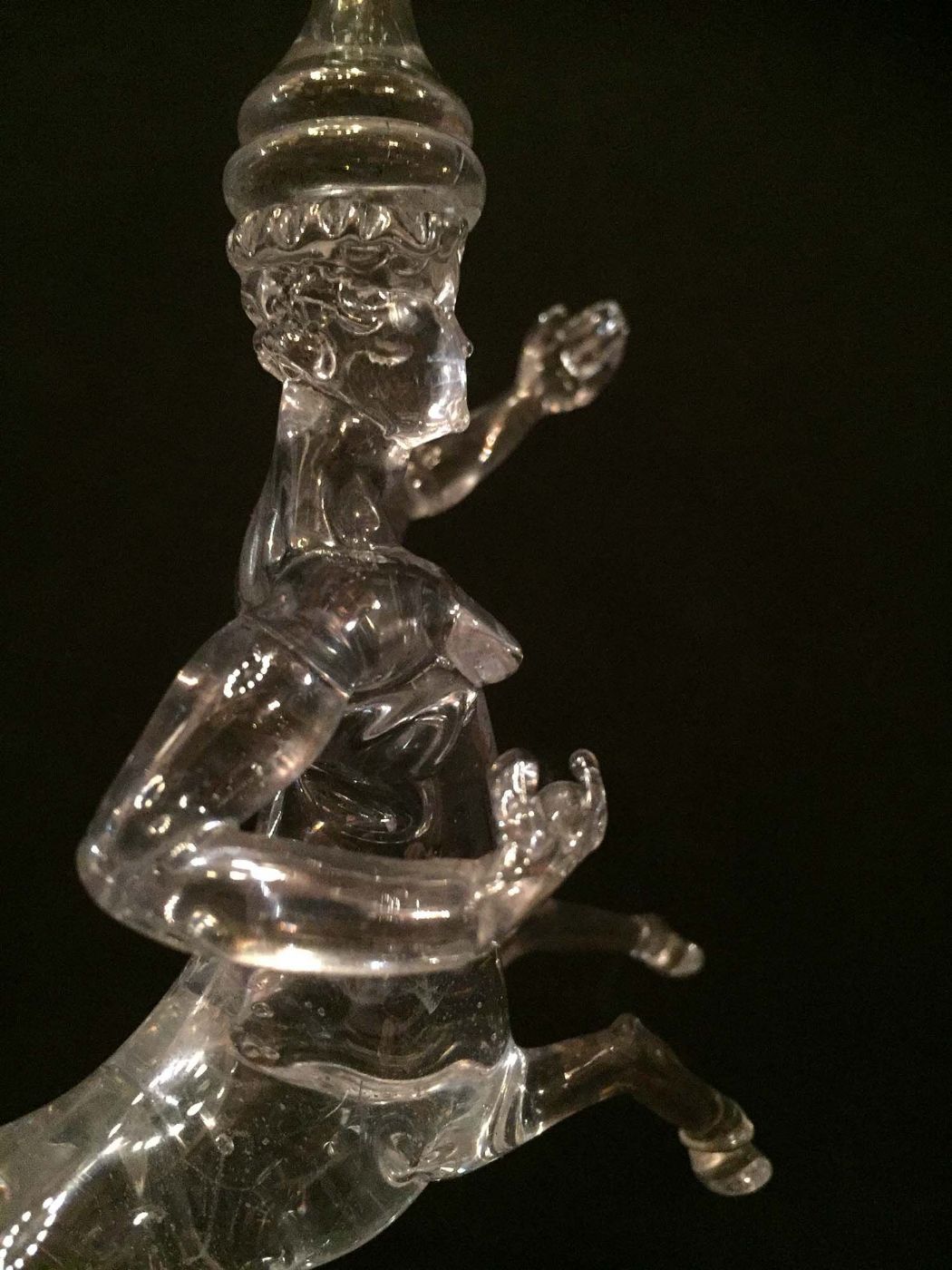
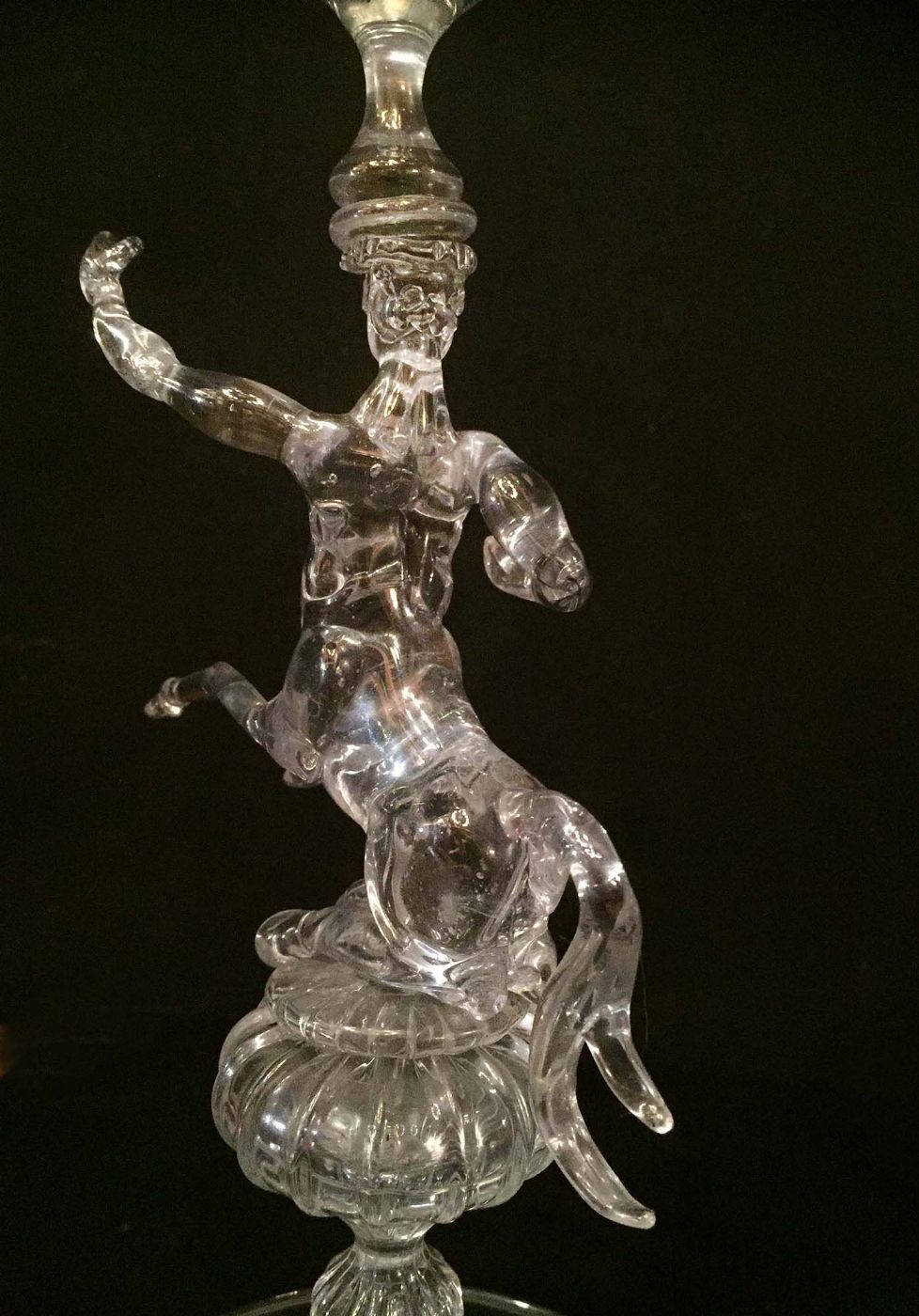
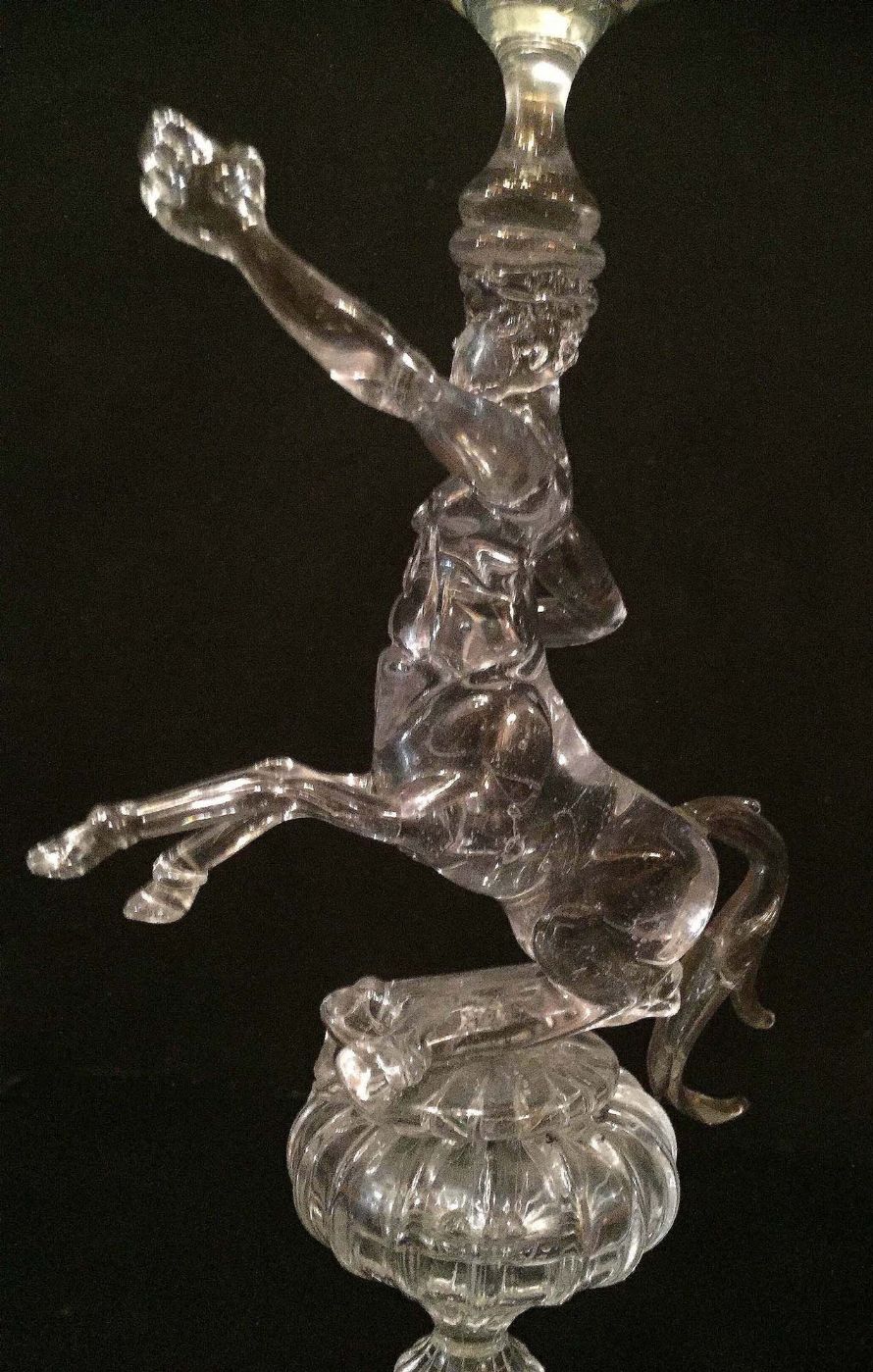
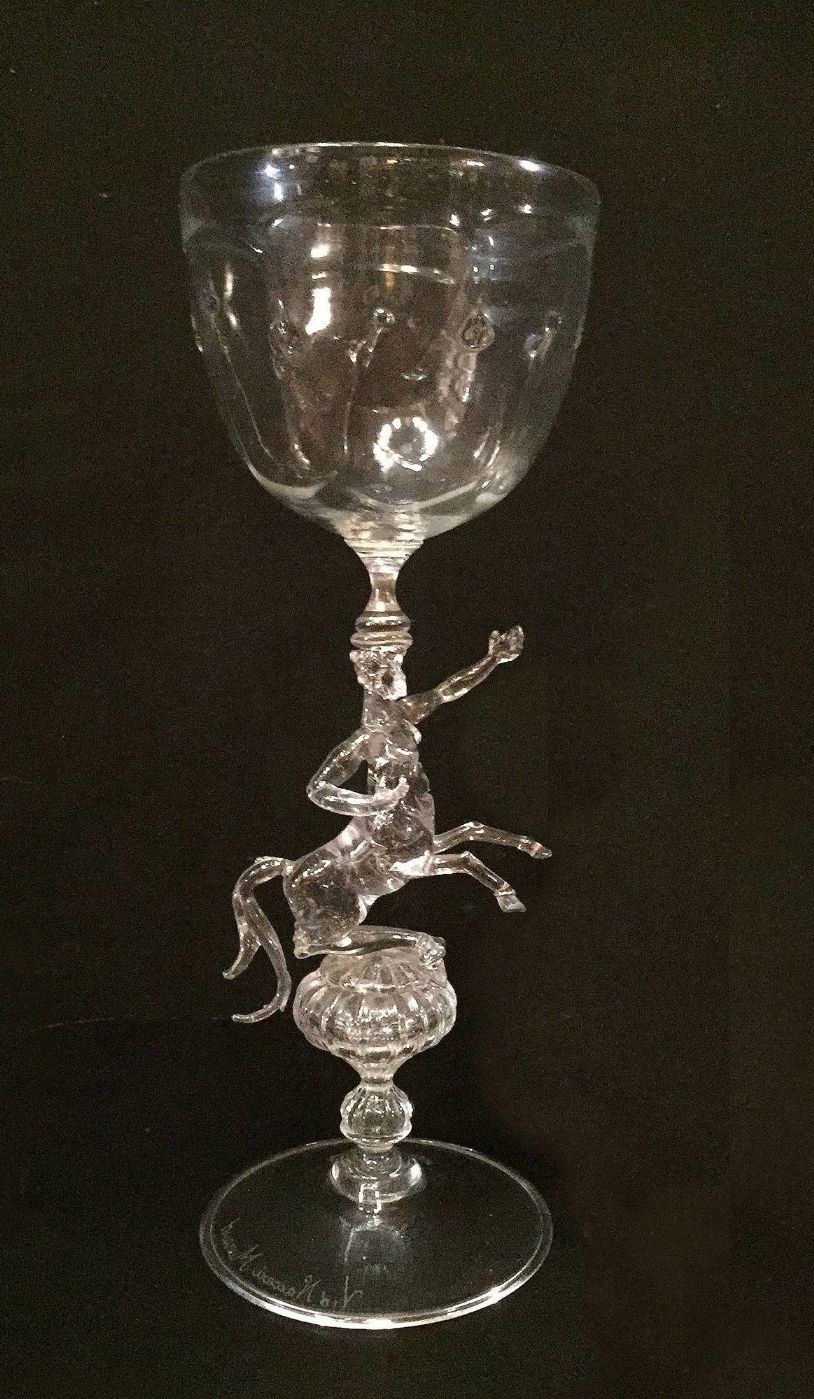
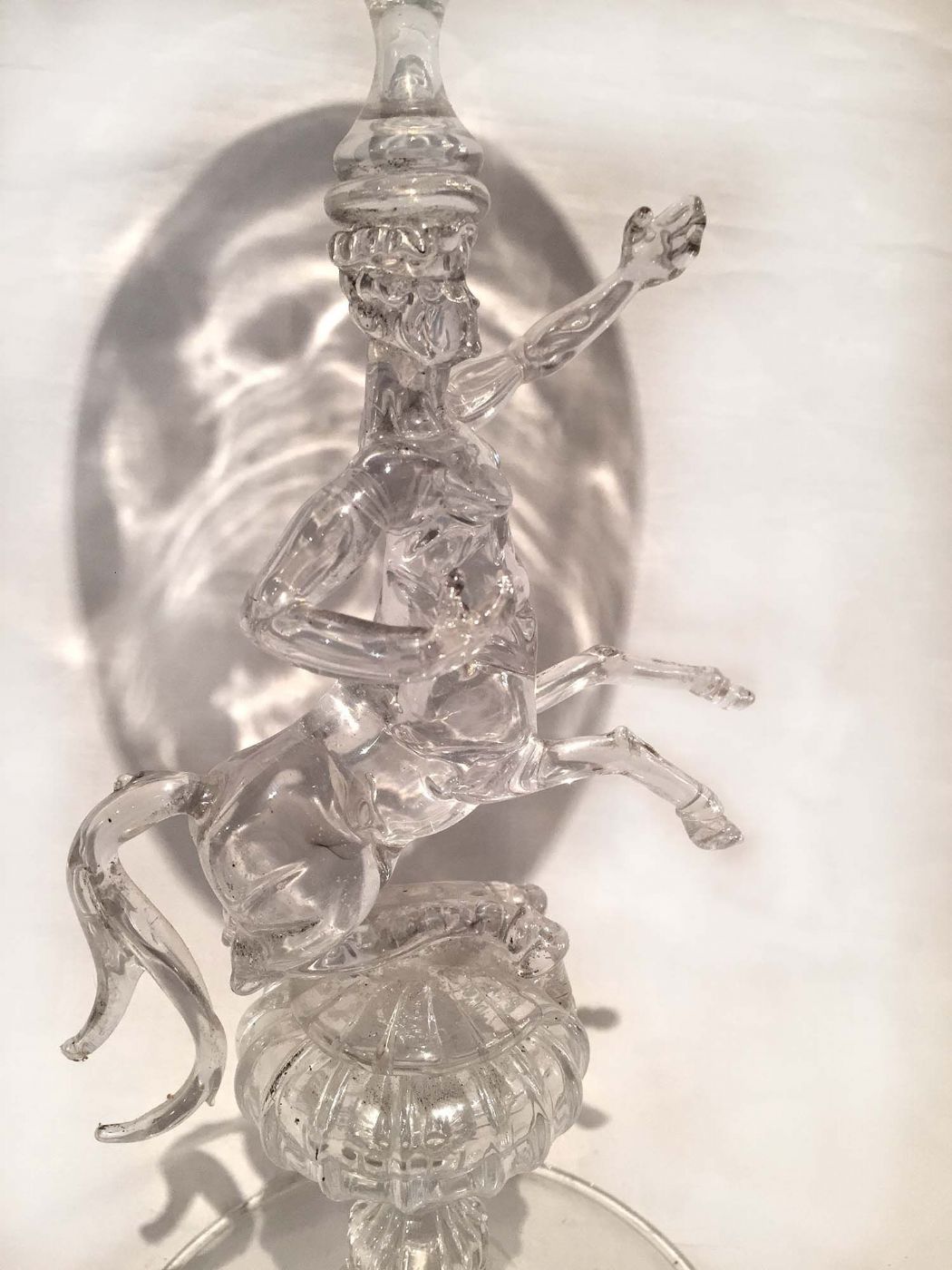
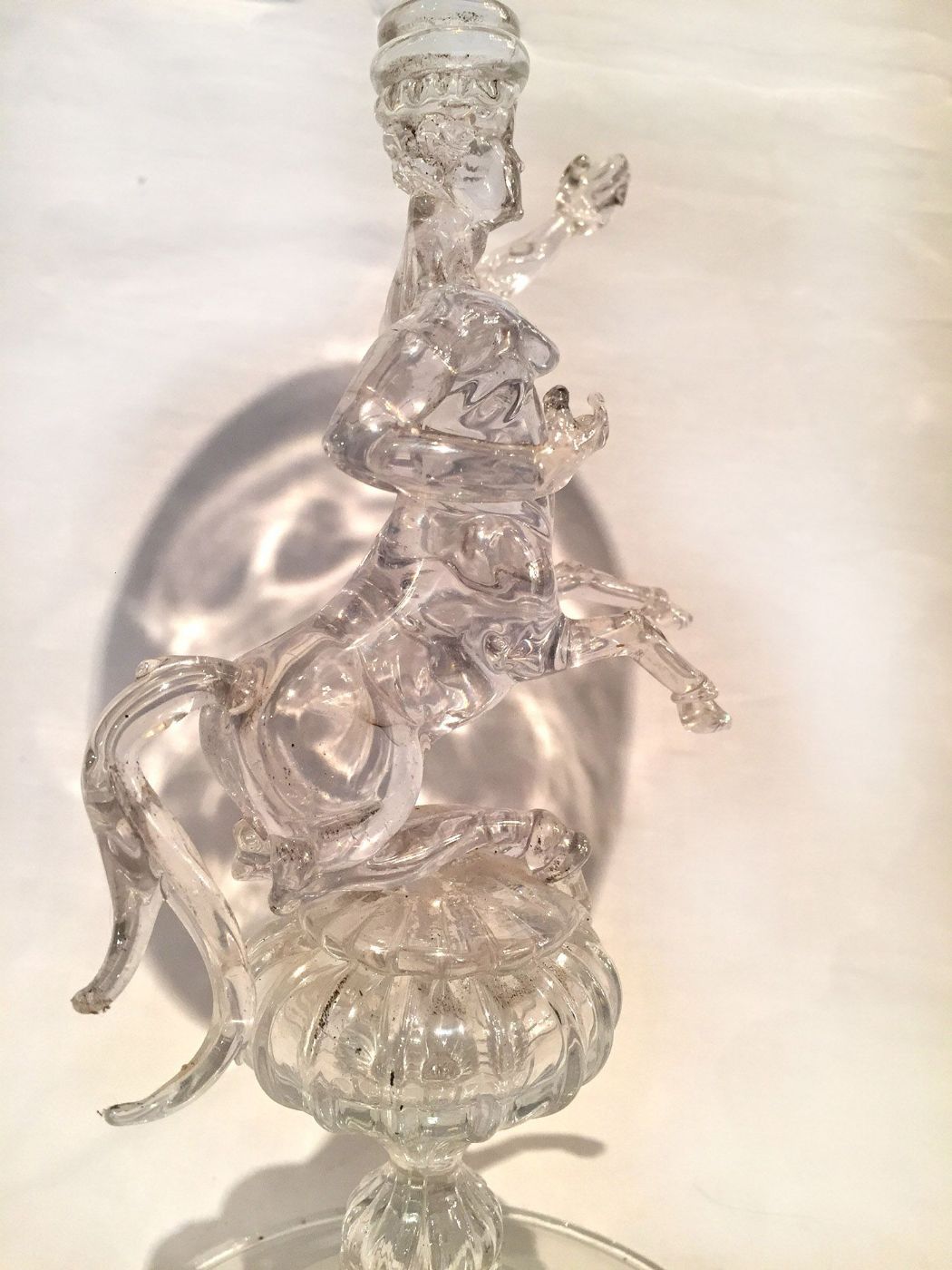
THE CENTAUR - Murano crystalline glass sculpture by masters Viò and Naccari
Description:
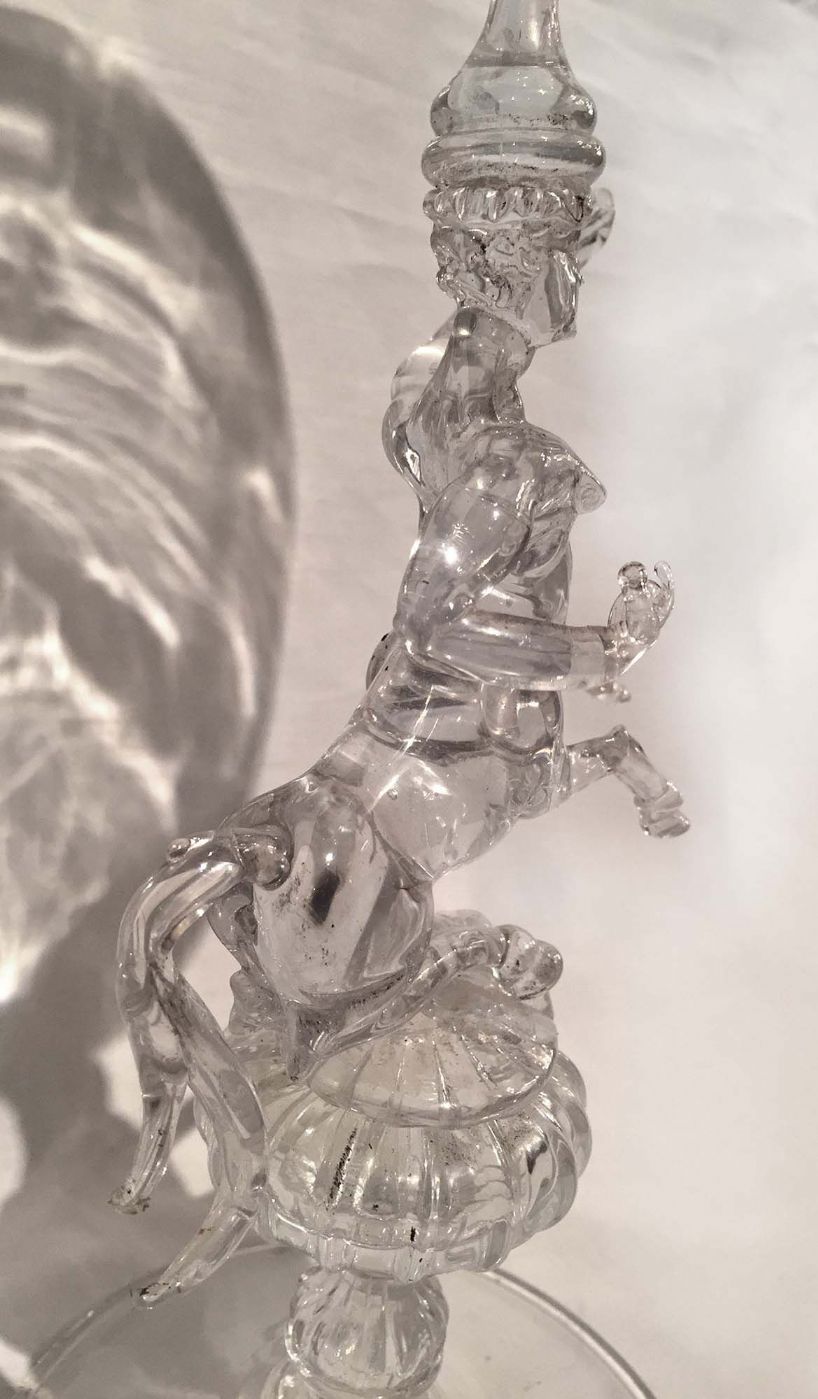
Elegant crystalline glass chalice depicting the figure of a Centaur, a creature of Greek mythology, half man and half horse.
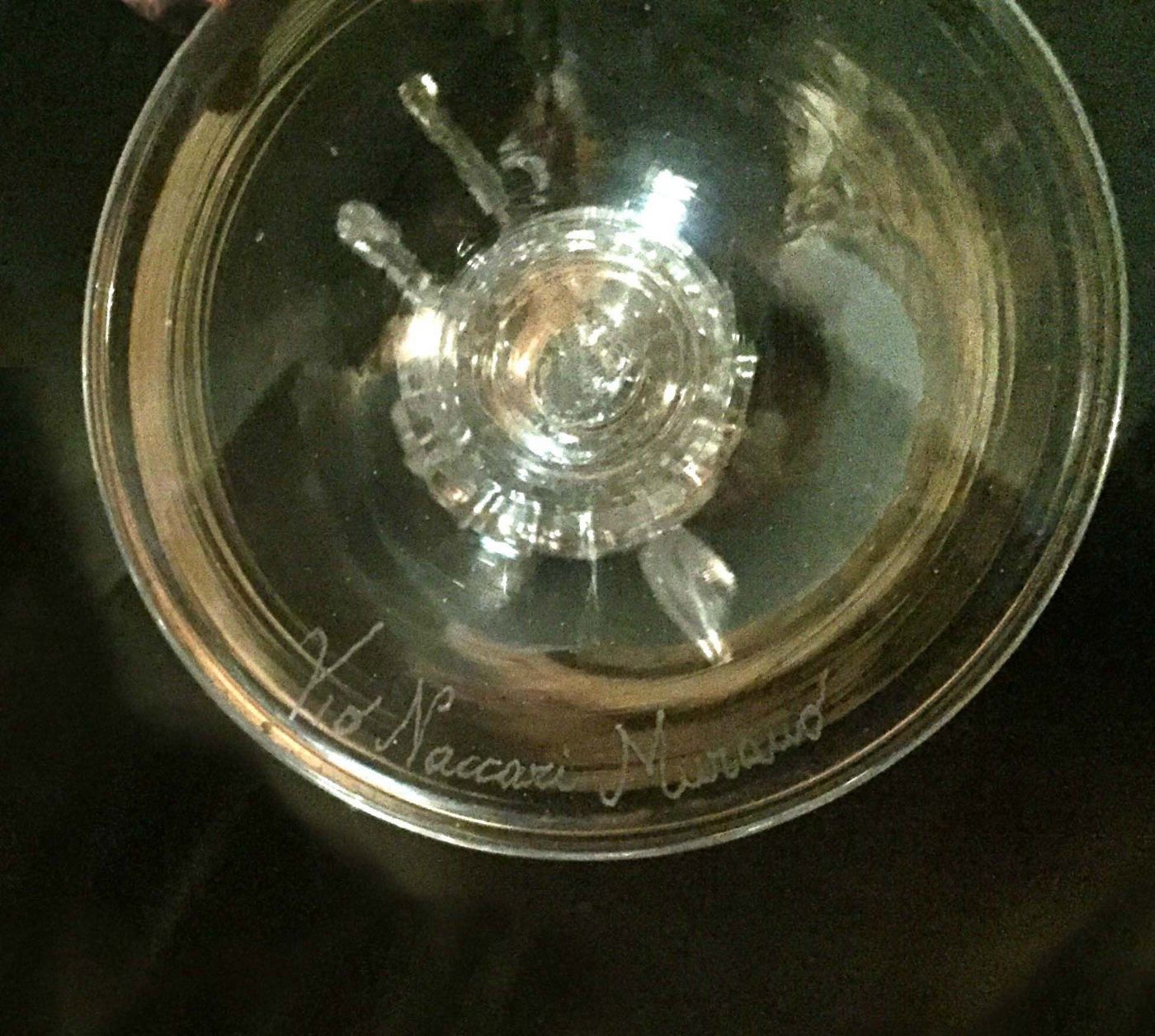
Author: masters Viò and Naccari
Signed work
Murano – Venice 20th Century
Measurements: Height 39 cm
€ 2,250.00
Definition of “Crystalline Glass”
“Crystalline glass” is defined as colorless and transparent glass, decolored with manganese dioxide, obtained with purified raw materials. Since the Middle Ages, crystal has been considered the most precious Murano glass. The secret of its quality lies in the purity of the raw materials used, in the use of bleaching agents, in the preparation of the vitrifiable mixture and in the conduct of the fusion. In the mid-15th century, the Muranese proposed a pure and colorless glass, which for the first time in history was called “crystal” and was subsequently reproduced in other European countries. Unlike Nordic crystal, which has a high concentration of lead oxide and which today must be subjected to strict controls relating to the fumes deriving from the fusion, Murano crystal is a soda-lime glass whose main components, in addition to silica, are sodium oxide and calcium oxide. The soda crystal is very suitable for the production of particularly light blown objects which require long processing times. Towards the mid-1400s, the art of Murano glass experienced an epochal turning point thanks to Angelo Barovier, a fascinating figure of artist/scientist who managed to obtain, through a real alchemical process, a new type of extremely clean glass and so similar in transparency to crystal that he himself called it crystalline glass (then Venetian crystal). This new discovery failed to replace the colored glasses which in the meantime had become a peculiarity of Murano production but certainly contributed to incredibly refining its transparency.