ANSELMO BUCCI
(Fossombrone, 1887 ~ Monza, 1955)
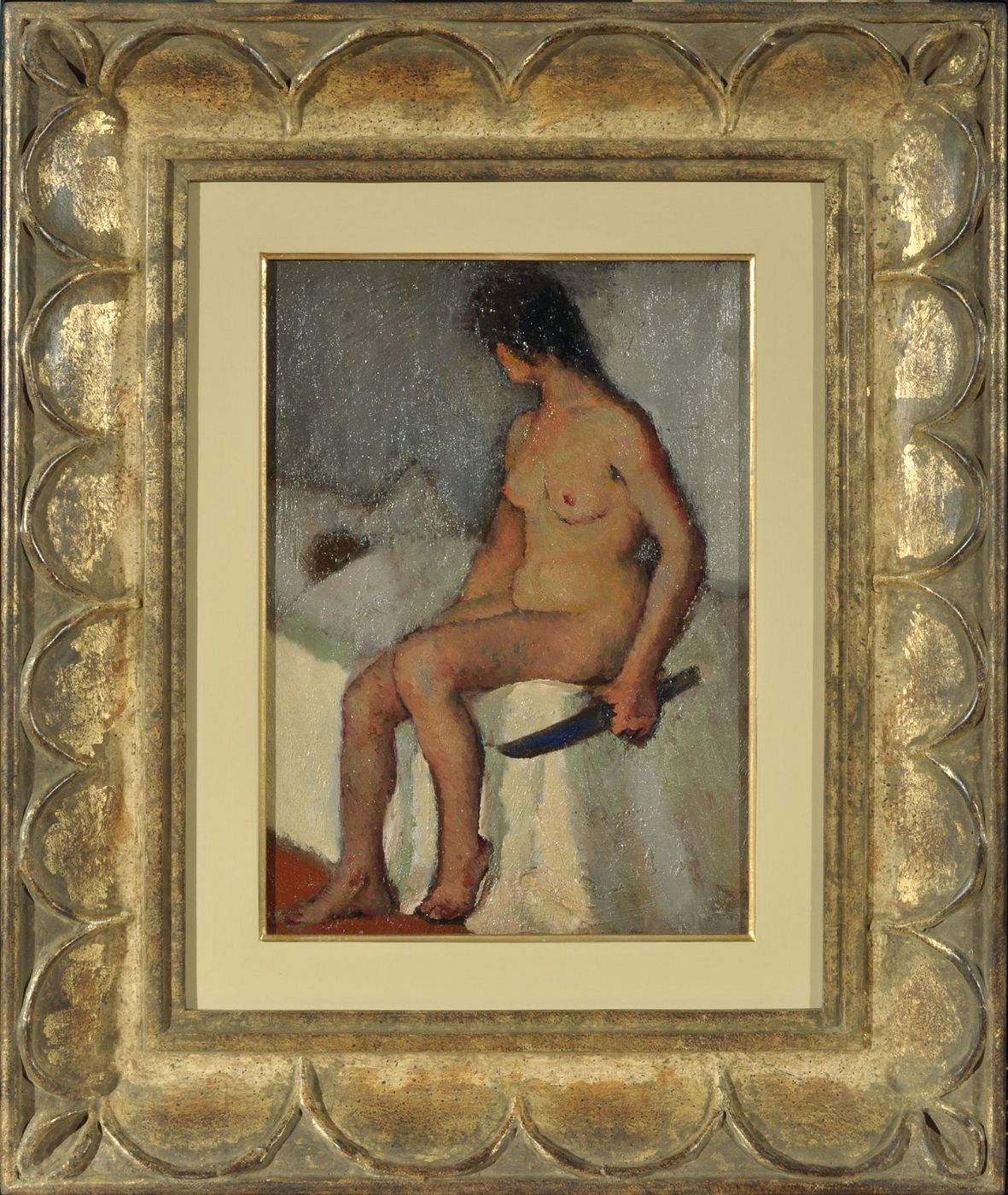
Judith and Holofernes (1931)
Oil on panel, 35x25 cm
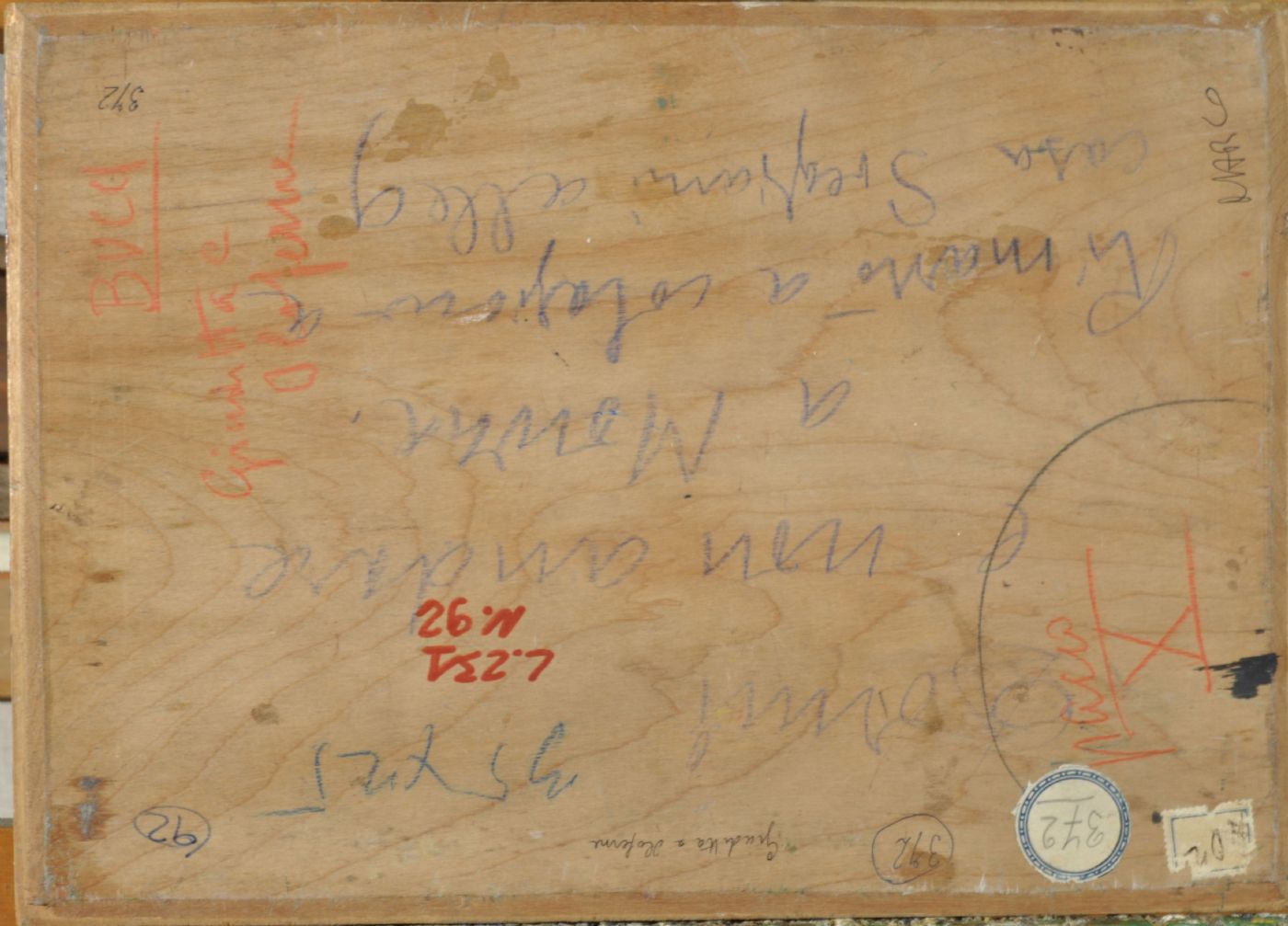
Autograph signature and title on the back
Autograph writing with personal autograph message: "Sleep and don't go to Monza. I will stay for breakfast at home. Wake me up at 9 a.m."
Provenance: Marco Fossati collection - Bucci Heirs
Bibliography: Between the lines. Twenty-four artists of the Italian Novecento through images and words, edited by G.Cribiori, 9cento Milano Edizioni, 2023, table 82, p 144
The Studiolo gallery proceeds with the archiving of the Maestro's works through the Anselmo Bucci Archive Milan
for information
[email protected]
In the Bible, more precisely in the Book of Judith, composed of 16 chapters describing the story of the Hebrew Judith, set in the time of Nebuchadnezzar (605-562 BC), "king of the Assyrians" [sic]. The Jewish city of Betulia is under siege by Holofernes, an Assyrian general, and is liberated thanks to Judith.
One night Judith prepared herself, dressed, and, beautiful, went with a servant to Holofernes' tent, bringing gifts with her and pretending to want to betray her people to deliver them to the enemy. Holofernes believed her, invited her to his banquet, drank and got drunk. He invited her to his rooms and Judith waited for the right moment to kill him by cutting off his head with two blows of a scimitar. After killing him, she put his head in the food basket and returned, victorious, to her people. Judith is, among the biblical figures, a symbol of virtue and devotion to God.
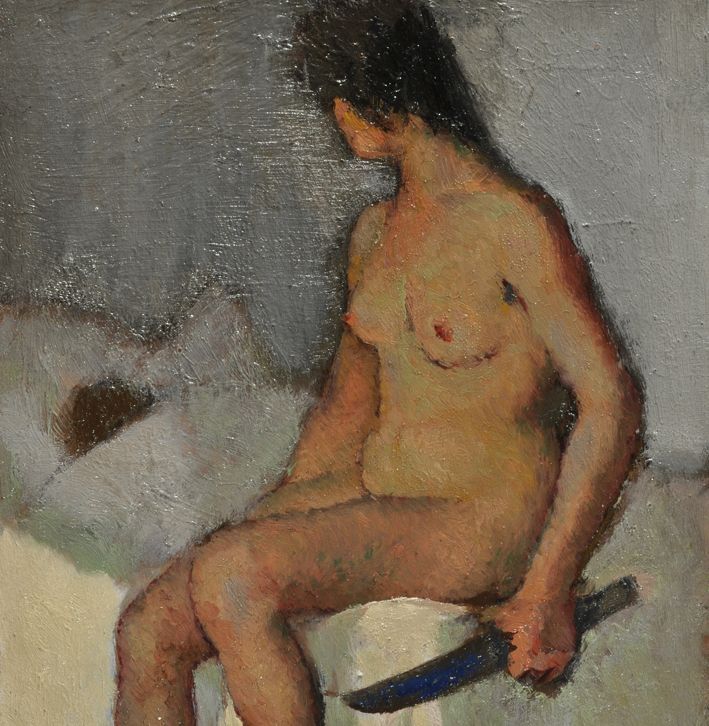
Anselmo Bucci rediscovers a protagonist, Judith, whom he interpreted in 1927, transfiguring her into her modernity: the woman, naked, sitting at the head of the bed where the modern Holofernes lies (Bucci himself?) appears in the act of deciding what the future of her companion will be, even if the large knife held suggests a bloody ending.
Difficult, however, to interpret the "Bucci thought" in this case, without further indications: a plausible hypothesis is that it is a personal episode interpreted and dedicated to his relationship with a woman (through the title) with the usual pungent irony; an event, this, which could somehow connect the work to the message written on the back, of which, however, we do not know the recipient; it remains a fact that the person for whom Bucci wrote the message was certainly a woman, just as it is equally certain that she received a message written on the back of a painting entitled Judith and Holofernes...