
UNIQUE MASTERPIECE IN THE WORLD
WORK FROM A GREAT INTERNATIONAL MUSEUM
(first part of the photographic documentation)
The multi-decade history of an ancient art gallery like ours is punctuated by works (paintings, sculptures, furniture, Murano glass, watches, curious and rare objects, etc.) which, due to their uniqueness, rarity and value, sometimes they leave an indelible memory even in collectors and art scholars like us who are used to being surrounded by "beautiful things". Not all works, not all art and antiques, in fact, are unforgettable. Even in ancient times they created works and objects of insignificant artistic and aesthetic value, therefore the established antiquity cannot be the only factor in estimating an artefact. The peculiarity and uniqueness of a work or an ancient art object, almost always linked to extremely demanding and original clients and to the artist's creative choices, therefore constitute an often decisive added value, which really makes the difference.
Even if each of us has legitimate individual tastes that lead us, to a greater or lesser extent, towards certain periods, styles and historical eras, there are however cases, and this is an example, in which, independently of reciprocal tastes in terms of cabinet-making, we all magically agree.
The incredible table that we are proud to present could in fact be a "flagship" not only for the best international antique galleries, but also for the most famous art museums in the world. In fact, in none of these institutions it is possible to observe, at this moment, a wooden artifact of this era, typology, workmanship, workmanship and refined use of every most exquisite woodworking technique. A "catalogue" work, in other words. And all this goes far beyond the era (even very ancient, first quarter of the seventeenth century) and the geographical origin of the table (Tuscany, a region that alone made the history of second millennium cabinet-making in Italy and in Europe).
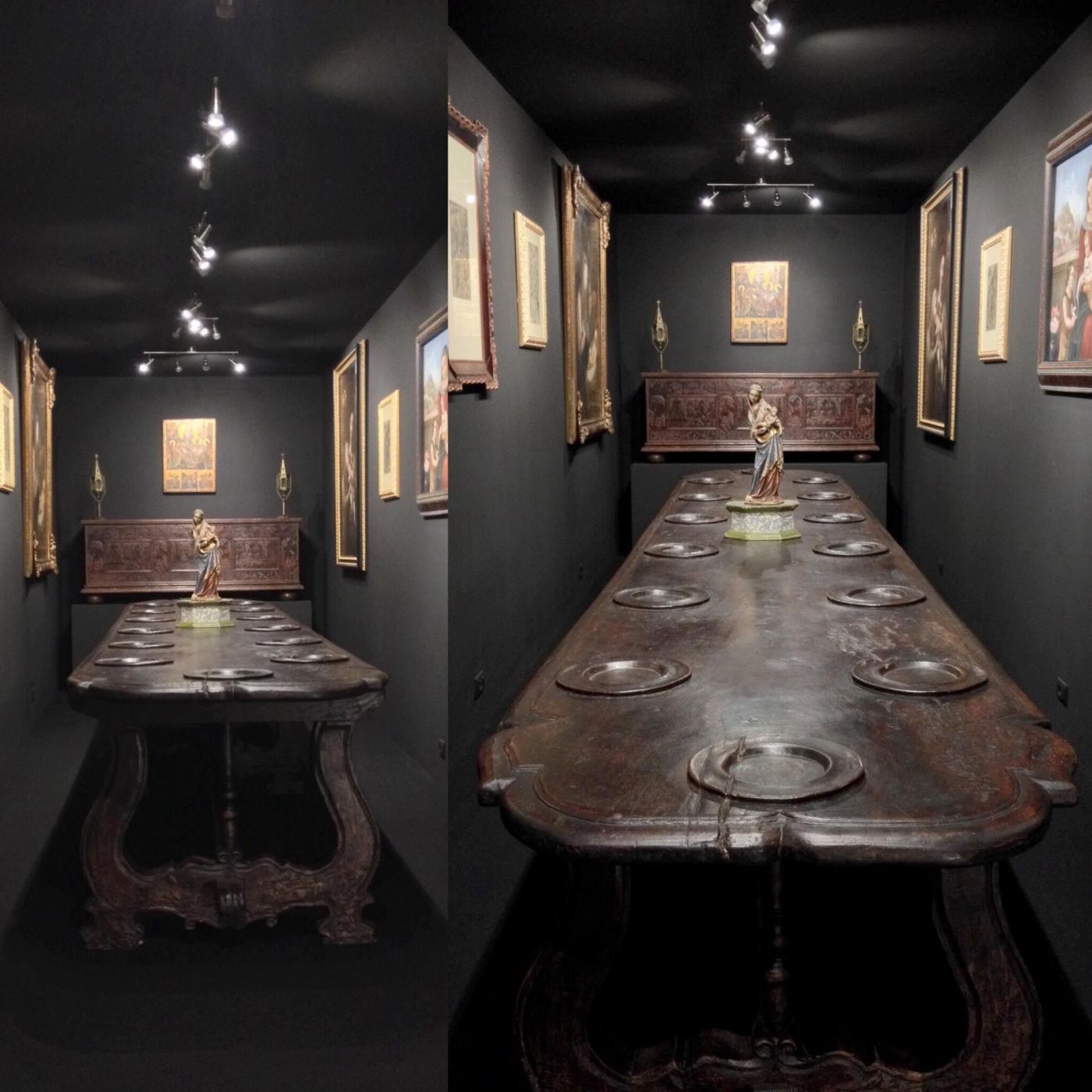
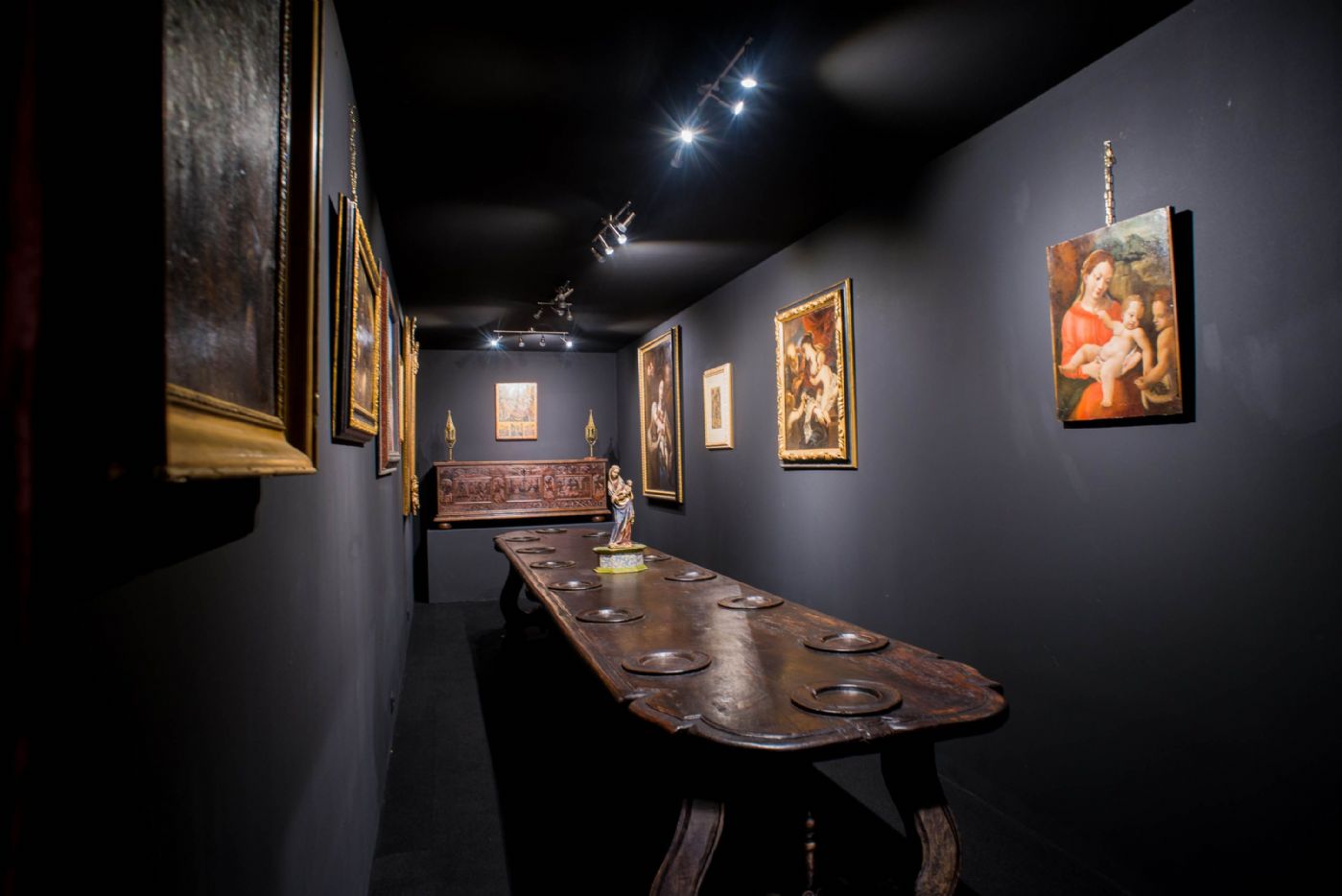
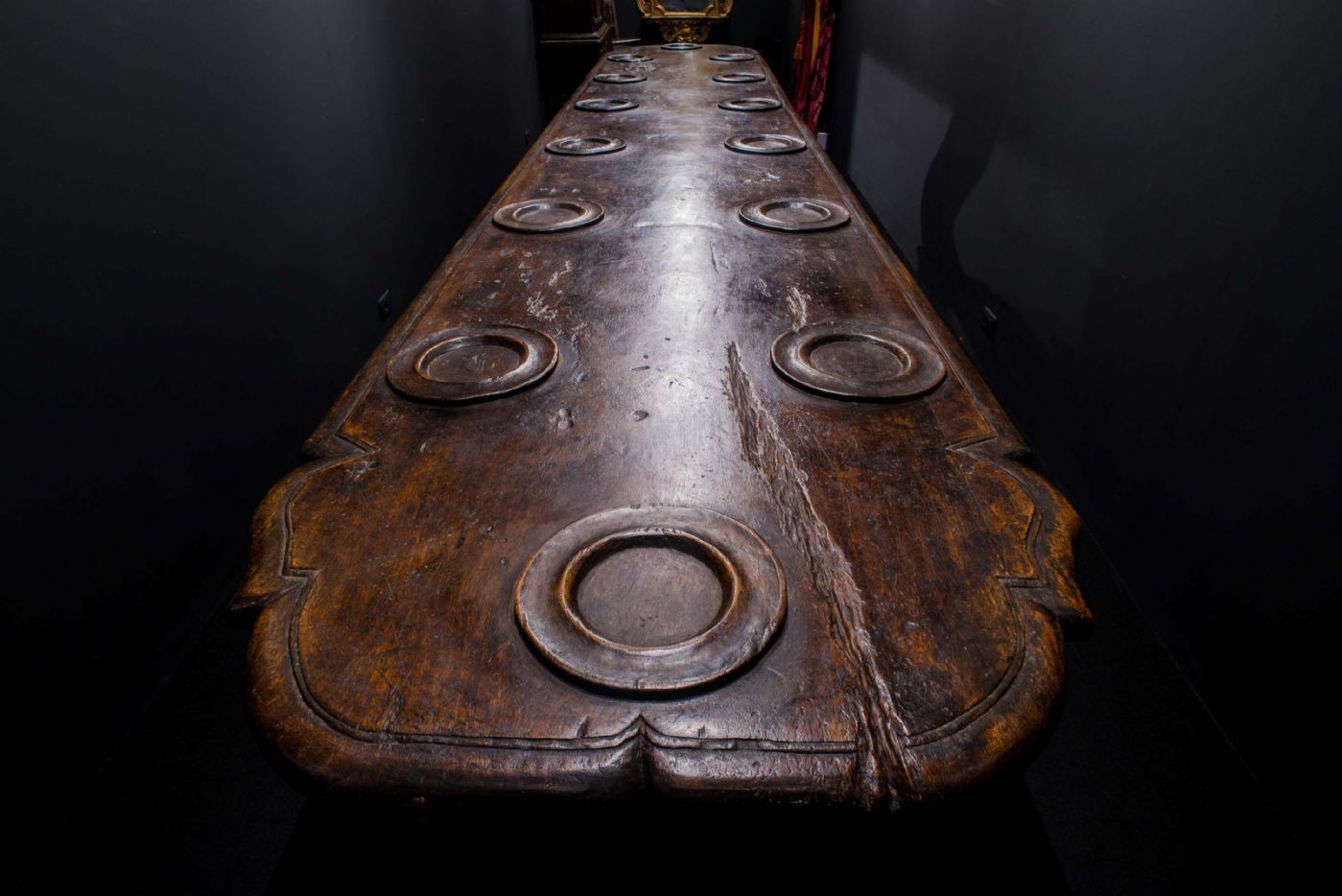
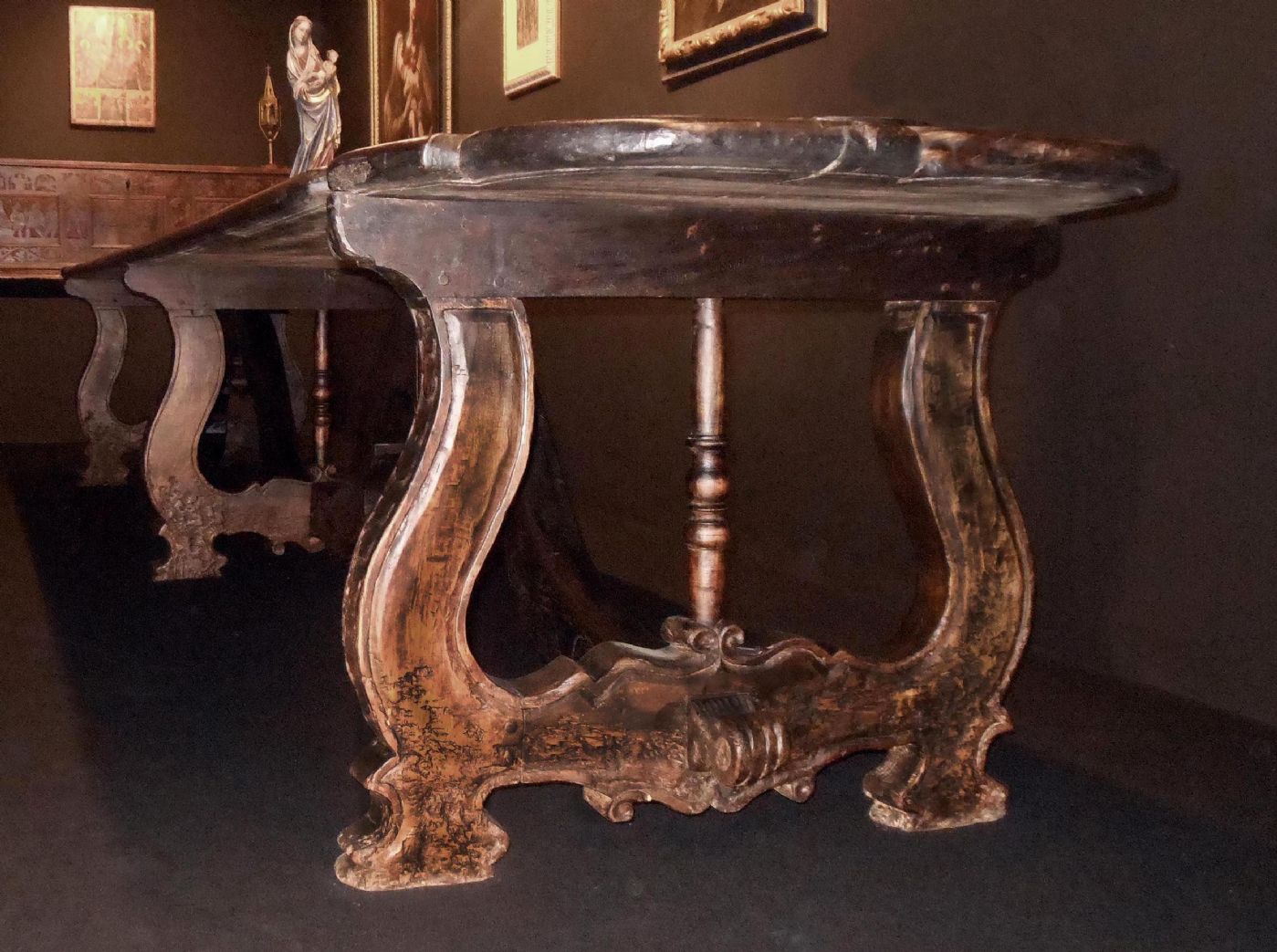
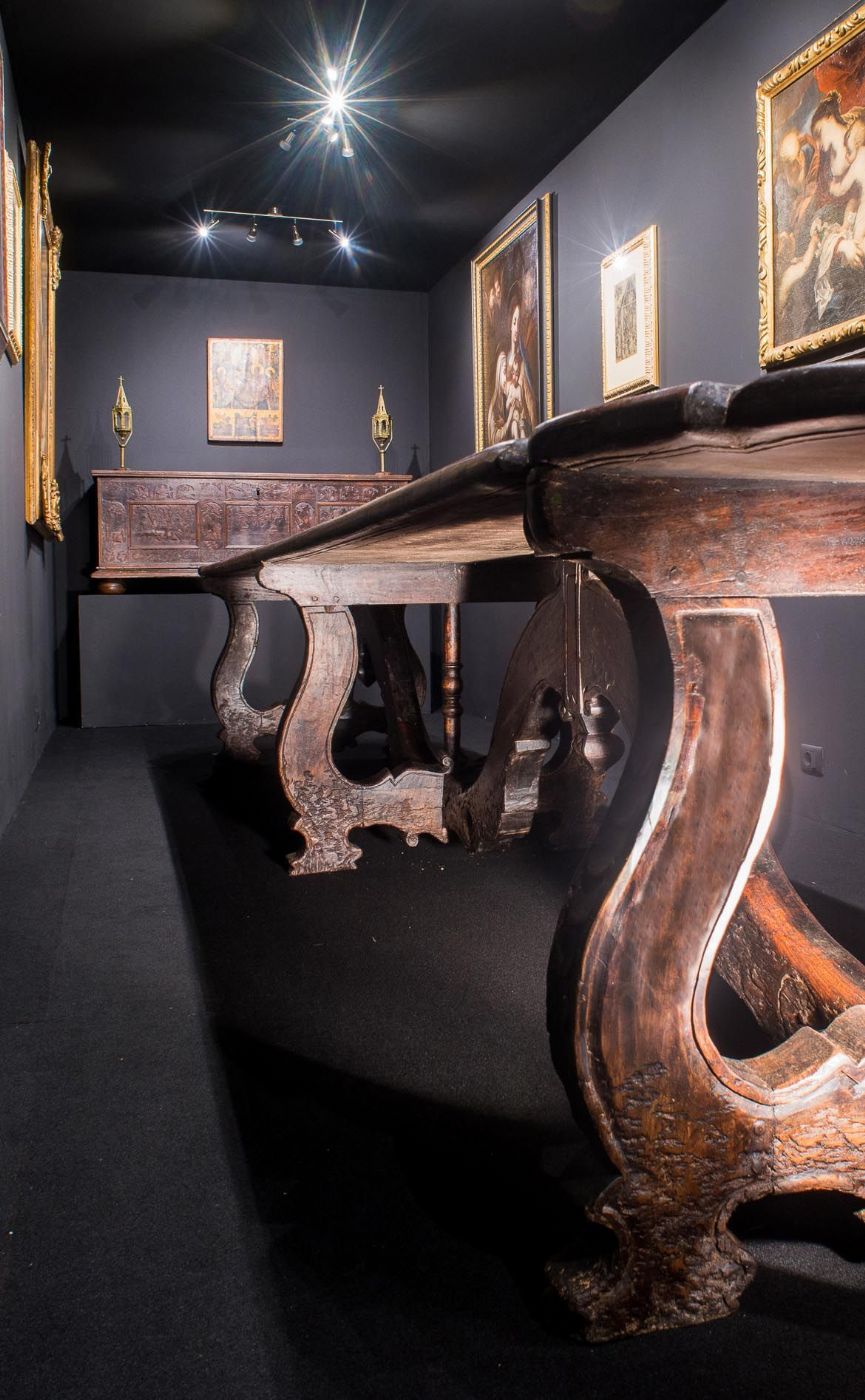
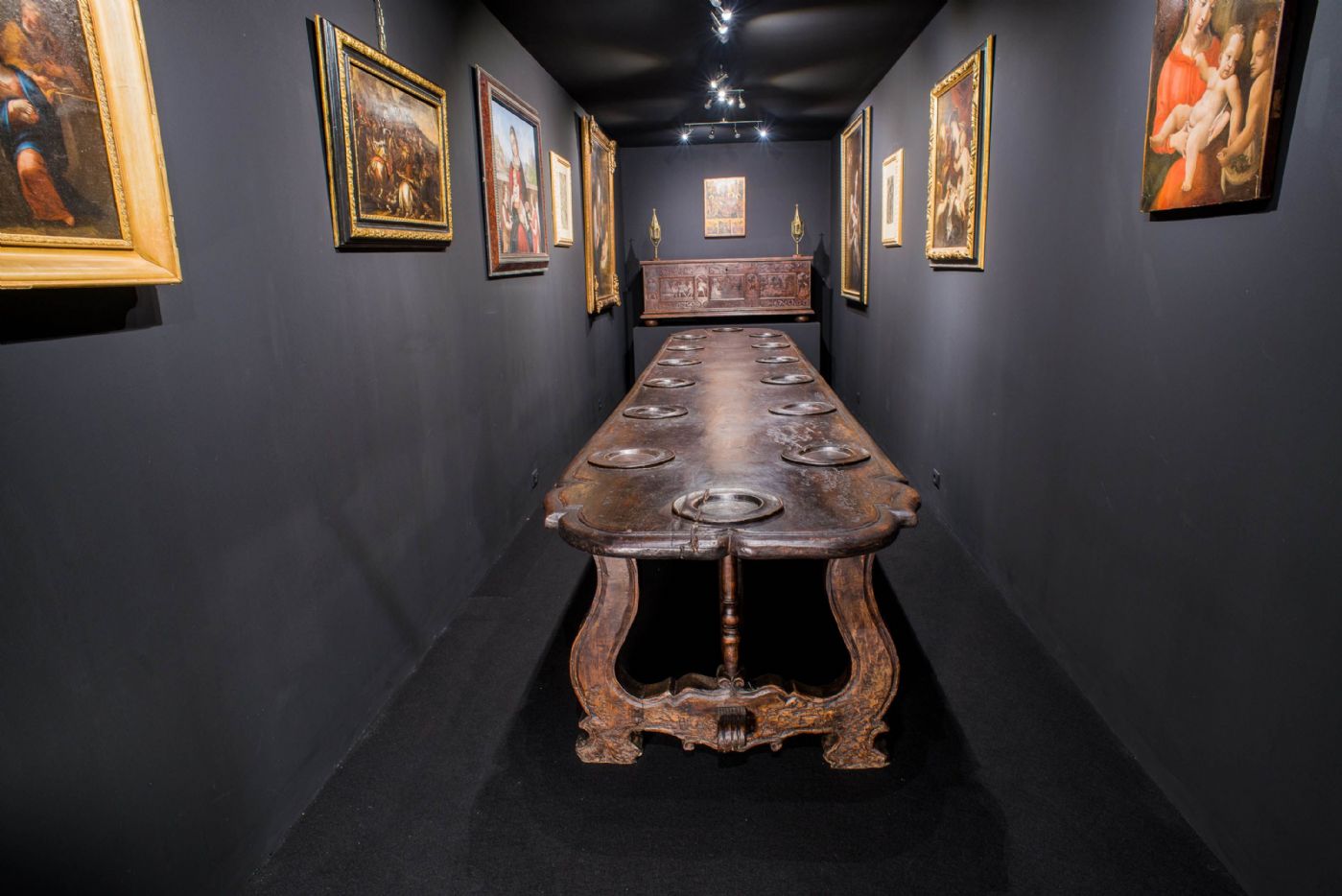
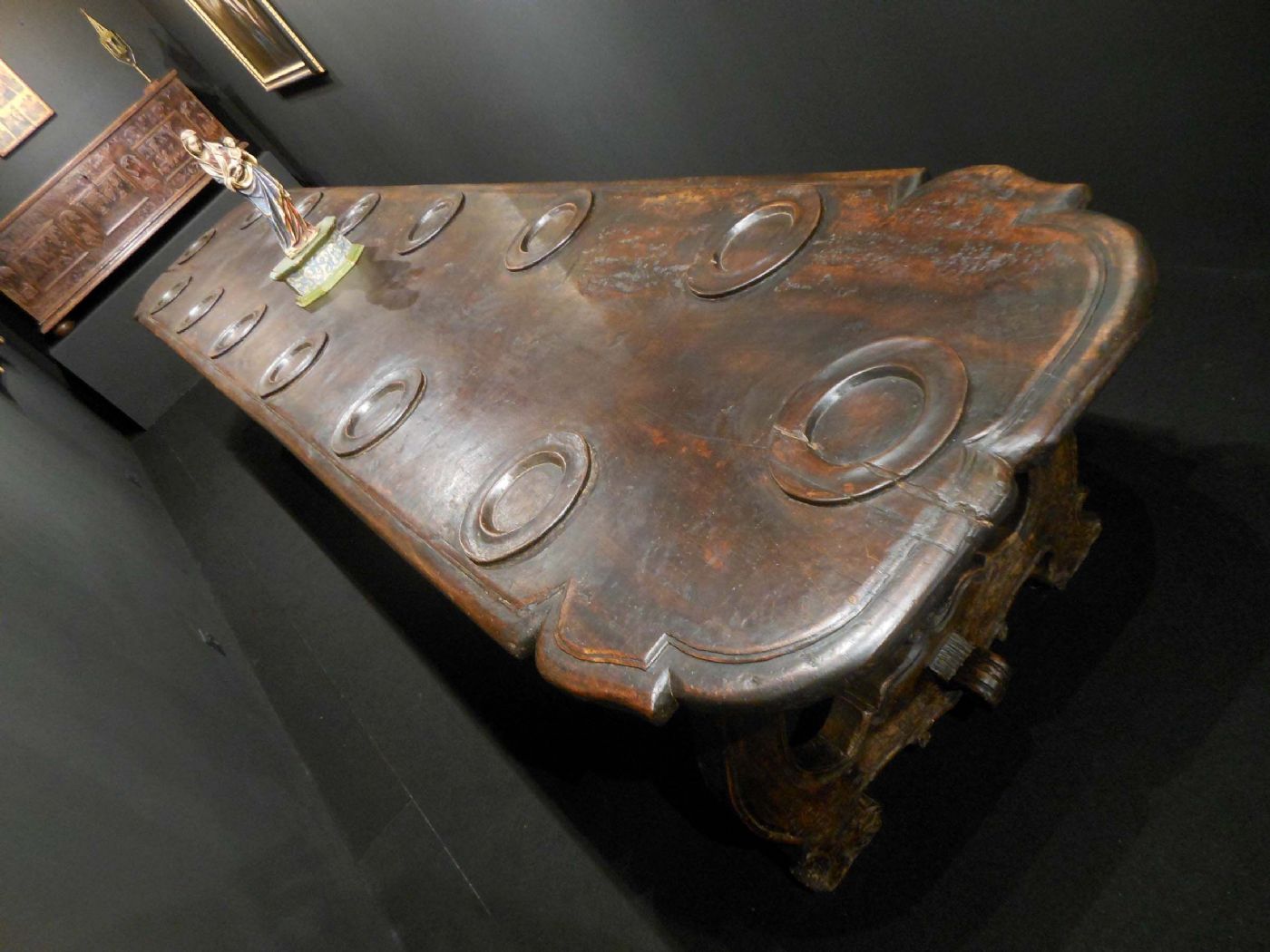
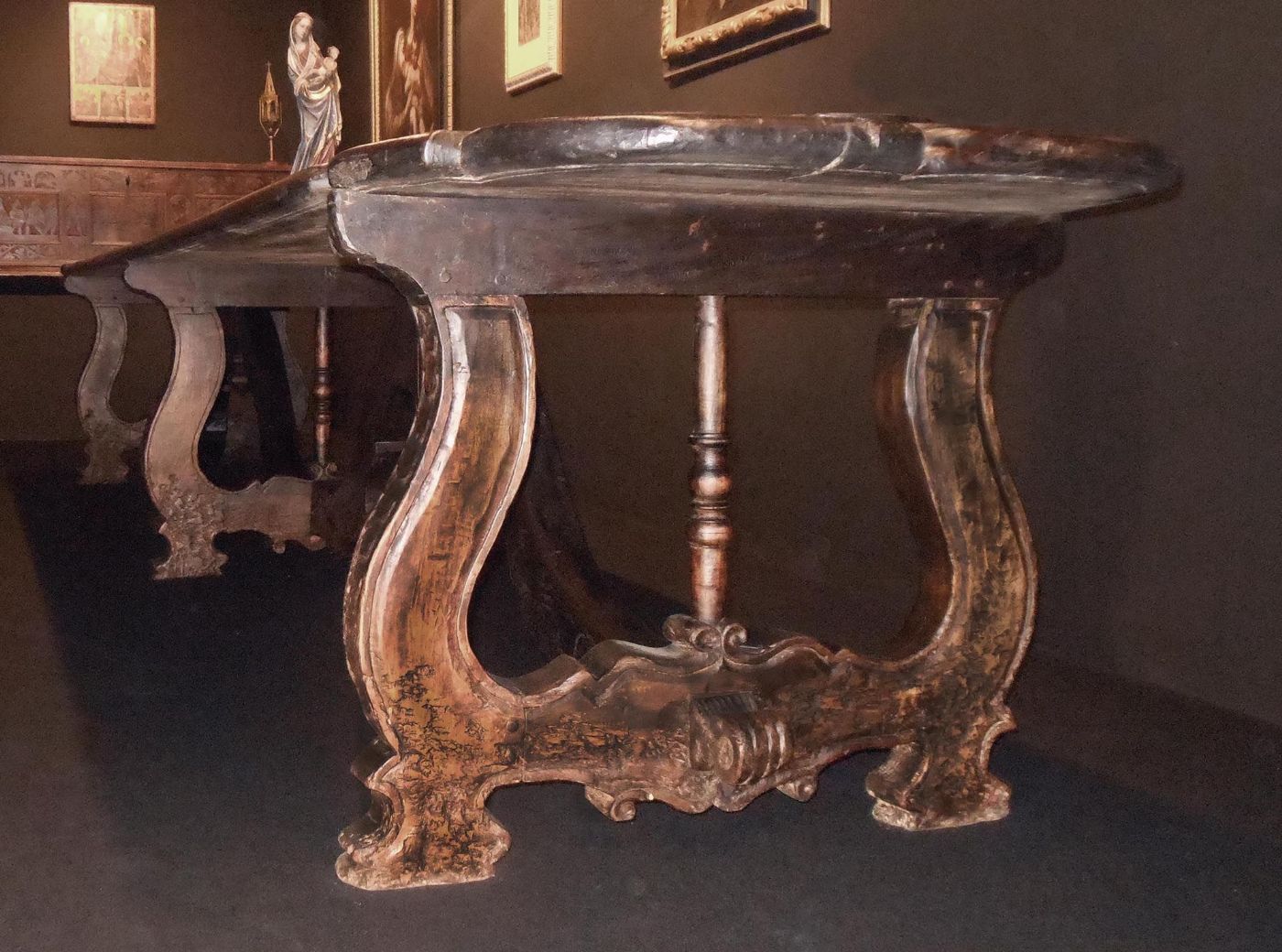
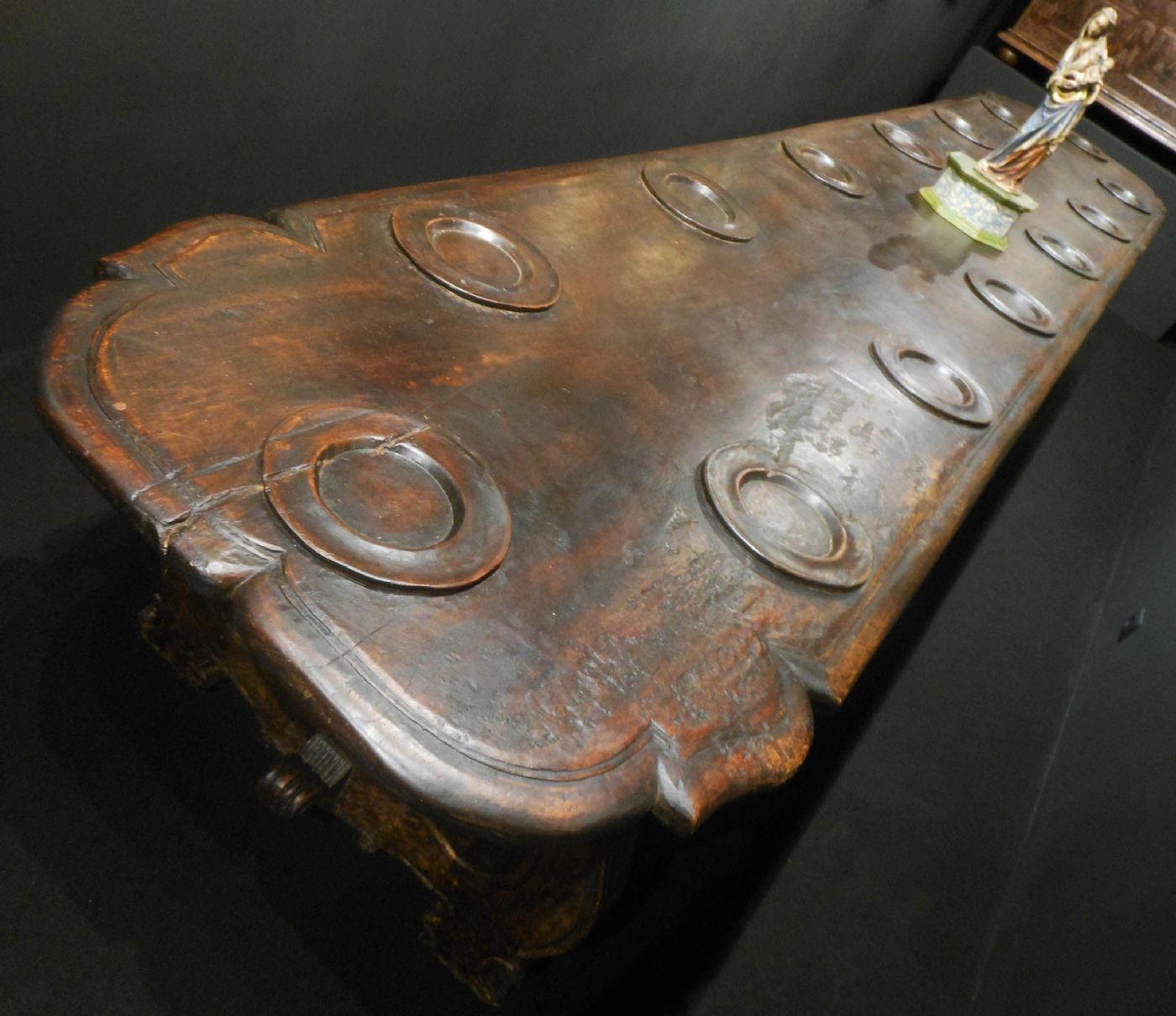
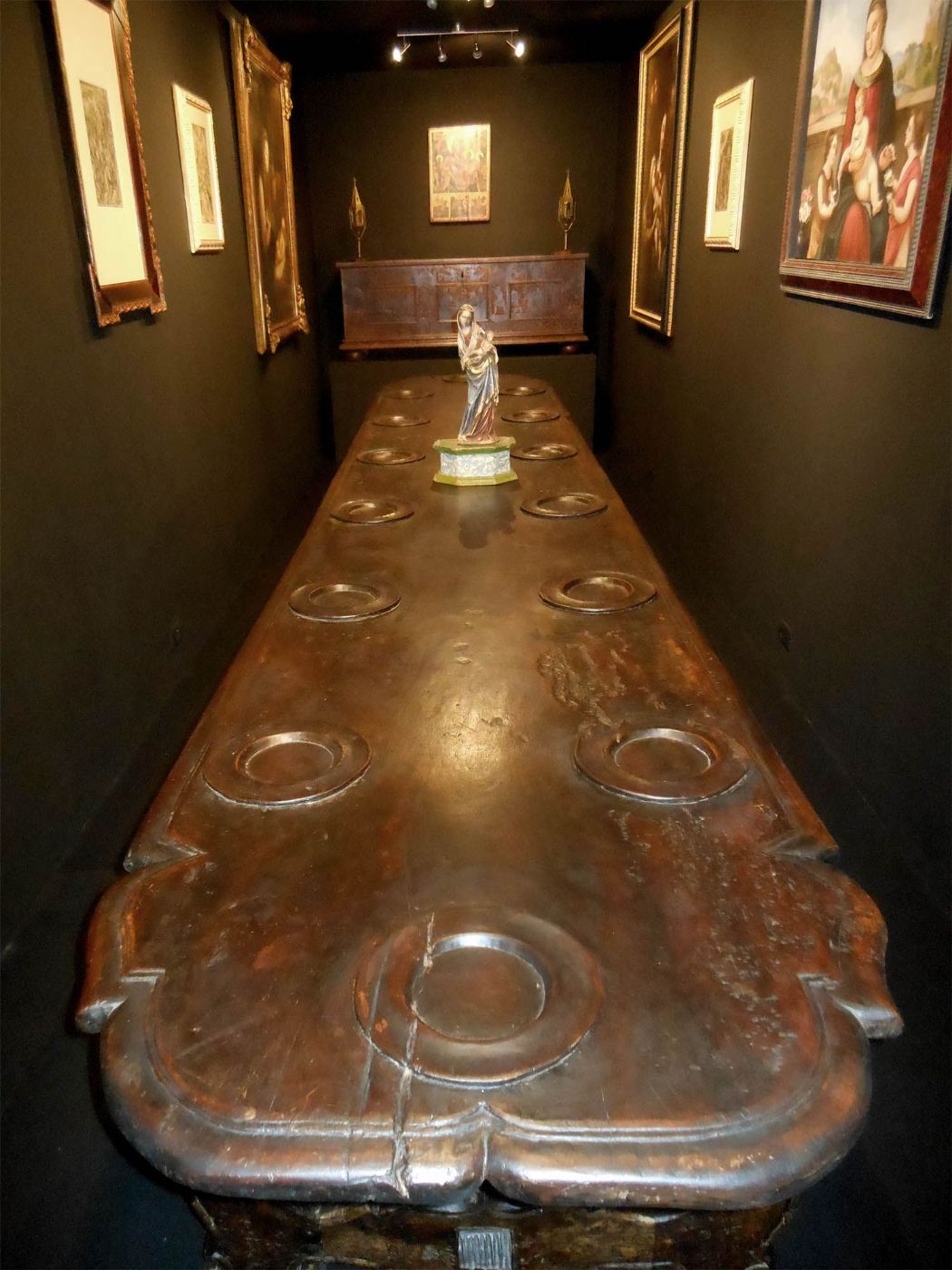
This is a monumental table-refectory almost 5 meters long, 93 cm wide, 81 cm high, in carved and carved solid walnut, with a very thick and unusual top made from a single gigantic tree. And where the client, certainly due to a very specific request linked to noble hospitality and the desire to amaze, requested that 14 table seats (including the two head of the table) be carved into the thickness of the wood. A center table, therefore, made according to the technique and typology of the conventual and monastic "fratini". But certainly intended for a large reception hall of a castle or an abbey, where guests of particular importance could be received and hosted for lunch and dinner. Tables of this type were also called "for parade" or "for show", precisely because they allowed for sumptuous equipment, with the display of the most precious services and crockery. The extreme antiquity of the table is also evident in its shape and dimensions, with a moderate width which is a reference to the typical proportions of conventual refectory tables (hence the term), of medieval and monastic origin, which, as known, they were long and narrow. However, in this sumptuous and monumental table we wanted to respect an aesthetic canon of late medieval derivation, while enriching it with particular carvings both on the apical edges of the top and, above all, in the magnificent and gigantic "lyra" supports (three, given the length of the table, connected to each other by large joints of equal size and incredible thickness), with shading and tonal variations of color in the wood, which give depth and refinement to the cabinet-making work. The three large lyre-shaped supports or pillars of the table, similar to powerful curved beams, represent a veritable stylistic sample of the most refined carving techniques. With parts in low and high relief (auspicious floral decorations) and even "in the round", with the appearance of heart-shaped sculptures. Which suggest a client with a romantic background, perhaps a marriage, with the intention of sanctioning an indissoluble bond between two people and two families. Or perhaps also, why not, a kind gesture born from the inspiration of the cabinetmaker. It is important to remember that, between the 1400s and 1600s, carving was one of the oldest and most widespread wood decoration techniques, which allows for the creation of remarkably refined friezes: it is obtained by digging the surface of the wood with special tools (chisel and gouge) following a pre-established design. The sculptural carving is performed, as in our case, freehand and is comparable, in terms of difficulty and mastery, to the most noble sculpture.
The carving is performed directly in the solid wood, on the structure of the piece of furniture itself.
Almost all types of wood could be used but, for the more refined jobs, for the more refined works, as in the case of our table, woods with a compact grain were used (in Italy and in Tuscany almost always walnut).
What in our case appears to have never been seen before and which makes this extraordinary table a truly unforgettable wooden artifact are the aforementioned 14 positions for dishes, carved and sculpted in walnut wood and forming a single body with the table top. These are circular notches (or underplates) of evident but not exaggerated thickness with the right dimensions to contain, almost interlocking, the bottom of a plate which, in fact, can thus be placed in the center of the wooden circle in the shape of a fixed underplate . Let us not forget that, between the fourteenth and seventeenth centuries, there was the habit of often using pewter crockery, as well as majolica or ceramic, simply placed on the table top. And always without the use of tablecloths (whose prevalent use will start from the eighteenth century). Therefore the table "had to be seen" and was adequately "laid" only near each table place and according to the number of diners. It is clear that the "dominus e la domina" (the hosts) sat at the two ends of the table, while, in our case, up to 12 guests could take part in the banquet. We can also think of such a precise number (14) by referring to the customs of noble, religious, military and secular congregations, particularly flourishing in Italy and also widespread in Tuscany, a region where powerful noble families of early medieval origin dominated the scene for centuries . Moreover, how can we not forget the LAST SUPPER where Jesus and the 12 Apostles sat at the table in 13, then the famous "Knights of the Round Table" (who were 12), the "Brotherhoods of the Disciplined, the Illuminati and the Penitents (always in even numbers of at least 12 or 14 followers), the "Confraternities of the Blessed Sacrament" (of 12 or more members), the "Noble Congregations of the Grand Duchy of Tuscany", made up of a limited number of guests who sat at the table not only for banquets and libations, but also to discuss the various aspects of their rules and chivalric affairs.
Many scholars argue that the Italian and European culinary art originated within the walls of castles, monasteries and abbeys. In the feudal and monastic world one can in fact find a very lively attention to food and its preparation and presentation. Dining rooms, kitchens and refectories of castles, abbeys and monasteries were at the same time important places of aggregation but also places of meditation and prayer, where the moment of conviviality was often consecrated to silent listening to sacred texts or reports of facts and events .
Our table therefore represents, after careful reading and cultural analysis, a real "slice of life of its time", an outstanding example of an "open book on history dug into the heart of a noble wood such as walnut", essence typical of the best Tuscan cabinet-making between the sixteenth and seventeenth centuries.
In this context, even the so-called "Minor Guilds", such as Cabinetmaking, rise to the rank of real "Major Guilds", of which they are direct daughters. "Minor Arts" in which, often, illustrious masters infused not only their executive technical knowledge but also the inspiration of real "artists". Which is why wooden masterpieces like this table, skilfully preserved in their authenticity, have been able to challenge time and human events, reaching us miraculously intact, extraordinary witnesses of our ancient civilization.
UNIQUE MASTERPIECE IN THE WORLD OF ABSOLUTE MUSEUM VALUE
TUSCANY – First quarter of the seventeenth century
Measures:
Length cm. 490 – Width cm. 93 – Height cm. 81
CONFIDENTIAL NEGOTIATION