MASTERPIECE - EXTRAORDINARY VENETIAN PAINTED TRUMEAU FROM THE EARLY EIGHTEENTH CENTURY - ABSOLUTE MUSEUM VALUE
Description:
EXTRAORDINARY VENETIAN PAINTED TRUMEAU FROM THE EARLY EIGHTEENTH CENTURY
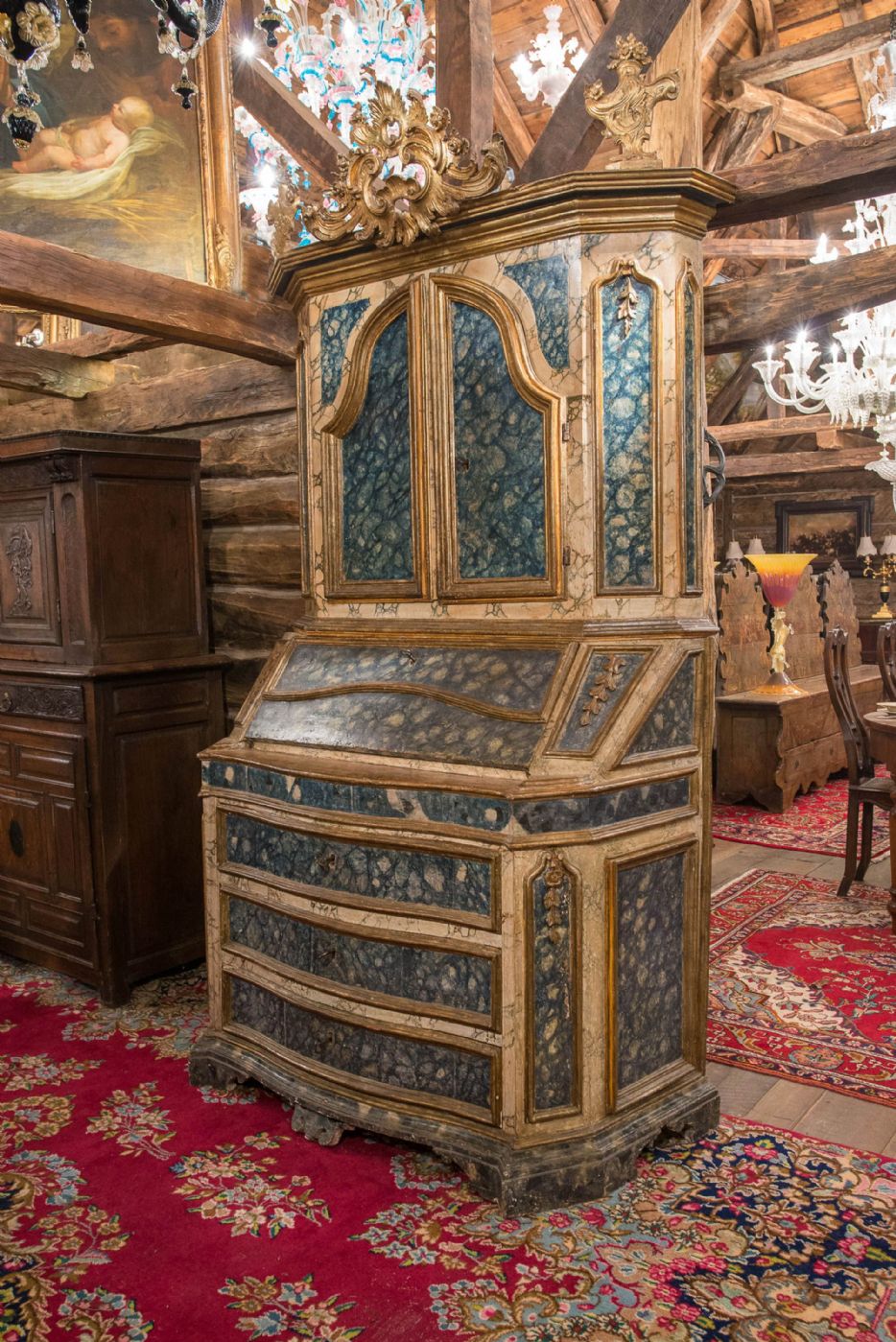
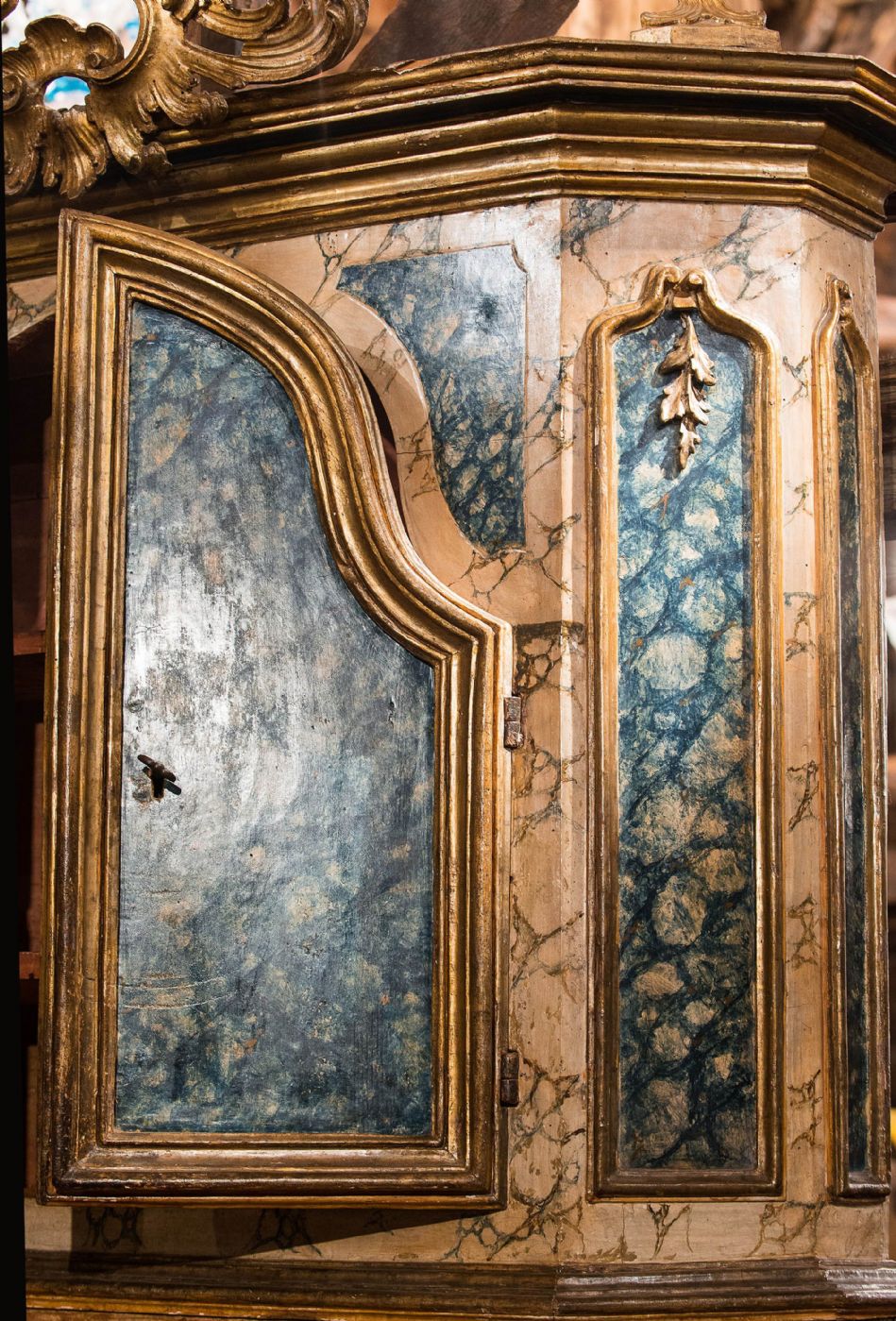
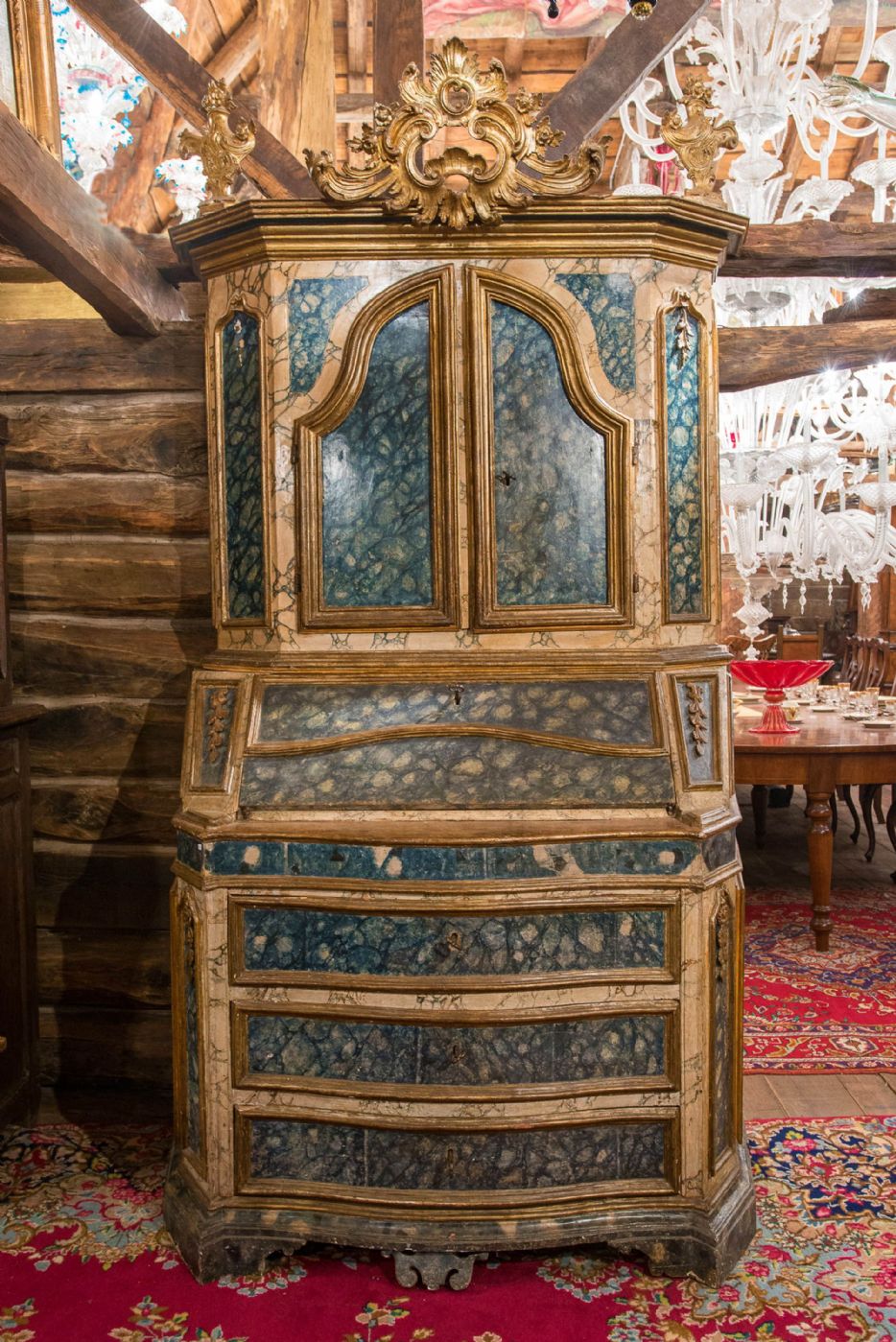
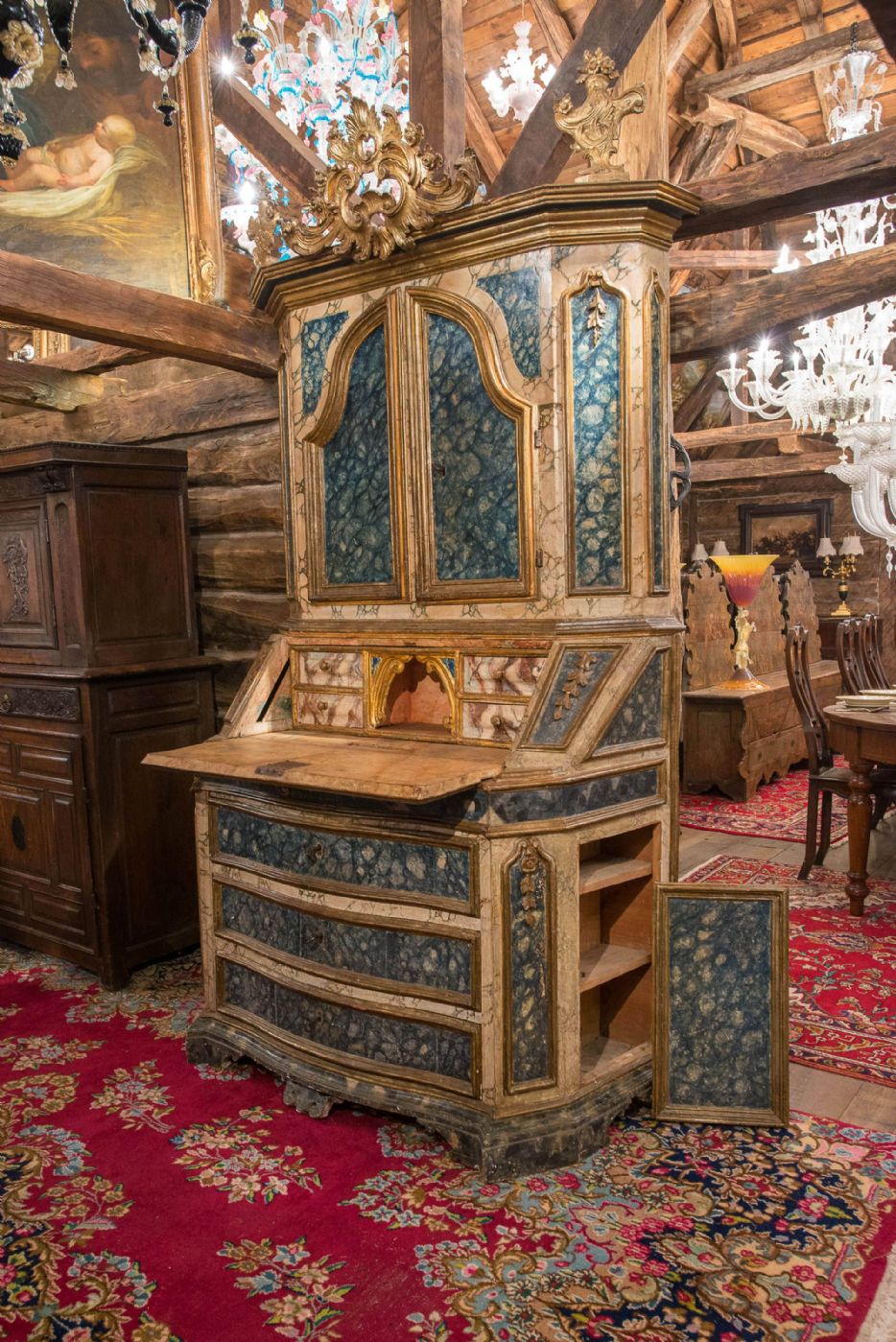
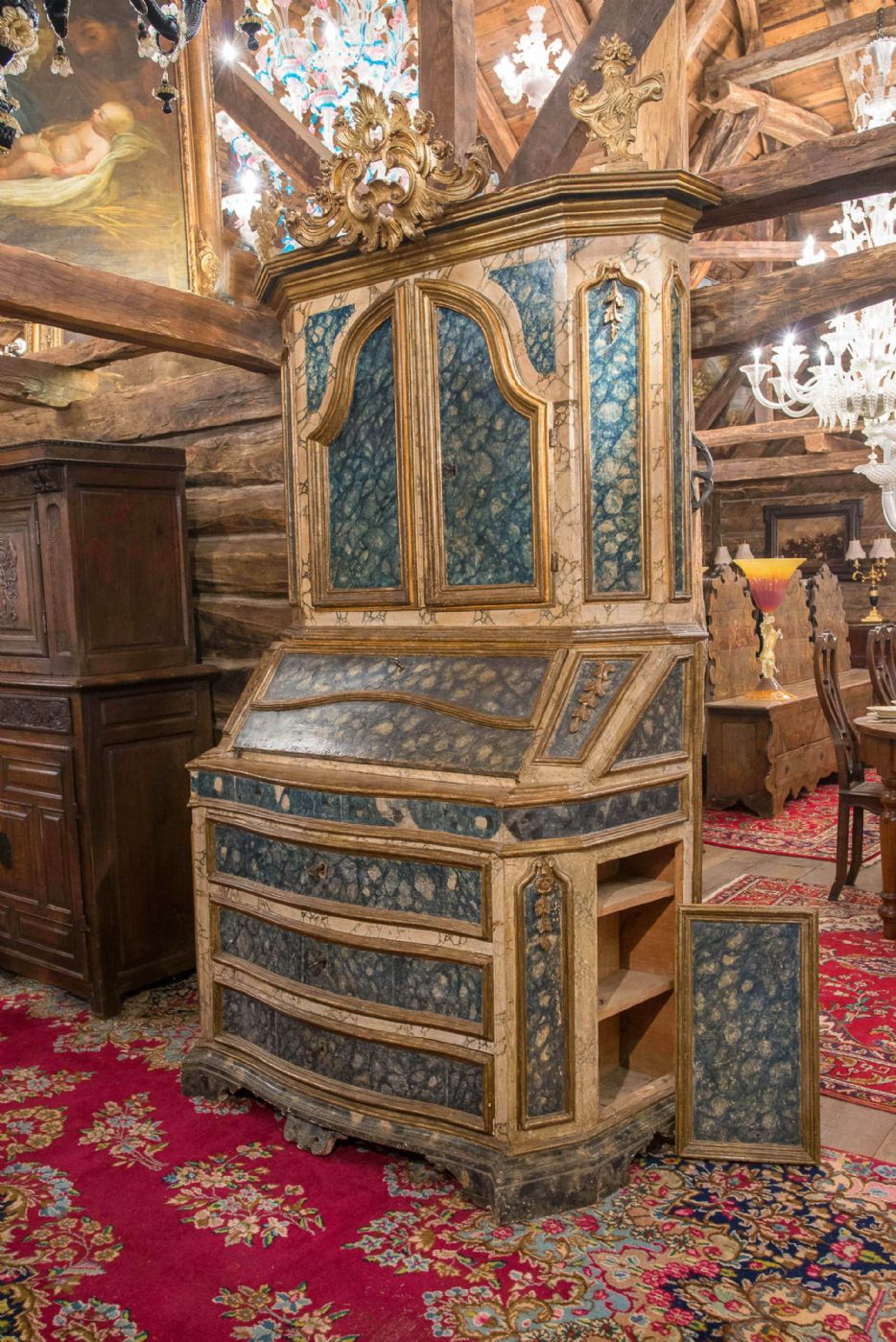
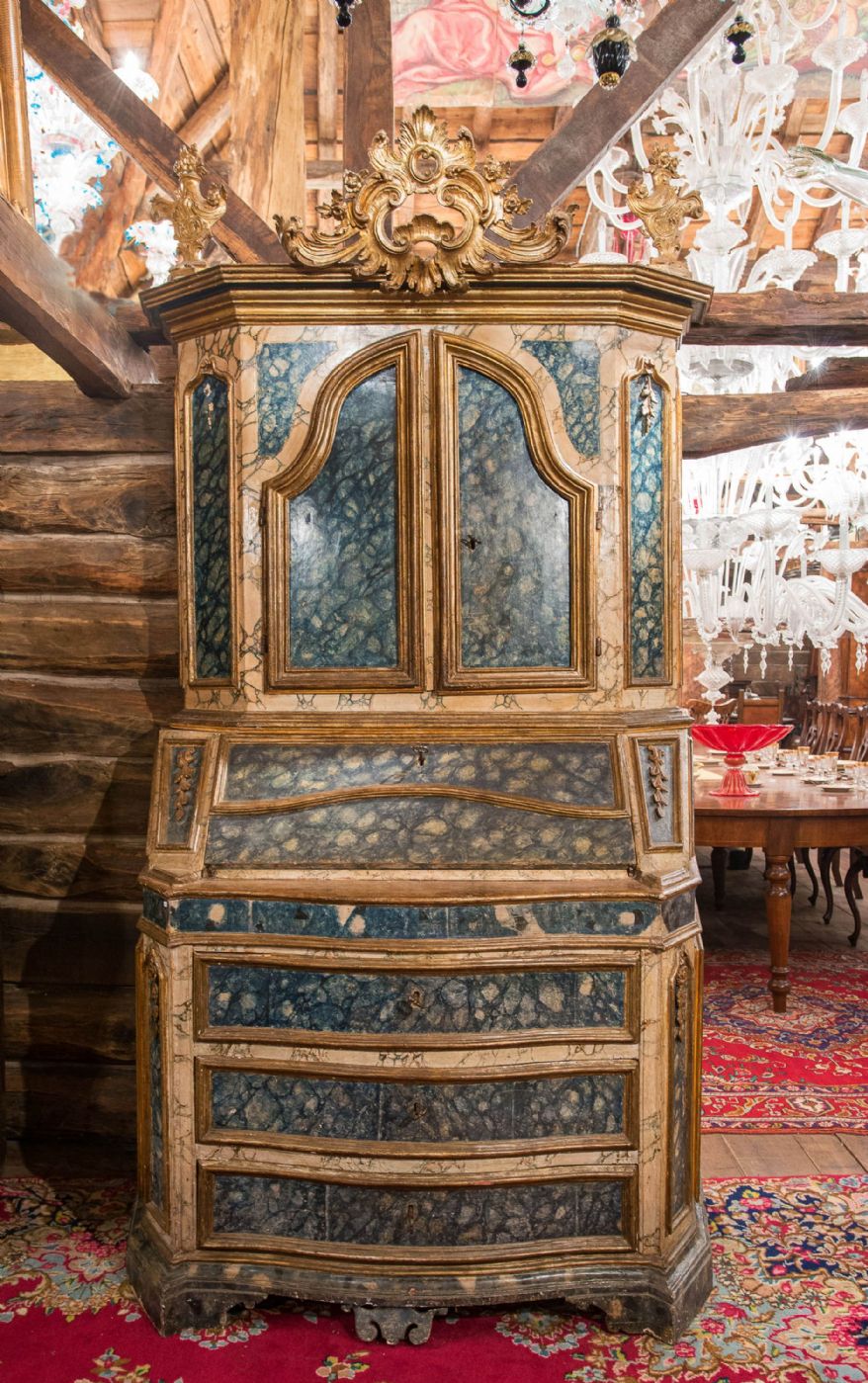
Exceptional "Trumeau" or chest of drawers with drop-front and raised section, made of poplar wood and various other woods, entirely painted, gilded, and lacquered "a mecca." The drop-front once served as a writing desk. Generally, valuables and collectibles such as porcelain and silverware were stored in the raised section. From a formal standpoint, this exquisitely crafted piece of furniture belongs to the eighteenth century, of which it would historically be the undisputed protagonist. Here, the curvilinear forms, although evident, tend to soften, underscored by the marvelous "faux marble" decoration, created "a mecca" on various shades of gray and enriched by gilded frames and delicately carved friezes with leaves and flowers.
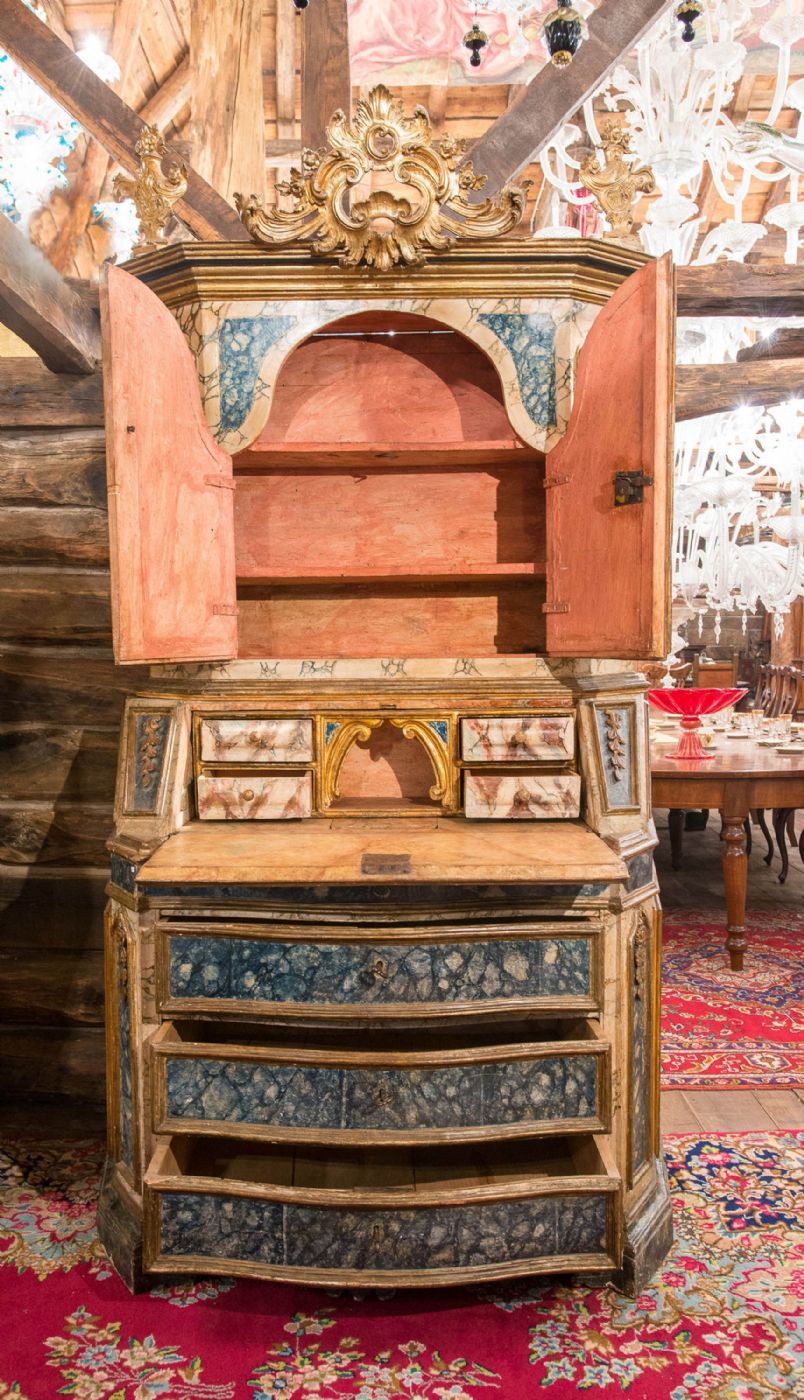
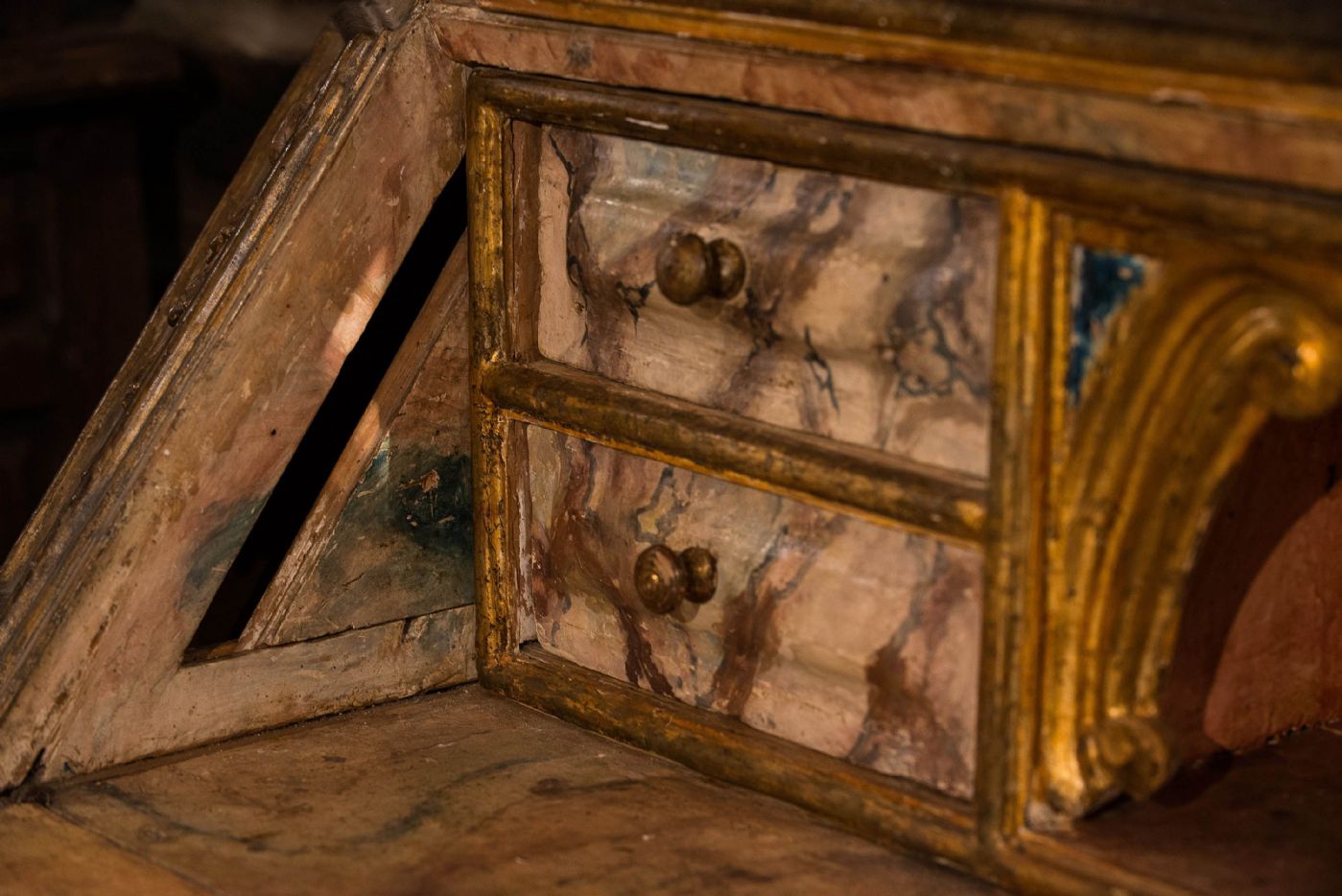
Opening the drop-front, as if unlocking a precious chest, we admire a unique faux marble decoration in shades of orange to light, delicately shaded gray. Gilded frames elegantly complete the ensemble, adorning the four drawers of the beautiful piece. According to tradition, which identified the most refined and exquisitely crafted trumeaus with the presence of "optional" features intended to amaze, we also find several "secrets" in our piece, both on the right and left sides, and in the center. In addition, on the two outer sides of the chest of drawers, there are two other, larger secret doors, artfully concealed and removable. The combination of the central drawers, also removable and called "scarabattolo," and the secret compartments, gives this masterpiece of high-end cabinetmaking a "mysterious" appearance, ideally used to hide documents, love letters, and exclusive "safe" objects.
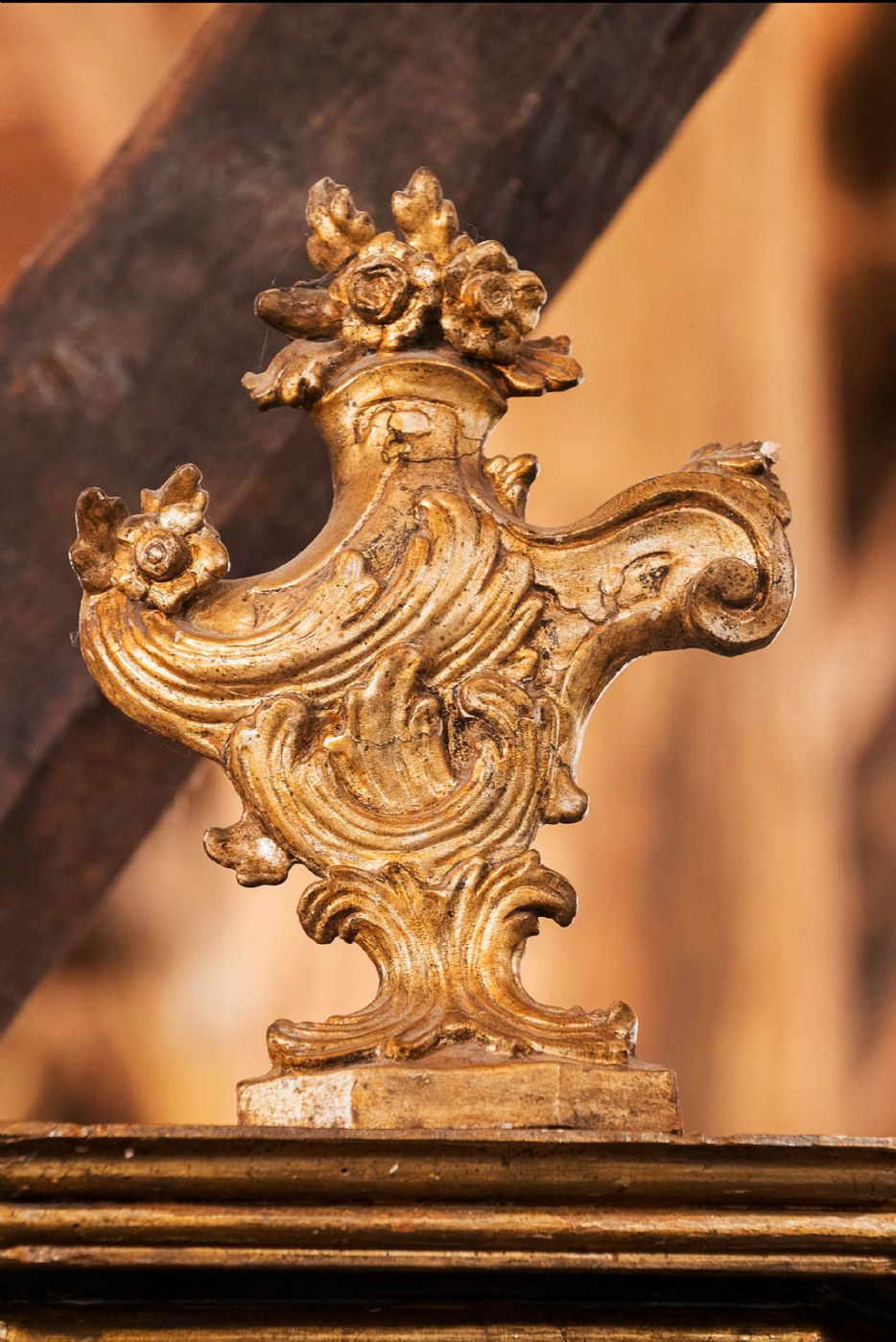
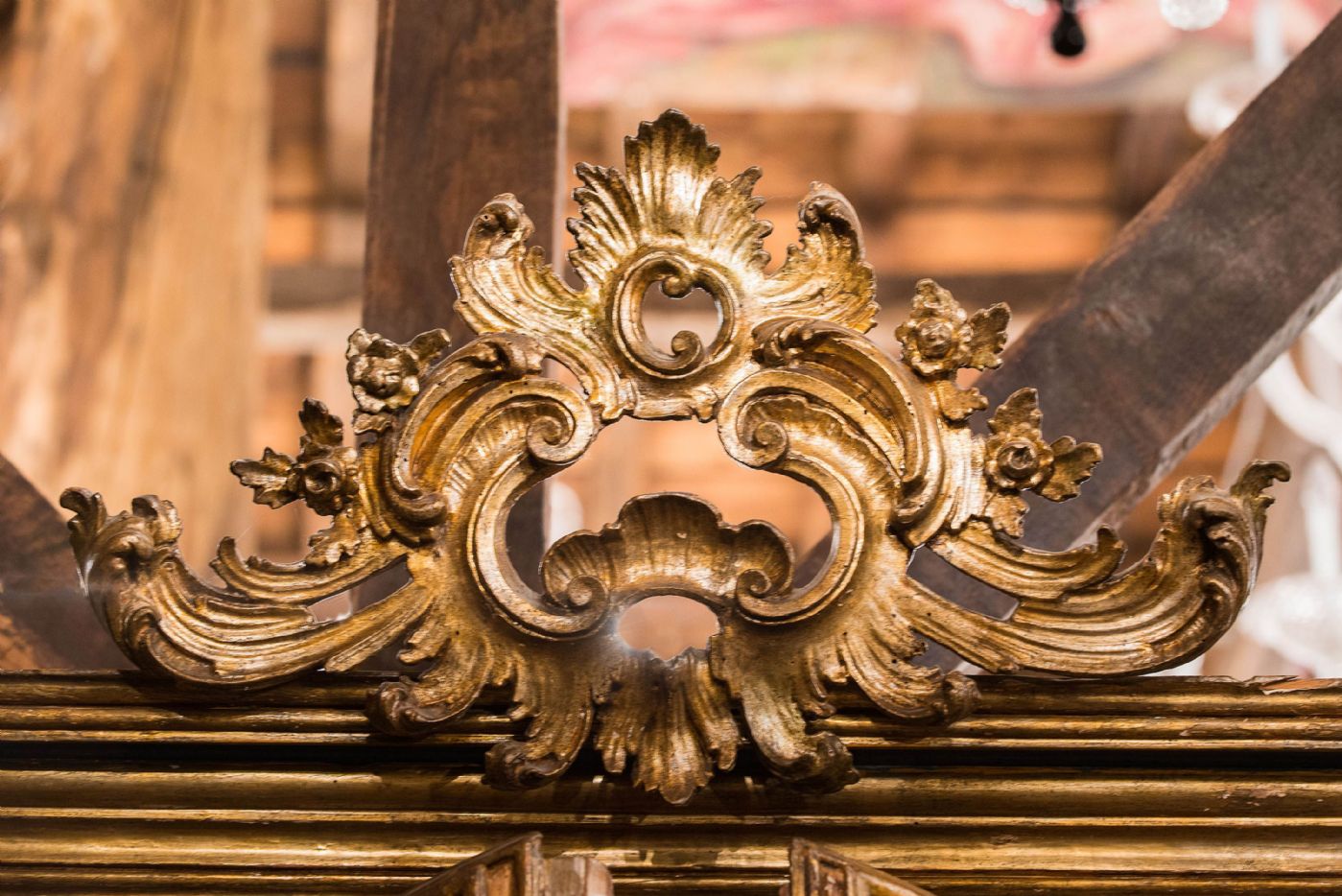
A truly unique piece of furniture of its kind and certainly the result of a wealthy private commission, enhanced by the precious central gilded crest and the two pinnacles also gilded in mecca with auspicious motifs.
The feet, typical of the early eighteenth century, are also extremely elegant and finely worked, with frames with sinuous lines underscored by painted friezes.
A truly "regal" piece of furniture, certainly very rare both for the mastery of its craftsmanship and for its excellent state of preservation. According to the ancient tradition of trumeaus, this piece is among the most sumptuous wooden artifacts ever to appear in the history of Italian and European cabinetmaking. Venetian models, as is well known, are among the most sought-after and precious, true "must-haves" and "status symbols" for refined collectors and lovers of beauty.
Brief historical notes
"Trumeau" is a French term that, in Gothic architecture, indicates the central pillar of a portal, originally designating the wall space between two windows, and, from the eighteenth century, the mirror hanging in the corresponding space. From this meaning, the term then comes to define a very important and absolutely sumptuous piece of furniture, most famous especially in the eighteenth century in the Venetian, Milanese, Genoese, Marche, and Roman areas. During the same period in France, they were also made in Paris to characterize palaces and noble residences.
The artifact consists of a chest of drawers with a drop-front and a raised section above, closed by two doors, with a drop-down top inside which there are niches, drawers, and, as we have seen in our case and only in the most refined models, also secrets of various sizes and types.
The very original piece of furniture is therefore made up of two distinct bodies, separated from each other by a drop-front, forming a harmonious combination of furniture initially intended for different functions. It is plausible that the eighteenth-century trumeaus, whose mere presence is enough to furnish a room in an elegant and unforgettable way, were born precisely from two-bodied cabinets from an earlier period, therefore from the seventeenth century, structurally inspired by them to transform into a precious and refined antique object capable of enchanting antique furniture lovers all over the world.
Italy - Venice: early eighteenth century
MASTERPIECE OF VENETIAN MASTER CABINETMAKERS OF ABSOLUTE MUSEUM VALUE
Measurements: height cm. 249 depth cm. 59 (with drop-front open cm. 80) width cm. 121